Chasing Inspiration or Chasing Instagram?

written by Reagan McGowan, Kate Cooper, Maggie Baker & Emma Stromberg

This blog feature is an exclusive bonus installment to the Spring 2026 issue of Blending Magazine: Are the Streets still Made for Dreaming?

After you finish reading, be sure to explore the rest of the magazine online—just follow this link to download the full Fall 2025 edition:
https://jschoolfua.com/images/BM/BM_151.pdf

Note: Some interviewees within this article did not provide last names and are identified by first name only.

Florence has long been a city that invites curiosity. Its narrow streets, Renaissance architecture, and centuries of art and history naturally inspire those who walk through it. Traditionally, visitors arrived eager to learn, to wander, and to discover. However today, that sense of exploration often begins long before arrival, through a screen.

This piece began with a simple question: are study abroad students and tourists experiencing Florence for themselves, or are they chasing a version of the city they’ve already seen online? To explore this, conversations were held with locals and visitors across Florence focusing on how social media shapes movement, behavior, and perception within the city.

At a small bar near Piazza Santo Spirito, Marco, a bar owner described a daily routine he has come to expect. Tourists order drinks, often Aperol spritzes, and immediately begin taking tons of pictures of them.

“Every day I see people ordering a spritz and taking five pictures before they even drink it,” he said.

For Marco, the shift is clear. Where visitors once lingered over conversation or asked about local wines, many now seem focused on documenting the moment rather than living in it.

This behavior extends far beyond cafés. Near Ponte Vecchio, Sofia, a jewelry vendor, watches tourists pause in nearly identical spots along the bridge, often for long periods of time.

“Many people come here and say, This is the spot from Instagram,” she explained.

What was once a passageway now becomes a staging ground for recreated photos. Even meals, traditionally a central part of Italian culture, have become part of this visual routine. Giulia, a server at a trattoria near Piazza del Duomo, noted that it is rare for customers to begin eating immediately.

“Before they eat anything, they take pictures,” she said.

She has also noticed that social media influences what people order, with visitors sometimes requesting dishes or drinks they have seen online, rather than asking for local recommendations.

Florence is increasingly navigated not through spontaneous exploration, but through a digital checklist. Visitors move between locations they have already seen online, following paths rather than discovering spots organically. This pattern has physical effects on the city too. Certain locations become densely crowded while others, equally rich in character, remain unseen by many.

Yet, the influence of social media is not entirely negative. For some, it serves as a gateway rather than a limitation. Andrea, who works in a gelato shop near Via dei Neri, explains that many customers discover the shop through Instagram or TikTok.

While some take a quick photo and leave, others stay, ask questions, and engage more deeply.

“It depends on the person… Some come for the photo, but others stay and talk.”

Among study abroad students, there is also an awareness of this dynamic. At Piazzale Michelangelo, Emily, a student from the United States, admits that she had seen the view online before arriving. While she found it just as beautiful in person, she was struck by the crowds.

For locals like Luca, a university student, this shift has subtly changed the atmosphere of the city.

“Sometimes it makes the city feel more like a stage than a real place,” he said, describing how public spaces are increasingly treated as backdrops for photoshoots rather than real places.

And yet, despite these changes, Florence continues to offer moments that resist this pattern. In Piazza della Signoria, street musician Matteo performs for crowds that often begin by filming, but sometimes stay to listen.

“Those moments feel more genuine,” he said. For him, the city’s ability to inspire has not completely disappeared. “Even if people come because of Instagram, once they are here, they still experience the beauty of the city.”

Florence today exists in a space between performance and presence. Social media shapes how people arrive, where they go, and what they prioritize. It creates expectations, and influences behavior. But it does not fully define Florence.

The city still offers something deeper, found not in perfectly framed photos, but in small, unscripted moments: a conversation in broken Italian, a quiet street discovered without intention, a song that makes someone stop and listen.

The question, then, is not simply whether visitors are chasing an Instagram version of Italy. It is whether they allow that version to be the only one they see.
Starting Behind, Finding My Way: My 11-Week Study Abroad Experience

written by Nicole Tonas

Everyone else was strolling around in cute flats and stylish high-neck coats, sipping cappuccinos like they belonged in a Florentine magazine, while I was over here in my beat up Adidas Sambas and my puffer jacket from high school, feeling like the least fashionable tourist in the city.

That pretty much sums up what it felt like arriving in the last group of my study abroad program. I’m here for 11 weeks, which in theory was fine, but actually showing up weeks after everyone else? Completely different story.

My program offers 18, 15, and 11 week sessions. The people I met enrolled in the 18 week session, who arrived 7 weeks prior to me, especially already have their lives together. They completely knew the lay of the land, already having established their favorite cafés and could go grocery shopping without spending an extra 30 minutes translating every single item. Some of them even picked up basic Italian within the first few weeks. Meanwhile, I was dragging my suitcase around, double checking Google Maps every two minutes, and still somehow managing to get lost.

My first week was honestly kind of overwhelming. Everyone else seemed so comfortable, like they had already figured everything out. They were talking about weekend trips they had already gone on and all their traveling experiences, and I was just sitting there confused, like it was a completely different language. I felt like I had missed the beginning of a movie and was trying to piece together the plot without asking too many questions.

Even classes felt like that. People already knew how things worked, what professors expected, and how assignments were structured. I was just trying to keep up, not sound completely clueless every time I had to ask a question, and pretend that three hour classes were nothing new to me. It’s a weird feeling, being new when most people aren’t.

But at the same time, being late in a way forced me to notice everything more. Since nothing felt routine yet, even the smallest things stood out. The way people take their time with coffee instead of rushing out, how the streets are always kind of busy but not chaotic, and how satisfying it feels to finally recognize where you are without checking your phone.

And the small wins? They felt huge. The first time I went to the grocery store and actually knew what I was buying because I had added my favorites to my weekly list. That was a relief. Successfully ordering food without overthinking every word. Remembering how to get to class without maps. Those moments made me feel like I was slowly figuring things out, even if I started behind everyone else.

Socially, it definitely took more effort. I had to be intentional about talking to people before class, asking questions, and putting myself out there because I didn’t want to feel like the newbie still stuck in the homesick phase of study abroad. But people were more open than I expected, and once I stopped overthinking it, conversations started to feel a lot more natural. Now that I’ve been here a few weeks, I don’t feel as out of place anymore. I’m not fully caught up in the same way as the people who have been here since the beginning, but I don’t feel lost either. I have my own routine now, my own favorite spots, I’ve been on my own trips, and I have a better sense of how everything works.

Starting late didn’t ruin my experience, it just made it different. If anything, it made me more aware, more independent, and more willing to put myself out there. I had to figure things out quickly, but in the process, I’ve learned a lot more than I expected to in such a short time.

So yeah, starting a study abroad program later than most of my peers wasn’t the most ideal way to do it. But it’s kind of like being thrown into something halfway through, you’re confused at first, maybe a little out of place, but eventually, you catch on. And once you do, it actually feels pretty rewarding.

Little Things That Last

Florence’s Love for Physical Memories and Moments

This blog feature is an exclusive bonus installment to our Fall 2025 issue of Blending Magazine. After you finish reading, be sure to explore the rest of the magazine online—just follow this link to download the full Fall 2025 edition:
https://jschoolfua.com/images/BM/BM_151.pdf

written by Reegan Parker, Sophie Mosolino & Grace Heffernan

In a world where memories live on screens, Italy still treasures those you can hold in your hands. From collecting an abundance of old receipts from local cafes, to postcards in little shops, to stopping at a vintage photo booth to capture a night with your friends, the charm of Italian travel is not stored in photo albums or Instagram posts. These small physical items we’ve collected throughout several months of living here serve as little stepping stones of a life journey we will never forget. These tangible mementos keep the memories abroad alive. 

Italian Momentos 

Italy is a country that celebrates the art of slowing down a busy life and noticing the small beauties hidden inside little cobblestoned streets, trattorias, and museums. A simple business card of a cafe can take you back to the best croissant you’ve ever had, a postcard from Cinque Terre can bring back the visuals of bright colored buildings and bottles of limoncello. Even an empty wine bottle can shift you back to reminiscing a night filled with laughter and the people you were with. Postcards, a piece of jewelry, or an empty candy wrapper can provide a sense of closeness to the traditions that Florence has to offer. They can even be brought back to America to remember what it felt like to be immersed in this beautiful culture. 

Preserved Memories 

To further our observations, we asked a few of our roommates also studying abroad in Florence what physical objects they hold close to them. Many of them cherish the Fotoautomatica photo booth strips. They shared that the photo strips remind them of spontaneous nights out with their best friends, preserving a happy moment in time with the flash of a camera. The vintage look of 

the photos is unique to any other photo you could take on a cell phone and print out, providing a different and nostalgic sense of emotion that brings back memories every time you look at it. For instance, one of our friends has collected postcards everywhere she has traveled, from Paris to Greece. “I’m keeping these forever,” she says as the postcards are displayed proudly on her bulletin board. These physical mementos will hold a place in most everyone’s heart, and hands, which makes it so special to keep them preserved for a lifetime. 

A Cultural Souvenir 

Furthermore, the attachment to physical objects is deeply rooted in Italian culture, a culture that proudly preserves its history. From making pasta with your hands, to pouring the perfect glass of

Chianti wine with pride, Italy treasures the physical parts of experiences. In America, we’ve experienced the shift of most things being digitalized for ease and efficiency. This goes hand in hand with the dynamic, capitalistic culture of the United States many have grown up with. This is very different from the cultures we have experienced in Italy, where schedules are slower and structured with intentional rest and reset. People in Florence walk slower, enjoy lengthy meals with friends and family, and life is seen to be enjoyed and not occupationally or financially maximized. The objects and mementos have reflected these mannerisms, to savor and remember each moment spent through something physical. As sojourners visiting Italy for a stretch of time, these simple mementos and joys are something we recognize and cherish, and we will proudly bring back these pieces of Italian culture and community with us when we return to America.

A “Carless” Chronicle: What I Learned Trading My Keys For a Passport

written by Logan Grigsby

At first, I was nervous about trading my sedentary, car-dependent life for the walkable streets of Florence. I was nervous about getting lost, accidentally walking into the “bad side of town,” or simply not being able to physically walk that far. However, walking in Florence led me on a journey of self-discovery, connection, and helped transform me physically, spiritually, and emotionally.

In my hometown of Kansas City, going just about anywhere meant getting in the car; heck, I couldn’t even take my own dog on a walk without driving somewhere! My lifestyle was very sedentary most days; I would only walk a couple of thousand steps. I felt unhealthy, and walking more than a few blocks felt foreign to me. However, I knew even before I arrived in Florence that I wanted to trade my car keys for a passport and a nice pair of shoes. I knew I wanted to explore the city, and I knew I wanted to be healthier and happier. I never could have imagined the transformation that was in store for me, physically, emotionally, and even spiritually, and the love I would gain for Florence. This is my journey on how simply walking has changed my perspective and my life.

As I mentioned before, I was in pretty rough shape. I didn’t exercise, I didn’t go to the gym, and I was considered by most to be a “couch potato” stuck in a constant loop of getting out of school, plopping on the couch, and doom scrolling TikTok or Instagram for hours, never seeing the beauty in front of me.

My journey started small. Let me tell you, the first week was a challenge. We had a heat wave, and my body was just not used to walking around. At first, my body screamed when I had to walk across town for class, and don’t even get me started on the hills… Although, as time went on, I started shedding off fat, and the steps got easier as every day went by. At first, I struggled to hit seven thousand steps. I soon found I was disappointed in myself if I got anything less than fifteen thousand.

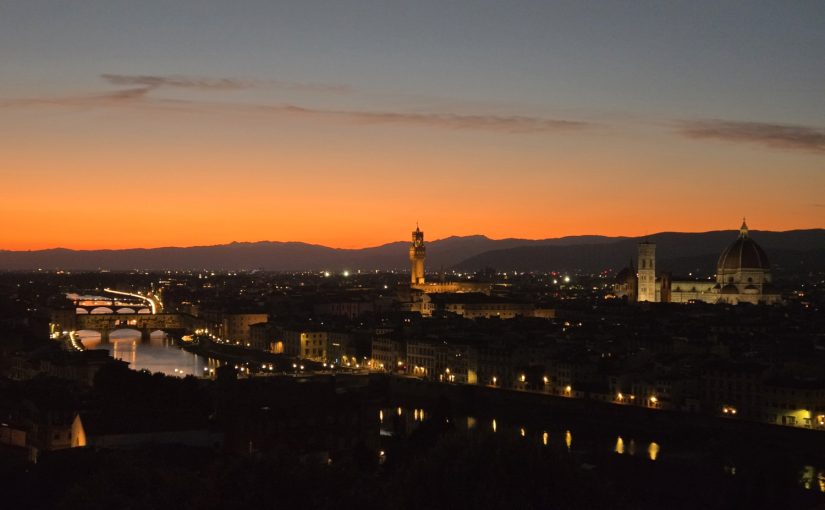
I remember my first week here attempting to make the trek up to Piazzale Michelangelo; A wonderful square with a beautiful look over the city. It was not the easiest hike. I remember having to stop and take breaks constantly. I drank nearly a gallon of water and I genuinely thought my body would give up on me. I decided to retake that journey during my final week in Florence, and not only did I not need any breaks, but I also found I was genuinely enjoying my journey up the hill!

A healthier lifestyle isn’t all that I found; the true magic of a walkable city isn’t the exercise, but it’s the hidden treasures you find along the way. Things you wouldn’t bat an eye at if you were driving in a car. Wandering aimlessly through the city quickly became a favorite pastime of mine. I didn’t know where I was going, but every day I would pick a new direction and set off. This led to some genuinely life-changing experiences.

During my first week, I found what I assumed was a small, unassuming bookstore. I honestly went in for the air conditioning; however, it turned out to be the legendary “Giunti Odeon,” a library and cinema, and what many locals have told me is one of their favorite places in the city. This quickly became one of my favorite spots to study, hang out, or just relax and watch a movie.

Then, one day while walking along the river, I stumbled upon “The Ultravox,” a truly unique outdoor event space that regularly hosts free concerts and offers a vast array of food options. I must admit, I fell in love.

One of my more memorable experiences was discovering “The Havana Club,” a small area on the river that the Cuban embassy officially recognizes for showcasing their culture in Florence. This is a place where I truly connected with the area and grew culturally. I remember walking up to the sand volleyball court quite nervous and sheepishly asking if I could join in, and before long, I had made a group of friends with local Florentines! They would eventually convince me to take to the dance floor, something I never considered, as I always thought that I had “two left feet.” I was so anxious, I thought I was going to throw up, but surrounded by people with positive attitudes and energy, I quickly found myself learning to Salsa dance. Who would have thought that I would learn to Salsa in Florence, of all places.

Of all the things I have done, if I hadn’t decided to just go on a walk, I would have never had these amazing experiences.

My walks have allowed me to truly appreciate the art and history of the city, which permeates it. My first time walking into Piazza della Signoria, I honestly was at a loss for words. Surrounded by breathtaking architecture, beyond lifelike statues, I have never experienced anything like that, and it will forever be a memory in my mind. Back home, I felt like I never took the time to “stop and smell the roses,” and appreciate the beauty surrounding me; however, in Florence, it is unavoidable.

My appreciation for Florence extends beyond the architecture, though. What truly makes Florence so special is the people who make up the city. Every day I see something new and special, from seeing artists freehand the Mona Lisa on the street with chalk, to guitars and accordions filling the streets with sound, to my first experience with Opera music on the front steps of the Duomo, the melodies of this city have filled my heart and soul.

My most spiritual moment came from walking down the street and discovering a small church on the street corner where I saw locals walking in and out of. I don’t usually consider myself a religious person, but something drew me to it, and I decided I needed to walk in and see the building for myself. It was quiet, it felt holy, but it also felt warm and welcoming. Before coming to Florence, I attended the funeral of a friend near and dear to me and was still struggling a bit with the loss, so I decided to do something I haven’t done in a very long time: I sat and I prayed. I talked to my friend who left too early, I spoke to my family who left this earth too early, and I sat and I prayed. This was a tremendously difficult moment for me, but I honestly felt a weight off my shoulders, and I felt a connection I hadn’t felt in a long time. I honestly felt like a changed person.

My time in Florence has taught me so much. At first, I thought getting more steps in would at best help me lose some weight and breathe a little deeper, but that couldn’t be further from the truth. It builds a sense of community and connection. I love running into my flatmates or classroom friends that I have made here, who may also just be aimlessly walking around, an experience that never happens back home. Trading my keys for a passport was a nerve-wrecking experience at first, but I now know it’s one of the most rewarding experiences of my life. It forced me to slow down, to pay attention, and engage in my new home. I’m not just living in Florence, I am discovering it one step at a time. This experience has changed my body, my heart, my mind, and my soul in the best way possible. I will forever be grateful for my experience here.

Travel Fatigue: The Day Trip For When You Need A Break From Day Trips

written by Hannah Johndrow for SPEL Public Relations

Because my study abroad term was only six weeks long, I packed in a lot of travel into such a short period of time. I didn’t know anybody else going abroad with me, so I didn’t plan any trips in advance as some other students do. I was initially worried that I wouldn’t be able to travel much on the weekends, or that I wouldn’t have anybody to go with. 

I got along very well with my roommates, so we established a sort of unspoken travel group among the three of us. We were bad at planning ahead, so almost every trip we took was booked at the very last second. While I’m not here to recommend following our lead in that respect, I did take the time to compile an itinerary for one of my favorite day trips that I took during my time here in Florence. The constant travel on the weekends most definitely catches up to you, so this is the perfect day trip for when you just need a break from traveling, but still want to explore Italy! 

Travel Tip 

First of all, a quick disclaimer before we get into the full story. I’d like to share some advice for traveling in Italy! When traveling by bus or train, it is really important to understand their ticket validation system. This was a major culture shock for me. In the U.S., I’ve always bought my bus and train tickets on my phone, then was good to go. In Italy, however, many tickets require validation. There is often a machine outside of the bus/train station, or it may be on the actual bus/train. 

It is extremely important that you validate your tickets, because they are not viewed as being valid tickets until they are officially validated (typically the machine will leave a stamp on your ticket with the time and date of validation). I learned this the hard way when I purchased a bus ticket but didn’t understand that I had to validate it. Within thirty seconds of getting on the bus, a ticket officer came up to me and asked to see the ticket, which he refused to accept as valid because I had not validated it. I was fined forty euro! So, beware of this important cultural difference. 

The Elsa River Park 

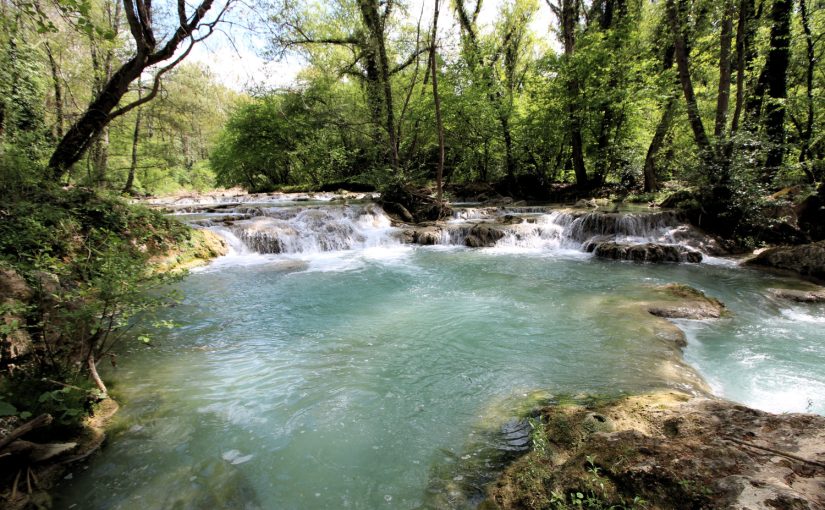
My favorite day trip was to the Elsa river, which is only an hour drive from Florence. The entrance to the river is called “Parco fluviale dell’Elsa o Sentier Elsa” on Apple Maps (which translates to “Elsa River Park”). While my friends and I drove there, there is a bus that takes you directly from Florence to the entrance of the park! I would suggest Google or Apple Maps to determine the quickest bus route. 

What to pack: 

● Swimsuit 

● Towel (to dry off, and to sit on) 

● Snacks 

● Water bottle 

● A camera (you’ll want to take pictures of the gorgeous turquoise water!) 

I’d recommend leaving earlier in the morning so that you can have the whole day ahead of you (this goes for any day trip). It’s nice to get there before the crowds too. Once you get to the entrance of the park, there is a trail alongside the river. It was crowded the day I went because it was so hot, but we walked down the trail until we found an open spot to sit! Just walk the trail until you find a good spot. It’s nice to get there around lunchtime so you can sit down, eat, and then relax by the water for the rest of the day. I spent the whole day here when I went. I’d just gotten back from a day trip the day before and felt like I needed a more relaxing day, but I didn’t want to sit around either. This trip was perfect because I was able to explore a new place, and relax. 

So, if you’re currently studying abroad at FUA, I hope you decide to explore this hidden gem! It’s the perfect escape from the Summer heat, and is off the beaten path of touristy spots.

15 Weeks in Italy: A Photojournal

written by Jack Wardynski for SPEL: Journalism

To commemorate my study abroad journey, I decided to use this final blog as a photo journal of some of my favorite spots and sights that I encountered during my 15 weeks here. Some are well-known, others are niche and minor, but they all left an impact on me and helped paint the picture of the country in my head that I will carry with me back to the States.

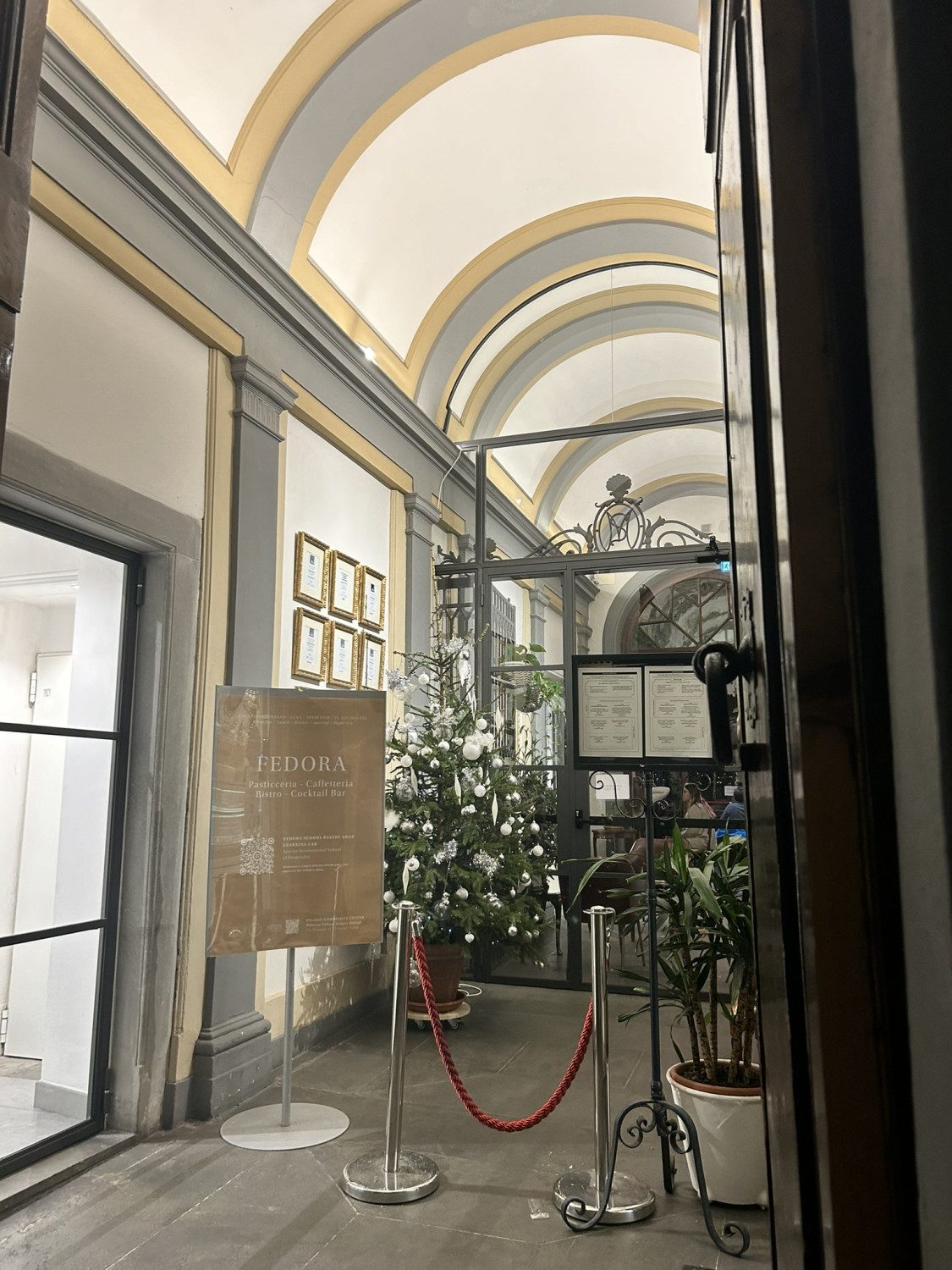
Fedora Pastry Shop (located at FUA & AUF’s Palazzi Community Center)

One of AUF & FUA’s own locations, Fedora Pastry Shop, located on Via Ricasoli, 21 became the staging ground of a daily ritual for me. The café was just a ten minute walk from my apartment, and most days I would make the short trek to grab myself a light breakfast. I tried to embrace the coffee culture while I was in Italy, and I came to enjoy starting my day with a pastry and a cappuccino. Also, it being a school meant that I would often see familiar faces from classes and events, solidifying itself as one of my most appreciated spots in the city.

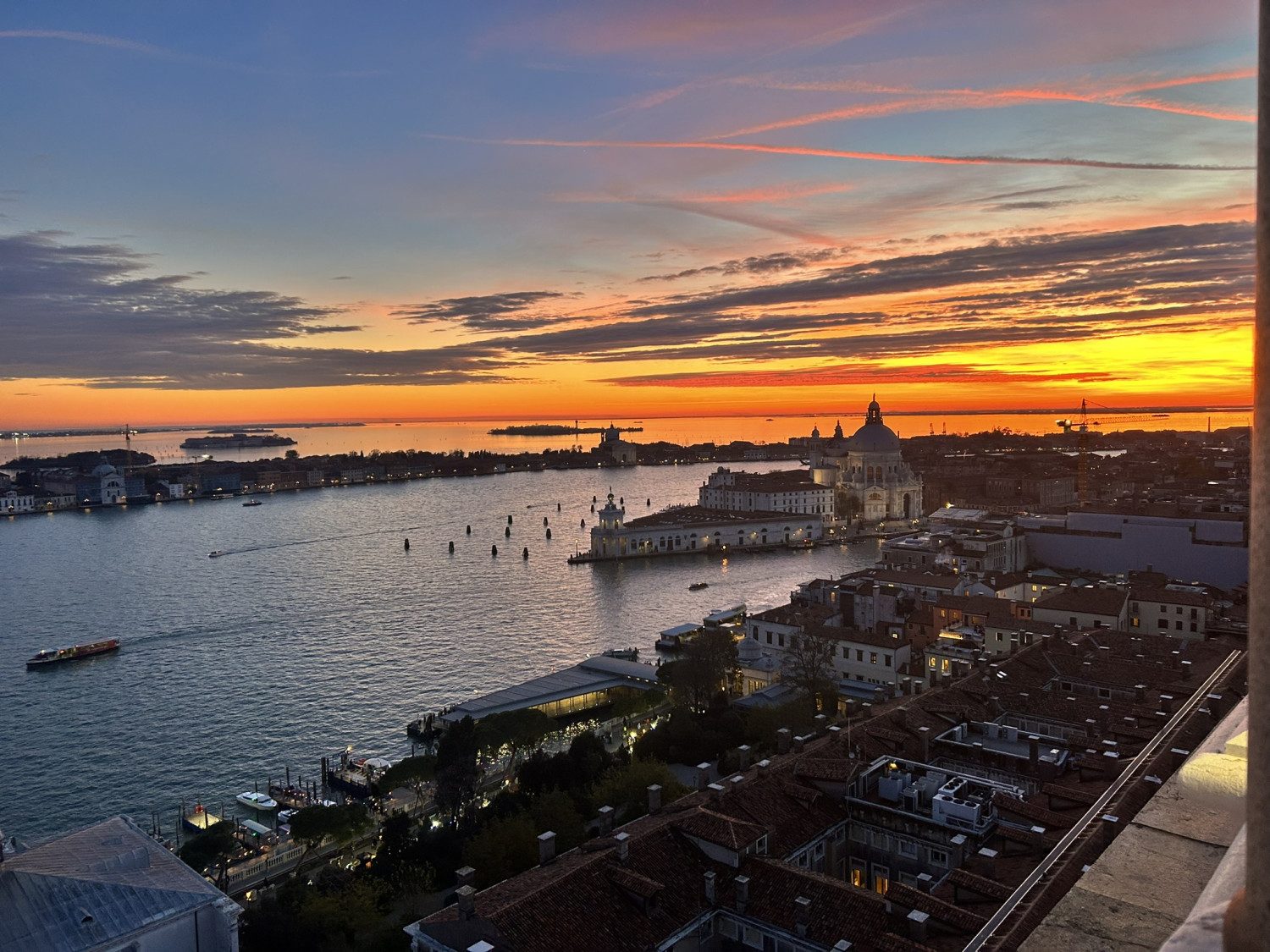
Piazza San Marco, Venice

Piazza San Marco in Venice is one of the more popular attractions in the floating city, and it was a common meeting place for my family while we were exploring. This shot is from the top of the Campanile di San Marco is one of the most beautiful I captured during my semester. The crisp autumn air blew into the top of the tower as we looked out across the city beneath us, and we spent time identifying landmarks on the skyline that stood out to us. Much of the joy of Venice is exploring the undercurrent of canals that snake through the city, but getting this bird’s eye view was incredible as well.

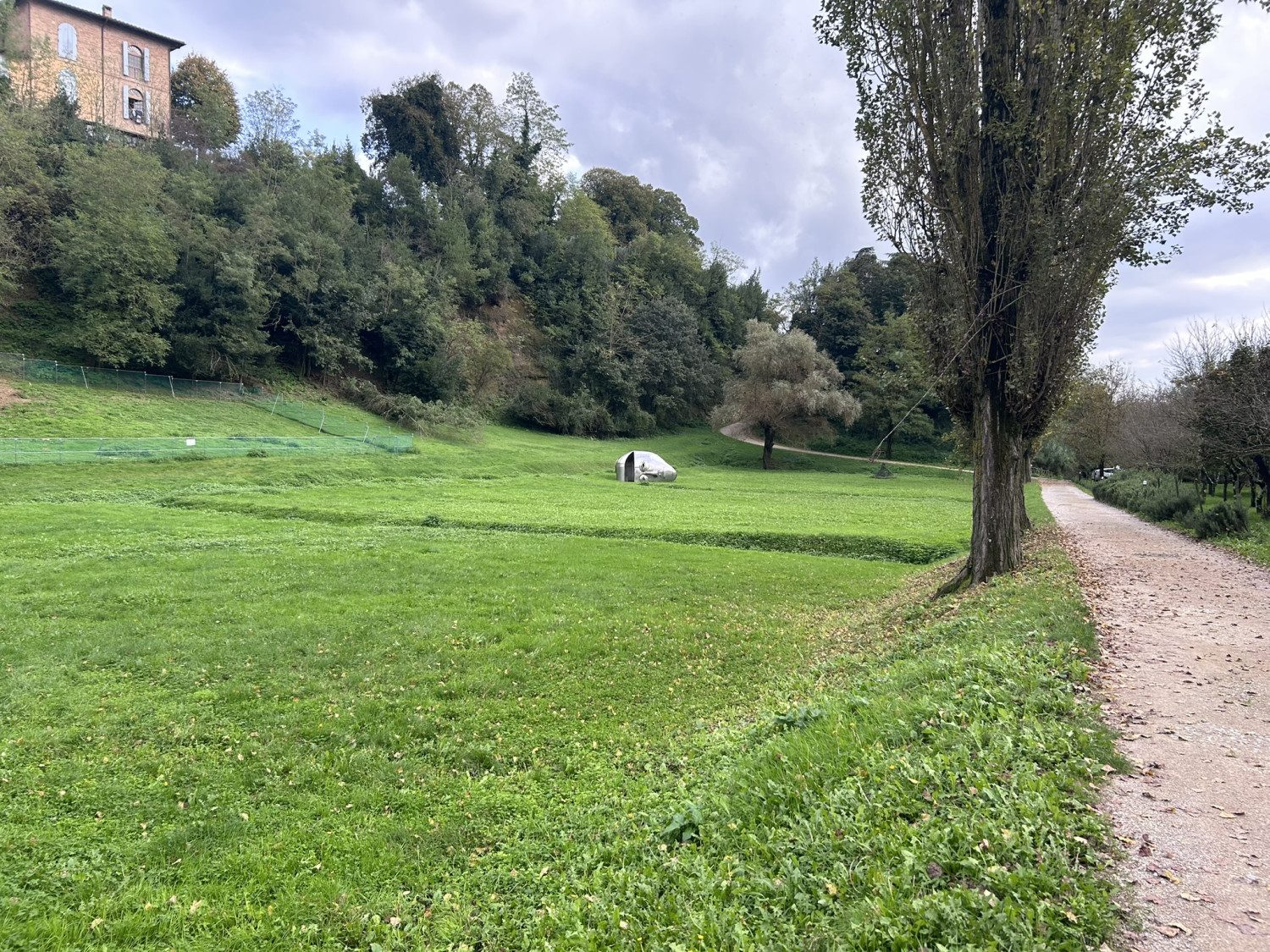
Siena, Italy

Siena was one of the most memorable places that I visited during this trip, and Orto dei Pecci was the piece of it that has stuck with me the most. This community garden near the outskirts of town featured an eclectic assortment of landmarks, from a herd of free-range goats wandering the treeline to this odd sculpture that was placed in the middle of an open field. Something about exiting the hustle and bustle of the town and entering into this strange green haven offered a welcome respite to a long day of traveling.

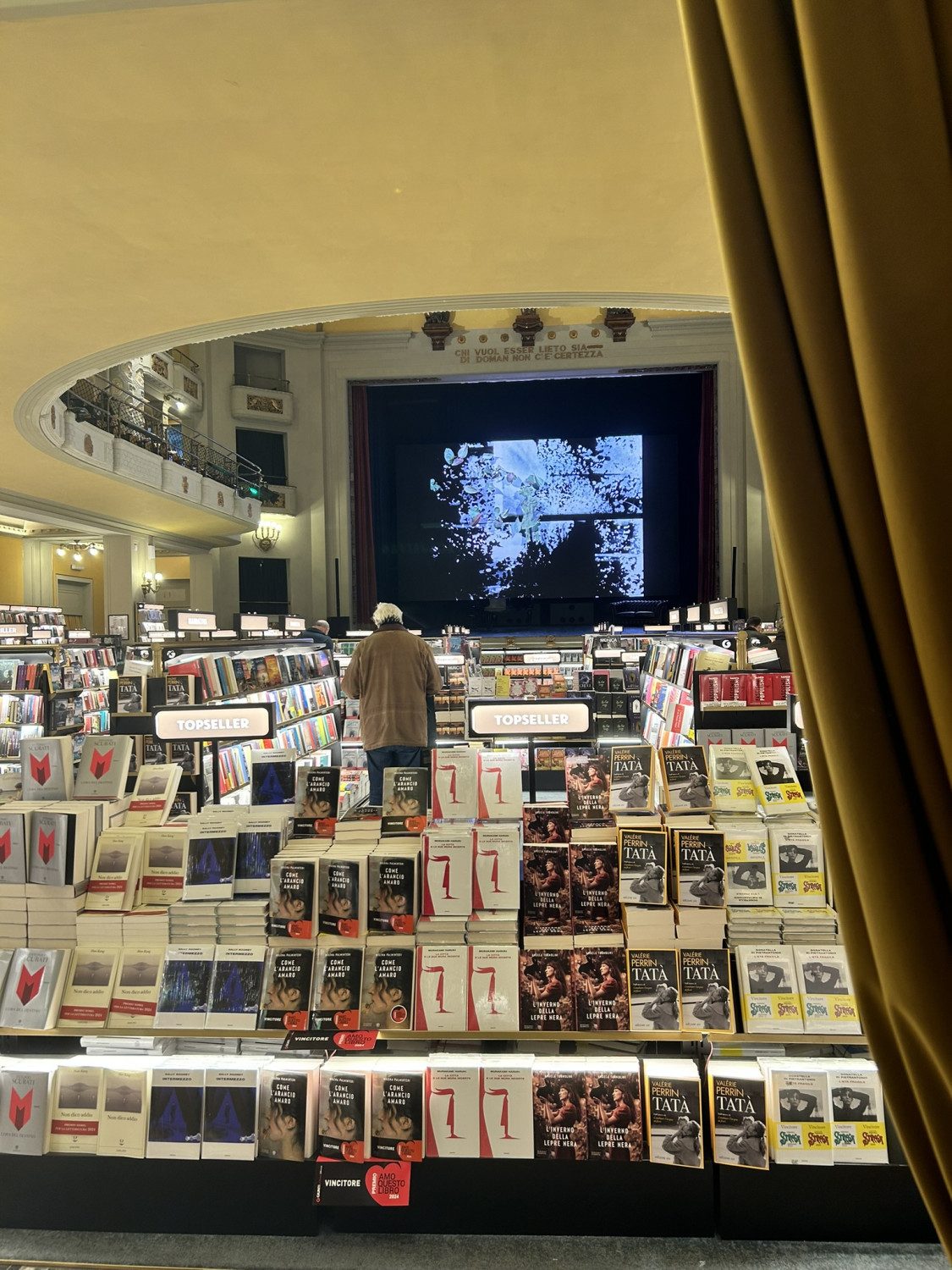
The Giunti Odeon Cinema, located in Florence, Italy

The Giunti Odeon Cinema became an unexpected, but welcome frequent hangout spot for me. After first hearing about it online, I checked it out during my first week in Florence and was drawn in by the unique atmosphere. By day, the place is a bookstore and study center that plays muted films in the background, and at night the store is closed so a movie can be screened like in a proper theater. Getting work done here was a common occurrence for me, and while it was often crowded, the free Wifi and general relaxed vibe made it one of my favorite destinations in the city.

Viareggio, Italy

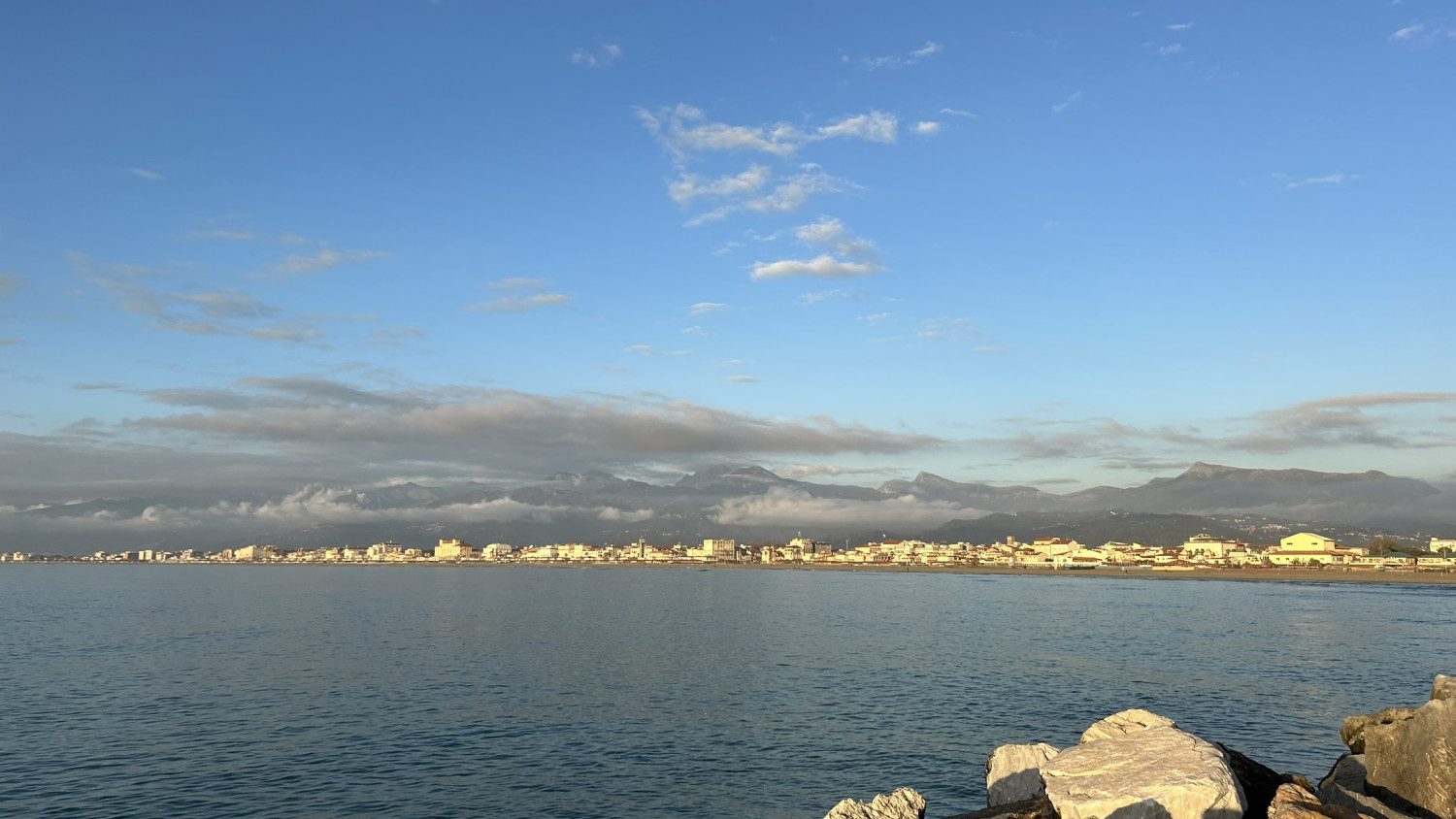
This shot of the seaside town, Viareggio is a particularly stunning one to my eye. This was another place that I visited when my family came to see me, and I initially wasn’t sure what the town had to offer. We ended up renting some bikes from a very kind old woman in the park and rode down the coastline, eventually arriving at the end of a pier. From there, you could see the whole town laid out in front of you, and the view with the cloudline and the mountains in the background was incredible. I will never forget this moment, and I am grateful I got to share it with my family who were experiencing Italy for the first time.

Gatto

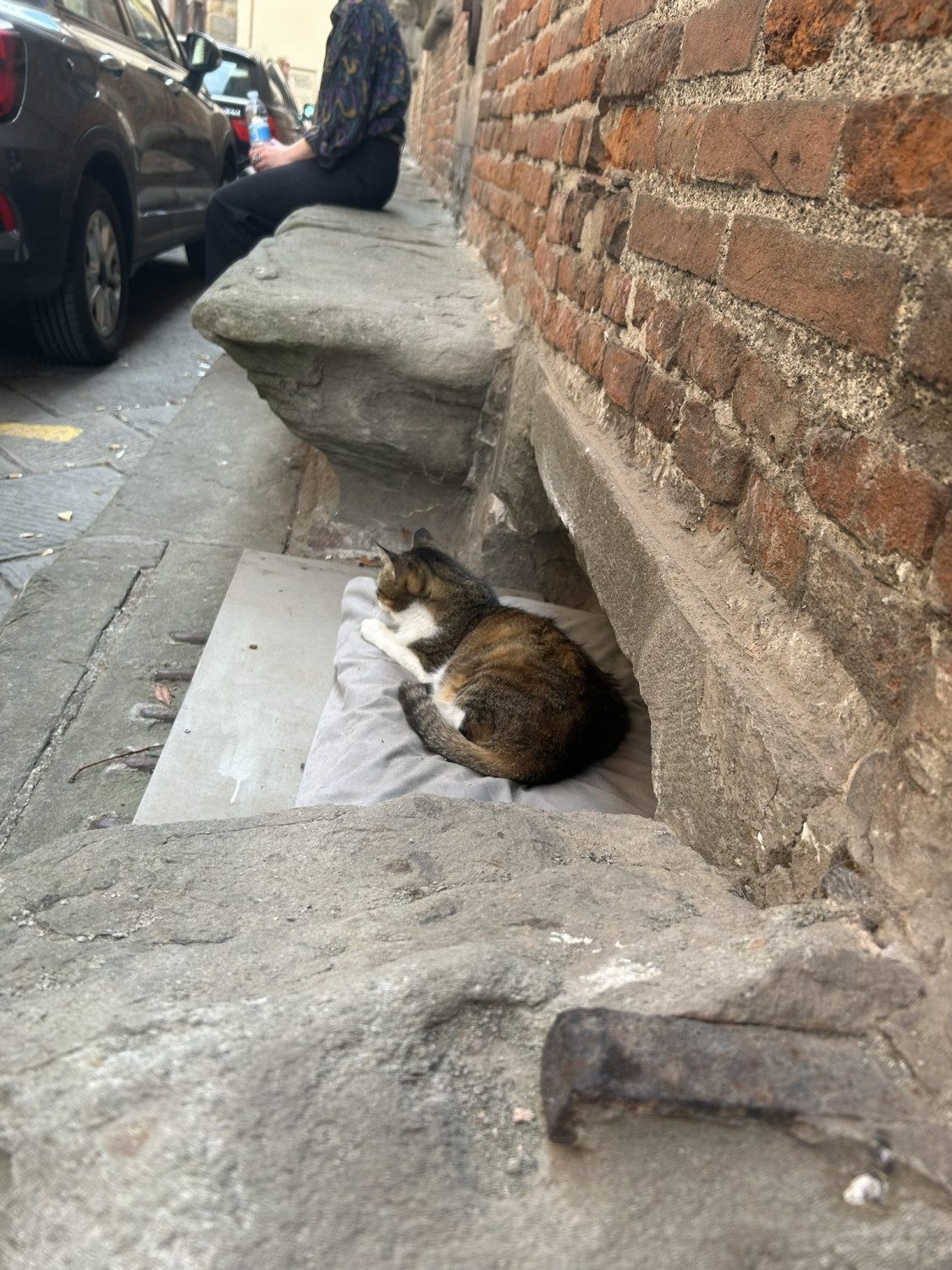
This cat was one of my favorite Italian denizens that I encountered during my stay. I ran into him on the streets of Lucca, the fascinating walled city just to the west of Florence. Lucca was the first place that I visited after arriving in Florence, and spending the day exploring really gave me the opportunity to slow down and relax for the first time since leaving the US. The journey over and the days leading up to it were so hectic, I often neglected the opportunity to take in the excitement of what I was doing. This cat, who seemed so comfortable in his environment, resting on pillows that lined the street like he owned the place, was a role model for me: take a second, chill out, and breathe.

Riomaggiore, Cinque Terre, Italy

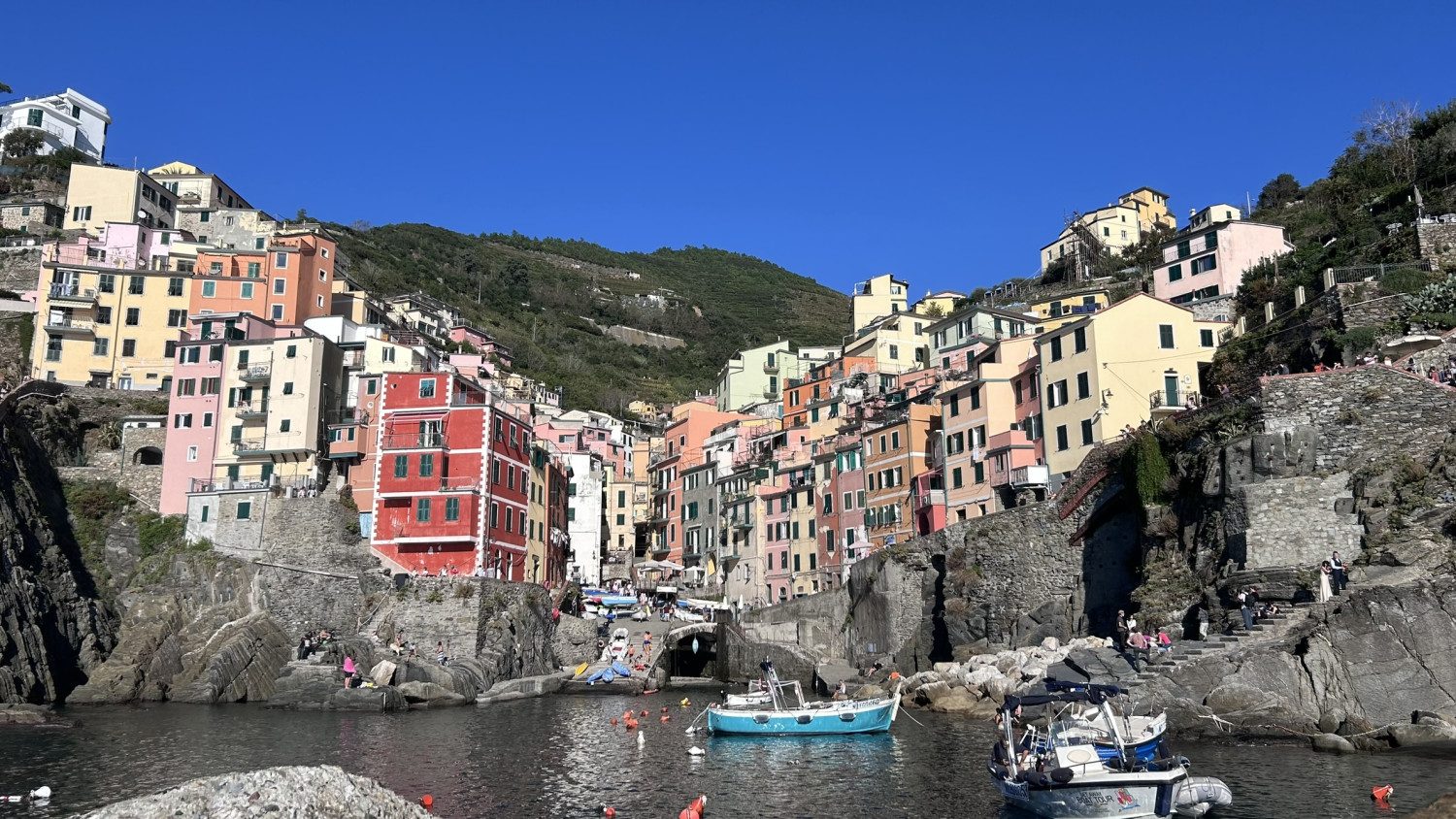
It goes without saying that Riomaggiore, and Cinque Terre as a whole, is one of the most distinctive places in the country. The vibrant, multi-colored houses were totally new to me, and the only other place that mimicked this style that I saw was the island of Burano in Venice. I had some delicious seafood in Riomaggiore, and then spent the rest of the afternoon exploring all of its little nooks and crannies. More than anything, I wanted to witness things while studying abroad that I may never see again, and that was certainly the case here, as no town back home can really mimic this.

Trastevere, Italy

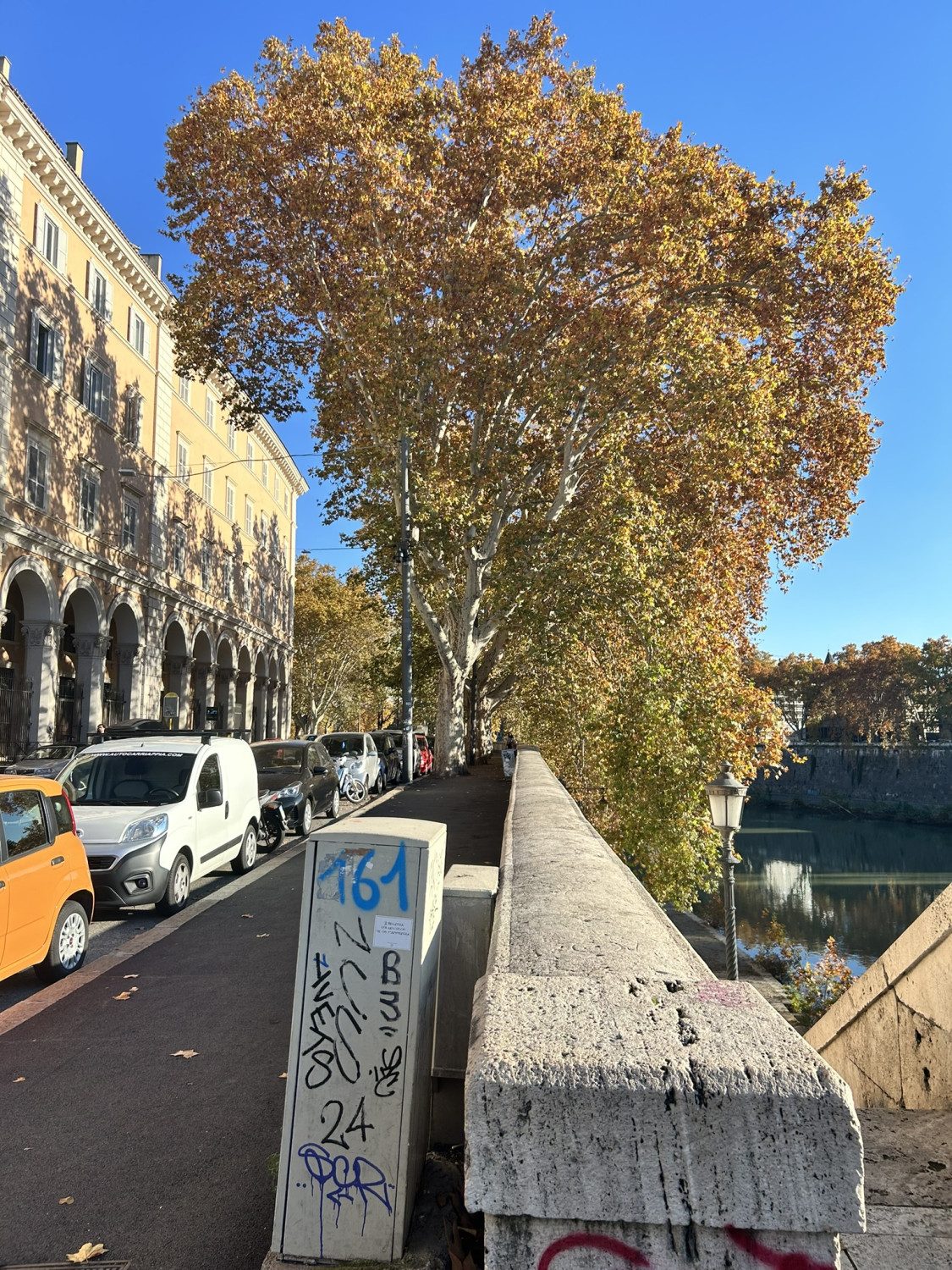
The days I spent in Rome were fascinating to me. It had such a different feel to it than anywhere else I went in Italy, and the mixture of ancient architecture with modern infrastructure and culture made for an irreplicable blend. For me, however, I was most pulled in by Trastevere, a generally low-energy neighborhood just outside the city center on the west side of the Tiber River. This was where I found the best restaurants in the city, and in general the more relaxed mood offered a soothing refresher from the hectic sights and sounds of the Eternal City. It lacked the iconic landmarks one typically associates with Rome, but I would recommend anyone traveling to the city to check it out.

Basilica di San Miniato

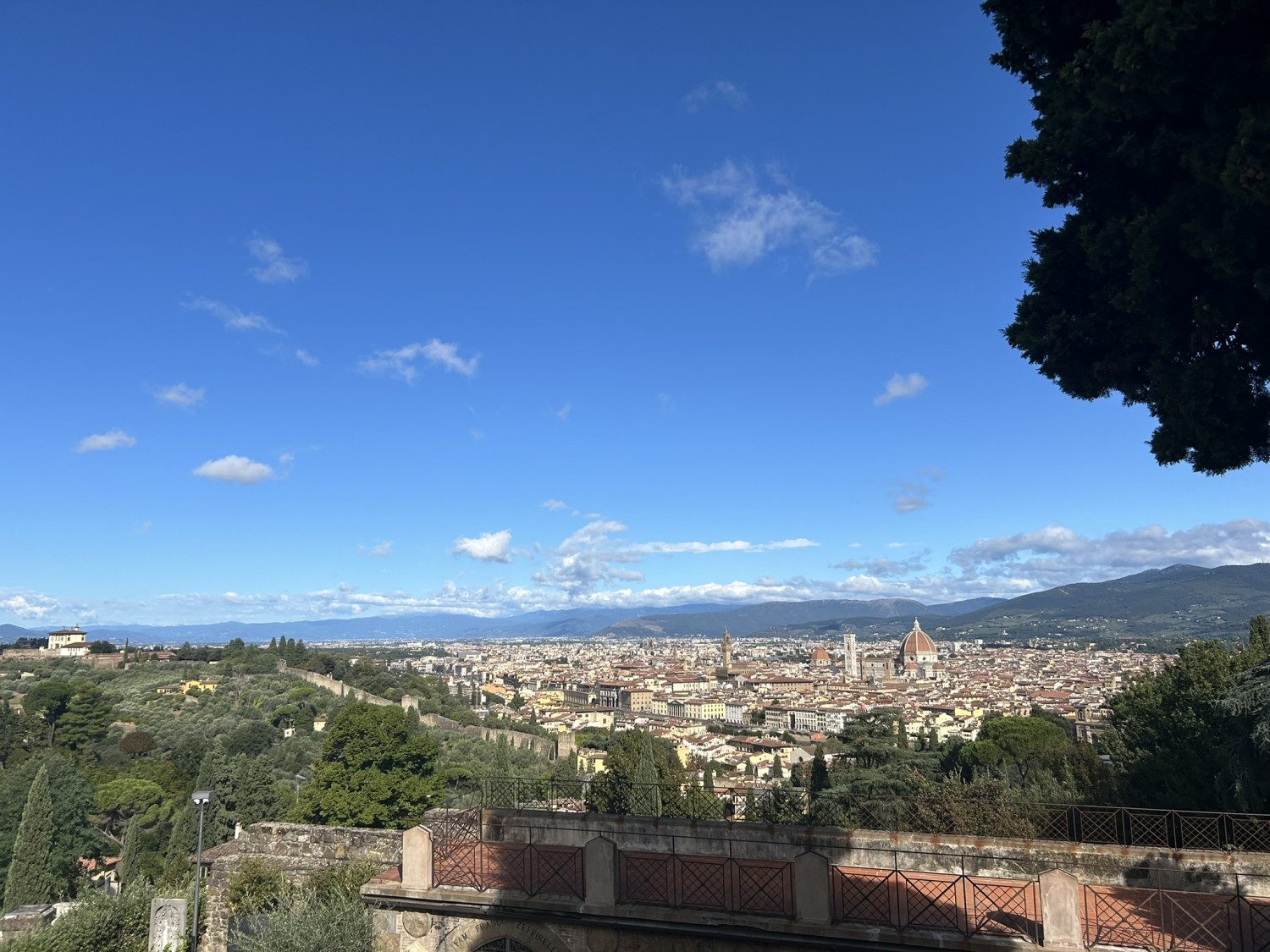
For my money, the best view of Florence can be found here at the Basilica di San Miniato. I discovered this spot during a walking class conducted by an FUA professor, and it instantly clicked in my mind as a place that I will remember for the rest of my life. Located just a short hike from the crowded Piazzale Michelangelo, the Basilica gives you such an incredible perspective on the city, and for me, going up there during my first month here was so valuable. When I think back on my time spent in Italy, the sights from outside this tranquil abbey will be one of the first things I picture in my mind’s eye.

Italy From the Lens of Media, and the View From Reality

written by Alex Daggett for SPEL: Journalism

Italy has become one of the most popular and sought after destinations for travelers in the past decade, and this tourism boom has been heavily contributed by depictions of Italy and Italian culture in American media. However, the way that this representation in popular movies, pop culture, and television shows has portrayed the country does not accurately reflect the current landscape and culture of Italy. After living and studying in Florence for the past 10 weeks, I have sought to examine the differences in expectations set by the media, and the reality of the country. 

One of the main reasons that I had such an affinity for Florence and Italy was the rich history, the art, and the culture that I have been studying and reading about for years. However, it is becoming more and more common for people to travel to Italy because of the images and ideas of the country that have been pushed out and popularized by American media. The issue of this is that these depictions are not accurate, and portray a romanticized version of the culture and country. Thus, leading to travelers who seek these unrealistic expectations being left with disappointment, and an unfair resentment for the true Italian culture. Some of the common tropes and ideas that I have seen being pushed come from very popular movies and television shows, such as the romanticized version of Northern Italy in the film, ‘Call Me by Your Name’. 

While many go to Italy expecting to see the same lush landscapes and sprawling villas that are portrayed in the feature film with Timothée Chalamet, they are confronted with the fact that Italy is not the perfect utopia that is depicted in the film, but rather a real living country, with a diverse and intricate community from all walks of life. This is not a bad thing at all, and part of what makes Italy so special to me, but to many who have watched this film, they are expecting reality to align with Hollywood. When they are inevitably confronted with the truth of the situation, they unfairly direct their anger at the country and the people who did nothing but get stereotyped by Hollywood. In my personal experiences, I have found some amazing small towns and beautiful surroundings, that are nothing like what is shown in movies, but are even more amazing than the cliche scenes in movies. Seeing actual vineyards, with real farmers, and to see real homes that you can tell people actually live in rather than just decorated like they are in magazines is so much more personally fulfilling to me, and I wish that was what was shown in these movies, rather than an idealized version of reality.  

The language barrier is also something that many tourists are not prepared for, as in films such as ‘Call Me by Your Name’ or the hit series ‘The Sopranos.’ In these forms of media, characters are portrayed as speaking mostly English with a vague ‘Italian’ accent, and that is the image that is seared into the brains of the viewers, setting them up for disappointment when they realize that most Italians speak their actual native tongue. That is part of the immersive experience, to try and learn someone else’s language, while you are in their country; it is selfish to expect the opposite. ‘The Sopranos’ also paints a scene of Italy where everyone is connected in some form to the Mafia, or organized crime, and this is also simply not the case. 

The problem also lies in expectations set by Italian-American culture, that many have internalized as just purely Italian. The most obvious example of this would be the differences in food, and dining culture. While many Americans think that the dishes of Spaghetti and Meatballs, thick and creamy Fettuccine Alfredo, and Chicken Parm, are dishes that they can find that are native and from Italian culture, they are actually creations from the blending of Italian immigrants and American culture, that only exist in the states, and are not actually from the country of Italy itself. This culture shock is often hard to adjust to for many travelers, and unfortunately many restaurants have started making these Italian-American dishes exclusively for travelers to eat because it is what they expect of Italy, causing many tourists to completely miss out on proper and authentic Italian cuisine. This is defeating the entire point of traveling. The failure to appreciate true Italian culture is heartbreaking to see, as I have found so many amazing dishes that I could never find in the United State. These dishes have actual history and roots from the country of origin, and are not portrayed nearly as often in American media. There is a large disconnect between what is portrayed in the media that is classified as ‘Italian’ and what you actually find in Italy, which is sad to see, because the real Italy is far more interesting than the version that is shown to Americans in the media. In order to appreciate the true beauty, one must set aside past baisers from media, and experience the culture authentically. 

Parts of You

written by Valerie Tiscareno for SPEL: Journalism

A bag, the clothes on my back, the shoes on my feet, that is all I need to leave — something you and I talked so heavily about. Our dreams of being nomads, going from here to there with no ties. Here I am, 6,191 miles away from home, walking the normally-crowded streets of Florence at 6 in the morning with nothing more than a side quest in mind to get outside of Florence. Meeting up with my friend Kyla at the C1 bus station to get to Fiesole, We waited, groggy and tired. 

I thought of you. 

How you left home and moved from place to place. When you were unsatisfied, you disappeared in the mountains, canyons, somewhere quieter. Here I am doing the same thing, moving from the coastal ocean of California to the grassroots of Missouri then the cobblestone streets of Italy. The excitement and struggles of moving somewhere new; a rush we both divinely understood.  

Florence has been nothing more but eye opening. Even so, I feel the need to leave to go somewhere quieter. So, Kyla and I hopped on the bus and left. Up to the windy, narrow roads away from Florence. With every stop, the roads got greener and the world got softer. Until we stopped and went off near the hill tops in Fiesole.

With no agenda, others had a mission to find coffee. We set off together. The town center was lonely, everything facing each other. It took us no more than about 500 feet to find coffee. We were happily greeted by the barista as we ordered two cappuccinos and two croissants. We sat outside and discussed our friendships and our lives, something so dear to the both of us.

And I thought of you again.

How much you deeply cared for every person you met. The smile you were able to put on someone’s face, even if it was the first time you met them. How you dropped everything for a friend in need. 

As we paid for our coffee, we walked around the sleepy town and sat still. We wandered up the hills and discovered a playground. One swing set, one slide, one rocking horse. I had never been so excited for something so simple. I ran to the swing and Kyla took the rocking horse. Giggling, swinging back and forth, I was no longer grieving my home, my family, my friends, or girlhood. I hopped off and traded Kyla for the rocking horse. Then, eager to see more, we ran off to the other side of town. 

Leaving Florence with Kyla was the only thing I needed. Kyla was the first person I met before coming to Italy. We took on the long 12 hour flight together, and she was a hidden treasure in my life that Italy brought to me. As we walked together, we saw hidden pieces of art scattered around the town. We walked up the stairs of a church and we were greeted by a butterfly — another hidden surprise. Butterflies for me have always meant that someone who has passed was visiting. Insert sentence-long association. Sitting on the ground, spreading its beautiful orange spotted wings to the sun, it was  the first time I had seen a butterfly in Tuscany.

And I thought of you again.

How I met you by chance. Out of all the colleges I got into, I chose Mizzou. Out of the thousands of people to meet that first week, I met your friends. By chance I bumped into them before they were to throw their first college party. How you were not  supposed to go, but decided to go about 30 minutes before they were leaving KC. 

For a second, in Tuscany, I got to see you again. Before I could say goodbye, you fluttered your wings and flew away. 

Ciao Italia!

By Michael Lovanne

A study abroad student reflects on overcoming challenges when facing a new culture such as the Italian one and what he has learned so far.

You’ve done it. You said arrivederci to friends and family, left the comforts of your university behind, and have settled into your new life in a different country. Now what? No matter what your expectations of this experience were, you are probably finding yourself a bit overwhelmed with the new sights, sounds, and of course the language of your new Italian environment. I found it a lot to take in myself; I’ve never visited, let alone lived in a place where I didn’t speak the native language, nor have I felt so personally attacked by pigeons or shared an alley with speeding cars and motorcyclists every day. I almost felt reduced to a child again, constantly confused and unsure of what to do and how to do it right. However, over this last week I’ve come to the realization that if this is where I chose to live for the next 3 months of my life, I might as well live it properly. I’ll admit my accent is terrible and I am nowhere near fluent, but it’s important to focus on small steps, i.e. making an effort to learn courtesy phrases like ciao, grazie, prego and buonasera. Thanks to these efforts, I have already felt more at home and comfortable with my surroundings. I’ve explored, purposefully gotten lost, tried new foods, and have fallen more in love with Florence and Italy after every passing day. So, my advice to you in your new home is to take your time, avoid tourist spots in favor of exploring the city for yourself, and most importantly, live how the locals do!

See more of Florence and Italy at FUA’s FB, Instagram, and Twitter.

Female Artists in Italy

Photo by Author

By Alyssa Schultz

Today Florence is full of creative women, but what about Florence of the past?

For centuries it has been male artists who have attracted the interest of art historians. Great collectors and museums have barely paid attention to the existence of talented female artists from periods such as the Italian Renaissance and Baroque period. Women like Artemisia Gentileschi and Plautilla Nelli are not as widely known as Michelangelo and Leonardo da Vinci. Even by doing a simple Google search, looking for Italian renaissance artists, not one top result is a female artist. This may also be due to the fact that women had to be self-taught. Female artists were not able to study at universities. They were also not allowed to study anatomy and it was illegal for them to sell their artwork. Now, times are starting to change. Over the last decade, more than 40 works of art by female artists have been restored to their original dignity and returned to the museum spotlight. This is because of the AWA: Advancing Women Artists Foundation. Florence is known for its excellence in the arts, and the female artists of the Renaissance paved the way for women in the arts today.

See more of Florence and Italy at FUA’s FB, Instagram, and Twitter.