Letting go of Plan A

What happens when you move to a walkable city for study abroad, then lose your ability to walk?

written by Laurel Swanz

It was supposed to be my fourth day of class. 

Instead, I was alone in the back of a taxi, going back to the hospital for the second time in two days. 

I sat, my head resting on the window and my right leg up on the seat next to me, pain reverberating in my knee with every bump the cab hit. In Florence, that’s every few seconds. 

I watched out the window as students, school bags on, cappuccinos in hand, walked to class. It was, ironically, raining outside, and even more ironically, the radio station seemed to be set to Depression.fm. 

“All by Myself” was genuinely playing as the tears started to fall. I let the misery sink in. 

All I could think was “why me?” Why does everyone else seem to be having a normal study abroad experience, or at least one closer to what they expected? 

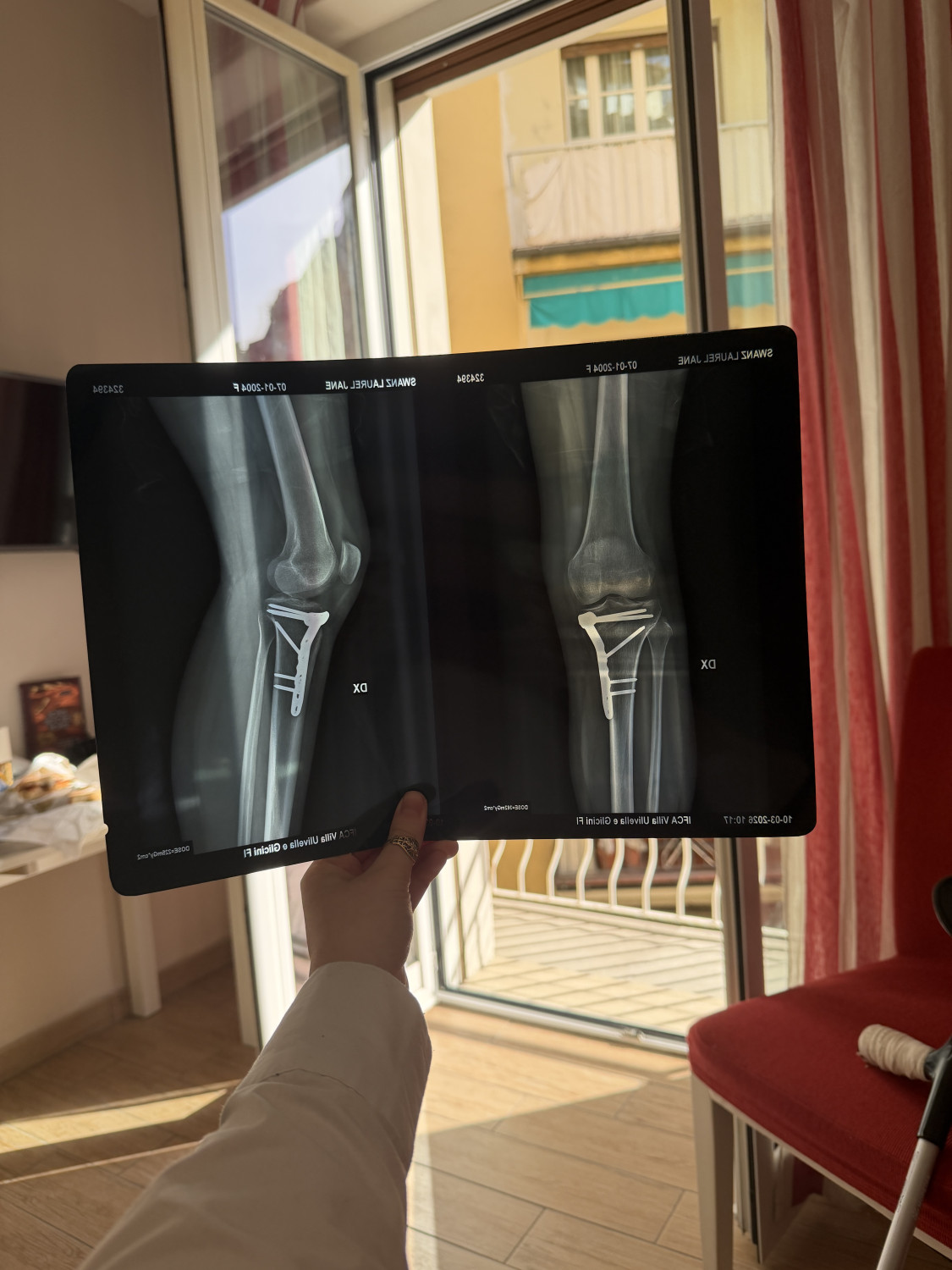
When I got to the hospital, I quickly learned I wouldn’t be leaving anytime soon. My leg was broken, a tibial plateau fracture. I’d be having surgery to ensure proper healing in three days and stay in the hospital for a week after that.

It was unclear exactly how long recovery would take, but certain I would not walk for at least 2 months without crutches. 

It had happened a few days prior on a Saturday night, January 31. My very first night out with friends turned into a nightmare before I even realized I’d fallen down. 

My best friend McCall and I were running to catch up with our friends when we came across Santa Maria Novella, which has patches of grass in front of it, surrounded by low wire fences. I saw the little fence and didn’t think twice about jumping over it as I ran — it was less than a foot tall and I was certain I’d clear it.

What I didn’t anticipate was the uneven terrain on the other side. McCall and I went down, one right after the other. The full force of my jump and weight of my body pummeled into my right knee. I tried to stand and felt excruciating pain, buckling to the ground.

I sat and stared in disbelief at the Grand Hotel Minerva in front of me, the beautiful historic church to my right. I heard someone approach McCall to help her up, but my mind was floating off to some place faraway, trying to escape the reality of what had happened.

“That guy just took my phone!” McCall yelled, panicked. That snapped me out of it.

Feigning concern for our well-being, a stranger had pulled McCall off the ground by her forearm, taking her phone with him in one swift motion before disappearing into the night. She raced after him as quickly as she could on a sprained ankle, but he was gone.

We called her parents from my phone, and they helped us calm down and get a taxi home, where what was once a minor inconvenience became my sworn enemy: the 4 flights of stairs to our apartment. 

Heroically, like a mother lifting a car off her child with pure adrenaline, McCall cradled me in her arms and marched us up the steps.

All I could do was ask, “What did I do?” again and again the whole way up. 

I was devastated. Everything I’d wanted from this experience – independence, discovery, adventure – felt completely out of reach, stolen from me in an instant. 

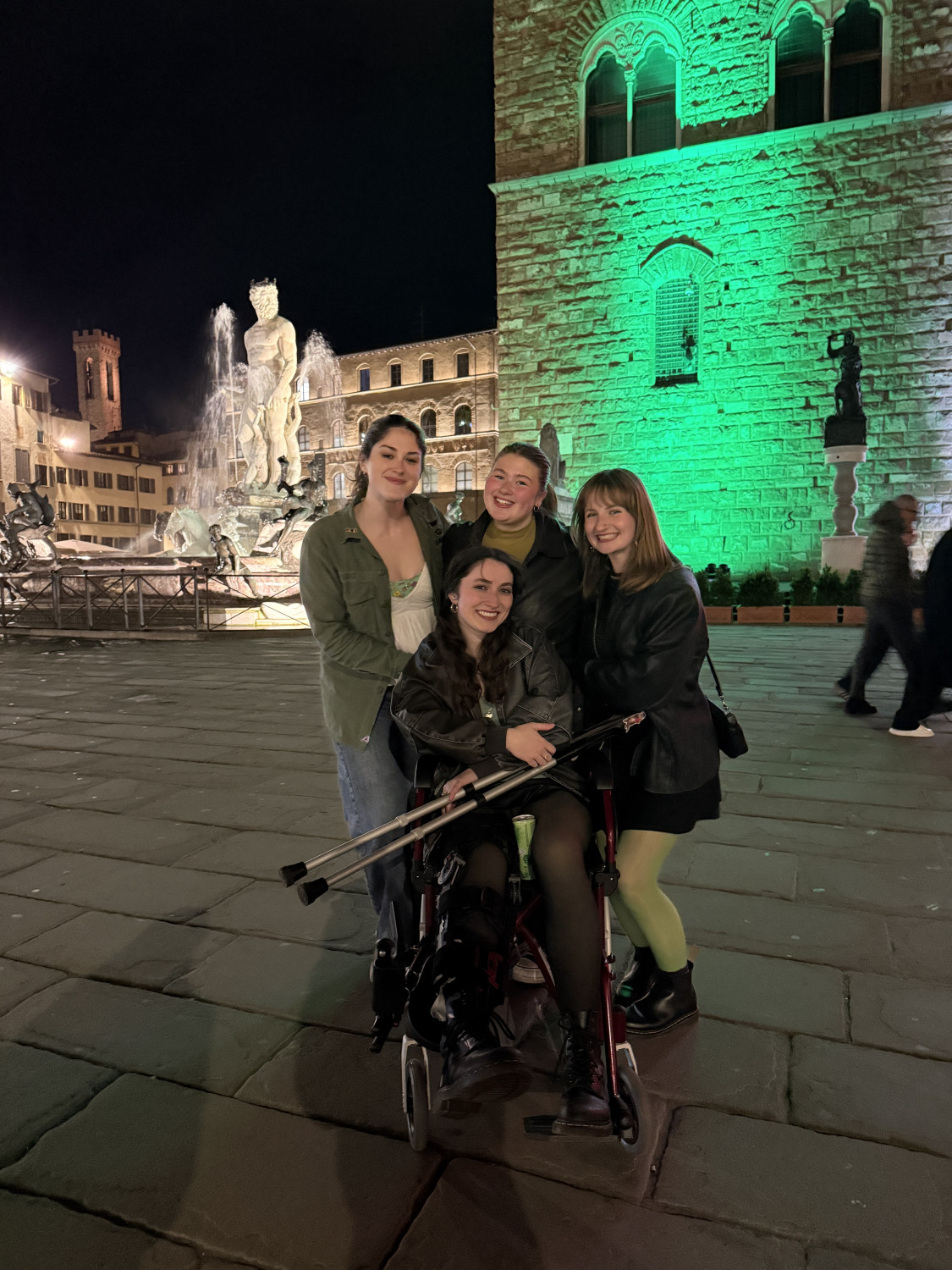
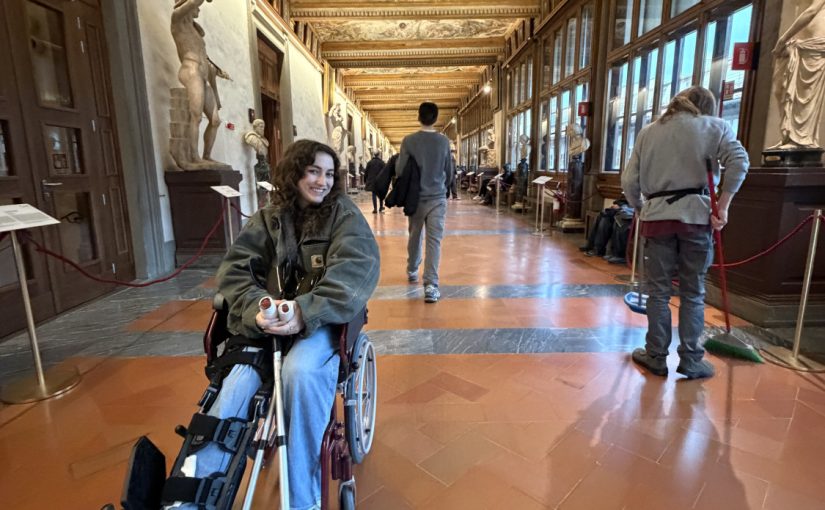
And for about two weeks, I let my devastation consume me. I was a shell of myself, in near-constant pain, envious of my peers to the point of resentment. Hearing them talk about their weekend trips across Europe in class when I had been pushed there in a wheelchair by my mom was beyond frustrating – it was downright isolating. 

“Props to you, I would have just gone home,” they’d say, intended as a testament to my strength. I didn’t feel strong.

“Easy for you to say,” I’d think. “I’ll never have a chance like this again, and now it’s ruined.”

I searched for meaning. Did I do something to deserve this? I’d worked so hard to make studying abroad a reality for myself, working multiple jobs and applying for scholarships.

I’d looked forward to it for a whole year, letting the prospect of having the time of my life in Italy bring me comfort during some of the most stressful months of my life, expecting it to change everything.

Well, it did…just not in the way I wanted it to.

If I’ve learned anything from this experience, it’s that life doesn’t usually give you what you want how you want it, especially if what you’re asking for is growth. Because growth isn’t comfortable. 

I wanted to come to Italy and get closer to my truest self, and was met with the painful reality that it wouldn’t come easily.

Now, writing this on the train back to Florence from a 5-day solo trip, a week from the end of my program, I’m still pissed that I broke my leg. But I also got exactly what I wanted. I am closer to my truest self, because I learned how to separate feeling like myself from the presence of joy and sit with what just was even when it felt so unfair.

There was no cosmic reason for it to happen. It just did. Sometimes bad things just happen and it’s up to you to make meaning out of it, or as the corny shirt my aunt bought me from the souvenir shop says, “make limoncello” from the lemons. 

I had to find gratitude when I felt cursed, happiness when I felt hapless, the strength to get out of bed when I couldn’t stand on both feet, and self-assurance when I couldn’t get anywhere without someone else’s help. 

Not to mention an apartment crutching distance from school with an elevator in a city that hasn’t been upgraded since basically the Renaissance…

And I did it all. I still got to see more of the world at 22 than most people do by 50.

With the help of therapy, physical therapy, family who’d cross oceans to help me, friends who’d pick me up from my apartment to push me to class, and really good travel health insurance, everything started looking up.

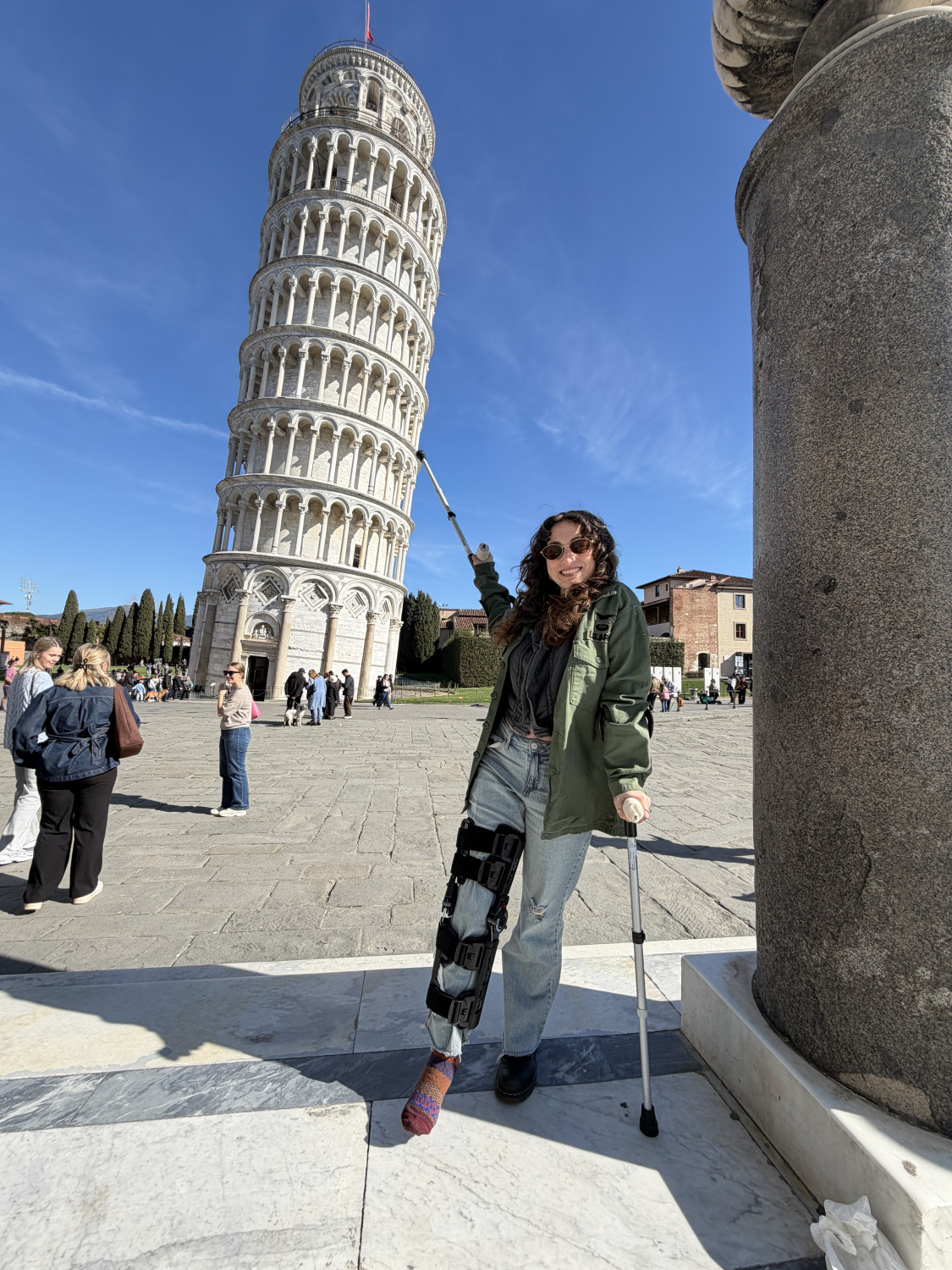
Exactly two months after my surgery, I was able to put full weight back on my leg. I still had a month and a week left abroad, and I booked a trip for every remaining spare minute. And every trip I’ve gone on, you best believe I’ve appreciated every second more deeply than I ever could have if this hadn’t happened. I will never take my mobility for granted again.

Most importantly, I won’t take the people who love me for granted. Even when I was cranky and crying, when I could barely talk about anything other than how upset I was, they showed up for me. They made me laugh and picked me up off the ground (even literally, shoutout McCall). They helped me remember who I am. 

Never again will I view needing help as a weakness. I had a hard time with it at first, especially the wheelchair. I don’t like being pitied or feeling out of control. I really don’t like feeling dependent on others. Now I’ve come to understand that’s what community is for. We’re not supposed to do it all on our own. 

Accepting help doesn’t equate to relinquishing independence. In this case, it allowed me to keep it. Because my family and friends were there to help me get around, get groceries, take my trash out and clean my apartment, I didn’t have to go home. 

I got to go to Ischia this weekend, climb to the top of a medieval castle (as in, stairs!) and look out at the sun setting over the sea, knowing that I didn’t lie down and die along with my expectations when my leg broke three months ago. So, when life places more metaphorical low-wire fences and uneven ground in my path, I know I’ll be okay even if I trip.

“You know what you do when Plan A doesn’t work out?” my therapist asked me on a Zoom call taken from my hospital bed on the day I was admitted.  “You kick the sh*t out of Plan B.”
English Education in Firenze

written by William Norris

Never in my life would I have expected to be living in Florence, Italy at 20 years old. Let alone, have the opportunity to teach Italian to elementary school students. When arriving in Florence, I didn’t know what I was getting into, and honestly, I was extremely nervous about my decision to live overseas. I was lucky enough to be presented with the volunteer opportunity to teach English to local Italian students.

At first, I was reluctant to apply for the position, and honestly, I waited until the last day of the deadline to even submit the application. I felt this sudden urge to give back to this amazing city. I was offered the position, and I ran with it.

When the first day of class arrived, I was filled with excitement mixed with nerves. It was an interesting feeling. I had to meet the program representative and my teaching partner, both of whom I had never met before, and I was running late due to a mistimed 30-minute walk.

Upon meeting them, we rushed to the tram because we were already running late, and they gave us a rundown of the lesson we had prepared and what to expect throughout the semester. The tram stop was deeper in the city, which I would describe the area as a more casual, local way of life; it was a time away from the touristy chaos that occurs in the city center. Seeing this way of life put me at ease.

When we first arrived at the school, I started to feel nostalgic, remembering my days back in elementary school and how happy I was. The first thing I noticed was that the school had a mini soccer field right out front. Something you’d rarely see in America, or any school I was accustomed to.

As we figured out how to sign in, we quickly realized the front desk worker didn’t speak English, further reinforcing the fact that we were fully integrated into the local community. Once we finally signed in, we walked up to the classroom we were assigned, and the nerves began to fully set in, simply because I had never done this before.

As we got let in, I quickly realized how excited these kids were, and it immediately filled me with joy, eliminating my nerves. I realized that these students were amazed that I was from a country that many of them had never been to. I reminisced about being in elementary school and how cool I would’ve thought it was if someone from another country came to teach me their language.

We began the lesson by introducing ourselves to the students, sharing our names and places of origin, which immediately prompted a discussion. This simple introduction caused them to fire away with questions about our favorite food, songs, and sports, lasting almost the entire class.

I was shocked at how good their English was at such a young age. They were at the same level of English as I was when I was taking Spanish in college.

This got me thinking. America’s school system has a lot of flaws, but one particular aspect is that we should have a language class at a young age. Seeing how many languages European citizens speak seems to be attributed to how young they were when they started learning.

When I walked out of the school, I felt fulfilled. Going into this, I didn’t know if I would enjoy it, but when I was outside of that school, and all the stress and anxiety had finally left my system, I couldn’t wait for next week’s class.

I firmly believe that one of the best ways to start your day is to make someone happy. This volunteer experience has not only taught me so much about Italian culture, but also about myself. Broadening your experiences and helping others out is crucial for a fulfilling life, and this experience in Florence only reinforced this sentiment further.

Across the River

written by Jack Eckhart

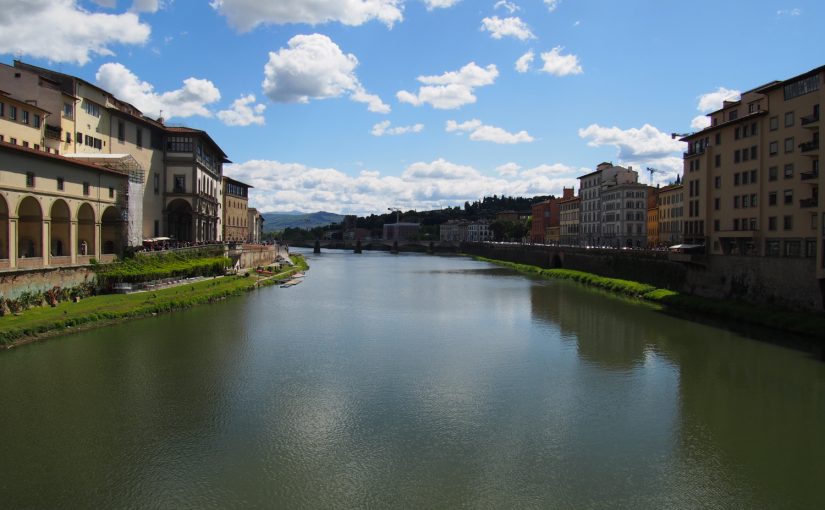
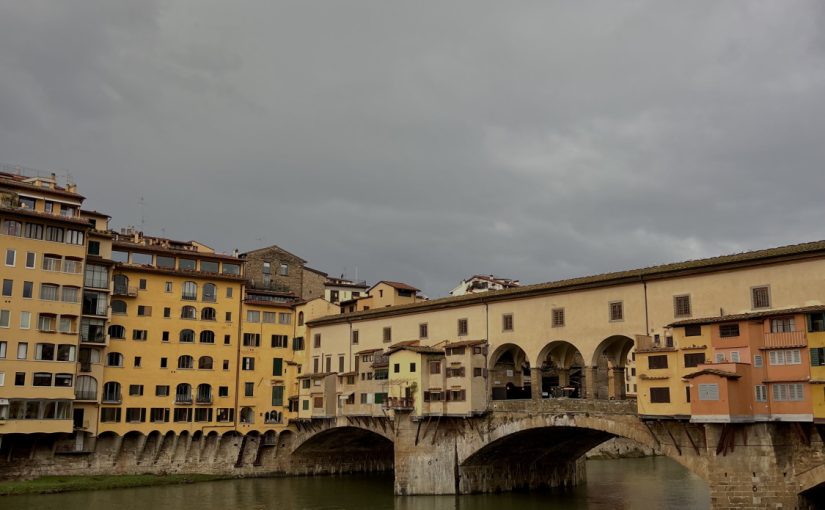
We wade across the crowded Ponte Vecchio, trying to stay out of tourists’ photographs and dodge street vendors hawking odd toys. Finally crossing, the crowd slowly fades as we venture up a steep hill toward Piazzale Michelangelo. Each step we take provides reprieve from the fast-paced Florence I spend most of my days. 

As I continue climbing, nature begins to emerge quietly reasserting its dominance on the land it once controlled. Soggy leaves cover a winding cobblestone road. On each side of the street walls provide homes an additional layer of security from the city. Muffled thumps echo down the road out of my Onitsuka Tigers as I get more lost in the hills. With no end in sight I keep moving forward allowing the road to control my fate. 

Eventually the soft hum of cars slowly became less and less faint, as I’m dumped out of my peaceful sanctuary onto a busy road. Following the cars deeper into the hills, I throw my headphones in, drowning out the noise. 

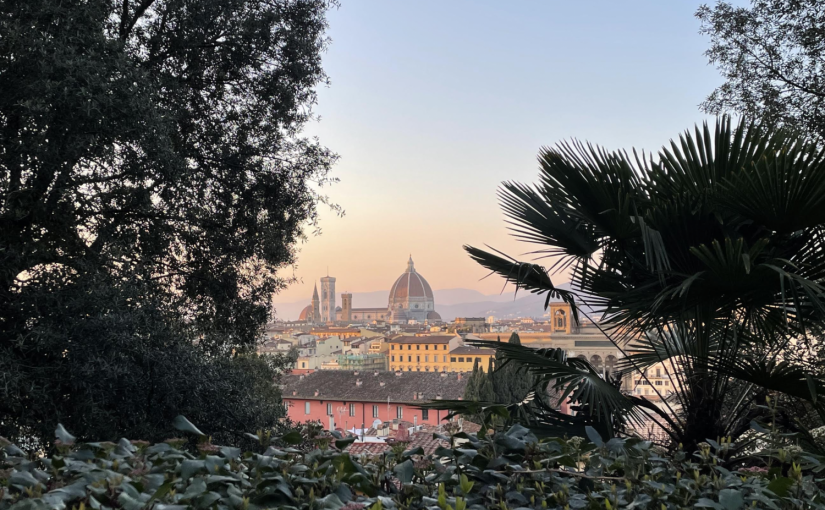
Looking out I can see fragments of the city around tree branches and in between homes, never seeing the entire city. Each glimpse reminds me of the overwhelming beauty possessed by the city. 

When I finally reach a small overlook with nothing marked, nothing out of the ordinary, I stop. Below me, Florence splinters into terracotta rooftops and thin smoke rises from chimneys, the Arno a silver ribbon threading everything together. It isn’t the grand view tourists climb for, but it feels earned, like a secret the city didn’t mind giving up today.

I stand there longer than I planned, letting the wind tug at my jacket, and the city settle into its tiny compartments below. And as I turn back toward the road, toward the descent I know is coming, I realize this is the part of Florence I’m always searching for: the quiet in-between, the spaces where the city finally lets me breathe.

You Don’t Just Study Abroad…You Study Yourself Too

Discover the three transformative life lessons that I learned during my six-week study abroad experience at Florence University of the Arts that I would not have been able to comprehend if I had stayed home this summer.

When I boarded the plane to Florence, Italy, for a six-week study abroad experience with Florence University of the Arts (FUA), I knew I was going to grow academically and professionally. I enrolled in a three-week course and worked a public relations internship covering diverse community events, conducting research, and collaborating with interns from various departments.

But as much as I learned in classrooms and internship meetings, some of the most valuable lessons came from simply assessing myself and my surroundings while living abroad. Here are are the three main insights I gained in Florence that no textbook could teach:

1. Discomfort is a Great Teacher

Moving across the globe from my familiar Michigan environment was the first jolt of discomfort. I was no longer just a few hours from home like I am for college, instead an entire ocean! That kind of distance forces a newfound level of independence. Whether it becomes overwhelming or empowering is up to you.

There were emotional hurdles, like the occasional hits of homesickness. And then there were the practical challenges, such as navigating a foreign metro system when my international phone plan suddenly stopped working, or trying to communicate professionally at public events where most attendees spoke only Italian. Getting lost, whether physically or in conversations, became something I eventually grew more comfortable with. That said, safety always comes first and keeping your guard up where it’s due is essential. No adventure is worth compromising your instincts or well-being.

Every time I stepped outside of my comfort zone within reason, not once did I regret pushing through the fear. Because if you’re always comfortable, you’re probably not going to grow in the long run.

2. Everyone You Meet Carries a Story Worth Hearing, Including You

During my stay in Florence, I shared a multi-room apartment with eleven roommates from across the U.S. and Australia. We came from all different walks of life…a few older than me, others navigating their very first trip abroad alone. Our most valuable times spent together weren’t always the last-minute weekend trips or shared meals, but the simple conversations where we opened up and shared pieces of our individual stories. There were times when I realized how much of my own life I’ve taken for granted, or received advice from a unique perspective I have not heard previously.

However, one of the most unexpected and memorable interactions happened when I was completely alone.

After finishing a long day working a community event, I treated myself to dinner at Sgrano, a fully gluten-free restaurant in the city. I sat at a table for one and ordered a sandwich followed by a slice of gluten-free chocolate cake. As I was enjoying my dessert, I suddenly heard a voice from the table next to me say, “You know, chocolate cake isn’t really eaten at this hour.”

I looked over and laughed, lightheartedly replying, “Oh well, I guess it’s exposed I’m a tourist.”

To my surprise, my response opened the door to a long, meaningful conversation with the couple seated beside me. What started as small talk of where we’re from turned into an hour-long discussion about life. They shared how they met, talked about their children (who were around my age), their constant travels, hobbies, and asked about my studies and experience abroad. 

Before we left, they unexpectedly paid for my entire meal and said, “Thank you. This felt like we were talking to our kids again.”

While studying abroad, you quickly learn that people will respond to you in all kinds of ways. Some welcome you with open arms, some are simply curious, and others may not understand you right away. Whether it’s a five-minute chat with a roommate in passing or a shared meal with strangers who feel like a touch of family by the end, every interaction holds the potential to teach you something. If you listen more and assume less, you’ll find stories worth hearing; and you’ll begin to recognize that your own story is worth sharing, too.

3. Gratitude Deepens With Distance

Perhaps the most profound lesson of all: travel is a privilege and I do not take that lightly. Not everyone gets the opportunity to live in a foreign country, to immerse themselves in a new culture, or to step outside their familiar world long enough to see it differently. That constant awareness has grounded me throughout the whole experience.

It’s funny how being far away can actually bring you closer to what matters most. With every breathtaking view and every delicious meal, there was also a small part of me that was growing a deeper appreciation for home. The gift of distance doesn’t just create space, it creates clarity too.

This experience also gave me a new appreciation for myself. I’m proud of the courage it took to get on that plane, to navigate unfamiliar places, to build friendships with strangers, and to stay open to every lesson. The version of me who returns home is definitely not the same as the one who left. And that’s something I’ll be forever grateful for.

Recently, I stumbled upon a writing assignment from my senior year of high school, where I had to create a bucket list of dreams to accomplish over the next ten years. On that list were the names of European countries scribbled more as wishes than actual plans. At the time, the thought of visiting these places felt distant, like fantasies reserved for “someday.”

Now, having lived those dreams, It has reminded me that what once felt out of reach can become reality when you stay open, curious, and brave enough to say yes.

So here’s what I’ve learned: always show up. And never forget to look up; whether at the architecture, the people, the unfamiliar streets, and everything in between. Life has an interesting way of leading you exactly where you’re meant to go.

In a Galaxy Far, Far Away: My First Two Weeks Abroad

written by Charlotte Cicero for SPEL: Journalism

Ciao a tutti, my name is Charlotte Cicero. I’m a junior at the University of Missouri in Columbia, Missouri, and am studying abroad at Florence University of the Arts (FUA) this semester. I’m a Broadcast Journalism major with a minor in Hospitality Management, and this semester, I’ll be writing for this website you’re currently reading, as well as the Blending Magazine. 

I’ve lived in Florence for a little over two weeks now. The adjustment has not been easy, and I think I’m still shocked that I’m finally living this dream that has just felt like some faraway plan for many, many years. 

When I was only 16 years old, I set a plan in motion to study abroad during the spring semester of my junior year. I was sitting in 10th grade English class with my friend Zoe, who said she wanted to go to Spain. We’re 21 now, and I’m going to visit her in Spain in a few weeks. I said I wasn’t sure where I wanted to go yet. After all, I had 4 years… 4 years that flew by incredibly fast.

When I was applying to colleges, I wanted an experience that was going to feel brand new. Living in California my whole life, Missouri was nothing short of new. I didn’t totally notice it at first, but people live differently in Missouri than in California. Life moves at a different pace, driven by different forces and values.

This transition to Florence, however, feels nothing like my transition to college. I’m still trying to decide if that’s a good thing, and I’m hoping it is. I feel these changes in a much different way from how everything felt when I got to Missouri. This transition feels almost unreal, like I am still in the process of, well, processing. 

I walk the same streets every day. I can get to the store, the city center, and all my classes without Google Maps. I feel lucky that these streets feel so safe and familiar, but sadly, not like home. Not yet, at least. 

I get this sense that many people see studying abroad as this competition – to see as many places as possible, take as many weekend trips as you can, and always be going somewhere other than your host city. Yes, realistically speaking, you are spending the majority of your time in your host city during the week, so it makes sense to book that weekend getaway. How can you say no when RyanAir is going viral on TikTok and SMARTTRIP EUROPE has a 10% off code for every trip they offer? 

For me, I want to get to know Florence. Of course, I want to see as much of Europe as my schedule (and wallet) will allow. But there’s something special about talking to the same employee at the coffee shop on your street every morning, sipping your espresso (that you’re still getting used to) as you muster up the courage to practice the new word you learned on Duolingo the previous night. Going to see all the museums that Florence has to offer. Spend as many days as you can in the Boboli Gardens and watch all the sunsets you can watch from Piazzalle Michelangelo. Watching old couples walk down the streets of Florence together, hand-in-hand. Telling random people not to buy from the heaping mounds of gelato because it’s a tourist trap. Helping a family take their Christmas card photo in front of the Duomo. Sitting in a crowded coffee shop full of study-abroad kids who are trying to navigate this crazy adventure. Study abroad kids are going through all the same emotions as you, who need a hug from their mom, who are trying to juggle finding normalcy, independence, and friendship in a place they’ve probably never been. 

I think what we all need to remember is to stop moving for a second. Breathe. Look at the Duomo and just breathe. Look at the dark green window panes on the top floor of every street and breathe. Before going out with your friends on ‘Space Wednesday,’ breathe. Staying present is the only way to appreciate what a gift this moment is, right? Because we don’t even have any idea just how good this is all going to get. 

I’ll see you at the end of the semester.

Uniendo Culturas

The Beauty of Finding Home in Another Country

written by Paula Simon Borja for SPEL: Journalism

Han pasado cuatro meses desde que llegué a Florencia, una ciudad que parece suspendida entre el arte de su pasado y el desorden vibrante de su presente. Vivir aquí era un sueño que me había acompañado desde hace años, un anhelo casi romántico que por fin se hizo realidad. Nunca antes había vivido fuera de México, y mi llegada estuvo llena de asombro y pequeños descubrimientos: las cúpulas imponentes que recortan el cielo, los aromas embriagadores de la comida que escapan de las trattorias y la música de la calle que parece marcar el pulso de la ciudad. Desde el primer momento, algo en Florencia resonó en mi interior. La calidez de la gente, el ritmo intenso de las conversaciones y la devoción por la comida me resultan extrañamente familiares, como si en este rincón de Italia estuviera redescubriendo pedazos de mi propio país.

It has been four months since I arrived in Florence, a city that seems suspended between the grandeur of its artistic past and the vibrant chaos of its present. Living here was a dream that had accompanied me for years, an almost romantic longing that finally came true. I had never lived outside of Mexico before, and my arrival was filled with wonder and small discoveries: the imposing domes cutting across the sky, the intoxicating aromas wafting from trattorias, and the street music that seems to set the city’s rhythm. From the very first moment, something about Florence resonated within me. The warmth of its people, the lively cadence of conversations, and the devotion to food felt strangely familiar, as if in this corner of Italy, I were rediscovering pieces of my own country.

Entre todas las similitudes, la conexión con la comida es quizá la más entrañable. En Florencia, cada comida es un ritual, un acto que trasciende lo cotidiano para convertirse en una celebración. Recuerdo una tarde en el mercado central, donde los colores y aromas de los ingredientes frescos parecían cobrar vida: quesos curados, panes recién horneados, frutas maduras y embutidos artesanales. Me transportó a los mercados en México, donde los puestos de chiles secos, especias y tortillas recién hechas vibran con la misma energía. Mientras saboreaba un panino relleno de porchetta, pensé en los vendedores y cocineras que, tanto en México como aquí, son los custodios de un saber ancestral, portadores de tradiciones que se comparten a través de sabores y texturas. Visitar el mercado, aquí y allá, es un acto casi mágico que conecta a las personas con sus raíces y da forma a la memoria colectiva.

Among all the similarities, the connection to food is perhaps the most heartwarming. In Florence, every meal is a ritual, an act that transcends the ordinary to become a celebration. I remember an afternoon at the central market, where the colors and aromas of fresh ingredients seemed to come alive: aged cheeses, freshly baked bread, ripe fruit, and artisanal cured meats. It transported me to the markets in Mexico, where stalls of dried chiles, spices, and freshly made tortillas hum with the same energy. As I savored a Schiacciata, I thought of the vendors and cooks who, both in Mexico and here, are the custodians of ancestral knowledge, carriers of traditions shared through flavors and textures. Visiting the market, here and there, is a near-magical act that connects people to their roots and shapes the collective memory.

Pero no todo son coincidencias agradables. En una de mis primeras semanas, fui a registrar mi residencia temporal. Llegué temprano, con todos mis documentos en orden, solo para descubrir que las filas eran interminables y los procesos, laberínticos. Fue una experiencia que me llevó de vuelta a las oficinas gubernamentales de Ciudad de México, donde la paciencia es indispensable para navegar la burocracia. En ambas culturas, la burocracia tiene ese peculiar talento para recordarte que, aunque todo avance, hay cosas que parecen resistirse al cambio.

But not everything is a pleasant coincidence. During my first few weeks, I went to register for my temporary residency. I arrived early, with all my documents in order, only to find endless lines and labyrinthine processes. It was an experience that took me back to government offices in Mexico City, where patience is neccesary for navigating bureaucracy. In both cultures, bureaucracy has that peculiar talent for reminding you that, while everything else moves forward, some things seem stubbornly resistant to change.

El caos también se manifiesta en las calles. Las motos y camionetas manejan con una audacia que raya en lo temerario, los peatones desafían las leyes del tráfico con una despreocupación admirable, y los autos parecen fluir más por instinto que por reglas. Este desorden me resulta, curiosamente, reconfortante. Me recuerda al bullicio de las calles mexicanas, al ir y venir caótico pero lleno de vida que define nuestras ciudades. Incluso la suciedad en las esquinas, los restos de una noche animada, tienen ese aire familiar que habla de la humanidad que late en cada rincón.

Chaos also manifests in the streets. Bikes and vans drive with an audacity that borders on recklessness, pedestrians defy traffic laws with admirable nonchalance, and cars seem to flow more by instinct than by rules. This disorder feels, oddly enough, comforting. It reminds me of the bustle of Mexican streets, the chaotic yet vibrant movement that defines our cities. Even the litter in the corners, remnants of a lively night, has that familiar air that speaks of humanity pulsing through every corner.

Hay, sin embargo, aspectos más oscuros que conectan a Italia y México. Al poco tiempo de estar aquí, comencé a notar cómo ciertas dinámicas de poder impregnan la vida cotidiana de manera sutil pero innegable, como un murmullo constante que todos escuchan pero pocos mencionan abiertamente. Pensé inevitablemente en las redes de crimen organizado en México, en cómo sus historias se entrelazan con la realidad diaria, moldeando una parte del carácter colectivo. En ambos países, estas sombras son reconocidas pero no permitidas a definir la identidad por completo. Hay una resistencia a ceder el alma de la cultura a estas fuerzas, un esfuerzo por preservar lo mejor de cada lugar.

There are, however, darker aspects that connect Italy and Mexico. Soon after arriving, I began to notice how certain power dynamics subtly but undeniably permeate daily life, like a constant murmur everyone hears but few openly acknowledge. I inevitably thought about Mexico’s organized crime and how their stories intertwine with daily reality, shaping part of the collective character. In both countries, these shadows are acknowledged but never allowed to fully define identity. There is a resistance to surrender the soul of the culture to these forces, a determination to preserve the best of each place.

El machismo es otro terreno común, aunque aquí se manifiesta de formas distintas. Las historias de las mujeres italianas que luchan por sus derechos me recordaron las marchas multitudinarias de México, los cantos y los gritos de justicia que llenan las calles cada 8 de marzo. En ambas culturas, la lucha por la igualdad y la dignidad es un movimiento imparable, un eco que atraviesa fronteras y conecta a quienes se niegan a aceptar la desigualdad como destino.

Patriarchy is another shared terrain, though it manifests differently here. The stories of Italian women fighting for their rights reminded me of the massive protests in Mexico, the chants and cries for justice that fill the streets every March 8. In both cultures, the fight for equality and dignity is an unstoppable movement, an echo that crosses borders and connects those who refuse to accept inequality as destiny.

Y luego está el nacionalismo, ese orgullo ferviente que tanto italianos como mexicanos llevan en la sangre. Aquí, como en México, hay una devoción por proteger la lengua, las tradiciones, la historia. Pero también hay una solidaridad implícita, una lealtad silenciosa que parece decir: “En las buenas y en las malas, los tuyos siempre serán los tuyos.” Es algo que siento en los pequeños gestos, en la manera en que se cuidan entre sí, en cómo defienden lo suyo con pasión y amor.

And then there is the undeniable nationalism, that fervent pride that both Italians and Mexicans carry in their veins. Here, as in Mexico, there is a devotion to protecting language, traditions, and history. But there is also an implicit solidarity, a quiet loyalty that seems to say: “Through thick and thin, your people will always be your people.” It’s something I sense in the small gestures, in the way they care for one another, in how they defend what is theirs with passion and love.

Ahora, mientras miro por la ventana de mi pequeño departamento florentino, las campanas de una iglesia cercana resuenan con una melodía que ya me resulta familiar. El aroma de una trattoria invade el aire, mezclados con el eco de pasos sobre los adoquines. Pienso en los sonidos vibrantes de México, en el calor del sol que abraza incluso en invierno, en los volcanes que custodian el horizonte de mi país. Las diferencias entre estas dos culturas son apenas un matiz. En el amor por la vida, la comida, la familia y la resistencia ante la adversidad, somos, al final, mucho más parecidos de lo que jamás imaginé.

Now, as I look out the window of my small Florentine apartment, the bells of a nearby church ring with a melody that has already become familiar. The aroma of a trattoria fills the air, mingling with the echo of footsteps on cobblestones. I think of the vibrant sounds of Mexico, the warmth of the sun that embraces even in winter, the volcanoes that guard the horizon of my homeland. The differences between these two cultures are few. In their love of life, food, family, and resilience in the face of adversity, we are, in the end, far more alike than I ever imagined.

La última parada

Florence & the moment that changed everything

written by Paula Simon Borja for SPEL: Journalism

En el verano de 2022, tuve el privilegio de viajar 45 días por Europa. Comencé en Madrid, luego recorrí Barcelona, Viena, Budapest, Praga, Berlín, Ámsterdam, París, Roma, Venecia y, finalmente, Florencia. Aunque en ese momento no era plenamente consciente de ello, esa última parada marcaría el cierre perfecto para un viaje que terminó superando todas mis expectativas. Al final de aquel mes, me encontraba exhausta: había subido y bajado de cientos de trenes, me había alojado en hoteles baratos, arrastrado maletas de 20 kilos y me había alimentado principalmente de comida rápida de puestos callejeros. Ya no sentía el impulso de seguir explorando, aunque era absurdo quejarse. Durante esas semanas, tuve la fortuna de admirar algunos de los lugares más hermosos del mundo, de escuchar las canciones más alegres, de reír hasta sentir dolor de estómago y, a su vez, sentir una necesidad profunda de llorar. Florencia, de todos los lugares que visité, fue el que más me conmovió.

In the summer of 2022, I had the privilege of spending 45 days traveling around Europe. I landed in Madrid, then made my way to Barcelona, Vienna, Budapest, Prague, Berlin, Amsterdam, Paris, Rome, Venice, and finally, Florence. What I didn’t know at the time was that I would end the trip with a truly unforgettable experience. By the end of that month, I was utterly exhausted: hopping on and off trains, staying in budget hotels, hauling 44-pound suitcases, and surviving mostly on street food. Honestly, I was running out of steam. It felt almost ridiculous to complain, given how fortunate I was. I had seen some of the world’s most beautiful places, heard the happiest music, laughed until my stomach hurt, and, at times, cried from overwhelming emotions. It was Florence that moved me the most.

Llegué a Florencia sin demasiadas expectativas. Después de haber estado en lugares como París o Roma, pensaba que la ciudad no podía competir con la magnitud histórica y cultural de esos destinos. Mi hermano, un apasionado de la historia, siempre me había hablado de Italia con una devoción casi reverencial. Su fascinación por el Imperio Romano, por los mapas antiguos y por las ciudades históricas es casi obsesiva. Vivió un año en Turín, y su lugar favorito en el mundo es la Plaza de San Marcos, en Venecia. Ese verano, tuve el privilegio de recorrer Italia a través de su ojos, de sus relatos, de sus sentimientos.

I arrived in Florence with little to no expectation. After seeing amazing places like Paris and Rome, I thought, perhaps wrongly, that Florence couldn’t compare in terms of history, culture, or beauty. My brother, however, has an almost obsessive passion for history. He spends hours watching documentaries, drawing ancient cities from old photos, and knows everything there is to know about the Roman Empire. He is utterly obsessed with old maps, especially of ancient cities. He lived in Turin for a year, and his favorite place in the world is Piazza San Marco in Venice. That summer, I had the privilege of seeing Italy through his eyes.

Fuimos al Coliseo en dos ocasiones, exploramos el Vaticano, pasamos casi tres horas bajo el sol abrasante del Foro Romano y contemplamos el atardecer desde el Castillo Sant’Angelo. Fueron experiencias inolvidables. Al día siguiente, llegamos a Florencia. Visitamos el Duomo, recorrimos el museo Uffizi, comimos pizzas y focaccias, nos impresionamos ante el David y volvimos a caminar bajo el sol abrasante ahora en Santo Spirito. En nuestro último día de recorrido, y de viaje en general, mi hermano nos llevó a la Plaza Michelangelo.

We visited the Colosseum twice, explored the Vatican, spent nearly three hours under the scorching sun at the Roman Forum, and watched the sunset from Castel Sant’Angelo. Those were unforgettable experiences. The next day, we arrived in Florence. We toured the Duomo, walked through the Uffizi Gallery, ate pizza and focaccia, were awestruck by the statue of David, and then walked under the hot sun again, this time in Santo Spirito. On our last day in the city, and the last day of the trip, my brother took us to Piazzale Michelangelo.

La subida no fue fácil, pero cada paso valió la pena. Opté por lo que hoy sé que es “el lado correcto”: el que ofrece una vista completa de la ciudad, mientras que el otro, más corto, evita el espectáculo que se despliega frente a ti. Ese día, me encontré en primera fila. La plaza no estaba no estaba demasiado, estaba en su punto justo: un ambiente vibrante, festivo, pero con espacio para sentarse en las famosas escaleras y dejarse envolver por la magia del lugar. En la cima, una banda comenzó a tocar música, canciones populares, algunas de ellas de épocas pasadas. Una de esas canciones, en particular, me dejó sin aliento. No era de mi gusto ni pertenecía a mi estilo musical habitual, pero en ese instante, en ese preciso contexto, la sentí profundamente, hasta lo más íntimo. No pude evitarlo: lloré con una intensidad inesperada, como si ese momento estuviera sanando algo dentro de mí, como si fuera la pieza que me faltaba para sentirme completamente realizada y feliz.

The climb wasn’t easy, but every step was worth it. I took what I now know is “the right path”, the one that offers a full view of the city, while the other, shorter route, turns its back on the spectacle ahead. That day, I was front and center. The square wasn’t too crowded; it was just the right amount of people: lively, festive, but still with space to sit on the famous stairs and let yourself be wrapped up in the magic of the place. At the top, a band started playing music—popular songs, some from past eras. One of those songs, in particular, took my breath away. It wasn’t my usual taste, nor the kind of music I’d typically choose, but in that moment, in that exact place, it moved me deeply. I couldn’t help it: I cried, unexpectedly and intensely, as if that moment was healing something inside me, like it was the missing piece I needed to feel completely whole and happy.

Estaba acompañada de mis hermanos y dos mujeres rumanas que habíamos conocido unos destinos atrás y que decidieron acompañarnos en la última parte del viaje. Compartí esa experiencia con personas que, aunque tal vez por razones distintas, estaban viviendo algo igualmente significativo. En ese momento, todos compartimos una misma emoción, un mismo sentimiento. Es una acción tan común entre los seres humanos que parece casi involuntaria, pero es un privilegio sentir. Es un privilegio llorar, reír, admirar, asombrarse. 

I was with my siblings and two Romanian women we had met a few stops earlier, who decided to join us for the last part of the trip. I shared that experience with people who, although for different reasons, were feeling something just as meaningful. In that moment, we all shared the same emotion, the same feeling. It’s such a common thing among humans that it almost feels automatic, but it’s a privilege to feel. It’s a privilege to cry, to laugh, to appreciate, to be amazed.

Esa escena, esa canción, ese atardecer en la Plaza Michelangelo, fue el cierre perfecto para un viaje que ya había sido extraordinario. Ese momento encapsuló todo lo que había vivido en los 45 días anteriores: los lugares, las personas, los sentimientos, los recuerdos. Fue como si la vida hubiese tomado todo eso y lo hubiera condensado en ese instante, en ese lugar, con esas personas. Ese día comprendí, de manera profunda, que Florencia poseía una magia única. Fue entonces cuando supe que debía regresar, que había vivido algo irrepetible. En diciembre de 2024, cuando decidí buscar la oportunidad de hacer un intercambio académico, no hubo duda de que Florencia sería mi destino. Ahora, todos los días, voy a esa plaza a ver el atardecer, a escuchar música y a compartir un sentimiento de libertad. Abrazo con fuerza el privilegio de revivirlo a diario.

That moment, that song, that sunset in Piazzale Michelangelo, was the perfect ending to a trip that had already been extraordinary. It captured everything I had experienced in the past 45 days: the places, the people, the emotions, the memories. It felt like life had taken all of that and condensed it into one instant, in one place, with those specific people. That day, I deeply understood that Florence had a unique magic. It was then that I knew I had to return, that I had experienced something unforgettable. In December 2024, when I decided to look for a chance to study abroad, there was no question: Florence would be my destination. Now, every day, I go to that place to watch the sunset, listen to music, and share a sense of freedom. It’s a gift I cherish, being able to relive it each day.

Parts of You

written by Valerie Tiscareno for SPEL: Journalism

A bag, the clothes on my back, the shoes on my feet, that is all I need to leave — something you and I talked so heavily about. Our dreams of being nomads, going from here to there with no ties. Here I am, 6,191 miles away from home, walking the normally-crowded streets of Florence at 6 in the morning with nothing more than a side quest in mind to get outside of Florence. Meeting up with my friend Kyla at the C1 bus station to get to Fiesole, We waited, groggy and tired. 

I thought of you. 

How you left home and moved from place to place. When you were unsatisfied, you disappeared in the mountains, canyons, somewhere quieter. Here I am doing the same thing, moving from the coastal ocean of California to the grassroots of Missouri then the cobblestone streets of Italy. The excitement and struggles of moving somewhere new; a rush we both divinely understood.  

Florence has been nothing more but eye opening. Even so, I feel the need to leave to go somewhere quieter. So, Kyla and I hopped on the bus and left. Up to the windy, narrow roads away from Florence. With every stop, the roads got greener and the world got softer. Until we stopped and went off near the hill tops in Fiesole.

With no agenda, others had a mission to find coffee. We set off together. The town center was lonely, everything facing each other. It took us no more than about 500 feet to find coffee. We were happily greeted by the barista as we ordered two cappuccinos and two croissants. We sat outside and discussed our friendships and our lives, something so dear to the both of us.

And I thought of you again.

How much you deeply cared for every person you met. The smile you were able to put on someone’s face, even if it was the first time you met them. How you dropped everything for a friend in need. 

As we paid for our coffee, we walked around the sleepy town and sat still. We wandered up the hills and discovered a playground. One swing set, one slide, one rocking horse. I had never been so excited for something so simple. I ran to the swing and Kyla took the rocking horse. Giggling, swinging back and forth, I was no longer grieving my home, my family, my friends, or girlhood. I hopped off and traded Kyla for the rocking horse. Then, eager to see more, we ran off to the other side of town. 

Leaving Florence with Kyla was the only thing I needed. Kyla was the first person I met before coming to Italy. We took on the long 12 hour flight together, and she was a hidden treasure in my life that Italy brought to me. As we walked together, we saw hidden pieces of art scattered around the town. We walked up the stairs of a church and we were greeted by a butterfly — another hidden surprise. Butterflies for me have always meant that someone who has passed was visiting. Insert sentence-long association. Sitting on the ground, spreading its beautiful orange spotted wings to the sun, it was  the first time I had seen a butterfly in Tuscany.

And I thought of you again.

How I met you by chance. Out of all the colleges I got into, I chose Mizzou. Out of the thousands of people to meet that first week, I met your friends. By chance I bumped into them before they were to throw their first college party. How you were not  supposed to go, but decided to go about 30 minutes before they were leaving KC. 

For a second, in Tuscany, I got to see you again. Before I could say goodbye, you fluttered your wings and flew away. 

Home Away From Home

written by anonymous

To be an immigrant’s daughter, there is a certain weight that sits with you. From the day you are born, you’re split in two. To be taught two languages, two cultures, two homelands. In the United States, to be an immigrant is to be lower. To be a Mexican immigrant is to be scum. As I grew up, I was taught to hide my identity. I spoke in English in public and Spanish in private, to favor American pop culture over Mexican. My golden skin was something to be ashamed of, to stay inside more. My locks of curls to be burned and tamed into straightened hair. My heart has always been torn into two.

At home, my family was proud of the life they worked so hard to make for my brothers and I. Now, it is our job to show that we are educated, organized, and hard working; that university is the goal to change the narrative for my family. My mom attended high school in the U.S. and graduated, but it wasn’t until 18 years later when she was 32 years old that she got her bachelor’s degree. She was the first in my family to ever receive a degree in higher education. My mom set the example that anything was possible, that my brothers and I had our futures handed to us; we were supposed to be nothing more than exceptional. In my parent’s eyes, that meant to hide our culture that America saw as less-than.

My brothers and I knew how to play the part; after all, we experienced the everlasting backlashes of America. Our whole lives, we have been told we didn’t belong where generations of my family worked for us to be. I was told to go back where I came from, and countless times I was picked on. Kids would throw my pencil case to the floor, leaving my things scattered, and tell me to pick it up “cleaning lady.” My brother was told to “mow the grass gardener” by a player of the opposite team on the soccer field. My little brother is a clean slate, doesn’t know any Spanish, and has yet to come to understand his culture.

The aggressions are something I’ve realized is my price to pay for living in the United States. Something I’m not sure I’m equipped to take anymore. Since going to university, I’ve been faced with micro aggressions, and it’s now supposed to be my job as the minority to educate my classmates. It’s aggravating, and parts of me wished I had never stepped foot in Missouri. Countless phone calls to my mom asking if I am overreacting or if they are being racist. It’s hard to be in a place that I have worked to be, and yet, in many ways said or unsaid, that I shouldn’t be in. Despite this, I continue my academic career in hopes of raising the percentage of 19% of Latino that have a bachelor’s degree, joining my mom and my older brother and showing my dad that his countless days of sacrifice have amounted to something.

Now, I stand here, not in the U.S. or Mexico, but in Italy, a country that my grandparents would have never imagined one of their grandkids would be in. I’m here interning for a food publication, where I had the opportunity to cover an event dedicated to Latino food. For once, I saw my culture being celebrated on a bigger stage instead of being shamed or transformed into something others could easily grasp. For once, speaking Spanish isn’t alien-like, but a bridge for me to communicate with others. Being Mexican doesn’t mean I’m associated with drugs, gangs, or the lower class. I was told by one of the chefs that, “It’s so wonderful that you’re Mexican. Your culture, your people are so bright, giving, and happy. Thank you for everything you have brought here.”

For once, I was seen for who I am, who my family is, and for how my people are. Parts of me never want to leave Italy with my little time spent here. The problem is, if I stay here, what was all that my family struggled for? To be an immigrant’s daughter is to be split in two.

Unpacking Self-Discovery: How Florence Painted My Journey of Growth

written by Kylyn Maxwell for SPEL: Public Relations

Packing is always daunting for me. Whether it is an overnight stay at a friend’s house or a three month endeavor in a foreign country, both scenarios instill the same amount of panic within me. How do I temporarily abandon the things that mean so much to me? I would never wish my most prized possessions to collect a layer of dust, leaving them neglected. 

My bag can only weigh fifty pounds. Even my youngest sister weighs more than that.

I had finally come to terms with entering a new country. I prepared myself to become consumed with a deep feeling of discomfort. I was willing to let things go. After all, how do you grow if nothing is changing? I let my petals flourish and my roots grow deep into unfamiliar soil. 

My suitcase held business casual loafers and slacks instead of my cherished paint brushes and 16×20 canvases. I had been decorating canvases with the thoughts that entered my mind since I was 16. 

I could refrain from zipping my sister up in my suitcase, but I had no choice but to let go of the things that have been grounding me for so many summers. 

The plane engulfed my thoughts. The amount of rows on the aircraft put me in a trance, I had never been overseas. The flight was filled with contemplation. I decided I would welcome the unfamiliar with open arms, in hope that it would do the same to me. 

A different scene appears through the narrow gape of the plane window. Mediterranean cypresses and warm-colored buildings caught my attention. They were quite different from the oak trees and neutral-colored houses I had been surrounded with my whole life. I had no idea what I was doing, and perhaps that was the best remedy for an intense desire for personal growth and expansion. 

I wandered the uneven, cobblestone streets of Florence. Not a single step I took was steady and secure, similar to my placement in the city. I couldn’t find anything reminiscent of the things that typically brought me comfort. 

I had four keys. Two small ones, one medium sized one, and one that looked like it was out of a storybook. I put the key in the lock of the large, decadent door, struggling to enter. 

Noticing my struggle, a man next door asks if I need help. He grasps the key in his hand, easily unlocking the door. I notice his hand is covered in swatches of paint; blues, yellows, and red-orange. I noticed his shop next door, decorated in canvases with thick strokes of paint and thoughtful color choices. I feel a sense of comfort knowing that my apartment is next to someone who shares the same love for painting as me. It was in that moment, that I knew I could make home in a place that was unconnected from the rest of my life. 

As my time in Florence dwindled, the sun gleamed brighter and my connection with the painter grew stronger. I used his acrylic paint and palette knives. I showed him paintings from the previous summers that I had left behind. Our styles of painting were so different, yet we could both appreciate each other’s talent. We made an exchange. I sketched citrus fruits along the canvas he lent me. I had painted oranges, lemons, and grapefruits before, but the painter insisted I try to paint in his style; a style that was reminiscent of Post-Impressionist artworks. 

As time is fleeting, my suitcase reappears in front of me. I stare at the canvas that hangs on the wall of my bedroom that I grew to love. How do I rip my roots from the ground that I had become so familiar with? I place my canvas in my suitcase, remembering how I came here lacking canvases, paints, and brushes.

My suitcase is more full than it was in May, along with my heart and my brain. I had flourished, all because of Florence. 

Connections can be forged no matter the location and there are always exchanges to be made that leave you fulfilled. Sometimes the best fertilizer for growth can be one you’re unfamiliar with.