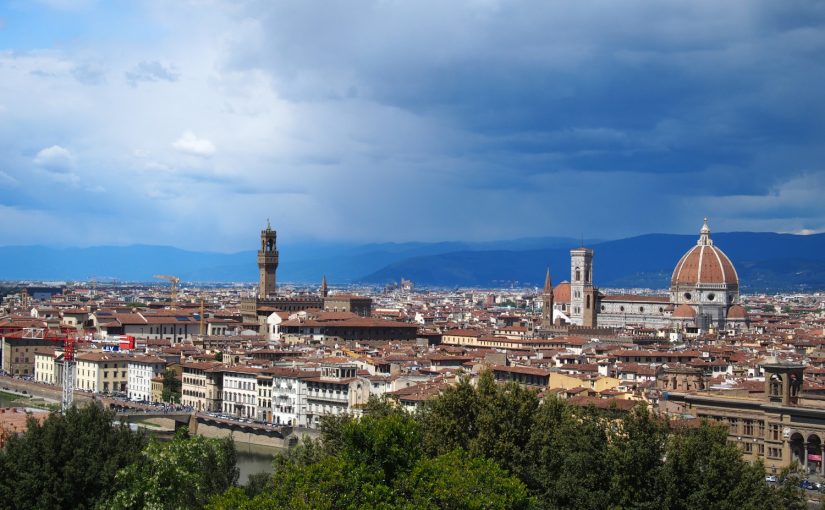
Anti-Algorithm Discoveries

How a Hidden Thrift Shop Serves as a Reminder to Explore Unplugged

written by Annie Lund & Alex Schraufnagl

This blog feature is an exclusive bonus installment to the Spring 2026 issue of Blending Magazine: Are the Streets still Made for Dreaming?

After you finish reading, be sure to explore the rest of the magazine online—just follow this link to download the full Fall 2025 edition:
https://jschoolfua.com/images/BM/BM_151.pdf

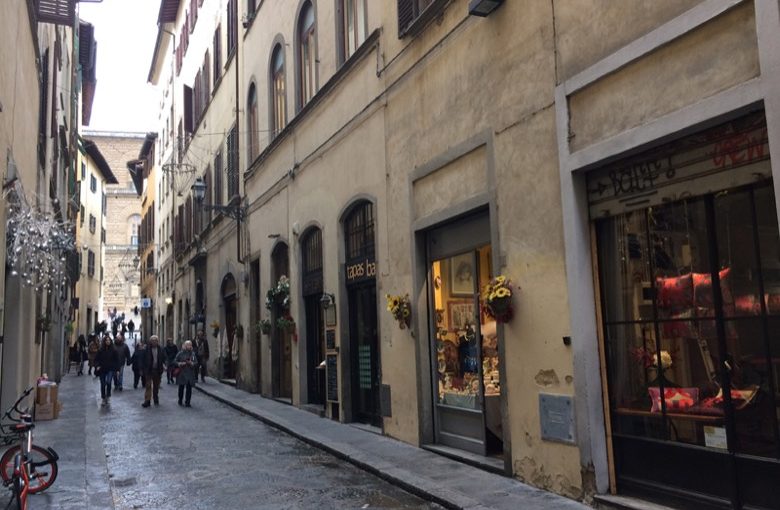
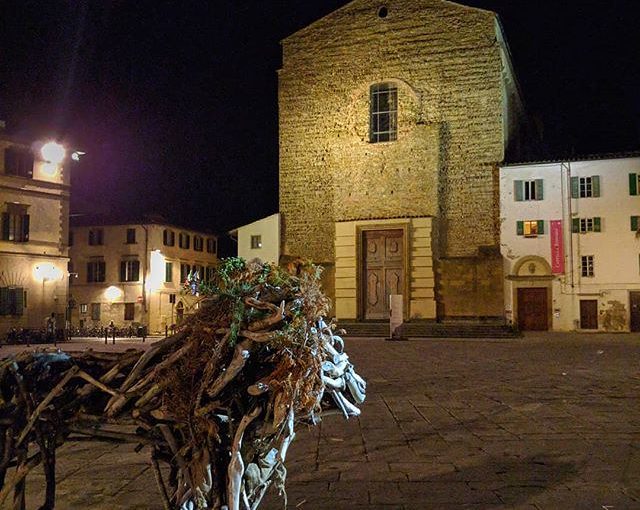
On any given weekday, the doors of San Remigio Catholic church are sealed shut and its stone steps are likely filled with patrons enjoying a sandwich from one of the dozens of panino stores nearby. Heads are lurched down at phones, searching for their next “must-see” Florentine adventure.

People spend their afternoons scrolling the internet for the newest Italian trend, and chasing a version of Florence that has already been curated for them. However, on Saturday and Sunday nights, the church steps draw a different crowd. Not a passerby rushing between reservations, but those curious enough to notice a small room off the sanctuary that warmly glows with an open door.

Immediately upon entry to Mercatino Parrocchiale, you’re met with the smell of old books and a circle of Italian women conversing. Jewelry, artwork, photos, and clothing litter the room with no rhyme, reason or price tags. Trinkets and treasures are priced however the women say, typically under five euros.

All items are donated, the market is only open on weekend nights, and proceeds support the church ministry. As you weave through the aisles of the shop, you find yourself getting lost in the hundreds of dusty items lining the shelves while the comforting buzz of Italian conversation lingers in your ears.

In an era where Florence has become a hotspot for viral meals, shops and photogenic storefronts, Mercatino Parrocchiale is a symbol of discovery without TikTok or Google reviews. It stands for what international students and tourists crave but can’t articulate– the feeling of curiosity that leads to organic finds.

It’s hard not to notice the algorithmic feel of the city given the lines stretch around corners, crowds gathered in familiar clusters, and entire days planned based on what appears on a screen. Even the location of the market showcases the popularity of Florence’s city center with bustling nightlife and viral sandwich shops.

This modern way of travel through social media feels familiar. A TikTok shows you exactly what you’re going to get before you walk through the doors of an establishment, leading to a predictable and pre-tested experience. Individual restaurants and shops in Florence have gone viral for singular meals and products, which become the establishment’s entire identity.

Mercatino Parrocchiale offers an entirely different experience, where the place is defined by the people that come together in it rather than a singular item. The uniquely authentic feeling of the thrift comes from the people who create it, not the products they sell.

San Remigio’s market is a product of people coming together, offering a unique experience that is often hidden beneath an endless reel of digital content. This tiny thrift store represents a quieter, unfamiliar layer of the city that often goes unnoticed in the noise of its digital counterparts.

No one is telling you which items are worth picking up and there is no viral moment attached to a specific corner of the room, leading to an experience that feels authentic and unfamiliar. Visitors to the market must pick through the donated goods and find items that speak to them, offering a new authentic experience where souvenirs are not pre-picked by influencers or the plethora of travelers who post about their experience in Florence.

This online phenomenon of modern travel begs the question- what else are we missing?

If the most interesting and quirky parts of Florence don’t show up in the algorithm that pushes popularity, then maybe they exist just outside of it entirely. Not hidden, but overlooked. Sometimes, the best way to explore a city is the old-fashioned way, with an open mind and no agenda at all.

Moving like this allows you to experience Florence as your own, rather than through the curated aesthetic of someone else’s screen. If you have the privilege of visiting Florence, challenge yourself to follow your own sense of curiosity, even if it leads nowhere in particular.

Step into places that don’t ask to be seen. Linger where there are no lines. Let yourself get it slightly wrong. After all, the feeling of stepping out of a small shop and back into a street full of tourists completely unaware of what they’ve just passed feels like holding onto a quiet secret.
Chasing Inspiration or Chasing Instagram?

written by Reagan McGowan, Kate Cooper, Maggie Baker & Emma Stromberg

This blog feature is an exclusive bonus installment to the Spring 2026 issue of Blending Magazine: Are the Streets still Made for Dreaming?

After you finish reading, be sure to explore the rest of the magazine online—just follow this link to download the full Fall 2025 edition:
https://jschoolfua.com/images/BM/BM_151.pdf

Note: Some interviewees within this article did not provide last names and are identified by first name only.

Florence has long been a city that invites curiosity. Its narrow streets, Renaissance architecture, and centuries of art and history naturally inspire those who walk through it. Traditionally, visitors arrived eager to learn, to wander, and to discover. However today, that sense of exploration often begins long before arrival, through a screen.

This piece began with a simple question: are study abroad students and tourists experiencing Florence for themselves, or are they chasing a version of the city they’ve already seen online? To explore this, conversations were held with locals and visitors across Florence focusing on how social media shapes movement, behavior, and perception within the city.

At a small bar near Piazza Santo Spirito, Marco, a bar owner described a daily routine he has come to expect. Tourists order drinks, often Aperol spritzes, and immediately begin taking tons of pictures of them.

“Every day I see people ordering a spritz and taking five pictures before they even drink it,” he said.

For Marco, the shift is clear. Where visitors once lingered over conversation or asked about local wines, many now seem focused on documenting the moment rather than living in it.

This behavior extends far beyond cafés. Near Ponte Vecchio, Sofia, a jewelry vendor, watches tourists pause in nearly identical spots along the bridge, often for long periods of time.

“Many people come here and say, This is the spot from Instagram,” she explained.

What was once a passageway now becomes a staging ground for recreated photos. Even meals, traditionally a central part of Italian culture, have become part of this visual routine. Giulia, a server at a trattoria near Piazza del Duomo, noted that it is rare for customers to begin eating immediately.

“Before they eat anything, they take pictures,” she said.

She has also noticed that social media influences what people order, with visitors sometimes requesting dishes or drinks they have seen online, rather than asking for local recommendations.

Florence is increasingly navigated not through spontaneous exploration, but through a digital checklist. Visitors move between locations they have already seen online, following paths rather than discovering spots organically. This pattern has physical effects on the city too. Certain locations become densely crowded while others, equally rich in character, remain unseen by many.

Yet, the influence of social media is not entirely negative. For some, it serves as a gateway rather than a limitation. Andrea, who works in a gelato shop near Via dei Neri, explains that many customers discover the shop through Instagram or TikTok.

While some take a quick photo and leave, others stay, ask questions, and engage more deeply.

“It depends on the person… Some come for the photo, but others stay and talk.”

Among study abroad students, there is also an awareness of this dynamic. At Piazzale Michelangelo, Emily, a student from the United States, admits that she had seen the view online before arriving. While she found it just as beautiful in person, she was struck by the crowds.

For locals like Luca, a university student, this shift has subtly changed the atmosphere of the city.

“Sometimes it makes the city feel more like a stage than a real place,” he said, describing how public spaces are increasingly treated as backdrops for photoshoots rather than real places.

And yet, despite these changes, Florence continues to offer moments that resist this pattern. In Piazza della Signoria, street musician Matteo performs for crowds that often begin by filming, but sometimes stay to listen.

“Those moments feel more genuine,” he said. For him, the city’s ability to inspire has not completely disappeared. “Even if people come because of Instagram, once they are here, they still experience the beauty of the city.”

Florence today exists in a space between performance and presence. Social media shapes how people arrive, where they go, and what they prioritize. It creates expectations, and influences behavior. But it does not fully define Florence.

The city still offers something deeper, found not in perfectly framed photos, but in small, unscripted moments: a conversation in broken Italian, a quiet street discovered without intention, a song that makes someone stop and listen.

The question, then, is not simply whether visitors are chasing an Instagram version of Italy. It is whether they allow that version to be the only one they see.

Hands of Heritage: The Artisans Keeping Oltrarno Alive

This blog feature is an exclusive bonus installment to the Spring 2026 issue of Blending Magazine: Are the Streets still Made for Dreaming?

After you finish reading, be sure to explore the rest of the magazine online—just follow this link to download the full Fall 2025 edition:
https://jschoolfua.com/images/BM/BM_151.pdf

written by Samantha Mircetic, Jillian Rottman & Jenna Pravecek 

For centuries, individuals have shaped Florence’s cultural identity through creativity, craftsmanship, and an enduring respect for tradition. These legacies are not only in history books but they remain alive in workshops, studios, and storefronts throughout the city – especially in the Oltrarno neighborhood, where the spirit of craftsmanship continues to flourish.

There’s one particular street in the Oltrano, Sdrucciolo de’ Pitti, that carries a multitude of craft, history and talent in just one little stretch right down the road from Pitti Palace. Here, you will find a small, quiet road that is tucked away from the swarms of tourists and museum-goers. Along this street lies a stretch of artisan shops, each with their own unique crafts, that make their living and do their part to preserve the traditions and keep the practice of handmade art alive – one little street, yet so many different stories to be told. 

La Casa Della Stampa lives quaintly along Sdrucciolo de’ Pitti, and serves as a prime example of genuine craftsmanship fostered by familial pride. Lorenzo Sarubbi, the shop owner, is carrying on the techniques of his mother and father who opened the shop over fifty years ago. He uses a familial technique involving antique papers stamped and pressed with handmade designs. This technique is both a blend of artistic excellence and Florentine heritage. The shop’s designs honor Italian cities, nature, and symbolism, and pay homage to a long history through their use of genuine and vintage materials. The shop exudes an intimate family history and tells a story of a dream that came alive long ago. As one of multiple genuine artisan shops in the neighborhood, La Casa Della Stampa represents generations of Florentine success and expertise still alive today. 

As you travel a few doors down from La Casa Della Stampa, you will stumble into Giulia Materia – a shop combining design and handicraft with journals, bags, clothing, and more that are designed by Giulia Materia herself. Materia is aware and passionate about the challenges Florentine artisans face today. 

“There’s no way to let young people learn about true artistry anymore,” Materia said. “True artisans are being replaced by cheap souvenir shops, [and] now it’s very hard for small businesses to start.” 

The prices have gotten so high and the number of people who care about true artisanry is at a staggering low. The dream for artisans to uphold their shops and family legacy is being threatened by sky high storefront rent prices and overtourism. Giulia is a living example of the very few true handmade artisans who struggle to keep their work alive in a world becoming consumed by mass production. 

Continuing along Sdrucciolo de’ Pitti, you will stumble upon Arsdecorating. Here, Gabriella Gaeta displays the creative works of her and her husband, who work together to keep art and tradition alive. In a world where technology was beginning to dominate artistic design, Gaeta was determined to preserve her authentically human designs, and took to painting instead. 

“I wanted to create something that was impossible to recreate with computers,” Gaeta said. 

Then, Gaeta and her husband started to collect and restore antique pieces. In 2009, the couple combined their skills to open the store Arsdecoradting: a shop filled with beautifully unique pieces that capture the beauty of Florentine artisanship as well as the lost art of making things by hand. 

These businesses are actively functioning archives of Florence’s past, which is filled with tradition, skill, and identity. In today’s world, mass production and global chains dominate the market, but these businesses stand as an exception to this rule. One little street, Sdruccio de Pitti, and so many stories to be told.

Even in the smallest corners, away from the heavy foot traffic that Pitti Palace brings, lies countless stories and a heritage that stretches beyond the storefront. These artisans have a dream of continuing the traditional practices that make the Oltrarno neighborhood such a well preserved picture of Florence masterpieces. These shopowners strive to keep the spirit of Florence alive in modern times, and as consumers we can all help keep their dreams alive. 

How Moradi il Sedicente Keeps Art Alive in Florence 

written by Kaylin Martinez, Elena Beenblossom & Rachel Ward

This blog feature is an exclusive bonus installment to our Fall 2025 issue of Blending Magazine. After you finish reading, be sure to explore the rest of the magazine online—just follow this link to download the full Fall 2025 edition:
https://jschoolfua.com/images/BM/BM_151.pdf

In the heart of Renaissance Florence, history is not just confined to museum walls; instead, it floods the streets, where the art can truly come alive. Florentine street artist, Moradi il Sedicente, creates art through his surrounding resources, intentionally interacting with the environment around him. As an artist, Moradi believes that art “shouldn’t be trapped in galleries — it should grow from the ground, from the city itself.” 

Born in Florence in 1980, Moradi creates art organically, made from branches, leaves, axes, and memory. Looking further into his pieces, it is visible that his works have a deeper meaning; his installations are mostly found in places that he knows well, spaces that he can connect with and understand. Originally having a passion for painting, Moradi found inspiration through nature and what it evokes. He began to adopt the theory behind street art, aiming to connect his art with his viewers. Pieces that have been seen around Florence have revolved mainly around animals made out of wood, but the meaning goes beyond that. Seen through his social media, he further explains the depth behind his pieces. For instance, “I’ve always believed that Nature should take back her space” (27 April 2020). That is supporting the sculpture of a deer standing by the River Arno. 

When walking through Florence, it is not uncommon to come across one of Moradi’s creations emerging from an unexpected corner of the city. A realistic crocodile covered in bark sits on Lungarno Torrigiani, while a statue of a unicorn stands tall in Anoncella Park, serving as a symbol of rebirth after a destructive storm that destroyed the park in 2015.

Each sculpture seamlessly blends into the surroundings of the city due to the natural materials used to build it. Viewers of the artwork are typically drawn in by the details used in creating these pieces, unsure at first whether they are seeing an artwork or something that has simply taken shape on its own. This quiet merging of art and environment captures the essence of Moradi’s work, inviting viewers to rediscover the connection between nature and urban life. 

Moradi’s creations often emerge from what others might overlook, materials such as discarded branches, fragments of wood, and remnants of nature. By reconstructing these materials into expressive, often animalistic forms, he gives new life to the remnants of the natural world. Florence’s environment seems to bring each piece to life with its artistic history, architecture, and heritage. This relationship between Moradi’s work and Florence’s identity is central to his practice. The city of Florence has long been defined by its appreciation for the Renaissance era, and Moradi’s work is an extension of that natural beauty that was once so prevalent. His materials are fragile, temporary, and deeply tied to the cycles of life and death in nature. Instead of striving for timelessness, he allows his works to weather, to rot, to be reclaimed by their environment. Viewers of his work comment, “his pieces don’t stand out at a first glance, and then suddenly it’s there, like the city is breathing.” 

After a quick scroll through Moradi il Sedicente’s Instagram page, his devotion to his art becomes very apparent. As he describes, his work is “a profound journey of listening, creation, and connection, where nature, landscape, and community intertwine in a single, vibrant breath” (23 July 2025). This statement reflects his belief that each piece is more than a sculpture, and is a direct act of participation with Florence’s surroundings and those who inhabit it. Moradi’s art is not meant to be admired as a singular work of art but as part of the street art culture of Florence. His “installations that blend with the territory, inviting passers-by to pause, observe, and feel” (8 August 2025) embody the idea that art should emerge from life itself. In this way, his social media presence extends his practice beyond the physicalities, becoming another form of connection, and sharing the evolving relationship between art and nature. 

Through his blending of tradition and modern technique, Moradi has the means to reshape the understanding of what it is like to be a contemporary Florentine artist today. His sculptures, crafted from reclaimed materials and natural elements, serve as quiet reminders that beauty in Florence is not only in its past but also in a constant transformation. Moradi’s work invites both tourists and locals to reflect on the placement and purpose of the art, suggesting that creativity in Florence is not confined to its museums or monuments. Instead, it lives and evolves within the everyday landscape, continuing the city’s long tradition of reinvention through artistic expression.

Little Things That Last

Florence’s Love for Physical Memories and Moments

This blog feature is an exclusive bonus installment to our Fall 2025 issue of Blending Magazine. After you finish reading, be sure to explore the rest of the magazine online—just follow this link to download the full Fall 2025 edition:
https://jschoolfua.com/images/BM/BM_151.pdf

written by Reegan Parker, Sophie Mosolino & Grace Heffernan

In a world where memories live on screens, Italy still treasures those you can hold in your hands. From collecting an abundance of old receipts from local cafes, to postcards in little shops, to stopping at a vintage photo booth to capture a night with your friends, the charm of Italian travel is not stored in photo albums or Instagram posts. These small physical items we’ve collected throughout several months of living here serve as little stepping stones of a life journey we will never forget. These tangible mementos keep the memories abroad alive. 

Italian Momentos 

Italy is a country that celebrates the art of slowing down a busy life and noticing the small beauties hidden inside little cobblestoned streets, trattorias, and museums. A simple business card of a cafe can take you back to the best croissant you’ve ever had, a postcard from Cinque Terre can bring back the visuals of bright colored buildings and bottles of limoncello. Even an empty wine bottle can shift you back to reminiscing a night filled with laughter and the people you were with. Postcards, a piece of jewelry, or an empty candy wrapper can provide a sense of closeness to the traditions that Florence has to offer. They can even be brought back to America to remember what it felt like to be immersed in this beautiful culture. 

Preserved Memories 

To further our observations, we asked a few of our roommates also studying abroad in Florence what physical objects they hold close to them. Many of them cherish the Fotoautomatica photo booth strips. They shared that the photo strips remind them of spontaneous nights out with their best friends, preserving a happy moment in time with the flash of a camera. The vintage look of 

the photos is unique to any other photo you could take on a cell phone and print out, providing a different and nostalgic sense of emotion that brings back memories every time you look at it. For instance, one of our friends has collected postcards everywhere she has traveled, from Paris to Greece. “I’m keeping these forever,” she says as the postcards are displayed proudly on her bulletin board. These physical mementos will hold a place in most everyone’s heart, and hands, which makes it so special to keep them preserved for a lifetime. 

A Cultural Souvenir 

Furthermore, the attachment to physical objects is deeply rooted in Italian culture, a culture that proudly preserves its history. From making pasta with your hands, to pouring the perfect glass of

Chianti wine with pride, Italy treasures the physical parts of experiences. In America, we’ve experienced the shift of most things being digitalized for ease and efficiency. This goes hand in hand with the dynamic, capitalistic culture of the United States many have grown up with. This is very different from the cultures we have experienced in Italy, where schedules are slower and structured with intentional rest and reset. People in Florence walk slower, enjoy lengthy meals with friends and family, and life is seen to be enjoyed and not occupationally or financially maximized. The objects and mementos have reflected these mannerisms, to savor and remember each moment spent through something physical. As sojourners visiting Italy for a stretch of time, these simple mementos and joys are something we recognize and cherish, and we will proudly bring back these pieces of Italian culture and community with us when we return to America.

The Beating Heart Above Florence

A place where sunsets, cameras and people meet to be present

This blog feature is an exclusive bonus installment to our Fall 2025 issue of Blending Magazine. After you finish reading, be sure to explore the rest of the magazine online—just follow this link to download the full Fall 2025 edition:
https://jschoolfua.com/images/BM/BM_151.pdf

written by Maëlys Brunet

As the city slowly changes from season to season, we are constantly reminded of Piazzale Michelangelo as the beating heart of Florence. Especially during the summer months. The Piazzale remains alive through both tourists and locals, particularly at sunset, as wanderers gather on the steps with a simple glass of wine to listen to a band’s music or take pictures as a souvenir of the moment, as time pauses, just for a moment. This Florence phenomenon stirs curiosity about the aura the city holds in people’s hearts, a current that pulses through and unites communities. 

Piazzale Michelangelo seems nowadays as a rite of passage, a go-to place when visiting Florence to admire the city’s iconic skyline. But what about its history? Built in 1869 by Giuseppe Poggi, it was originally meant to just be a terrace, celebrating Michelangelo’s art. A representation of progress, but also modernity and the future, as Florence was the capital of Italy during that time. Nowadays, we see Piazzale Michelangelo as a place to slow down, reconnect to the beauty of the city, with a crowd to accompany us into this poetic journey. 

The typical route to Piazzale Michelangelo is just as memorable as the view itself. Beginning from the tower of San Niccolò, take the ascending stairs and path between the large trees. The climb begins as we slowly rise above the city of Florence, in anticipation of the view that awaits, as if leading towards something sacred. Then, the main terrace appears, the crowd gets denser, and the city spreads below. In the golden hour of the evening, music plays in the background and people dance to its infectious beat. Monuments wear orange and yellow as the sun begins to set, offering the perfect moment for multiple photoshoots to spontaneously appear. Phones and digital cameras alike click with the same rhythm as conversation or laughs. 

Piazzale Michelangelo is the place where multiple generations meet to capture the essence of Florence. As a guitarist tunes his strings, he shares that although the people there always change, the sunset and view remain a constant. There is poetry when we stare at the landscape, thinking it was approximately the same view as the one our ancestors looked out at centuries ago. People at first come for a simple view, then leave with memories, connections and hearts filled with emotion. Here the sunset isn’t edited, it is put on display, shown in its raw form to its audience.

Looking away from the view and back towards the crowd, students share a bottle of wine, while pizzas are eaten by a family visiting from abroad. All the while, social media enthusiasts are trying to capture the perfect shot. A couple stairs down, people listen to music, dance to the rhythm of guitars and saxophones, and cheers can be heard for a couple that just got engaged. This place holds authentic moments of life and connection that will never be forgotten. 

As night approaches, some remain while others venture further, all the way to San Miniato al Monte – a hidden place above Piazzale Michelangelo – to admire the city from a similar perspective. Apart from the overwhelming crowd and movement, you find peace and quietness, almost like coming out of a dream. Two different atmospheres but only a single feeling remains unchanged: reassurance and interaction. 

In those small interactions, it is where Piazzale Michelangelo holds its core, being something rare and precious to keep hold of. A moment apart from digital, inviting those that gather to be there mentally, with your own thoughts, to live in the moment rather than posting it. The space gathers both past and present. Life and art coexist around a skyline view, with a community to share the same moment with, just for a couple of minutes… or even a couple of hours. 

In an age of constant digital scrolling, Piazzale Michelangelo remains a symbol of the contrary. Not every view needs to be shared or posted on social media, as it must be experienced and lived through the senses and presence of people around us. The difference lies in the fact that the beauty of the square can be shared through both photos and memory, however those emotions we feel when in its presence, cannot be replicated on the digital screen.

When we look at Piazzale Michelangelo, we can see its beauty in the different communities it brings together. Some live in the moment, as a break, an aside, a moment apart from the fast pace of life. We take this moment to slow down, take a step back, and enjoy the present moment with friends, family, or alone. Others may take advantage of the moment by capturing a memory, particularly through digital means, engaging in an online community.

Piazzale Michelangelo explores the possibilities and redefines the opportunity to come together as a community, whether in-person or virtually. This place in Florence demonstrates a new perception of what a community can be, beyond what we are used to seeing, while continuing on the same path of harmony and the search for unforgettable moments. 

Jazz Revival Amongst the Youth

With the recent closure of Florence’s Jazz Club, allow this to be read as an ode to a staple in past study abroad students’ daily lives, with hopes of bringing back fond memories. In addition, this blog feature is an exclusive bonus installment to our Fall 2025 issue of Blending Magazine. After you finish reading, be sure to explore the rest of the magazine online—just follow this link to download the full Fall 2025 edition:
https://jschoolfua.com/images/BM/BM_151.pdf

written by Clara Koster, Hailey Kookaby, Tess Letendre & Peri Raczynski

“Going to Jazz Club felt like being at home in New York,” said Colleen, a student at Florence University of the Arts (FUA). For many students, the Jazz Club offers a familiar, intimate vibe — a break from the usual bars and techno nights of Florence. The dimly lit venue, tucked into a side street, draws students in with the promise of soulful music and a warm, relaxed atmosphere. 

Despite being an older style of music, jazz is finding new resonance among the city’s youth. A sign of its relevance is when a place appeals to students, who have consistently driven cultural trends. The sound of jazz now drifts through the streets of Florence, played by street performers and live musicians, sparking curiosity and excitement for a nightlife experience that emphasizes listening rather than dancing. 

The Jazz Club opened in 1979 and has consistently offered live performances. While jazz is the primary style, rock, R&B, and blues are also commonly heard. The club is small, and lines begin to form about a half hour before doors open, mostly made up of students eager to see what the venue has to offer. Guests are greeted at the desk, pay cover, and receive a membership card — their first drink included, with future visits covered by the card. 

Reactions to the club vary. “I thought it was kind of boring,” stated Harleigh, another student. “It’s not like the other bars I usually go to.” Devon, a classmate, described her experience as “amazing,” citing her deep love and appreciation for jazz. Maria, another student, elaborated on how she prefers Thursday nights for blues sets, saying, “It’s slower, moodier and fits the atmosphere better than Wednesday nights, which are more crowded.” Despite the differing opinions, one thing is clear: the Jazz Club leaves a lasting impression on those who seek it out. 

For our own visit, the ambiance was immediately striking. The room was filled with resonant bass tones, the wail of the saxophone, and a sense of focus on the music. Students swayed gently to the rhythm, some closing their eyes to fully immerse themselves, while others held quiet conversations without shouting over the music. The atmosphere was comforting and welcoming, creating a space where anyone interested in music could feel at home. 

The Jazz Club’s blend of historical charm and contemporary appeal illustrates Florence’s ongoing artistic legacy. Students like Tatum Park appreciate the club as a break from conventional “college” music, feeling connected to the city’s long-standing appreciation for music and art. Similarly, Colleen finds nostalgia and familiarity in the experience, while Devon finds inspiration and awe. The club demonstrates that even older musical forms, when presented thoughtfully, can engage and excite a younger generation. 

While most students gravitate toward techno-heavy clubs and crowded bars, the Jazz Club offers something different: a revival of old-fashioned musical reception. It’s a space where students can experience live jazz, blues, and other genres in a way that emphasizes presence and connection. In Florence, a city steeped in artistic and musical heritage, the Jazz Club has become a bridge between past and present, giving students a new way to engage with the timeless power of music.

The Rebirthed Art of “La Vita Lenta”

Journaling: The Personal and Authentic Form of Memory

This blog feature is an exclusive bonus installment to our Fall 2025 issue of Blending Magazine. After you finish reading, be sure to explore the rest of the magazine online—just follow this link to download the full Fall 2025 edition:
https://jschoolfua.com/images/BM/BM_151.pdf

written by Liana Torres, Heather Collins & Lydia Turner

In an age where our thumbs type faster than our thoughts, the digital world feels impossible to escape. Our devices allow us to easily type reminders, organize assignments, jot down school notes, or record fleeting thoughts within seconds. Walking into a library, classroom, or café in Florence, you will often see people with iPhones in their hands, computers on their laps, and the rhythmic tapping of keyboards as they urgently take notes and revise them in record time. It’s a convenience that may seem luxurious, but people are craving originality due to the loss of creative media. It’s efficient, but detached. 

A new wave of creatives, travelers, and locals in Florence is embracing a slower, more tactile ritual: taking pen to paper. Here in Italy, where beauty can be found in imperfection and time is slowed down, journaling has taken on a deeper meaning. Writing by hand anchors you in the moment, making it a physical craft that demands presence and meaningful thought. 

Journaling is an extremely personal experience; a leather-bound notebook isn’t just stationery it’s an accessory, an extension of personal style. The marbled paper, the smooth pen, the color of ink chosen, every detail becomes a reflection of self. In a city renowned for its craftsmanship, from leather bags to jewelry, the journal joins the wardrobe of self-expression. To open it is to reveal not curated perfection, but raw honest thought. The choice of the journal’s cover is unique and tailored to the user’s taste, often serving as a fashion accessory. Residents and visitors alike are slowing down, mirroring the ancient streets and buildings around them, translating their experiences through ink rather than a screen. 

Florence itself feels designed for reflection. The view from the rose garden at sunset, views of the Duomo, the echo of footsteps on cobblestones, and the scent of paper and ink from small workshops all invite slowness. To sit with a notebook in a Florentine café isn’t merely to write, it’s to participate in a centuries-old dialogue between beauty, and thought. The act of journaling becomes a quiet rebellion against the speed of modern life, reconnection with presence. 

Psychological studies have shown that handwriting engages more areas of the brain than typing does. When the hand forms letters on paper, neural pathways responsible for memory, comprehension, and creativity become activated. Writing slows down the mind and creates deeper reflection, forming strong connections between thought, language, and page. One must think before they write, as each sentence becomes more meaningful when it cannot be easily erased. There’s something deeply human about seeing one’s thoughts take shape, imperfect and unfiltered. Typing on a computer removes the permanence, thoughtfulness, and focus that handwriting naturally gives. It is nostalgic, but also a neurological discipline. Our engagement with what we are learning, feeling, and experiencing is deepened.

Journaling is an art form in Florence. In local markets and small boutiques, hand-stitched leather notebooks and marbled papers are commonly found authentic, high-quality stationery. They signify Italy’s value for craftsmanship, and in Florence, the art of leatherwork. These boutiques also draw consumers into the old, analog world by offering products such as wax seals, personalized notecards, and fountain pens. Each item tells a story, not only of Italian craftsmanship, but of the person who chooses it. 

Tourists, visitors, and students of Italy often feel compelled to document their experiences here in an honest and authentic way. Instead of simply snapping photos on their phones, many sketch their surroundings or write about their emotions in the moment, carrying their journals as if they were passports. 

The Italian way of life, la vita lenta, is a philosophy of taking it easy and living in the moment. It embraces the rhythm of slowness and authenticity, valuing conversation, artistry, and the transformation of life’s seemingly mundane moments into something meaningful: a shot of espresso made by a local barista, a handwritten letter or postcard, or a leather journal carefully crafted by an Italian artisan. People can truly reflect rather than quickly react on their phones. 

Journaling allows for the documentation of lived experiences; it’s a way to highlight valuable memories and live through physical paper instead of a screen. Imperfection is welcomed, and the texture of the paper carries the rawness and realness of each written experience. It is more sacred. In Florence, handwriting isn’t about rejecting technology, it’s about reclaiming something real. Paper invites you to be unfiltered, unedited, and utterly yourself.

Florence Was My True Laboratory

written by Kathleen Morris

This blog feature is an exclusive bonus installment to our Spring issue of Blending Magazine, honoring the never-ending legacy of Giancarlo Cauteruccio. After you finish reading, be sure to explore the rest of the magazine online—just follow this link to download the full Spring 2025 edition:
https://jschoolfua.com/images/BM/BM_151.pdf

A video of a massive explosion serves as the opening backdrop for the latest production directed by Giancarlo Cauteruccio, capturing the audience’s attention as vibrant flames engulf a building.

The projector screen transitions to display a montage of troops entering battle, introducing visual motifs that reappear throughout “Il ritorno del soldato,” “The Return of the Soldier.”

The application of technology is a trademark of Cauteruccio’s theatrical style, harkening back to his roots as the founder and artistic director of Teatro Studio Krypton, located in Florence, Italy. The essence of Cauterrucio’s work can be summarized in a single word: innovation.

His show, which debuted this February at Teatro Aurora, located in Scandicci – a suburb of Florence, relies heavily on technical elements to underscore war’s toll on soldiers’ families. In his introductory speech, Cauteruccio warns audiences that it is “not going to be a fun night.” Still, he emphasizes the necessity of telling a story shrouded by darkness.

The tragedy portrayed within the script is echoed by the tragic origins of the playwright himself, Saverio Strati.

Strati, a writer from the Calabria Region, lived a life of poverty and did not receive recognition for the thousands of manuscripts he had written until after his death. To revive his legacy, the show was commissioned to celebrate the centenary of the writer’s birth.

Cauteruccio acknowledged his connection to Strati, explaining, “We found ourselves in the same peripheral city of Florence, a suburb without any identity. Today it has changed, thanks to the work done by artists who experienced it.”

Upon entering Teatro Aurora, Cauteruccio’s impact on the community is evident.

The lobby overflows with fans prepared to support his latest project. Following the show, a line forms once more. This time, patrons swarm Cauteruccio to personally offer praise for “Il ritorno del soldato.”

The love that Cauteruccio holds for the region, as evidenced by his willingness to recover Strati’s lost work, is matched by the enthusiasm of his audience in Scandicci.

For decades, Cauteruccio has demonstrated a fierce commitment to Florence’s art scene. He has distinguished himself as a changemaker, tirelessly pushing boundaries and actively defying artistic precedent to modernize the industry. 

“At the end of the ‘70s, I began to understand that technological evolution would lead to a transformation,” he adds.

Since the ‘80s, he has played an influential role in redefining art practices in Florence. The establishment of Teatro Studio Krypton, founded by Cauterruccio and Pina Izzi in 1982, aligned with the awakening of the city’s avant-garde movement.

“We found ourselves amid the phenomenon of postmodernity,” Cauteruccio observes.

In collaboration with other artists, he created a new language built on the notion that the theatre is “a place of synthesis” where all art forms intersect. 

“I set up a job there which looked predominantly at contemporaneity,” he shares. “It was a theater of research, experimentation, and innovation… that featured poets, musicians, philosophers and architects.”

As Florence’s underground scene blossomed in the 20th century, Cauteruccio’s embrace of radical creativity fueled a movement that created instrumental progress within and beyond the theatrical realm. Undeterred by the unknown, Cauteruccio launched a revolution driven by postmodernity and new spectacularity. 

“I was led to strategic approaches in a contemporary way and an aesthetic that allowed the new generations to come into contact with a language that was previously taken for granted,” he describes. 

Cauteruccio refined this approach at Krypton, replacing classical music with electronic sounds and introducing the laser beam to Europe’s theatrical sphere. By rejecting tradition while honoring the elegance of past practices, his work has garnered an “explosion of interest” for half a century.

His career transcends the stage, as he has authored several books and taught at universities across Italy and the United States. In every setting, Cauteruccio considers the influence of his emergence in “The Cradle of Renaissance.” 

With a hint of reverence, he declared, “Florence was my true laboratory.”

Cauteruccio concludes with a thought about the synergistic relationship between artists and their audience – one is not complete without the other. Likewise, Florence’s underground art scene would not be complete without him. As a figurehead of progress and ingenuity, Cauteruccio’s efforts will endure and ignite a spark within the next generation of trailblazers.

The Sound of Florence

written by Alena Pietrini, Clare Kearney & Autumn Verna

This blog feature is an exclusive bonus installment to our Spring issue of Blending Magazine. After you finish reading, be sure to explore the rest of the magazine online—just follow this link to download the full Spring 2025 edition:
https://jschoolfua.com/images/BM/BM_151.pdf

Pinocchio Jazz Club, located in the heart of Florence, serves as a hub for local jazz culture, offering an intimate location for both musicians and audiences. Founded by Costanza Nocentini and Daniele Sordi, the club promotes high-quality jazz music in order to create growth of both classic and emerging talent. Each Saturday, a range of performances play at the club and perform their own original compositions and jazz classics. The famous Pinocchio logo is inspired by pop culture stemming from Florence, creating a sense of community at a very intimate club. Beyond its musical contributions, Pinocchio Jazz Club plays a vital role in preserving Florence’s locality despite the increasing tourist surroundings. The club stands as a testament to Florence’s roots by offering a space for cultural exchange and a deeper connection to music. The Pinocchio Jazz Club stands tall as an important institution for both locals and visitors to celebrate Florence’s dedication to the genre.

Pinocchio Jazz Club is a well known organization located in the heart of Florence. Locals and tourists enjoy this important location for the Florence community. Costanza Nocentini and Daniele Sordi oversee the association and ensure it continues to spread jazz to as many people as possible. Nocentini revealed that the organization was founded with the goal of encouraging the growth of the local jazz community and promoting quality music that stands apart from commercial sounds. That goal has clearly been exceeded, as many jazz stars began their careers at Pinocchio Jazz Club. 

Each Saturday, the club hosts a new musician who brings their own spin on jazz. Some rework classics while others perform original compositions, all contributing to the evolving nature of jazz. Pinocchio Jazz Club isn’t just a venue where people passively watch a performance, it’s a zestful space that comes alive with the effervescence of the music. The club itself sits tucked into a residential part of Florence. The surrounding area has wide streets, more greenery, and a noticeable lack of tourists. It feels like a place where people actually live, not just visit. 

Inside, the setting feels intimate while also being full of enthusiasm. The lighting is vibrant and changes with the vibe of each performance, adding another dimension to them. One of the more iconic details is the famous Pinocchio riding the whale logo, which stands out in the background and reminds you of the novelty and roots of the club. The club is medium-sized, with space for people to sit at tables, making it feel inclusive no matter where you are. The performances range from full-on jam sessions with multiple musicians, to solo acts. 

One of the most striking things about the shows is how often the performers will involve the audience. Since the seating is so close to the performers, it’s impossible for the audience not to get swept up in the passion of the performance. The musicians feed off the audience’s reactions, and the crowd responds in turn, creating a dynamic environment that makes each show feel different and alive. There’s a genuine sense of play between the crowd and the musicians that makes the space feel fun, warm, and communal. It’s a casual crowd as people of all ages come through, some dressed up for a night out, others just stopping by. 

There’s a bar tucked into the back, and the whole place has an effortless local charm. What’s especially cool is that a lot of the musicians don’t seem to be playing off sheet music or pre-planned sets, but are simply riffing and letting the music take shape in real time. This aspect of the club just adds to its electrifying energy. 

 The impact of Pinocchio Jazz Club goes beyond music. It plays a critical role in preserving Florence’s local identity. Many of Florence’s visitors come just to check off the big sights and leave without ever experiencing the soul of the city. The historic center is starting to reflect that, with fast food chains and souvenir shops replacing once locally-run stores. In a city that was once defined by the Renaissance, by pushing boundaries and creating something new, it’s almost upsetting to see it slowly turn into a checklist for tourists. 

Places like Pinocchio Jazz Club push back against that. They give locals and those looking to connect with the city on a deeper level a chance to do so. Pinocchio Jazz Club reminds us of the roots of Florence. Whether you come for the music, vibe, or a break from the city center, there’s something about the club that stays with attendants. Florence will always have to navigate the balance between the old and new, locals and tourists, but places like Pinocchio Jazz Club make that dynamic feel more manageable. 

In the end, what makes Pinocchio Jazz Club so memorable isn’t just the music or the setting, but the sense of being part of something genuine. It’s rare to find places that blend tradition and originality so well, and even rarer to find ones that stay connected to the local community. Whether you’re a long-time jazz fan or just discovering the club, you leave knowing you’ve experienced something special.