Starting Behind, Finding My Way: My 11-Week Study Abroad Experience

written by Nicole Tonas

Everyone else was strolling around in cute flats and stylish high-neck coats, sipping cappuccinos like they belonged in a Florentine magazine, while I was over here in my beat up Adidas Sambas and my puffer jacket from high school, feeling like the least fashionable tourist in the city.

That pretty much sums up what it felt like arriving in the last group of my study abroad program. I’m here for 11 weeks, which in theory was fine, but actually showing up weeks after everyone else? Completely different story.

My program offers 18, 15, and 11 week sessions. The people I met enrolled in the 18 week session, who arrived 7 weeks prior to me, especially already have their lives together. They completely knew the lay of the land, already having established their favorite cafés and could go grocery shopping without spending an extra 30 minutes translating every single item. Some of them even picked up basic Italian within the first few weeks. Meanwhile, I was dragging my suitcase around, double checking Google Maps every two minutes, and still somehow managing to get lost.

My first week was honestly kind of overwhelming. Everyone else seemed so comfortable, like they had already figured everything out. They were talking about weekend trips they had already gone on and all their traveling experiences, and I was just sitting there confused, like it was a completely different language. I felt like I had missed the beginning of a movie and was trying to piece together the plot without asking too many questions.

Even classes felt like that. People already knew how things worked, what professors expected, and how assignments were structured. I was just trying to keep up, not sound completely clueless every time I had to ask a question, and pretend that three hour classes were nothing new to me. It’s a weird feeling, being new when most people aren’t.

But at the same time, being late in a way forced me to notice everything more. Since nothing felt routine yet, even the smallest things stood out. The way people take their time with coffee instead of rushing out, how the streets are always kind of busy but not chaotic, and how satisfying it feels to finally recognize where you are without checking your phone.

And the small wins? They felt huge. The first time I went to the grocery store and actually knew what I was buying because I had added my favorites to my weekly list. That was a relief. Successfully ordering food without overthinking every word. Remembering how to get to class without maps. Those moments made me feel like I was slowly figuring things out, even if I started behind everyone else.

Socially, it definitely took more effort. I had to be intentional about talking to people before class, asking questions, and putting myself out there because I didn’t want to feel like the newbie still stuck in the homesick phase of study abroad. But people were more open than I expected, and once I stopped overthinking it, conversations started to feel a lot more natural. Now that I’ve been here a few weeks, I don’t feel as out of place anymore. I’m not fully caught up in the same way as the people who have been here since the beginning, but I don’t feel lost either. I have my own routine now, my own favorite spots, I’ve been on my own trips, and I have a better sense of how everything works.

Starting late didn’t ruin my experience, it just made it different. If anything, it made me more aware, more independent, and more willing to put myself out there. I had to figure things out quickly, but in the process, I’ve learned a lot more than I expected to in such a short time.

So yeah, starting a study abroad program later than most of my peers wasn’t the most ideal way to do it. But it’s kind of like being thrown into something halfway through, you’re confused at first, maybe a little out of place, but eventually, you catch on. And once you do, it actually feels pretty rewarding.
English Education in Firenze

written by William Norris

Never in my life would I have expected to be living in Florence, Italy at 20 years old. Let alone, have the opportunity to teach Italian to elementary school students. When arriving in Florence, I didn’t know what I was getting into, and honestly, I was extremely nervous about my decision to live overseas. I was lucky enough to be presented with the volunteer opportunity to teach English to local Italian students.

At first, I was reluctant to apply for the position, and honestly, I waited until the last day of the deadline to even submit the application. I felt this sudden urge to give back to this amazing city. I was offered the position, and I ran with it.

When the first day of class arrived, I was filled with excitement mixed with nerves. It was an interesting feeling. I had to meet the program representative and my teaching partner, both of whom I had never met before, and I was running late due to a mistimed 30-minute walk.

Upon meeting them, we rushed to the tram because we were already running late, and they gave us a rundown of the lesson we had prepared and what to expect throughout the semester. The tram stop was deeper in the city, which I would describe the area as a more casual, local way of life; it was a time away from the touristy chaos that occurs in the city center. Seeing this way of life put me at ease.

When we first arrived at the school, I started to feel nostalgic, remembering my days back in elementary school and how happy I was. The first thing I noticed was that the school had a mini soccer field right out front. Something you’d rarely see in America, or any school I was accustomed to.

As we figured out how to sign in, we quickly realized the front desk worker didn’t speak English, further reinforcing the fact that we were fully integrated into the local community. Once we finally signed in, we walked up to the classroom we were assigned, and the nerves began to fully set in, simply because I had never done this before.

As we got let in, I quickly realized how excited these kids were, and it immediately filled me with joy, eliminating my nerves. I realized that these students were amazed that I was from a country that many of them had never been to. I reminisced about being in elementary school and how cool I would’ve thought it was if someone from another country came to teach me their language.

We began the lesson by introducing ourselves to the students, sharing our names and places of origin, which immediately prompted a discussion. This simple introduction caused them to fire away with questions about our favorite food, songs, and sports, lasting almost the entire class.

I was shocked at how good their English was at such a young age. They were at the same level of English as I was when I was taking Spanish in college.

This got me thinking. America’s school system has a lot of flaws, but one particular aspect is that we should have a language class at a young age. Seeing how many languages European citizens speak seems to be attributed to how young they were when they started learning.

When I walked out of the school, I felt fulfilled. Going into this, I didn’t know if I would enjoy it, but when I was outside of that school, and all the stress and anxiety had finally left my system, I couldn’t wait for next week’s class.

I firmly believe that one of the best ways to start your day is to make someone happy. This volunteer experience has not only taught me so much about Italian culture, but also about myself. Broadening your experiences and helping others out is crucial for a fulfilling life, and this experience in Florence only reinforced this sentiment further.

Hands of Heritage: The Artisans Keeping Oltrarno Alive

This blog feature is an exclusive bonus installment to the Spring 2026 issue of Blending Magazine: Are the Streets still Made for Dreaming?

After you finish reading, be sure to explore the rest of the magazine online—just follow this link to download the full Fall 2025 edition:
https://jschoolfua.com/images/BM/BM_151.pdf

written by Samantha Mircetic, Jillian Rottman & Jenna Pravecek 

For centuries, individuals have shaped Florence’s cultural identity through creativity, craftsmanship, and an enduring respect for tradition. These legacies are not only in history books but they remain alive in workshops, studios, and storefronts throughout the city – especially in the Oltrarno neighborhood, where the spirit of craftsmanship continues to flourish.

There’s one particular street in the Oltrano, Sdrucciolo de’ Pitti, that carries a multitude of craft, history and talent in just one little stretch right down the road from Pitti Palace. Here, you will find a small, quiet road that is tucked away from the swarms of tourists and museum-goers. Along this street lies a stretch of artisan shops, each with their own unique crafts, that make their living and do their part to preserve the traditions and keep the practice of handmade art alive – one little street, yet so many different stories to be told. 

La Casa Della Stampa lives quaintly along Sdrucciolo de’ Pitti, and serves as a prime example of genuine craftsmanship fostered by familial pride. Lorenzo Sarubbi, the shop owner, is carrying on the techniques of his mother and father who opened the shop over fifty years ago. He uses a familial technique involving antique papers stamped and pressed with handmade designs. This technique is both a blend of artistic excellence and Florentine heritage. The shop’s designs honor Italian cities, nature, and symbolism, and pay homage to a long history through their use of genuine and vintage materials. The shop exudes an intimate family history and tells a story of a dream that came alive long ago. As one of multiple genuine artisan shops in the neighborhood, La Casa Della Stampa represents generations of Florentine success and expertise still alive today. 

As you travel a few doors down from La Casa Della Stampa, you will stumble into Giulia Materia – a shop combining design and handicraft with journals, bags, clothing, and more that are designed by Giulia Materia herself. Materia is aware and passionate about the challenges Florentine artisans face today. 

“There’s no way to let young people learn about true artistry anymore,” Materia said. “True artisans are being replaced by cheap souvenir shops, [and] now it’s very hard for small businesses to start.” 

The prices have gotten so high and the number of people who care about true artisanry is at a staggering low. The dream for artisans to uphold their shops and family legacy is being threatened by sky high storefront rent prices and overtourism. Giulia is a living example of the very few true handmade artisans who struggle to keep their work alive in a world becoming consumed by mass production. 

Continuing along Sdrucciolo de’ Pitti, you will stumble upon Arsdecorating. Here, Gabriella Gaeta displays the creative works of her and her husband, who work together to keep art and tradition alive. In a world where technology was beginning to dominate artistic design, Gaeta was determined to preserve her authentically human designs, and took to painting instead. 

“I wanted to create something that was impossible to recreate with computers,” Gaeta said. 

Then, Gaeta and her husband started to collect and restore antique pieces. In 2009, the couple combined their skills to open the store Arsdecoradting: a shop filled with beautifully unique pieces that capture the beauty of Florentine artisanship as well as the lost art of making things by hand. 

These businesses are actively functioning archives of Florence’s past, which is filled with tradition, skill, and identity. In today’s world, mass production and global chains dominate the market, but these businesses stand as an exception to this rule. One little street, Sdruccio de Pitti, and so many stories to be told.

Even in the smallest corners, away from the heavy foot traffic that Pitti Palace brings, lies countless stories and a heritage that stretches beyond the storefront. These artisans have a dream of continuing the traditional practices that make the Oltrarno neighborhood such a well preserved picture of Florence masterpieces. These shopowners strive to keep the spirit of Florence alive in modern times, and as consumers we can all help keep their dreams alive. 

Why are students studying abroad not visiting Venice as much as anywhere else?

In order to understand my perspective about Italy, we must start in Florence. I live 40 minutes away from my school, and must take a long, quick paced walk each day to make it to my classes and meetings on time. As the weather has changed, so has Florence with tourists arriving in waves and collecting outside the Duomo and Palazzo Vecchico. This addition of tourists has added 10 more minutes to my hike each day. This factor has made me start to dislike my days in Florence, and get what I am calling “Florence Street Fatigue.” This is not to say I don’t like Florence, I just am starting to get frustrated on my days where I have to work and walk though popular areas just to get where I need to be on time. 

One week I decided to take a train up to Venice and have a little escape. My train of course got delayed due to train strikes, and eventually made its way. I wasn’t feeling good due to the lack of sleep I had gotten the night before, but kept on moving nonetheless. This bad feeling didn’t last long because when I stepped off the train, the humid, salty air instantly made me feel revived. The sun was shining (after a month of rain in Florence, this was a relief), and the birds were chirping. I checked into my hostel and had this girl say hello to me. Five minutes later she and I had become friends, and were inseparable until the moment I left. We took the train to the island, and walked out into the sun speechless. Each way you look there was a different architecture style, boats, gondolas, restaurants bustling with business, stores and most importantly pigeons. 

Now, I don’t know what the deal is with pigeons in Italy, but they really have no problem being stepped on, and stood right next to, because to them we are food supply. There were several instances where they were not going to get out of my way, and were prepared to stand their ground. I have never in my life, not in New York City or anywhere else have experienced such animals with character. Chasing and trying to step on them became my new favorite game, because why are they trying to eat my parmesan and bread? 

Anyways, I walked over the bridge of sighs and went to the Doge’s Palace. The walk inside the museum, I came to learn, is a very unique one. As I walked over, I noticed tons of people taking photos and I couldn’t see what. This experience was so cool, and all the ceilings were lined with gold frames inside the museum. I love museums and it was such a unique and cool experience to see that Venice had its own army at the same time as the Romans, as well as prison cells you could visit. I even visited my first ballroom (that I can recall), and it took my breath away. Nothing in a T.V. show or movie has ever compared to how beautiful the one at the Correr Museum was; it makes the ones in Bridgerton look like a joke. 

After purchasing more souvenirs than I needed, I noticed how much less crowded Venice was than Florence. This quickly became my oasis away from studying. I think it was so unique that the main transportation of the island was by boat, and it ended up really being the fastest way around the island! I didn’t experience as many people stopping in front of me or bumping into me.

My favorite activity I signed up for was the island tours of Murano and Burano. I’ve seen glassblowing presentations before, but never one in less than 10 minutes, and of a horse with great detail! It’s amazing to me how their family secrets have stood the test of time, and carried on in today’s society. On the island of Burano I have never seen lace made by hand, but I really have been missing out on that thus far in my life. 

If you haven’t been convinced to spend a weekend in Venice, let me tell you how much fun I had wandering. Each road of course has a dead end one way or another leading to the water, but always has tiny little shops and gelato are around every corner. One of my favorite shop wandering experiences I had was in a little artist’s shop called Armonie Venezia. This space was tiny but mighty with little scrolls and handmade masks in every corner. I spent some time chatting with the artist learning about his trade, and how much his shop means to him. As a journalist, I am always looking for stories, but my curiosity gets the better of me frequently. He explained and educated about the history of Carnevale, and how important it is to Venetians, which apparently are very few, these days on the island. 

And coming full circle, I am still unsure of why study abroad students are not choosing Venice as a popular choice for their full weekends. Almost all the people I have met at FUA or other schools choose Venice for one day, or not at all. I still feel like I need to go back, and it has plenty of history and excitement to explore. While it’s not Rome, Venice is still amazing and unique in its own way. It was cheap to stay one train ride away, and had many islands to go visit and explore if you wanted to venture out. I loved my experience, and honestly I enjoyed it more than the overnight buses I’ve been taking out of the country for weekends. My short train ride from Florence allowed me the opportunity to make the most out of my weekend and enjoy a full 3 days immersed in the culture. 

Does this mean my perspective of Florence has maybe shifted due to how much work I do? Possibly. I think I really do love the ocean, because I grew up in Colorado and have only seen it a handful of times, but Venice really was magical and special. Florence crowds to me are in no way a comparison to the hidden gem of Venice. Each corner had a different story to tell, and the best gelato you’ll ever have.

My first trip after breaking my leg

written by Laurel Swanz

The week before the break between the 3-week intensive and 11-week semesters, I got some of the worst news of my adult life. 

My tibia was broken and I needed to ensure proper healing.

Like most study abroad students, I had big plans for my break: Venice for Mardi Gras and, ironically, a skiing and hiking trip to Grindelwald, Switzerland. 

Unlike most study abroad students, I became mostly immobilized before even attending more than three classes. 

Obviously, I crashed out at first, wondering if my whole experience was ruined, asking why me… but that’s a story for another day. I just got back from the trip of a lifetime! 

My friend Laney had planned a trip to visit me long before the tibia malfunction, and we knew we wanted to see some countries outside of Italy. 

We weren’t going to let it stop us from achieving this goal, and her trip fell when I had just been granted 50% weight bearing on the broken leg. So, I decided I was finally ready to travel.

After a month of the worst FOMO imaginable, watching my peers explore the world, the trip felt like chugging ice-cold water after waking up parched in the middle of the night or finishing a (painful) marathon. 

A study abroad student secret: we used SmartTrip to book a long weekend in Budapest, Vienna, and Salzburg. It was affordable and surprisingly accessible. We loaded up my trusty red wheelchair and crutches and were on our way via charter bus late Thursday, March 19…47 days after my little accident.

One thing you should know about Laney and I is that we have never and will never run out of things to talk about, so the nine-hour bus ride was tolerable. The hard-earned special treatment of being given the whole back row of the bus to ourselves, allowing me to put my leg up for the journey, helped, too. 

We watched Laney’s favorite movie, “Before Sunrise,” set in Vienna, and discussed the intricacies of the dialogue, the simplicities and complications of love and the meaning of life…a typical viewing experience for us.

Before we knew it, George Ezra’s “Budapest” was blasting over the bus speakers, marking our arrival. We dropped our things off at the hostel, enjoyed free breakfast and made our way to the walking tour, or as I called it, the rolling tour. Get it? I couldn’t walk.

Laney was a trooper, pushing my wheelchair all over the city. We saw all the sights and learned about “Buda” and “Pest,” who were actually two dudes that started two different cities across the Danube River from each other that eventually combined into one. The two sides of Budapest still have a rivalry, by the way.

While most of our tour group went to the famous thermal baths of Budapest, Laney and I opted for a lesser-known, more adorable attraction — MiniPig Cafe Budapest.

For the purpose of this blog, let’s not think too hard about the ethics of animal cafes. My leg was broken and I was sure some little creatures would make me feel better, and I’m happy to report that I was completely correct.

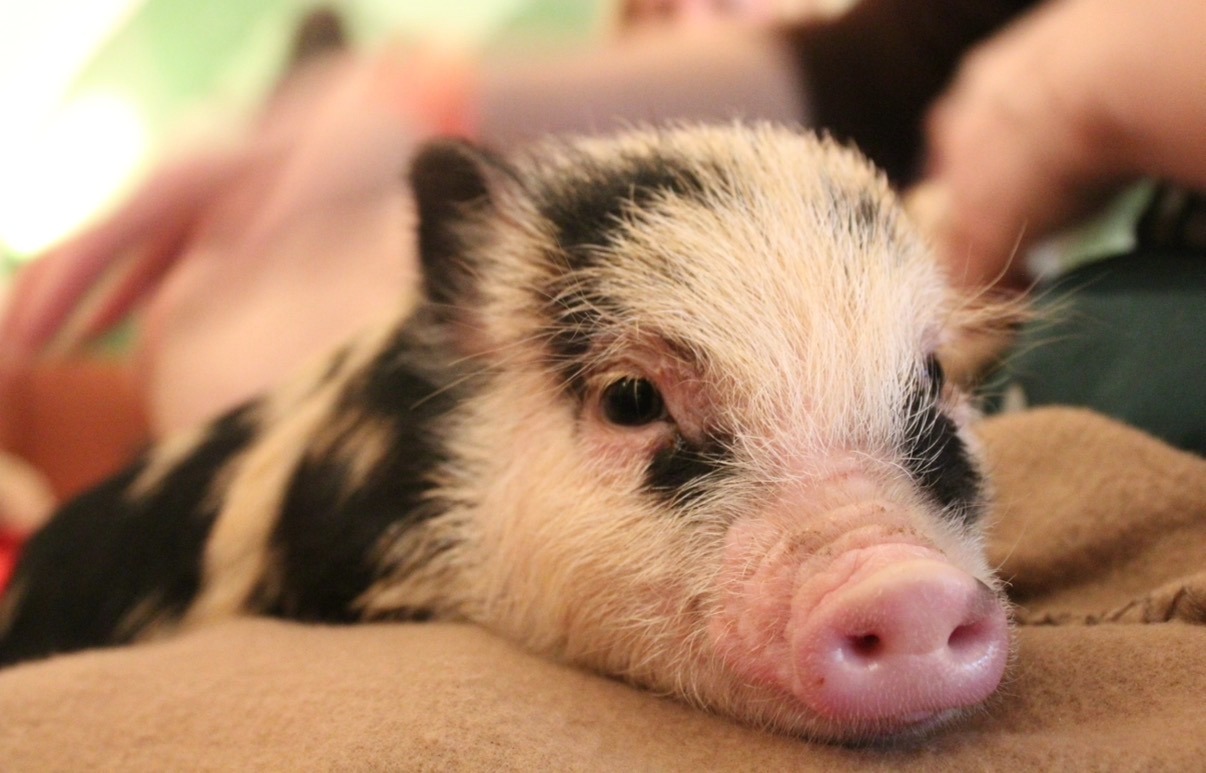
We sat on the ground of the cafe for half an hour while the fuzzy pigs wriggled and oinked all over the place. Within 2 minutes, the pigs had made every attempt to eat my crutches, which consequently had to be removed from their reach. Within 5, I understood Fern from Charlotte’s Web better than ever before. Two little pigs had curled right up in our laps and fallen peacefully asleep between our legs.

A baby minipig at the MiniPig Cafe Budapest.

Saying goodbye to the pigs was made easier by the fact that we had a prosecco cruise booked that evening. After a delicious meal of Hungarian street food, we rolled over to the dock. 

I had to be rolled backwards in the wheelchair down the ramp to get to the boat, which felt like an honest-to-God rollercoaster. I threw my arms up in the air to humor the line of passengers watching.

Yet again, the universe granted me special treatment — our very own designated seats right at the front of the boat, “Titanic-style” as the cruise owner put it. 

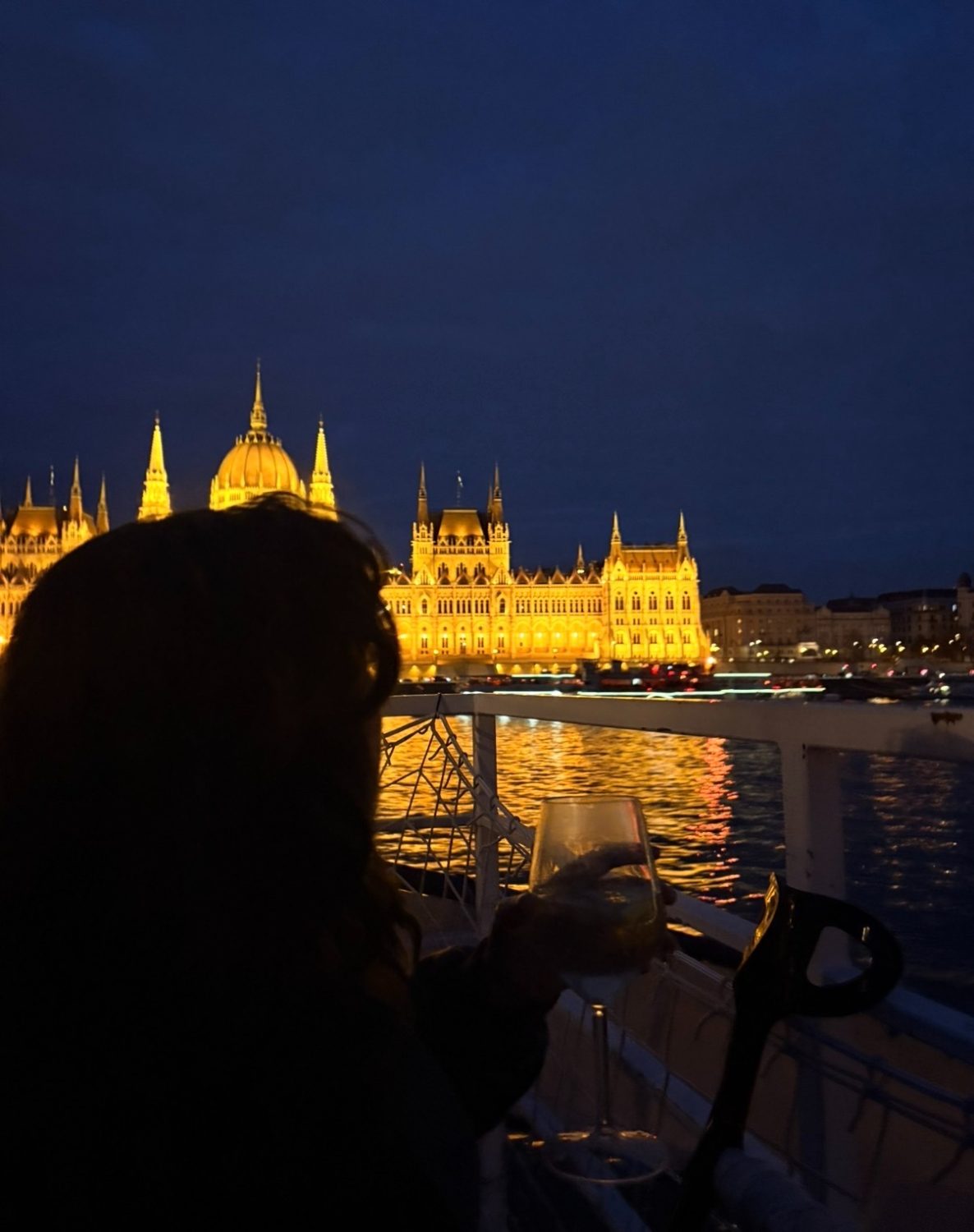
As we sailed past the Hungarian Parliament Building with a perfect view, I felt a feeling I hadn’t felt before about my whole leg situation. It wasn’t gratitude, not even close, but something close to peace.

Me on the Prosecco cruise looking at the Hungarian Parliament Building.

Yes, something awful happened, no matter how much I wish it didn’t. But that doesn’t mean no good can come from it. Good can come from everything, and as cliché as it sounds, it’s up to us to look for it, even if focusing on the bad parts comes a lot more naturally. In this case, I assure you the negative thoughts won for about a month straight. My Hungarian/Austrian adventure was an overdue turning point.

The morning after our Prosecco-soaked night in Budapest, bright and early, Vienna was waiting for us. I slept the whole bus ride and enjoyed a much-needed (seated) shower before embarking on a wiener-seeking mission. 

The words “wiener” and “wien” are everywhere in Vienna, to mine and Laney’s immature delight. We were cracking up left and right, only to discover, of course, that “Wien” is German for Vienna. Hence why we know sausages as “wieners” — it literally means “from Vienna.” So we had to try some authentic sausages, and they did not disappoint. 

Instead of joining the group for the guided tour, we went to key spots featured in “Before Sunrise,” allowing Laney to step right onto the set of a movie that means so much to her.

The drive Sunday morning was gorgeous, filled with mountains and adorable Austrian villages. Salzburg was breathtaking. After an action-packed weekend, we chose to relax and soak up the sun in Mirabell Gardens.


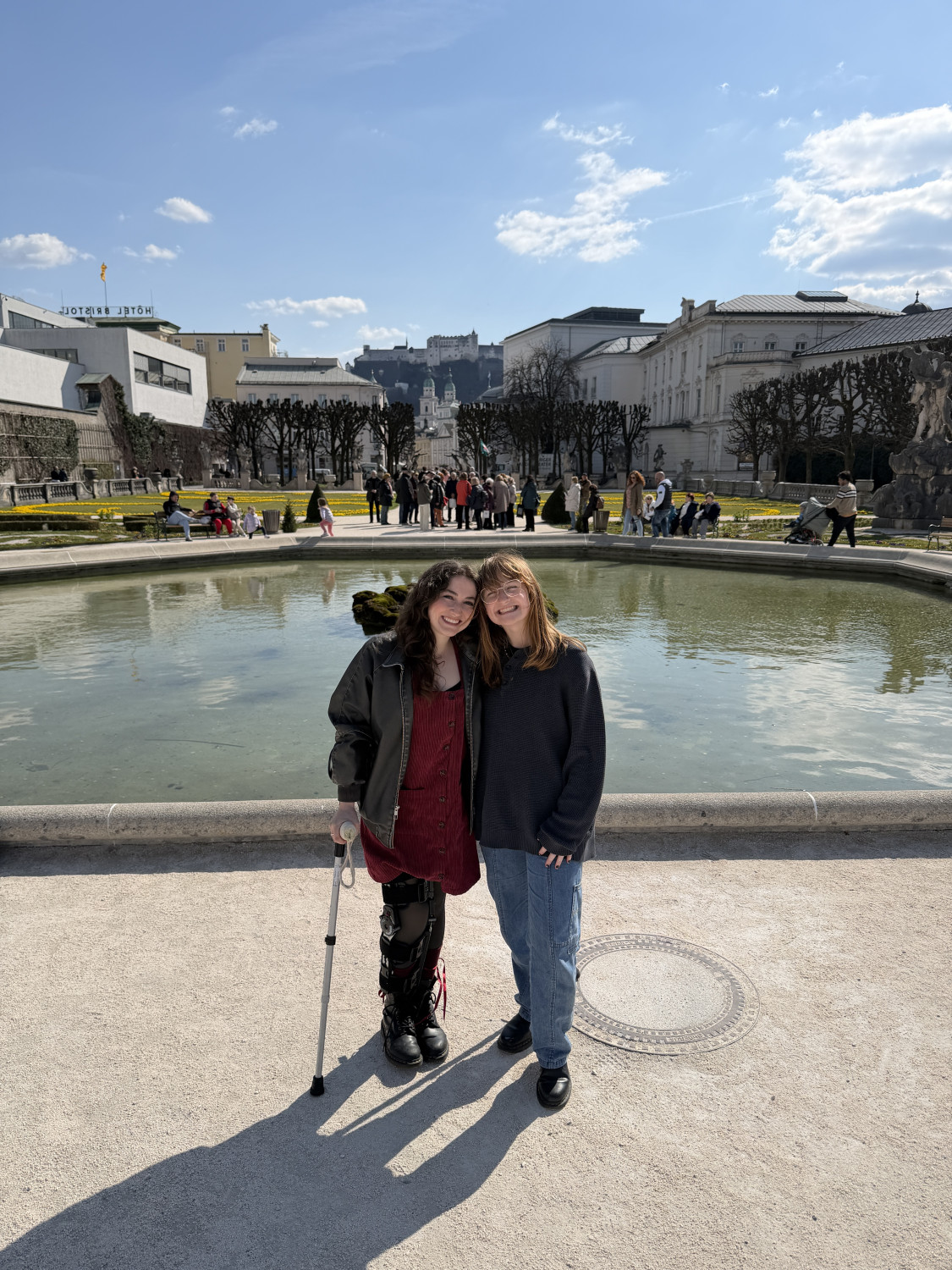
Laney and I in Mirabell Gardens.

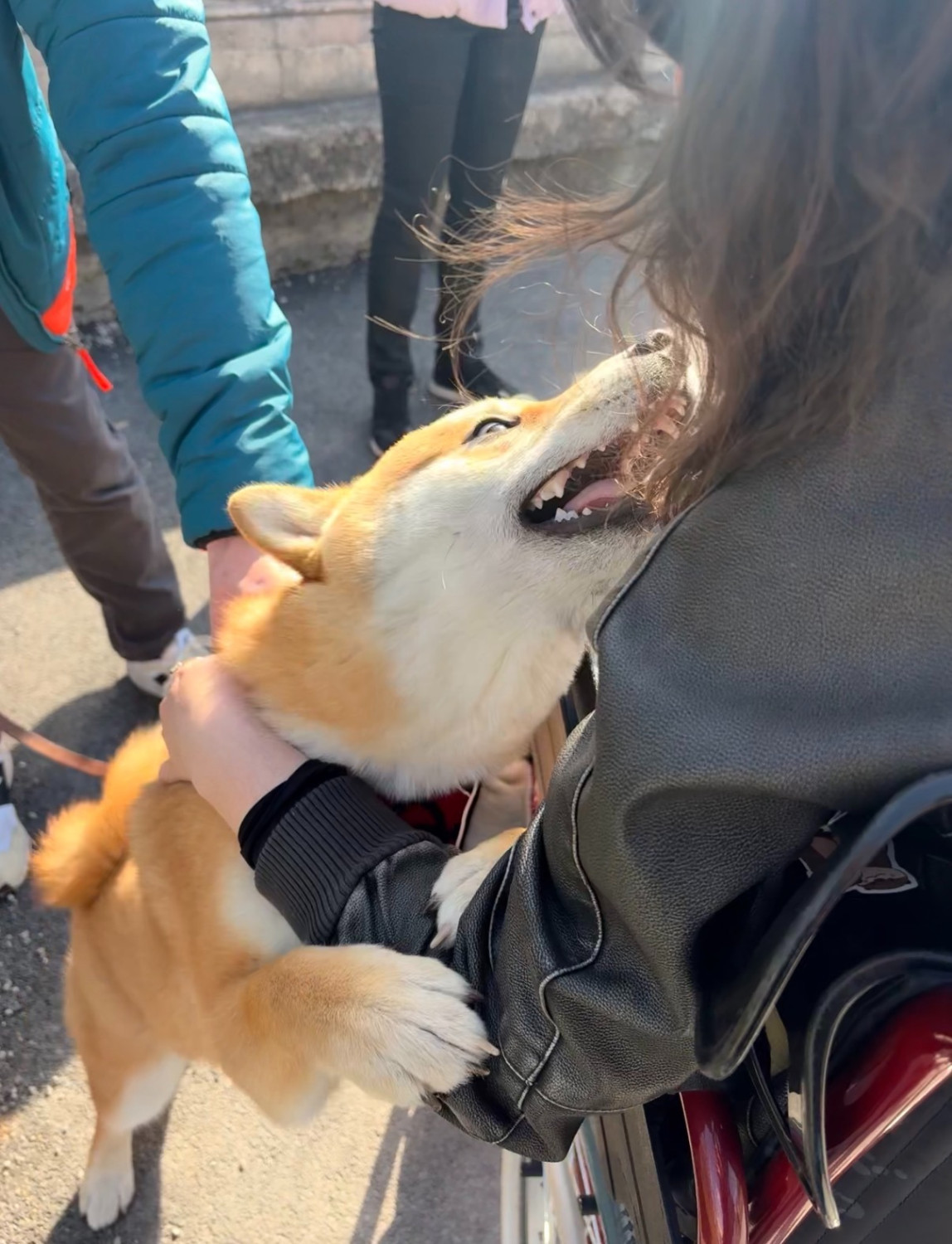
Here, I met the love of my life. A Shiba Inu. For context, Shibas are my favorite dog breed. I love their pointy ears, curly tails and fuzzy faces. But Shibas don’t tend to love me back. I try to pet them every time I see one, but they are known for their standoffish attitudes and signature side eye, and that’s typically what I get.

This Shiba was a breath of fresh air, a light in this dark world. He jumped all over my wheelchair, licked me and held onto me with his paws. It was magical. Finally, a Shiba matched my energy. After watching countless videos of Shibas online, it felt like meeting a celebrity.

Meeting my new best friend.

Then we went on a nutcracker hunt. Laney collects them, and Salzburg is known for its Christmas markets. By the time we finally found the perfect one, it was time to head back to Florence.

Reflecting on my storied weekend, I have a few key takeaways.

  1. All three cities I visited were significantly more wheelchair friendly than Florence. The roads were mostly flat with a ramp on nearly every sidewalk, compared to Florence’s indescribably bumpy cobblestone streets. Have you ever ridden on a wooden rollercoaster? It’s like that, minus the seatbelt, plus thousands of staring tourists who won’t move out of your way.
  2. European architecture is breathtaking, and pictures do not do it justice.
  3. When traveling in Europe, go in the churches.
  4. And on the bridges!
  5. The nightlife in Hungary and Austria is unmatched. I finally got to party!
  6. I won the friend lottery in 7th grade when I met Laney.
  7. I might need to get a Shiba. (or a pig?)
  8. Everything is going to be okay.