Hidden Gem: Locally Owned Gym in Florence Provides Much Needed Solace

written by Alex Daggett for Special Project: Experiential Learning in Journalism

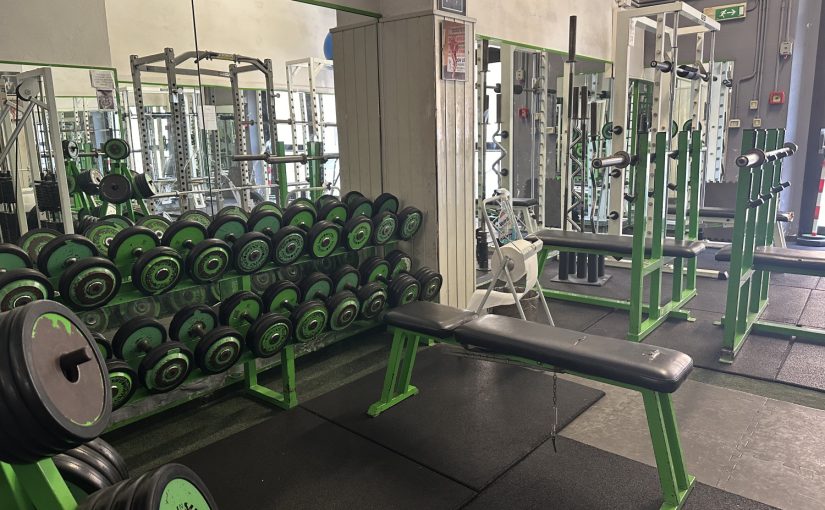
Tucked away on the quiet street, Via del Leone, with a modest sign and entrance, Gym & Tonic is a true, classic testament to athletic performance and bodybuilding. Built on the first floor of a residential building, the space extends to the back with free weights and old school machines adorning the right side. Under a skylit converted garden is a dance studio and boxing area. Certificates, awards, records, and trophies for mens physique occupy the walls everywhere the eye can see, and a sense of community is felt. 

As soon as I arrived in Florence to study abroad for the Summer, I immediately sought after a gym so I could stick to my workout routine.  After some research, there still weren’t any gyms that stood out to me. By pure chance, I happened to walk by Gym & Tonic while exploring the south side of the city, and decided  to take a look around. Immediately upon entering, I was shocked by how seamlessly the whole space was integrated into the classic architecture, nothing looked out of place. I was so used to the concept and sights of large scale commercial gyms where everything looks the same, and this was far from it. Despite the rustic nature of the machinery, everything was clean, and practical. I have been to a non commercial body building gym only once before, and this evoked very similar emotions and feelings, while offering an Italian twist. 

“I’ve been in charge for 26 years, since I inherited the gym from the man who owned before me,” said owner, Francesco Borghesi.

Despite the establishment being older than himself, Borghesi is synonymous with Gym & Tonic in the current date.

“I’ve been lifting weights since I was 15,” Borghesi said. “It’s what I love.” Borghesi provides not only customer relations, but also teaches various courses.

“I am thankful to have many good teachers in my time,”  Borghesi said. “So I try to provide the same to others.”

When I met Borghesi, he was teaching a patron a boxing lesson. Once he was finished, he told me all about the gym. I then bought a membership and got a workout in that day. Since then, I have gone every day and have yet to find a flaw in the gym. The hours are from 10:00 to 20:00, and every time I’m met with an immersive environment full of lively locals. Working out has always been a great escape and opportunity for self focus and reflection, and this is the perfect place for just that. Every time that I go to a commercial gym, it always just feels so clinical and uninviting, but Gym & Tonic offers such a different environment that is refreshing. I am very glad that I found this spot, as it made this international transition a lot easier. 

While it may not be on any travel destinations, or top ten lists, I think that adds to the charm of such an establishment. A place that is largely untouched by tourists offers a level of immersion and authenticity that is hard to come by. For that reason alone, Gym & Tonic is worth checking out, and they even offer day passes for people looking to get a quick lift in. A true hidden gem of Florence, located at Via del Leone 10.

Special Project: Experiential Learning in Journalism – A Writing Journey Through Study Abroad

written by Sophia Koch for Special Project: Experiential Learning in Journalism

I’ve always harbored a deep desire to explore the world. Contemplating my future as a journalist, I’ve often envisioned myself traversing diverse landscapes and culture. Some of my favorite travel experiences have thus far been confined to the United States, with standout destinations including Carmel, California; Maui, Hawaii and Key West, Florida. These travels sparked a realization within me: a profound yearning to delve into travel writing to some extent.

Studying abroad has unveiled a different facet of journalism, exposing me to the intricacies of writing about entirely new cultures, cities, and people.

Upon learning my home institution at the University of Missouri School of Journalism added the Florence study abroad program, I swiftly recognized it as the ideal opportunity. Uncertainty came over me regarding the experience awaiting me in a foreign country at a different university. I wondered whether the instructors would be stringent, what subjects they would cover, and how my Special Project Experiential Learning (SPEL) internship in Journalism would unfold. The SPEL program, offered through Florence University of the Arts – The American University of Florence, provides 3 credits along with real-world reporting and writing experience. The special project course features experiential learning hours with the Community Engagement Member Institutions (CEMI), which are dynamic learning environments created to foster learning through interaction within the community. 

During my second week in Florence, as my first class commenced and I met with Sofia Galli, my supervisor for the SPEL placement, I realized the breadth of knowledge awaiting me. The professors’ expertise and the assignments the instructor tasked me with promised to enrich my understanding of Florence thus being my first time ever in Europe.

Over the past 15 weeks, Professor Galli has assigned me various articles to be published on the institution’s websites. I’ve had the privilege of attending school-sponsored events, such as a book presentation featuring Italian author Caterina Perrone. Alongside attending, I conducted a thorough interview with the author, delving into her book and gaining insights into Florentine history. Hosted by the school’s advisors and students, the article found its place on their website. Another school-sponsored event I had the opportunity to attend was Laura Fauzzi’s art exhibition. Although I’m not a big art enthusiast, learning about the way she creates art through breathing and listening to waves was incredibly intriguing and something I had never encountered before. This experience once again reminded me why I love journalism so much – because it allows me to learn something new every day.

While some events I cover are not in English, initially posing a challenge, I’ve overcome this hurdle with assistance from my advisors and by conducting interviews in English such as the book presentation with Caterina Perrone. This journey has facilitated my growth as a journalist, reinforcing the notion that in this profession, nothing comes easy—a skill set I owe to FUA-AUF and the SPEL placement.

One of my favorite pieces I worked on was a profile of two bachelor’s degree students attending The American University of Florence. They are siblings from Brazil studying culinary arts and fine arts. I had the opportunity to speak with them about their experience living full-time abroad and learn more about their Brazilian culture. Additionally, I participated as a journalist in the Art and Community: Secret Florence Walks course, observing the dynamic interactions between the professor, students, and the urban landscape. Beyond contributing an article to the website and enhancing my portfolio, this experience exponentially deepened my understanding of Florence.

While my SPEL journalism internship is concluding, the whole experience has been transformative. From the picturesque landscapes of Carmel to the vibrant streets of Florence, each experience has shaped my understanding of journalism and ignited my passion for travel writing. Through the SPEL internship, I’ve not only honed my writing skills but also gained invaluable insights into different cultures and storytelling techniques. 

Fashion Takes Initiative on Environmental Protection

written by Isla Herring for Special Project: Experiential Learning in Journalism

Italy is commonly recognized for its significance in the fashion industry and the latest trends, along with the country being the birthplace of many reputable brands. A copious amount of designer brands was created here such as Prada, Gucci, Valentino, Versace, Fendi, and more. Although we recognize these brands for their power in the fashion world, we do not often consider the impact that they make on the planet. Brands today are taking steps to reduce their carbon footprint and take preventative measures for the future. 

Prada has been recognized in the past for its lack of protection of animal welfare by using materials derived from living beings, but recently they have been making strides towards sustainability by using recycled packaging and solar energy. They have also produced two new collections in which they use recycled nylon and recycled gold for their products instead of manufacturing more original materials. They are not only working to combat the backlash from their past methods of clothing production, but they are displaying effort to assist in improving our planet. 

As of December of 2022, Miu Miu, which is owned by the Prada Group, has implemented several sustainable measures such as offsetting emissions, use of solar energy in their buildings, and recycled plastics for their packaging. They also offer an upcycled collection that includes low-impact materials that are not as harmful to the environment. 

Owned by Capri Holdings, Versace, has been an Italian brand with long-standing recognition for its minimized negative impact on the planet. They have implemented numerous responsibly sourced and certified materials into their products throughout the years. They have also limited the use of animal-derived materials and banned furs from their products.

Ferragamo is another brand that has attempted to be conscious of their consumption of animal products. They have an official welfare policy that includes only sourcing wool from non-mulesed sheep as it is the most ethical process. 

Gucci is not specifically labeled as a ‘sustainable brand,’ yet they have been making improvements to their company to be more eco-friendly. They have incorporated materials that are recycled into their products, along with changing their methods of fabric cutting to produce less waste. They are also reducing their emissions and minimizing harmful chemicals in their leather.

Additionally, certain brands have been credited for donating money to environmental conservation projects. Prada has collaborated with the Intergovernmental Oceanographic Commission to support ocean conservation. Versace has also supported this cause by collaborating with organizations like the Green Carpet Fashion Awards. These awards celebrate leaders who are creating transformations to approach and achieve change on behalf of the planet. Fendi partners with various projects such as the World Wide Fund for Nature which supports local communities to conserve natural resources and put policies in place to protect natural habitats. Furthermore, Missoni has involved itself in philanthropic initiatives such as supporting environmental conservation projects. They also collaborated with OrphanAid Africa and have donated earnings made from their products to other charitable causes. 

As a consumer, it is important to be aware of your involvement in the health of the planet. Being mindful of the brands you choose to support can cause change that makes vast differences to the environment. Also, holding companies accountable for their part in the earth’s deterioration can bring about alternate solutions. Designer companies have been able to get away with unethical practices in the past due to their high profit levels, but it is necessary that we credit their current efforts to polish up their methods and materials.

Runseeing in Florence

Written by: Maya Echols-Albrecht

As a study abroad student, I am constantly trying to make the most of my time abroad. Taking advantage of the cheap flights to other countries and spur of the moment decisions truly make studying abroad a once in a lifetime experience. One thing I did not prepare myself for however, was taking time to explore Florence, the city I live and study in. This is when I decided to pick back up an old hobby of mine: running. 

I quickly started doing research on some good places to run in and outside of the city, figuring this could be an amazing opportunity for me to truly experience all of Florence. I still vividly remember my first run up to Piazzale Michelangelo, exploring the wooded trails and more residential areas of Florence which I never would have seen if I hadn’t gone on a run. This is when I knew I should start regularly running here. 

I found a blog that highlights various running routes in Florence, ranging from scenic paths along the Arno River to challenging trails in the surrounding hills. The blog also provides tips for runners, such as where to find water fountains or restrooms along the routes, and suggests the best times of day to avoid crowds and traffic. 

As I continued exploring Florence through running, I discovered hidden gems like the Boboli Gardens, a vast park filled with statues, fountains, and winding paths perfect for a leisurely jog. I also stumbled upon local parks and squares where I could join in on group runs or yoga sessions organized by the community.

Not only has running allowed me to stay active and maintain my fitness while abroad, but it has also deepened my connection to Florence. Each run feels like a mini adventure, as I uncover new sights, smells, and sounds of this beautiful city. It’s amazing how something as simple as lacing up my running shoes can turn an ordinary day into an extraordinary experience.

Experience a Rooftop View in Florence

Written by: Sophia Koch

One thing that will never get old while living in Florence are the immaculate views. I pass by the Duomo every day and still love to look at the architecture and admire the overall size of the building, but with the weather heading into spring, I have been enjoying going to rooftop bars. The views are amazing to experience, so I have taken on the mission to try out different rooftops to experience a new view of the city.

Caffè del Verone

During my Cultural Introduction to Italy class, our professor took us on a site visit, and then she made sure we went up to the Caffè del Verone rooftop to see the view during sunset. The sunset was so beautiful that night, and the weather was abnormally warm for February, so I knew I had to come back.

This place definitely feels like a hidden gem because it was a bit confusing getting to the restaurant, but the front desk employees at the museum were nice enough to lead the way. I came back on a weeknight about 30 minutes before sunset with my roommates. We grabbed drinks and found a table. Most of the tables were full, and the ones that sat right by the railings were all two-top high-top tables, so if you want a good seat during sunset, I suggest going earlier.

The way the restaurant is laid out with the other tall buildings around, you actually can’t physically see the sun go down, but it is still a breath-taking view when the sky changes colors over the Duomo and the Synagogue of Florence, with the hills in the background. Usually, most rooftops offer a view of the Duomo but I really enjoyed this one because there was a new view to see of the city. There is also a perfect picture spot right when you walk down the hall to get on the patio with the Synagogue of Florence in the distance.

The drinks were fantastic, and while in Italy, you can’t go wrong with an Espresso Martini. Drinks are about 10 to 15 euros, and they come with some chips and nuts to snack on. Overall, it was a really lively place and perfect for having aperitivos, hanging out, or playing cards with your friends and family.

View on Art Rooftop Cocktail Bar

Another example of the marvelous rooftop bars in Florence with jaw dropping views is located on the 6th floor of Hotel Medici. You will find a panoramic view of the Duomo and city on the terrace of this rooftop bar. If you want great pictures with the Cathedral in the back, this is the place to go. The terrace is super small and hard to get reservations during sunset, and it usually gets busy because the view is really to die for, so if you want the best table, I suggest going right when it opens for a cappuccino or a signature cocktail. 

This is a great location for a romantic evening, a fun evening with friends, or even a spot to bring your family when they visit so they really get to see one of the best views of Florence’s admired Duomo. It will definitely get busy, especially with the tourist season starting, so beware of crowds.

You can either come for a coffee and pastry or try their wide selection of wines and refreshing cocktails, as well as a range of foods from charcuterie boards to burgers. The prices for drinks range from 10 to 20 euros, but that is to be expected with the scenery. I feel like this place can offer both a relaxing time to cherish the view or a lively time with live music and some performances. We came at 2 pm, and all the tables on the terrace were full, but tables were still available inside.

I am definitely bringing my family here when they visit to impress them with the city I have been able to live in for this whole semester—and so I can get them to pay for the drinks. This is a must-visit place before you leave Florence.

When visiting new places, I love finding sites with great views to capture the essence of the city, especially at sunset.  These two rooftops give you two different vibes as well as views of Florence. Next time you are looking for a place to have a relaxing day and soak up the sun, or a lively night listening to some live music, overlooking a wonderful view, these two places in Florence will give you just what you are looking for. 

Navigating No Meat in Florence

Written by: Isla Herring

When I stopped eating meat at 11 years old, I never anticipated the challenges it would hand me while in a foreign country. As someone studying abroad who speaks limited Italian, shopping for food and ordering at restaurants is a difficulty I did not quite prepare myself for. 

Italy is commonly recognized for its food, whether it is pizza, pasta, cheese, sandwiches, or soup, the list can go on. I have always heard amazing recommendations about food from Italy and it was something that excited me when looking into studying abroad. Once I arrived here and was faced with menus in languages that I could not understand, I began to worry about how I would manage my diet in Florence. 

My first night in Florence was an experience that has lingered in my head for all of my meals since. I was attempting to read the menu and decipher the codes for allergies that are provided at the end of the page. I saw a number that told me if dishes contained fish, a number for eggs, and many numbers for other allergies and sensitivities, yet I saw no indication that meals contained meat. I decided that my best option would be pasta because I was famished and had hoped that it would be simple enough to understand if it contained meat. 

When the server set my plate down in front of me, my stomach immediately dropped. What I had ordered, thinking it was just a version of a red sauce, contained lumps of meat that I didn’t recognize. I told myself not to panic because this was just a meal, but from the stress of my travels, the lack of food in my body, and being in a place where the servers hardly understood me, I did indeed panic. 

I said to my roommates once the staff had walked away that my food had meat in it and I did not know what to do. Everyone looked at me with a face of concern as they could read the overwhelming emotions coming over me  in that moment.

“Trade with me,” was the first response that I heard. Luckily for me, my roommate ordered a meatless pasta dish and offered to switch with me so that I could get some food in my body. I knew then that going forward I had to make a conscious effort to improve my understanding of the language and vegetarian options while abroad. 

My first step  was to search for how to say, “without meat,” in Italian, which I learned is, “senza carne.” I knew this term would come in handy for me going forward. I also searched for, “fish,” which is, “pesce,” and practiced the pronunciation of these terms. 

After some basic terminology lessons, I wanted to find more places in Florence that were vegetarian or vegan friendly. Although now I felt confident that I could avoid meat, I still wanted meals that were more than just a noodle or a bread. I wanted to find options that still offered me protein and vegetables. 

I did some basic web browsing to see some places that were close enough for me and decently affordable for a student on a budget. The first place that I found was called “#Raw Vegan Firenze,” a restaurant that offers a variety of vegetarian and vegan options for a reasonable price. They have many juice options as well and focus on clean and healthy ingredients. 

The next place that I found was “Brac,” which offers Mediterranean food. It can be slightly pricey, but has many accommodations and vegetarian options for more of a sit-down dinner experience. They are recognized for their vegetarian and vegan options, along with gluten-free accommodations. 

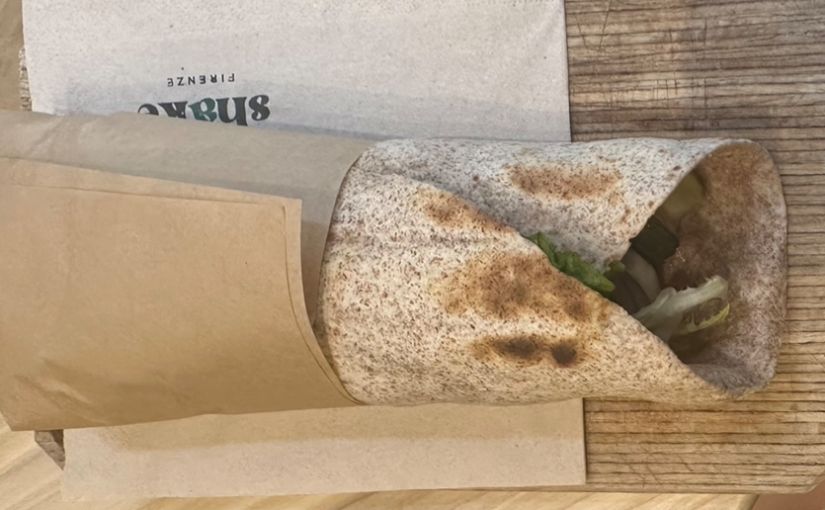
The last place that I want to mention is one that I discovered on my own when strolling around the city. It is called “Shake Cafe,” and it has many options for acai bowls, salads, and wraps that I very much enjoyed. They focus on healthy cuisine, sustainability, and high quality ingredients. The place is very cozy and welcoming and the staff were very understanding and kind. I ordered a falafel wrap that came with onions, beets, greens, hummus, and a lemon vinaigrette.  

I found that there are many places here that offer vegetarian meals that are more than just a salad or a carb. Some quick research immediately made me feel much more comfortable in this new city I call home. I began to make a list in my notes of places that I discovered were viable options for my diet. This way, when I’m in a pinch for food, I know I have places to go to on hand now.

I also did some more research on quality vegetarian protein sources and began to compile a list of these foods as well so I could search for them at restaurants, and grocery stores when cooking for myself. The top searches were foods like, seitan, tofu, lentils, beans, sprouted grains, oats, nuts, and eggs. These have become foods that I focus on when preparing meals and dining out to ensure that my diet is staying balanced with nutrients and substance. 

Overall, the transition to new food is a challenge for everyone, and for those who have dietary restrictions, the process can be even more strenuous. My advice is to do some research and stay optimistic because there are people everywhere who share your same struggles, regardless of language and location. 

A Home Away from Home

By Barbara Carranza
Photo by author 

I knew when I applied to the Special Project Experiential Learning (SPEL) Journalism course that Florence  was one of the most beautiful cities in the world. I thought it would be the perfect spot for me: a relaxed, artistic, history-filled setting that would appeal to my old and free-spirited soul. It turns out I was right on the money (and so much more). As I’m getting ready to head back to Charlotte, my heart grows heavy. Although I have only spent two months in Florence, it’s evident to me that I have found a home away from home.

The thought first crossed my mind just a few days after my arrival. I assumed assimilating to a whole new country, language, and culture would naturally take time, but surprisingly, a sense of ease settled in me very quickly. Since I have always been curious about everything, I wondered: is it because Florence is the total opposite of Charlotte, a metropolitan city nearing 1 million inhabitants; or that everything is within walking distance, or maybe it’s the “homey” vibe that Florence just gives off that makes me feel so comfortable here? Whatever the case, it didn’t take long for me to tell my parents and friends that I wanted to move here. It was a big revelation for me because after all of the trips I’ve taken in my life, the closest that I ever came to thinking, “Yeah, I can see myself living here,” was Miami and Los Angeles. Not even Lima, Peru, my birthplace, and where almost all of my relatives live made the cut. Quite the opposite – I’ve repeatedly said that while I love visiting Lima, I could never live there. So when it dawned on me that I could actually picture myself living in Florence, I was shocked, but it was a good, welcoming realization.

Now that my time here is coming to a close, the reasons for my love of Florence have become clearer. I believe one of them is the persevered presence of its antiquity provides me an endless supply of imagination. As a writer, I read and write every day. Staying in Florence gave me a burst of creativity. I wrote articles for FUA during the day, and incessantly wrote my own stories at night. Whether it was in my apartment’s living room with the windows open or in a café down the street by the Duomo, the words poured out of me, and it was simply wonderful.

Another reason for wanting to stay would have to be the breathtaking beauty of the city. Raised in a place where skyscrapers dominate the skyline, Florence offered a nice change of scenery. Instead of having the Bank of America Corporate Center, Duke Energy Center, and Bank of America Stadium in the horizon, there was the Duomo’s terracotta-lined dome, Giotto’s bell tower, Palazzo Vecchio’s Torre di Arnolfo, and the surrounding hills of the valley that the city lies in. At times, it made me feel like I was living hundreds of years ago, when Florence reigned supreme during the Renaissance.

Though I’m happy to return to my family and friends, I’m also sad to leave Florence. I’ll always carry the memories with me. I don’t know when I’ll return, but what I do know is that one day I will.

See more of Florence and Italy at FUA’s FBInstagram, and Twitter.

Having Family in Florence: What I Taught and What I Learned

Photo by author

By Gregg Casazza

For two weeks my family visited me in Florence. I got to show them around the ancient city, and was eager to teach them about everything I learned. Surprisingly, throughout this experience I ended up learning quite a bit as well.

Family is everything in Italy. It is not altogether uncommon to find three generations of a family living in one house, children are in-part raised by their countless aunts and uncles, and family meals are some of the most important events in the day. Being from an Italian family myself, being away from them for so long has been quite difficult. However, the separation has taught me a lot, and has especially helped me with my own personal growth.

It wasn’t until I had the pleasure of having my family visit me, that I realized just how much I had learned throughout my Study Abroad experience “on my own.” At the beginning of the semester, time after time I was told, “You will learn your way around the city completely,” and although I am usually quite bad with directions, these people were right. I no longer needed Google Maps to navigate the city, I didn’t need Yelp to suggest restaurants, I didn’t need TripAdvisor to find things to do or see in the city. My parents remarks at how impressive it was that I knew the city so well.

I became like a tour guide for my family, on their own private tour of Florence. Showing my family around the city was in one way a test of how much I had learned about the ancient city, but also a farewell tour around my favorite spots and locales. Things like the legacy of the Medici family, hidden gardens and piazze, as well as the numerous cafes and libraries were all a bit bittersweet to visit again, but also surprised me on just how much I had learned by walking the many winding streets of the city. Even little things like the train system which at first felt impossibly foreign, now seemed almost second-nature. I taught my family about ordering meals or coffees, using different currency, picking wine, the history of Florence, and other seemingly smalls tasks that had become utterly mundane to me, but had contributed to my overall learning experience.

Learning about Florence was not the only way I grew however, I also grew personally as well. Study abroad allowed me a greater sense of independence. I learned my place in a global context, learned how to be alone, and how to be self-sufficient. Shopping for meals in and of itself can be an act of self-sufficiency, but knowing where to shop, how to get the freshest produce, and the best prices are also a huge part of personal growth in Florence, and shows a lot of maturity. Using what I had learned, I cooked for my family during their visit using the freshest vegetables and meats, I made traditional Tuscan dishes, Antipasto, Primo, Secondo, and Contorno, and I realized how much I had grown as a person, and how much being in Florence helped me to “grow-up” as well.

Being with family in Italy, just makes sense. Being away for so long was really tough, but after I made it through that hurdle, Study Abroad started to really work for me. In only one semester I became more integrated into Florentine life, learned about the country, and about myself, and it took my family being here for me to really see it for myself.

See more of Florence and Italy at FUA’s FBInstagram, and Twitter.

Ciao Italia!

By Michael Lovanne

A study abroad student reflects on overcoming challenges when facing a new culture such as the Italian one and what he has learned so far.

You’ve done it. You said arrivederci to friends and family, left the comforts of your university behind, and have settled into your new life in a different country. Now what? No matter what your expectations of this experience were, you are probably finding yourself a bit overwhelmed with the new sights, sounds, and of course the language of your new Italian environment. I found it a lot to take in myself; I’ve never visited, let alone lived in a place where I didn’t speak the native language, nor have I felt so personally attacked by pigeons or shared an alley with speeding cars and motorcyclists every day. I almost felt reduced to a child again, constantly confused and unsure of what to do and how to do it right. However, over this last week I’ve come to the realization that if this is where I chose to live for the next 3 months of my life, I might as well live it properly. I’ll admit my accent is terrible and I am nowhere near fluent, but it’s important to focus on small steps, i.e. making an effort to learn courtesy phrases like ciao, grazie, prego and buonasera. Thanks to these efforts, I have already felt more at home and comfortable with my surroundings. I’ve explored, purposefully gotten lost, tried new foods, and have fallen more in love with Florence and Italy after every passing day. So, my advice to you in your new home is to take your time, avoid tourist spots in favor of exploring the city for yourself, and most importantly, live how the locals do!

See more of Florence and Italy at FUA’s FB, Instagram, and Twitter.

I Wish I’d Been Here When: My Home Was a Nunnery

Artwork from my apartment’s walkway depicting angels and other religious imagery. Image courtesy of apartment building.

By Isabel Pellegrino

My apartment used to be a convent dating back to the 15th  century. I can’t help but wonder about the way the nuns lived here. I wish I was able to go back in time to better understand their lives and how they perceived Florence and its future.

I wish I had been in Firenze when nuns gathered in my apartment’s kitchen. In the 15th century, my apartment was a convent. It is hard to picture this space as home to a religious community. While I try to embrace the Italian culture in all of it’s beauty and class, I am not sure the way I live could ever be compared to the grace of a Renaissance nunnery. Yet, here I am. Through an old wooden door, rod iron gates and a few flights of stone stairs, you will find us cooking and practicing our Italian; sometimes we feel like it’s the best we can do to connect with those who occupied this space before us.

During the 15th century, Florentine convents were evolving from small communities to large institutions, according to historian Sharon T. Strocchia in her book “Nuns and Nunneries in Renaissance Florence.” It became common practice for highly- educated unmarried women to congregate in convents. As a result, nunneries became hubs for research, academic dialogue and political influence. As I sit at the kitchen counter of my apartment, I dream of traveling back in time to speak with these women. I can see them now gathering around tables with their noses in books and crosses around their necks. Question after question would flow from me: What is it like to be women leaders of a religion often dominated by men? What do you see your legacy as? What does Firenze mean to you and your faith? How can I honor your lives in my time?

But more than anything else, I wish I had the chance to roam the Florentine streets with them and see the city through their perspective. In the midst of the Renaissance, I wonder how they felt about the art and how it influenced their faith. I wonder if they had any idea of what the convent space would become in the centuries afterwards. While I will never have a time machine during my fleeting few months in Italy, my roommates and I have pledged to take time every day to be grateful for our apartment and our lives in Italy. When we sit around our dinner table and discuss culture, religion, politics and philosophy, it’s almost as if we have been transported back in time by the everlasting art of conversation. I like to imagine the nuns doing exactly this, just centuries ago. Our apartment bridges our times together. So maybe, we aren’t all that disconnected after all.

See more of Florence and Italy at FUA’s FB, Instagram, and Twitter.