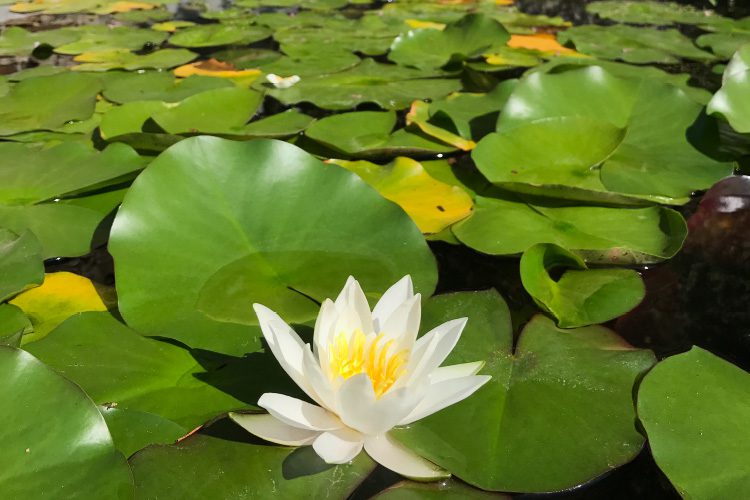
Van Gogh’s Colors

Photo by Author

By Chrystalla Christodoulou

“Loving Vincent”, and what Vincent van Gogh can teach us about color and life.

“Loving Vincent” is the first movie to ever be produced using only oil paintings. In order to make this dream a reality, the movie’s production team hired 500 artists from around the world who not only were amazing in their own right, but could paint in Van Gogh’s different styles with painstaking accuracy.

I watched the movie in the cinema, and I am convinced it is the only way to really appreciate it’s magic. It does not miss a beat and from the first scene we are introduced to its interesting nature. The paint strokes are always moving, crawling across the screen in a spiral or straight line. Every slight change in facial expression is captured, every scrunch of the eyebrow, every shoulder shrug. I remember sitting up when the young protagonist is smoking and talking to someone. After taking a drag, he looks away in order to not blow the smoke in the face of his companion. Little details like this could have theoretically been omitted, and the five year long project maybe wouldn’t have taken as long. Yet, the honesty the movie exudes would not have been present.

The movie is filled with “Easter eggs” as most of, if not all, scenes are inspired or adapted from one of Van Gogh’s paintings, including every single speaking character! While the story that is played out isn’t necessarily true, it is interesting to see how the death of one of the world’s most beloved artists might have affected the people around him.

During my Fall Break I visited London for the first time and after seeing “Loving Vincent” I made sure to not miss Van Gogh’s corner in the National Gallery. Exhibited in a room with Pissarro, Seurat, Toulouse-Lautrec and others, his pieces take up an entire wall. This was the first time I had seen his work in real life. Upon seeing “Farms near Auvers”, which was included in one of the most visually engaging scenes in the movie, I understood why the idea for “Loving Vincent” came up. Even in a still painting, Van Gogh’s brush strokes seem to be dancing.

Florence illuminates with color throughout the day, shifting through tones of a similar palette. On my walk to school I play a game. I try to see how many colors I can find in new places. Electric blue on this lady’s eyelids, yellow socks on that toddler, a rainbow caught in a puddle on the street. It is said we dream in black and white. All the more reason to live in pursuit of full, brilliant color.

See more of Florence and Italy at FUA’s FB, Instagram, and Twitter.
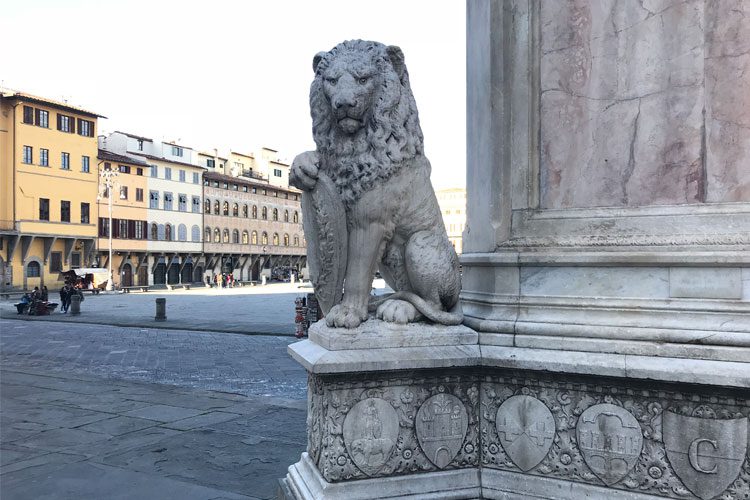
An Intimate Portrait of Pietra Serena

Photo by the Author

By Oceana Minthorne

Anyone who has visited Tuscany will appreciate pietra serena, a gray stone found in architectural and sculptural details as well as street pavement throughout cities such as Florence, Siena, and Arezzo. It has been used by the ancient Etruscans and cited since Renaissance times by the likes of Vasari. Oceana Minthorne shares an intimate and personified portrait of pietra serena.

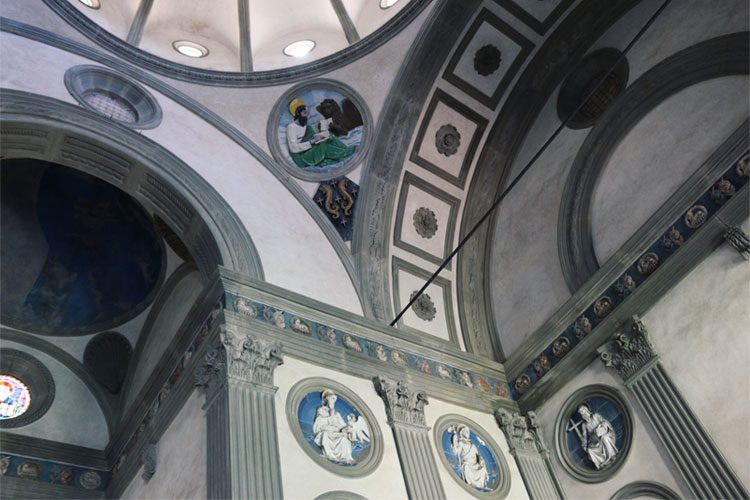
I wish I could lay down on the floor and stare for hours.  The stone is so smooth. Opposite from me, I want to be it. Perfect. Elegant. Clean. It envelopes this entire ceiling, cascades onto the walls, and delicately embraces the floors. The stone is cool but inviting, like the girl you envied in high school and wanted to be friends with but didn’t know how to talk to.  Serena.  Calm.  She is just that.

The dome is circular.  It goes round and round and does not stop.  Gets back to its starting position and begins again.  Never tiring.  Effortlessly elegant.

I wish I could lay down on the floor and stare for hours.  Melt into the ground, become the stone.  I would have a view of the dome forever.  I could watch visitors “oooh” and “aaah” over my aesthetic. They could step on me and it wouldn’t hurt. I’d be quarried from Fiesole. The best. They’d talk about how strong and sleek I am. I would inspire Steve Jobs and bits of me would be placed all over the world.

I am the stone.  Perfect. Elegant. Clean.  I fill the room, the ceiling, the walls, the floor. I am cool, inviting, Serena.

See more of Florence and Italy at FUA’s FB, Instagram, and Twitter.
A Glance into Florentine Tabernacles

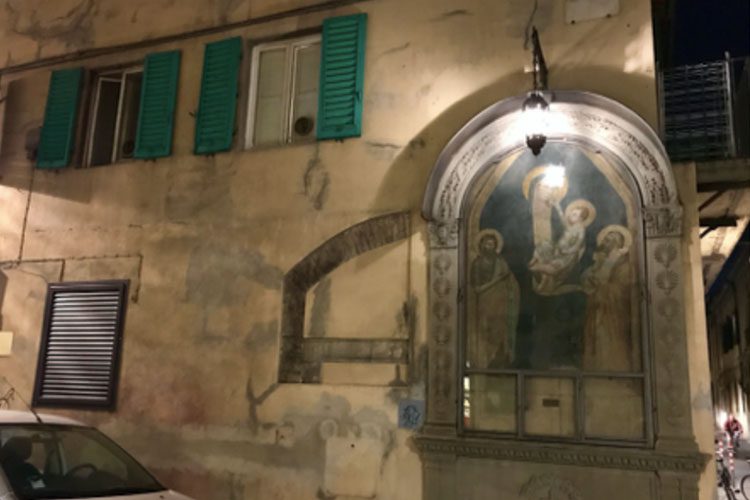
The Florentine Tabernacle Canto di Monteloro on Via degli Alfani.

By Emelia Imperati

Tabernacles cover the streets of Florence, adding further religious, historical and aesthetic appeal and meaning to the city. Canto di Monteloro is one example of these beautiful and purposeful creations, dedicated to their patron saints.

Although it is customary to be swept away by the grandiose markers of Florence, such as the Duomo or the Santa Croce, many tourists overlook the hidden treasures that flood the city. The Florentine tabernacles cover many streets and offer additional historic and artistic significance that is often overlooked by travelers. Depictions of Pagan gods were originally displayed around the city but were later replaced by images of saints after Constantine’s conversion to Christianity. During the 14th century, Italian towns dedicated themselves to patron saints, and Florence reflected their vowed devotion to the Virgin Mary and John the Baptist through the approximate 1,200 tabernacles. These religious testaments were built to offer support for the Christian doctrine during the war against heresy, during which groups challenged Catholicism. They also were used as a source of protection during the plague in 1348, the year of the “Black Death” Residents utilized them through candle lightings, written prayers, and placed offerings to seek out defense from the patron saints against disease and death. They were commonly commissioned by middle class families, as those of greater wealth focused on assisting cathedrals, chapels, sculptures and more elegant decorations and structures.

One of these tabernacles placed on Via degli Alfani, on the corner of Borgo Pinti, was a common site for these behaviors, customs and beliefs of the past. It was named Canto di Monteloro, meaning Corner of Monteloro. It reflects an illustration of the Virgin Mary holding the child, surrounded by Saint John and Saint Peter. It was built by Compagnia della’Assunta, one of the companies of the Festive Powers, an association of regional companies that created exhibits, parties and banquets. They played an essential role in the construction of antiquities of late Renaissance Florence. The Canto di Monteloro was made with a popular and traditional stone of this era known as pietra serena, which was used for many other structural and artistic creations throughout the city. Below the image of the three saints is a portrayal of a cross on a 3-pointed mountain, which became the crest that gave name to the song the tabernacle was named after, and also to the powerful festive power, Montiloro, who gathered at this location. A wide shed resembling a small chapel originally protected the ornament, but was destroyed by traffic in the street. The fresco underwent several reconstructions overtime and was removed in 1953 for an extended period of time by the Superintendent for Artisitic and Historical Property. It was later replaced in this original location in 1991, and still remains as a beautiful additive to the street.

See more of Florence and Italy at FUA’s FB, Instagram, and Twitter.
Life in Florence: Festival of Lanterns

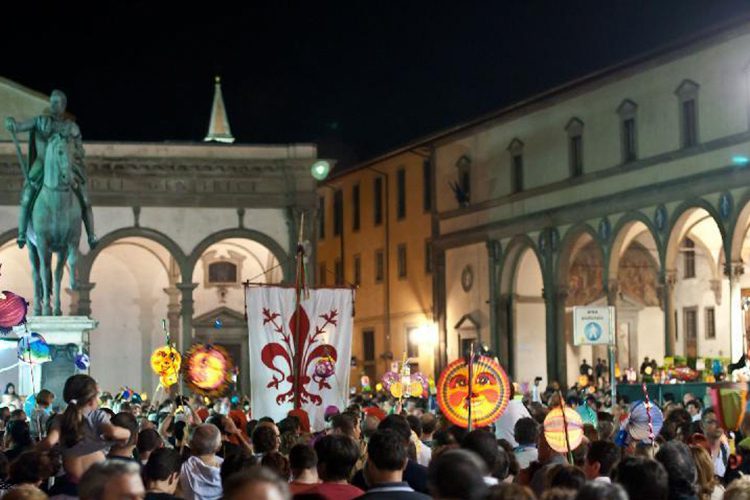
Locals gather in Pz. Santissima Annunziata for the Rificolona festivity. Photo by the author.

By Mikey Dombrowiecki

When it comes to studying abroad, sometimes it’s not as easy as it seems. For most of us, we tend to experience one common struggle: culture shock. This blog post describes my way of becoming more connected with the Italian culture through a local Florentine event.

It has now been about two weeks since I have arrived to Florence, Italy to complete my semester abroad. When coming abroad, I knew the lifestyle and culture here would be different than what I am used to in my charming little beach town in Ocean Grove, New Jersey. Little did I know this adjustment would be bigger than I could have ever imagined – one can infer that I was experiencing severe “culture shock.” So, I figured I would take matters into my own hands to find a way to break away from my homegrown routine begin to act like a Florence native. While browsing around for things to do, an FUA professor introduced me to the idea of attending the “The Lantern Festival,” called “Rificolona.” Unsure of what exactly it was, I figured I should have an open mind and attend as it was located only a few blocks away from my apartment.

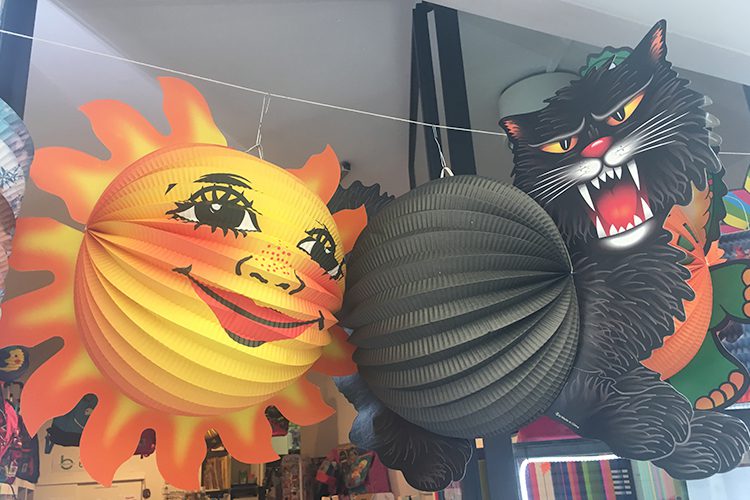
Modern-day Rificolona lanterns. Photo by Carmen Collins.

I ventured off on my own to attend the festival, and found myself piled in with hundreds of locals who were also gathering to participate in the festival. Aimlessly wandering around, I later ran into some of my classmates and together we walked around and explored. We also quickly grabbed some of the lanterns to avoid being just tourists. Halfway through the evening, I spotted my boyfriend Kyle, his roommate, Brenden, and their Italian host dad, Marco. Marco was kind enough to invite the boys to the festival so they authentically experience Italian culture. As the festival went on, I found myself engaging in conversations with Marco. Never missing a beat, he explained to me every ounce of the background and importance behind the festival, including the vivid memories from his childhood and how he came to the festival every year. He now brings his own kids, who are ages eight and ten.

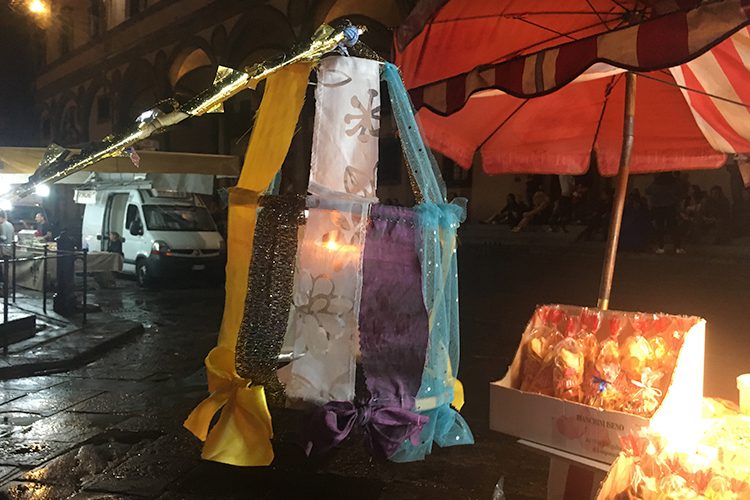
A homemade lantern at the Rificolona festivity. Photo by Carmen Collins.

Simply explained, the Festival of Lights is in honor of the Virgin Mary – the celebration of her life. The event originated in the 17th century, when farmers would make a pilgrimage into the city to pay tribute to the Virgin Mary’s birthday at the basilica of Santissima Annunziata. Centuries later, this still remains the location for a Florentine tradition that gathers the city’s residents for an illuminated evening.

See more of Florence and Italy at FUA’s FB, Instagram, and Twitter.

The Pazzi Chapel: Venturing into Santa Croce

Photo by the author

By Shelby Olson

If you venture further into the Santa Croce complex, you will come across many other monuments that hold much significance to early Florentine history such as the Pazzi Chapel. 

When staying in Florence, Santa Croce is a highly recommend spot to visit because it is beautiful but also has fascinating history behind it such as the tombs of the famous. When you enter Santa Croce, the first thing you see is a large church filled with sculptures, paintings, and stained glass windows that light up the room. When you head out of the church, you are met by a large garden and a series of cloisters. If you walk across the garden, this is where you will find the Pazzi Chapel which is not something to miss out on when visiting Santa Croce.

The Pazzi Chapel was commissioned by Andrea Pazzi and built by Filippo Brunelleschi. It was built to show the legacy of the Pazzi’s power and patronage, as well as to show off their wealth and status to the Medici family. Originally, the chapel was a learning area for the monks but also a burial place for the family.

The chapel is a very important project of Filippo Brunelleschi because it was built according to a specific architectural harmony, and he was able to achieve this after studying and measuring ancient buildings in Rome such as the Pantheon. The chapel was commissioned in 1429 and it was opened in 1443, during this time Brunelleschi had passed away and was not able to finish the chapel on his own. There were also many stops in construction throughout the years due to funding as well as conspiracies the Pazzi family made on the Medici family. In 1478, Giuliano de’Medici was killed and Lorenzo de’Medici wounded while attending mass at the Florence Cathedral. Needless to say, the family’s position swiftly fell after the attempted coup to topple the Medici.

Although Filippo Brunelleschi was not able to finish the chapel, he holds much significance within it because of his perspective and ingenuity. Brunelleschi’s works are not limited to the Pazzi Chapel as he had worked on the Florence Cathedral of Santa Maria del Fiore and its famed Dome, the Basilica di San Lorenzo, the Ospedale degli Innocenti and much more. Filippo Brunelleschi is buried inside the Florence Cathedral and continues to be an important part of the city’s history.

Inside the chapel, there are many beautiful works of art created by different Florentine artists. The relief, a raised sculpture representing Saint Andrew, was created by Luca della Robbia. Della Robbia also created the rounds with the apostles and decorated the central dome with sculptures and two paired dolphins. The stained glass window representing the figure of Saint Andrews was drawn by Alesso Baldovinetti.

The Pazzi Chapel is a simple yet elegant chapel. Although the interior colors are dim, the stained glass windows and colors of the paintings light up the room. Not only is the chapel full of history that dates back centuries, but it is a beautiful work of art and architecture that is worth seeing when visiting Santa Croce.

How to Visit:

Basilica di Santa Croce, Piazza S. Croce, 16, 50122 Firenze
Monday-Saturday 9:30AM to 5PM
Sunday 2PM to 5PM
Tickets: €8

Social Media & Study Abroad

By Dorothy Wigon
Photo by Sebastian B.

What are the digital ways study abroad students are utilizing to research their destinations pre-departure and upon arrival? Social media platforms such as Instagram, Facebook, and Twitter are not only ways to show your friends and family what you are doing but also tools for exploring new environments.

Music courtesy of FUA Music Production Course students

People of Florence

By Chantal Boynes
All photos by the author

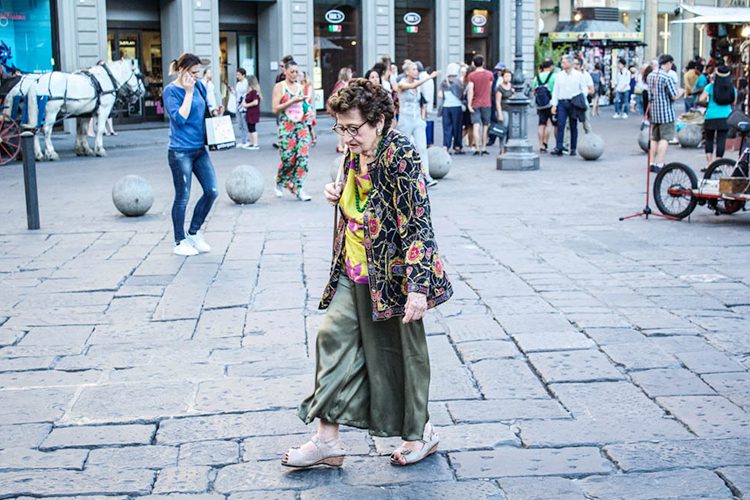
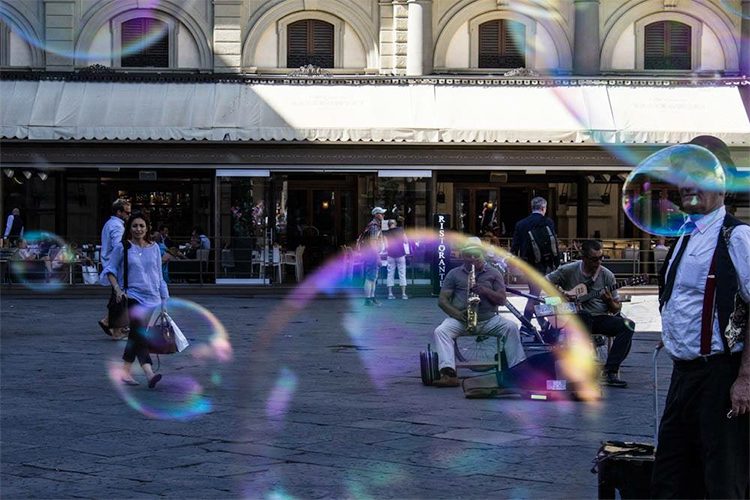
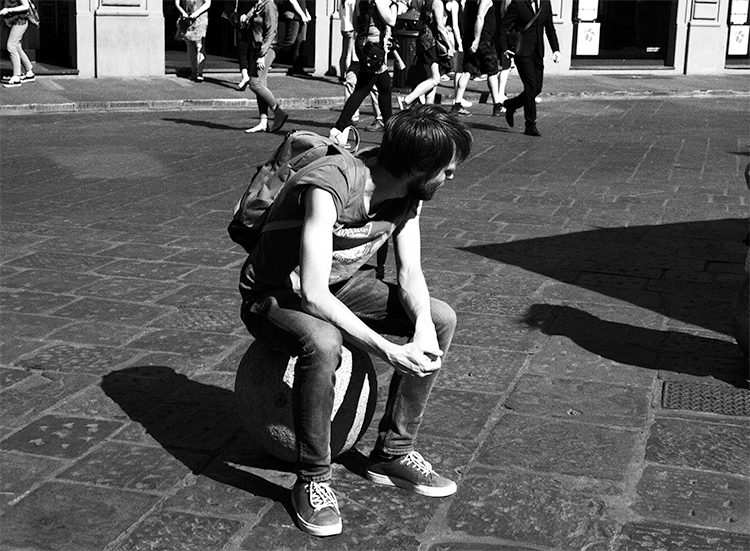
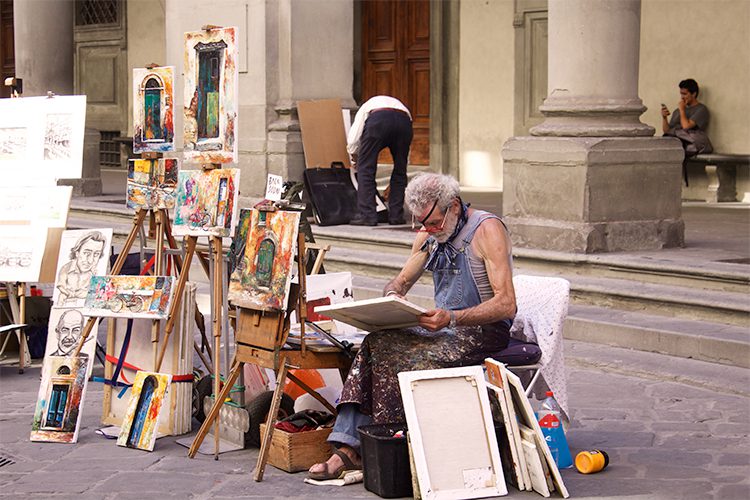
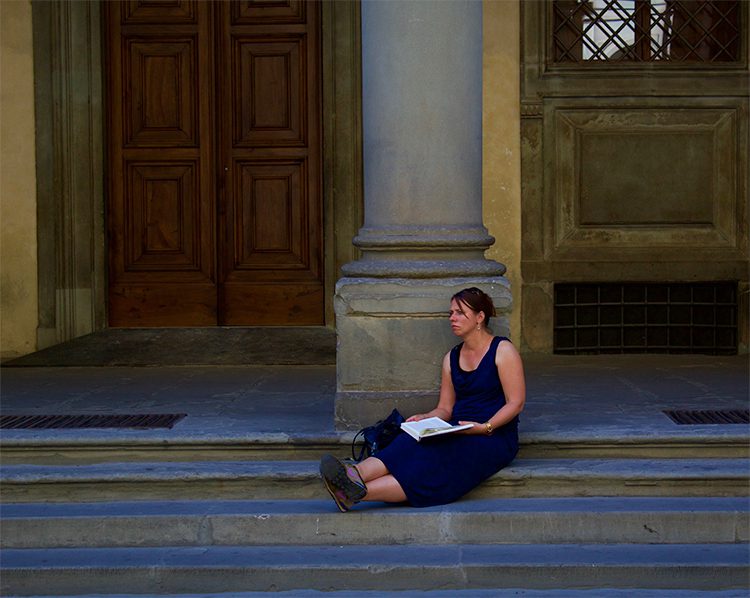
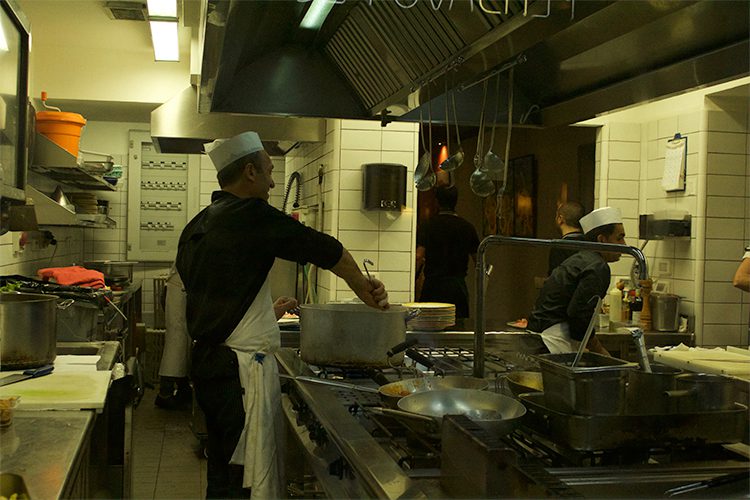
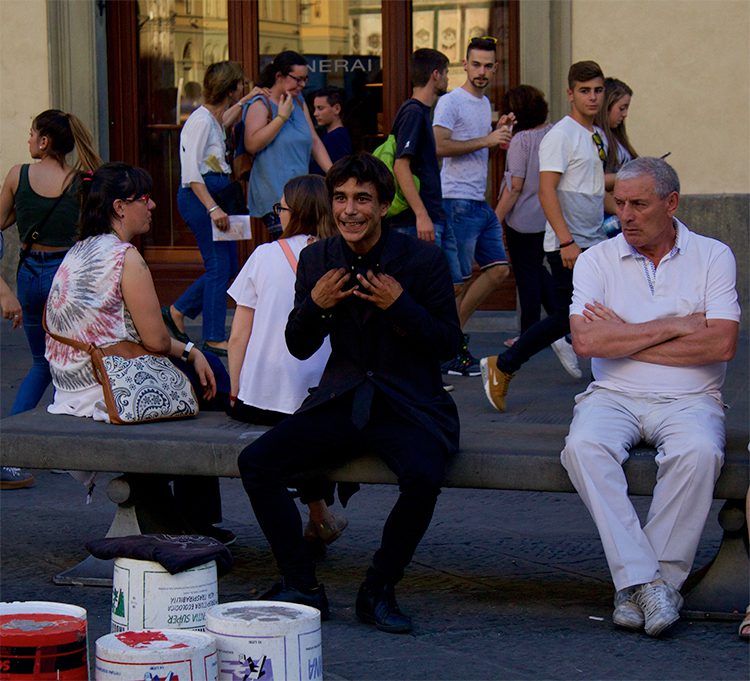
Recent Street Photography student Chantal Boynes captures the people of Florence through this gorgeous photo essay on the diverse individuals that make up our city.

There are hundreds of stories that I could have written for this article about the different people walking the streets of this beautiful old city everyday. Each person is at a different point in their lives, coming from different countries, backgrounds and languages. Each individual has their own story to tell and this photo series captures just 1 second of the 2,228,800,000 seconds in the average person’s life. With this we can catch a brief glimpse into the lives of some of the People of Florence.


Live Music in Florence

Photo by the author

By Shelby Olson

Visiting local music venues throughout Florence is a great way to experience a new form of art as well as the city nightlife. I had the chance to check out three venues in Florence that accommodate to many different styles.  

If you are looking to experience a different form of art in the city, Florence has many live music venues that can accommodate to your style whether that be upbeat, laid back, or a classic feel. I took a look at a few different live music venues throughout the city and had the chance to experience a different side of the nightlife in Florence.

Jazz Club is a great place if you are looking for an upbeat bar full of live music and dancing. They are open late and offer a food menu along with a large selection of drinks. Jazz Club hosts Italian artists and occasionally international artists, and concerts don’t start until later in the evening. The music genre is typically jazz but depends on the band playing and the shows have a very intimate feel. To get into the club, you can purchase a member card at the door for 6 euros (includes a beverage), and you’ll use the card for subsequent visits.

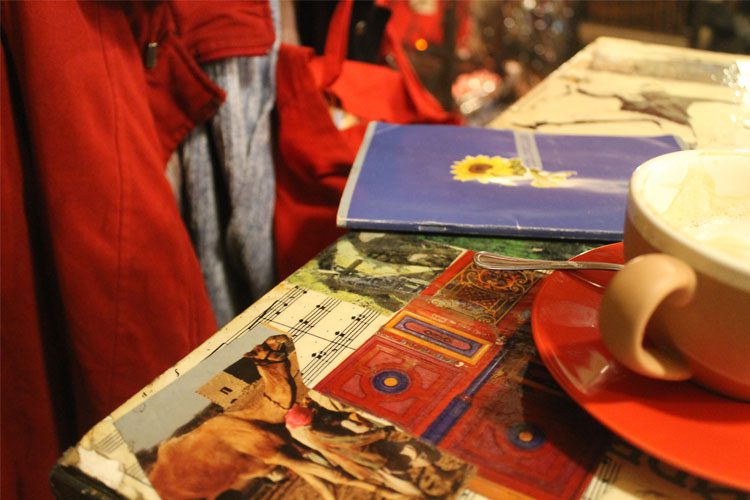
Libreria La Cité is a small cafe and library that hosts live music at night and they occasionally have events on various nights of the week. This is a neat place to check out if you are looking for a relaxing night filled with drinks, books, and music. I had the chance to visit La Cité during the evening and came across a lot of people sitting down with a book and coffee before the music started. The building is not too big but it is packed with bookshelves and even has an upstairs area with comfortable seating. I would definitely go back to this place whether it be for a coffee and book or to listen to music.

The Virgin Rock Pub is well-known for friendly service, rock music, and a great selection of food and drinks. It hosts events on the weekends with live music and aperitivo. The Virgin Rock Pub also has outdoor seating if you want to enjoy the music while still experiencing Florence’s beautiful weather during the summer. I had the opportunity to attend the Virgin Rock Pub during one of their events and it was a neat experience. The space is small but is decorated with old rock memorabilia, drum symbols turned into lights, posters, and paintings. After 10 o’clock, a band played classic rock music while everyone crowded in to listen.

There are many wonderful places in the city that can accommodate to your style. I recommend visiting these music venues during your time in Florence because it gives you a different taste of Florence at night. Try starting out with these spots and definitely venture out to explore the many music venues to check out while living in Florence.

How to Visit:

Jazz Club: Via Nuova de’ Caccini, 3, 50100 Firenze
Closed Monday, Friday-Saturday 11PM-4AM, other days 11PM-3AM

Libreria La Cite: Borgo S. Frediano, 20/r, 50124 Firenze

Virgin Rock Pub: Via dell’Agnolo, 76, 50122 Firenze
Open everyday 3PM-3AM

See more of Florence at FUA’s FBInstagram, and Twitter.
 

The History of Via Sant’Egidio

Photo by the author

By Jessica Rowe

Via Sant’Egidio is a small street in Florence with a long history. On this street, you’ll find the Hospital of Santa Maria Nuova and, inside, the church that gave the street its name.

Via Sant’Egidio is a small, quaint street nestled between Via Bufalini and Piazza Gaetano Salvemini. Along this street you will find a mixture of shops and apartment buildings, often with bars on the windows or green shutters.

What you might not know when walking down this street is that it’s named after the Sant’Egidio church which currently resides inside the Hospital of Santa Maria Nuova. The church was rebuilt from its ancient foundation and consecrated by Pope Martin V in 1419. During the 16th, 17th, and 18th centuries, the church was restored and changes were made to it.

Sant’Egidio is the Italian name for St. Giles, a Christian saint and the patron saint of many things, including beggars, epilepsy, forests, and fertility.

This street is almost perfectly centered in the nexus of FUA’s buildings. You may even walk down it without realizing it as you go from Ganzo to Squola. But even if you miss most of the street, you cannot miss the hospital. The building takes up much of the street and the exterior is laced with beautiful details. There is a plaque by one of the doors that tells you about the church and its history.

You can visit the church for free from 8-12 a.m. or from 4-6 p.m. While the original art from the church has been lost, the art currently inside is well worth a look.

See more of Florence at FUA’s 
FBInstagram, and Twitter.
Live Music Evenings in Florence


By Madison Starkey

Florence is home to a rich live music scene waiting to be discovered. Madison checked out NoF, a locals’ favorite in the artsy San Frediano neighborhood in the Oltrarno, where the vocals and beat made for an unforgettable experience to be remembered. 

NoF is where good vibes are plenty and musicians from “all corners and crossroads of the globe” are hosted weekly. My friends and I have the good fortune of living just a block away from this cool and confident live jazz club in the Oltrarno neighborhood. We recently caught a performance that I know will be one of my favorite memories of Florence. A young woman with dark hair, black boots, and the strongest, most vibrant voice I’ve ever heard provided the vocals for this unforgettable evening. The night was unforgettable, due to her captivating talent and due to the fact that we stumbled across it by pure chance. We had originally intended to walk past NoF, but the voice of the singer, the rhythm the drummer was banging out, and the smooth, deep sounds emanating from the guitarist’s strings captured us before we could do so. Instead, we wandered, dreamlike, into NoF, and weaved our way through the small crowd to the front of the stage.

And that is where we stayed.

I so vividly remember that night, that music, and stealing glances at my friends faces and enjoying their facial expressions: they were as entranced as I was. The woman’s voice was deep, smooth, and seductive even with the most upbeat songs. The band played mostly jazz music and re-vamped versions of classic hits. I failed to find out what the artist or band’s name was, unfortunately, but I know I’ll be revisiting that night in years to come. In my reveries, one moment I’m taking notes at University, the next, I’m back in that dark wood-panelled room, unable to stop myself from swaying to my imagined, but once real music.

NoF
Borgo S. Frediano 17red

See more of Florence at FUA’s FBInstagram, and Twitter.