In Florenzia: A Day In The Life

written by Makayla Sims

When I wake, the black-out curtains of my apartment that are cracked only let in a sliver of light to let me know a new day has come. I’ll lay in bed for a couple (see: 30) more minutes and then decide it’s time to go face what has come to greet me. Today is Tuesday, so it’s my slow morning. Normally, I will make myself breakfast, but Conad was busy last night with locals, tourists, and students alike shopping, so I figured I’ll go out for breakfast before my anatomy class later in the evening. 

I make my way to Le Vespe Cafe, a little American breakfast spot off of Via Ghibellina and where I find myself if I ever miss a taste of home. Currently, I’m studying abroad until mid-December, and I’ve been here since mid-September. Slight homesickness is a part of the gig, I fear. When I step outside of my apartment, I catch a glimpse of the Duomo, not even five minutes away from my front door. Despite my sentimentality, I will miss it greatly when I am gone. My ten minute walk to Le Vespe is accompanied by October rain, and the pumpkin latte I end up getting reminds me of how beautiful it is to have rain during the fall.

I still have a couple of hours before my next class, and there are a couple of things I want to do today before my three and a half hour lecture. 

The first place I want to go to is the Boboli Gardens. For my 8 am class, Grow, Cook, Heal, Therapy for Wellbeing, that I have on Wednesdays, we have an assignment where my group must tour four different gardens from different neighborhoods. Then, we must take and upload photos as well as a brief history and description of the grounds (as you can see, nothing too bad).

My twenty minute walk to the gardens features a major staple in Florence, as we (me and my friends) cross the Golden Bridge. It’s hectic and loud and crowded, and by far has one of the most beautiful views of the Arno River I have seen. Still, hold onto your phone and your friends- with these conditions losing one of these is not unlikely.

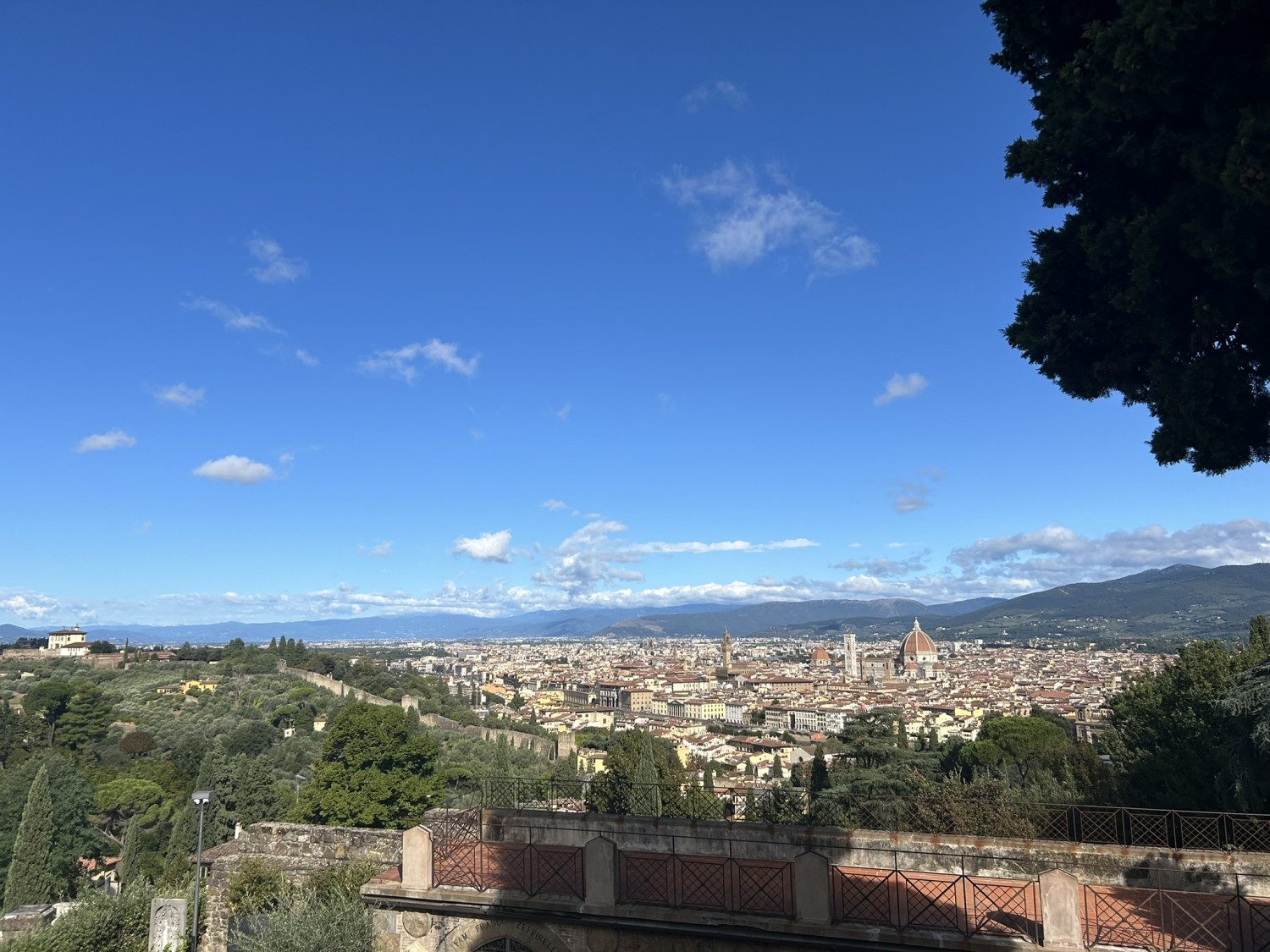
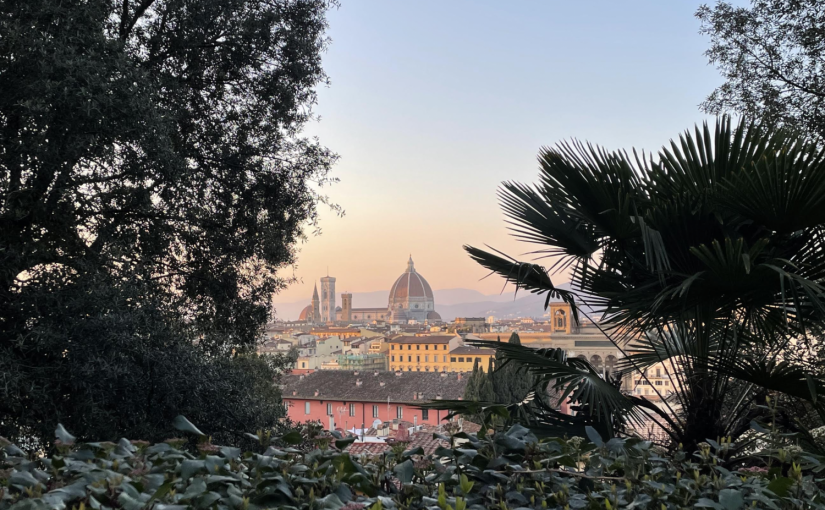
Boboli Gardens comes attached with a ten dollar entrance fee for the day. We enter through the Pitti Palace, but skip that tour because that isn’t what I’m here for. Instead, we climb the slanted, small, long stairs to the beginning of the garden’s grounds. It’s beautiful here, undeniably so, with a beautiful clearing for the main statues and ponds. To the left and right, the grounds spread out behind a wall of shrubs, with a maze to get into and out of those sections of the garden. If you continue straight all the way to the top, however, you see one of the best views in Florence (apart from the top of the Duomo). 

This picture does not do this view justice.

For a moment, I forget about the assignment and just stare. I’m in Italy, I’m in Florence. And the bustling cityscape, the rolling countryside behind it, that’s been my home. For the rest of my life I can know for myself that I, at one point in the distant past, lived there. The beauty of the art, the people (most of them), the food, my friends. It’s just-

Beautiful. 

I finish up taking notes of the different architecture and landscapes, then I make my way to my second destination before my anatomy class.

There’s this little record store called Contempo Records that I pass everyday on my way to FUA’s lecture halls. Everyday I pass it, I want to go inside. I don’t have a record player, but my sister does. I know she will appreciate a little memento. I walk inside and am greeted with spiraling ceilings and records stacked to the nines. I don’t end up getting anything, but it makes me feel at home.

After enduring my three hour lecture, I know that it’s time for me to get some homework done. FUA has a library in the same building, but it closes at 6pm and my class is done at 6:55. So I go to, quite genuinely, my favorite place in the city. 

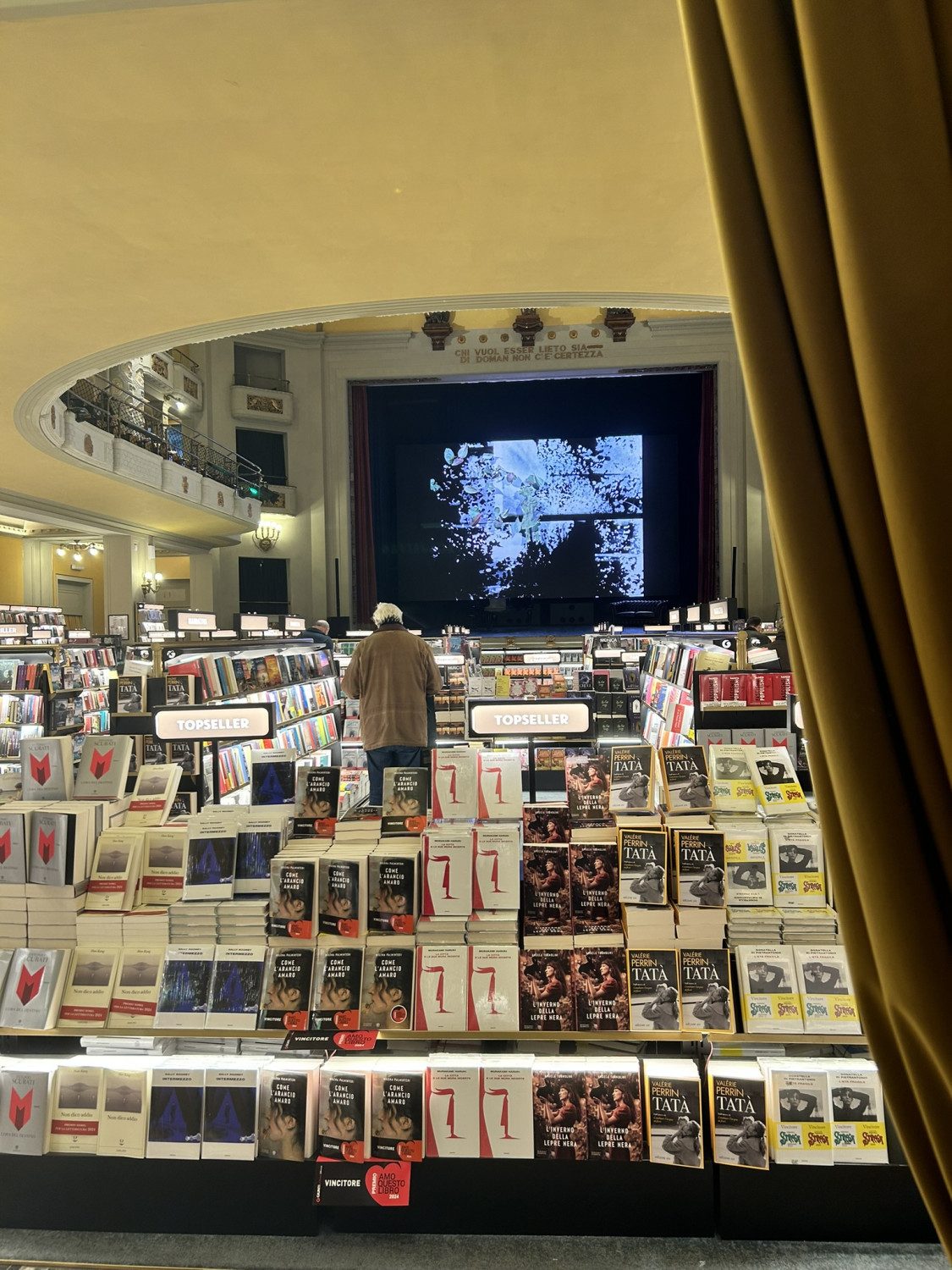
The Giunti Odeon Libreria e Cinema is a bookstore/movie theater. Up in the rafters, there are old theater seats for visitors to read or work on homework while a movie plays in the background. Almost always it’s really, really warm inside and almost never can you hear the movie. I love it.

I sit there and work till about 8:30 pm, which is when I make my way back to my apartment. My friends and I have decided to cook ourselves dinner, with some gnocchi pasta, green beans, and focaccia. Before I head inside, I take one last look at the Duomo. How can anyone not be romantic about Florenzia? I wonder.

La última parada

Florence & the moment that changed everything

written by Paula Simon Borja for SPEL: Journalism

En el verano de 2022, tuve el privilegio de viajar 45 días por Europa. Comencé en Madrid, luego recorrí Barcelona, Viena, Budapest, Praga, Berlín, Ámsterdam, París, Roma, Venecia y, finalmente, Florencia. Aunque en ese momento no era plenamente consciente de ello, esa última parada marcaría el cierre perfecto para un viaje que terminó superando todas mis expectativas. Al final de aquel mes, me encontraba exhausta: había subido y bajado de cientos de trenes, me había alojado en hoteles baratos, arrastrado maletas de 20 kilos y me había alimentado principalmente de comida rápida de puestos callejeros. Ya no sentía el impulso de seguir explorando, aunque era absurdo quejarse. Durante esas semanas, tuve la fortuna de admirar algunos de los lugares más hermosos del mundo, de escuchar las canciones más alegres, de reír hasta sentir dolor de estómago y, a su vez, sentir una necesidad profunda de llorar. Florencia, de todos los lugares que visité, fue el que más me conmovió.

In the summer of 2022, I had the privilege of spending 45 days traveling around Europe. I landed in Madrid, then made my way to Barcelona, Vienna, Budapest, Prague, Berlin, Amsterdam, Paris, Rome, Venice, and finally, Florence. What I didn’t know at the time was that I would end the trip with a truly unforgettable experience. By the end of that month, I was utterly exhausted: hopping on and off trains, staying in budget hotels, hauling 44-pound suitcases, and surviving mostly on street food. Honestly, I was running out of steam. It felt almost ridiculous to complain, given how fortunate I was. I had seen some of the world’s most beautiful places, heard the happiest music, laughed until my stomach hurt, and, at times, cried from overwhelming emotions. It was Florence that moved me the most.

Llegué a Florencia sin demasiadas expectativas. Después de haber estado en lugares como París o Roma, pensaba que la ciudad no podía competir con la magnitud histórica y cultural de esos destinos. Mi hermano, un apasionado de la historia, siempre me había hablado de Italia con una devoción casi reverencial. Su fascinación por el Imperio Romano, por los mapas antiguos y por las ciudades históricas es casi obsesiva. Vivió un año en Turín, y su lugar favorito en el mundo es la Plaza de San Marcos, en Venecia. Ese verano, tuve el privilegio de recorrer Italia a través de su ojos, de sus relatos, de sus sentimientos.

I arrived in Florence with little to no expectation. After seeing amazing places like Paris and Rome, I thought, perhaps wrongly, that Florence couldn’t compare in terms of history, culture, or beauty. My brother, however, has an almost obsessive passion for history. He spends hours watching documentaries, drawing ancient cities from old photos, and knows everything there is to know about the Roman Empire. He is utterly obsessed with old maps, especially of ancient cities. He lived in Turin for a year, and his favorite place in the world is Piazza San Marco in Venice. That summer, I had the privilege of seeing Italy through his eyes.

Fuimos al Coliseo en dos ocasiones, exploramos el Vaticano, pasamos casi tres horas bajo el sol abrasante del Foro Romano y contemplamos el atardecer desde el Castillo Sant’Angelo. Fueron experiencias inolvidables. Al día siguiente, llegamos a Florencia. Visitamos el Duomo, recorrimos el museo Uffizi, comimos pizzas y focaccias, nos impresionamos ante el David y volvimos a caminar bajo el sol abrasante ahora en Santo Spirito. En nuestro último día de recorrido, y de viaje en general, mi hermano nos llevó a la Plaza Michelangelo.

We visited the Colosseum twice, explored the Vatican, spent nearly three hours under the scorching sun at the Roman Forum, and watched the sunset from Castel Sant’Angelo. Those were unforgettable experiences. The next day, we arrived in Florence. We toured the Duomo, walked through the Uffizi Gallery, ate pizza and focaccia, were awestruck by the statue of David, and then walked under the hot sun again, this time in Santo Spirito. On our last day in the city, and the last day of the trip, my brother took us to Piazzale Michelangelo.

La subida no fue fácil, pero cada paso valió la pena. Opté por lo que hoy sé que es “el lado correcto”: el que ofrece una vista completa de la ciudad, mientras que el otro, más corto, evita el espectáculo que se despliega frente a ti. Ese día, me encontré en primera fila. La plaza no estaba no estaba demasiado, estaba en su punto justo: un ambiente vibrante, festivo, pero con espacio para sentarse en las famosas escaleras y dejarse envolver por la magia del lugar. En la cima, una banda comenzó a tocar música, canciones populares, algunas de ellas de épocas pasadas. Una de esas canciones, en particular, me dejó sin aliento. No era de mi gusto ni pertenecía a mi estilo musical habitual, pero en ese instante, en ese preciso contexto, la sentí profundamente, hasta lo más íntimo. No pude evitarlo: lloré con una intensidad inesperada, como si ese momento estuviera sanando algo dentro de mí, como si fuera la pieza que me faltaba para sentirme completamente realizada y feliz.

The climb wasn’t easy, but every step was worth it. I took what I now know is “the right path”, the one that offers a full view of the city, while the other, shorter route, turns its back on the spectacle ahead. That day, I was front and center. The square wasn’t too crowded; it was just the right amount of people: lively, festive, but still with space to sit on the famous stairs and let yourself be wrapped up in the magic of the place. At the top, a band started playing music—popular songs, some from past eras. One of those songs, in particular, took my breath away. It wasn’t my usual taste, nor the kind of music I’d typically choose, but in that moment, in that exact place, it moved me deeply. I couldn’t help it: I cried, unexpectedly and intensely, as if that moment was healing something inside me, like it was the missing piece I needed to feel completely whole and happy.

Estaba acompañada de mis hermanos y dos mujeres rumanas que habíamos conocido unos destinos atrás y que decidieron acompañarnos en la última parte del viaje. Compartí esa experiencia con personas que, aunque tal vez por razones distintas, estaban viviendo algo igualmente significativo. En ese momento, todos compartimos una misma emoción, un mismo sentimiento. Es una acción tan común entre los seres humanos que parece casi involuntaria, pero es un privilegio sentir. Es un privilegio llorar, reír, admirar, asombrarse. 

I was with my siblings and two Romanian women we had met a few stops earlier, who decided to join us for the last part of the trip. I shared that experience with people who, although for different reasons, were feeling something just as meaningful. In that moment, we all shared the same emotion, the same feeling. It’s such a common thing among humans that it almost feels automatic, but it’s a privilege to feel. It’s a privilege to cry, to laugh, to appreciate, to be amazed.

Esa escena, esa canción, ese atardecer en la Plaza Michelangelo, fue el cierre perfecto para un viaje que ya había sido extraordinario. Ese momento encapsuló todo lo que había vivido en los 45 días anteriores: los lugares, las personas, los sentimientos, los recuerdos. Fue como si la vida hubiese tomado todo eso y lo hubiera condensado en ese instante, en ese lugar, con esas personas. Ese día comprendí, de manera profunda, que Florencia poseía una magia única. Fue entonces cuando supe que debía regresar, que había vivido algo irrepetible. En diciembre de 2024, cuando decidí buscar la oportunidad de hacer un intercambio académico, no hubo duda de que Florencia sería mi destino. Ahora, todos los días, voy a esa plaza a ver el atardecer, a escuchar música y a compartir un sentimiento de libertad. Abrazo con fuerza el privilegio de revivirlo a diario.

That moment, that song, that sunset in Piazzale Michelangelo, was the perfect ending to a trip that had already been extraordinary. It captured everything I had experienced in the past 45 days: the places, the people, the emotions, the memories. It felt like life had taken all of that and condensed it into one instant, in one place, with those specific people. That day, I deeply understood that Florence had a unique magic. It was then that I knew I had to return, that I had experienced something unforgettable. In December 2024, when I decided to look for a chance to study abroad, there was no question: Florence would be my destination. Now, every day, I go to that place to watch the sunset, listen to music, and share a sense of freedom. It’s a gift I cherish, being able to relive it each day.

Tuscan Leather

written by Pedro Calderon for SPEL: Public Relations

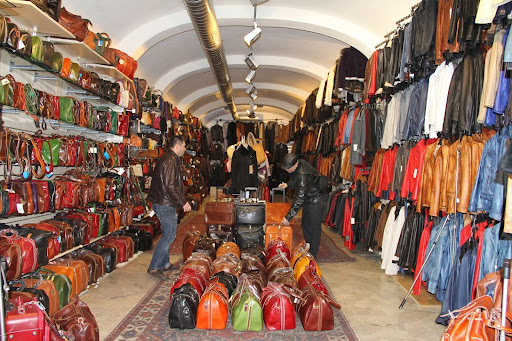
If you take just a 10-minute walk through the center of Florence, you will immediately notice a wide variety of storefronts: trattorias, gelaterias, and souvenir shops. Among these, leather goods shops are particularly prominent, and for good reason. Many of these shops offer a range of products such as leather jackets, accessories, bags, wallets, shoes, belts, and countless other items in practically every color you can imagine. Italy, especially the region of Tuscany, is known for its high-quality leather and craftsmanship, thanks to a long tradition of being a central market for trade.

One of the best places to find leather goods is the Mercato di San Lorenzo, located next to the Mercato Centrale, just a 7-minute walk from the Piazza del Duomo. Inside the Mercato Centrale, you will find vendors selling fresh produce and meat, as well as restaurants upstairs offering delicious local cuisine and an excellent selection of wines. Outside, the Mercato di San Lorenzo is lined with vendors selling souvenirs like key chains, miniature statues, postcards, shirts, sweaters, scarves, and an impressive selection of leather goods. While these shops are plentiful with colors and designs, real leather lovers may want to wander outside of the Mercato Centrale area to find family-run boutiques. Some of the highest rated, and local favorites include Casini (Piazza de Pitti, 30, Firenze), Bemporad (Via Calzaiuoli 11/15/17/B Firenze), Giorgio 1966 Leather Store (Via del Canto dei Nelli 34, Florence), Pierotucci (via Lungo L’Ema 17, Ponte a Ema, Florence), and Benheart. 

Tuscan leather is sourced from local cattle, and the region’s pastures are ideal for raising them. The same cattle that contribute to Florence’s famous Bistecca alla Fiorentina also provide the high-quality hides used in artisanal leather products. This connection between the livestock and leather industries reinforces a sustainable tradition where nothing goes to waste, blending the region’s culinary and artisanal excellence into one cultural experience.

The area’s tradition of leather working dates back to the 13th century. Leather working was already popular in the 1200s in the Republic of Pisa, and after Florence conquered Pisa in the 1400s, many wealthy business owners decided to establish leather production operations in and around Florence; this practice has remained stable despite economic cycles. Professional leather workers can have successful careers as pattern makers, prototype makers, product developers, accessories designers, and fashion entrepreneurs. Modern luxury brands based in Florence, such as Gucci, Ferragamo, Pucci and Cavalli, specialize in high-quality leather goods. Today, local artisans are often hired to collaborate with high-end fashion houses on specialty accessory designs.

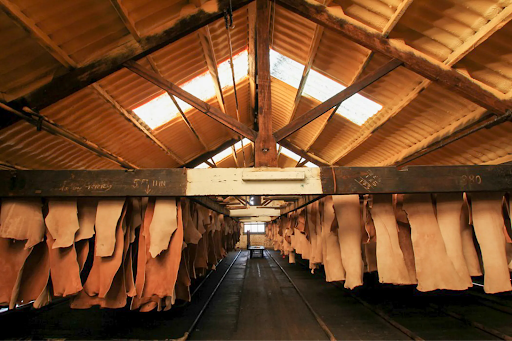
The leather making process begins in a tannery, where the hide is processed using vegetable tannins to get its color. The tanning agent, called liquor, is made from a mixture of ground tree bark, twigs, leaves, and water, and other ingredients to form the desired color. But before this step, the raw hides must be prepared by tanning or drying them with salt to preserve their properties. The hides are then rehydrated to make it easier to remove the hair on the surface, exposing the leather’s natural grain, texture, and softness. They are then pre-tanned with natural tannins and then fully vegetable-tanned using the liquor. Finally, the hides are dried and classified based on their appearance and quality, determining how and for what they will be used. The entire process can take 20 to 40 days to complete. Although centuries old, the process has been made more efficient by technological advancements. In the Arno Valley near Pisa alone, there are hundreds of leather factories and workshops.

Leather is prized for its many qualities, including flexibility, strength, elasticity, malleability, and breathability. There are generally four types of leather that consumers encounter. The highest quality is full-grain leather, which is the top layer of leather and shows off the natural properties of the leather, sometimes even imperfections. Top-grain leather, which is smoother and cheaper than full-grain leather, is still considered high quality. Genuine leather, the most common and affordable type, is what is usually found in everyday designs and souvenirs, although it is considered the lowest quality. Finally, suede is a soft, velvety type of leather often used for footwear and upholstery.

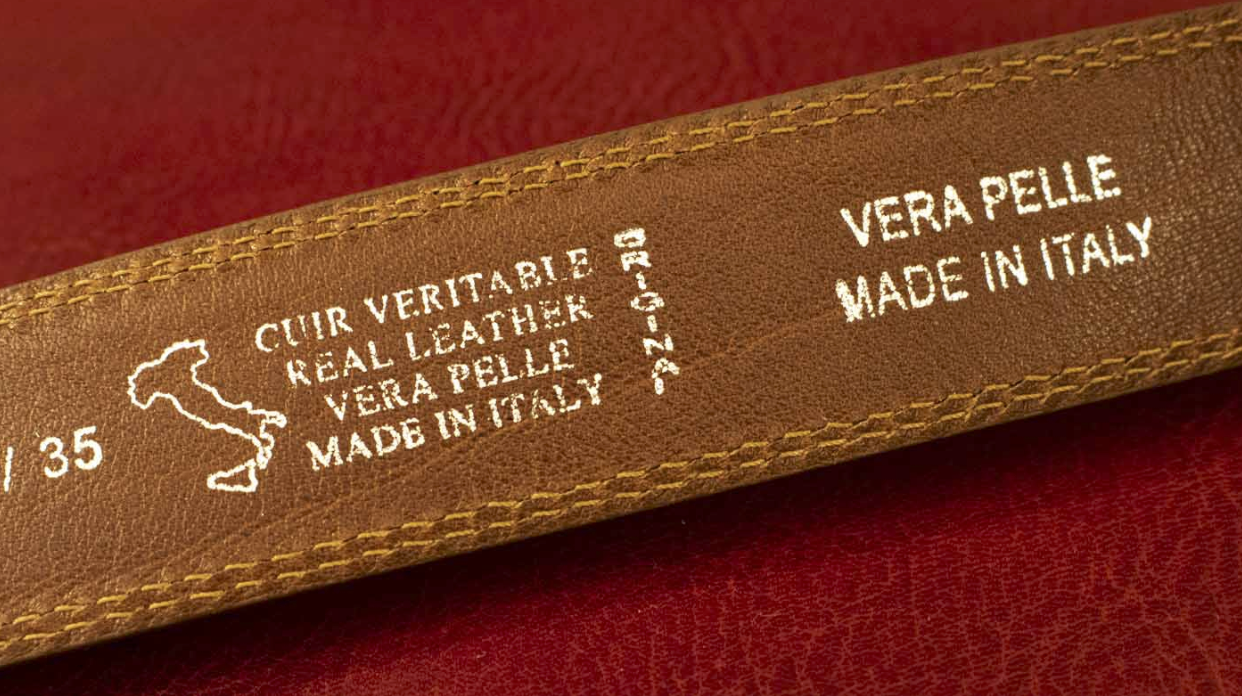
I always recommend purchasing leather products with the “Made in Italy” label to support local artisans and the economy. Although cash is often preferred, most vendors accept cards. Leather is a perfect and useful souvenir or gift for anyone visiting Florence and wanting to take home a piece of Tuscany. It is a product that lasts almost a lifetime.

Mysteries Beyond the Tourist Trail: Ghosts, Legends, and Timeless Traditions of Florence

written by Sydney Kerrihard for SPEL: Public Relations

With only a few months to explore Florence, study abroad students are often swept up in the surface-level customs of the city – refraining from cappuccinos after 11 am or adjusting to the quiet afternoons of the Italian riposo. But beneath these everyday habits lies a city full of rich folklore and deep-rooted traditions, passed down from generation to generation. From haunting ghost stories whispered among children to age-old rituals, Florence’s cultural heritage is far too complex to fully unravel in just a few short months. Yet, it’s these lesser-known stories, tales, and traditions that truly capture the heart of this historic city.

The Ghost of Palazzo Vecchio

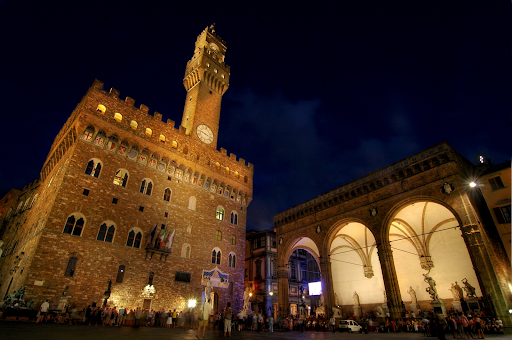
Figure 1. 
Palazzo Vecchio late at night.

While the exact number of people who were killed at Palazzo Vecchio remains unknown, one story specifically stands out. Baldaccio d’ Anghairari, a military leader notorious for his violent nature, earned his grim nickname “Baldaccio” because of his aggression.

On September 6, 1441, Baldaccio was summoned to the Palazzo Vecchio where he was ambushed – shot from behind, thrown from a window, and dragged into the Piazza della Signoria where he was beheaded. Wrongfully accused of treason, his death shocked the city of Florence, and even the Pope expressed remorse for the horrible crime committed against him.

Since that day, legend has it that Baldaccio’s ghost haunts the halls of Palazzo Vecchio, returning every September 6th.  Some believe that every 50 years, Baldaccio would return on the night of his death, holding its head under its arm. In 2001, a couple claimed to have encountered Baldaccio while on a romantic stroll at Piazzale Michelangelo. Having taken some photos of the evening, they later discovered a face staring back at them in one of the pictures. When paranormal investigators confirmed the photo was unaltered, they concluded the face belonged to the restless ghost of Baldaccio, still unable to find peace.

The Legend of “Rifrullo del Diavolo” (“The Devil’s Recoil”)

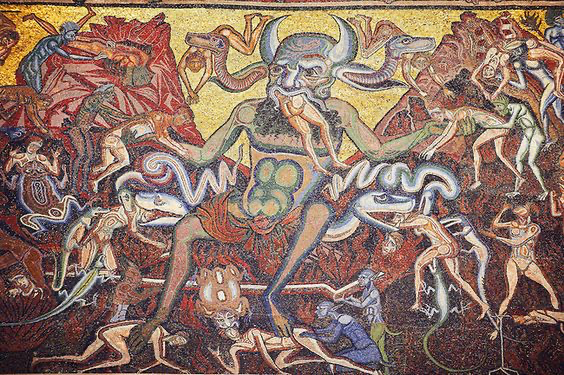
Figure 2. 
A visual representation of the “Rifrullo del Diavolo”.

Near Via Della Studio, just over the bridge, you will feel a slight breeze that in the winter turns into a powerful whirlwind. The wind is known as the “Rifrullo del Diavolo” or “The Devil’s Recoil”, a strange natural phenomenon rooted in an ancient legend.

The legend begins long ago when the devil was said to be pursuing a priest through the streets of Florence, determined to claim his soul. Once they arrived at the Cathedral of Santa Maria del Fiore, the priest pleaded with the devil, asking to pray one more time before suffering eternal damnation. The devil agreed, confident in his victory, and waited outside while the priest entered the church.

As the devil stood by the front doors, he dozed off, and his snores stirred up a gentle breeze. But when he awoke, he realized the priest had outwitted him, escaping through a back door. Furious at this deception, the devil’s anger turned his snores into a whirlwind of rage.

Since that day, the “Rifrullo of the Devil” has never stopped blowing, waiting in anger for the priest to emerge from the church.

The Rificolona Festival

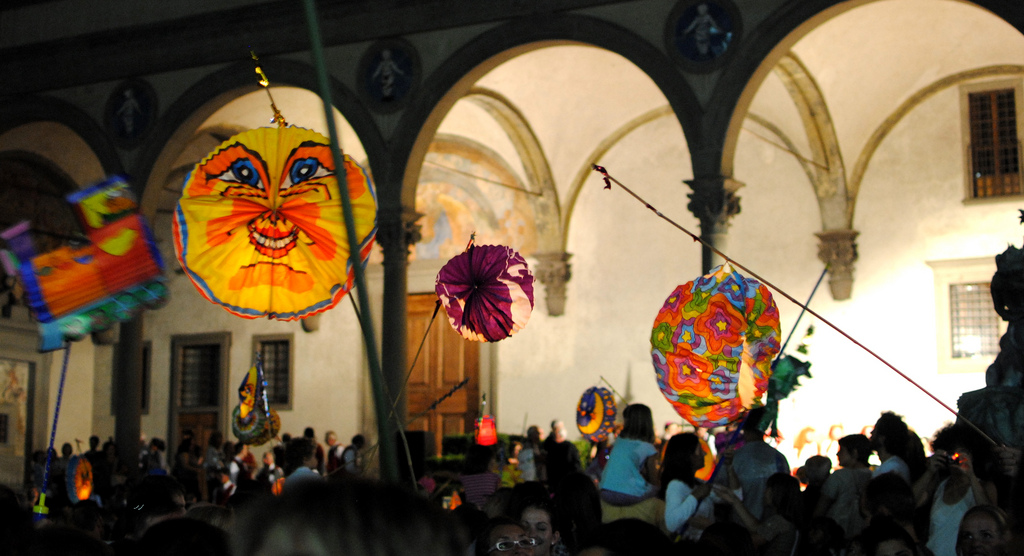
Figure 3. 
Lanterns from the Rificolona Festival lining the streets.

The Rificolona Festival is an ancient tradition that gained popularity in the mid-17th century. Held on September 7th, the night before the celebration of the Virgin Mary’s birth on September 8th, it marks a unique moment in Florence’s history.

On the evening of September 7th, farmers and merchants from the surrounding countryside would make their way into Florence, bringing goods to sell the next morning. They set out early to secure prime spots in the marketplace, lighting their way with lanterns hanging from sticks, canes, or poles, creating a beautiful collection of light through the dark streets.

Today, this tradition lives on through the children of Florence, who will craft or buy colorful lanterns to parade throughout the city. As they traverse the streets, they chant traditional songs such as the famous folk tune, “Ona, ona, ona che bella Rificolona! La mia l’è co’ fiocchi e la tua l’è co’ i pidocchi” (“Oh, oh, oh, what a beautiful lantern! Mine has ribbons, yours has lice”). The parade begins at the Basilica di Impruneta at 4 pm and concludes at Piazza Santissima Annunziata at 9:30. Sometimes, children will even throw clay balls at the lanterns to try and break them, adding an element of competition to the evening.

The following day on September 8, the terrace of Santa Maria del Fiore opens to visitors, offering a view of the lanterns from the previous night.

The Art of Busking: Florence’s Relationship with Street Performers

written by Ava Lees for SPEL: Public Relations

When walking around Florence, it’s difficult to miss the wide array of street performers who make their living displaying their talents in front of famous landmarks like the Duomo and Ponte Vecchio. All different types of performances from singing to puppeteering can be seen across the city, adding to the rich culture of art here. Florence’s streets often echo with the vibrant sound of guitars, violins, and even the occasional accordion, as artists fill the air with melodies that seamlessly compliment the city’s centuries-old architecture.

Street performing, or busking, has been around for centuries and has been present in Florence since the Renaissance era. During the Renaissance, Florence was not only the center of intellectual and artistic innovation but also a city where art and life intertwined in the most public ways. The streets were alive with performers entertaining and inspiring everyday citizens. These street artists brought art to the masses, making it accessible to people from all walks of life, and fostering a unique communal experience in public squares. This has carried into the culture of the city today, although there are a few more regulations around it. 

In my short time in Florence, I’ve seen dozens of different performances by buskers. I remember the first time I came across this was during sunset as I was taking a walk over Ponte Santa Trinita. Before I could see anyone, I could hear the music floating through the air and adding to the atmosphere of the gorgeous scenery of Florence. A crowd had gathered around a woman as she sat on the bridge playing the violin for a mix of both tourists and locals who were on the bridge to watch the sunset. It felt like a scene straight out of a movie and since that moment I have found the street performances in this city captivating. 

After witnessing dozens of talented buskers around the city, I started to wonder how these artists make their money. In recent years, Florence has implemented fairly strict laws when it comes to allowing people to busk, so it isn’t as simple as setting up and playing music. They’ve implemented a licensing system that performers can use so they can all display their talents without stepping on each other’s toes and causing chaos in the city. 

The license requires planning about a month in advance and costs fifty dollars a week for performers to be given a designated space for up to seven days in a row. Once performers do have a license, they are given guidelines to follow, such as having a two-meter square to perform in and reserving spaces at least ten days in advance. The regulations are so strict that even using a chair while performing incurs an additional 50-cent charge a day. 

Despite the regulations and logistical challenges, the spirit of busking in Florence continues to thrive, bringing life, music, and creativity to the city’s streets. These performers are not just providing entertainment, they are keeping alive a centuries-old tradition that has shaped the cultural fabric of Florence. The city’s unique blend of history, art, and strict modern regulations ensures that while Florence evolves, it remains a haven for street performers who enrich the daily lives of both locals and visitors.

Italy From the Lens of Media, and the View From Reality

written by Alex Daggett for SPEL: Journalism

Italy has become one of the most popular and sought after destinations for travelers in the past decade, and this tourism boom has been heavily contributed by depictions of Italy and Italian culture in American media. However, the way that this representation in popular movies, pop culture, and television shows has portrayed the country does not accurately reflect the current landscape and culture of Italy. After living and studying in Florence for the past 10 weeks, I have sought to examine the differences in expectations set by the media, and the reality of the country. 

One of the main reasons that I had such an affinity for Florence and Italy was the rich history, the art, and the culture that I have been studying and reading about for years. However, it is becoming more and more common for people to travel to Italy because of the images and ideas of the country that have been pushed out and popularized by American media. The issue of this is that these depictions are not accurate, and portray a romanticized version of the culture and country. Thus, leading to travelers who seek these unrealistic expectations being left with disappointment, and an unfair resentment for the true Italian culture. Some of the common tropes and ideas that I have seen being pushed come from very popular movies and television shows, such as the romanticized version of Northern Italy in the film, ‘Call Me by Your Name’. 

While many go to Italy expecting to see the same lush landscapes and sprawling villas that are portrayed in the feature film with Timothée Chalamet, they are confronted with the fact that Italy is not the perfect utopia that is depicted in the film, but rather a real living country, with a diverse and intricate community from all walks of life. This is not a bad thing at all, and part of what makes Italy so special to me, but to many who have watched this film, they are expecting reality to align with Hollywood. When they are inevitably confronted with the truth of the situation, they unfairly direct their anger at the country and the people who did nothing but get stereotyped by Hollywood. In my personal experiences, I have found some amazing small towns and beautiful surroundings, that are nothing like what is shown in movies, but are even more amazing than the cliche scenes in movies. Seeing actual vineyards, with real farmers, and to see real homes that you can tell people actually live in rather than just decorated like they are in magazines is so much more personally fulfilling to me, and I wish that was what was shown in these movies, rather than an idealized version of reality.  

The language barrier is also something that many tourists are not prepared for, as in films such as ‘Call Me by Your Name’ or the hit series ‘The Sopranos.’ In these forms of media, characters are portrayed as speaking mostly English with a vague ‘Italian’ accent, and that is the image that is seared into the brains of the viewers, setting them up for disappointment when they realize that most Italians speak their actual native tongue. That is part of the immersive experience, to try and learn someone else’s language, while you are in their country; it is selfish to expect the opposite. ‘The Sopranos’ also paints a scene of Italy where everyone is connected in some form to the Mafia, or organized crime, and this is also simply not the case. 

The problem also lies in expectations set by Italian-American culture, that many have internalized as just purely Italian. The most obvious example of this would be the differences in food, and dining culture. While many Americans think that the dishes of Spaghetti and Meatballs, thick and creamy Fettuccine Alfredo, and Chicken Parm, are dishes that they can find that are native and from Italian culture, they are actually creations from the blending of Italian immigrants and American culture, that only exist in the states, and are not actually from the country of Italy itself. This culture shock is often hard to adjust to for many travelers, and unfortunately many restaurants have started making these Italian-American dishes exclusively for travelers to eat because it is what they expect of Italy, causing many tourists to completely miss out on proper and authentic Italian cuisine. This is defeating the entire point of traveling. The failure to appreciate true Italian culture is heartbreaking to see, as I have found so many amazing dishes that I could never find in the United State. These dishes have actual history and roots from the country of origin, and are not portrayed nearly as often in American media. There is a large disconnect between what is portrayed in the media that is classified as ‘Italian’ and what you actually find in Italy, which is sad to see, because the real Italy is far more interesting than the version that is shown to Americans in the media. In order to appreciate the true beauty, one must set aside past baisers from media, and experience the culture authentically. 

Parts of You

written by Valerie Tiscareno for SPEL: Journalism

A bag, the clothes on my back, the shoes on my feet, that is all I need to leave — something you and I talked so heavily about. Our dreams of being nomads, going from here to there with no ties. Here I am, 6,191 miles away from home, walking the normally-crowded streets of Florence at 6 in the morning with nothing more than a side quest in mind to get outside of Florence. Meeting up with my friend Kyla at the C1 bus station to get to Fiesole, We waited, groggy and tired. 

I thought of you. 

How you left home and moved from place to place. When you were unsatisfied, you disappeared in the mountains, canyons, somewhere quieter. Here I am doing the same thing, moving from the coastal ocean of California to the grassroots of Missouri then the cobblestone streets of Italy. The excitement and struggles of moving somewhere new; a rush we both divinely understood.  

Florence has been nothing more but eye opening. Even so, I feel the need to leave to go somewhere quieter. So, Kyla and I hopped on the bus and left. Up to the windy, narrow roads away from Florence. With every stop, the roads got greener and the world got softer. Until we stopped and went off near the hill tops in Fiesole.

With no agenda, others had a mission to find coffee. We set off together. The town center was lonely, everything facing each other. It took us no more than about 500 feet to find coffee. We were happily greeted by the barista as we ordered two cappuccinos and two croissants. We sat outside and discussed our friendships and our lives, something so dear to the both of us.

And I thought of you again.

How much you deeply cared for every person you met. The smile you were able to put on someone’s face, even if it was the first time you met them. How you dropped everything for a friend in need. 

As we paid for our coffee, we walked around the sleepy town and sat still. We wandered up the hills and discovered a playground. One swing set, one slide, one rocking horse. I had never been so excited for something so simple. I ran to the swing and Kyla took the rocking horse. Giggling, swinging back and forth, I was no longer grieving my home, my family, my friends, or girlhood. I hopped off and traded Kyla for the rocking horse. Then, eager to see more, we ran off to the other side of town. 

Leaving Florence with Kyla was the only thing I needed. Kyla was the first person I met before coming to Italy. We took on the long 12 hour flight together, and she was a hidden treasure in my life that Italy brought to me. As we walked together, we saw hidden pieces of art scattered around the town. We walked up the stairs of a church and we were greeted by a butterfly — another hidden surprise. Butterflies for me have always meant that someone who has passed was visiting. Insert sentence-long association. Sitting on the ground, spreading its beautiful orange spotted wings to the sun, it was  the first time I had seen a butterfly in Tuscany.

And I thought of you again.

How I met you by chance. Out of all the colleges I got into, I chose Mizzou. Out of the thousands of people to meet that first week, I met your friends. By chance I bumped into them before they were to throw their first college party. How you were not  supposed to go, but decided to go about 30 minutes before they were leaving KC. 

For a second, in Tuscany, I got to see you again. Before I could say goodbye, you fluttered your wings and flew away. 

Four Nights in the Desert

written by Lily Carroll for SPEL: Journalism

Working and studying in Florence the entire summer has been a great mix of work and play. As the workload began to grow, I decided to plan a trip I could look forward to and motivate me to work extra hard. On the day of our last exam, I could barely contain my excitement. With my pen on paper, I felt both prepared and full of excitement. I knew that whenever I finished my test, I would be bound for Marrakesh. Five days and four nights in the desert, a guided, group tour through Viaje en Marruecos. I had some friends go on this trip in the past, and they said it was the best trip they took. When the opportunity presented itself, I jumped on board immediately. I find that sometimes I can get overwhelmed planning, and feel like I’m frantically picking what to do. It was such a luxury to be able to be completely present, having all activities taken care of. 

We landed in Marrakesh Friday morning, and were brought to our first hotel of the trip. The heat outside exceeded my expectations, so I was elated when I saw the crystal blue swimming pool outside. The first day was spent relaxing in the sun and water, taking in the gorgeous views around us. We reflected on the things we have accomplished in our courses and internships, and how rewarding this day felt. Only a few short weeks and we would be back in the United States, preparing for the next semester at our University. With rosy cheeks, we left the pool and eagerly got ready for the morning ahead, where we would meet the rest of our group, and venture deeper into the desert. 

With a group of students from all over the country, we ventured to a small village just between our Marrakesh and the Sahara desert. We observed all sorts of tradition and craftsmanship as we explored the desert. People in small huts painted with natural materials, permanently sealed by fire. We visited the location where Hollywood films and shows have been recorded, such as Gladiator and Game of Thrones. Then, we climbed to the highest point in the village. This was no easy feat, but so rewarding to take in the beautiful architecture and desert scenery. Finally, we sat down for our first authentic Moroccan meal. We were showered with delicious bread, vegetables, and fruits of all kinds, and the most delicious chicken I’ve ever had. Kittens roamed freely and joined us for our table scraps. With picturesque stops along the way, we continued on to our hotel of the day to relax and get to know our tour group. Together we swam, shared a meal, and swapped stories of our summer travels. It was so moving to share such a unique experience with people ranging from Minnesota to Mexico that quickly became good pals. 

Finally, we embarked onto the main event: camping in the Sahara desert. A long, windy drive up and around mountains through whirling sand built the anticipation for this incredible opportunity. We stopped along the way at a small boutique with kaftans, pashminas, and all sorts of authentic Moroccan crafts and garments. We took pictures in the traditional outfits, received henna tattoos, and got our own pashminas to wear in the desert. Then, we dropped off our luggage at a hotel that had the most gorgeous pool with a view of the sand dunes. After a few hours of swimming, it was time to ride camelback into the desert for a night of camping.

As I slowly admired the Sahara on the back of a camel, I was taken aback at the magnitude of this desert. Enormous, mounding sand dunes as far as the eye could see made everything else seem so small. Ten feet in the air, my head was on a constant swivel, completely awestruck and overcome with gratitude. I felt almost as if every twist and turn this summer had led me to this moment. The thousands of photos could never do justice to the sights to behold in the desert, and the powerful emotions this place evoked. The camels knelt down as we approached a row of buggies for us to ride through the dunes. I could not contain my excitement, kicking up sand as I ran to meet the passenger seat of the very first one. 

Through laughter and the sandy breeze, we zoomed over and around the dunes. A terrible driver myself, I was extremely nervous to switch into the driver’s seat. When I finally did, I felt more free than I ever have. With sand in my eyes, I slammed the accelerator and my inhibitions melted away. We came upon a steep dune, where we slid down on a snowboard, and climbed all the way back up. This adrenaline-packed day wore us out, and after the sunset, we finally arrived at our campsite. Small tents with beds housed us for the evening, with a gathering area where we joined for meals and a drumming performance. After the performance, we were welcomed to play along. We laughed at our mismatched rhythms and were in utter disbelief at all the adventure one day could hold. We stayed up until sunrise and tired ourselves out for the nine-hour bus ride back into town. 

Heading back for our last evening before our red eye, we rested and daydreamed about all that we had done in the days past. We caught up on our sleep and were on our way back to Florence. It’s trips like these that have enriched my study abroad experience so much. Expanding beyond Italian culture has been so impactful, and has made Italy feel more and more like home each time I come back. This trip gave me the opportunity to interact with a myriad of cultures, those of which I haven’t gotten to experience in Italy yet. Being able to integrate into multiple countries’ ways of life has been incredibly humbling. Engaging with locals and their way of life has been the best part of traveling, especially with such a rich culture as Morocco. With their patience and understanding, I continue to learn just how much personal and intellectual growth arises from immersing oneself in another culture. 

Behind the Scenes of the Palio

written by Alex Daggett for SPEL: Journalism

The light falls onto the street in harsh shadows, with the sounds of crowds and cheers mixing with the sharp rhythmic noise of hooves clacking. Antonio Mula is no stranger to this scene, as he has grown up surrounded by the Palio race and all that goes into it. As he prepares the racehorse, Estupendo for his trial run, he lets out a quick breath to calm himself down. Mula closes his eyes to prepare, letting the world quiet as he focuses on the task ahead. Together, horse and man become one, and they take off down the street. 

The Palio di Siena is one of the oldest horse races in the world, taking place annually 45 minutes south of Florence. The Palio is such an important part of Italian culture because of how far back the history of it goes. Officially starting in 1633, this race predates the entirety of the United States. I have never been involved in something that stretches back so far in time, which gave me a new appreciation for the event. There are trials and parties in the days leading up to the official race, which occurs on July 2 every year. This was explained to me by Mula while he gave Estupendo a shower following their practice. 

In my time in Florence, I have had the chance to be involved in this historic event, getting a glimpse into this cultural experience. Every horse has a sponsor, and since I am interning with one of the foundations that is sponsoring a participating horse, I was given a first-person vantage point into the race’s preparation. 

A month before the event, I took a trip out to visit the race horse, Estupendo, as well as his rider, Antonio Mula. Heading off into the Tuscan countryside from Florence is like taking a car ride into a different world, with a large expansive sky, rolling hills, and fields and fields of grass and vineyards in every direction. The ranch was located about 15 minutes north of Siena, and tucked away in the hills, only accessible by a seldom used gravel road. The ranch itself houses several different horses, as well as goats, cows, and a number of different animals, all roaming the property.

While meeting with Mula, I got to see him take Estupendo out for his practice. The pair galloped across a small track, going in all kinds of different directions and speeds to prepare for the Palio. 

What really stood out to me was how much care was put into the animal, and how traditional everything was. Mula always rides bareback — a bizarre feat to me — and does everything very old-school in terms of horse raising.  

After Mula finishes hosing off and brushing Estupendo, he leads the horse back to the stable, where he gives him some hay to munch on. Mula takes a great deal of care when it comes to Estupendo, as this horse has never competed in a Palio before. To see the behind the scenes elements of what goes into everything to make a horse ready to race was truly an eye opening experience to me, and it would not have been possible if I never came to Florence. The Palio is such a unique event, and while it has many controversies surrounding it, I hope that it never goes away and we can continue to hold onto this historical event. 

The Magic of the Florentine Neighborhoods

written by Ashley Rodio for SPEL: Journalism

Neighborhoods. Something both Denver, my home city, and Florence are all composed of, yet have such different meanings. In Denver, a neighborhood is just where you live. Maybe you are attached to a certain local food joint or park. But in Florence, a neighborhood is where you live. There is an intense sense of pride that comes with the neighborhood you live in as a Florentine, and it’s apparent in every aspect of life. They have personalities, different charms and offerings to locals and tourists alike. 

Santa Croce 

I live in the Santa Croce neighborhood. It’s my beating heart of Florence, and I can feel the pulse in everything. Below my apartment lays a square of restaurants, vibrant as ever but only at night; it waits to come alive. I hear words in every language, see people of every decent, and smell the vast arrays of cuisine on display. Here lies the Santa Croce Basilica, where I pass on my way to class everyday. I have seen proposals, polo matches, and every celebration under the sun. I sit on the stoop with the painter who lives next door to my apartment. We sip cappuccinos and pet the dogs that trot by, and he tells me about his life in Yugoslavia. 

Santo Spirito 

I could never write enough about the Santo Spirito neighborhood, the area I frequently brave the cross-river trek to enjoy. My favorite tradition, Sundays in front of the Basilica di Santo Spirito, stems from this neighborhood. At the Sunday market I meet the Florentine vendors. I hear the stories of the lavender man, with fields long spanning the Tuscan countryside. He shows me the lavender soap covers his wife spends hours making. She couldn’t make the trip to the city. The Santo Spirito neighborhood holds the esteemed Pitti Palace, the Boboli gardens sprawling along the rear. I leave this place with a sore neck for days, as I can’t tear my gaze away from the intricate ceiling artworks in the Palace. 

Santa Maria Novella 

The neighborhood that first greeted me when I stepped out of the train station: Santa Maria Novella. My first introduction to the city I have been calling my newfound home. It stretches beyond the Arno River’s right bank, fitting, as the neighborhood flows with art and culture. Florence’s main exhibition center lies here, forming the Palazzo dei Congressi, the Palazzo degli Affari and the Fortezza da Basso. In front of the Basilica of Santa Maria Novella, the keeper of medieval renaissance art, I sit on the curb and sipped cappuccinos. I watch locals and tourists alike flit by. A new perfume aroma fills the air, presumably from the perfumery. Here, I feel peace.

San Giovanni 

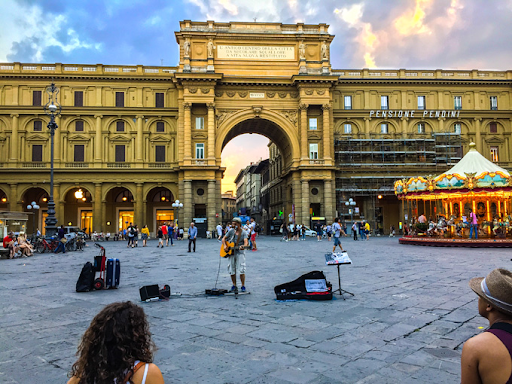
The San Giovanni neighborhood, the real beating heart of Florence. The neighborhood with, arguably, the most tourists. This isn’t a bad thing. I watch people who have spent their entire lives saving to experience the Cathedral of Santa Maria del Fiore, mouths agape as they take it all in. The marble of the cathedral gleams as I pass by. I can never take enough pictures. I hear children laugh as they go round and round on the carousel in the historic Piazza della Repubblica. At night it comes alive, with music filling my ears and lights lining the streets. 

The first time I really understood the neighborhood pride of Florence was during Calcio Storico, the classic Florentine sport. While violent, the game brings local comradery to light, displaying long fostered honor to the tourists. The parade, held before the first Calcio Storico game, marched through the piazza while I was on my way home. I remember being frozen, so intrigued by the chants, the Italians dressed in their neighborhood colors. Reds, blues, purples flash by, people from the streets joining in. Flags waved, and young children ran alongside their parents, gleaming at who they might one day become. It was incredible. Although I am an American, I was so proud of these people and what they were standing for. It was more than just a game, it was family ties. 

I may have only lived in Italy for a couple of months, but the importance of the Florentine neighborhoods has become increasingly prominent to me. This pride, these charms, are irreplaceable, and I’m so lucky to have experienced a piece of each location.