Experiencing Eataly: Italy & the Global Market

Photo by Jess Pitocco

By Anastasia Finney

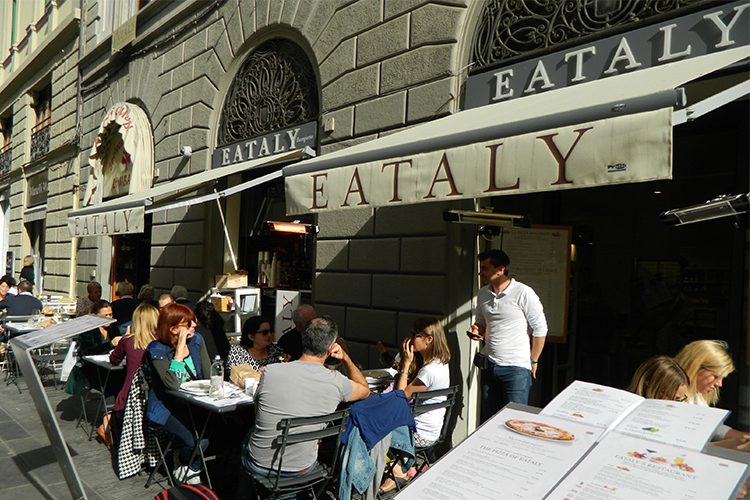
An FUA Marketing class goes inside the food retail business through a site visit at Eataly Florence.

Studying abroad at Florence University of the Arts is truly an experience like no other.  Oftentimes, this is due simply to the location of this institution in the heart of Florence, allowing effective and memorable learning outside the traditional classroom walls.

An “Introduction to Marketing” class taught by Professor Andrea Adams experienced a site visit this fall to local Eataly store.  Eataly is a food retailer, comprised of grocery markets and restaurants, that focuses on selling quality Italian goods to an international market.  According to the website, the Eataly mission is “to demonstrate that high-quality Italian food and drink are at hand.”  Eataly also highlights that they not only focus on Italian food itself, but also “living the Italian way” in terms of taking the time to enjoy this high-quality and local food.

The marketing class was able to go on a tour of the Eataly facilities, as well meet with a store manager to get an insider’s perspective.  “We got to learn about an Italian business through an international marketing perspective,” said student Nicholas Tyndall.  “I got a new view on how Italian businesses are vying to compete in an evolving global marketplace.”

Founded in 2007, Eataly has already grown exponentially and received international attention.  The most recent addition to the company is a second New York City store in downtown Manhattan, opened in August 2016, which has received excitement and positive reviews.  The students in this marketing class were able to see Eataly here in its founding country, as well as see how it has already influenced their home countries.

Besides in Italy and the United States, Eataly has locations in Brazil, Japan, South Korea, United Arab Emirates, Germany, and Turkey.  From the presentation, Tyndall said the most interesting thing he learned was “how far Eataly has already spread across the globe and how aggressive its expansion plans are for the future.”  The company plans to open additional stores across the United States, as well as expand into Canada, Mexico, France, Russia, China, Australia, and more.

The marketing class also received student cards from Eataly to experiment with the customer experience of benefits and discounts, ranging from bakery items to restaurant meals.

“I like that FUA really emphasizes this kind of experiential learning,” Tyndall concluded.  “It makes the material much more interesting and helps you to explore Florence itself.”

Interested in visiting Eataly?  The main store is on Via de’ Martelli, 22, right by the Duomo.  There is also a smaller Eataly marketplace within the Mercato Centrale – Via dell’Ariento, 50123 Firenze.

See more of Florence at FUA’s FB, Instagram, and Twitter.

My Love of Slow Tourism

Photo by the author
Photo by the author

By Amber Wright

I’m a slow tourist. You won’t see me power walking from monument to monument or rushing to get through a museum because there are still three other places I need to get to that day. This is the main reason that studying in Italy was right for me. At the start of my program I had four whole months to see Italy for what it really is. I had 106 days to get to know the heartbeat of the city and understand the area.

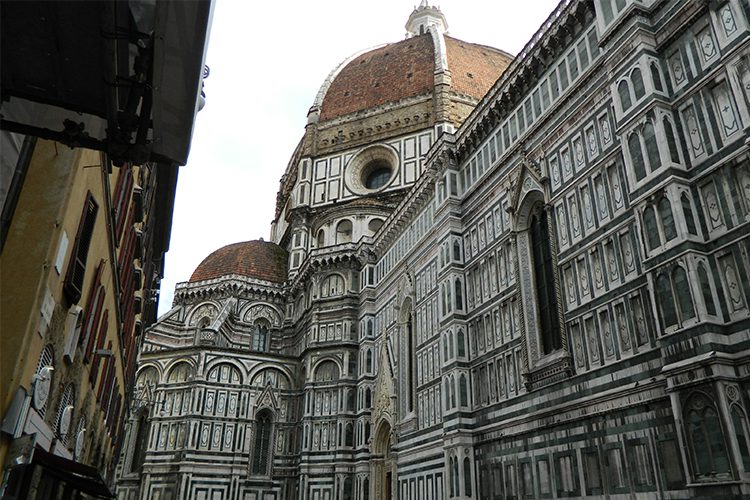
The art and detail put into everything in Italy is astounding. You can’t capture this with your camera and you won’t be able to see it all with a short walking tour through city center. I walk by the Duomo every day, twice a day, and because of my busy schedule between classes and my experiential learning tasks, I never really stop to admire it. I glance up and think how beautiful it is, but that’s the extent of it. Because I walk by these monuments so often, I tend to take them for granted, and I have to intentionally take time to go experience them and just be engrossed by the beauty. 

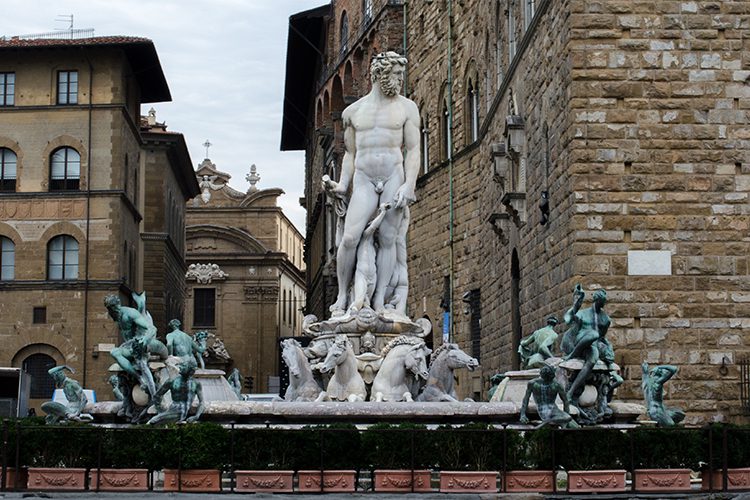
As for my slow tourist style and as weird as it sounds, steps are my favorite thing in Italy. I love sitting on the steps of Santa Croce in the morning, before all the other tourists wake up, and then heading to Piazza Della Signoria for the Fountain of Neptune. The steps of Santo Spirito are the perfect place to enjoy a pizza at sunset and the steps of the Duomo at midnight are worth missing a few hours of sleep for. These steps are where I sit for hours, slow down, and take in every detail of Florence.

As for seeing every detail, Stendhal Syndrome is real. It’s a funny diagnosis of being absolutely overwhelmed by beauty, and it’s hard not to believe its real. However, when it was first diagnosed, it was to tourists who had spent all day in the heat, running from place to place, looking up at the monuments. Its no wonder they felt dizzy. 

Don’t rush to do everything, like the diagnosed tourists, just to say you did it. Take time to experience and be in the moment of the places you go. Slow down and etch the details of Santa Croce, The Fountain of Neptune, and Duomo into your memory – these are the moments you will take home with you and remember forever.

Time may feel like its against you, but Italy isn’t a sprint. As a student here, my time is a marathon that I’m soaking up every moment of.

See more of Florence and Italy at FUA’s FBInstagram, and Twitter.

The Side Effects of Traveling

Photo courtesy of the author

By Jess Pitocco

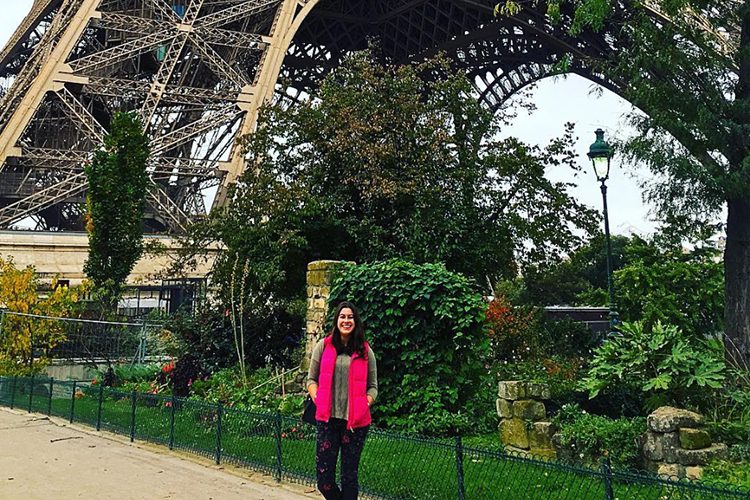
From Florence, it only takes an hour and a half to fly to Paris, France. From Paris to Lisbon, Portugal, it only takes two hours to fly. From there, it takes another two hours to fly to Barcelona, Spain. In my personal experience, I have never been at such ease while traveling by plane. Italy’s central location made it an easy jumping-off point for my ten-day trip to these places over the fall break. While I was at ease traveling, what I didn’t expect were the side effects of all that country-hopping.

My room was filled to the brim with laundry, and my brain was filled with anxiety about homework as classes geared up for the homestretch of the fall semester. I had been so used to switching languages that I resorted back to English instead of Italian when ordering a pizza. I had gotten so little sleep on my travels that I was constantly tired and needed three cappuccinos a morning to stay awake for class. The blisters on my feet were excessive, and my bank account was drained from eating out for every meal while away.

I was overwhelmed, and I still am. While traveling, you learn so much about yourself. You learn how to navigate a city without a data plan. You learn how to let go of the little things that go wrong, like losing jewelry or getting stopped at the airport for having too many liquids in your carry-on. You learn how to stand in a line without getting too impatient with the wait. You learn how to pack for ten days in a bag built for two.

What you don’t learn is how to cope with all that change, both physically and mentally. Now that I am back in my temporary home of Florence, I cannot help but think how much more I want to see and how much more I want to travel. However, my body cannot take the lack of sleep and bad eating habits, and my mind cannot handle the stress of prolonged travel. I missed my routine in Florence; getting my coffee in the morning, walking to class, having dinner with my roommates, and even taking a shower without using miniature travel bottles. Traveling overall was an extremely positive experience. But, traveling is also a double-edged sword: I loved exploring the world, but I craved the stability of cooking in my own kitchen and sitting down to watch Netflix before bed.

I wouldn’t regret traveling, and wouldn’t discourage anyone from doing so. However, some words of wisdom: if I had stayed in one place longer I think I would have had a much more relaxing journey. I wish I had foreseen the complications, and taken it easier. I didn’t need to see four museums in Barcelona, but I did so anyway despite my body telling me to slow down. My advice for a long trip? Take it one day at a time, the world will still be there tomorrow.

See more of Florence and Italy at FUA’s FBInstagram, and Twitter.

A Local & Two Foreigners: Our Favorite Places in Florence

Photo by the authors

By Amber Wright, Deborah Galasso, Jess Pitocco

Our mission this week between the three of us, Amber Wright, Deborah Galasso, and Jess Pitocco, was to write down the places that best symbolize or represent Florence, Italy. It proved to be pretty difficult; there are thousands of unique bars, monuments, churches and museums to visit in the city. It could take years to explore all that Florence has to offer! Even so, from each of our own perspectives, domestic and abroad, we chose our favorite spots in Florence.

Florence from the perspective of a local, Deborah Galasso, is full of art, culture, and cappuccino. Her favorite parks, restaurants and artistics centers that, in her opinion, best describe the culture and feeling of Florence, Italy:

  1. Villa Bardini is a magical place where I go frequently. Today, it is an exhibition center that hosts temporary shows. Villa Bardini is a beautiful garden setting, and can be visited today separately with the same ticket that you would purchase at the Boboli Gardens.
  2. Opera di Firenze is another particular place I visit as a fan of art, theater, and Florence’s musical works. I like the unusual and modern structure, and the theater’s interior is spacious and gorgeously decorated.
  3. I always go to Anfiteatro Romano alle Cascine because I love art. This amphitheater located in the Cascine Park, and takes us back to past times. It’s a historic space for indoor and outdoor events in Florence, the best ones are featured in the summer.
  4. Giardino del Drago, near Via Bolognese and a part of the Giardiano dell’Orticultura, is a relaxing place that makes you admire the beauty of Florence from another point of view. The distinctive and artistic statue in the shape of a dragon is at the center, and gives the garden its name. It is a place I visited as a child and remember fondly to this day.
  5. Chiosco is a small bar/kiosk along the Arno near St. Niccolò. It’s great especially in the summer, because you can observe the river while having aperitivo. The bar is close to the Arno, is full of lights, and has a fun atmosphere.”

Florence from our perspective, Amber and Jess, two study abroad students, is a bit different. These five places represent Florence for us because they are landmarks to help us get home, great food and shopping, and places that make Florence feel like home since we’ve arrived.

  1. We pass Piazza Gaetano Salvemini every day on our way to class at FUA’s J School. Whether in the morning or at night, there are always a myriad of characters in the Piazza, from tourists to locals. The old men play chess near the bike racks everyday, and the dog owners are followed by their pooches without leashes. There are helpful places on the edges of the palazzo: an ATM, Tabacchi, and 99 cent store. It is a place where everyone gathers for errands and meals!
  2. Sant’Ambrogio Market is the most authentic market we have found in Florence, and conveniently one of us lives across the street from it. We love ordering a cappuccino at the bar inside, while listening to impromptu performances of the violinist and cellist in the center of the market. This indoor-outdoor market is cheaper than Central Market and offers everything from clothing, antiques, to any type of produce and food you could imagine – a gem for foodies!
  3. La Milkeria is a small boutique coffee shop on Borgo degli Albizi. Every so often when we’re missing home, we go in there and get a good ol’ bagel. It’s our little secret how often we go in there to get a taste of home!
  4. Walking east on that street, you’ll come to Piazza di San Pier Maggiore. This square used to be the home of the Church of San Pier Maggiore. While it no longer stands, the reconstructed arches of the church still outline the square. There is a fresh produce stand in front of the arches that is the perfect place to grab a piece of fruit on your way to class. We love stopping in this square to imagine what it used to look like!
  5. Lastly, our favorite part of Florence are our own streets. We walk home and every time we stroll down our roads, we stumble upon a new shop or new restaurant. We continue to discover a mix of small boutiques, local restaurants, and vintage shops in our own corner of Florence. As we get closer to our homes, street art and familiar places welcome us home – our favorite places in Florence.

See more of Florence and Italy at FUA’s FBInstagram, and Twitter.

Filistrucchi: Fake Beauty, Real Tradition

Photo by Megan McCall

By Melissa Maize

Filistrucchi is a Florentine institution that makes the ordinary, extraordinary. FUA Digital Writing students recently visited the historic theater makeup laboratory and shop. 

If you could be anyone, who would you want to be?

If you could swap faces, swap lives, even for only day, who would you choose? A Duke, a Duchess, Abraham Lincoln? Lady GaGa? At Filistrucchi, you can be anyone.

We all have little things about our appearance we’d like to change- smaller nose, thicker hair, higher cheekbones- and Filistrucchi was built on that need. Established in 1720, it catered to Florentine nobles, providing wigs and make up to suit their stylistic needs. It then developed into one of the leading make-up and hair providers to the Opera and stage, and later cinema. Gaining notoriety as masters of their trade, their clients soon spread as far as New York and Boston.

Perusing photos of their work, the shop owners recount stories of how they transformed men into women, women into men, old into young, the transformations often so complete that the clients’ families didn’t even recognize them.

It’s amazing to think that all that stands between you and complete anonymity is a few layers of make up. It seems to me that Filistrucchi has survived three hundred years and two epic floods not because beauty is timeless, but because the desire to look beautiful is.

See more of Florence and Italy at FUA’s FB, Instagram, andTwitter.

Art History: A Different Perspective

Visitors at the Uffizi. Photo by Jessica Pitocco.

By Nicole DeCosta

Alicia Deakin from London discusses how being in Florence has had a first hand impression on her perspective on Art History.

After the first half of the semester here at Florence University of the Arts, the students seem to be settling in nicely to the bustling lifestyle of classes during the week and exploring on the weekends. Sitting down with 21-year-old Alicia Deakin from Suffolk, England we discussed how she has had to adapt to this cultural change and new lifestyle.

With classes taking place Monday through Friday, Deakin said that her art history class is held twice a week.

“I’m happy that the class meets twice a week. Originally I found myself comparing my schedule to other semester students taking once a week classes, but I quickly realized just how much I enjoyed the class,” said Deakin. “I was feeling super lucky to be able explore the city of Florence and take part in the included field learning city activities offered through the class.”

Taking an art history course through FUA, Deakin said how amazing it was to experience this much raw culture within a class. When asked why this class was her favorite, she said how inspiring it was to be amongst some of the most amazing artwork she’d ever seen.

“Offering me new skills that I have not used in sometime, because I had taken a few years off from University, this class provides me an opportunity to study a new topic that both interests me and excites me,” said Deakin.

Noting the high quality education being provided to her through FUA, Deakin said, “the difference in my classes here from in London are so drastic, it is important to see how much the professors want to engage with you as students, while also wanting you to have the best possible experience in Florence.”

Since Deakin has never studied art history prior to coming to Florence, she said her favorite part is the novelty of the class, learning new topics, while also being placed within the Florentine environment. Knowing she is able to see the art firsthand, Deakin is thankful for the opportunity that FUA has provided her, and being here has allowed her to open her cultural perspective.

Offering students an opportunity to receive a strong education, while also an experience of a lifetime, including travel, cultural exchanges, and new opportunities, attending FUA, Deakin says, “is a once in a lifetime experience!”

See more of Florence and Italy at FUA’s FB, Instagram, and Twitter.

The Pressure to Travel

Photo by the author
Photo by the author

By Jess Pitocco

There is a pressure all study abroad students feel to travel, and travel often. In the months leading up to your departure, you get seemingly hundreds of Facebook invites and messages from travel companies urging you to book trips. Your friends tell you they are jealous of all the countries you will visit, and your older sister will say that traveling during study abroad was the best experience of her entire life.

How do you compete with that? How can you balance classes, getting to know your home city and still travel every weekend? Can you afford the big price tag of traveling from country-to-country seeing the sights?

Studying abroad isn’t about getting the perfect Snapchat story, Instagram post, or foreign fashion. It’s not about impressing your friends back home with how sophisticated and worldly you have become in such a short period of time. It’s about giving yourself the opportunity to explore the world, find yourself, and have a little fun while doing it. The pressure, anxiety, and apprehensiveness that goes along with that are normal. That’s what everyone experiences every day back home. What you have to remember is that this is your experience and your four months to get outside your comfort zone and really enjoy your time here.

So stay home one weekend and try that restaurant you always pass by and smell the goodies in the air. Try that cooking class instead of Skyping home and relaying every moment of your day, instead of actually living in that moment. Give yourself a weekend to be a tourist in your own city, and try to find a favorite spot to write in your journal. And if you do want to travel, do so not because everyone else is doing it. Do it for you.

Personally, I plan on taking advantage of FUA’s optional excursions because of their convenience and quality guides. I will be going on, but not limited to, at least two different trips within Italy: Venice & its Islands, Napoli, Capri and Pompeii, and more. However, I’ve had a lot of fun staying here in Florence for some weekends as well. I love visiting the museums on the first Sunday of every month because all admission is free! I also enjoy bringing a picnic to the Piazzale Michaelangelo to enjoy with the view. Figure out your favorite spot in Florence, and tag #MyFUA to let us know how much you love just being here in the city!

See more of Florence and Italy at FUA’s FB, Instagram, and Twitter.

Pane Sciapo: The Bread Conundrum

Photo by the author
Photo by the author

By Jess Pitocco

On my first day in Florence, I sat down at a restaurant in the shadow of the Duomo hungry from my flight. I had unpacked and was looking forward to food like a dog looks forward to playing fetch. So when I was brought the bread basket, I devoured each piece and noticed something strange. It was hearty but extremely bland and tasteless. I realized there was no salt! Salt, a seemingly essential ingredient, wasn’t in my first taste of Italian food whatsoever. I didn’t know at the time you should wait to mop up your meal with the bread, an Italian custom I had forgotten in my desperation to get food in my belly. So, after realizing this, I had to find out why the bread was saltless and sciapo (Italian for “bland”).

Chef Pietro Di Marco says the legends of saltless bread vary, and that if asked, every Florentine will give you a different story as to how it happened. A chef his whole life, teaching at Apicius since January, I trust his version of the salt-legend:

Throughout the centuries, the legends have been told. Nothing is on paper, but we all know about the bad blood between (the city of) Pisa and Florence. Pisa, long ago, was the only Tuscan city with access to the sea. Therefore, they were responsible for the distribution, packaging, and taxation of salt for Florence. Florence didn’t want to pay to bake their bread, plus the rivalry and battles between them didn’t help the situation. From there, the evolution of Florentine cuisine began.

The most common dishes involving Tuscan bread (pane toscano), and the most important dishes according to Chef Di Marco, are pappa al pomodoro and ribollita. Pappa al pomodoro is a bread-based tomato soup with herbs and spices, a rich and filling dish invented by Florentine farmers. Ribollita translated means “twice boiled,” and it is another soup reboiled with vegetables (like local white and black cabbage) and poured over bread. Chef Di Marco says it is easy to tell when dishes are made with old-school recipes or new-school recipes: the thickness of the soup, and the ingredients like olive oil, give it away. He says that every chef in Florence knows how to make these dishes, and that without them Florentine cuisine wouldn’t be Florentine cuisine.

Pane toscano can be made in about three hours time and takes a while to rise. This ensures its freshness for days, lasting longer than most bread you get at the supermarket. Its origin is from the province of Lucca, in the town of Altopascio, which still claims its fame to the crunchiest crust and the softest insides of all bread in Italy.

To learn about Tuscan bread, stop by Apicius, the hospitality department at FUA, and get a taste of it where it’s served daily at Ganzo, the Apicius restaurant. And while having a breakfast pastry or dessert at Fedora, the Apicius pastry shop, ask the baking experts there for tips and tidbits about it!

See more of Florence and Italy at FUA’s FB, Instagram, and Twitter.

The Love Affair of Dante and Florence

Photo by Amber Wright
Photo by the author

By Amber Wright

Every time I walk down a corridor of the Uffizi, I look Dante in the eye. I bitterly and sarcastically thank him for making me work so hard in the literature class I took my senior year of high school. Oh, The Divine Comedy. I still have the poem on my shelf back in California with copious amounts of notes in the margins, yet somehow I completely forgot Dante himself was a Florentine. Now living in the city’s center, it seems I cannot walk down the road without metaphorically looking Dante in the eye.

It’s not hard to miss the admiration Florence has for the poet. According to FUA faculty member Marta Russo, there are over 100 references to Dante throughout the city. He had a love affair with Florence as you can see in his poems. However, it was not always like this. In Florence, he was involved in a political struggle between the Guelphs and Ghibellines, and these rival parties disagreed on who should hold power in Italy. The Ghibellines supported the Holy Roman Emperor and the Guelphs were in favor of the Pope. Dante himself was a Guelph and was eventually exiled for it, but you wouldn’t know by Florence’s current celebration of the poet.  

The most obvious places to see Dante in Florence are the Uffizi – in the museum’s outdoor gallery of statues – and in front of the Basilica of Santa Croce. As mentioned previously, Dante was exiled from Florence for his political stance among the Guelphs. He never returned, and was buried in Ravenna – this is something Florence is still trying to cope with. According to Prof. Russo, the cities to this day disagree over where his bones should rest. While he isn’t actually buried there, Santa Croce still houses a tomb in his honor.

This love struggle isn’t one-sided: Dante loved his city back then as much as it loves him now. The father of the Italian language references Florence in many passages in The Divine Comedy. In Canto XXVI, Dante proclaims, “Florence, rejoice, now that you have such fame, and over land and sea you spread your wings! The whole Inferno’s ringing with your name!”

He may have been exiled, but his ties to Florence were undying. In fact, if Dante had not been exiled, he may have not written The Divine Comedy at all, says Prof. Russo. It was his exile that made Dante realize and understand his great love for his city. He was able to step back and fully understand the greatness of where he was from, and essentially intertwine this passion into his poem.

Dante and Beatrice, painting by Henry Holiday

Today, Florence honors Dante with plaques and statues around the city. They are its olive branch to the great poet, and a way to preserve his great history.  I see this preservation not only when I visit the Uffizi, but also when I walk down Via Guelfa. I see his legendary presence on the corner where he first saw his true love Beatrice and am reminded of the ultimate love story that Dante lived, with his native city.

See more of Florence and Italy at FUA’s FB, Instagram, and Twitter.

Your Fall Guide to Fruits and Vegetables in Florence

Central Market
The Central Market, photographed by the author.

By Jess Pitocco

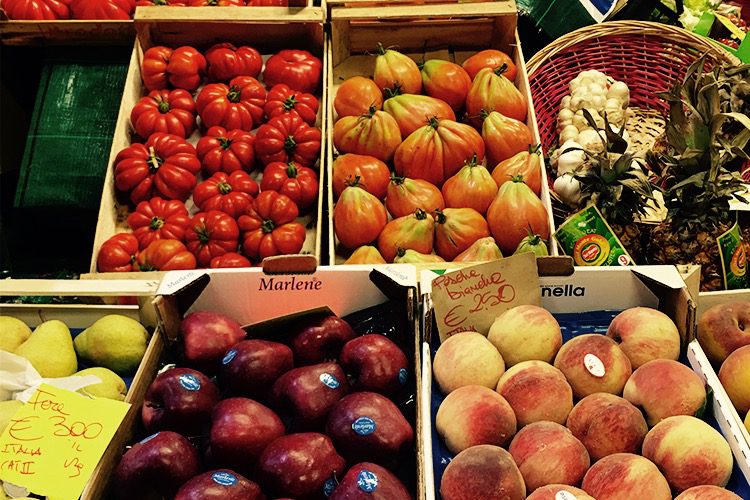
Italy isn’t all about the carbs; fruits and vegetables play a huge role in Italian cuisine. Here’s everything you need to know this fall about the best fruits and veggies in Florence. Check out the best markets, what produce is in-season, and vegetarian-friendly restaurants and recipes!

The high-carbohydrate diet many associate with Italian cuisine is a falsehood: Italians may eat carbs, but their lifestyle, portions, and eating habits are much healthier. That’s why when the New York Times reports on Italian eating habits, the focus is not on how to eat a low-carb diet while traveling, but rather why Italians are some of the healthiest people in the world. Fruits and vegetables, though filled with those ‘nasty’ carbs, are absolutely essential not only to a healthy diet, but also to Italian cuisine. That’s why including some apples, asparagus or zucchini in your basket while on your daily market trip is important to the Italian experience.

If you haven’t been to an Italian local market yet, give yourself an afternoon to go and explore one of the best parts of living in Florence. There are more than four big Florentine markets, not including the San Lorenzo Market, that you should visit to get the best, and freshest, produce (and even some clothing, music, plants and pastry too!)

However, before going to the market, know what fruits and vegetables are in season. Check out this chart to see that apples, blueberries, grapes, tomatoes, green beans, and cucumbers are just some of the fruits and vegetables that are at their best in September.

Want to visit some renowned vegetarian restaurants in Florence? Try Le Fate on Via S. Zanobi, for it’s fully vegan and vegetarian menu inspired by the signs of the zodiac and recommended by Travel + Leisure Magazine. Dolce Vegan and Il Vegetariano both have extensive vegetarian and vegan options as well, both a less than 10 minute walk from one another in the center of Florence. Still want more options? Silvana Vegan is an additional option, on Via dei Neri near the Galileo Museum.

If you don’t want to eat out, FUA Professor Cecilia Ricci, who often teaches food and culture courses, swears by this traditional Italian recipe for fruits and vegetables:

Cold Barley Salad, with Shrimp, Anchovy Fillets, and Cherry Tomatoes

Ingredients:

  • 300 g Pearl barley
  • 200 g Shelled shrimp
  • 15 g Extra-Virgin olive oil
  • 150 g Cherry tomatoes
  • 3-4 leaves of basil, cut in julienne
  • Black pepper
  • Salt
  • 8 Anchovies fillets, preserved under oil

Directions:

Boil the barley in a pot with 1.5lt of water with salt. Once the barley is cooked, strain it and place it to cool down in a bowl. In the meantime, wash and dice the cherry tomatoes. In a casserole pan add the extra-virgin olive oil, heat it at medium temperature, and let the anchovies fillet to melt. Once the anchovies are ready add the shrimp and sauté them in the oil for 2-3 minutes. Add the barley in the casserole, stir and mix all the ingredients together for 5 more minutes. Then, remove all the ingredients from the pan and place them in a bowl, add the diced cherry tomatoes, basil, pepper, salt, and mix. Refrigerate for at least 30-45 minutes before to serve. And enjoy!

After buying your fruits and vegetables, make sure you pay attention to how long they keep. Basically, how long the fruits veggies last is based on where they are from. If they are fresh from the market, your fruits and vegetables can last 3-4 days without rotting or refrigeration. If they are from the supermarket, the produce can go bad within a day or two because it has been refrigerated and prevented from becoming ripe. That way, as soon as they leave the supermarket your fruits and veggies can become ripe faster and ultimately rot faster. Buying fresh produce from the local market is a better way to ensure it will last (and it will taste better too!)

Click here for a guide to eating out in Florence, provided by FUA’s hospitality department.

See more of Florence and Italy at FUA’s FB, Instagram, and Twitter.