ACF Fiorentina: Florence’s Soccer Team

Photo by Beatrice Santini

By Karla Silva

I grew up in a Brazilian family – we live and breathe soccer. It is like a religion. My parents would set their lives around a soccer game, adjusting their work schedules to watch an important match. There was no such thing as DVR to them– the game always had to be experienced in real time. Soccer games were a time of celebration, where family and friends got together. It was one of my favorite things growing up. And to see that embedded in the Italians, especially the Florentines, is a way to reconnect to my family.

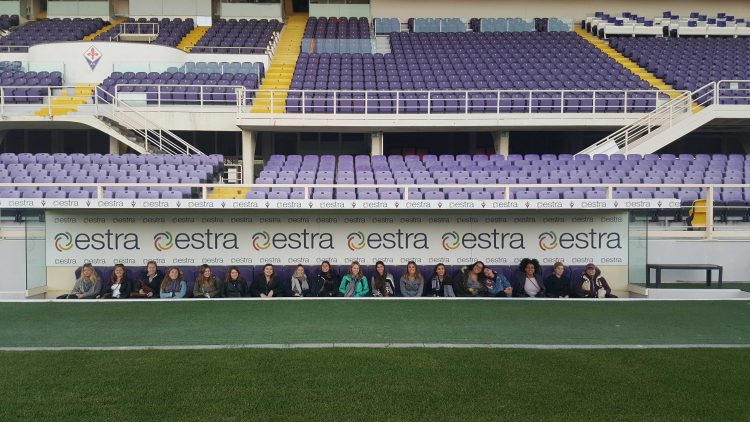
I recently had the honor to go on a special tour of the Stadio Artemi Franchi, home of the ACF Fiorentina soccer team thanks to my Writing for Digital Media course at FUA. You can feel the pride of the stadium’s management team as you walk through the VIP entrance, with its bright white walls and the elegant symbol of the team adorning them: a purple fleur-de-lys inside a gold-lined diamond.

We quickly made our way to the media room, where the press gather together after each match. You can imagine the intensity of representatives of different media outlets fighting to get their questions asked, one jumping over the other to get their burning questions asked for their article.

It takes a lot of work to get a team popular enough for there to be a need for the media room, let alone an audience to watch the game, and we have the team’s Digital Media department to thank for that. To get the word out via countless social media channels and put out content that will appeal to fans of all ages isn’t an easy task. It takes hard work that many do not realize. It made me wonder how much effort truly goes into getting a game to run smoothly, or to construct a large fan base for the team as we make our way out of the media room and into the stadium itself.

I’ve always felt that the locker room is a sacred place for the players. It’s where they get ready, prepare for the upcoming match. They talk strategies, spread words of encouragement. It’s their home. Their private space. And entering that space allowed us to see a personal side that no other fan is able to see. It felt like we were in on a secret that everyone wanted to know.

The Florentines value the sport of soccer, which goes hand in hand with family. It’s impossible to walk down the streets of Florence without seeing a splash of purple here and there. To have the opportunity to walk on the field that the Florentines value so much was an experience I’ll never forget. Though the stadium is on the smaller end, seating around 45,000+ fans, it felt expansive underneath the glowing setting sun. Back home, whenever there was a game, it was always a party. Family and friends, friends of family and even neighbors get together celebrate. The spirits are always high, the energy constantly flowing.

Seeing the stadium empty and quiet, was a new feeling for me. You visualize the loud and high energy of a full stadium in comparison. The lack of cheers and chants made the stadium seem almost peaceful, like the quiet before the storm. We were even given the chance to sit on the players’ bench, which was the perfect end for our visit. Being able to experience the field from the player’s angle was unforgettable, a viewpoint that only a certain select few get to see.

One thing that I noted during our visit was the amount of people it takes to operate the stadium. The fans don’t always know, and neither did I, that the game consists of so much more than just the players. From the coach to the stadium manager, the commentators, the digital media specialist, even the workers who keep the field in top conditions – all of these individuals support the needs of the players and the game itself. The backbone of the stadium is just as important as the team.

I am forever grateful for this opportunity that I have been given. Soccer is a big part of my life and to be able to walk through the inner workings of a stadium and witness how the entire range of stadium workers connect to put on an amazing game for fans was a unique experience that I will cherish.

See more of Florence at FUA’s FB, Instagram, and Twitter

What to Do in Florence with only a Few Days Left

Photo by the author
Photo by the author

By Jess Pitocco

I have only a few days left here in Florence and I am starting to panic. What have I missed? What else can I do? What sights have I not seen? How can I make the most of the short amount of time I have left studying abroad? I know everyone says that time flies by, but I don’t think I really understood that feeling until now. As cliched as it is, I do feel as though this semester went by in the blink of an eye. So how do I savor the tastes, views, and people of Italy with a short amount of time left? After brainstorming, I’ve come up with some solutions for when it feels like it’s too soon to go home.

  1. Revisit your favorite places! Take a couple days, in between studying for finals of course, and revisit your favorite spots. Don’t take them for granted. Give yourself time to appreciate each and every store, restaurant, and museum that touched your heart. Commit them to memory, even take pictures, so that these places will never leave you. My favorite restaurant, Ristorante Il Paiolo on Via del Corso, will be my first stop; their fare is the most authentic that I’ve found in Florence! Plus, every time I go I’m greeted with the warmest of smiles and the most gracious service.
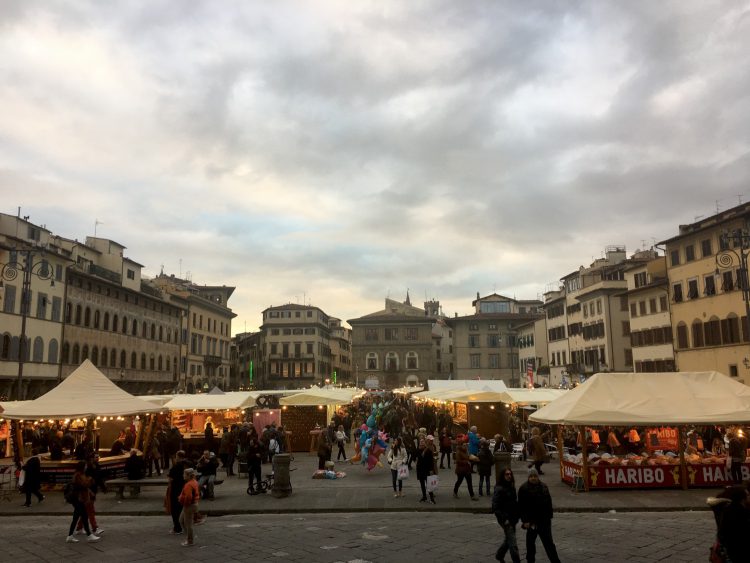
  2. Do something you aren’t able to at home; take an Italian cooking class, visit an enoteca that you haven’t ventured to yet, visit that famous museum you’ve missed. Give yourself a day to explore where you haven’t explored, and find a store you haven’t entered, maybe even taste a new dinner entree you haven’t tried yet! The Christmas market in the Piazza Santa Croce is a perfect place to spend some quality time exploring; not just for the food, but for the lights and the Christmas/winter season spirit.
  3. Speaking of trying new things, try and get lost in your city. Florence, for me, has plenty of side streets filled to the brim with cute boutiques and galleries to discover. Every time I find a new area of the city, or a new street I haven’t walked down, I get excited. On the side street Borgo Pinti, finding the small Mrs. Macis clothing boutique lead me to one of the most creative fashion finds I’ve seen in Florence. Carla Macis, the store owner, makes gorgeous dresses with prints on them from 1980s Italian stamps; truly unique! In these last weeks, I will not hesitate to go off the beaten path and explore what I haven’t yet.
  4. Take a chance; get a haircut, buy that dress you’ve been eyeing for weeks in that store window, or even write that blog you’ve always wanted to start. Give yourself something to remember Florence by; whether that be a journal, a piece of street art, or a pair of shoes, don’t forget to give yourself some kind of souvenir. My recommendation is not to buy yourself a magnet of the Duomo, however, it is to find something that means a lot to you. My souvenir will be spending a Saturday at the San Ambrogio market: getting a meal there, relaxing with coffee, and exploring the wares and produce. That entire day will be filled with journal writing and picture-taking. It was the first thing I visited in Florence and was in awe of Italian culture. Now I will end my study abroad experience in the market, like a bookend to my amazing experience. So whether you find an object that reminds you of a certain day or memory, or even going to get your nails done with your closest friend you’ve made abroad; give yourself something to take back with you, you won’t regret it.

I am realizing how important Florence has become; it has been such a huge part of my college experience, and I will miss it tremendously. I will miss complaining about the steps on the way to Piazzale Michelangelo, I will miss getting a gelato at La Gelateria dei Neri, and I will miss walking in the shadow of the Duomo and Palazzo Vecchio every day. However, I can’t dwell on how much I will miss a place while I’m still here; starting to miss Florence while still living in Florence is a paradox of the mind that I am not interested in traversing. For now, I will live in the moment and give myself the opportunity to make as many positive, fun and awe-inspiring memories as I can in my final days here.

See more of Florence at FUA’s FB, Instagram, and Twitter

Home is Where the Heart Is

Photo courtesy of the author

By Amber Wright

If you asked me how many places I’ve called “home,” I would say four – I grew up in California, now live in Washington, worked in Northern Ireland for a few months, and am now studying for four months in Italy. I’ve had to make a home where I am three times since I’ve left where I grew up, and each time my concept of home has changed.

When I first moved to Seattle, it was easy. My close friends in California had all moved, so it was generally painless for me to leave. I found all the things that made me feel comfortable and things that were familiar to me. I found my groove, and I made as many new friends from school as possible to surround myself with.

When I moved to Belfast, it wasn’t so easy. I was very secluded and separated from people where I lived, and the most familiar place I could go was Starbucks thirty minutes away. I hardly met anybody my age while working there and often spent days alone.

As excited as I was to be in Florence for a semester, I was nervous about moving to a new country again. With moving to Florence, I would be here longer and there was an added challenge of the language barrier in trying to make friends. How was I going to meet anybody? I was afraid that I wouldn’t be able to make a home for myself here like I wasn’t able to in Belfast.

Three months later, Italy now feels like home just as much as Seattle does. When I first arrived, I had no idea what to do. I went the first week eating out every night and using a tee-shirt to dry off because I had no idea where a supermarket was or where I could buy a shower towel. Now, after traveling to amazing places like Germany, Croatia, and Spain, I get a sense of comfort, something I never got in Belfast, arriving at Santa Maria Novella Station, walking past the Duomo, and entering my apartment.

Italy has been very different from anywhere I’ve lived before, landscape, language, and climate-wise, but it has become normal and comfortable for me. However, this sense of comfort hasn’t come from knowing where to buy food or from decorating my room, it’s come from the community I’ve been lucky enough to form here. “Home is where the heart is,” “home is where your family is,” and my mother’s personal favorite, “home is where your momma is,” are popular phrases for a reason. Feeling at home is about the people surrounding and supporting you in that place, whether that be friends or family.

My study abroad program staff and the institution have done an excellent job of bringing students together and creating a community that people feel at home in. From taking day trips to having Thanksgiving dinner together, my program has become my family who I lean on for support.

The relationships you form over study abroad are quick and wild. You form friendships immediately because you all know you’re in the same position – a new country where you don’t know anybody. You go to dinner together that first night, then to Piazzale Michelangelo the next day, and then before you know it you’re exploring Florence with these friends every weekend. These friends will be the ones you climb to the top of the Duomo with and also get lost trying to find that one osteria in the far outskirts of city center. You’ll struggle though your Italian language class, and celebrate together when you have your first successful conversation with a local. You’ll discuss the culture you’re immersing yourself in, and also reminisce about the few things you miss about home. Finally, it’s three months later in December, still with two weeks to go, and you’re already crying thinking about leaving these people and leaving what and who has been home for the past few months.

Home isn’t a thing or a place, but a feeling that you get from the people by your side. My time here in Florence is intertwined with the people I spent it with, and I won’t be able to think about Europe without thinking of them. When I’ll look back on living in Italy and how much I felt at home here, it won’t be because of my apartment on Borgo Pinti. It will be because of the amazing friends and community I had surrounding me here making it feel like home.

See more of Florence at FUA’s FB, Instagram, and Twitter

Art’s Greatest Spy: Exploring the Museo Casa Siviero

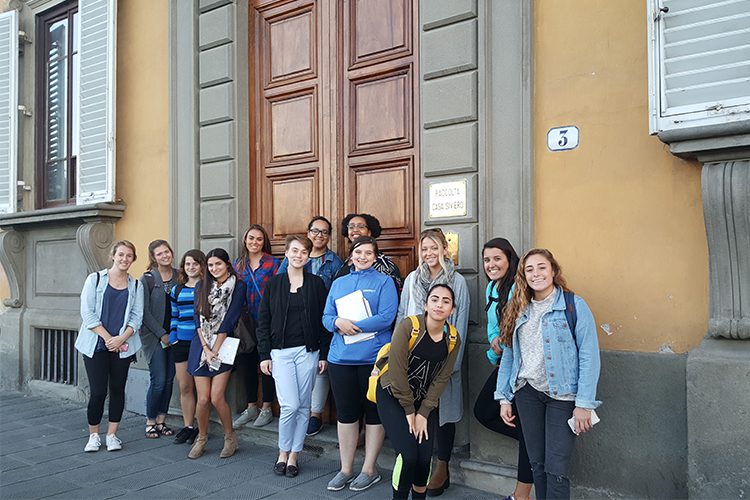
FUA digital writing students visit Casa Siviero. Photo by Beatrice Santini.

By Leeya Mengistu

A Florentine home-turned-museum houses the intriguing story of a man whose involvement in WWII and fascism in Italy made a priceless contribution to Italian art.

Lungarno Serristori 1 is nondescript in the way that every historical home in Florence blends into the Renaissance landscape of the city. The exterior is a faded shade of yellow. The front courtyard is shaded by trees and the driveway covered in gravel. The building itself is styled the typical Florentine architecture. But the former owner of the home, as well as the treasures that lie inside, are what draws visitors from around the world.

Meticulously cared for by the Amici dei Musei e dei Monumenti Fiorentini, the Museo Casa Siviero hosts the memory and history of classical art’s 007 figure: a man whose reputation as a smartly dressed, valiant ladies’ man is surprisingly much less known than James Bond’s.

Rodolfo Siviero’s two-story estate is home to an exciting legacy. The basement holds a museum of his life and achievements, while the main floor holds the personal art collection of Siviero, who wanted to be remembered for his achievements as a collector as well as his achievements as a spy. The pieces include weapons, paintings, sculptures whose cultural and historical significance attributed to their owner are priceless.

But how did a failed art historian become a national hero?

Siviero, born in 1911, began as a humble humanistic studies major at the University of Florence with dreams of working in art history. Instead, life led him to the fascist Italian secret service, where he became an agent going undercover to recover beloved pieces from the Nazi party. His largest mission in 1937 brought him to Berlin, where he collected intelligence undercover as a persona very close to himself: a student pursuing art history.

A few years later, Siviero joined the resistance in Italy and became an anti-fascist. He began to monitor the movements of artwork stolen by the Germans. This time he worked from the home at Lungarno Serristori after previous owner and dear friend, Jewish artist Giorgio Castelfranco, fled Florence in fear of the incoming Nazis.

It wasn’t long before he was captured and tortured in the Villa Triste, or the Sad House, by the Fascist military in 1944. Committed to the role, he resisted relentless interrogation and won back his freedom. Even today it is still unknown whether Siviero himself was truly with or against the National Fascist Party.

Of course, Siviero’s work was not in vain. Around 200 pieces of artwork recovered by the spy are currently hosted or archived in Florence’s world-famous Uffizi Gallery.

Although anxious to secure his status in the Italian art history world, Siviero remained an obscure figure during his time. An interesting fact, he loved women and a letter to Hollywood’s popular blonde bombshell, Jean Harlow, was reciprocated with autographed photo. Siviero eventually retired his life of espionage and returned to a traditional job in the arts: President of the Accademica delle Arti del Disegno. He maintained the position until his death in 1983, and his home was given to the Tuscan Region in order to keep the legacy alive for generations to come.

Museo Casa Rodolfo Siviero
Lungarno Serristori, 1-3
Free entry, see the below site for opening times.
www.museocasasiviero.it

See more of Florence at FUA’s FB, Instagram, and Twitter

Florence in the Rain

Photo by the author
Photo by the author

By Jess Pitocco

A typical day in Florence looks like this: the Duomo is never shrouded by clouds, the sun always makes the bronze ball on the top of the cupola shine like gold, the streets are filled with bustling people, and in each doorway, a new delicious smell entices you. Florence may seem like just another city of dreams; however, what does it look like when it’s raining?

The contrast can be quite stark, actually. The streets slowly get less crowded as the sky opens up. Ponchos and umbrellas are sold at every corner. The whole city feels like it is in a shadow as people try and find shelter from the storm. And just as the rain pours down and splashes you, the sun peeks through the clouds and you see blue sky. But only for a moment. The rest of the day is cloudy, on and off rain, making the Duomo as gray as the sky.

I find solace on these rare rainy days at small cafes, preferably on a side street. I usually throw on sneakers and try to get through the puddles without making my socks too wet. The rain boots I bought for this occasion have a hole in the sole and are useless when it gets stormy outside. I fast-walk, bringing my backpack and hope that the wifi works today.

Depending on how I feel, I get a cappuccino, coffee, hot chocolate, or tea. It makes my hands sweat and fogs my glasses, but it’s so comforting to me in my soggy clothes that I don’t care. I usually get a snack while I sit and do homework. Sometimes I read, or just relax. At home, where I’m from, rainy days are designated movie/cinema days. Here, I will happily settle for a cute cafe, some sweet treats, and a good book.

Florence, before arriving, had never seemed like a cold season city to me (a fellow FUAer shares how to spend a winter day alone, btw). However, a rainy day can sometimes bring a fall-like atmosphere to the city. People bundle up, briskly walk back and forth to escape the rain; it reminds me of the snowed-in streets of New England where people do the exact same with snowflakes. Either way, some of the gloomiest looking days in Florence make me feel most connected to the city. I found a good reading spot, my favorite coffee, and a comforting ambiance to a city that is most of the time lively and exciting. Rainy days here aren’t sad; they are calm, introspective and more enjoyable than you’d expect. What’s your favorite rainy-day spot?

See more of Florence at FUA’s FB, Instagram, and Twitter


Experiencing Eataly: Italy & the Global Market

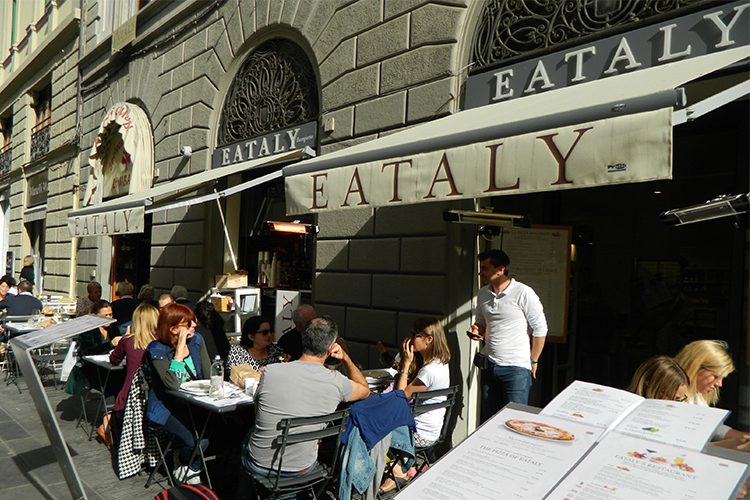
Photo by Jess Pitocco

By Anastasia Finney

An FUA Marketing class goes inside the food retail business through a site visit at Eataly Florence.

Studying abroad at Florence University of the Arts is truly an experience like no other.  Oftentimes, this is due simply to the location of this institution in the heart of Florence, allowing effective and memorable learning outside the traditional classroom walls.

An “Introduction to Marketing” class taught by Professor Andrea Adams experienced a site visit this fall to local Eataly store.  Eataly is a food retailer, comprised of grocery markets and restaurants, that focuses on selling quality Italian goods to an international market.  According to the website, the Eataly mission is “to demonstrate that high-quality Italian food and drink are at hand.”  Eataly also highlights that they not only focus on Italian food itself, but also “living the Italian way” in terms of taking the time to enjoy this high-quality and local food.

The marketing class was able to go on a tour of the Eataly facilities, as well meet with a store manager to get an insider’s perspective.  “We got to learn about an Italian business through an international marketing perspective,” said student Nicholas Tyndall.  “I got a new view on how Italian businesses are vying to compete in an evolving global marketplace.”

Founded in 2007, Eataly has already grown exponentially and received international attention.  The most recent addition to the company is a second New York City store in downtown Manhattan, opened in August 2016, which has received excitement and positive reviews.  The students in this marketing class were able to see Eataly here in its founding country, as well as see how it has already influenced their home countries.

Besides in Italy and the United States, Eataly has locations in Brazil, Japan, South Korea, United Arab Emirates, Germany, and Turkey.  From the presentation, Tyndall said the most interesting thing he learned was “how far Eataly has already spread across the globe and how aggressive its expansion plans are for the future.”  The company plans to open additional stores across the United States, as well as expand into Canada, Mexico, France, Russia, China, Australia, and more.

The marketing class also received student cards from Eataly to experiment with the customer experience of benefits and discounts, ranging from bakery items to restaurant meals.

“I like that FUA really emphasizes this kind of experiential learning,” Tyndall concluded.  “It makes the material much more interesting and helps you to explore Florence itself.”

Interested in visiting Eataly?  The main store is on Via de’ Martelli, 22, right by the Duomo.  There is also a smaller Eataly marketplace within the Mercato Centrale – Via dell’Ariento, 50123 Firenze.

See more of Florence at FUA’s FB, Instagram, and Twitter.

My Love of Slow Tourism

Photo by the author
Photo by the author

By Amber Wright

I’m a slow tourist. You won’t see me power walking from monument to monument or rushing to get through a museum because there are still three other places I need to get to that day. This is the main reason that studying in Italy was right for me. At the start of my program I had four whole months to see Italy for what it really is. I had 106 days to get to know the heartbeat of the city and understand the area.

The art and detail put into everything in Italy is astounding. You can’t capture this with your camera and you won’t be able to see it all with a short walking tour through city center. I walk by the Duomo every day, twice a day, and because of my busy schedule between classes and my experiential learning tasks, I never really stop to admire it. I glance up and think how beautiful it is, but that’s the extent of it. Because I walk by these monuments so often, I tend to take them for granted, and I have to intentionally take time to go experience them and just be engrossed by the beauty. 

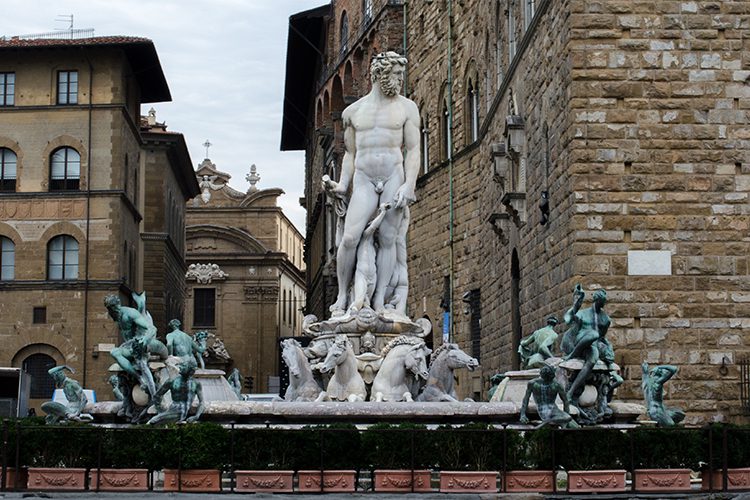
As for my slow tourist style and as weird as it sounds, steps are my favorite thing in Italy. I love sitting on the steps of Santa Croce in the morning, before all the other tourists wake up, and then heading to Piazza Della Signoria for the Fountain of Neptune. The steps of Santo Spirito are the perfect place to enjoy a pizza at sunset and the steps of the Duomo at midnight are worth missing a few hours of sleep for. These steps are where I sit for hours, slow down, and take in every detail of Florence.

As for seeing every detail, Stendhal Syndrome is real. It’s a funny diagnosis of being absolutely overwhelmed by beauty, and it’s hard not to believe its real. However, when it was first diagnosed, it was to tourists who had spent all day in the heat, running from place to place, looking up at the monuments. Its no wonder they felt dizzy. 

Don’t rush to do everything, like the diagnosed tourists, just to say you did it. Take time to experience and be in the moment of the places you go. Slow down and etch the details of Santa Croce, The Fountain of Neptune, and Duomo into your memory – these are the moments you will take home with you and remember forever.

Time may feel like its against you, but Italy isn’t a sprint. As a student here, my time is a marathon that I’m soaking up every moment of.

See more of Florence and Italy at FUA’s FBInstagram, and Twitter.

The Side Effects of Traveling

Photo courtesy of the author

By Jess Pitocco

From Florence, it only takes an hour and a half to fly to Paris, France. From Paris to Lisbon, Portugal, it only takes two hours to fly. From there, it takes another two hours to fly to Barcelona, Spain. In my personal experience, I have never been at such ease while traveling by plane. Italy’s central location made it an easy jumping-off point for my ten-day trip to these places over the fall break. While I was at ease traveling, what I didn’t expect were the side effects of all that country-hopping.

My room was filled to the brim with laundry, and my brain was filled with anxiety about homework as classes geared up for the homestretch of the fall semester. I had been so used to switching languages that I resorted back to English instead of Italian when ordering a pizza. I had gotten so little sleep on my travels that I was constantly tired and needed three cappuccinos a morning to stay awake for class. The blisters on my feet were excessive, and my bank account was drained from eating out for every meal while away.

I was overwhelmed, and I still am. While traveling, you learn so much about yourself. You learn how to navigate a city without a data plan. You learn how to let go of the little things that go wrong, like losing jewelry or getting stopped at the airport for having too many liquids in your carry-on. You learn how to stand in a line without getting too impatient with the wait. You learn how to pack for ten days in a bag built for two.

What you don’t learn is how to cope with all that change, both physically and mentally. Now that I am back in my temporary home of Florence, I cannot help but think how much more I want to see and how much more I want to travel. However, my body cannot take the lack of sleep and bad eating habits, and my mind cannot handle the stress of prolonged travel. I missed my routine in Florence; getting my coffee in the morning, walking to class, having dinner with my roommates, and even taking a shower without using miniature travel bottles. Traveling overall was an extremely positive experience. But, traveling is also a double-edged sword: I loved exploring the world, but I craved the stability of cooking in my own kitchen and sitting down to watch Netflix before bed.

I wouldn’t regret traveling, and wouldn’t discourage anyone from doing so. However, some words of wisdom: if I had stayed in one place longer I think I would have had a much more relaxing journey. I wish I had foreseen the complications, and taken it easier. I didn’t need to see four museums in Barcelona, but I did so anyway despite my body telling me to slow down. My advice for a long trip? Take it one day at a time, the world will still be there tomorrow.

See more of Florence and Italy at FUA’s FBInstagram, and Twitter.

A Local & Two Foreigners: Our Favorite Places in Florence

Photo by the authors

By Amber Wright, Deborah Galasso, Jess Pitocco

Our mission this week between the three of us, Amber Wright, Deborah Galasso, and Jess Pitocco, was to write down the places that best symbolize or represent Florence, Italy. It proved to be pretty difficult; there are thousands of unique bars, monuments, churches and museums to visit in the city. It could take years to explore all that Florence has to offer! Even so, from each of our own perspectives, domestic and abroad, we chose our favorite spots in Florence.

Florence from the perspective of a local, Deborah Galasso, is full of art, culture, and cappuccino. Her favorite parks, restaurants and artistics centers that, in her opinion, best describe the culture and feeling of Florence, Italy:

  1. Villa Bardini is a magical place where I go frequently. Today, it is an exhibition center that hosts temporary shows. Villa Bardini is a beautiful garden setting, and can be visited today separately with the same ticket that you would purchase at the Boboli Gardens.
  2. Opera di Firenze is another particular place I visit as a fan of art, theater, and Florence’s musical works. I like the unusual and modern structure, and the theater’s interior is spacious and gorgeously decorated.
  3. I always go to Anfiteatro Romano alle Cascine because I love art. This amphitheater located in the Cascine Park, and takes us back to past times. It’s a historic space for indoor and outdoor events in Florence, the best ones are featured in the summer.
  4. Giardino del Drago, near Via Bolognese and a part of the Giardiano dell’Orticultura, is a relaxing place that makes you admire the beauty of Florence from another point of view. The distinctive and artistic statue in the shape of a dragon is at the center, and gives the garden its name. It is a place I visited as a child and remember fondly to this day.
  5. Chiosco is a small bar/kiosk along the Arno near St. Niccolò. It’s great especially in the summer, because you can observe the river while having aperitivo. The bar is close to the Arno, is full of lights, and has a fun atmosphere.”

Florence from our perspective, Amber and Jess, two study abroad students, is a bit different. These five places represent Florence for us because they are landmarks to help us get home, great food and shopping, and places that make Florence feel like home since we’ve arrived.

  1. We pass Piazza Gaetano Salvemini every day on our way to class at FUA’s J School. Whether in the morning or at night, there are always a myriad of characters in the Piazza, from tourists to locals. The old men play chess near the bike racks everyday, and the dog owners are followed by their pooches without leashes. There are helpful places on the edges of the palazzo: an ATM, Tabacchi, and 99 cent store. It is a place where everyone gathers for errands and meals!
  2. Sant’Ambrogio Market is the most authentic market we have found in Florence, and conveniently one of us lives across the street from it. We love ordering a cappuccino at the bar inside, while listening to impromptu performances of the violinist and cellist in the center of the market. This indoor-outdoor market is cheaper than Central Market and offers everything from clothing, antiques, to any type of produce and food you could imagine – a gem for foodies!
  3. La Milkeria is a small boutique coffee shop on Borgo degli Albizi. Every so often when we’re missing home, we go in there and get a good ol’ bagel. It’s our little secret how often we go in there to get a taste of home!
  4. Walking east on that street, you’ll come to Piazza di San Pier Maggiore. This square used to be the home of the Church of San Pier Maggiore. While it no longer stands, the reconstructed arches of the church still outline the square. There is a fresh produce stand in front of the arches that is the perfect place to grab a piece of fruit on your way to class. We love stopping in this square to imagine what it used to look like!
  5. Lastly, our favorite part of Florence are our own streets. We walk home and every time we stroll down our roads, we stumble upon a new shop or new restaurant. We continue to discover a mix of small boutiques, local restaurants, and vintage shops in our own corner of Florence. As we get closer to our homes, street art and familiar places welcome us home – our favorite places in Florence.

See more of Florence and Italy at FUA’s FBInstagram, and Twitter.

Filistrucchi: Fake Beauty, Real Tradition

Photo by Megan McCall

By Melissa Maize

Filistrucchi is a Florentine institution that makes the ordinary, extraordinary. FUA Digital Writing students recently visited the historic theater makeup laboratory and shop. 

If you could be anyone, who would you want to be?

If you could swap faces, swap lives, even for only day, who would you choose? A Duke, a Duchess, Abraham Lincoln? Lady GaGa? At Filistrucchi, you can be anyone.

We all have little things about our appearance we’d like to change- smaller nose, thicker hair, higher cheekbones- and Filistrucchi was built on that need. Established in 1720, it catered to Florentine nobles, providing wigs and make up to suit their stylistic needs. It then developed into one of the leading make-up and hair providers to the Opera and stage, and later cinema. Gaining notoriety as masters of their trade, their clients soon spread as far as New York and Boston.

Perusing photos of their work, the shop owners recount stories of how they transformed men into women, women into men, old into young, the transformations often so complete that the clients’ families didn’t even recognize them.

It’s amazing to think that all that stands between you and complete anonymity is a few layers of make up. It seems to me that Filistrucchi has survived three hundred years and two epic floods not because beauty is timeless, but because the desire to look beautiful is.

See more of Florence and Italy at FUA’s FB, Instagram, andTwitter.