Cosmic Travel: Through the Macro Sphere

By Donald Blair
Photos by author

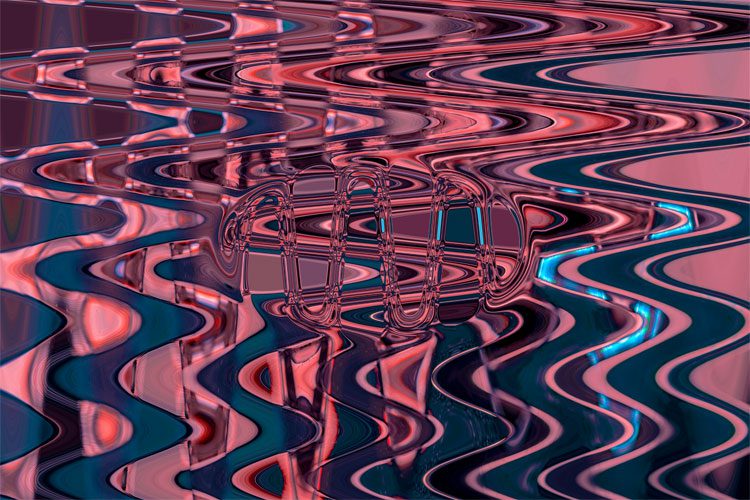
SPEL Photography student Donald Blair shares his beautiful textures created through macrophotography.

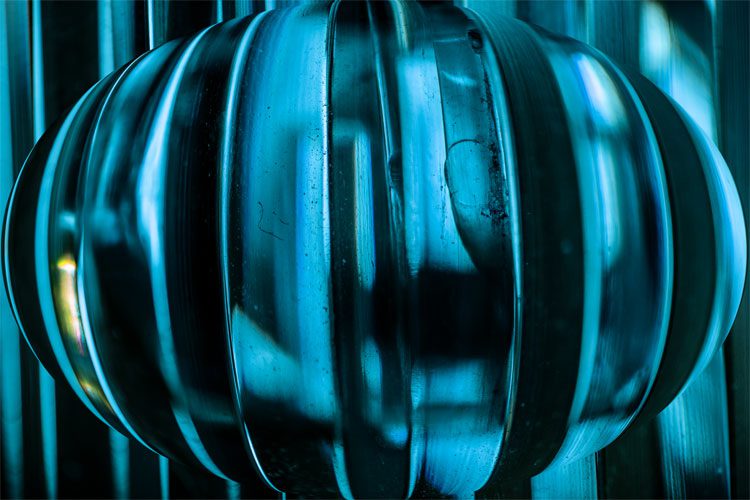
I decided to explore the textures of the world through macrophotography; often combining composited, and augmented graphic elements. I opted to take this approach to convey the way I see the world through my unique perspective. I often get lost in the tiny minute details of sight, sounds, and textures that most people never notice. Although I could not find away to express sound through this particular part of the creative process, I was able to show the visual textures that I often get lost in. This is a body of work I plan to continue for a long time to come. I find it is a unique way to explore my surrounding world as I travel through life. I am able to capture the actual textures of my journeys across this awesome planet, in a way traditional travel photography often neglects.

I expanded upon the scope of this project by incorporating my playful and imaginative side by making these images represent a visual story of inter-dimensional space exploration. This work pulls from my previous works where I try to convey a somewhat psychotropic/cosmic travel experience. This collection of photographs take the observer through three separate stages of a transient voyage. The first series of images focuses on Dimensional Travel through light to reach a new universe. Part of this series titled “Warp Drive” is also currently on exhibition at FUA’s DIVA campus.  My Dimensional Travel series begins with images that are shot straight and less processed. Then it gradually approaches an increasingly augmented perspective. The Dimensional Travel series then morphs into my other two series. The second series of images explore the planetary cosmos of this new universe. And, the last series of images pull the observer down to the new planetary landscapes that exist in this new exciting realm. Although each section of these three series are different, they culminate into a single cohesive body of work that I call Cosmic Travel.

The Dimensional Travel series starts by exploring a macro photographic study of bent light. By focussing in on the textures of a fresnel type prismatic light refractor, differing liquids, and transparent/translucent objects; I was able to observe the world in a way that recalls the moments of my life since childhood when I would get lost in wonder as I would gaze through objects that would bend and manipulate light. Things such as looking through the side of a glass top table would present a new universe to me. I was able to see beyond my present reality as the glass would warp and bend the light as it passed through. It also is symbolic of the way sci-fi movies and television represent cosmic travel by the warping and bending of light. For example: when Star Trek would engage warp speed, or teleportation; or, when Dr. Who would travel in his Tardis. This also alludes to my own cosmic experiences that lifted the veil of reality,  by presenting a new way of looking at the world in which I exist. 
See more of Florence and Italy at FUA’s FBInstagram, and Twitter.

A Home Away from Home

By Barbara Carranza
Photo by author 

I knew when I applied to the Special Project Experiential Learning (SPEL) Journalism course that Florence  was one of the most beautiful cities in the world. I thought it would be the perfect spot for me: a relaxed, artistic, history-filled setting that would appeal to my old and free-spirited soul. It turns out I was right on the money (and so much more). As I’m getting ready to head back to Charlotte, my heart grows heavy. Although I have only spent two months in Florence, it’s evident to me that I have found a home away from home.

The thought first crossed my mind just a few days after my arrival. I assumed assimilating to a whole new country, language, and culture would naturally take time, but surprisingly, a sense of ease settled in me very quickly. Since I have always been curious about everything, I wondered: is it because Florence is the total opposite of Charlotte, a metropolitan city nearing 1 million inhabitants; or that everything is within walking distance, or maybe it’s the “homey” vibe that Florence just gives off that makes me feel so comfortable here? Whatever the case, it didn’t take long for me to tell my parents and friends that I wanted to move here. It was a big revelation for me because after all of the trips I’ve taken in my life, the closest that I ever came to thinking, “Yeah, I can see myself living here,” was Miami and Los Angeles. Not even Lima, Peru, my birthplace, and where almost all of my relatives live made the cut. Quite the opposite – I’ve repeatedly said that while I love visiting Lima, I could never live there. So when it dawned on me that I could actually picture myself living in Florence, I was shocked, but it was a good, welcoming realization.

Now that my time here is coming to a close, the reasons for my love of Florence have become clearer. I believe one of them is the persevered presence of its antiquity provides me an endless supply of imagination. As a writer, I read and write every day. Staying in Florence gave me a burst of creativity. I wrote articles for FUA during the day, and incessantly wrote my own stories at night. Whether it was in my apartment’s living room with the windows open or in a café down the street by the Duomo, the words poured out of me, and it was simply wonderful.

Another reason for wanting to stay would have to be the breathtaking beauty of the city. Raised in a place where skyscrapers dominate the skyline, Florence offered a nice change of scenery. Instead of having the Bank of America Corporate Center, Duke Energy Center, and Bank of America Stadium in the horizon, there was the Duomo’s terracotta-lined dome, Giotto’s bell tower, Palazzo Vecchio’s Torre di Arnolfo, and the surrounding hills of the valley that the city lies in. At times, it made me feel like I was living hundreds of years ago, when Florence reigned supreme during the Renaissance.

Though I’m happy to return to my family and friends, I’m also sad to leave Florence. I’ll always carry the memories with me. I don’t know when I’ll return, but what I do know is that one day I will.

See more of Florence and Italy at FUA’s FBInstagram, and Twitter.

Bookshops in Florence

By Lillian George

FUA student Lillian George tells us everything we need to know about bookshops in Florence.  

Florence is filled with several historical landmarks, and many people travel from all over the world just to see them. Shopping is also a must whilst you are visiting Europe, but what about books? Sure, go ahead and order your book on Amazon, or your kindle, but are you getting the real experience? Having items shipped to you whilst you are in another country can be expensive, and it can take a few weeks. Going into a bookstore is an experience in itself, and it can really take you into a whole new world.

Just the other day I was walking down the crowded streets of Florence, and I stumbled upon an old bookstore, BM Bookshop. It had a very retro feel to it, just by looking at display in the window. I wanted to walk in, but it seems that the store had been permanently closed. I could tell right away that this bookshop had been around for quite some time. The person working next door could tell I was a student, and she greeted me immediately. I walked over to the friendly woman and introduced myself. I decided to try to talk to her directly about the store, although my Italian is not very good. Luckily, she spoke some English and I was able to learn more about the remarkable BM Bookshop. Talking to someone about this shop and learning as much as I did was a great experience, even if I did manage to go inside the store itself.

BM Bookshop was possibly the oldest English language bookshop in Florence, Italy. It was first introduced about fifty years ago by Libby, an American, and her husband Francesco, an Italian from Florence. The focal point of this store was the huge selection of Italian cookery books, tourist guides and books on art, architecture, design and fashion in English. However, recently (before they shut down) they added French, German and Spanish language sections. BM Bookstore was a sincere and welcoming location for English-speaking people. This bookstore was located in central Florence, and even if you cannot go into the store anymore, I recommend taking the walk over there just to see the history of it all.

The woman I talked to, who preferred to remain anonymous, peaked my interest about this store. Later that day, I went home to do some research. The most recent owner of the shop was John Werich, a young Swedish man who has lived in Florence since 2006. He bought the store because he was looking for a way to put down roots in the city. This store made him feel at home, but it’s sad that the bookshop did not last very long while it was in his possession. He and his family are art lovers, so when he bought this historical place he decided to bring some art into the store. Another interesting fact is that the store was not always called “BM Bookshop”, he renamed it to be “B&M Books and Fine Art”. He decided to rename the shop when he bought it to honor his family’s love for art.

Walking around Florence each day is getting better and better for me. I’m able to navigate the city without GPS now, and it really is becoming home. Finding stores like BM Bookshop is what this city is all about. Just because a place is shut down forever, it doesn’t mean that you can’t learn about it. I am grateful to have met the woman who taught me so much about this little old bookshop with a history behind it.

See more of Florence and Italy at FUA’s FBInstagram, and Twitter.

A Ghostly Side of Florence

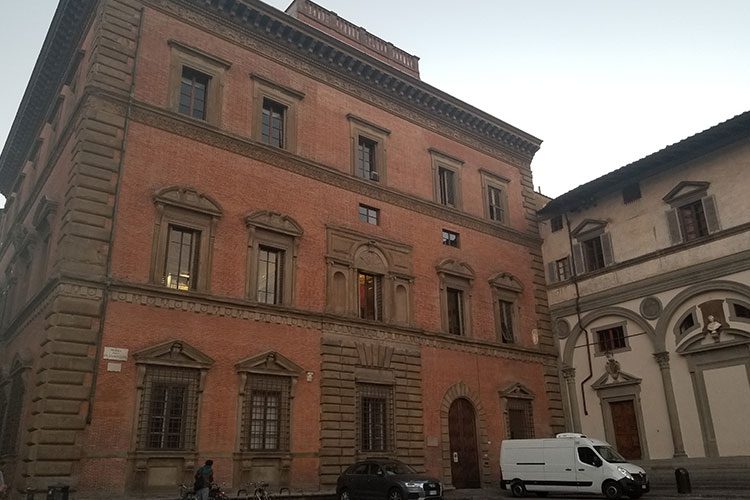
Palazzo Budini-Gattai and the open window
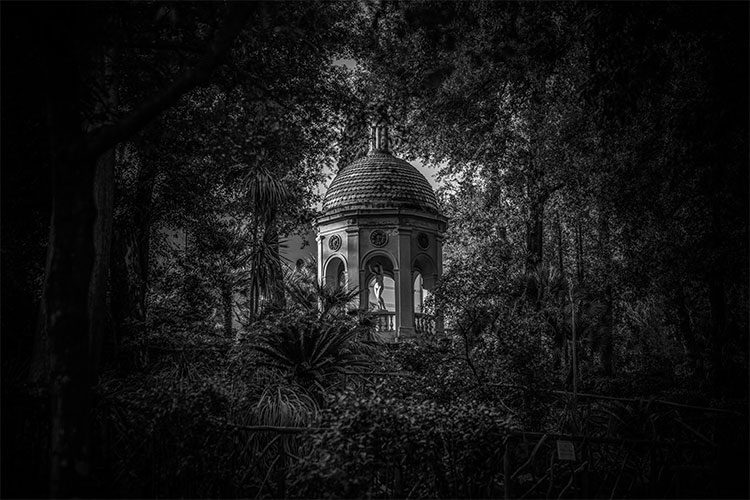
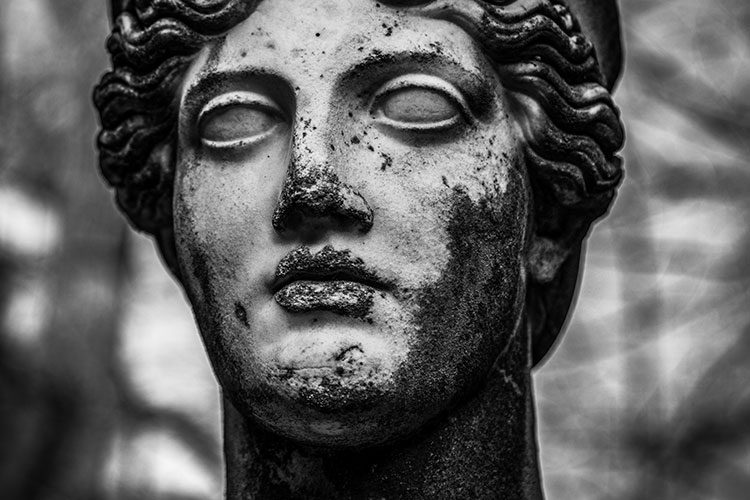
Photo by author
By Barbara Carranza

SPEL Journalism student Barbara Carranza gives us paranormal suggestions for an alternative tour of Florence.

I’ve had a life-long fascination with the paranormal; just ask my family members or friends. When I arrived in Florence, one of the first things I searched up was if the city had any reported haunted sites that I could visit. With Florence being ancient and enriched with history, of course I wasn’t let down.

The fall season has descended upon us, and with the temperatures dropping, what better way to spend your nights than reading scary stories and strolling through the streets to check out some of Florence’s darkest legends and mysteries?

  • Palazzo Budini-Gattai

If you’ve been to the Piazza Santissima Annunziata, you’ve seen the Palazzo Budini-Gattai. A red brick building with three floors, it was constructed in the 16th century by the Grifoni family and eventually came under the ownership of the Budini-Gattai family. The legend attached to this place is in the far right window on the top floor. It is always open, even when it rains. The reason for this is because the ghost of a noblewoman is still waiting for her husband to return from war. They had just married when he was called for battle, and the young lady waited by the window so she could see him return, but he never did. Heartbroken, the woman became attached to the room and the window until she died. When the shutters were finally closed, an unnatural force moved the furniture and threw books off the shelves. The chaos didn’t stop until relatives reopened the window – and so it has stayed open, never to close lest someone wants to risk angering the ghost.

Located in Piazza Santissima Annunziata, on Via dei Servi, 51.

  • Pensione Burchianti

Located less than a 10-minute walk from the Duomo, the Santa Maria Novella train station and the basilica it is named after, Pensione Burchianti is a 3-star hotel that is situated perfectly for tourists. Open since 1919, the hotel has garnered a quality reputation for housing celebrities, politicians, and poets over the years, including an alleged visit by Fascist dictator Benito Mussolini. However, guests might find themselves not the only ones residing in their suites. Among the reports of unexplained events, paranormal stories in the hotel includes hearing children skip down the hallways, the feeling of being watched, the sensation of icy cold breath being blown on people’s faces, and sensing the mattress dip as if someone was sitting on it. If that doesn’t scare you, there is also the Fresco Room where people have seen a pink, translucent figure. The owner of the hotel refuses to stay overnight, so if you’re brave enough to do it, make sure to record your stay because you might capture something!

Located on Via del Giglio, 8.

  • Palazzo Vecchio

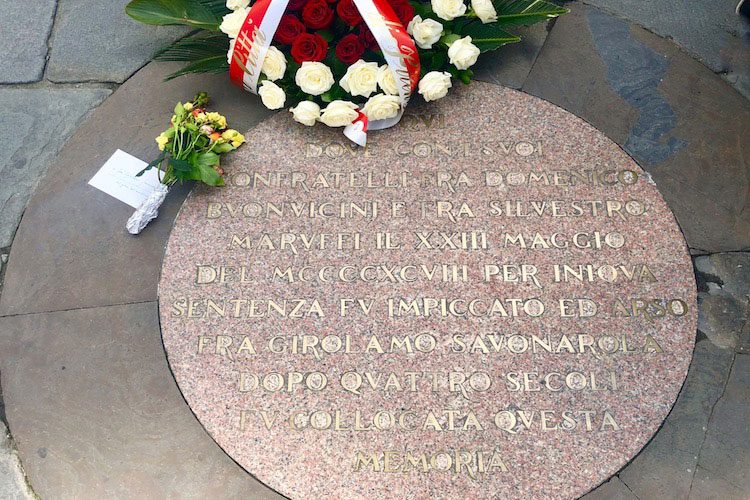
Find yourself wandering by one of the Florence’s most recognisable landmarks at night? Here are a couple words of advice: don’t yell out Baldaccio d’Anghiari’s name. Palazzo Vecchio, and the Piazza della Signoria in general, have witnessed so much blood spilled on its pavement over the last 600 years. For example, the hanging and burning of Friar Girolamo Savonarola in 1498, an event that is commemorated in a plaque positioned on the exact place where he was executed. But did you know of the mercenary Baldaccio d’Anghiari? In 1441, he was wrongly accused of treason and killed in the Palazzo Vecchio. His body was thrown out of a window and dragged across the Piazza where his severed head was put on display. It’s now said that his ghost roams the premises of the Palazzo; sounds of footsteps can be heard when it closes for the day and all the tourists have left. Do not yet his name and avoid saying it out loud for no reason. If you decide to address him, you must speak respectfully in a low voice.

Located in Piazza della Signoria,
Opening hours 9am-7pm Monday-Sunday, 9am-2 pm on Thursdays.

See more of Florence and Italy at FUA’s FBInstagram, and Twitter.

The Fascinating Garden of Villa Stibbert

By Donald Blair
All photos by author

Photography SPEL student Donald Blair explores the beauty of the Villa Stibbert garden.


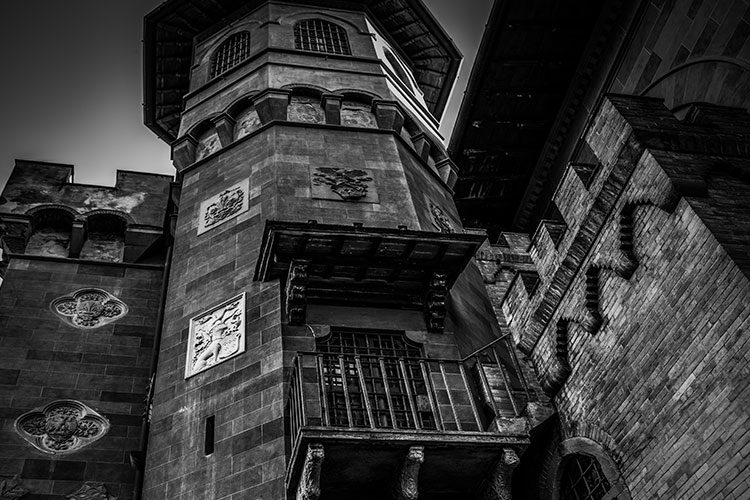
Gazebo in the garden.

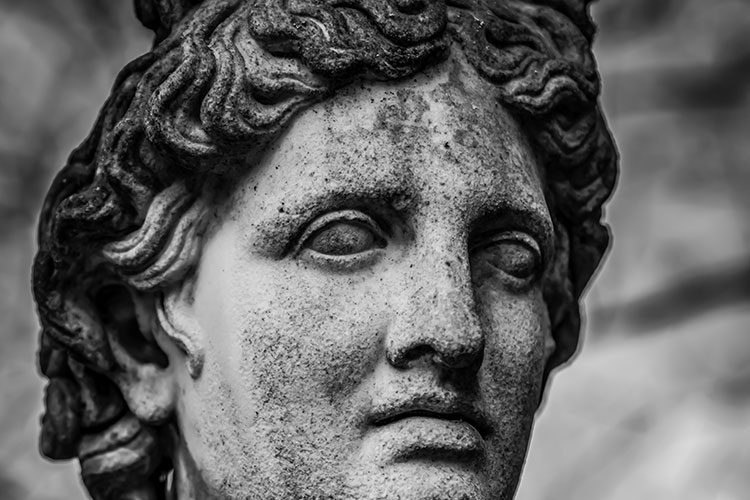
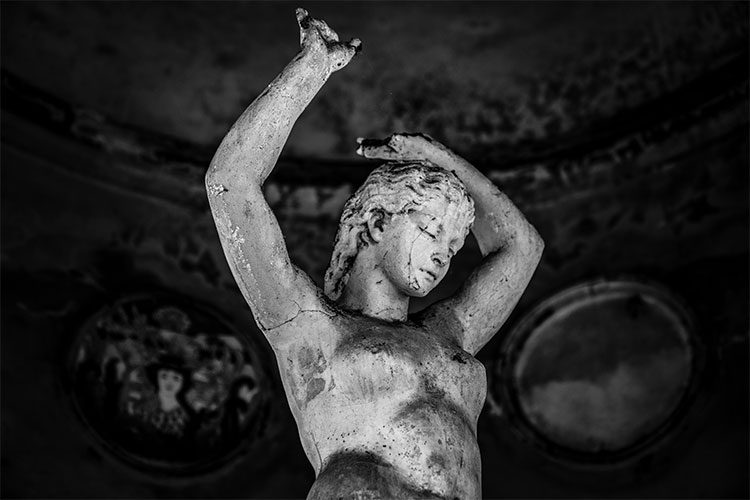
This Stibbert garden sculpture has a ghostly presence as seen by the weathering of her face.

This is one of the many pieces of art one can discover by exploring the area.
 Statue inside gazebo.

Stibbert Garden is designed in the English Garden tradition, allowing one to walk around and discover the art and beauty of the garden’s landscape.

See more of Florence and Italy at FUA’s FBInstagram, and Twitter.

La Fiorita: A Florentine Tradition

Photo by author

By Dara Hernandez

Journalism student Dara Hernandez digs deeper into the life of Girolamo Savonarola and the meaning behind the yearly Florentine celebration of “La Fiorita.”

One of the main reasons I was drawn to Italy is for the amount of history that it possesses. Walking through the streets of Florence is like walking through a book with a chapter for every building, every piazza, and every sculpture.

Of Italy’s countless traditions, there is one in particular that has existed since 1498. It is known as Florence’s “La Fiorita” and is meaningful to the people of Florence.

The person who inspired this event was a man named Girolamo Savonarola. He was born September 21, 1452 and grew up to eventually become a Dominican friar and preacher here in Florence. He was an extremely radical preacher yet was loved by many Florentines. At the time, he became well-known for his prophecies of civic glory, destruction of secular art and calls for Christian renewal. He was also notorious for organizing “bonfires of vanities” in which artworks, books, musical instruments and other objects were burned.

Savonarola’s passion-filled beliefs led him to getting excommunicated by the Pope. He was no longer allowed to participate in services of the church. Regardless, he chose to defy the Pope. Due to issues of this sort, he ended up being hanged and burned along with two followers on May 23, 1498 in Piazza della Signoria. The next day, his followers filled the area with flowers to honor his life and thus the tradition was born.

In fact, “La Fiorita” is an entire morning dedicated to the memory of Girolamo Savonarola. The people of Florence begin with a mass, proceed to spread flowers on the ground and finally, hold a costume parade to toss rose petals in the river.

As I was learning more about Savonarola, I found myself constantly wondering why people would praise someone who was famous for the destruction of, what he defined as, immoral art and someone who burned secular objects. However, seeing the roses over the plaque in memory of this man made me realize that not only are people drawn to radical, unordinary humans striving to make a difference, but also that Florentines simply accept Savonarola as part of their history. They recognize that walking through Piazza della Signoria holds stories with meaning that should be remembered.

Therefore, despite the unconventional and radical ways of his preaching, Florentines have continued celebrating his life on May 23, year after year.

See more of Florence and Italy at FUA’s FBInstagram, and Twitter.

The Farther You Go, the Better it Gets!

Photo by the author

By Jenna Berman

Before studying abroad in Florence, I was sent nearly 10 different “guides” – each one claiming to know the “best place to eat penne with red sauce” or the “most incredible gelato spot.” Yet no one told me about San Frediano neighborhood in the Florentine “Oltrarno.” It was not until I met a local family friend for lunch that she advised me to visit the town crowned “the coolest neighborhood in the world” by Lonely Planet. Finally, three months later, as instructed by my Writing in Digital Media instructor, I set out to make my own opinion about the famous neighborhood across the river.

It is in San Frediano that the chaos of Florence fades, the streets and sidewalks get a bit narrower, the buildings appear even older, and the shiny, brand names are replaced with local artisan shops, quaint cafes, and authentic Italian restaurants. Something about the ora feels just a little more authentic, cozy, and surreal.

As I roamed the streets, stopping into a neighborhood bake shop that smelled of warm, homemade bread and chocolate-goodness, I came across Cara Jansen, 21, who is attending Syracuse University in Florence while living with a host family in San Frediano. “It’s just cooler,” Jansen said. “Everything feels more honest and authentic here.”

San Frediano is a residential district that possesses Florentine treasures such as the Basilica of Santa Maria del Carmine and the church of Santo Spirito. But don’t be fooled by its simplicity – because it is there where the beauty of the neighborhood rests. Merely minutes away from the hustle and bustle of the surrounding areas, parts of San Frediano feel so quiet, I can almost hear my own footsteps.

I sat down at a local restaurant for a quick bite where I spoke to a nice, young local couple sitting next to me. The couple married almost two years ago and reside in a “charming” home tucked away in San Frediano. Although our conservation was interrupted with a tough language barrier, I asked them both how they would describe the neighborhood. The husband, with kind eyes, looked over at his wife and smiled.

“It’s home. A beautiful town that we call home” he said.
His wife smiled back, chuckled, and turned to me and sighed.

“I grew up in Rome,” she told me. “I never thought I would love anywhere more – until I moved here.”

On my walk back from San Frediano to Santa Croce, I could not help but feel I just experienced a different world. Maybe it was the love of the married couple, the smell of the delicious baked goods, or the charm of historic streets. But I finally understand Lonely Planet – I may have just encountered “the coolest neighborhood in the world.”

See more of Florence and Italy at FUA’s FBInstagram, and Twitter.

Esselunga Supermostra

Photo by author

By Samantha Bedell 

Samantha Bedell shares her experiences of visiting an Esselunga supermarket in Florence and the exhibition Esselunga Supermostra. Esselunga Supermostra details the rich history of the supermarket chain throughout the last sixty years.

Esselunga has been a part of Italian culture for sixty years. First established in Milan in 1957, and later introduced in Florence a few years later, this supermarket chain has been at the center of Italian culture since its inception.

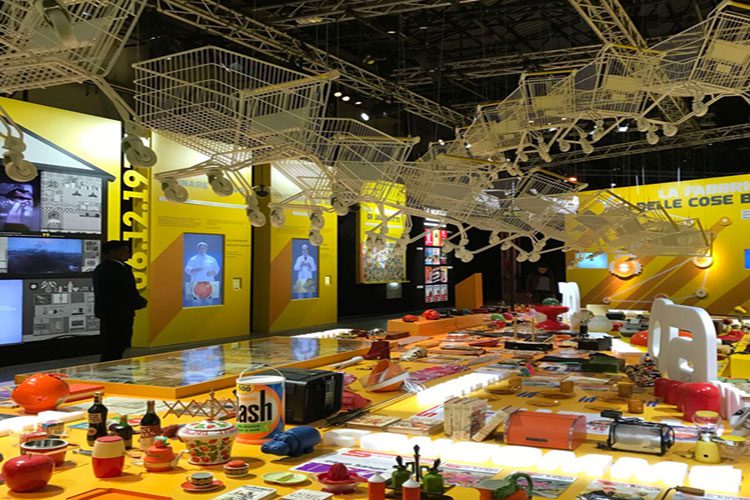
Esselunga on Via Masaccio in Florence is reminiscent of a typical supermarket. There are aisles of products like one may expect, but the charm of Esselunga is in the details. Looking up there are products hanging overhead that don’t necessarily correspond to the aisles below. For example, an aisle may have boxed cookies, but above are slippers in a plethora of sizes. Turning a corner, one may expect a display with fruits or vegetables, but in Esselunga there could be a display of popular novels. To understand Esselunga’s uniqueness, there needs to be a look back in time.

To celebrate Esselunga’s sixtieth anniversary, there is an exhibition titled Esselunga Supermostra at Stazione Leopolda. I will fully admit, I did not know what to expect at an exhibition about a supermarket chain.

Walking to the exhibition, you’re greeted by large iron gates and banners detailing the dates of the show. Security opens the door for visitors to enter and a few rows of cash registers from the fifties transports you back in time. Through a sweeping black curtain is another wall replicated to look as if it were the original 1957 entrance to an Esselunga. Once through the fringe, the visitor is taken back to the sixties and seventies. The walls are a bright yellow and the ceiling has a sculpture of grocery carts that lead the eye from one end of the room to the other. Below the sculpture is a large platform full of products Esselunga would have sold at the time and other items that were culturally relevant. Most of the walls are interactive to engage visitors of any age. One wall details where Esselunga has imported its products from while another lets visitors discover different recipes used by the supermarket.

The next room highlights the architecture of Esselunga and the eighties. The architecture of the chain is described in a series of models, watercolor paintings, and photographs. On a large yellow wall hangs items that are quintessential of the time like leg warmers, Rubik’s cubes, and Walkmans. At the center of the room is a “behind the scenes” of an Esselunga warehouse and a small dance floor complete with a disco ball, lights, and music.

The following room highlights the ad campaigns in the mid nineties. I have never seen a similar campaign full of whimsy. Each sculpture and poster in this room relies on taking the product it is featuring and turning it into something else. For example, one poster asks “mappamondo o melone?” and the image is of a honeydew melon shaped as if it were a globe. There are dozens of ads similar to this throughout the room, and each has the ability to make the viewer smile.

The next section of the exhibit stands out the most. Mirrors cover the ceiling and floor to mimic a kaleidoscope while a video plays on the walls. The videos that play take the visitor from the beginning to end of the production of some of Esselunga’s products like pasta and desserts.

The final room of Esselunga Supermostra wraps up the visitor’s experience by declaring the chain’s continued support for the arts and always providing convenience and the lowest prices for their customers. The exhibition ends with an actual Esselunga delivery truck that visitors can sit in for a selfie using #SuperMostra. While heading for the exit, visitors receive a keychain, commemorative shopping bag, and DVD to celebrate sixty years of Esselunga.

The exhibit is on view until April 21 and entry is free. The entirety of the exhibition is in Italian, but even if you don’t speak the language, I highly recommend visiting. Walking through the history of Esselunga makes you feel like a true Italian. I never thought the history of a supermarket chain could be as colorful or engaging.

See more of Florence and Italy at FUA’s FBInstagram, and Twitter.

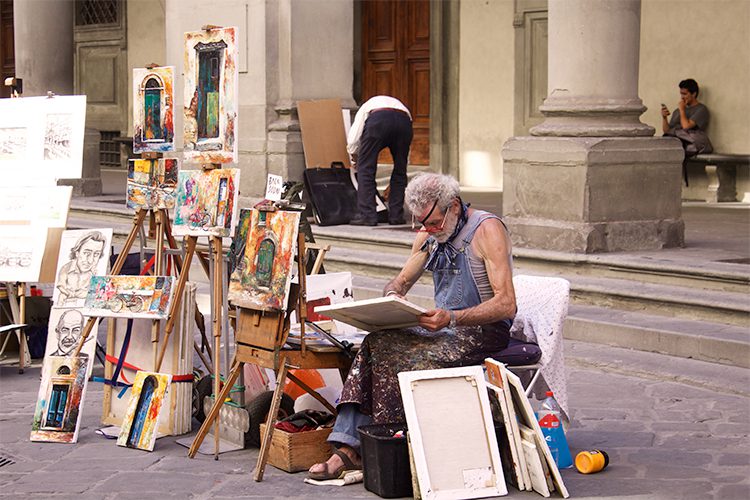
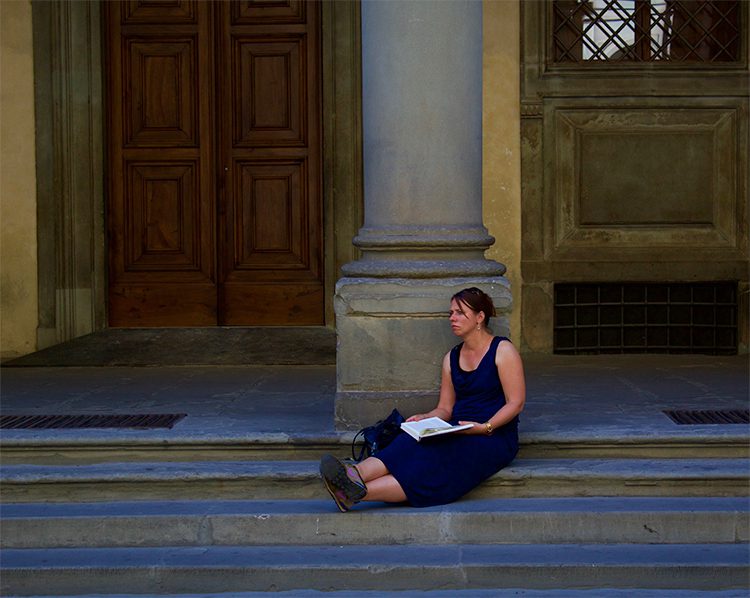
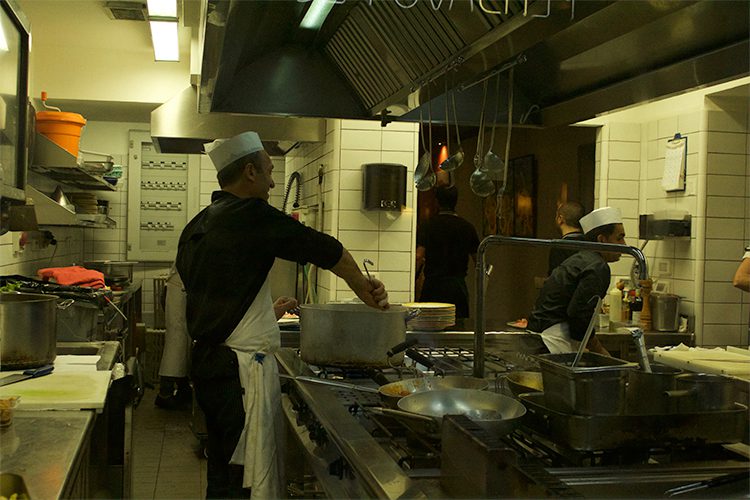
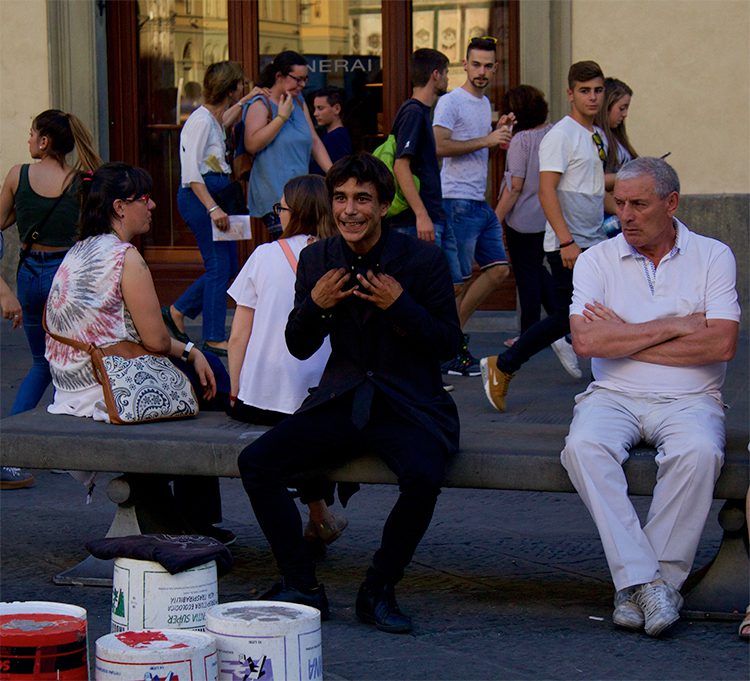
People of Florence

By Chantal Boynes
All photos by the author

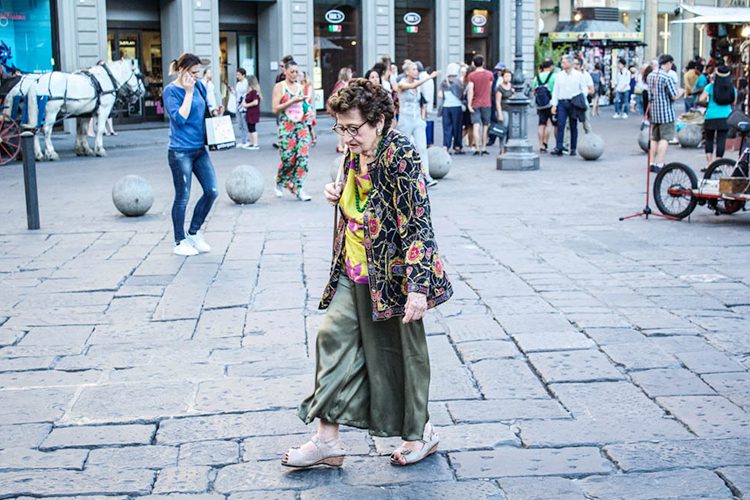
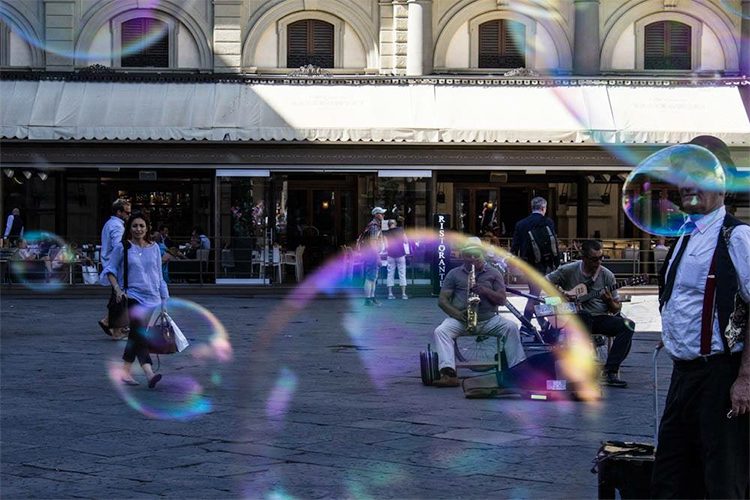
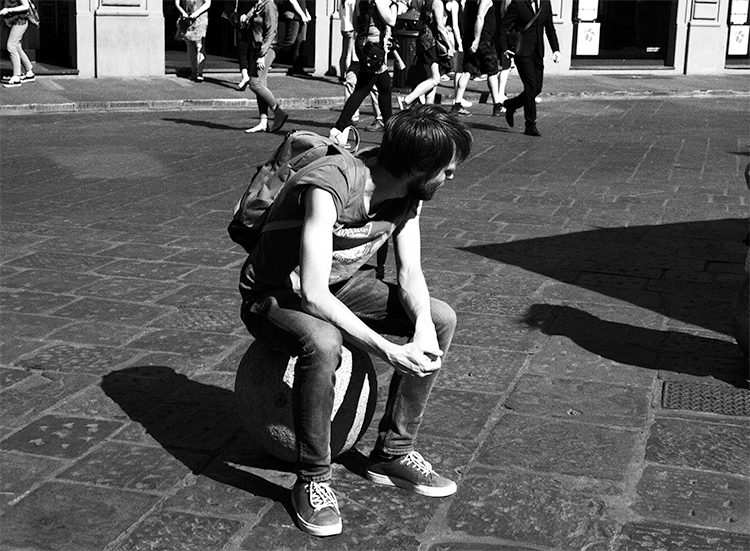
Recent Street Photography student Chantal Boynes captures the people of Florence through this gorgeous photo essay on the diverse individuals that make up our city.

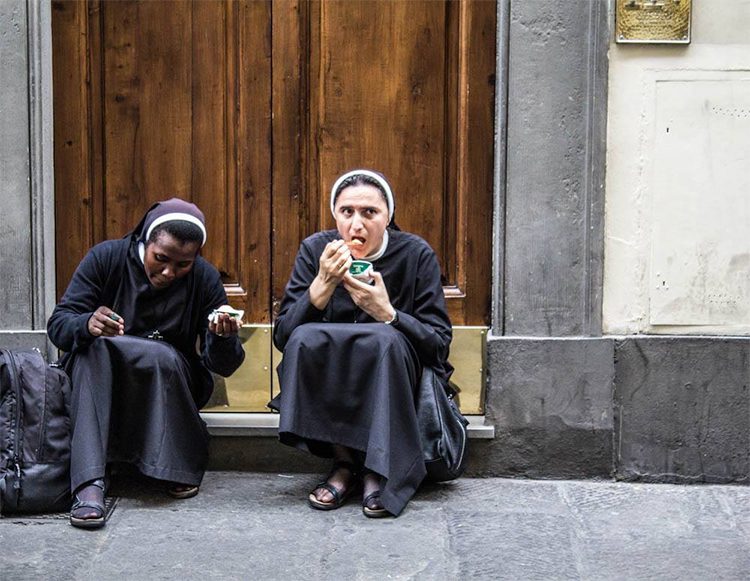
There are hundreds of stories that I could have written for this article about the different people walking the streets of this beautiful old city everyday. Each person is at a different point in their lives, coming from different countries, backgrounds and languages. Each individual has their own story to tell and this photo series captures just 1 second of the 2,228,800,000 seconds in the average person’s life. With this we can catch a brief glimpse into the lives of some of the People of Florence.


Put your Phone in your Pocket (and get lost!)

Photo by the author

By Madison Landau

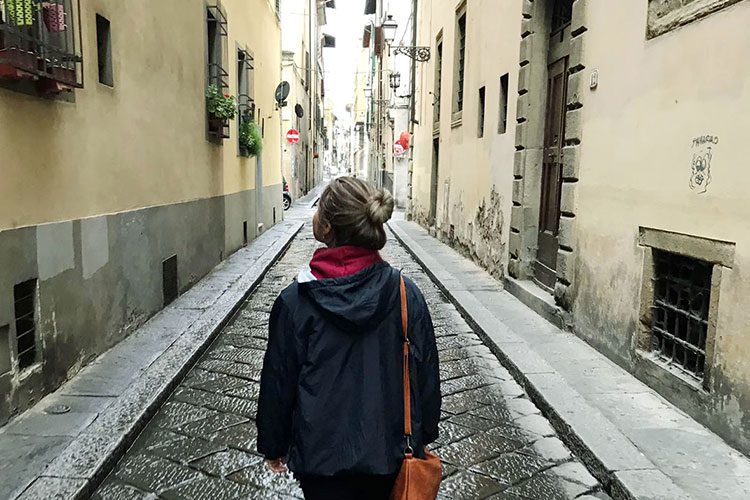
Walking down the streets in an unknown city in a foreign country can seem very overwhelming, especially in Florence’s winding neighborhoods. A great rule of thumb is to let yourself get lost and put your phone away…in trying to find your way back home you might just discover something new.

When arriving in a new country, my first instinct is to take my phone out to see if I have cell service or Wi-Fi. Arriving in Florence for my study abroad semester at FUA was no different, and I held my phone in a death like grip for the first week of living here.

Even though I was provided with great maps of the city by FUA, I still felt as if my phone was my lifeline here in Florence and that without it I would get lost forever among the streets of the city center. Little did I know how much nicer and productive my first week being here would have been if I had just allowed myself to actually get lost.

I had my face buried in my phone, looking at my maps instead of actually taking in my surroundings and understanding the streets of Florence. I didn’t want to feel uncomfortable in this city, yet I was so new to my surroundings that I refused to listen to everyone around me encouraging me to get lost.

My presence here in Florence was artificial in a sense that I really didn’t focus and appreciate where I was until I put my phone away and learned the streets of Florence.

Don’t get me wrong, I was still capturing and recording my moments here in Florence as much as I could. But instead of having my maps app constantly open, I had my camera open, or the TripAdvisor app open.

The difference between being too consumed within your electronics and being just consumed enough is a very delicate and thin line. While you want to photograph and remember every moment you can while you’re here in Florence, it’s so important to make sure you’re actually appreciating where you are and not just focusing on surviving.

Trust me, put the phone away when possible. Don’t just survive day to day while you’re abroad; thrive as much as you can here. Grow as much as you can. Put yourself in a world that you’re not familiar with, and learn to be okay with it.

See more of Florence at FUA’s FB, Instagram, and Twitter.