Coming to a new country by yourself can be scary, but learning how to fit into the culture can be even scarier. This is my experience witnessing fashion styles in Florence and learning to adapt to them myself.
Fashion is the style of clothing, hair, makeup, shoes, and so on, used by humans globally to express themselves. Fashion and the idea of fashion goes back centuries, but more specifically, the 19th century. In 1858, Charles Frederick became the first person ever to sew his label into garments he created, thus being the first “fashion designer” as we know it. Since then, fashion and style has elevated, changed, and adapted to different environments and to an array of people.
The biggest elevation of fashion I’ve ever noticed has been coming to Italy from the states. The people in Italy seem well-dressed, put together, and more understanding of expression through fashion. I have not noticed any locals wearing athleisure casually or sleepwear outside of the house, as I would see in America. I believe this is because Europe as a whole houses many of the main fashion capitals of the world. These capitals host weeks out of the year dedicated to showing off creative expression. It is an integral part of their culture and daily lives. It seems to be more respected and understood over here than in America. These events shape the trending styles to come and are watched carefully by locals as well as people all over the world.
I became intrigued with these fashion differences I noticed, so I decided to interview, research, and photograph my surroundings. I have found it extremely fascinating to witness my fellow students from all different parts of the world dressing well to class to fit into Italian style. I would argue none of us would dress as nicely for class at our home colleges.
I had a personal experience of wearing a hoodie and sweatpants around my hotel lobby and getting strange looks from all different types of people, from different areas of the world. It has become a known standard to dress well when out in Italy. After this experience I became much more aware of how I was leaving my apartment as well as how everyone else was.
During this time and the next few days, I was lucky enough to have a conversation with a local about her thoughts on fashion in Florence and Italy as a whole. I met a lady standing in line for a coffee shop who was dressed impeccably. She wore a blazer with dress pants and what looked to be red bottom heels. I could tell this was an expensive and well put together look. I began to tell her about my school journaling assignment and her thoughts on fashion differences worldwide. She explained to me that dressing well had always been the standard for her. She said, “Growing up, my mother and father dressed us in our best and it was expected of us as we grew. This was normal. I never saw my mother without beautiful hair or a nice dress on.” I found it interesting how she explained to me that it was normal to dress nicely and this had been instilled in her since childhood. I believe this to be the disconnect between fashion in Italy from other countries in the world. Parents are less expecting of what their child wears in other countries, thus holding lower standards in my opinion.
Although I discussed this topic with a few other locals, I got very similar responses across the board. The overall consensus being that dressing well had started during childhood and become a social norm. As an American student, I envy the fashion sense these interviewees held. Anyone can buy an expensive outfit, it was the way they styled these outfits that stood out to me. They each had something people around the world try to achieve, which is knowing how to style themselves perfectly. Overall, I grew in my knowledge of stylish appearance and the standards in different parts of the world.
written by Talia Velazquez for SPEL: Public Relations
A reflection on how exploring Florence encourages spontaneity and discovery, highlighting the city’s charm in its unpredictability and the value of wandering off the beaten path to uncover hidden gems and unique experiences.
They say, “You don’t know what you’ve got until it’s gone.” I would say they are right about everything… except Florence. I’ve known all along.
Every weekend that I pack a bag and leave for some new, exciting city, I feel a little sad–not because I don’t want to explore, but because I already miss home. Not my home-home. My Florence home. My creaky-ceilinged apartment with the mural above my bed. The little store I pass every morning on my way to class, where the dogs are always lounging by the window like they’re in on some secret. And let’s not forget the cobblestone streets that have tested my ankles more times than I can count but somehow still feel charming. There’s something about the worn-out texture of this city that makes it feel alive in a way my clean, polished hometown never could. It’s these small, oddly specific details that have worked their way into my daily rhythm–and now, I can’t imagine my life here without them.
At first glance, Florence was a maze. I had no idea how to get anywhere without my GPS, and honestly, I treated that little blue dot like my personal life raft. My classes were a 20-30 minute walk from my apartment, and I’d just stare at my phone, hoping it would lead me safely to my destination. One day, my phone died mid-walk; I had no choice but to try to figure out my way back without it. And, in those 30 minutes of trying to “not panic,” I found three new cafes, a few tiny shops, and a quiet little park I had no clue was just around the corner from where I lived.
It was an accident–but one of the best accidents of my life.
Since then, I made a habit of getting lost on purpose. I made it a rule: no GPS. I embraced getting lost. Florence rewards you for it, like it’s daring you to wander. Around every corner, there’s something new–an old man selling fresh strawberries, a second hand bookstore with handwritten notes tucked inside the margins, a view from a bridge I’ve never crossed before that feels like a scene out of a movie. These little treasures wouldn’t exist if I stayed on the beaten path, glued to my phone or my to-do list. These are things I’d never find back home. Things I might never find again, even here.
Every single day since I arrived in Florence, I’ve stumbled upon something new. It’s become my daily ritual–taking a different route, looking up instead of at my feet, discovering the city for the first time all over again. My roommates and I even started this funny little game: “What place did you find today?” We know the answer will always be something we’ll all end up visiting together at some point. Florence is like a love letter to curiosity–always waiting to reveal something amazing if you’re just open enough to look.
When I’m away on weekends, I miss that. I miss the random joy of wandering with no plan, of not knowing where I’m going, but finding something unexpected around every turn. I miss my roommates, too. Staying up late with people from all over the world, talking about nothing but everything at the same time. Swapping stories, comparing cultures, laughing about weird language slip-ups or marveling at the strange, wonderful ways we have all changed since we got here. I miss that feeling. The feeling that even when I have no clue where I’m headed, I know exactly where I belong.
Florence has made me softer and more spontaneous. Less scared of being unprepared. I’ve stopped trying to plan for everything. I’ve started letting the city guide me, saying “yes” to more things than I ever would have back home: spontaneous dinners with new friends, tagging along with people who seem to have an endless supply of places to explore, or even just stepping out of my comfort zone and taking a walk down a street I’ve never been down before. I’ve learned that you don’t need to have every moment mapped out to make it count. Florence has shown me more than I ever could have scheduled into an itinerary.
And here’s the thing: I thought I’d get tired of it. I thought the charm would fade, the magic would wear off. I mean, how many breathtaking sunsets over the Arno can one person handle, right? But now here’s the truth: Florence hasn’t gotten old. It’s only gotten more real. It’s not perfect–far from it. The roads are bumpy, the traffic is chaotic, and sometimes it feels like I’m living in a postcard that’s a little too messy to be real. But that’s the beauty of it. It’s raw. It’s alive. It’s a city that doesn’t apologize for being exactly what it is. And because of that, I’ve learned to stop trying to have everything perfectly planned out. Because life isn’t about following a schedule–it’s about the moments in between. The unexpected discoveries. The conversations that stretch until 2 a.m. The way the city feels like it’s breathing with you, not just around you.
I look back and realize: I’ll never be 19 in Florence again. I’ll never walk these streets in the same way, with the same people, in this same moment. And honestly? I wouldn’t want to. Florence has given me a version of myself that I never expected to find–a version that can be spontaneous, that can wander without a destination, and that can embrace the unknown. That’s what Florence has taught me: to say yes to the journey, to find beauty in the detours, and to never be afraid of getting lost. Because sometimes, getting lost can lead you to exactly where you need to be.
written by Hannah Johndrow for SPEL Public Relations
Because my study abroad term was only six weeks long, I packed in a lot of travel into such a short period of time. I didn’t know anybody else going abroad with me, so I didn’t plan any trips in advance as some other students do. I was initially worried that I wouldn’t be able to travel much on the weekends, or that I wouldn’t have anybody to go with.
I got along very well with my roommates, so we established a sort of unspoken travel group among the three of us. We were bad at planning ahead, so almost every trip we took was booked at the very last second. While I’m not here to recommend following our lead in that respect, I did take the time to compile an itinerary for one of my favorite day trips that I took during my time here in Florence. The constant travel on the weekends most definitely catches up to you, so this is the perfect day trip for when you just need a break from traveling, but still want to explore Italy!
Travel Tip
First of all, a quick disclaimer before we get into the full story. I’d like to share some advice for traveling in Italy! When traveling by bus or train, it is really important to understand their ticket validation system. This was a major culture shock for me. In the U.S., I’ve always bought my bus and train tickets on my phone, then was good to go. In Italy, however, many tickets require validation. There is often a machine outside of the bus/train station, or it may be on the actual bus/train.
It is extremely important that you validate your tickets, because they are not viewed as being valid tickets until they are officially validated (typically the machine will leave a stamp on your ticket with the time and date of validation). I learned this the hard way when I purchased a bus ticket but didn’t understand that I had to validate it. Within thirty seconds of getting on the bus, a ticket officer came up to me and asked to see the ticket, which he refused to accept as valid because I had not validated it. I was fined forty euro! So, beware of this important cultural difference.
The Elsa River Park
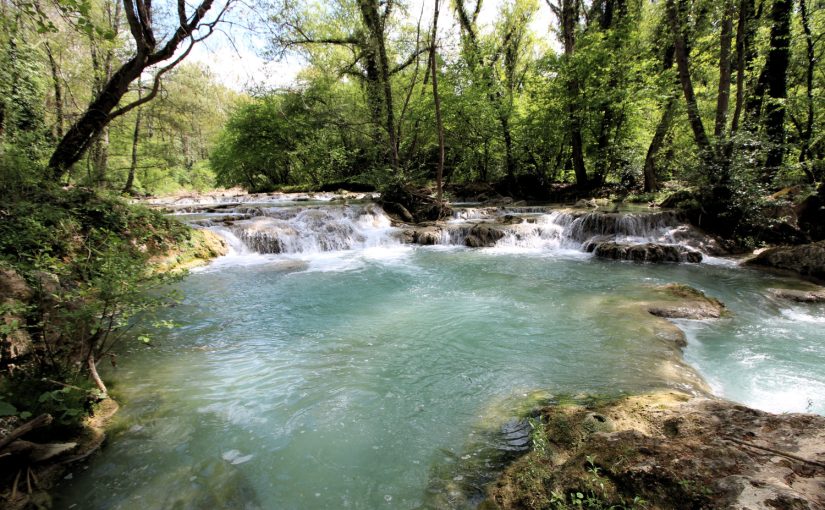
My favorite day trip was to the Elsa river, which is only an hour drive from Florence. The entrance to the river is called “Parco fluviale dell’Elsa o Sentier Elsa” on Apple Maps (which translates to “Elsa River Park”). While my friends and I drove there, there is a bus that takes you directly from Florence to the entrance of the park! I would suggest Google or Apple Maps to determine the quickest bus route.
What to pack:
● Swimsuit
● Towel (to dry off, and to sit on)
● Snacks
● Water bottle
● A camera (you’ll want to take pictures of the gorgeous turquoise water!)
I’d recommend leaving earlier in the morning so that you can have the whole day ahead of you (this goes for any day trip). It’s nice to get there before the crowds too. Once you get to the entrance of the park, there is a trail alongside the river. It was crowded the day I went because it was so hot, but we walked down the trail until we found an open spot to sit! Just walk the trail until you find a good spot. It’s nice to get there around lunchtime so you can sit down, eat, and then relax by the water for the rest of the day. I spent the whole day here when I went. I’d just gotten back from a day trip the day before and felt like I needed a more relaxing day, but I didn’t want to sit around either. This trip was perfect because I was able to explore a new place, and relax.
So, if you’re currently studying abroad at FUA, I hope you decide to explore this hidden gem! It’s the perfect escape from the Summer heat, and is off the beaten path of touristy spots.
Observations on Culture, Tourism, and Community Dynamics in Florence
written by Emerson Farrow
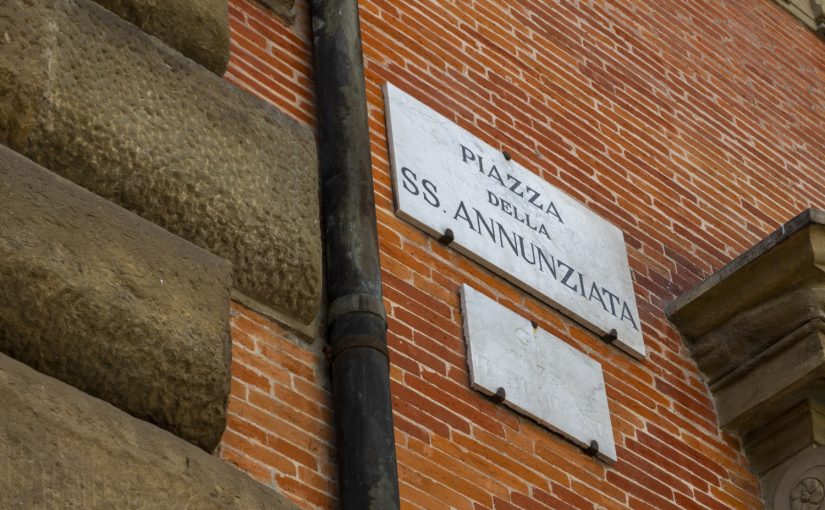
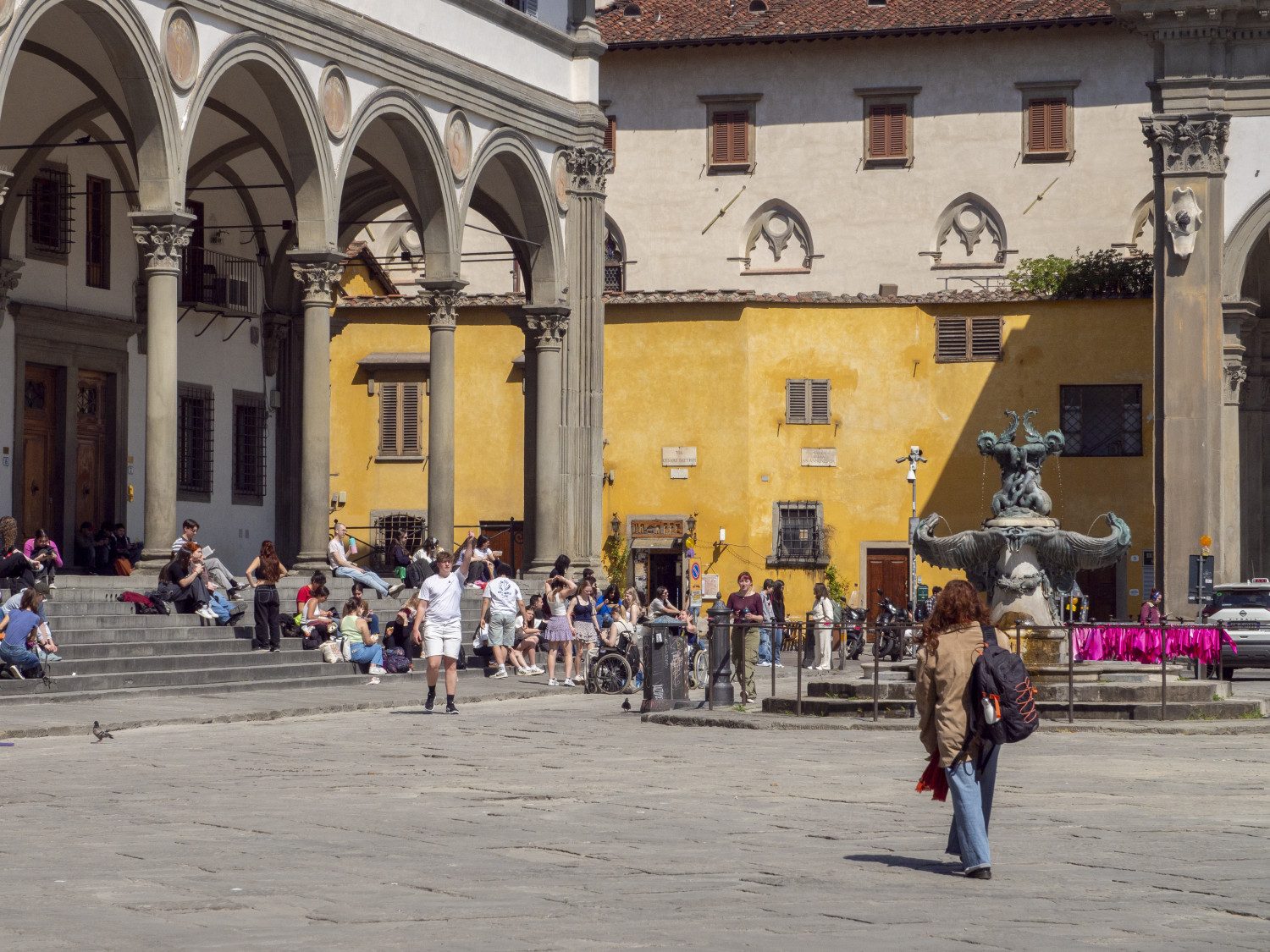
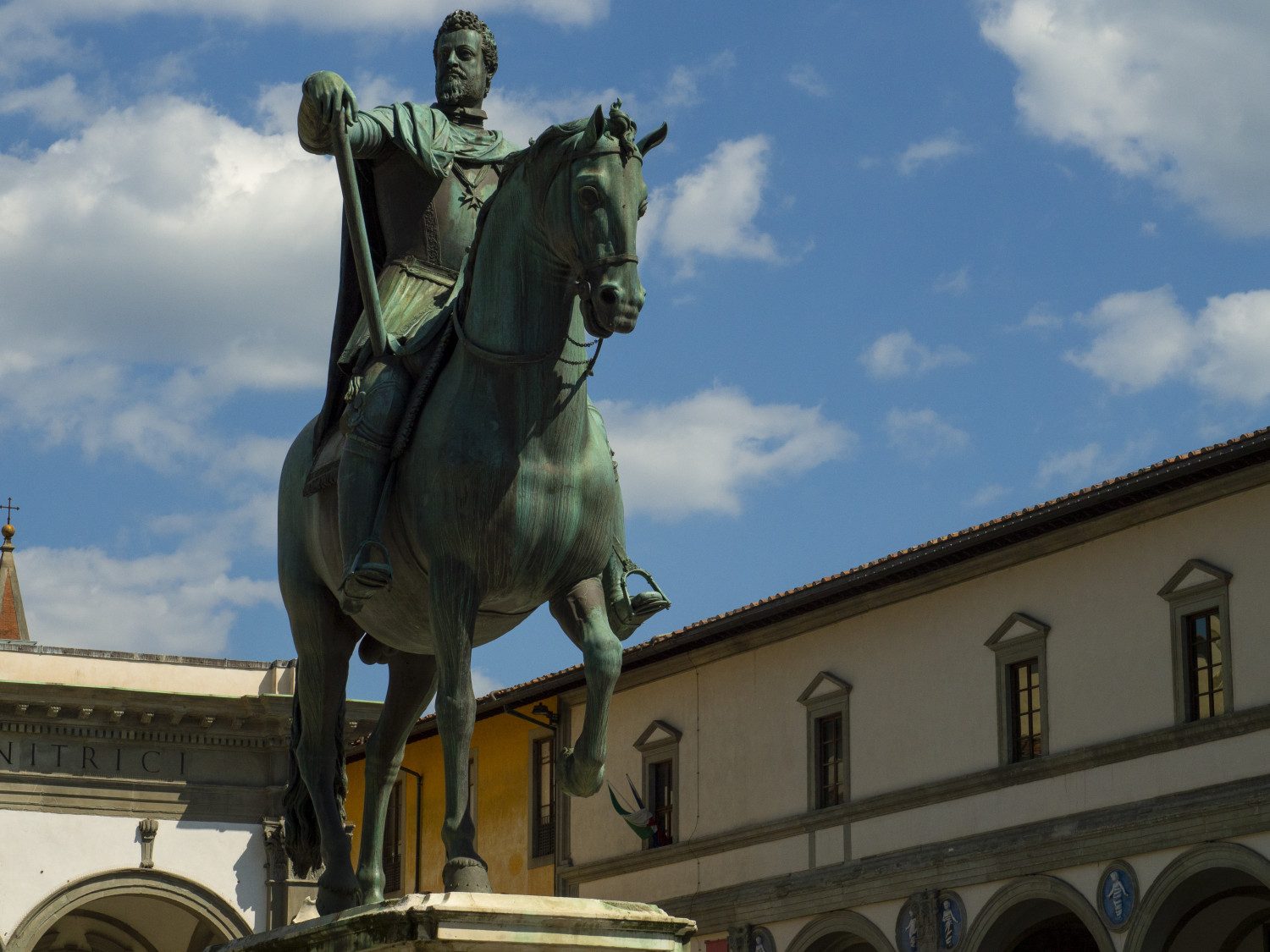
While visiting Piazza Santissima Annunziata, I went early on a Monday around eight in the morning and sat outside on the steps of Museo Archeologico Nazional di Firenzi. Within the square there are three statues in an open concrete “field” with no natural aspects within proximity. The plaza is surrounded by buildings, two sides being a museum and one side a church. The other side contains two apartment houses with streets in between them. The placements of the church felt out of place to me because of the tourist attractions swallowing its presence and taking away the importance of the value of a church, especially in Italy.
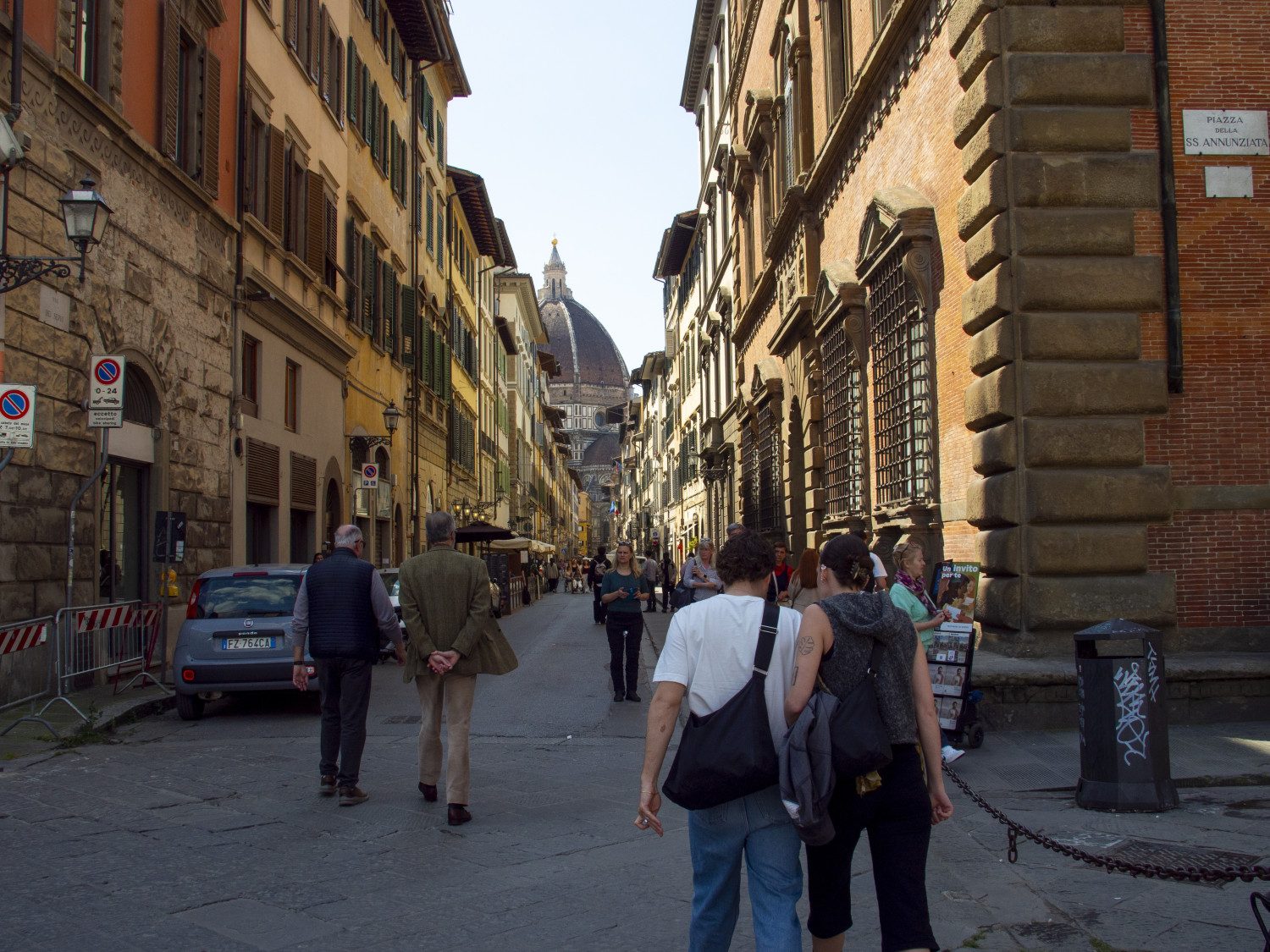
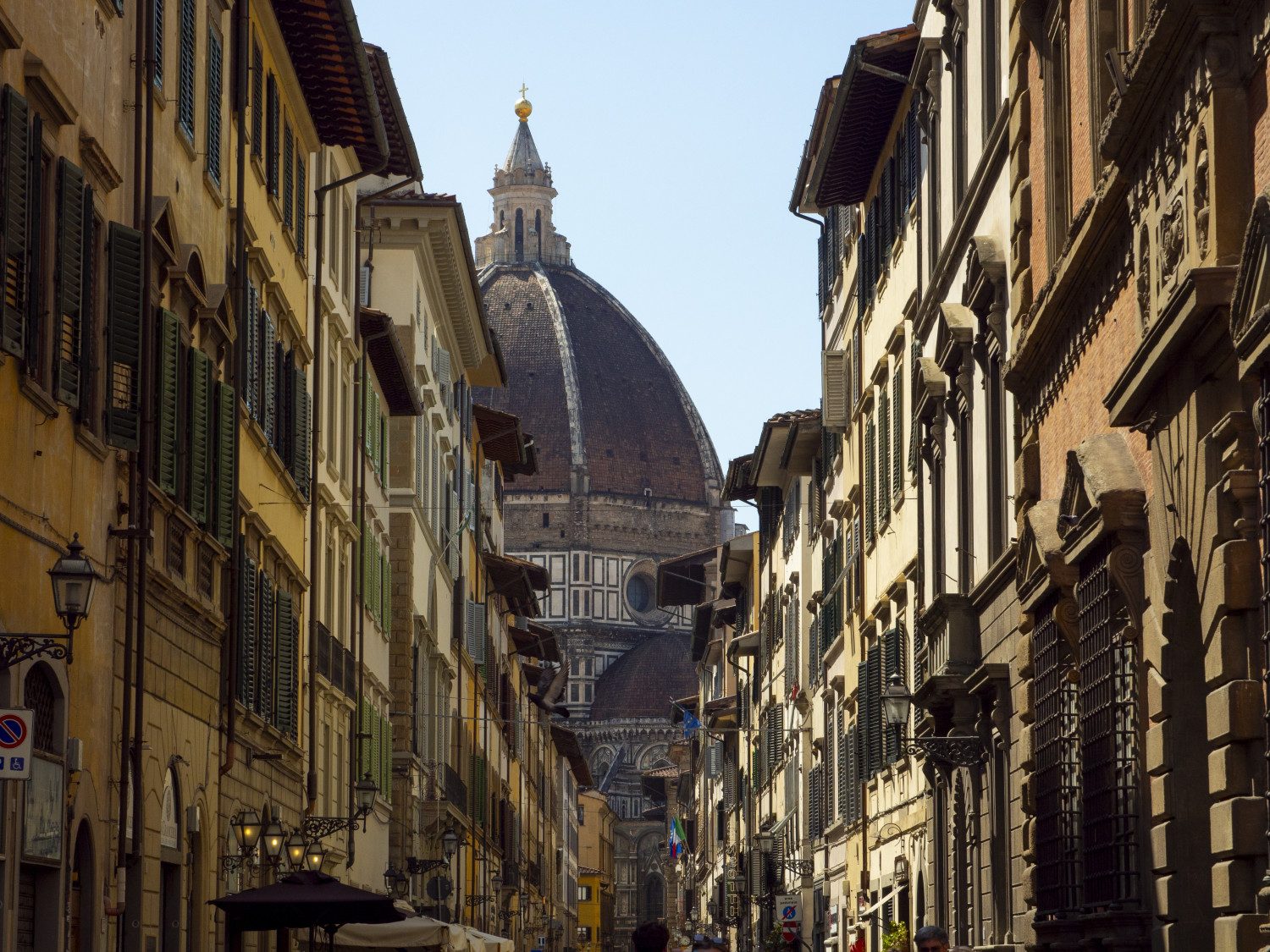
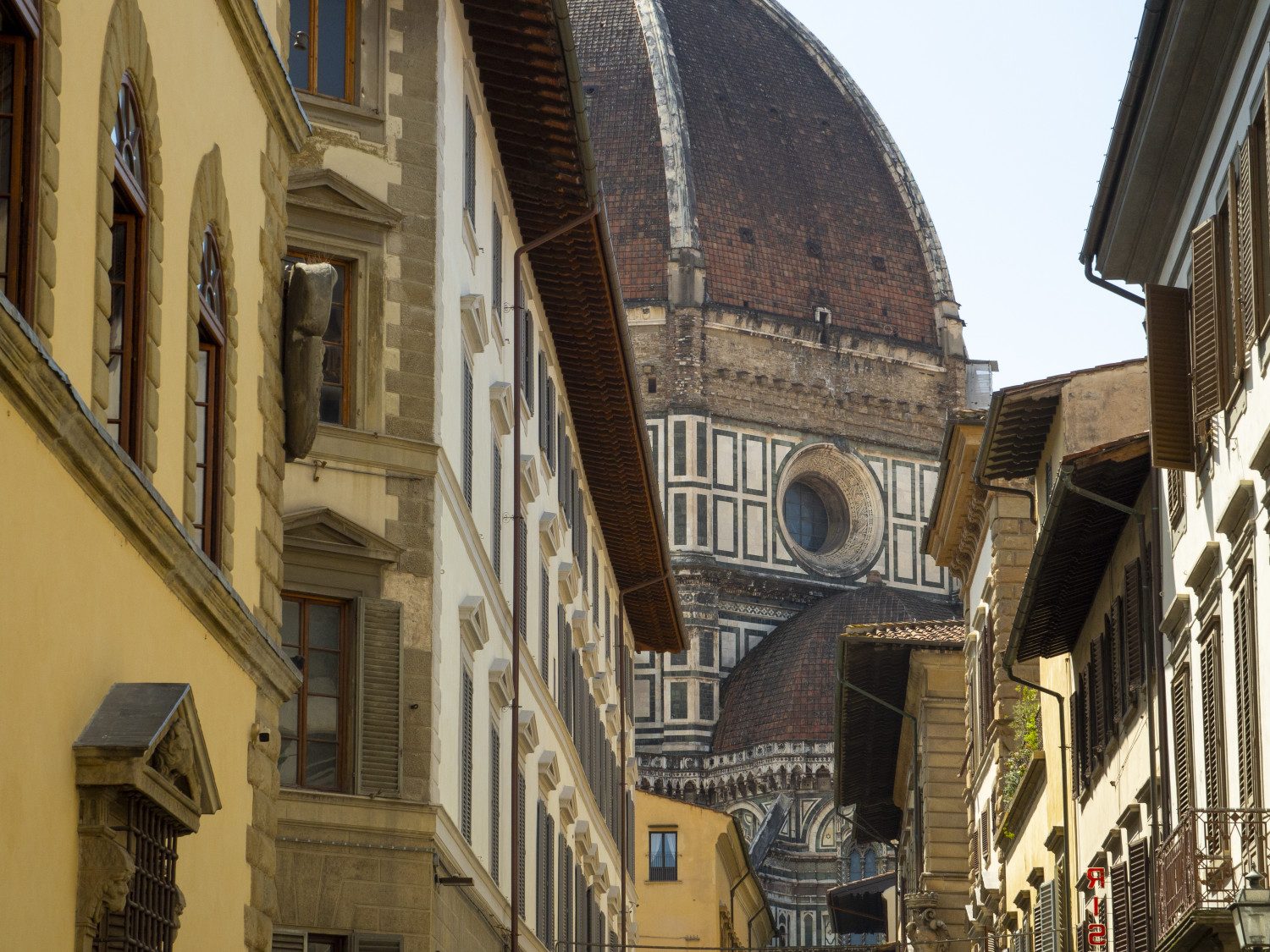
Within about 20 minutes of my observation I saw a group of people come into the middle of the plaza, with the center of the circle being a tour guide standing in the middle and talking about the history of the plaza. The tourists listened and looked around the center admiring the buildings and the streets. I noticed all of them taking pictures of this certain street, so immediately I was curious; what was so special about that street? I noticed outside of that group, there were other people walking around the group that were minding their own business trying to get to their destination. These people, I assume, were locals or people that have been in Florence for a while since they are so used to the appeal of the plaza that they don’t take the time anymore to stop and look around. When the tour left, I decided to get up and look at the street, revealing that it faced directly at the Duomo di Firenze. It was an alluring sight, with the sun reflecting off the Duomo and shining down the street off the buildings. It was perfectly in view of the plaza. I now knew why everyone was looking down that street, and of course I had to take out my phone and take a picture. This made me realize that this street itself is a big tourist attraction because of the beauty looking into the direction of the Duomo. This was the first observation I made on how people use the plaza; tours and taking pictures, while other people use the plaza simply as a shortcut towards their destination.
After I sat back down and over time, I noticed people going into the church that is located in the plaza; Church Alexander ET Robertvs Pvcii Fratres Dei Genitrici. Having a church there seems to bring the beauty of a community whether it’s with locals or tourists who want to visit the church to see the beauty or practice their religion. When some people were going into the church, they were holding hands, showing religion bringing people together no matter what their ethnicity is. Along with the attendees of the church, a group of kids that looked almost like a school trip went inside the building with an adult which I would assume was their teacher. The church brought both locals and tourists together within a building. This sense of community felt the square to be welcoming especially since there was a mix of locals and tourists. There is also a bus stop that is in front of the church dropping off people that attend the church, so it is also accessible for people that live far away.
At one point while I was there, there was a group of students hanging out on the other end of the stairs who were sitting down and talking amongst each other. They were all speaking Italian so I assumed they were students waiting for class to start and they were meeting up before so they could talk. As a person who isn’t fluent in Italian, sometimes I will feel isolated within a local spot. However, there was a mix of English speakers and Italian speakers so I didn’t feel left out, and because of all the communication happening around me, it didn’t make me feel isolated within the square which was an enjoyable feeling. Everyone felt included in the square because there were a lot of tours happening and then friends were with each other. Since there was a mix of English speakers and locals, it didn’t feel marginalized or that there was an exclusion of certain groups.
With the time I was sitting there, two tours happened in total. This made me wonder if the tours ever get annoying for the people who live in the apartments or even the people in the church. One of the tours went inside the church, and it made me think if the tourists were interfering with locals inside the church trying to worship and practice, especially since the locals had cameras out. I didn’t notice any locals using the church as an exhibit, which felt better because it is a church which can sometimes be seen as disrespectful, especially seen from a local’s point of view. Since living here in Florence, I’ve noticed the importance of religion here, and how it’s such a sacred part of Italy’s culture that is proudly incorporated into daily life. I wouldn’t assume the locals were going into the church to use it as an “exhibit” or even a “museum” because of this.
Other cultures aren’t surrounded by religion so they might not think much of looking inside the church. Religion is such a big practice in Italy that it gives disrespect to the locals that tours were disrupting a religious place of worship. The different interactions with the church shows the indecency of tours interacting differently between the locals and themselves.
I believe the biggest thing that attracted the tourists to Piazza Santissma Annuziata was the street that looked directly at the Duomo and the museum that I was sitting in front of. I later learned that the exact street is famous for the view and of course, the Duomo being a big tourist attraction being a historical beautiful church, it lured many people in to take photos. There were no businesses around besides the museum but I noticed no one went into the museum, I do think the only reason for this however was because it was closed for the day. The museum is a perfect example of gentrification because it’s asking money to enter, and with museums, the biggest community is attracting tourists.
The biggest gentrification example however, were the apartments surrounding the plaza. The apartments were located on the street that people were taking pictures of and the apartments itself overlooked the Duomo. Those apartments would be a prime location for Airbnbs because of the location and view; it checks all the points tourists want to see when they stay here so it would attract them. The owner of the apartment room would buy the apartments just to rent it out so they can obtain money from tourists who seek a perfect view of the Duomo for the time they were staying in Florence. Having the owners of the apartment within the building just to rent it out for tourists disrupts housing for actual locals searching for housing, decreasing the housing availability in Florence. Locals can actually make use of the apartments and use them year-round and not just for money use. Situations like this lead to housing problems for locals. It can increase the rent money and then the locals within that building can be kicked out of that building because of money problems and the rise of rent. Airbnbs take up opportunities for people looking for housing which can cause a rise of homelessness. Over time, the more the Airbnbs, the more the population decreases and the city turns into only a tourist attraction.
This is what I took out from sitting on the steps observing the environment. There was a great mixture of use of the plaza for locals and tourists. Tourists being so popular just in that spot may become a nuisance for the people that live around there because of the noise they make or the constant photos around their apartment, making it feel like they are never alone or in peace. The Airbnb opportunities around are the biggest example of gentrification I noticed. Not many people think of the long term effects of tourism but it’s a constant problem especially in Italy, causing disputation across the country. Overall, the plaza was a beautiful place that invited everyone and a place everyone can use but there was a big notice of tourist interactions.
Before I left to come abroad, my Google searches consisted of one thing and one thing only: What to pack for a semester abroad in Italy. Now, I knew all about taking adapters, portable chargers, medicine, and things of that nature. But what I really wanted to know was what clothes to wear in order to blend in with local Italians.
After my research, I concluded that I needed to bring jeans, basic tees, black boots, a trench coat, and all-black skirts and tops for going out. Looking back, I wish I would have done things a little differently. After landing in Italy and observing the fashion here, I can tell an American from an Italian almost instantly.
Although the clothes I was told to bring from strangers online were perfect staples, I felt as if something was missing. It wasn’t until my fashion walking class at FUA that I realized what it was. Authenticity.
My three-week course, “Style and the City: Florentine Fashion Walks” taught me how to express myself through fashion. We observed people on the streets, went to authentic markets with vintage clothing, and visited Pitti Palace to see the exhibit on Italian fashion. On day one, I knew this class would inspire me to be more unique, and buy clothes that I like instead of following the seemingly endless cycle of fashion trends.
Even walking the streets of Florence, you cannot pinpoint any particular trends–especially among local Florentines. No two people are wearing the same item of clothing, or anything remotely close to it. This does not happen with Americans. For example, a friend and I went shopping at Zara about a month ago in Florence. She bought a beautiful brown leather jacket–only to realize every other abroad student was wearing it on the streets, too. It’s interesting how Americans gravitate towards certain items of clothing at these stores–I’ve seen countless American students wearing the same sweaters and jackets from Zara, but no Italians.
Then, a few weeks ago, at the Santo Spirito Market, my friends and I were on the hunt for leather jackets. During our shopping, we passed an American who was wearing one. I made a comment saying, “That style is perfect, I wonder where she got that from.” Without any hesitation, both of my friends remarked that her jacket was actually from a popular shopping website called Princess Polly. Even funnier–both friends that I was with owned the jacket too.
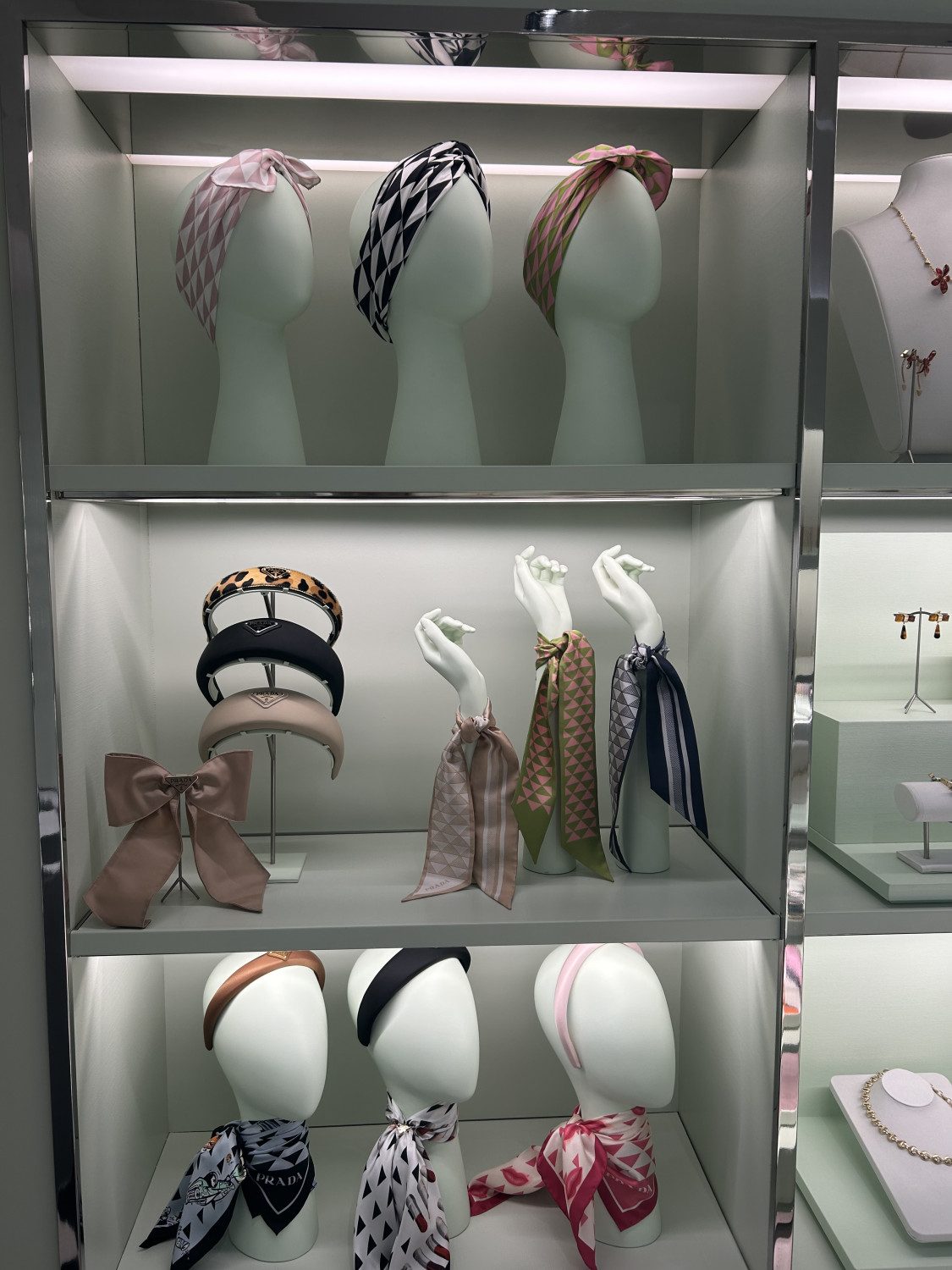
Don’t get it twisted–this is not to say that I don’t indulge in some of the trends myself, or that they are basic or bad in any way. However, if you want to dress more like a true Italian, simply wander around the markets, or visit department stores that are not in the US. Italians also love to accessorize, and dress up an outfit with a neck scarf, sunglasses, fancy belt, or a unique purse.
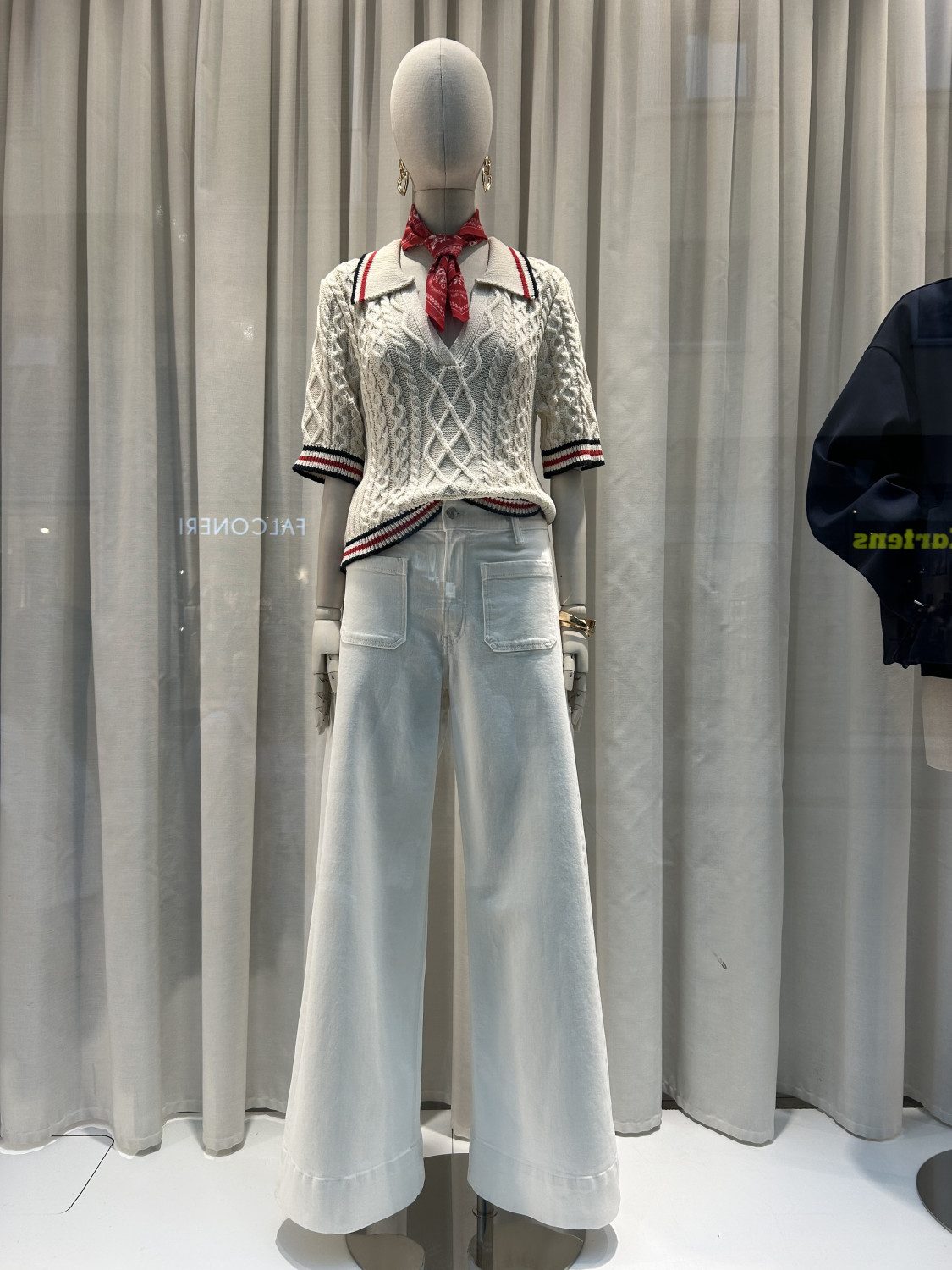
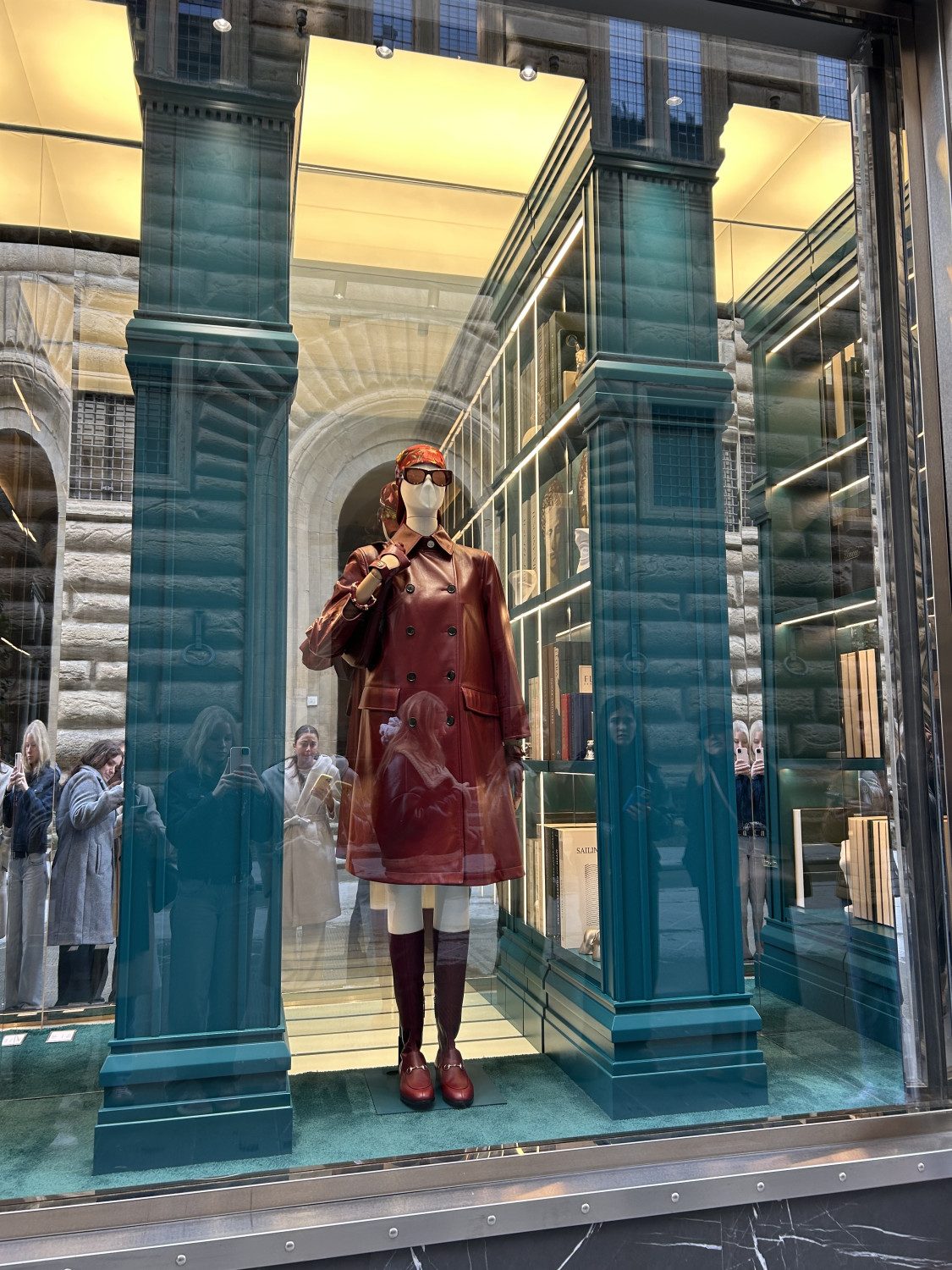
Another thing I like to do in order to gain some inspiration is to look at the mannequins in the stores. They are always dressed so intricately, showcasing many different items of clothing and ways to style it.
Here are a few of my favorites from my time here so far:
All in all, I’m glad I took with me the clothes I did. But I also know now that “blending in” with Italians basically means wearing whatever you feel most confident in. It’s ironic–the way to blend in here is to actually stand out. Every person I see on the streets is wearing something that suits them—and them only. Whether that be a pair of sparkly chunky boots, a purple fur coat, or a statement necklace, each individual person exudes their own aura.
A great example is this woman in the photo below. This is one of my favorite outfits I have seen in Italy. Now you see what I mean about authenticity and having your own style. I just had to snap a picture!
So, the next time you are out on the streets or sitting at a coffee shop, take a look around at everyone who passes by. And when you are at a store contemplating buying something you like because you fear judgement from peers, I urge you to buy it. Be different, be authentic, and enjoy the confidence that fashion gives you.
Let me explain. The city of Florence is known for its Renaissance art, right? Sculptures, paintings, architecture – regardless of where you step in this city, you are acutely aware of the reason for its namesake, the Capital of Artists. But when you take a look past the surface level, deep into the hidden parts of Florence, you’ll see that these artists people talk about are not just from the Renaissance. Down almost every street, you will see street art, graffiti tags, paper mache, statues, and paint. Artists like Clet, Blub, Lediesis, Exit/Enter, and so many others I can’t even begin to name them all, are the makers of this modern renaissance. Like those that came before, these artists have creativity to indulge and messages to spread. But unlike the renaissance of old, the substance of these messages will, and have, resonate with the masses.
Before I delve into some artists and their themes, I want to contemporarily define art. It is important to note that art, specifically street art, has always been used as a way to stick it to the man and rage against the machine. It is the language of the people, of those who have no other means but to create. Art always has been, and always will be, emotionally, socially, and politically relevant.
Clet is a prime example of an artist who falls under this category. One of his most prevalent statues, the Common Man, lends itself to this image.
Clet’s Common Man
However, this art piece has more of a complicated history. This piece was originally created and published in 2014, but was later taken down by authorities and given back to him (as it was not “legal”). However, after recieving a fine, Clet decided to reinstate this statue, regardless of the repercussions. After receiving another fine and citation, Clet decided to challenge this decision in the courts, ultimately winning and allowing this monument to remain standing in 2021. This story is ultimately one of resistance and protest. In the true fashion of an artist, Clet went against the grain to ensure that his message was heard.
What is that message? Well, this piece is used to highlight the neglect that the common man receives, and thus the challenges he faces day to day. Clet’s Common Man provides us with an image of this man stepping off into the river, ready to face the end. When this sculpture was put up once more, this piece took on a hopeful, inspiring outlook. Like many pieces of street work, the art itself takes on a life of its own once it was thrust out of the artist’s hands and into those of the public.
Other artists like Exit/Enter and Blub also reflect a social message within their work. Exit/Enter uses depictions of little stick figures and red ink to, once again, tell the struggle of the common man. In Exit/Enter’s pieces, we consistently see this figure drawn in a relatively juvenile manner – and from the crayon drawings (listed above) or the handwriting used – we can see that he does this on purpose. But what is he trying to say? Exit/Enter’s message is one of hope and love. His work says to the people, the only way we can get through it all, is to have a little positivity. Using the non-detailed drawings and handwriting (like those reminiscent of a young child), we can infer that he uses that to play off of the perceived naivety that often comes with that line of thinking.
Blub’s message is a similar one. His works can be found all around Florence, with prevalent renaissance figures painted in blue and donning scuba/diving gear. His theme is that even though we are underwater- financially, socially, emotionally, politically- we will meet whatever may come. His work instills on the viewers that the unknown of the future can only truly be met with love.
To commemorate my study abroad journey, I decided to use this final blog as a photo journal of some of my favorite spots and sights that I encountered during my 15 weeks here. Some are well-known, others are niche and minor, but they all left an impact on me and helped paint the picture of the country in my head that I will carry with me back to the States.
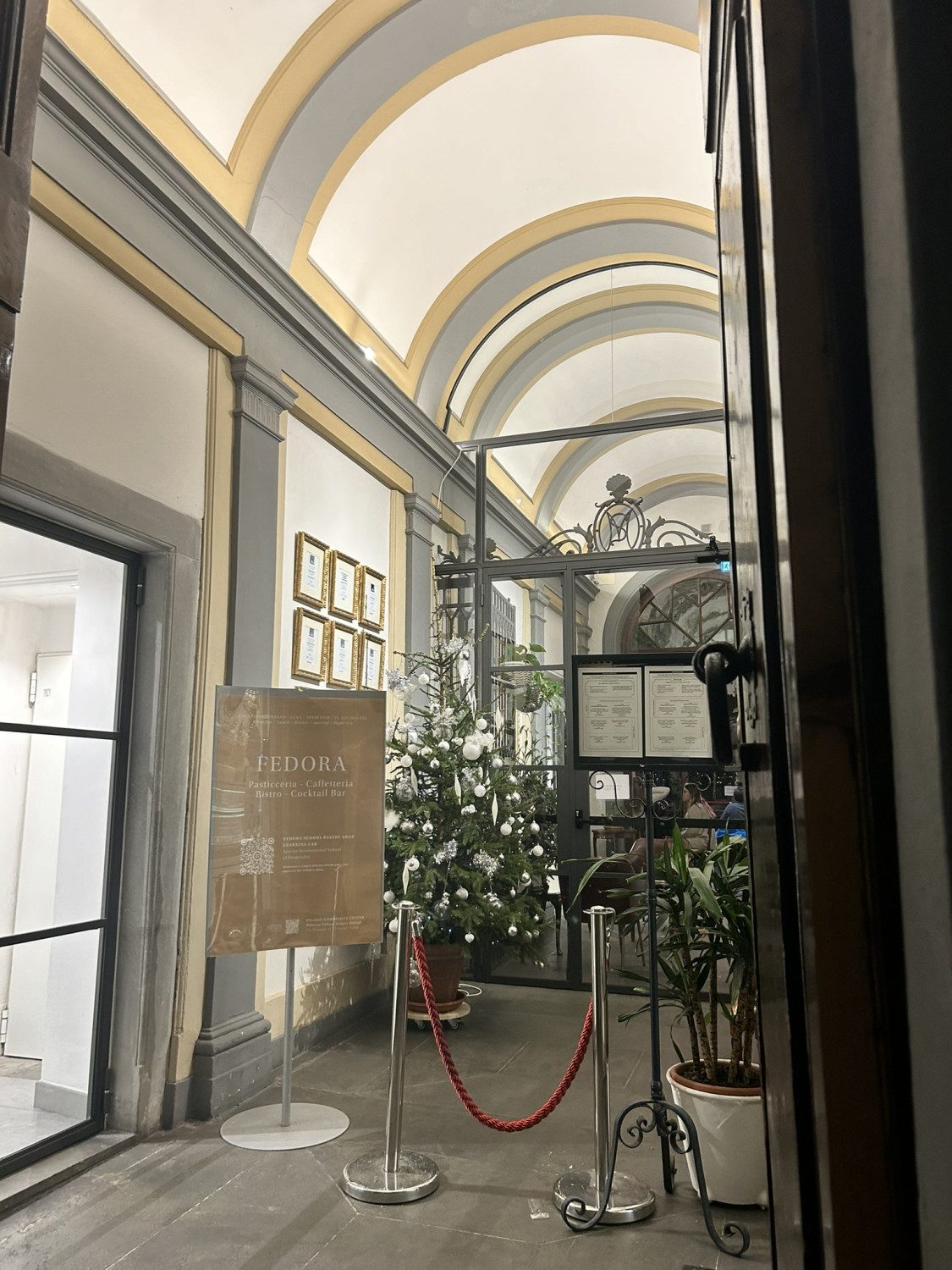
Fedora Pastry Shop (located at FUA & AUF’s Palazzi Community Center)
One of AUF & FUA’s own locations, Fedora Pastry Shop, located on Via Ricasoli, 21 became the staging ground of a daily ritual for me. The café was just a ten minute walk from my apartment, and most days I would make the short trek to grab myself a light breakfast. I tried to embrace the coffee culture while I was in Italy, and I came to enjoy starting my day with a pastry and a cappuccino. Also, it being a school meant that I would often see familiar faces from classes and events, solidifying itself as one of my most appreciated spots in the city.
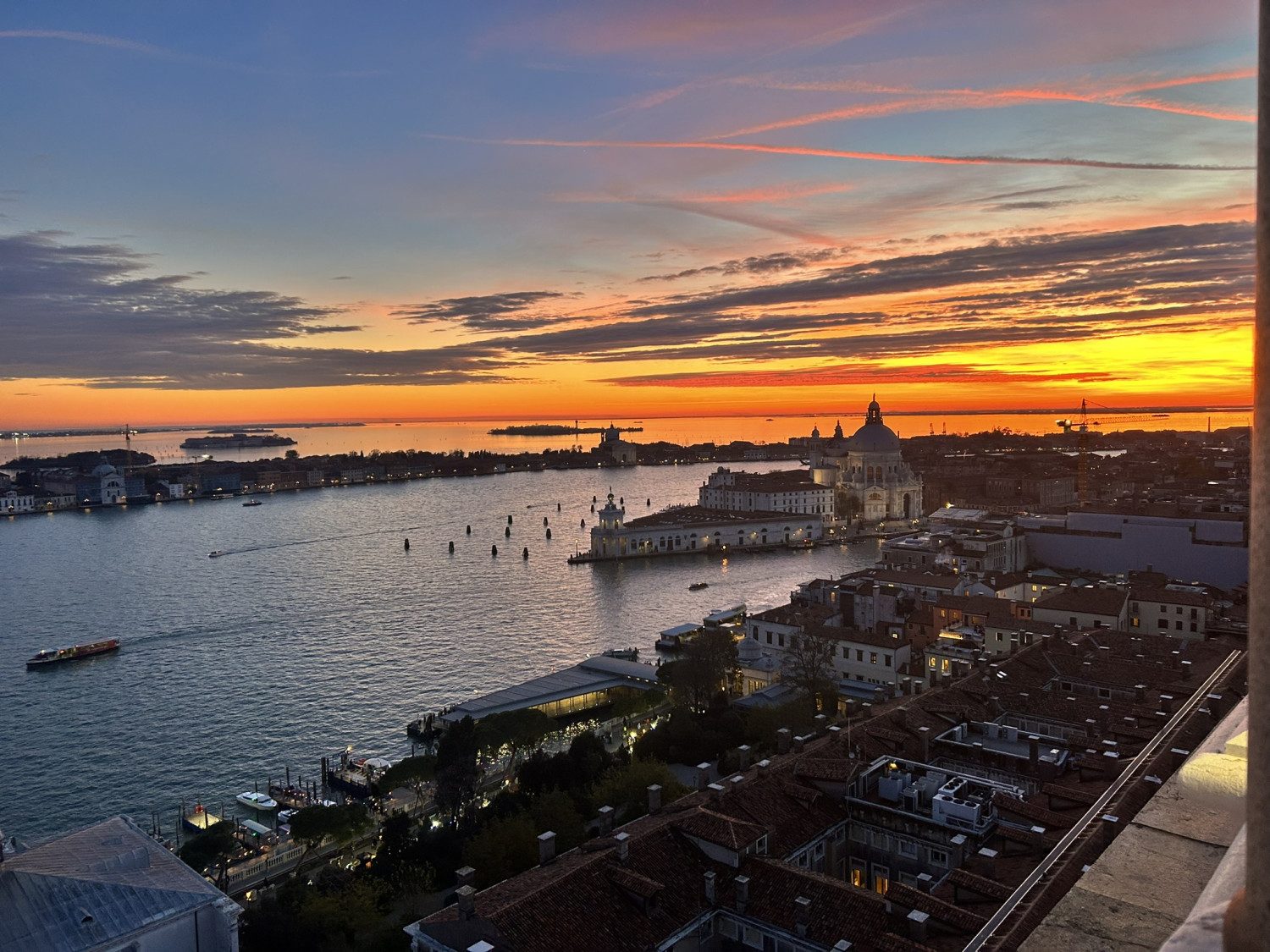
Piazza San Marco, Venice
Piazza San Marco in Venice is one of the more popular attractions in the floating city, and it was a common meeting place for my family while we were exploring. This shot is from the top of the Campanile di San Marco is one of the most beautiful I captured during my semester. The crisp autumn air blew into the top of the tower as we looked out across the city beneath us, and we spent time identifying landmarks on the skyline that stood out to us. Much of the joy of Venice is exploring the undercurrent of canals that snake through the city, but getting this bird’s eye view was incredible as well.
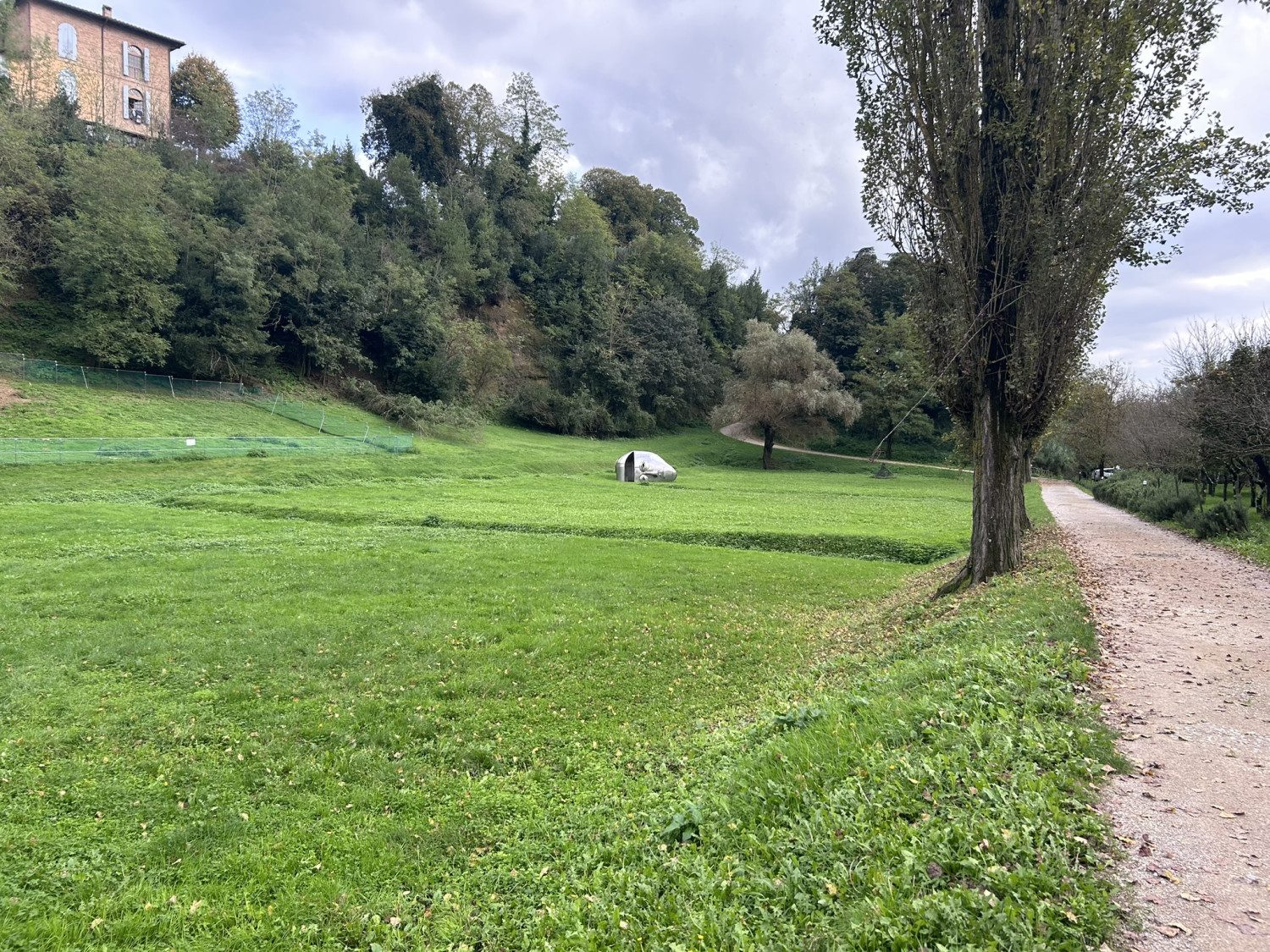
Siena, Italy
Siena was one of the most memorable places that I visited during this trip, and Orto dei Pecci was the piece of it that has stuck with me the most. This community garden near the outskirts of town featured an eclectic assortment of landmarks, from a herd of free-range goats wandering the treeline to this odd sculpture that was placed in the middle of an open field. Something about exiting the hustle and bustle of the town and entering into this strange green haven offered a welcome respite to a long day of traveling.
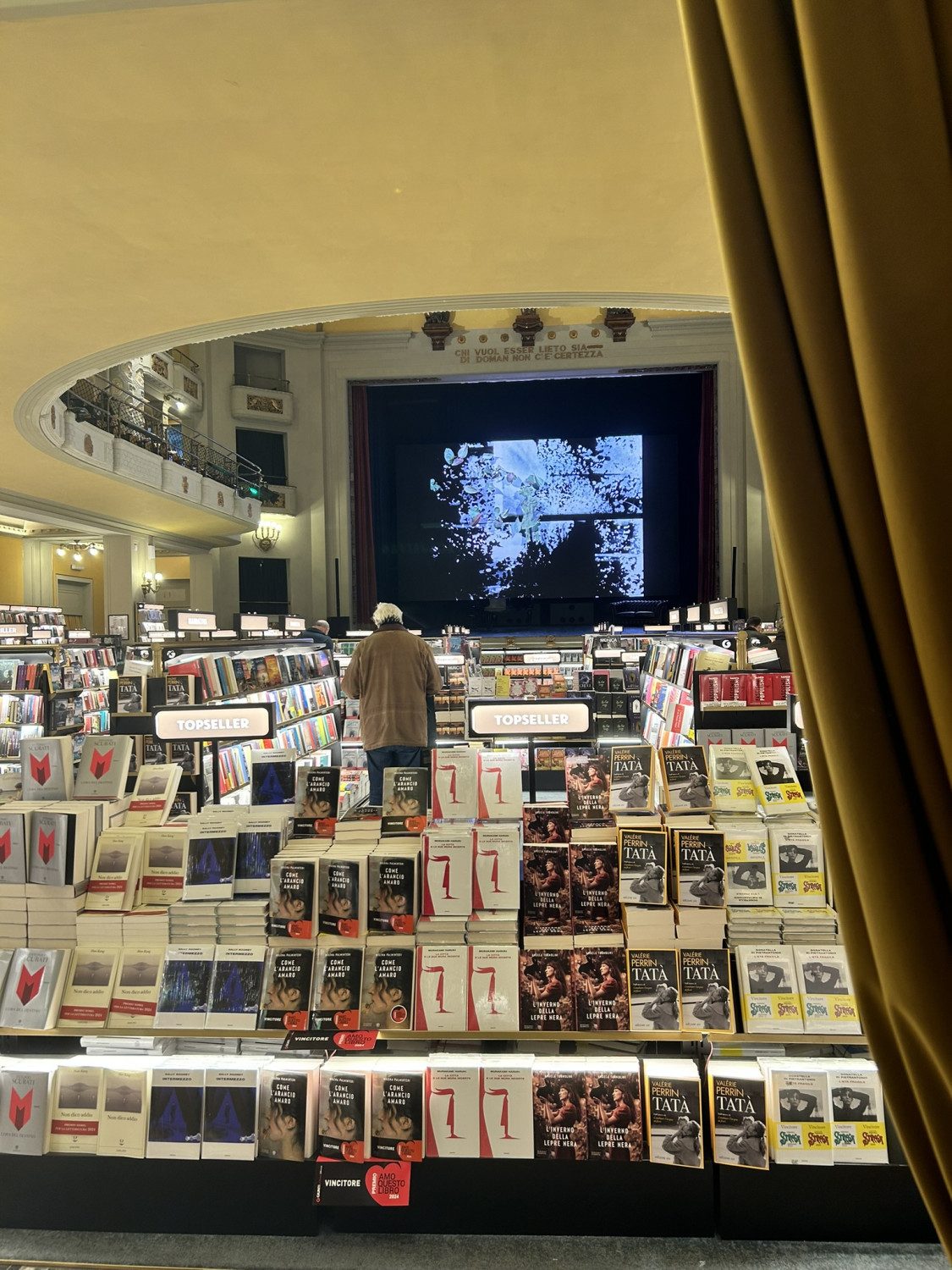
The Giunti Odeon Cinema, located in Florence, Italy
The Giunti Odeon Cinema became an unexpected, but welcome frequent hangout spot for me. After first hearing about it online, I checked it out during my first week in Florence and was drawn in by the unique atmosphere. By day, the place is a bookstore and study center that plays muted films in the background, and at night the store is closed so a movie can be screened like in a proper theater. Getting work done here was a common occurrence for me, and while it was often crowded, the free Wifi and general relaxed vibe made it one of my favorite destinations in the city.
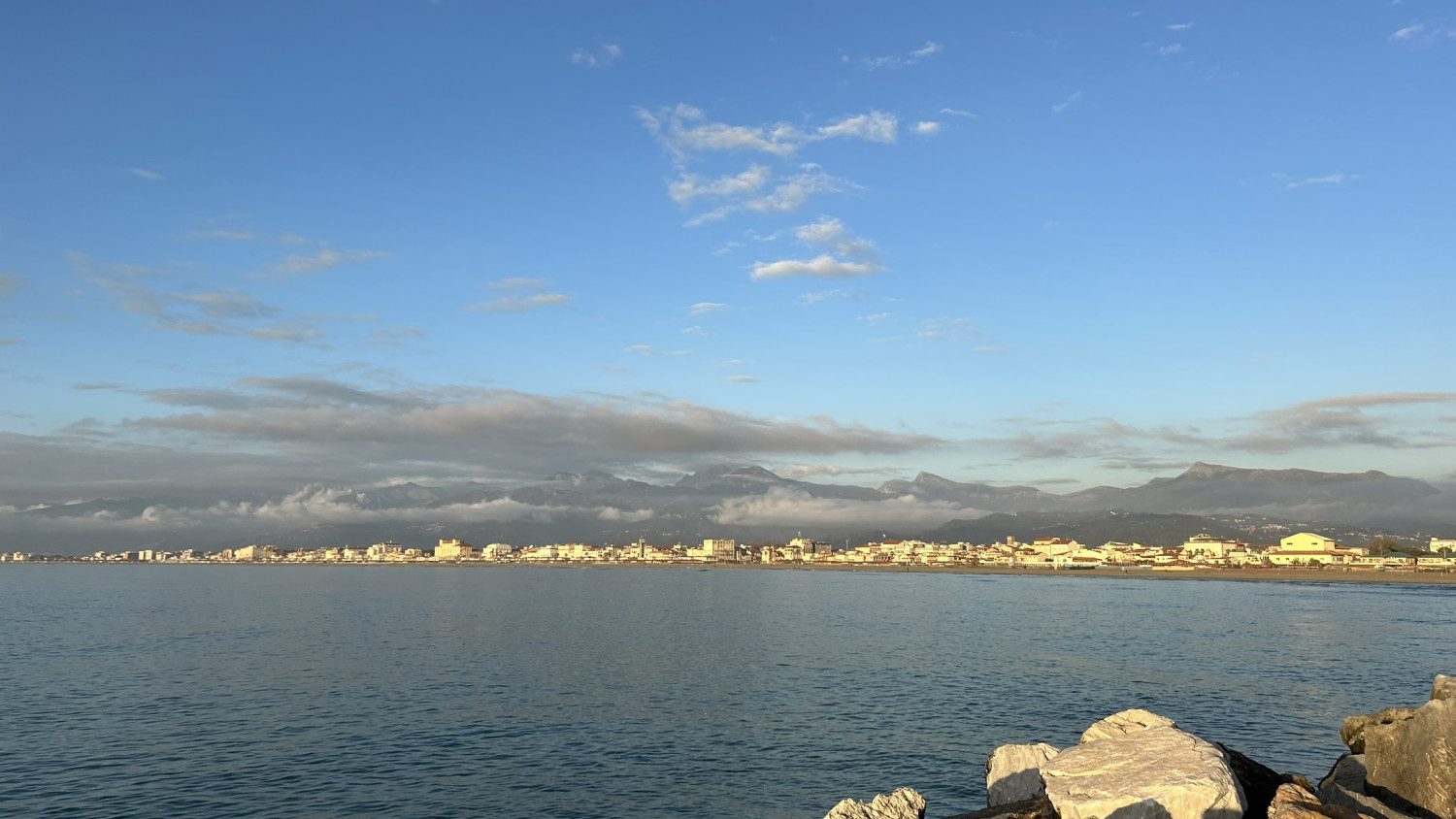
Viareggio, Italy
This shot of the seaside town, Viareggio is a particularly stunning one to my eye. This was another place that I visited when my family came to see me, and I initially wasn’t sure what the town had to offer. We ended up renting some bikes from a very kind old woman in the park and rode down the coastline, eventually arriving at the end of a pier. From there, you could see the whole town laid out in front of you, and the view with the cloudline and the mountains in the background was incredible. I will never forget this moment, and I am grateful I got to share it with my family who were experiencing Italy for the first time.
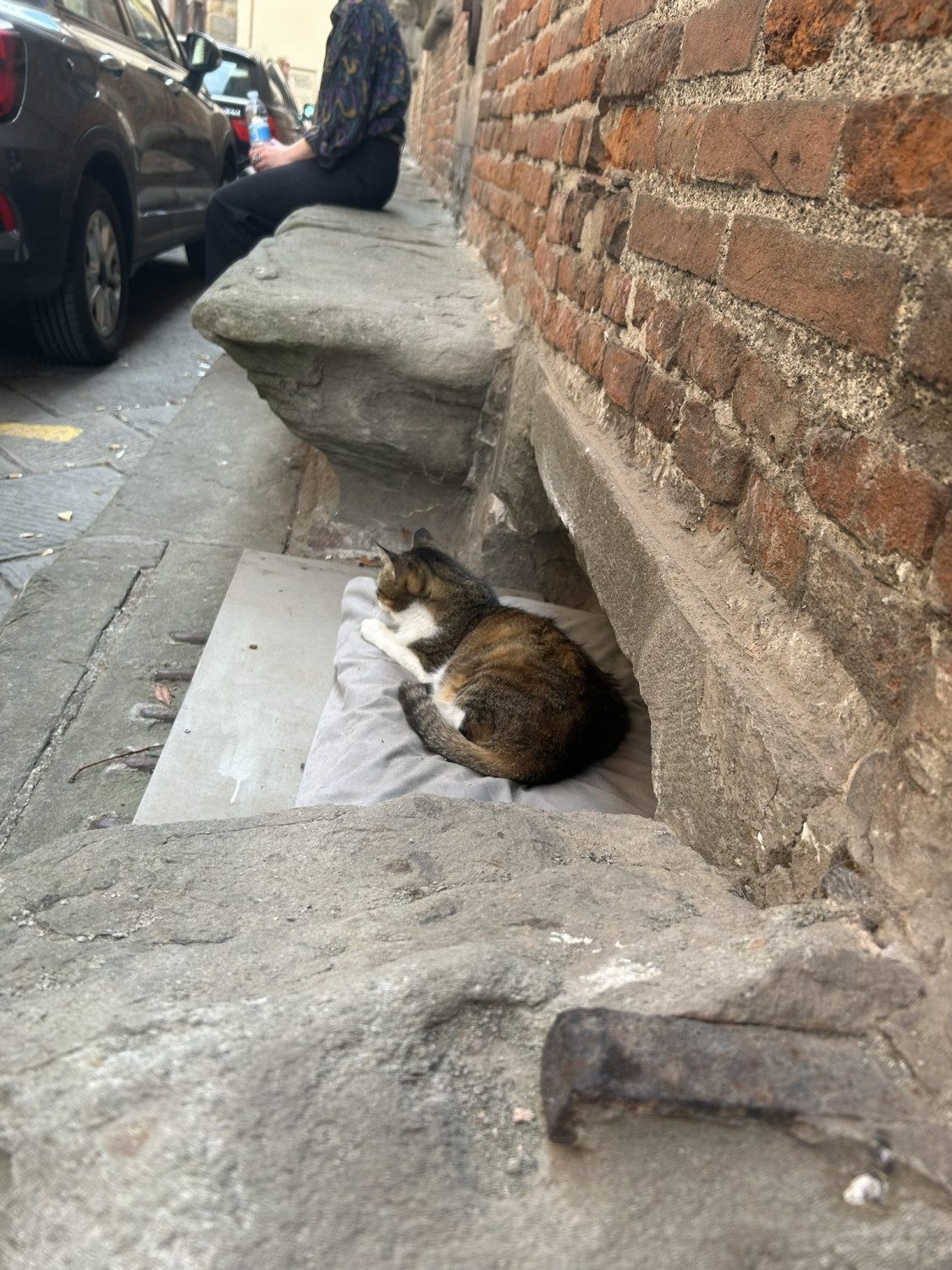
Gatto
This cat was one of my favorite Italian denizens that I encountered during my stay. I ran into him on the streets of Lucca, the fascinating walled city just to the west of Florence. Lucca was the first place that I visited after arriving in Florence, and spending the day exploring really gave me the opportunity to slow down and relax for the first time since leaving the US. The journey over and the days leading up to it were so hectic, I often neglected the opportunity to take in the excitement of what I was doing. This cat, who seemed so comfortable in his environment, resting on pillows that lined the street like he owned the place, was a role model for me: take a second, chill out, and breathe.
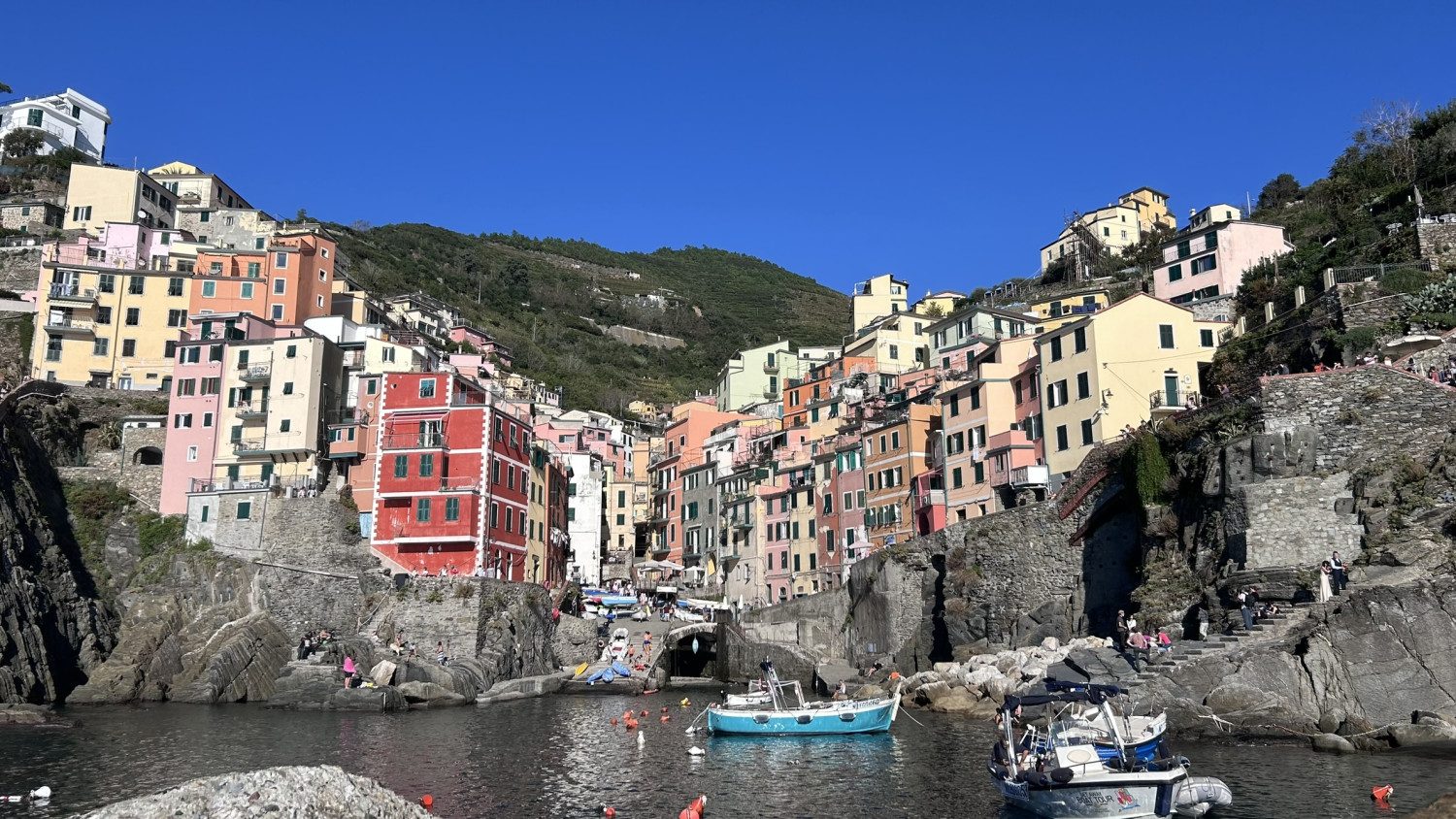
Riomaggiore, Cinque Terre, Italy
It goes without saying that Riomaggiore, and Cinque Terre as a whole, is one of the most distinctive places in the country. The vibrant, multi-colored houses were totally new to me, and the only other place that mimicked this style that I saw was the island of Burano in Venice. I had some delicious seafood in Riomaggiore, and then spent the rest of the afternoon exploring all of its little nooks and crannies. More than anything, I wanted to witness things while studying abroad that I may never see again, and that was certainly the case here, as no town back home can really mimic this.
Trastevere, Italy
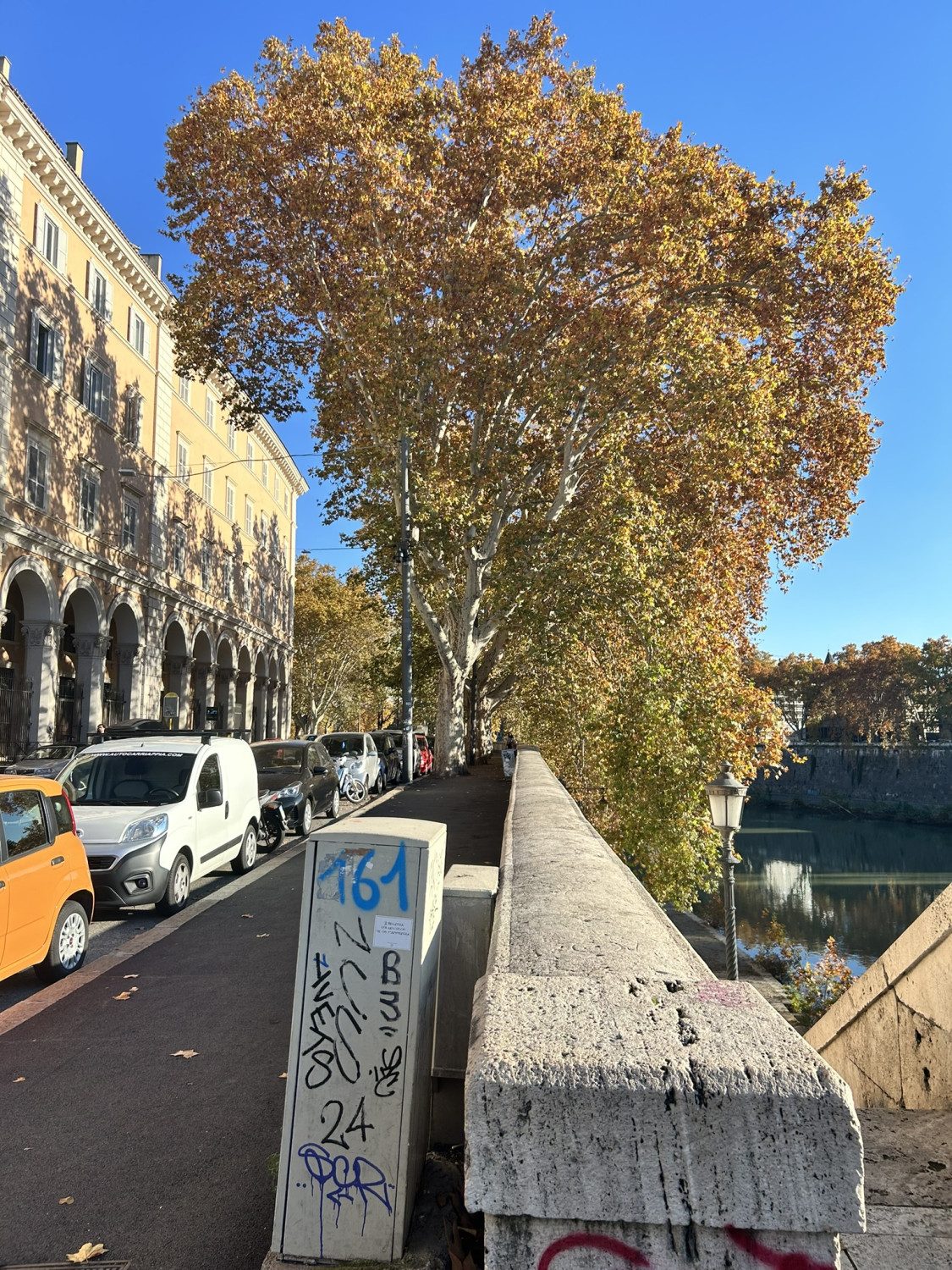
The days I spent in Rome were fascinating to me. It had such a different feel to it than anywhere else I went in Italy, and the mixture of ancient architecture with modern infrastructure and culture made for an irreplicable blend. For me, however, I was most pulled in by Trastevere, a generally low-energy neighborhood just outside the city center on the west side of the Tiber River. This was where I found the best restaurants in the city, and in general the more relaxed mood offered a soothing refresher from the hectic sights and sounds of the Eternal City. It lacked the iconic landmarks one typically associates with Rome, but I would recommend anyone traveling to the city to check it out.
Basilica di San Miniato
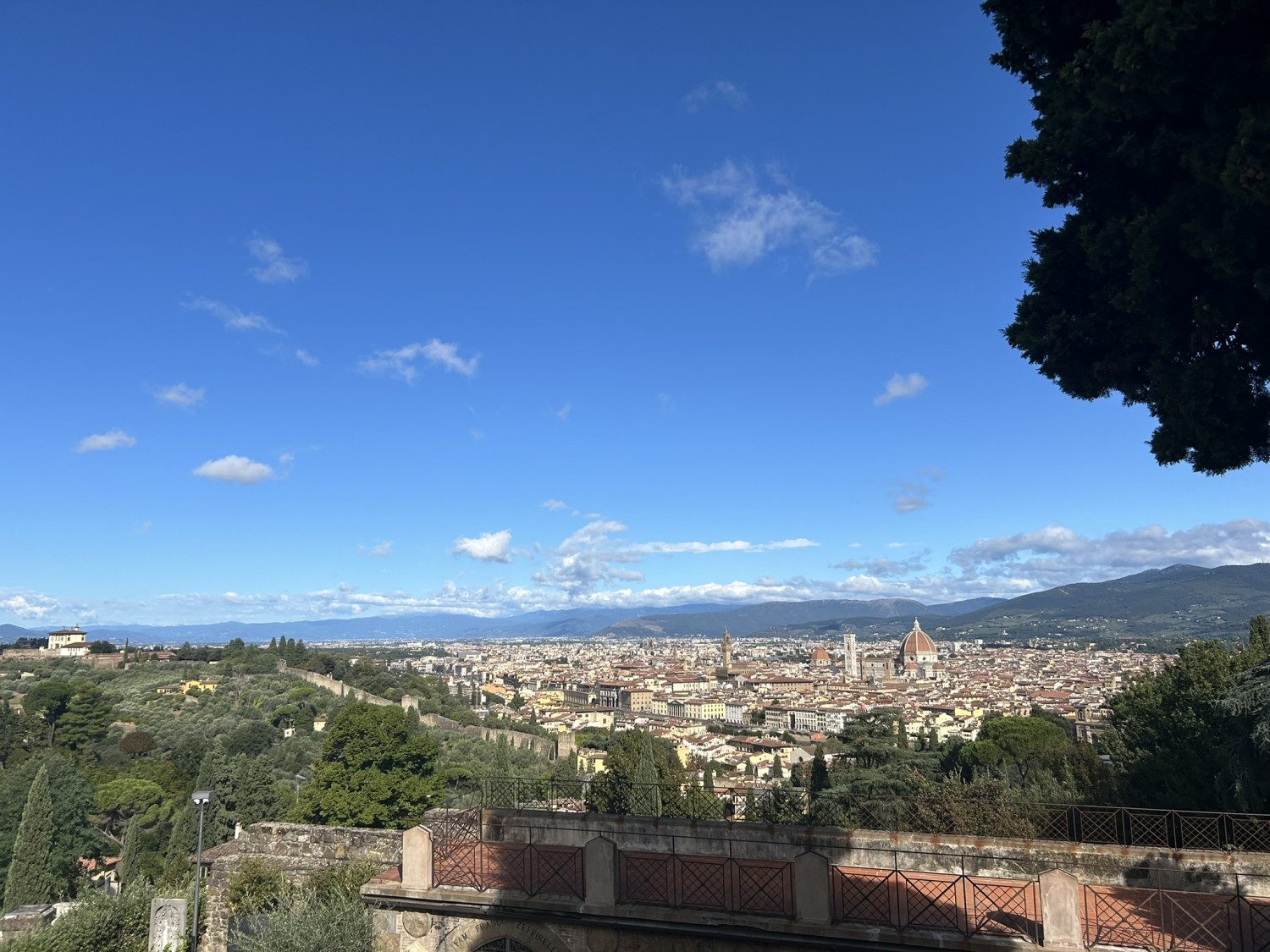
For my money, the best view of Florence can be found here at the Basilica di San Miniato. I discovered this spot during a walking class conducted by an FUA professor, and it instantly clicked in my mind as a place that I will remember for the rest of my life. Located just a short hike from the crowded Piazzale Michelangelo, the Basilica gives you such an incredible perspective on the city, and for me, going up there during my first month here was so valuable. When I think back on my time spent in Italy, the sights from outside this tranquil abbey will be one of the first things I picture in my mind’s eye.
What do you get when you mix a dead phone, a missed train, and a first-time solo traveler stuck in Bologna? A recipe for disaster — and resilience.
written by Savvy Sleevar for SPEL: Journalism
Flying Solo
Before I embarked on my semester-long journey to study abroad in Florence, I had never stepped foot outside the United States. Earlier this year, I had no passport, no overnight flights to speak of, and almost no solo travel experience. Before Italy, my most notable independent excursion was a quick trip to Chicago, which definitely involved a frantic sprint to my platform to catch the Amtrak train home. So, when I finally had a free day to travel during fall break, I figured I should start small.
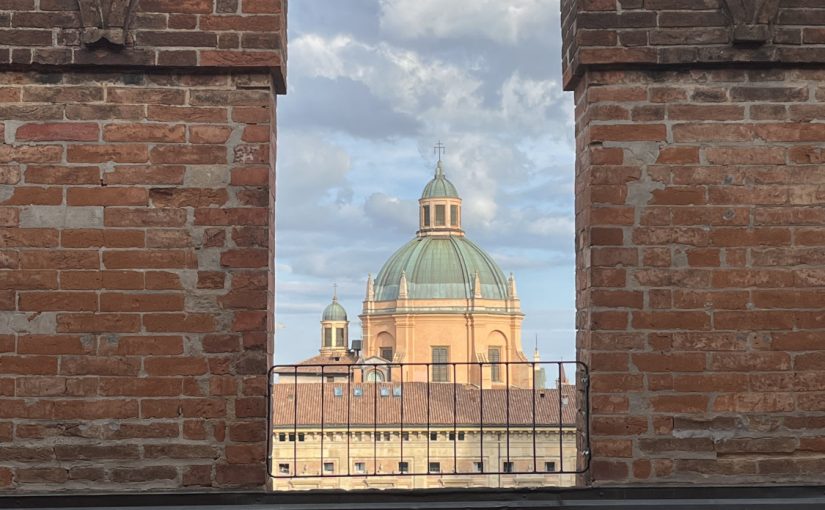
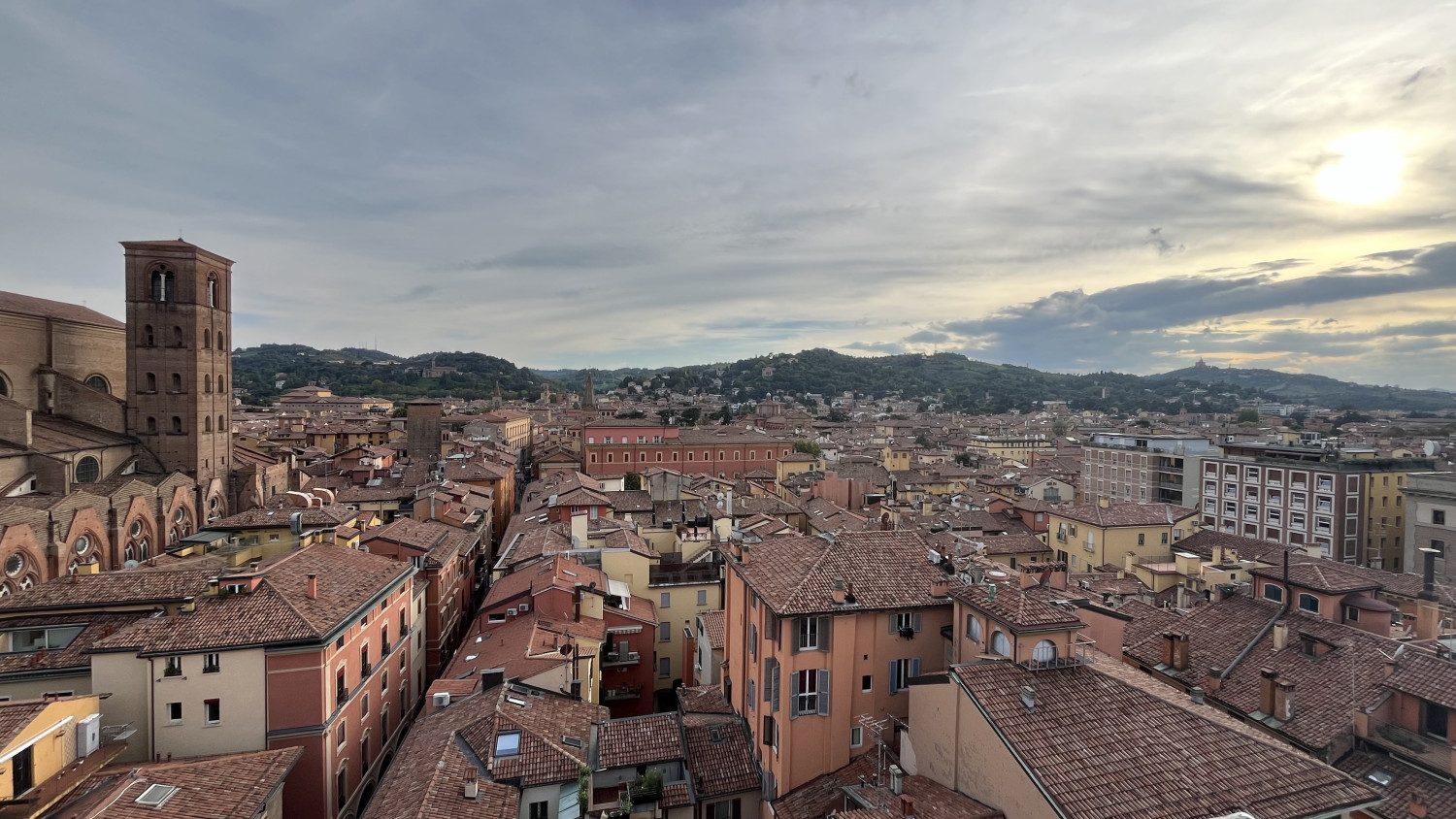
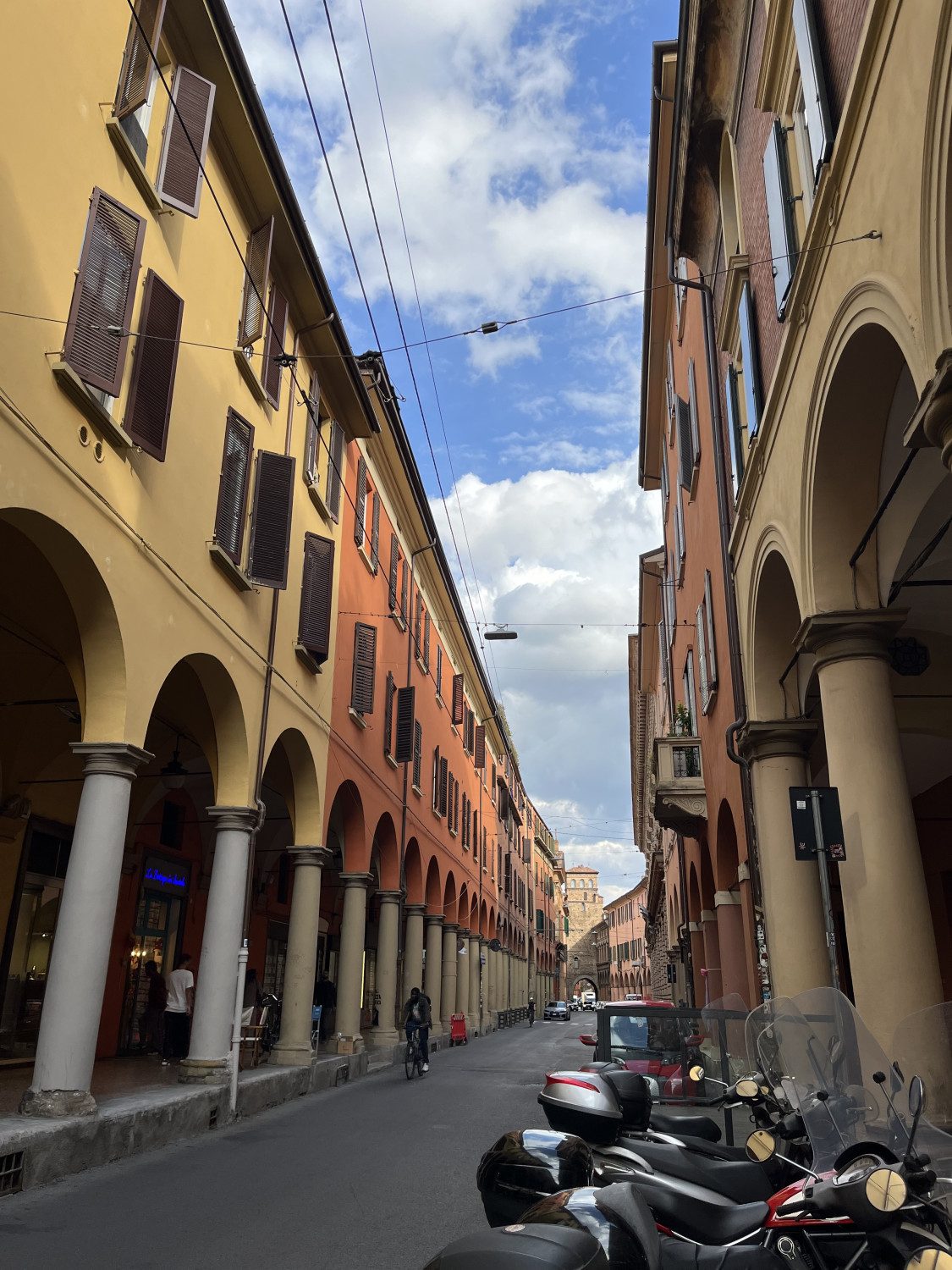
Bologna, Italy was my natural first choice. It’s just over 100 kilometers from Florence, and a round-trip Regionale train ticket only put me back about 20 euros. Not only was Bologna a safe bet for Baby’s First Italian Day Trip, the city itself is stunning. After I spent the afternoon perusing the local markets, wandering through the miles of colonnades in the city center, and standing awestruck inside Basilica di San Petronio, I wanted to get a glimpse of Bologna from above. But with the famous Asinelli Tower closed for maintenance, Torre dell’Orologio was the only way to get the bird’s-eye view of the city that I was after.
To get to the top of Torre dell’Orologio, the historic clock tower in Bologna’s main square, you need to sign a waiver. The staircase that takes you to the rooftop looks ancient, and it’s steeper than a heavy-duty step ladder. Put simply, you can’t afford to fall. So very, very carefully, I climbed up the steps, putting all my faith in the wooden railing and any remaining traction on my threadbare, 4-year-old HOKAs.
Once I reached the top, though, my precarious journey up the stairs was quickly forgotten. Immediately, I was enraptured by the view.
New Heights
Hey, I say to a low-resolution image of Mom on my phone screen.
Hi, Savvy, she replies. How’s Bologna?
I flip my camera around, replacing the image of my face with the view in front of me.
Oh, WOW! she says.
I spin my phone around to show her the city from every angle, and nearly 8,000 kilometers apart, Mom and I take in the scenery together. We look out at the tiled rooftops on Bologna’s countless amber buildings, the distant green hills speckled with homes and churches, and the statuesque towers and domes beyond the main square. I could have stayed up there all evening, taking endless pictures of the panoramic view, but I knew I had more to see at ground level. After hanging up with Mom and taking one last look at the breathtaking Bolognese skyline, I made my descent.
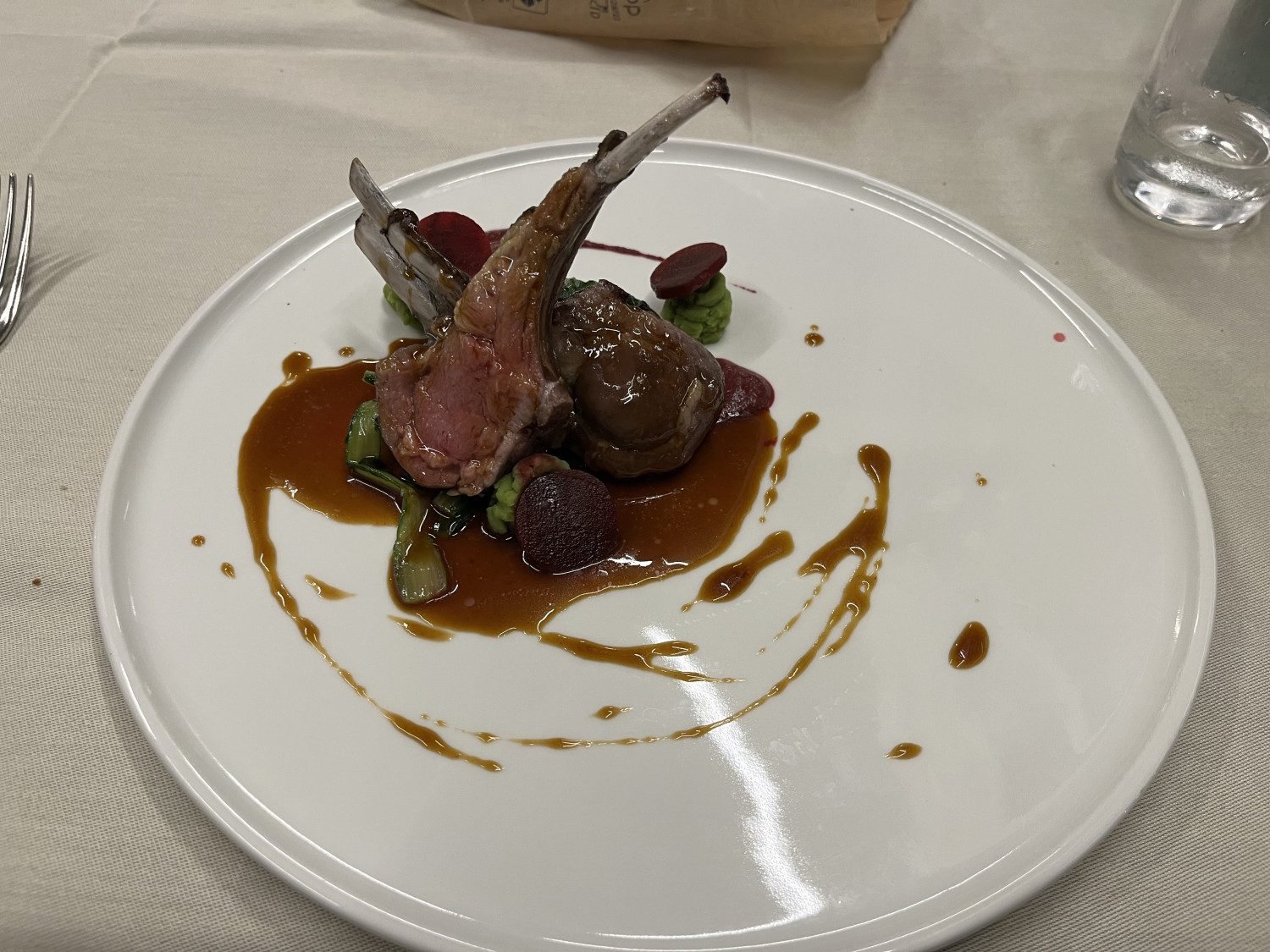
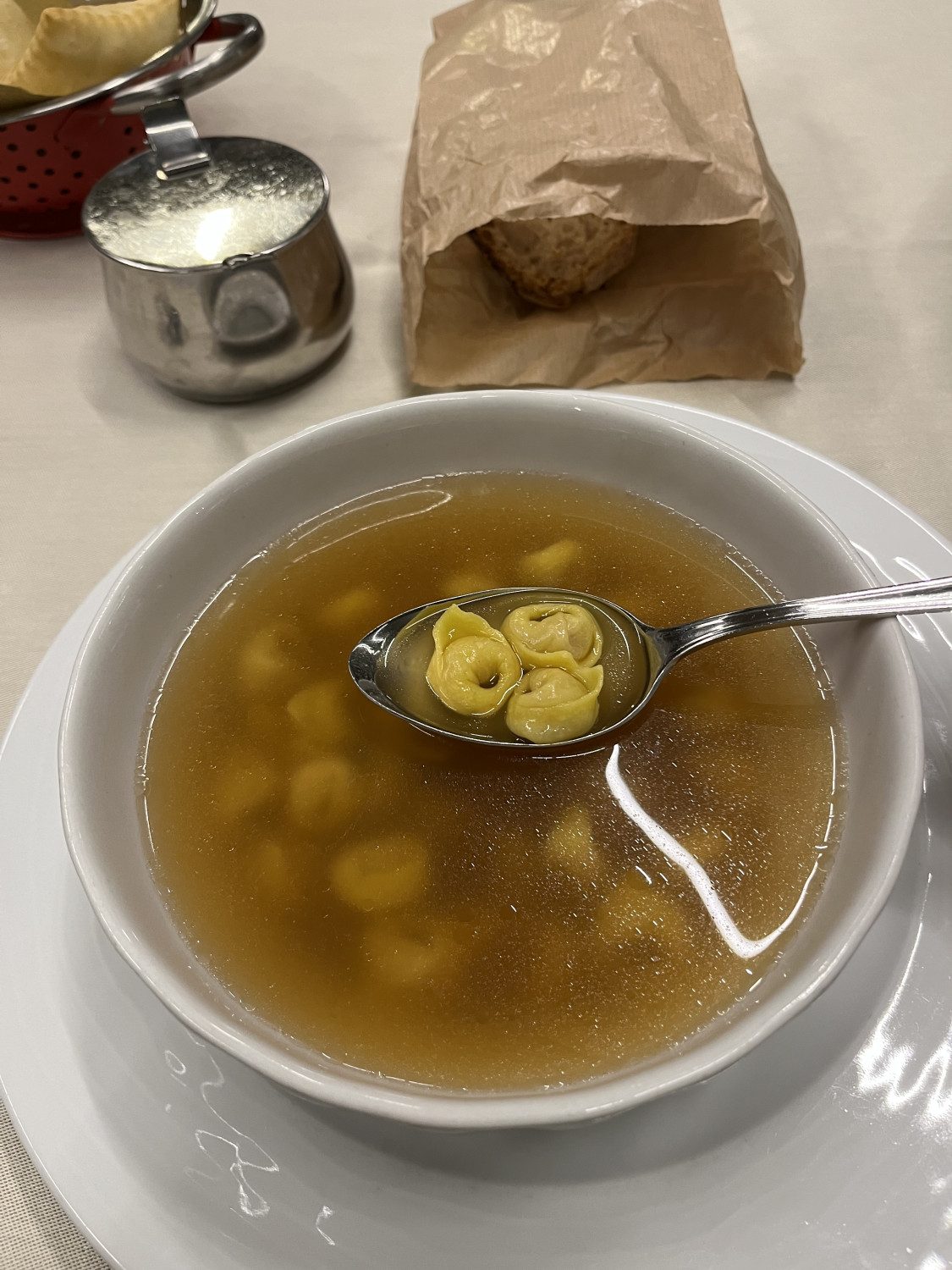
For the rest of the day, I soaked up as much of the city as I could. I people-watched in the square, craned my neck to see the frescoed ceilings in the extensive municipal art gallery, sipped a spritz at Serre dei Giardini Margherita, and savored incredible food. Earlier in the day, I ate lunch at Ahimè, sampling duck and porcini mushroom filled ravioli — and a single oyster just for fun. For dinner, I treated myself to Trattoria Da Me; I tried a regional specialty, tortellini in brodo, and I absolutely devoured a plate of lamb chops, beetroot, and chicory.
My adventures in the world of Bolognese cuisine were exceptionally rewarding. However, they were also doing quite a number on my bank account, so I begrudgingly declined dessert after dinner. Besides, I didn’t have much time left now that night had fallen, knowing I had a train to catch, and soon.
So, with a full belly and the haze of sleepiness starting to creep in, I hopped on a bike and set off for the station, determined to get there on time. My train was the last one bound for Florence’s Santa Maria Novella station that night, so when I reached Platform 1 with some time to spare, I felt a wave of relief.
The feeling wouldn’t last.
A Daring Escape
During one of my three-week intensive courses at Florence University of the Arts – The American University of Florence, we briefly went over the Italian words for cardinal directions. Nord is north, sud is south, est is east, and ovest is west. Pretty straightforward. Unfortunately for me, though, I didn’t recall this key Italian vocab until after my train disappeared from the Departures screen.
What was going on? I’m at Platform 1, but a train still hasn’t come and gone. Am I where I’m supposed to be right now?
Spoiler alert: I wasn’t. Like, not even close.
Turns out, my train had arrived at Platform 1 Est, leaving without me as I waited with false confidence on the opposite end of the station. Once I realized I definitely wasn’t in the right place, I finally saw the sign behind me on a pillar near my platform. Ovest, it read. Ovest? Oh NO.
Thus began my scramble to find any other conceivable way back home. As much as I enjoyed my day there, I was not sleeping in Bologna — but my phone sure wanted to. During my feverish stress walk around the station, my phone decided that this was the perfect time to die. I had already maxed out the juice on my portable charger, and I didn’t think it would be necessary to bring a charging brick. Surely I’d be on my train home by the time my phone is in danger of dying anyway, I thought. No need to bring it.
Yeah, right.
I probably looked like a lost puppy, wandering around outside the station, seeing if any of the employees at nearby hotels would lend me a charger, even if I couldn’t produce a room key. I quickly realized this was a waste of time and decided to shift gears after choking up in front of a concierge. Even though I knew full well that there weren’t any more trains bound for Florence until the next morning, I tried the station’s customer service desk. They didn’t have a charger to spare, but the men behind the desk did give me a little bit of hope. There was a bus station nearby, and from what they recalled, there should be some late-night trips to Florence. Thank goodness.
The trouble was, the directions to the station that they gave me were either too vague or simply didn’t process through my frantic brain correctly. Regardless, my search for a bus home wasn’t going well at all. And this time, I couldn’t quite choke back the tears as I paced down the street. I flagged down a police officer, hoping he could give me a sense of where on Earth I should be going before the waterworks really started. Luckily, his directions were much clearer, and I headed in the direction of the station as fast as my feet could carry me.
A quick note: The folks who work security at the Bologna Central Bus Station are not in charge of the bus schedule or ticket management; anything outside of protecting the area isn’t really part of their job description. However, they’ll evidently help you if you’re scared, alone, and in desperate need of a charger. Thanks to them, I was able to breathe just enough life back into my phone to book a FlixBus ticket to Florence. And because everything about me screamed American, I wound up in a very impassioned conversation about U.S. politics with Fabio, a security guy who made me feel way less alone in the midst of my chaotic night.
After what felt like forever, my bus arrived. I was on my way back to my host city at last, slated to arrive at Piazzale Montelungo. I felt the tension in my body slowly beginning to fade, and I fell asleep almost as soon as we reached the highway.
Crash Landing
When I woke up to the shuffling feet of disembarking passengers around 1 a.m., we were most certainly not at Piazzale Montelungo. Instead, the bus took us to Villa Costanza and made a quick getaway.
Villa Costanza, which felt just as desolate as a middle-of-nowhere rest stop in the Midwest, was a two-hour walk from my apartment. It was too late to catch a tram, there wasn’t a rentable bike in sight, and the nighttime chill was just intense enough to make me shiver in my short sleeves as I tried to troubleshoot. Oh, and did I mention my phone blew through its meager charge and died again? Fantastic.
With no other transportation options at my disposal, my next task was to procure an obscenely expensive late-night cab. Running on fumes, I awkwardly approached the other stragglers at the station one by one, squeaking out “inglese?” in the hope that I could explain my plight and ask to borrow someone’s phone. After a couple awkward attempts, I finally found someone who patiently watched me fumble around with their cell as I secured my ride.
The cab was there within minutes, and I could finally see the light at the end of the tunnel. As we sped down the nearly empty streets, I looked out the tinted windows, wondering how I would’ve ever managed to make this trip on foot, especially in the dead of night. Before I knew it, we arrived at the piazza by my apartment, but I couldn’t tell if I was more exhausted or elated. I used my final ounce of energy to walk to my building and trudge up the four flights of stairs, reaching my door at a cool 2 a.m. Needless to say, I was wiped, sleeping well into the afternoon the next day.
The way I see it, though, I can look at my trip to Bologna in one of two ways. On the one hand, I had to shell out a bunch of extra money to get back to Florence, I had my first real cry of the semester in Piazza delle Medaglie D’Oro, and I made more than enough travel mistakes to make myself question whether I’m even cut out for solo travel to begin with.
But on the other hand, the trip itself was fabulous, and it doesn’t deserve to be spoiled by a rocky trip home. And even though I was the one who got myself into this whole mess in the first place, I also proved that I was capable of getting myself out of it. I was overwhelmed and felt a little clueless, sure, but I promised myself that when I fell asleep that night, it would be back in Florence — and I kept that promise. I navigated the curveballs, I wasn’t too proud to ask for help, and someway, somehow, I managed to make it home.
It’s a little counterintuitive, but there’s something good about doing things wrong. It teaches you how to do things right, even if you have to learn the hard way. In that spirit, I’m confident my next trip to Bologna will be super smooth, especially after working through what felt like every possible worst case scenario the first time around. But even if things do go south in Bologna (or anywhere I visit, really) I know now that I have what it takes to persevere and get home in one piece, even if it means taking a route I didn’t expect. After all, where’s the fun in traveling if you don’t bring back a good story?
En el verano de 2022, tuve el privilegio de viajar 45 días por Europa. Comencé en Madrid, luego recorrí Barcelona, Viena, Budapest, Praga, Berlín, Ámsterdam, París, Roma, Venecia y, finalmente, Florencia. Aunque en ese momento no era plenamente consciente de ello, esa última parada marcaría el cierre perfecto para un viaje que terminó superando todas mis expectativas. Al final de aquel mes, me encontraba exhausta: había subido y bajado de cientos de trenes, me había alojado en hoteles baratos, arrastrado maletas de 20 kilos y me había alimentado principalmente de comida rápida de puestos callejeros. Ya no sentía el impulso de seguir explorando, aunque era absurdo quejarse. Durante esas semanas, tuve la fortuna de admirar algunos de los lugares más hermosos del mundo, de escuchar las canciones más alegres, de reír hasta sentir dolor de estómago y, a su vez, sentir una necesidad profunda de llorar. Florencia, de todos los lugares que visité, fue el que más me conmovió.
In the summer of 2022, I had the privilege of spending 45 days traveling around Europe. I landed in Madrid, then made my way to Barcelona, Vienna, Budapest, Prague, Berlin, Amsterdam, Paris, Rome, Venice, and finally, Florence. What I didn’t know at the time was that I would end the trip with a truly unforgettable experience. By the end of that month, I was utterly exhausted: hopping on and off trains, staying in budget hotels, hauling 44-pound suitcases, and surviving mostly on street food. Honestly, I was running out of steam. It felt almost ridiculous to complain, given how fortunate I was. I had seen some of the world’s most beautiful places, heard the happiest music, laughed until my stomach hurt, and, at times, cried from overwhelming emotions. It was Florence that moved me the most.
Llegué a Florencia sin demasiadas expectativas. Después de haber estado en lugares como París o Roma, pensaba que la ciudad no podía competir con la magnitud histórica y cultural de esos destinos. Mi hermano, un apasionado de la historia, siempre me había hablado de Italia con una devoción casi reverencial. Su fascinación por el Imperio Romano, por los mapas antiguos y por las ciudades históricas es casi obsesiva. Vivió un año en Turín, y su lugar favorito en el mundo es la Plaza de San Marcos, en Venecia. Ese verano, tuve el privilegio de recorrer Italia a través de su ojos, de sus relatos, de sus sentimientos.
I arrived in Florence with little to no expectation. After seeing amazing places like Paris and Rome, I thought, perhaps wrongly, that Florence couldn’t compare in terms of history, culture, or beauty. My brother, however, has an almost obsessive passion for history. He spends hours watching documentaries, drawing ancient cities from old photos, and knows everything there is to know about the Roman Empire. He is utterly obsessed with old maps, especially of ancient cities. He lived in Turin for a year, and his favorite place in the world is Piazza San Marco in Venice. That summer, I had the privilege of seeing Italy through his eyes.
Fuimos al Coliseo en dos ocasiones, exploramos el Vaticano, pasamos casi tres horas bajo el sol abrasante del Foro Romano y contemplamos el atardecer desde el Castillo Sant’Angelo. Fueron experiencias inolvidables. Al día siguiente, llegamos a Florencia. Visitamos el Duomo, recorrimos el museo Uffizi, comimos pizzas y focaccias, nos impresionamos ante el David y volvimos a caminar bajo el sol abrasante ahora en Santo Spirito. En nuestro último día de recorrido, y de viaje en general, mi hermano nos llevó a la Plaza Michelangelo.
We visited the Colosseum twice, explored the Vatican, spent nearly three hours under the scorching sun at the Roman Forum, and watched the sunset from Castel Sant’Angelo. Those were unforgettable experiences. The next day, we arrived in Florence. We toured the Duomo, walked through the Uffizi Gallery, ate pizza and focaccia, were awestruck by the statue of David, and then walked under the hot sun again, this time in Santo Spirito. On our last day in the city, and the last day of the trip, my brother took us to Piazzale Michelangelo.
La subida no fue fácil, pero cada paso valió la pena. Opté por lo que hoy sé que es “el lado correcto”: el que ofrece una vista completa de la ciudad, mientras que el otro, más corto, evita el espectáculo que se despliega frente a ti. Ese día, me encontré en primera fila. La plaza no estaba no estaba demasiado, estaba en su punto justo: un ambiente vibrante, festivo, pero con espacio para sentarse en las famosas escaleras y dejarse envolver por la magia del lugar. En la cima, una banda comenzó a tocar música, canciones populares, algunas de ellas de épocas pasadas. Una de esas canciones, en particular, me dejó sin aliento. No era de mi gusto ni pertenecía a mi estilo musical habitual, pero en ese instante, en ese preciso contexto, la sentí profundamente, hasta lo más íntimo. No pude evitarlo: lloré con una intensidad inesperada, como si ese momento estuviera sanando algo dentro de mí, como si fuera la pieza que me faltaba para sentirme completamente realizada y feliz.
The climb wasn’t easy, but every step was worth it. I took what I now know is “the right path”, the one that offers a full view of the city, while the other, shorter route, turns its back on the spectacle ahead. That day, I was front and center. The square wasn’t too crowded; it was just the right amount of people: lively, festive, but still with space to sit on the famous stairs and let yourself be wrapped up in the magic of the place. At the top, a band started playing music—popular songs, some from past eras. One of those songs, in particular, took my breath away. It wasn’t my usual taste, nor the kind of music I’d typically choose, but in that moment, in that exact place, it moved me deeply. I couldn’t help it: I cried, unexpectedly and intensely, as if that moment was healing something inside me, like it was the missing piece I needed to feel completely whole and happy.
Estaba acompañada de mis hermanos y dos mujeres rumanas que habíamos conocido unos destinos atrás y que decidieron acompañarnos en la última parte del viaje. Compartí esa experiencia con personas que, aunque tal vez por razones distintas, estaban viviendo algo igualmente significativo. En ese momento, todos compartimos una misma emoción, un mismo sentimiento. Es una acción tan común entre los seres humanos que parece casi involuntaria, pero es un privilegio sentir. Es un privilegio llorar, reír, admirar, asombrarse.
I was with my siblings and two Romanian women we had met a few stops earlier, who decided to join us for the last part of the trip. I shared that experience with people who, although for different reasons, were feeling something just as meaningful. In that moment, we all shared the same emotion, the same feeling. It’s such a common thing among humans that it almost feels automatic, but it’s a privilege to feel. It’s a privilege to cry, to laugh, to appreciate, to be amazed.
Esa escena, esa canción, ese atardecer en la Plaza Michelangelo, fue el cierre perfecto para un viaje que ya había sido extraordinario. Ese momento encapsuló todo lo que había vivido en los 45 días anteriores: los lugares, las personas, los sentimientos, los recuerdos. Fue como si la vida hubiese tomado todo eso y lo hubiera condensado en ese instante, en ese lugar, con esas personas. Ese día comprendí, de manera profunda, que Florencia poseía una magia única. Fue entonces cuando supe que debía regresar, que había vivido algo irrepetible. En diciembre de 2024, cuando decidí buscar la oportunidad de hacer un intercambio académico, no hubo duda de que Florencia sería mi destino. Ahora, todos los días, voy a esa plaza a ver el atardecer, a escuchar música y a compartir un sentimiento de libertad. Abrazo con fuerza el privilegio de revivirlo a diario.
That moment, that song, that sunset in Piazzale Michelangelo, was the perfect ending to a trip that had already been extraordinary. It captured everything I had experienced in the past 45 days: the places, the people, the emotions, the memories. It felt like life had taken all of that and condensed it into one instant, in one place, with those specific people. That day, I deeply understood that Florence had a unique magic. It was then that I knew I had to return, that I had experienced something unforgettable. In December 2024, when I decided to look for a chance to study abroad, there was no question: Florence would be my destination. Now, every day, I go to that place to watch the sunset, listen to music, and share a sense of freedom. It’s a gift I cherish, being able to relive it each day.
I know very well how to work an espresso machine. Better than a lot of people; at least I think. I know exactly how each pasta dish served to me here was made, what is inside of it, each and every kind of pasta there is, and how long each ragù took to cook. I grew up around Italians, an Italian family that came from Veneto.
I felt that I knew a tremendous amount about the culture, and a tremendous amount about the people. I do believe I still do, but because of the large difference Italians and Americans have culturally, it is impossible to not be overwhelmed. I had an idea that I would not need as much cultural integration because I am already so aware of the culture, but it is simply not true. I am an American, born and raised in upstate New York. Although raised around the culture it does not separate the fact that I am not from Italy.
Arrival in Florence
Florence is stunning. Stunning, and completely shocking for an American from a small town. How can so much history be packed into one city? Into one country? It is something I cannot grasp. With this incredible art and history come tourists. Many including me look in awe at everything around them. How can the outside and inside of the Duomo be so incredible? Genuinely, I wish I could express my amazement. Each minor detail was carved so long ago, each detail painted and worked on from centuries ago. I can go on and on, and for this reason I will always look like an American tourist. First of all because I am, and because of the utter astonishment I am in every time I walk by this masterpiece.
The amount of people that pack into the city center freaks me out. More than freaks me out, it scares me. Never in my life have I been around so many people, or lived somewhere so close to the center of something so important. I can continue to use the word overwhelming but unfortunately this word does not cover it. Walking outside and making one left turn I see the Duomo, and every designer store you can imagine. I believe this is the most tourism-filled part of the city. Understandably, since this is also the home of the Uffizi Gallery, something I cannot wait to see.
Lifestyle Changes & Differences
Living in a space where I am able to see the Duomo from outside my window is incredible. The way of living is extremely different. Americans love to waste energy. We keep our air conditioning on for hours at a time, leave the water running in the shower, and keep the lights on. At least these are things that I do…
If my roommates and I use too many outlets at one time, the circuit blows. By too many, I mean charging three computers at once, or someone wants to blow dry their hair. Conserving energy is taken more seriously, as well as the environment. Partly because I don’t think the same choice is given to waste energy, but also because it is of an almost cultural importance. I was always told to shut off the lights, turn off the fan, to not leave things running all day, and it puts things into perspective as I learn more about Italy, and how connected my family remains.
Environmentally, Italy is very in tune. They separate glass, paper, and organics, usually maintaining five different bins for what Americans would just call trash. I don’t want to group all of us into one realm of not recycling, but at least in my home, even when we do recycle, the garbage truck puts everything into one bin. I have seen it happen every single time. Unfortunately even if we want to be as environmentally friendly, I don’t know that we care enough. There is a care for their country that I do believe we lack. Americans I know in Florence I have seen not separate their trash and recycling, which is very sad. If we don’t have respect for other countries, how can we have respect for our own?
I do believe that we can turn this ideal around, but witnessing it in front of me has brought me not just a cultural shock, but also sadness. I would like to point out how exciting this is for many Americans as well, to see another country caring so much about the environment to separate everything, and following it.
In the end
I love Florence, and I love the country. I love being here, although overwhelming and the fact that it has taken me a bit to adjust; I don’t know that I ever will be fully adjusted. There is a comfort and a calmness here that the U.S. lacks, at least for me. Life here is based on taking care of yourself, feeding yourself, doing your work, being social and seeing friends.
The social aspect here is something we simply do not have in the U.S. as well. Walking culture and a thousand other things that make for a healthier life. Health is valued and cared about, activities and speaking to people is valued. I miss home, but for now home is here, and I am excited about it.