Green Spaces around Florence

By Katie Weiler
Photo by author

It’s nice to get out of the city air every once in a while to recharge on a nice day. Luckily, I had just that in mind when I found out about the Giardino dell’Orticoltura, or the Horticulture Garden of Florence. This garden is outside of the city center and has an air of mystery surrounding it. 

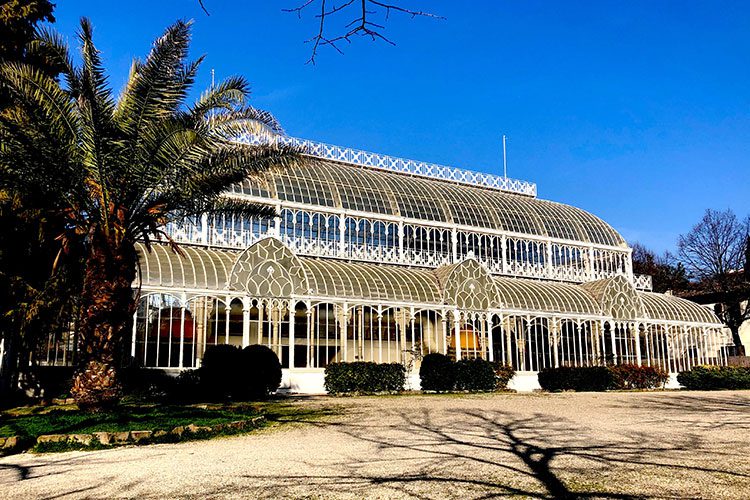
The greenhouse in this garden was built as the result of a movement for more green space in the city, and for all the nineteenth-century splendor it was built in, did not have all of the crowds I was used to in Florence. I was anxious to see what I might find and if it would even be open. 

As soon as I crossed the street, I was met with the open doors of the park. It was a lot bigger than in the pictures online. After walking a lap around the garden, I sat on a bench and tried to be as quiet as I could be. I found myself listening to the birds and writing in my journal. I could hear the people reading a few benches over turn the pages to their book every now and then. Others had parked their strollers next to the benches while the children slept. Some were taking a smoke break or reading the newspaper. There were many pathways lined with small pebbles, so that when people walked by even a few meters away you could hear their feet crunching the ground beneath them. I watched the people walk past with their friends and their dogs. I saw people sit down on the grass right next to the smaller flowers, the first of the little weeds that were starting to pop up in mid-february. 

The greenhouse was a sight to see. It sparkled the sun off of its clear windows which stood out against the white structure inside. It was completely empty inside, but there will be flower exhibits in late April that I’m told will fill the building with color. The tropical trees around the greenhouse make it very picturesque. Even on a colder day, the trees lend a feeling that the warmer weather will soon be here. The park itself seems out of a magazine, scattered statues of dogs are all around the place. What stands out to me is the decorated taxi that is in the grass on a raised bed. The taxi is covered in fun childish paintings and drawings of cartoons. After translating the message in the window, I learn it is the Milan 25 car, which was a taxi driven to cheer up children in hospitals. The taxi was decommissioned and replaced, so the old one is in the park for everyone to see and visit. 

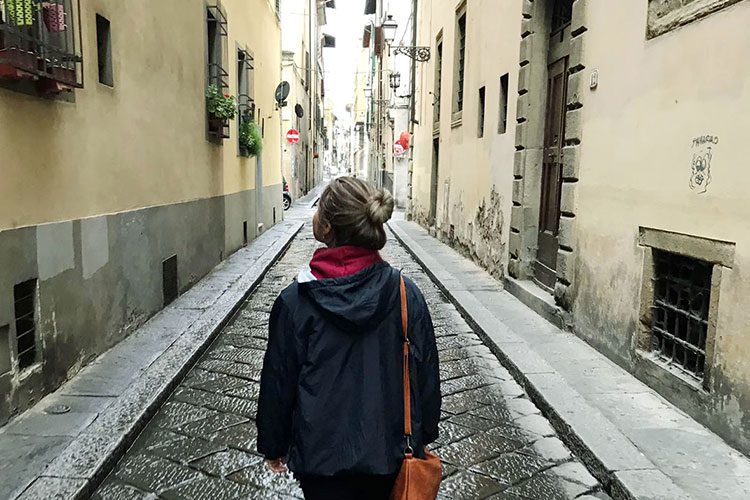
Although I wanted to stay in the quiet park all day, I decided to start making my way back to the city center. The streets were nearly empty on this side of Florence, and I noticed there was a lot more car traffic than I was used to in the historical district. I had to wander down the street to find a crosswalk, and when I did I found another small outdoor area. My directions were telling me I should cut through a park, but once I saw it I told myself I needed to make a detour. As soon as I saw the amazing Fontana Della Fortezza da Basso, a fountain with benches and sidewalks that was conveniently placed next to the base, I knew I had to come back here many more times in my days in Florence. I encountered many more Florentine sights on my way back, but none stuck to mind quite like the outdoor spaces did. I had never seen this side of Florence before and it seemed everywhere I turned, I had a new memory of this fantastic sun-filled day. 

See more of Florence and Italy at FUA’s FBInstagram, and Twitter.

A Home Away from Home

By Barbara Carranza
Photo by author 

I knew when I applied to the Special Project Experiential Learning (SPEL) Journalism course that Florence  was one of the most beautiful cities in the world. I thought it would be the perfect spot for me: a relaxed, artistic, history-filled setting that would appeal to my old and free-spirited soul. It turns out I was right on the money (and so much more). As I’m getting ready to head back to Charlotte, my heart grows heavy. Although I have only spent two months in Florence, it’s evident to me that I have found a home away from home.

The thought first crossed my mind just a few days after my arrival. I assumed assimilating to a whole new country, language, and culture would naturally take time, but surprisingly, a sense of ease settled in me very quickly. Since I have always been curious about everything, I wondered: is it because Florence is the total opposite of Charlotte, a metropolitan city nearing 1 million inhabitants; or that everything is within walking distance, or maybe it’s the “homey” vibe that Florence just gives off that makes me feel so comfortable here? Whatever the case, it didn’t take long for me to tell my parents and friends that I wanted to move here. It was a big revelation for me because after all of the trips I’ve taken in my life, the closest that I ever came to thinking, “Yeah, I can see myself living here,” was Miami and Los Angeles. Not even Lima, Peru, my birthplace, and where almost all of my relatives live made the cut. Quite the opposite – I’ve repeatedly said that while I love visiting Lima, I could never live there. So when it dawned on me that I could actually picture myself living in Florence, I was shocked, but it was a good, welcoming realization.

Now that my time here is coming to a close, the reasons for my love of Florence have become clearer. I believe one of them is the persevered presence of its antiquity provides me an endless supply of imagination. As a writer, I read and write every day. Staying in Florence gave me a burst of creativity. I wrote articles for FUA during the day, and incessantly wrote my own stories at night. Whether it was in my apartment’s living room with the windows open or in a café down the street by the Duomo, the words poured out of me, and it was simply wonderful.

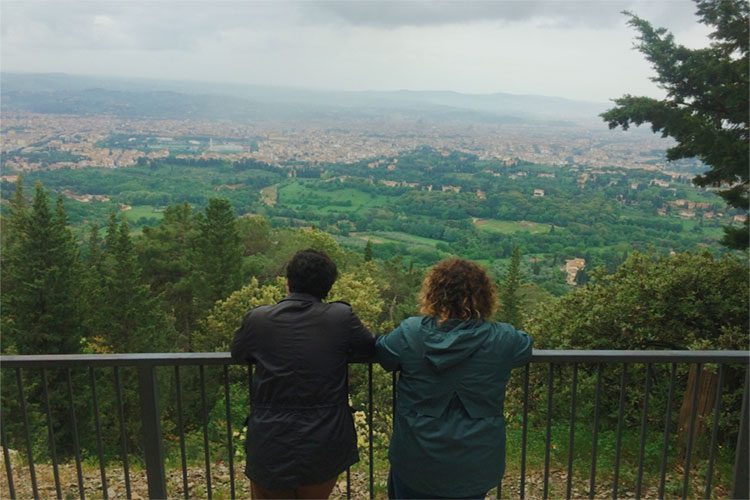
Another reason for wanting to stay would have to be the breathtaking beauty of the city. Raised in a place where skyscrapers dominate the skyline, Florence offered a nice change of scenery. Instead of having the Bank of America Corporate Center, Duke Energy Center, and Bank of America Stadium in the horizon, there was the Duomo’s terracotta-lined dome, Giotto’s bell tower, Palazzo Vecchio’s Torre di Arnolfo, and the surrounding hills of the valley that the city lies in. At times, it made me feel like I was living hundreds of years ago, when Florence reigned supreme during the Renaissance.

Though I’m happy to return to my family and friends, I’m also sad to leave Florence. I’ll always carry the memories with me. I don’t know when I’ll return, but what I do know is that one day I will.

See more of Florence and Italy at FUA’s FBInstagram, and Twitter.

A Ghostly Side of Florence

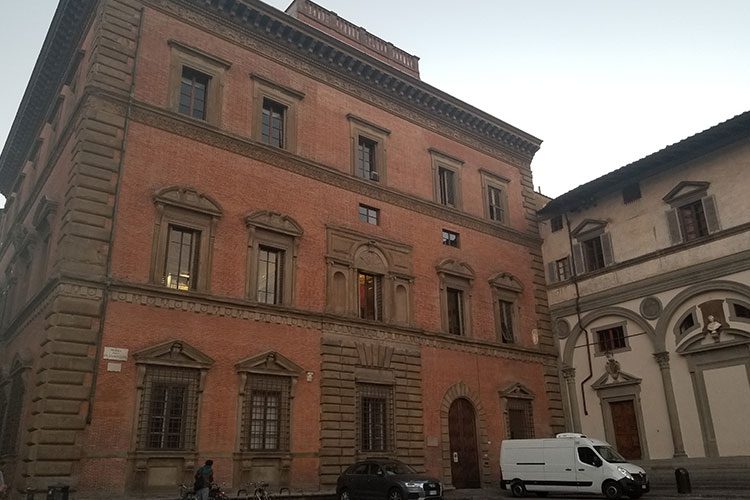
Palazzo Budini-Gattai and the open window

Photo by author
By Barbara Carranza

SPEL Journalism student Barbara Carranza gives us paranormal suggestions for an alternative tour of Florence.

I’ve had a life-long fascination with the paranormal; just ask my family members or friends. When I arrived in Florence, one of the first things I searched up was if the city had any reported haunted sites that I could visit. With Florence being ancient and enriched with history, of course I wasn’t let down.

The fall season has descended upon us, and with the temperatures dropping, what better way to spend your nights than reading scary stories and strolling through the streets to check out some of Florence’s darkest legends and mysteries?

  • Palazzo Budini-Gattai

If you’ve been to the Piazza Santissima Annunziata, you’ve seen the Palazzo Budini-Gattai. A red brick building with three floors, it was constructed in the 16th century by the Grifoni family and eventually came under the ownership of the Budini-Gattai family. The legend attached to this place is in the far right window on the top floor. It is always open, even when it rains. The reason for this is because the ghost of a noblewoman is still waiting for her husband to return from war. They had just married when he was called for battle, and the young lady waited by the window so she could see him return, but he never did. Heartbroken, the woman became attached to the room and the window until she died. When the shutters were finally closed, an unnatural force moved the furniture and threw books off the shelves. The chaos didn’t stop until relatives reopened the window – and so it has stayed open, never to close lest someone wants to risk angering the ghost.

Located in Piazza Santissima Annunziata, on Via dei Servi, 51.

  • Pensione Burchianti

Located less than a 10-minute walk from the Duomo, the Santa Maria Novella train station and the basilica it is named after, Pensione Burchianti is a 3-star hotel that is situated perfectly for tourists. Open since 1919, the hotel has garnered a quality reputation for housing celebrities, politicians, and poets over the years, including an alleged visit by Fascist dictator Benito Mussolini. However, guests might find themselves not the only ones residing in their suites. Among the reports of unexplained events, paranormal stories in the hotel includes hearing children skip down the hallways, the feeling of being watched, the sensation of icy cold breath being blown on people’s faces, and sensing the mattress dip as if someone was sitting on it. If that doesn’t scare you, there is also the Fresco Room where people have seen a pink, translucent figure. The owner of the hotel refuses to stay overnight, so if you’re brave enough to do it, make sure to record your stay because you might capture something!

Located on Via del Giglio, 8.

  • Palazzo Vecchio

Find yourself wandering by one of the Florence’s most recognisable landmarks at night? Here are a couple words of advice: don’t yell out Baldaccio d’Anghiari’s name. Palazzo Vecchio, and the Piazza della Signoria in general, have witnessed so much blood spilled on its pavement over the last 600 years. For example, the hanging and burning of Friar Girolamo Savonarola in 1498, an event that is commemorated in a plaque positioned on the exact place where he was executed. But did you know of the mercenary Baldaccio d’Anghiari? In 1441, he was wrongly accused of treason and killed in the Palazzo Vecchio. His body was thrown out of a window and dragged across the Piazza where his severed head was put on display. It’s now said that his ghost roams the premises of the Palazzo; sounds of footsteps can be heard when it closes for the day and all the tourists have left. Do not yet his name and avoid saying it out loud for no reason. If you decide to address him, you must speak respectfully in a low voice.

Located in Piazza della Signoria,
Opening hours 9am-7pm Monday-Sunday, 9am-2 pm on Thursdays.

See more of Florence and Italy at FUA’s FBInstagram, and Twitter.

Quidditch in Florence?

By Guneet Singh
All photos by author

Journalism student Guneet Singh explores her childhood in Florence.

When I chose Florence as my study abroad location, I knew it was a city that would give me a lot of experiences. But one experience I didn’t expect was being able to attend the opening ceremony of the Quidditch World Cup.

Yes, you read that right.

Quidditch, the fictional sport J.K. Rowling created in the Harry Potter series, is a real-life sport that was invented in 2005.

A Potterhead through and through, I couldn’t believe my luck when I found out the event was happening here! I’ve read all the Harry Potter books and as a child, Quidditch was the main sport I really understood.

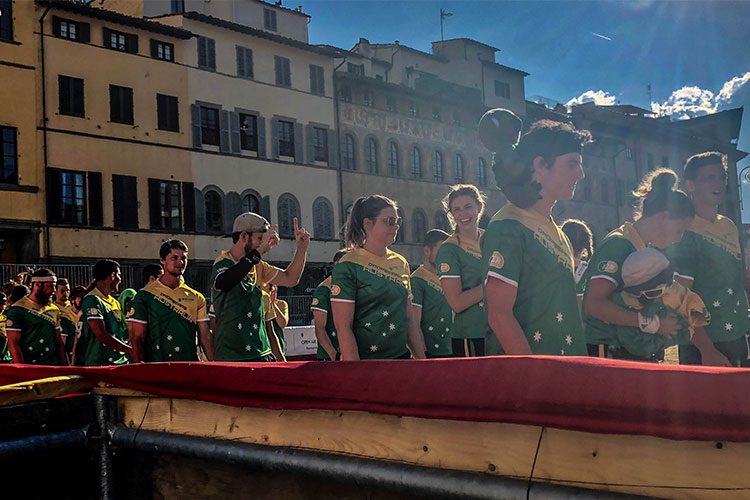
The opening parade itself was a five minute walk from Corso Tintori, one of FUA’s main buildings. I got there early and saw dozens of people in red shirts with the words “International Quidditch Association” sprawled across the back.

This is real.

A couple hundred spectators circled the stadium. I didn’t have a ticket but was standing in the right place at the right time and got in to see the ceremony! I was at the front of a crowd spread out across the sides of the dirt field. Eager fans ranged from toddlers to frantic young adults to those a little older and just curious about what the commotion was about.

Music started and teams entered the stadium slowly. I saw teams from countries all over the world, like New Zealand, Australia and the United States of America. There was a myriad of female players, which only serves as a testament to the diversity and acceptance the Harry Potter series preaches.

It was incredible to see an event like this bring so many people together and it was the best way to kick off my first week in Florence!

The Quidditch World Cup will be happening in Florence until July 2nd.

See more of Florence and Italy at FUA’s FBInstagram, and Twitter.

La Fiorita: A Florentine Tradition

Photo by author

By Dara Hernandez

Journalism student Dara Hernandez digs deeper into the life of Girolamo Savonarola and the meaning behind the yearly Florentine celebration of “La Fiorita.”

One of the main reasons I was drawn to Italy is for the amount of history that it possesses. Walking through the streets of Florence is like walking through a book with a chapter for every building, every piazza, and every sculpture.

Of Italy’s countless traditions, there is one in particular that has existed since 1498. It is known as Florence’s “La Fiorita” and is meaningful to the people of Florence.

The person who inspired this event was a man named Girolamo Savonarola. He was born September 21, 1452 and grew up to eventually become a Dominican friar and preacher here in Florence. He was an extremely radical preacher yet was loved by many Florentines. At the time, he became well-known for his prophecies of civic glory, destruction of secular art and calls for Christian renewal. He was also notorious for organizing “bonfires of vanities” in which artworks, books, musical instruments and other objects were burned.

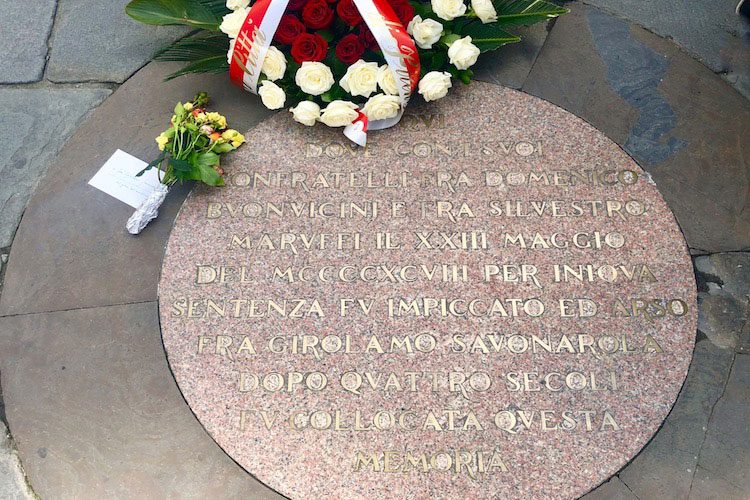
Savonarola’s passion-filled beliefs led him to getting excommunicated by the Pope. He was no longer allowed to participate in services of the church. Regardless, he chose to defy the Pope. Due to issues of this sort, he ended up being hanged and burned along with two followers on May 23, 1498 in Piazza della Signoria. The next day, his followers filled the area with flowers to honor his life and thus the tradition was born.

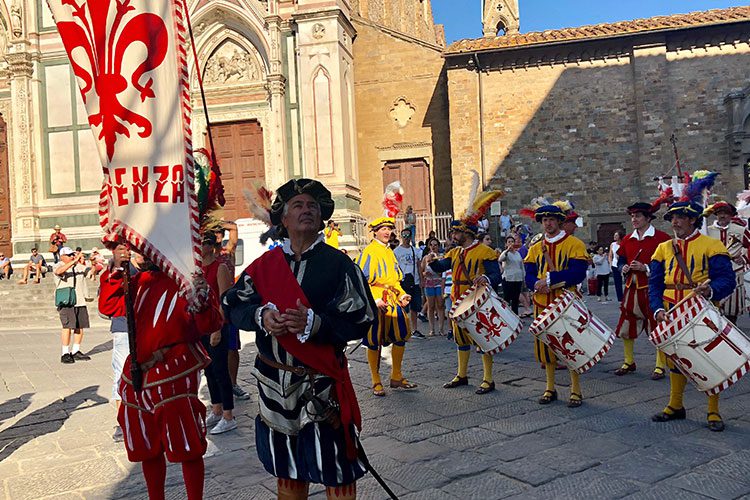
In fact, “La Fiorita” is an entire morning dedicated to the memory of Girolamo Savonarola. The people of Florence begin with a mass, proceed to spread flowers on the ground and finally, hold a costume parade to toss rose petals in the river.

As I was learning more about Savonarola, I found myself constantly wondering why people would praise someone who was famous for the destruction of, what he defined as, immoral art and someone who burned secular objects. However, seeing the roses over the plaque in memory of this man made me realize that not only are people drawn to radical, unordinary humans striving to make a difference, but also that Florentines simply accept Savonarola as part of their history. They recognize that walking through Piazza della Signoria holds stories with meaning that should be remembered.

Therefore, despite the unconventional and radical ways of his preaching, Florentines have continued celebrating his life on May 23, year after year.

See more of Florence and Italy at FUA’s FBInstagram, and Twitter.

Having Family in Florence: What I Taught and What I Learned

Photo by author

By Gregg Casazza

For two weeks my family visited me in Florence. I got to show them around the ancient city, and was eager to teach them about everything I learned. Surprisingly, throughout this experience I ended up learning quite a bit as well.

Family is everything in Italy. It is not altogether uncommon to find three generations of a family living in one house, children are in-part raised by their countless aunts and uncles, and family meals are some of the most important events in the day. Being from an Italian family myself, being away from them for so long has been quite difficult. However, the separation has taught me a lot, and has especially helped me with my own personal growth.

It wasn’t until I had the pleasure of having my family visit me, that I realized just how much I had learned throughout my Study Abroad experience “on my own.” At the beginning of the semester, time after time I was told, “You will learn your way around the city completely,” and although I am usually quite bad with directions, these people were right. I no longer needed Google Maps to navigate the city, I didn’t need Yelp to suggest restaurants, I didn’t need TripAdvisor to find things to do or see in the city. My parents remarks at how impressive it was that I knew the city so well.

I became like a tour guide for my family, on their own private tour of Florence. Showing my family around the city was in one way a test of how much I had learned about the ancient city, but also a farewell tour around my favorite spots and locales. Things like the legacy of the Medici family, hidden gardens and piazze, as well as the numerous cafes and libraries were all a bit bittersweet to visit again, but also surprised me on just how much I had learned by walking the many winding streets of the city. Even little things like the train system which at first felt impossibly foreign, now seemed almost second-nature. I taught my family about ordering meals or coffees, using different currency, picking wine, the history of Florence, and other seemingly smalls tasks that had become utterly mundane to me, but had contributed to my overall learning experience.

Learning about Florence was not the only way I grew however, I also grew personally as well. Study abroad allowed me a greater sense of independence. I learned my place in a global context, learned how to be alone, and how to be self-sufficient. Shopping for meals in and of itself can be an act of self-sufficiency, but knowing where to shop, how to get the freshest produce, and the best prices are also a huge part of personal growth in Florence, and shows a lot of maturity. Using what I had learned, I cooked for my family during their visit using the freshest vegetables and meats, I made traditional Tuscan dishes, Antipasto, Primo, Secondo, and Contorno, and I realized how much I had grown as a person, and how much being in Florence helped me to “grow-up” as well.

Being with family in Italy, just makes sense. Being away for so long was really tough, but after I made it through that hurdle, Study Abroad started to really work for me. In only one semester I became more integrated into Florentine life, learned about the country, and about myself, and it took my family being here for me to really see it for myself.

See more of Florence and Italy at FUA’s FBInstagram, and Twitter.

Allergies, Ailments, and Ancient Pharmacies

 Photo by author

By Gregg Casazza

If the thin layer of yellow pollen that covers the city isn’t already enough of an indicator, allergy season is now upon us. Scratchy eyes, sore throats, and stuffy noses seem to plague the entire city. Thanks to the city’s storied past, you can now easily stop by the local farmacia to get the appropriate modern medicine for nearly any ailment. The history of Florence is forever tied with that of the ancient pharmacies, which housed herbal remedies for anything from heartache to the black plague. What is perhaps most astounding about these ancient places of healing is that many are still open and operating today!

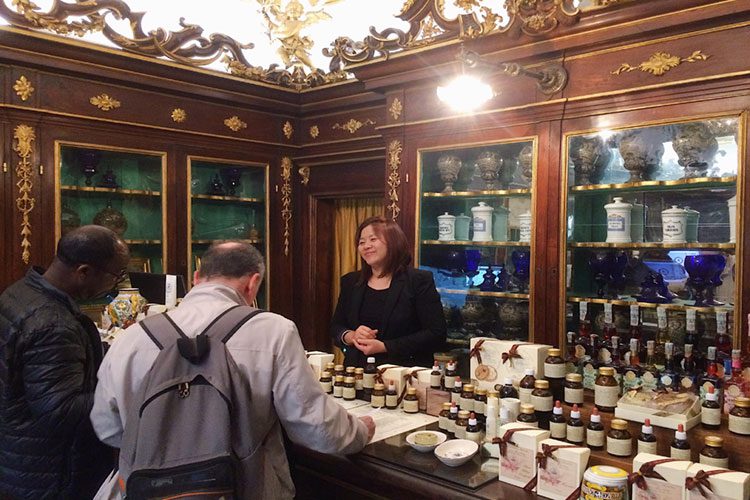
The Officina Profumo Farmaceutica di Santa Maria Novella is frequently touristed, and for good reason. This farmacia is the “oldest historic pharmacy in the whole of Europe, active without interruption for almost 4 centuries” as well as, “one of the oldest commercial establishments ever,” according to their website. This establishment began as a convent, with Dominican friars preparing essences, elixirs, ointments, and balsams using high quality ingredients and recipes that can still be found displayed today. The pharmacy is now a luxurious shop, specializing in perfume, as well as a free “museum of tradition.”

Another lesser known farmacia is the Ancient Boar Pharmacy, or Antica Farmacia del Cinghiale. Looking at the earliest official documents, there are mentions that this farmacia dates back to 1752. However, it is believed that it is actually much older. Similar to that of Santa Maria Novella, the early pharmacists made their own remedies, and the first documented pharmacist working, Girolamo Nicolò Branchi della Torre, prepared his own remedies in his private laboratory. His contributions were so notable that he has been accredited with moving the science of healing past the “magic of alchemy” to the science of chemistry. These contributions were so widespread that the Grand Duke of Tuscany asked him to open the first School of Chemistry in Pisa in 1757.

Many ancient pharmacies make up the history of Florence. There is Farmacia SS. Annunziata, which is also still in operation as well, and has been in operation since roughly 1561. They continue to utilize older traditions of preparing products such as tooth paste, shaving lotion, products for hygiene, skin, and galenic prescription (the combination of multiple medecines to increase their potency.) While these ancient pharmacies have changed a great deal in the many centuries since their inception, they have stayed largely the same as well. They may no longer be run by the Dominican monks however, many of the same recipes and natural ingredients are still being used to create their products. These pharmacies might seem ancient, but in a lot of ways they are rather progressive as well by not using animal-testing for their products. Ancient pharmacies are part of Florence’s strong heritage, and with so many still open today, perhaps consider checking one out the next time you suffer from allergies.

See more of Florence and Italy at FUA’s FBInstagram, and Twitter.


Piazza Massimo d’Azeglio has my heart

Photo by Author

By Gregg Casazza

Piazza Massimo d’Azeglio is a small park just a short walk away from Santa Croce, and I am absolutely in love with it.

There is something truly magical about the parks in Florence. Perhaps it is the fact that you so seldom see grass in the ancient stone city, or the fact that when sunlight streams through the tall slender trees, golden light dances all around the square. The soothing refuge these parks offer from the hustle-and-bustle of the city is much appreciated, and not lost on me one bit. However, finding one of these hidden treasures can be very hard for a casual traveler, and often the parks that CAN be found are just as busy as the rest of the city. So I found it rather shocking that a place as serene and inviting as Piazza Massimo d’Azeglio was only a quick walk from the city center.

This park and its surrounding neighborhoods hardly feel like they are a part of the Historic Center of Florence, and if not for the map, I wouldn’t believe it myself. The park is nestled right next to Viale Antonio Gramsci, and the walls of the old city. D’Azeglio is the best of both worlds, an area that feels different from a city, and more like a small town that you would find in a remote village in Italy, but still very close to the center of Florence. As such there are numerous luxury brands, and expensive places to visit in this area as well, including the Four Seasons hotel and its ancient Renaissance garden.

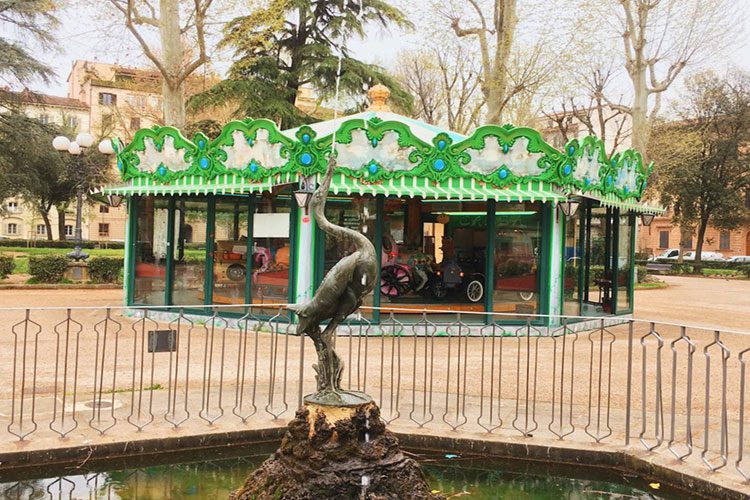
The neighborhood is a mixture of stately apartments, and small parks the likes of which stand in clear contrast to the rampant tourism and chaos of nearby areas such as Santa Croce and Palazzo Vecchio. Children run through the playground free of cares, like loose cannons running headlong past their friends who try to touch the sky on the swings. A group of boys play soccer, occasionally kicking their ball over the fence. Nobody goes to get it, they simply yell for their ball and wait, knowing one of the locals will happily assist. Near the center of the park is a beautiful carrousel. The small green ride lights up, and plays a cheerful tune which wafts through the air in the park, a few children go round and round, you can almost hear their smiles.

Most striking about the park however, is the community which uses the public space as their meeting grounds. Dog walkers stop to talk while their dogs play amongst each other, a daily activity for some. Older men stop to chat with their grocery bags stuffed with fresh produce bought from the nearby Sant Ambrogio market, or perhaps a delicious calzoni from Rocco. Couples sit on the benches, sharing an umbrella as they sit for hours, they wave to their friends and neighbours as they pass by on their bikes.

Named after Massimo Taparelli the Marquess of Azeglio (commonly called Massimo d’Azeglio) this park represents a lot for many people. D’Azeglio, who famously fought against the Austrians for Italian liberation, was also a prime minister and the leader of the movement that advocated an Italian national revival. His legacy is remembered in parks such as Piazza Massimo d’Azeglio.

There are so many places in Florence that are strikingly beautiful, but seem a bit hollow, like they lack the soul of the city. This is not true of Piazza Massimo d’Azeglio which seems utterly lived in, and yet still completely magical. I know that this park has my heart, and will have yours too.

See more of Florence and Italy at FUA’s FBInstagram, and Twitter.

Experiencing a Religion: Welcome to Fiorentina

Photo by Author

By Sean Ahern

Football is not merely a sport here in Florence. It has a much higher purpose than that. The city revolves around the club, the Viola. As a first timer attending a European football game, this was nirvana.

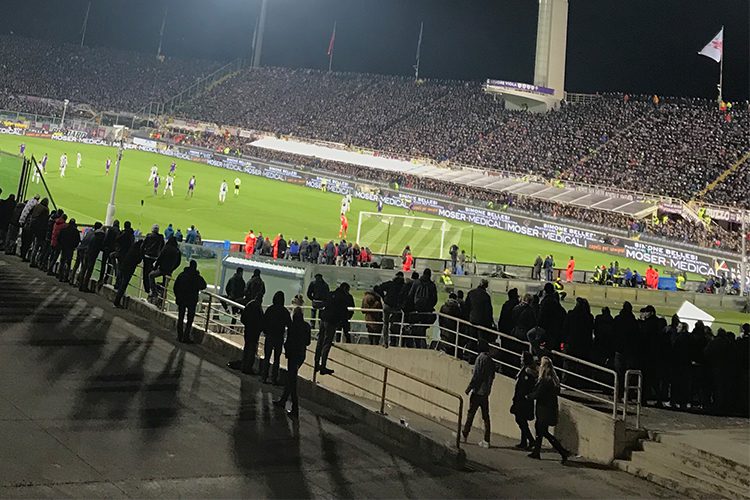
It was a typical Florentine Friday as I enjoyed my one class when my roommate and I decided to get tickets to the Fiorentina and Juventus game during the night. As a football superfan, I was more than willing to partake within this rivalry as I have only seen and heard insane things when it came down to this game. Time moved slowly as my anticipation grew to a fever pitch. Suiting up with my Fiorentina jacket, I was ready to toss away my tourist status and become a local. Walking over to the stadium, I heard the fans’ chants grow louder and louder. This surely was not just another Friday night football game, this was going to be war.

Heading to our seats, we noticed the sheer amount of people that were packed into the stadium and realized that this was something that was not of the ordinary. Excitement filled the stadium while the Fiorentina fans sang the songs of the club. I have personally never heard a louder stadium and the voices grew louder with every shot, every foul, and every pass.

Although Fiorentina lost the game two to nil, the atmosphere is something that I will never forget. It was my first real foray as a citizen of this wonderful city, and even though I will forget the names of the restaurants and the gelato places, I will never forget this game.

See more of Florence and Italy at FUA’s FB, Instagram, and Twitter.
Santo Spirito Market

Photo by Authors

By Kristen Kaneb and Danielle Wood

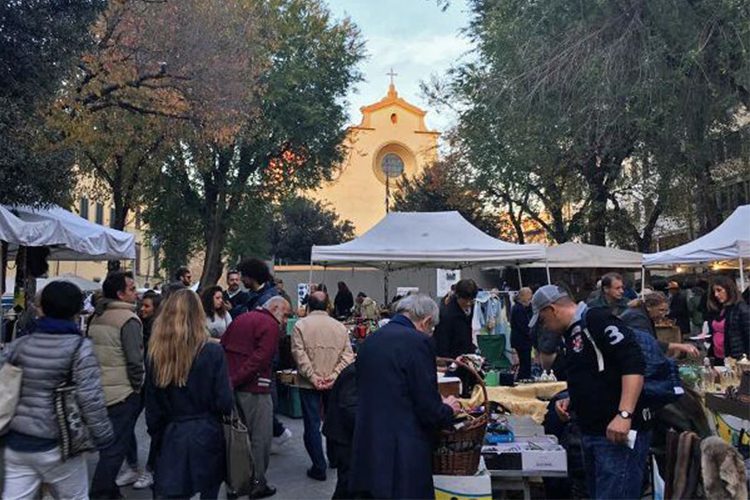
The Santo Spirito Market is an area where tourists and locals combine to experience all that Florence has to offer. It is a time where people can explore anything from food to wine to art to jewelry.

On the second Sunday of February it was time to visit the Santo Spirito Market. This is a perfect activity for a lazy Sunday to go walk around with your friends and browse through all the different fun stands. It’s amazing to be able to walk through and see such a variety of fresh, authentic goods. Whether you want to buy fresh meats and cheeses, homemade jams, or hand-crafted Italian jewelry, this market had it all.

Tourists and locals alike appreciate the San Spirito Market. It exemplifies Italians’ value of fresh produce and delicious-tasting meals. Of course, Italy is known for its exquisite meals using only the best ingredients. The market’s locally-grown vegetables, carefully sliced meats, and handmade pastas demonstrate the Italian value of putting time, effort, and thought into the production of each meal. Italians are committed to fresh, enticing, cuisine.

Observing the shoppers at the market, it was clear that they were carefully considering each purchase. They took their time to examine each product, whether it was the level of intricacy in a piece of jewelry or an orange’s freshness.

One of the best things about this market was that it was full of local Florentines. Santo Spirito is located on the other side of the river from the Duomo. Here you can have a genuine Italian cultural experience. If you start to get tired while shopping, the market is in the middle of the square surrounded by restaurants and a beautiful church. There is something for everyone. The San Spirito Market shows the norm of Italian culture: that people take their time to enjoy the little things in life.

See more of Florence and Italy at FUA’s FB, Instagram, and Twitter.