What happens when you move to a walkable city for study abroad, then lose your ability to walk?
written by Laurel Swanz
It was supposed to be my fourth day of class.
Instead, I was alone in the back of a taxi, going back to the hospital for the second time in two days.
I sat, my head resting on the window and my right leg up on the seat next to me, pain reverberating in my knee with every bump the cab hit. In Florence, that’s every few seconds.
I watched out the window as students, school bags on, cappuccinos in hand, walked to class. It was, ironically, raining outside, and even more ironically, the radio station seemed to be set to Depression.fm.
“All by Myself” was genuinely playing as the tears started to fall. I let the misery sink in.
All I could think was “why me?” Why does everyone else seem to be having a normal study abroad experience, or at least one closer to what they expected?
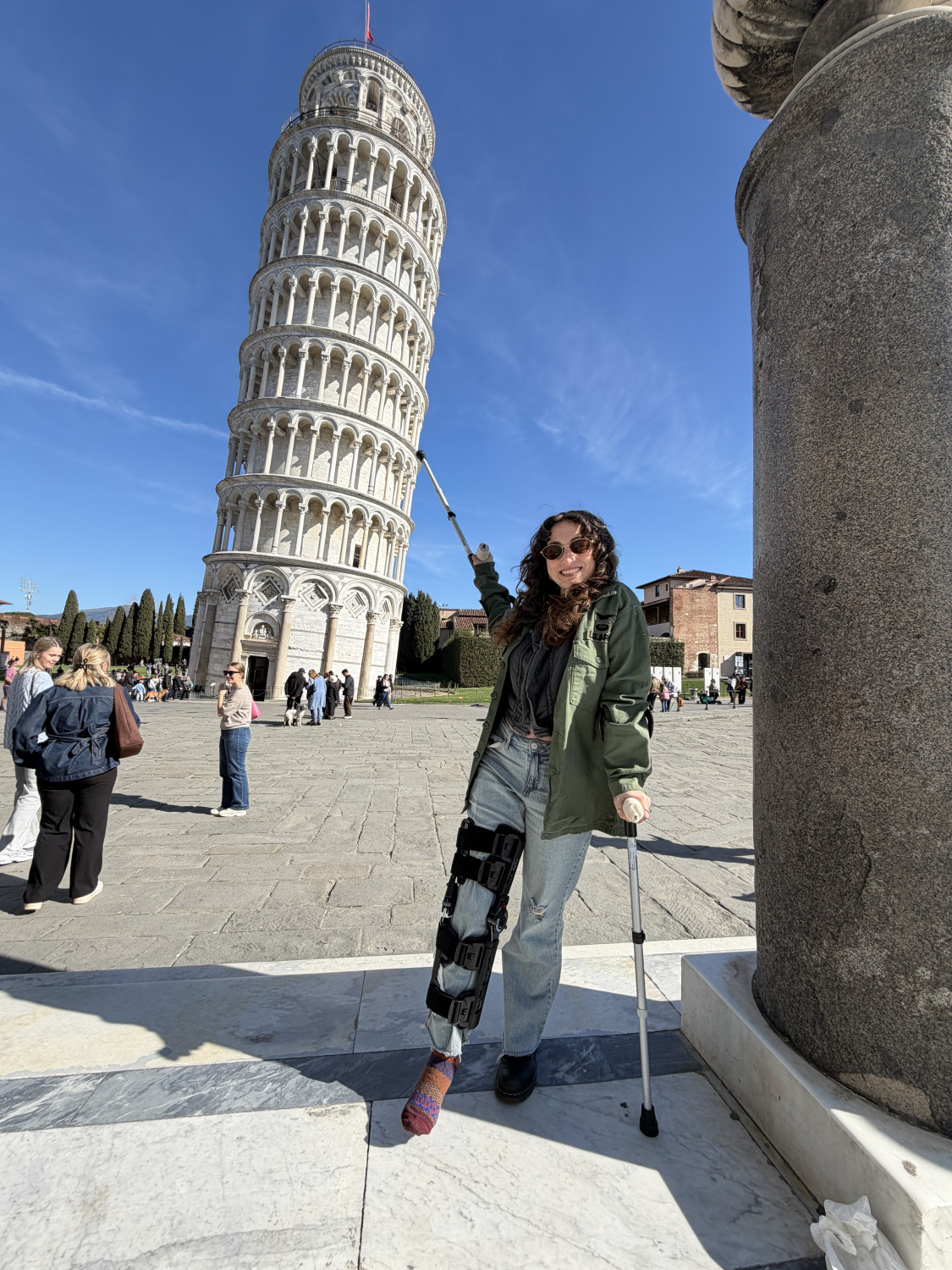
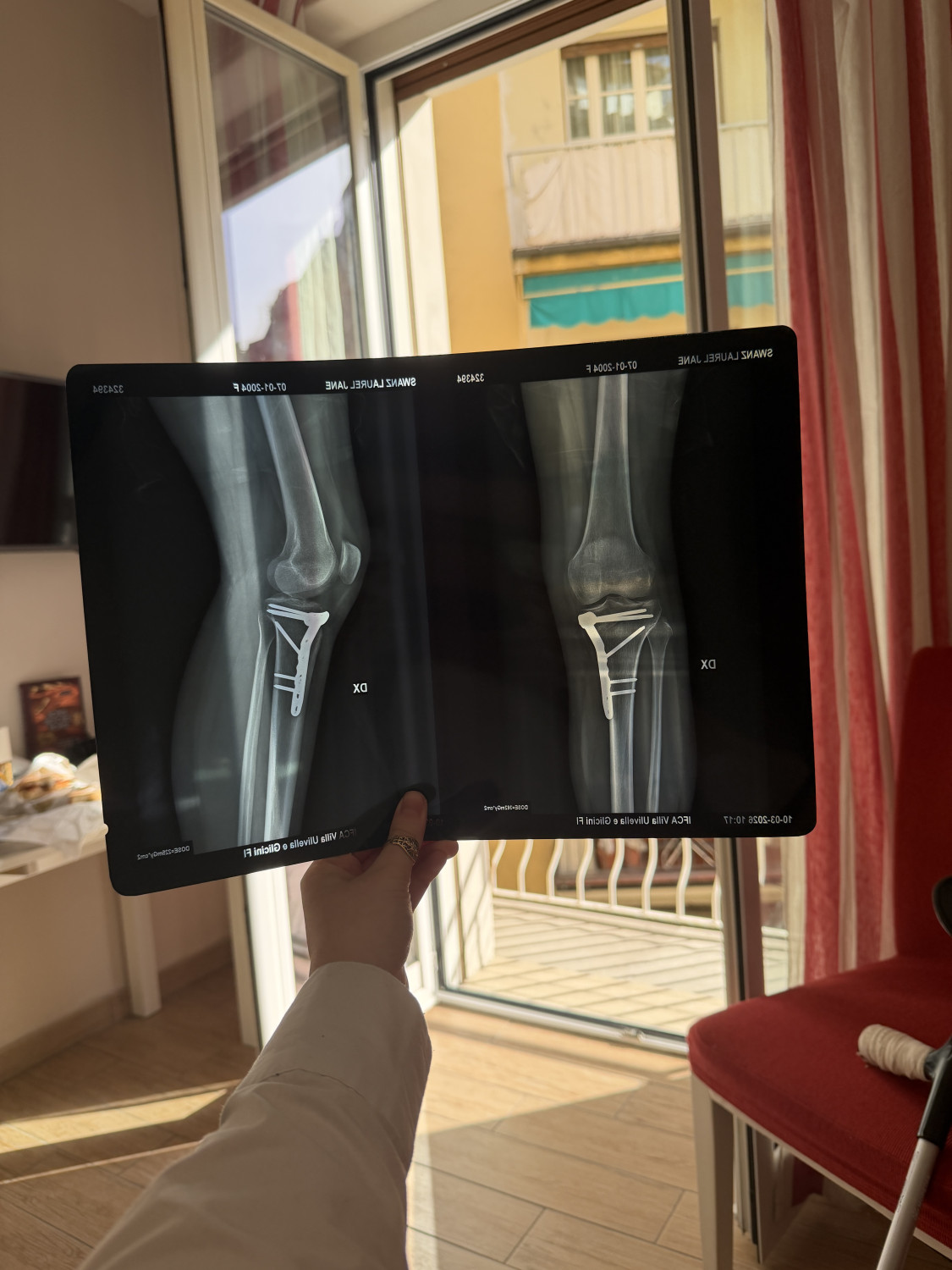
When I got to the hospital, I quickly learned I wouldn’t be leaving anytime soon. My leg was broken, a tibial plateau fracture. I’d be having surgery to ensure proper healing in three days and stay in the hospital for a week after that.
It was unclear exactly how long recovery would take, but certain I would not walk for at least 2 months without crutches.
It had happened a few days prior on a Saturday night, January 31. My very first night out with friends turned into a nightmare before I even realized I’d fallen down.
My best friend McCall and I were running to catch up with our friends when we came across Santa Maria Novella, which has patches of grass in front of it, surrounded by low wire fences. I saw the little fence and didn’t think twice about jumping over it as I ran — it was less than a foot tall and I was certain I’d clear it.
What I didn’t anticipate was the uneven terrain on the other side. McCall and I went down, one right after the other. The full force of my jump and weight of my body pummeled into my right knee. I tried to stand and felt excruciating pain, buckling to the ground.
I sat and stared in disbelief at the Grand Hotel Minerva in front of me, the beautiful historic church to my right. I heard someone approach McCall to help her up, but my mind was floating off to some place faraway, trying to escape the reality of what had happened.
“That guy just took my phone!” McCall yelled, panicked. That snapped me out of it.
Feigning concern for our well-being, a stranger had pulled McCall off the ground by her forearm, taking her phone with him in one swift motion before disappearing into the night. She raced after him as quickly as she could on a sprained ankle, but he was gone.
We called her parents from my phone, and they helped us calm down and get a taxi home, where what was once a minor inconvenience became my sworn enemy: the 4 flights of stairs to our apartment.
Heroically, like a mother lifting a car off her child with pure adrenaline, McCall cradled me in her arms and marched us up the steps.
All I could do was ask, “What did I do?” again and again the whole way up.
I was devastated. Everything I’d wanted from this experience – independence, discovery, adventure – felt completely out of reach, stolen from me in an instant.
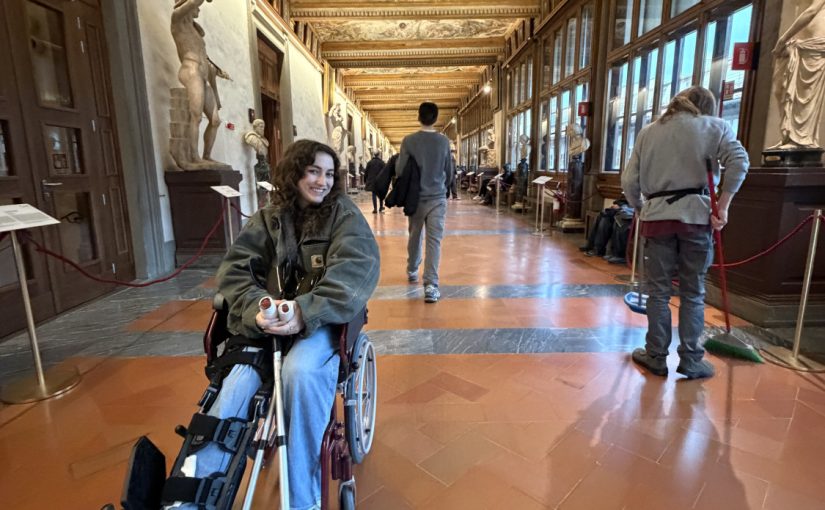
And for about two weeks, I let my devastation consume me. I was a shell of myself, in near-constant pain, envious of my peers to the point of resentment. Hearing them talk about their weekend trips across Europe in class when I had been pushed there in a wheelchair by my mom was beyond frustrating – it was downright isolating.
“Props to you, I would have just gone home,” they’d say, intended as a testament to my strength. I didn’t feel strong.
“Easy for you to say,” I’d think. “I’ll never have a chance like this again, and now it’s ruined.”
I searched for meaning. Did I do something to deserve this? I’d worked so hard to make studying abroad a reality for myself, working multiple jobs and applying for scholarships.
I’d looked forward to it for a whole year, letting the prospect of having the time of my life in Italy bring me comfort during some of the most stressful months of my life, expecting it to change everything.
Well, it did…just not in the way I wanted it to.
If I’ve learned anything from this experience, it’s that life doesn’t usually give you what you want how you want it, especially if what you’re asking for is growth. Because growth isn’t comfortable.
I wanted to come to Italy and get closer to my truest self, and was met with the painful reality that it wouldn’t come easily.
Now, writing this on the train back to Florence from a 5-day solo trip, a week from the end of my program, I’m still pissed that I broke my leg. But I also got exactly what I wanted. I am closer to my truest self, because I learned how to separate feeling like myself from the presence of joy and sit with what just was even when it felt so unfair.
There was no cosmic reason for it to happen. It just did. Sometimes bad things just happen and it’s up to you to make meaning out of it, or as the corny shirt my aunt bought me from the souvenir shop says, “make limoncello” from the lemons.
I had to find gratitude when I felt cursed, happiness when I felt hapless, the strength to get out of bed when I couldn’t stand on both feet, and self-assurance when I couldn’t get anywhere without someone else’s help.
Not to mention an apartment crutching distance from school with an elevator in a city that hasn’t been upgraded since basically the Renaissance…
And I did it all. I still got to see more of the world at 22 than most people do by 50.
With the help of therapy, physical therapy, family who’d cross oceans to help me, friends who’d pick me up from my apartment to push me to class, and really good travel health insurance, everything started looking up.
Exactly two months after my surgery, I was able to put full weight back on my leg. I still had a month and a week left abroad, and I booked a trip for every remaining spare minute. And every trip I’ve gone on, you best believe I’ve appreciated every second more deeply than I ever could have if this hadn’t happened. I will never take my mobility for granted again.
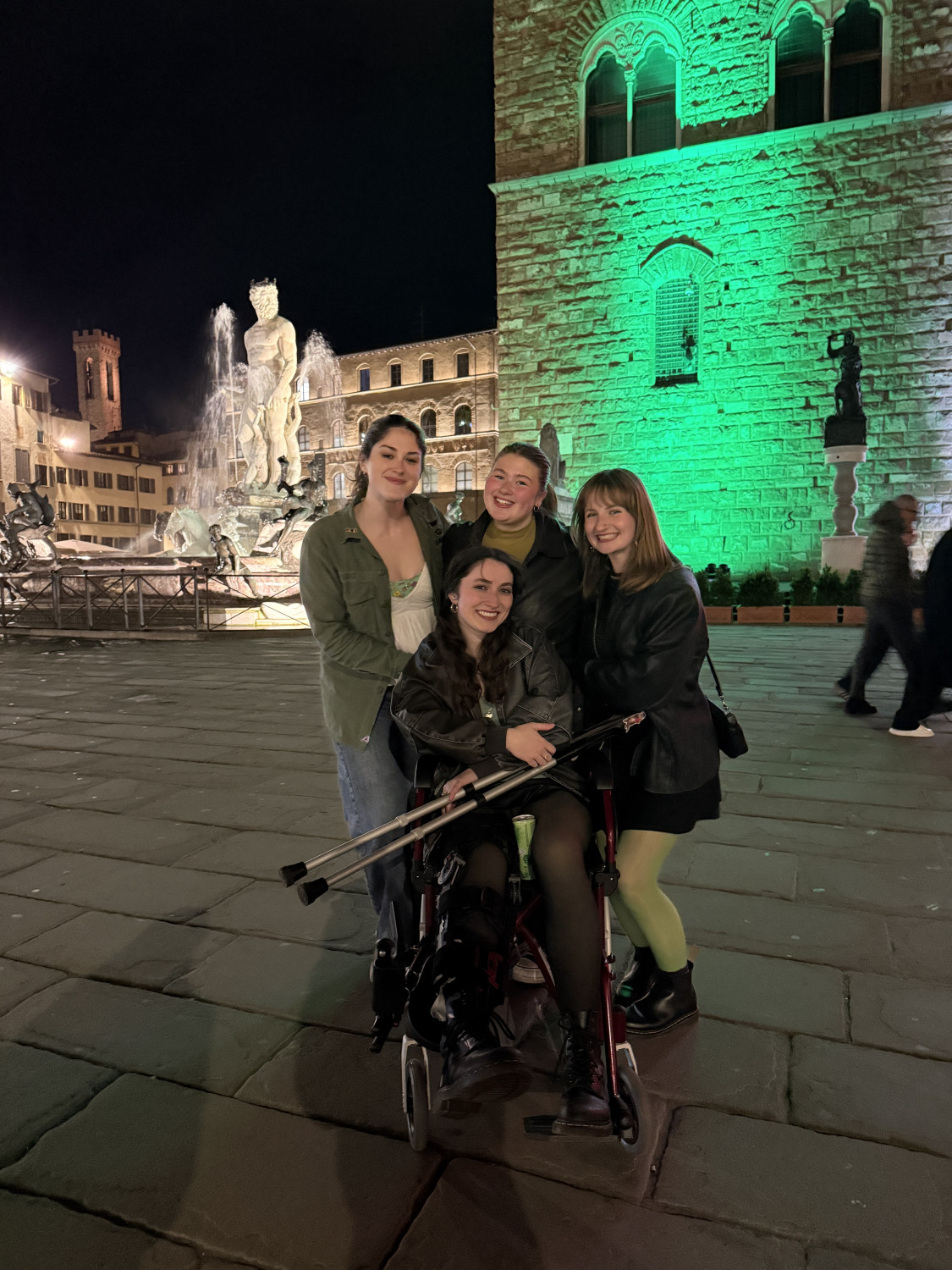
Most importantly, I won’t take the people who love me for granted. Even when I was cranky and crying, when I could barely talk about anything other than how upset I was, they showed up for me. They made me laugh and picked me up off the ground (even literally, shoutout McCall). They helped me remember who I am.
Never again will I view needing help as a weakness. I had a hard time with it at first, especially the wheelchair. I don’t like being pitied or feeling out of control. I really don’t like feeling dependent on others. Now I’ve come to understand that’s what community is for. We’re not supposed to do it all on our own.
Accepting help doesn’t equate to relinquishing independence. In this case, it allowed me to keep it. Because my family and friends were there to help me get around, get groceries, take my trash out and clean my apartment, I didn’t have to go home.
I got to go to Ischia this weekend, climb to the top of a medieval castle (as in, stairs!) and look out at the sun setting over the sea, knowing that I didn’t lie down and die along with my expectations when my leg broke three months ago. So, when life places more metaphorical low-wire fences and uneven ground in my path, I know I’ll be okay even if I trip.
“You know what you do when Plan A doesn’t work out?” my therapist asked me on a Zoom call taken from my hospital bed on the day I was admitted. “You kick the sh*t out of Plan B.”