Are you guys Nazi’s?

written by Lilly Vergnes

This blog feature is an exclusive bonus installment to our Spring issue of Blending Magazine. After you finish reading, be sure to explore the rest of the magazine online—just follow this link to download the full Spring 2025 edition:
https://jschoolfua.com/images/BM/BM_151.pdf

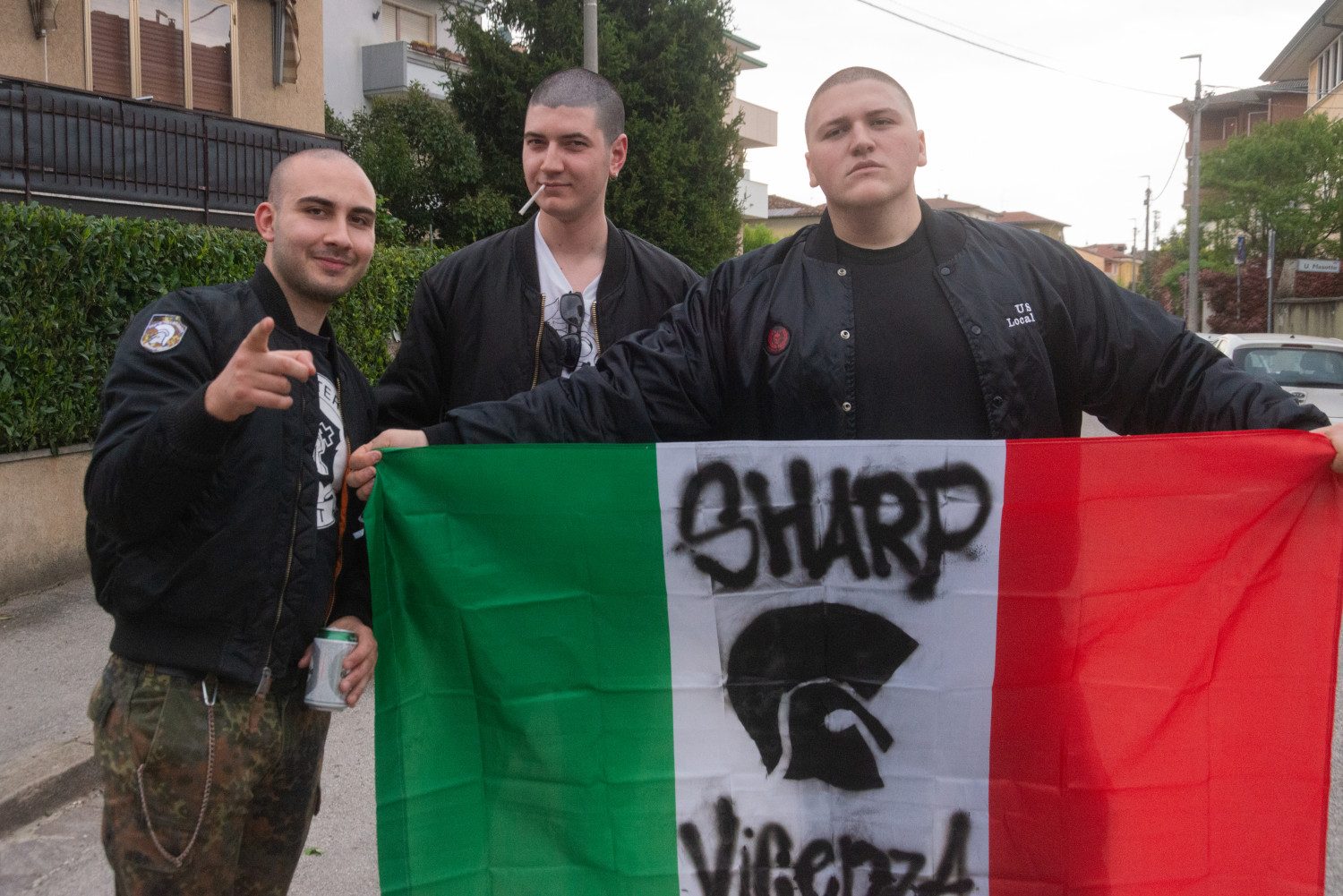
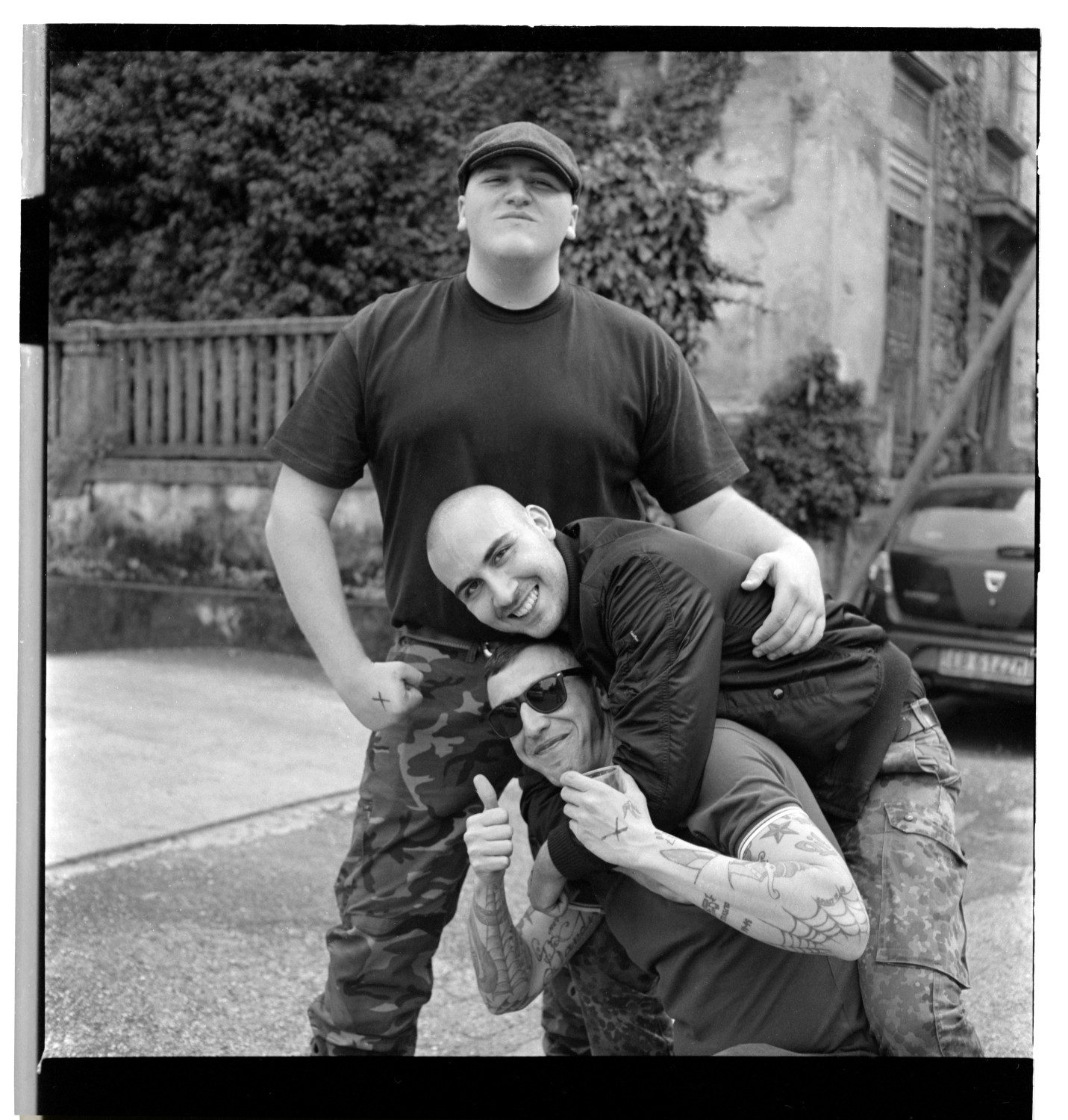
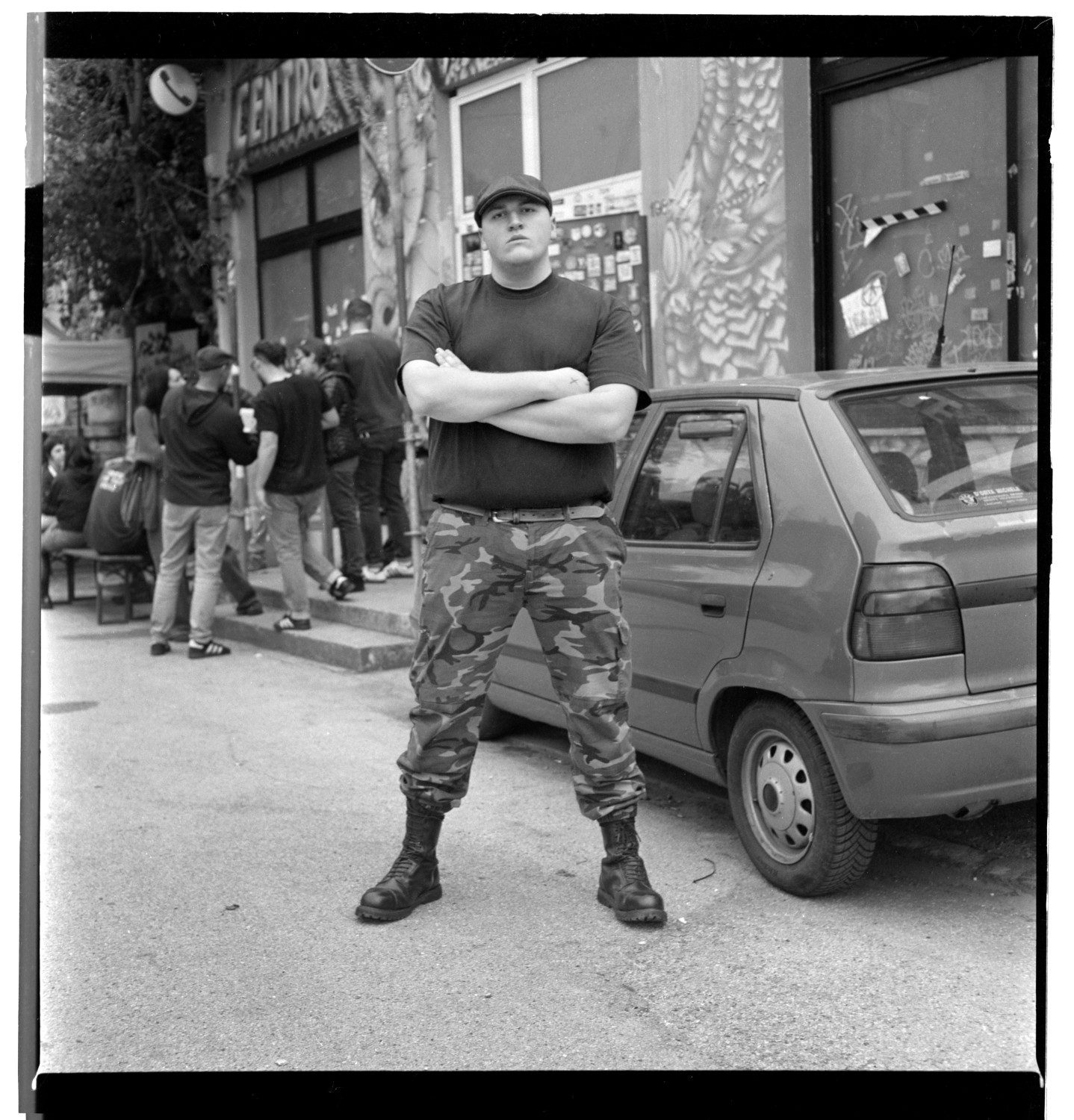
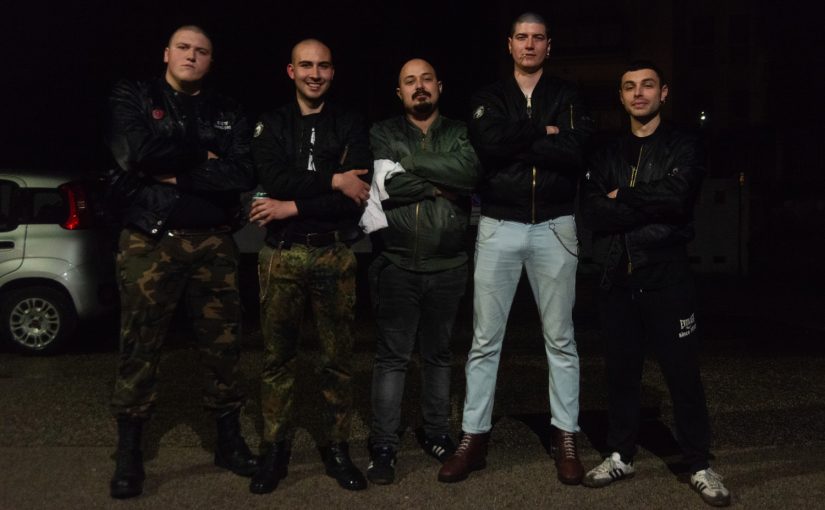
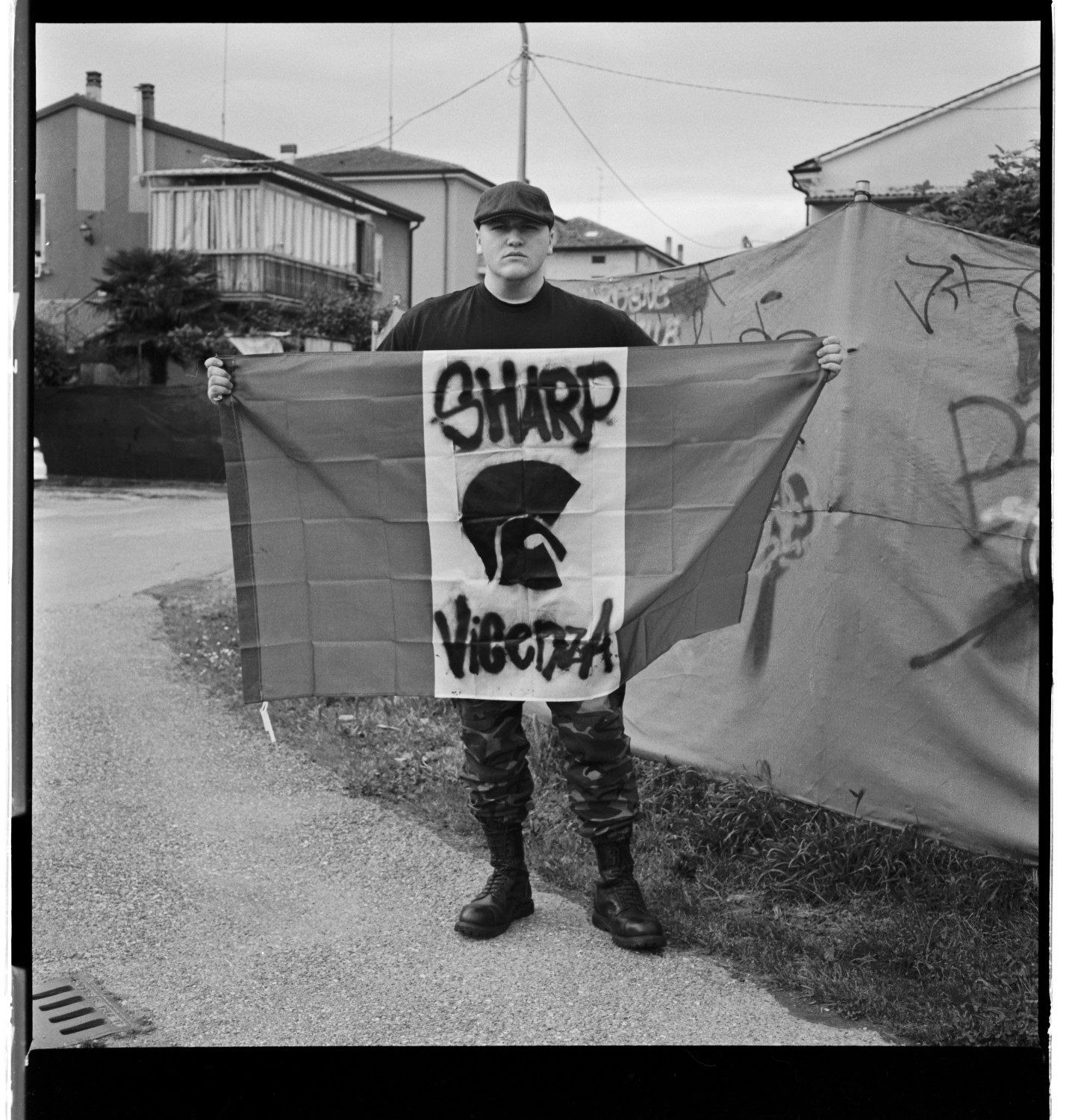
Lorenzo Carollo grew up in the northern part of Italy, in a small town near Verona. He followed the typical life path of an Italian teen, adding some illegal graffiti work in the mix. After high school, he went on to study History in Padova. You might wonder what kind of hobbies and activities one gets up to in rural northern Italy. For Carollo, he did not have to look far. He works in a mechanical factory, takes an interest in medieval history, plays the bagpipe, and in recent years has become a Skinhead. He has his hair cut short, wears boots and bomber jackets and goes to as many concerts as he can. This is also where I met him, at a concert at the Centro Popolare Autogestito (CPA) in Florence. I personally go to the CPA for its cheap beer and good music. Little did I know, that night’s concert was being played and attended by Skinheads. My first thought and question when I heard ‘Skinhead’ was, Are you guys Nazi’s? They all laughed, and Carollo started to explain the Skinhead movement to me over the loud music. 

Skinheads originated in Britain in the ‘60s. They were primarily influenced by Mod and the Jamaican Rudeboy subcultures, with a working-class pride and rejection of conservatism at the time. The original Skins had a lot of influences from Jamaican music and culture, such as Ska and Reggae. Later, in the ‘80s, a Punk aspect was introduced to the movement, with the working class Punk Rock Oi!. This was then mixed with the Jamaican genres from the previous generation, which was referred to as 2Tone. If these are the origins of the movement, then why do we only now associate Skinheads with white supremacists? 

During that same time in the ‘80s, the movement split up into two very distinct directions: far-right and left/apolitical. Britain’s political climate was precarious, and far-right supporters saw the Skinhead subculture as an opportunity to express their ideology. This spread fast, and by the ‘90s, neo-Nazi and fascist groups existed all over Europe and North America. 
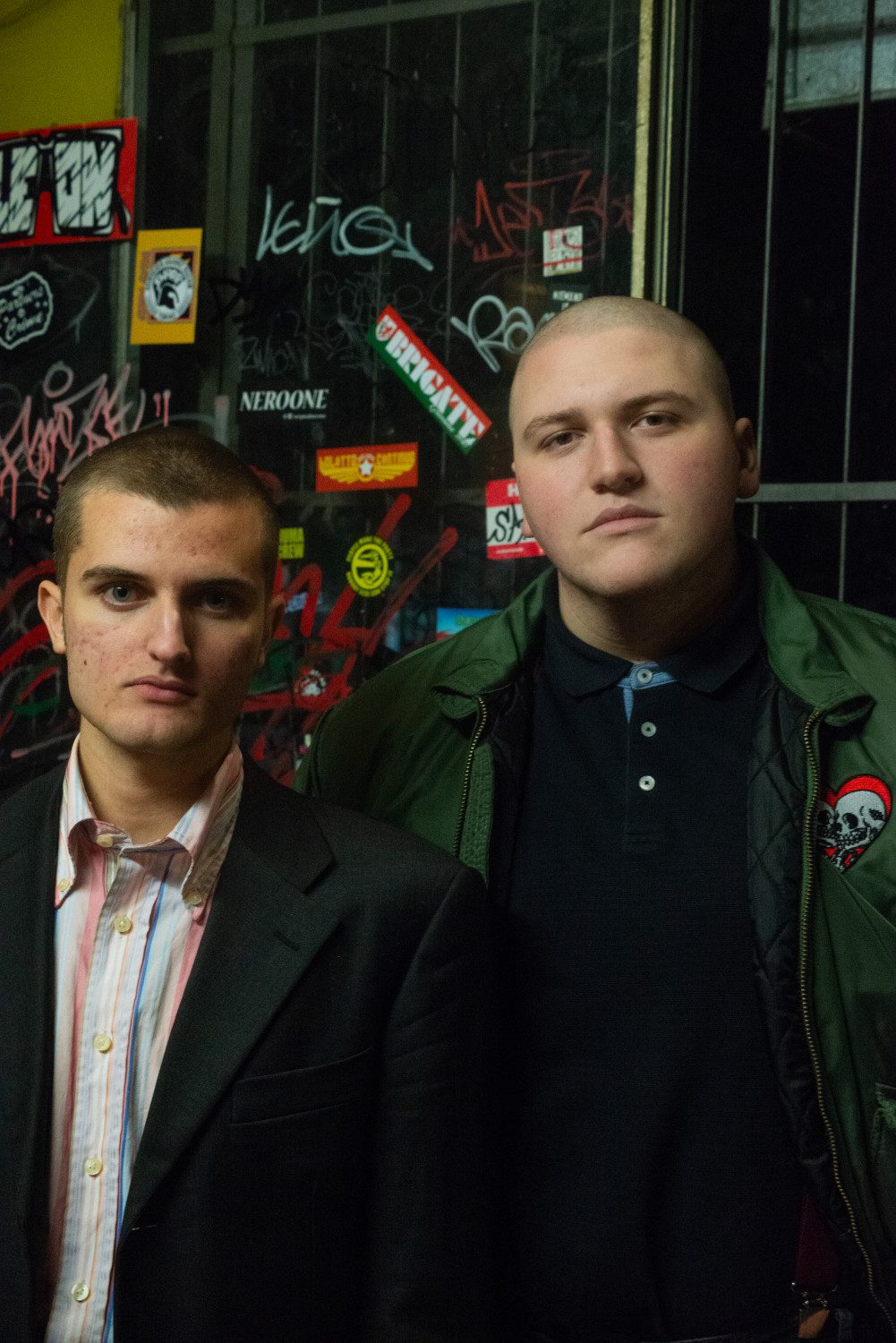
photo by Lilly Vergnes
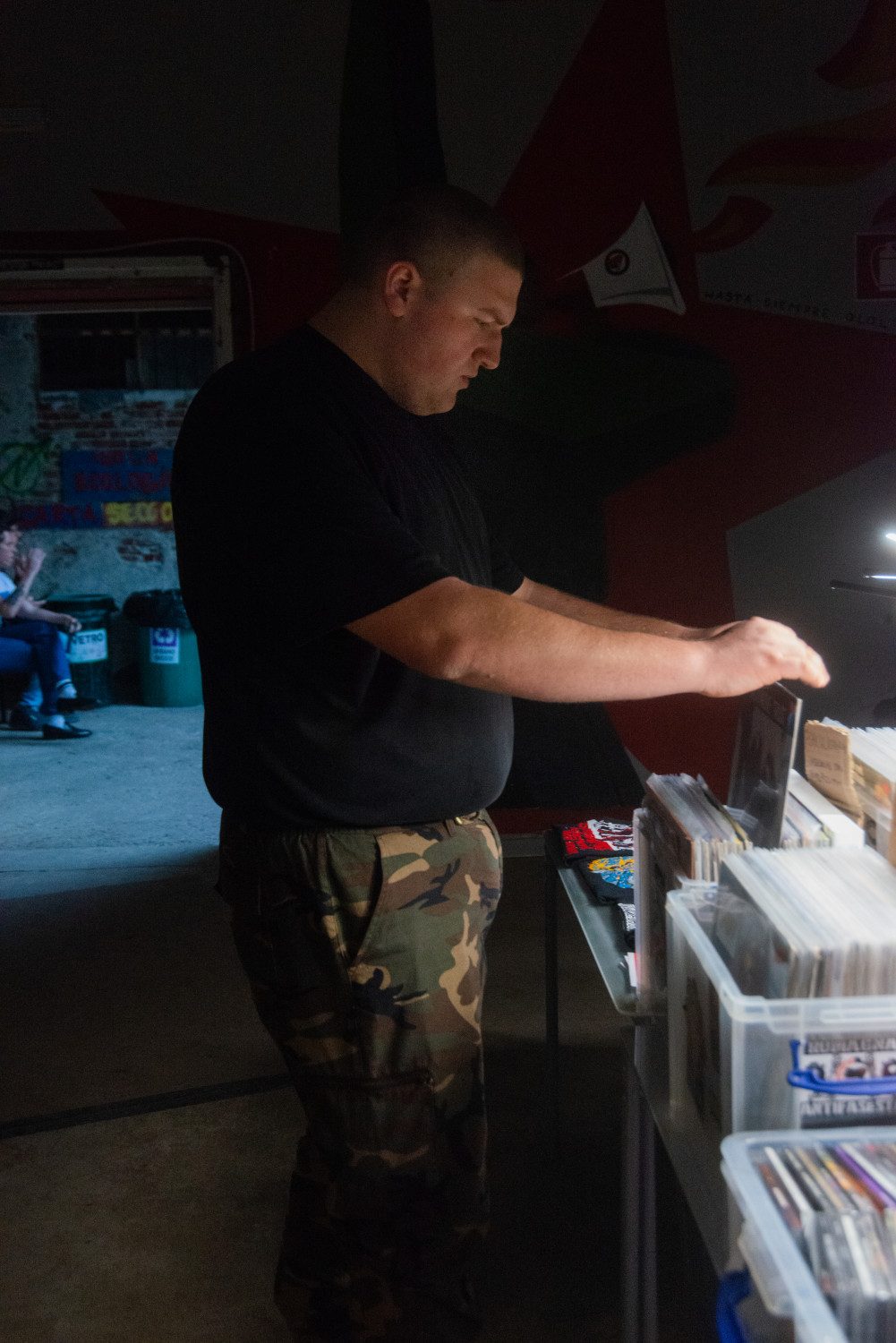
This is the image we still associate Skinheads with today in the mainstream mindset. However, a reaction to these right-winged groups quickly started. The movement known as Skinheads Against Racial Prejudice (SHARP) was created as an anti-fascist and anti-racist group. Today, they are considered an extension of the original Skinhead culture, the ‘real’ Skins. Skinheads completely deny the fascist groups as part of the movement, even refusing to call them ‘skinheads’ but ‘boneheads’ instead. The Skinheads main ideals are inherently left-wing, although some of them identify as apolitical.

Carollo first became familiar with Skinheads through some people he knew from high school. As a teen, he was interested in forming his own opinions on political matters. He was approached by some guys from a far-right Skinhead group in Vicenza, who wanted him to potentially join their group. After listening to some of the things they had to say, Carollo decided that their opinions did not align with his morals at all. He had a good friend who was black, whom he knew to be a good person, so he thought: how could it be true that all black people were bad? He made up his mind and began associating himself with people from the anti-fascist side of the movement: Skins from a smaller group called the Reggae Lads. Their ideas and morals lined up much more with his own, as he explained, “I could never understand why you would decide to hate. If you see a black man walking on the street who is smiling, you can’t be happy for him just because of the color of his skin? This is so stupid to me.” 

As for myself, I never realized that Skinheads are not what we see in the mainstream media. In reality, it seems like a subculture like many others, with their music, fashion and ideals, even ideals that most people could get behind. They are just as much, if not more, against neo-Nazi’s and facism as anyone else. In some way, they are the ones that are trying to make a positive change in the world.
Preparing for Florence: A Student’s Guide to Study Abroad at FUA

written by Savannah Carley for SPEL: Public Relations

A student-written guide to studying abroad in Florence, offering practical tips on packing, planning, and adjusting to life at FUA through personal experience.

Before I left for my study abroad program, my search history was filled with “What to pack for Florence, Italy” and “Best tips for studying abroad.” Every video and article gave the same advice: bring a portable charger, pack basics, and buy toiletries once you arrive. While these tips were helpful, I still felt uncertain. How many clothes should I really bring for six weeks? What would it feel like to land in a brand-new country? 

I remember wishing I had someone who had just done this to walk me through every step. While a lot of studying abroad depends on personal preferences and unexpected moments, I hope this guide offers advice that goes beyond the usual checklist you’ll find on social media. 

Here are some of the most helpful things I learned while preparing for my own study abroad experience. 

Plan Ahead Early 

My biggest piece of advice may sound simple, but it’s essential: do not wait until the last minute. This includes everything from sorting out academics and booking flights to making sure you have the right chargers and adapters. 

Start with your academics. Make sure your courses align with your goals and will transfer properly. Research programs thoroughly and don’t hesitate to ask questions. There are so many unique and specialized opportunities out there. Sometimes, just talking to someone can lead you to a class that’s a perfect fit that you might have otherwise overlooked. 

Stay in close contact with your home university to confirm credit transfers and requirements. Once academics are settled, take care of travel documents. Make sure your passport is valid and check whether you’ll need a visa based on your program’s length. 

After that, book your flights. Having your plans finalized will make everything else smoother. One tip: research your connection airports. I didn’t and ended up with an impossible layover in Paris. Knowing what to expect can ease a lot of stress, especially if it’s your first time abroad. 

Research Florence and Italian Life

Before you start packing, take time to learn about Florence. This can include anything about the culture, neighborhoods, public transit, tipping, or even how grocery stores work. The more familiar you are with daily life, the easier the transition will be. It’ll also help you pack smarter and with more intention. 

Packing 

Packing can be stressful, especially for a country you’ve never visited. For clothes, think layers and neutrals you can mix and match. Italy in early summer starts off cool but heats up fast. I relied on linen pants, airy skirts, and flowy dresses. Here’s what worked for me for six weeks in the summer, though I tend to overpack: 

● 10 Tops: Tanks, basics, flowy shirts 

● 3 Shorts: Linen, denim, patterned 

● 4 Pants: Jeans, linen, lightweight trousers 

● 5 Skirts: 3 long, 2 short 

● 3 Outerwear pieces: Jean jacket, sweater, linen cover-up 

● 4 Dresses: 2 long, 2 short 

● Comfy wear: Leggings, sweatshirt, pajamas 

● Shoes: 1 pair of tennis shoes, 1 pair of sandals 

Beyond clothes, don’t forget the essentials. You’ll use your phone constantly for maps, photos, and travel info, so bring a portable charger. Also bring multiple European plug adapters and extra cords in case one breaks. A small first aid kit with basics like Advil, cold medicine, band-aids, and any personal prescriptions is also a lifesaver. If you plan to buy toiletries in Florence, pack enough to get you through the first few days. You’ll be adjusting and might not get to the store right away. 

I also recommend bringing something to document your experience. For me, that was my camera. For you, it might be a journal, a sketchbook, or even voice notes on your phone. Having a way to capture your thoughts and small moments will help you slow down and appreciate your time abroad even more. A little intention in your packing can go a long way. Focus on comfort, versatility, and what makes you feel at home abroad. 

Final Prep 

Before you travel, make copies of your important documents, like your passport. I also created a printed list of important contacts, both for my program and back home, as well as key addresses. I kept it in my carry-on in case my phone died while traveling. Having a physical backup gave me peace of mind and ensured I wouldn’t be completely lost without my phone.

As your departure approaches, take time to prepare your mindset. The first few days may feel overwhelming. That’s normal. You will adjust. Learning a few basic Italian phrases can boost your confidence and show respect. I also recommend making a short bucket list of what you want to accomplish while abroad. It helps you stay excited and intentional. But, also stay open to spontaneous experiences. Those are often the most memorable. Most importantly, stay present. This is a once-in-a-lifetime opportunity! 

Final Thoughts 

Studying abroad in Florence has been one of the best decisions I’ve ever made. It can feel overwhelming at first, but every step you take to prepare will make your time abroad smoother. No guide can prepare you for everything, but I hope this one helps you feel more grounded and excited. Be curious, stay open, and give yourself grace. You’re about to begin something unforgettable!

Hidden but Not a Secret: The Underground World of Mercato delle Cascine

A historic open-air market where Florentines gather to sell and find clothes, food, household items, and anything else you could possibly imagine. There is a vintage presence along with a modernized vision occurring here.

written by Meredith Simpson, Amelia Mora, Alaura Cross, Sabrina Harris & Katie Brooks

This blog feature is an exclusive bonus installment to our Spring issue of Blending Magazine. After you finish reading, be sure to explore the rest of the magazine online—just follow this link to download the full Spring 2025 edition:
https://jschoolfua.com/images/BM/BM_151.pdf

As you enter the 1.5-kilometer-long market, the hum of bargaining surrounds you–an elderly woman haggles over schiacciata bread while a mother negotiates the price of pecorino cheese. The freshly roasted porchetta drifts through the air, mixing with the scent of sun-warmed leather from handcrafted belts displayed on a nearby stall. The sight of endless crowds moving between stalls, clutching canvas bags brimming with colorful produce, is overwhelming. A sense of curiosity stirs inside from the “offerta €1.50” signs. You wonder: Is this an authentic Italian bargain or just a tourist trap?

Il Mercato delle Cascine is the largest and cheapest open-air market in Florence, with its origins traced back to the 19th century. The market started as a place for Florentines to gather weekly to buy necessities at a bargain price. It is located in the biggest park in Florence, Parco delle Cascine, along the Arno River, and remains in the same location. During the ‘80s, the market stood as a place for authentic Italian vendors to come and sell their products to locals. The market’s products reflected Italian craftsmanship, and vendors were often Florentine families who had been selling for generations. Vendors and customers knew each other, and shopping here felt like an extension of local culture rather than a transaction. The market fulfilled every need, from groceries to clothing and household items. You could find a cobbler selling hand-stitched leather shoes beside a seamstress repurposing vintage silk scarves into elegant blouses. It was an integral part of the Florentine community to go and find truly vintage items.

Since the ’80s, the market has grown beyond its original Italian roots, reflecting a wave of globalization. As Florence became a prime tourist destination, its markets shifted to cater to new demands. In the past, every item was locally sourced—whether it was a handmade ceramic bowl or a handwoven scarf. Now, the merchandise tells a different story. There is a new wave of vendors who sell low-grade clothing products for 3-5 euros. These products have been unethically produced, which contradicts the original purpose of the market. A stall once known for vintage linen shirts now sells polyester blouses with “Made in China” labels. Where artisans once handcrafted belts from Tuscan leather, now imitation leather accessories line the tables. They are often indistinguishable from real craftsmanship until you touch the synthetic material.

The arrival of new vendors has shifted products from locally sourced Italian goods to imported fast fashion. These goods have been replacing Italian leather with synthetic fabrics, yet are sold at the same price. One of the many clothing stalls sells dupe designer shoe brands like Alexander McQueen for 10 euros. This “sale” can give the market a less authentic atmosphere and offer these already inexpensive products at a price that feels like a bargain. It’s clear that these items are not vintage, nor are they part of Florence’s rich fashion history. But for many shoppers, price wins over authenticity.

One local who has visited the Cascine market for decades expressed how the impact of new merchandise has changed the market’s motive from what it was supposed to be. It was originally meant to be a place where locals would come to find second-hand items and give them a new life. Under some vendors’ tents, that’s still the case. You can find well-known re-purposed brands like Levi’s and Diesel for an amazing low price. The market is still successful in its own way, but the new generation of vendors has taken advantage of the authenticity as a way to make a profit on mass-produced fashion.

Some may see this shift as an evolution that keeps the market relevant, while others feel it dilutes Florence’s fashion heritage. The market is held only on Tuesdays from 7 a.m. to 2 p.m. and still flourishes today. The food still smells delicious, and the prices are still low. But is a bargain worth the shift in focus?

Travel Fatigue: The Day Trip For When You Need A Break From Day Trips

written by Hannah Johndrow for SPEL Public Relations

Because my study abroad term was only six weeks long, I packed in a lot of travel into such a short period of time. I didn’t know anybody else going abroad with me, so I didn’t plan any trips in advance as some other students do. I was initially worried that I wouldn’t be able to travel much on the weekends, or that I wouldn’t have anybody to go with. 

I got along very well with my roommates, so we established a sort of unspoken travel group among the three of us. We were bad at planning ahead, so almost every trip we took was booked at the very last second. While I’m not here to recommend following our lead in that respect, I did take the time to compile an itinerary for one of my favorite day trips that I took during my time here in Florence. The constant travel on the weekends most definitely catches up to you, so this is the perfect day trip for when you just need a break from traveling, but still want to explore Italy! 

Travel Tip 

First of all, a quick disclaimer before we get into the full story. I’d like to share some advice for traveling in Italy! When traveling by bus or train, it is really important to understand their ticket validation system. This was a major culture shock for me. In the U.S., I’ve always bought my bus and train tickets on my phone, then was good to go. In Italy, however, many tickets require validation. There is often a machine outside of the bus/train station, or it may be on the actual bus/train. 

It is extremely important that you validate your tickets, because they are not viewed as being valid tickets until they are officially validated (typically the machine will leave a stamp on your ticket with the time and date of validation). I learned this the hard way when I purchased a bus ticket but didn’t understand that I had to validate it. Within thirty seconds of getting on the bus, a ticket officer came up to me and asked to see the ticket, which he refused to accept as valid because I had not validated it. I was fined forty euro! So, beware of this important cultural difference. 

The Elsa River Park 

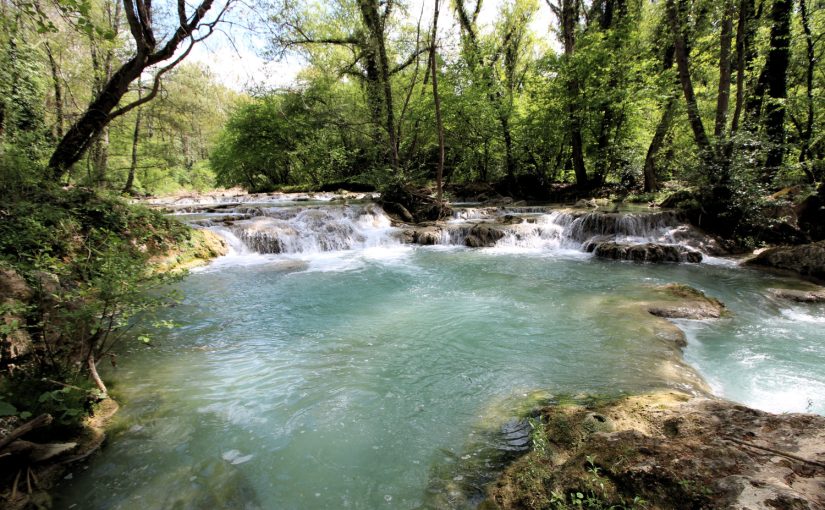
My favorite day trip was to the Elsa river, which is only an hour drive from Florence. The entrance to the river is called “Parco fluviale dell’Elsa o Sentier Elsa” on Apple Maps (which translates to “Elsa River Park”). While my friends and I drove there, there is a bus that takes you directly from Florence to the entrance of the park! I would suggest Google or Apple Maps to determine the quickest bus route. 

What to pack: 

● Swimsuit 

● Towel (to dry off, and to sit on) 

● Snacks 

● Water bottle 

● A camera (you’ll want to take pictures of the gorgeous turquoise water!) 

I’d recommend leaving earlier in the morning so that you can have the whole day ahead of you (this goes for any day trip). It’s nice to get there before the crowds too. Once you get to the entrance of the park, there is a trail alongside the river. It was crowded the day I went because it was so hot, but we walked down the trail until we found an open spot to sit! Just walk the trail until you find a good spot. It’s nice to get there around lunchtime so you can sit down, eat, and then relax by the water for the rest of the day. I spent the whole day here when I went. I’d just gotten back from a day trip the day before and felt like I needed a more relaxing day, but I didn’t want to sit around either. This trip was perfect because I was able to explore a new place, and relax. 

So, if you’re currently studying abroad at FUA, I hope you decide to explore this hidden gem! It’s the perfect escape from the Summer heat, and is off the beaten path of touristy spots.

From Coffee to Espresso & a Few Other Changes

written by Charlotte Cicero for SPEL Journalism

Ciao, my name is Charlotte Cicero. I’m a junior at the University of Missouri, and I had the privilege of studying abroad at FUA this past spring semester. For the past 15 weeks, I’ve been writing for the website you’re currently reading, and for Blending Magazine.

When I wrote my first blog post in January, I threw a corny title on what was pretty much a journal entry. For this final piece, without a corny title and with more structure and a little more wisdom, I want to reflect on some parts of that original post. So here we go.

“I’ve lived in Florence for a little over two weeks now. The adjustment has not been easy, and I think I’m still shocked that I’m finally living this dream that has just felt like some faraway plan for many, many years.”

Now I’ve lived in Florence for nearly four months. I’m not ‘shocked’ anymore, but instead in a constant state of wonder, curiosity, and awe of how much beauty I’ve witnessed in such a short time.

“This transition to Florence feels nothing like my transition to college. I’m still trying to decide if that’s a good thing, and I’m hoping it is. This transition feels almost unreal like I am still in the process of, well, processing.”

It turned out to be a great thing – change is supposed to feel like change. I’ve learned that new and different things create new and different comfort zones. At first, I felt behind my friends, like I was late to have the moment of “I’m really doing it! I’m finding myself in my twenties in Europe!” moment. But instead, I got to experience a buildup of little moments that over time made me realize that I was in my twenties, I was in Europe, and I was on the journey of finding myself. 

“I walk the same streets every day. I can get to the store, the city center, and all my classes without Google Maps. I feel lucky that these streets feel so safe and familiar, but sadly, not like home. Not yet, at least.”

I still walk most of the same streets. But now I play around with different routes, knowing that if I make it to the city center, I’ll always find my way back.

The streets feel safe, and familiar, and they finally feel like home. I walk down my street and wave to Matteo and Alessio, who work at the Virgin Rock Pub. I wave at the owners of Cucina di Ghianda, the restaurant next to our apartment. I high-fived Muhammad, who owns the convenience store next door. They all say “Ciao, Charlotte!”. I don’t know them all that well, but seeing them every day reminds me of the quiet power of human connection and community.

“There’s something special about talking to the same employee at the coffee shop on your street every morning, sipping your espresso (that you’re still getting used to) as you muster up the courage to practice the new word you learned on Duolingo the previous night.”

That person became Sergio at Santa Croce Champagneria, right across from FUA. I introduced myself to Sergio before my first day of FUA orientation, poorly attempting to speak Italian and unaware that he’d remember my name. I’d get my homework done there and spend every in-class break grabbing another espresso (which I’m very used to by now). No comment on my Duolingo streak.

“I think what we all need to remember is to stop moving for a second. Breathe. Look at the Duomo and just breathe. Look at the dark green window panes on the top floor of every street and breathe. Before going out with your friends on ‘Space Wednesday,’ breathe. Staying present is the only way to appreciate what a gift this moment is, right? Because we don’t even have any idea just how good this is all going to get.”

Note to January Charlotte: this paragraph needed workshopping, but I’ll forgive it. Deep breaths are in fact important! I paused to breathe in moments I knew were becoming memories. Like the time I was in Orvieto, having a coffee and journaling, and the man I’d shared a train row with walked by. I wrote in my journal: “A sweet elderly man in a yellow raincoat just walked by with his little dog.” I smiled at him, but he didn’t see me. Every time I think of that memory, I tear up. Not because it was emotional, but because it was ordinary. 

“I’ll see you at the end of the semester.”

Well, it’s the end of the semester. I’ve seen so many beautiful places, things, and works of art. I’ve seen life shift and stretch and swell with beauty, and met so many beautiful people. 

I can’t wait to reread this in six months, just like I’m rereading that first blog post now, knowing I had no idea how good it was all going to get.

So, here’s my last reflection: Keep walking new streets, even if you’re scared to get lost. Keep saying “Ciao” to strangers, even if you’re not sure they’ll remember you. Someday, you’ll look back and realize it was never ordinary at all.

I’ll see you. Don’t stop traveling and live your life curiously. And never stop letting the world surprise you.

The Monster of Florence

“He came up with a perfect plan.”

written by Charlotte Cicero & Guido Togliatti

This blog feature is an exclusive bonus installment to our Spring issue of Blending Magazine. After you finish reading, be sure to explore the rest of the magazine online—just follow this link to download the full Spring 2025 edition:
https://jschoolfua.com/images/BM/BM_151.pdf

Beneath the romantic cobblestones and rolling hills of Florence, Italy, lies one of the most disturbing true crime stories in European history. Between 1968 and 1985, a series of gruesome double homicides occurred in the Tuscan countryside. Il Mostro di Firenze—The Monster of Florence—created a legacy of terror, controversy, and conspiracy, and a decades-long series of unanswered questions.

A Pattern of Death

The first known crime occurred in 1968, though it wasn’t immediately linked to the rest. It wasn’t until a similar attack in 1974 that authorities began to suspect a serial killer might be at large. For 17 years, the murders continued. As media speculation and fear grew, so did the number of victims. 

Il Mostro di Firenze sought out young couples seeking privacy in rural areas and often attacked while the couples were in their cars. Throughout the serial murders, the weapon used was consistently the same—a .22 caliber Beretta pistol. The ritualistic elements in these murders pointed toward a deranged but highly meticulous criminal at work.

Insights from Florence

To better understand the grip this case holds on Florence, we spoke with Fabio Binarelli, a native of Tuscany and professor at The American University of Florence, who offered personal insight into the murders and their legacy. 

Binarelli noted that the killings followed a consistent pattern: the male victim was shot first, followed by the female, who was also often physically mutilated—most often targeting the breast or pelvic region. “That’s what made it feel truly serial,” Binarelli explained. 

The investigation was very complicated. Binarelli explained, “Today everything is on your laptop—but back then, to connect several files of investigation, you had to have one clever investigator who connected places and years with the details.”

Eventually, suspicion fell on Pietro Pacciani, a violent Tuscan farmer with a disturbing history. “The investigation narrowed down to one person specifically and his close circle of friends,”  Binarelli told us. Pacciani had once killed another man out of jealousy and had been known for abusing his wife and daughters. While Pacciani was convicted in 1994, his sentence was overturned in 1996 due to insufficient evidence. 

Adding to the surreal nature of the case, Pacciani created works of art that disturbed the people around him. “Despite being almost illiterate, he had an interesting collection of drawings, and if you see them, they give you chills…” He also wrote poems and read one about brotherhood and love to the court during his trial. “Imagine that,” Binarelli said. “You’re in front of the Supreme Court, answering for eight double murders, and you’re reciting poetry. Something … it’s off.”

Fear, Conspiracy, and Cultural Reflection

The atmosphere in Florence during the years of the murders was palpable. Locals avoided the countryside, and couples were terrified to go out at night. Conspiracy theories flourished—some claiming that Pacciani was merely a pawn for a secret society involved in ritual killings.

Binarelli elaborated, “It was a great opportunity for fictional writers and journalists – they have many conspiracy theories now.” 

American crime writer Douglas Preston famously got caught up in the case while researching in Florence. His book, The Monster of Florence, helped revive international interest, including a speculative link to the Zodiac Killer. Though no solid evidence ever backed this connection, the eerie similarities between the two killers only fueled the fire.

A Lasting Legacy

Beyond the crimes, the case peeled back layers of Tuscany’s cultural identity. “You have the judges: educated Florentines on one side, and on the other, Pietro and his friends, uneducated, rude, and when they were interrogated, they exposed the truths of their places.”

He continued, “Florence is sort of the light in the dark for human civilization. It’s interesting to see this inner struggle in the person of Piaccani, he was a brutal, violent person, a beast, but a beast with creative thoughts. That made him the perfect serial killer.”

Today, the Monster of Florence case remains officially unsolved. An upcoming Netflix docuseries has reignited interest and is set to be available this coming Fall. However, Binarelli says he’s weary about its historical accuracy: “If it’s only four episodes, that’s a lot to cram. I appreciate the artistic reenactment of things, but sometimes they are inaccurate or culturally distant.” 

Most of the tourists who come to Florence for its beauty, art, and history will never know the story that took place in the rolling hills above town. The legacy of Il Mostro di Firenze is a chilling reminder that even the most beautiful places can be harbors of darkness.