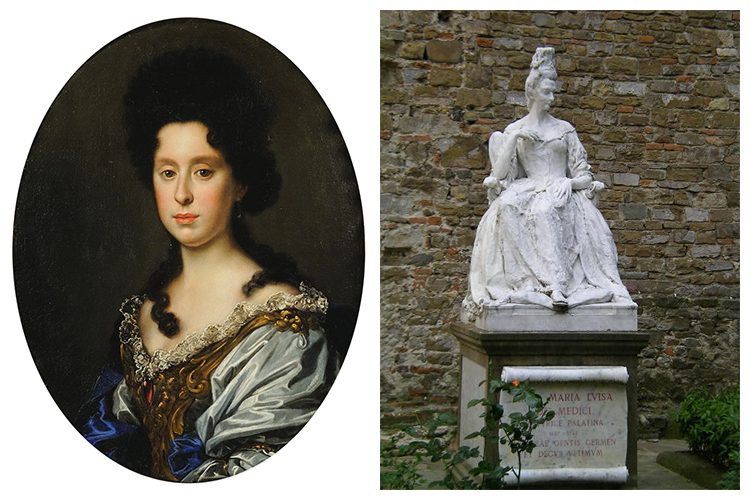
The Legacy of the “Wise Princess”


Photograph on right: by Sailko, distributed under a CC BY-SA 3.0 license

By Gregg Casazza

On the first Sunday of each month Florence opens up its museums free of charge, so why then were you able to stumble into the Uffizi on Feb. 18th without paying? You consult with your calendar, count back the weeks of the month, and are utterly stumped. Perhaps there was some mistake at the ticket counter, have you just snuck into one of the most famous museums in Italy? You hurry into the museum hoping no one will notice that you did not pay, completely unaware of this momentous anniversary.

Each year on this historic date, Feb. 18, the city of Florence remembers one of the most instrumental people in its history, Anna Maria Luisa de’Medici, by opening the Medici museums and tombs free for visitors. The last of the Medici’s, Anna Maria Luisa was a woman made of fire, steel, and an intense love for her country.

Sometimes referred to as “Principessa Saggia,” the wise princess, Anna Maria Luisa is the reason all of the art in Florence remains the property of the city. She was so wise that her own father thought that she would have made an excellent eldest son of the family, and tried to make arrangements for the Medici rule to be passed to Anna Maria Luisa in the case of her brother’s death. This was ultimately unsuccessful, and so after both her and her brother failed to produce heirs, and her brother passed away, Anna Maria Luisa was faced with a difficult decision. She realized something had to be done to ensure that the next family in line, the Lorraines, did not sell the many works of art for which Florence was and is famous for. She saw how this happened to another family which fell from power, the Gonzaga family in Mantua, and so she was determined to make sure this did not happen to Florence.

Anna Maria Luisa spearheaded this cause, and eventually created the Family Pact (Patto di Famiglia.) This formal legislature declared that the patrimony of the art must remain “ornaments of the state for the use of the public,” that would “attract the curiosity of foreigners.” This pact made it so that the art of Florence would forever remain in Florence. This single action ensured the longevity of the city, and has made Florence the destination that it is today. Anna Maria Luisa can be thanked for many things: tourism in Florence, the many museums and their works, music and theatre, and of course study-abroad. As a student, Florence is one of the greatest cities to study in, the universities and the culture offer an experience unlike anywhere else in the world, all because of Anna Maria Luisa.

Anna Maria Luisa is a figure unlike any other in history. Her sacrifices and dedication have made Florence what it is today; the birthplace of the Renaissance, as well as a destination for art enthusiasts and students all over the world. The legacy she left behind is the legacy of Florence as a whole, and although she is only remembered on Feb. 18, her impact can be seen every day in each street and each painting.

See more of Florence and Italy at FUA’s FB, Instagram, and Twitter.
Ciao Italia!

By Michael Lovanne

A study abroad student reflects on overcoming challenges when facing a new culture such as the Italian one and what he has learned so far.

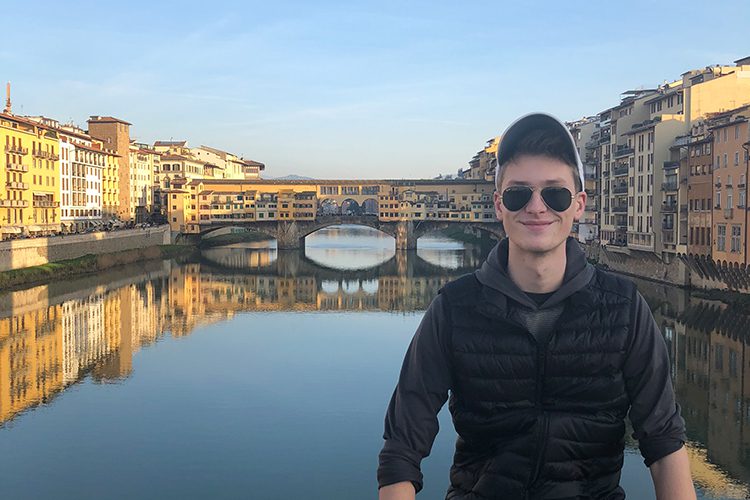
You’ve done it. You said arrivederci to friends and family, left the comforts of your university behind, and have settled into your new life in a different country. Now what? No matter what your expectations of this experience were, you are probably finding yourself a bit overwhelmed with the new sights, sounds, and of course the language of your new Italian environment. I found it a lot to take in myself; I’ve never visited, let alone lived in a place where I didn’t speak the native language, nor have I felt so personally attacked by pigeons or shared an alley with speeding cars and motorcyclists every day. I almost felt reduced to a child again, constantly confused and unsure of what to do and how to do it right. However, over this last week I’ve come to the realization that if this is where I chose to live for the next 3 months of my life, I might as well live it properly. I’ll admit my accent is terrible and I am nowhere near fluent, but it’s important to focus on small steps, i.e. making an effort to learn courtesy phrases like ciao, grazie, prego and buonasera. Thanks to these efforts, I have already felt more at home and comfortable with my surroundings. I’ve explored, purposefully gotten lost, tried new foods, and have fallen more in love with Florence and Italy after every passing day. So, my advice to you in your new home is to take your time, avoid tourist spots in favor of exploring the city for yourself, and most importantly, live how the locals do!

See more of Florence and Italy at FUA’s FB, Instagram, and Twitter.
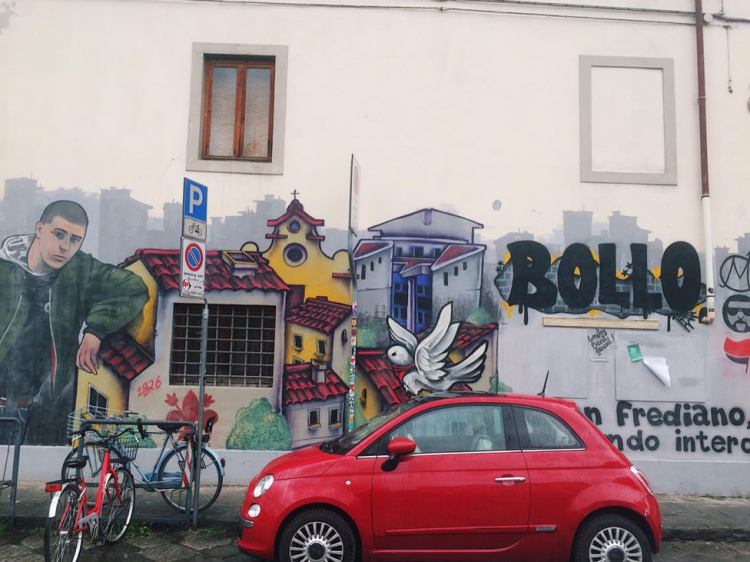
The Porta San Frediano and its close-knit community

Photo by Author

By Gregg Casazza

Walls are built to keep people apart, but in the small borgo of San Frediano it seems that this wall actually brings the community together.

Between 1332 and 1334 the Porta San Frediano was constructed. This gate acted as an important route between Pisa and Florence, allowing travellers to access the city through the gate in the sixth city wall, and enter the Oltrarno quarter. Nearly 500 years later, this gate is still a functioning access point to the city, however, unlike many of the standing gates, much of the connected wall remains. More remarkable than this is the veneration the community around the wall has for the historic culture of this gate.

In a city like Florence, the birthplace of the Renaissance, it should come as no surprise that those who walk its cobblestoned streets appreciate and respect the history of the city. Perhaps nowhere in the city is this as true as in the hidden treasure of Florence, the Oltrarno quarter.

The “other side of the river” (the Arno) as it is sometimes called, is home to many artisan shops, and is too often overlooked by the casual tourist. The borgo (borough) of San Frediano is especially connected to its historical roots, and to the roots of the Porta San Frediano. It seems in many ways that the gate which watched over the borgo for centuries now acts like a friend or a family member within the close knit community.

Locals can be seen hanging out by the wall. They leave flowers at its base, and in the alcoves of its stone exterior. Bright orange carnations pepper the ground, and stand out on even the dreariest of February days. A likeness of the gate is painted in stylistic purple on the outside walls of Da Simone la buticche del lampredotto, and a massive multicolored mural depicts the wall, the borgo, and states “San Frediano, il mondo intero” (San Frediano, the whole world) to all who enter the small borgo.

The wall acts as a sort of keystone for the community, holding the community together. Whether you sit in any of the small cafes nearby, or try some traditional cuisine at Trattoria Sabatino, the Porta San Frediano can be seen, watching over and protecting the community all these years later. During Notte Bianca, one of the famous festivals held in June in San Frediano, the community gathers for a long night of fun and music. During which, the focal point for many is the Porta San Frediano, which has lights and designs projected on it while locals partake in festivities from 9pm to 2am.

When something is part of a culture for so long it is easy to forget its importance. This is how history is lost, and how stories are forgotten. Thankfully, the people of San Frediano are keeping this part of their history in the forefronts of their minds, and still see an importance in this ancient wall.

See more of Florence and Italy at FUA’s FB, Instagram, and Twitter.
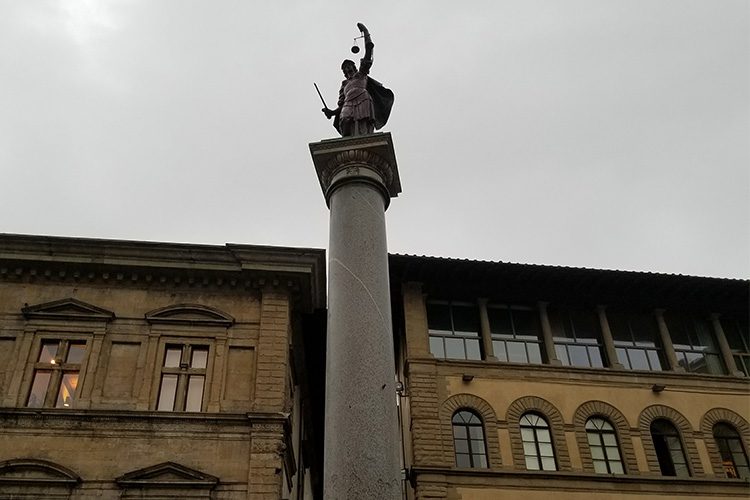
The Column of Justice

Photo by Author

By Valerie White

A Roman column stands surrounded by designer brands in the center of Florence.

The Column of Justice in piazza Santa Trinita is one of the many great works of art in Florence.  Unfortunately, it receives little tourist attention, despite being at end of the famous via Tornabouni. Along this road are a myriad of designer and luxury stores that attract tourists from all over; wealthy or not, everyone can window shop. In piazza Santa Trinita the luxury brand stores with their extravagant displays are contrasted with the Medieval and Renaissance architecture of several palaces from Florence’s history. Overlooking this juxtaposition of contemporary fashion and historical architecture is the statue of Lady Justice, stoically watching as the city evolves around her.

The Column of Justice is the largest Roman column in Florence. Atop it stands a statue of Lady Justice, carved out of porphyry stone. The column has two mates in the city, the Column of Peace in piazza San Marco and the Column of Religion in piazza San Felice; neither of which have statues atop them.

The Column of Justice was originally found in the Baths of Caracalla in Rome, but was moved to Florence in 1563 as a gift from Pope Pius IV to Duke Cosimo I de’ Medici.  The journey from Rome to Florence took almost an entire year. It was also attacked several times along the way by Turkish pirates.

The statue atop the column was originally a wooden replica until the current porphyry stone was created. At the time it was carved, porphyry was one of the hardest materials known.  It was an incredibly difficult material to work with for this reason and was carved by expert porphyry sculptor Francesco del Tadda and his son Romolo del Tadda. It took them eleven years to carve the statue to completion, and it is carved from six different blocks of porphyry that are held together by copper linchpins.

The Column of Justice was just made viewable again after a period of restoration.  Lady Justice had noticeable wear and even some holes in her cape before the restoration. But now she is looking impeccable as ever!

See more of Florence and Italy at FUA’s FB, Instagram, and Twitter.