By Alma Limon
This week’s “I Wish I Was There” podcast features a major Fiorentina professional soccer trophy victory in 1940 that changed the game for Florence’s home team.
By Alma Limon
This week’s “I Wish I Was There” podcast features a major Fiorentina professional soccer trophy victory in 1940 that changed the game for Florence’s home team.
By Lauren Miller
We’re thrilled to introduce our new blog sound bytes featuring original podcast content produced by the FUA Broadcasting New Media course! In the “I Wish I Was There When…” series, FUAers present about landmark moments for the city of Florence told firsthand. In this inaugural radio story, we reveal how the first piano was invented in Florence in the 18th century by Bartolomeo Cristofori.
Music credit:
Table for Four
Written and performed by CrusaderBeach
By Emily Entwistle
Italian culture includes many artisan traditions, crafts, and skills. The globalized world can make it hard to preserve such traditions, which are important to maintain and practice traditions.
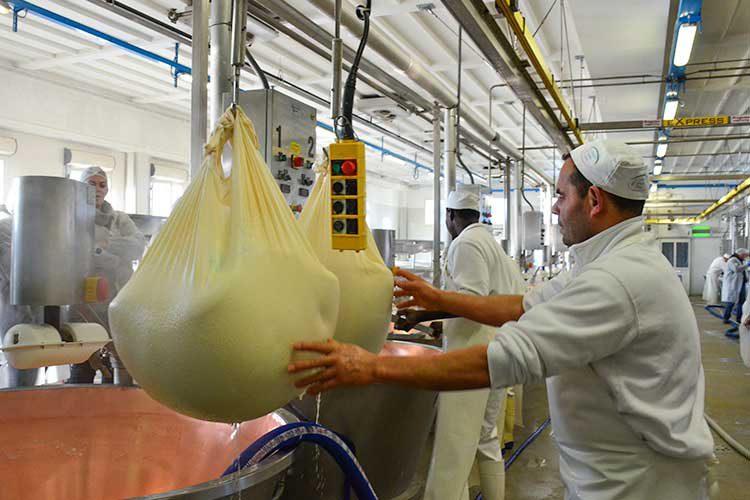
As part of my time in Florence I have learned about many unique, artisanal food processes. I’ve even visited production facilities in Modena and Parma for a field learning activity. The simple but lengthy processes that these artisans use to produce cheese, balsamic vinegar, and prosciutto are impressive. The extra care and time it takes to organically produce these foods seems like a challenge, but they are worth it. The rules, regulations, and standards set for these producers could seem like a bureaucratic nightmare, but they are implemented to insure that producers stay true to the craft.
There are aged balsamic vinegars that are 20, 50, and even 100 years old. The D.O.P. balsamic vinegars take an extremely long time to age, and once every year they move the balsamic from one wooden barrel to another. Consider also that there is such a huge difference between Parmigiano Reggiano and parmesan. Real Parmigiano Reggiano is aged for a minimum of 12 months, and according to most, the best is 22 to 24 months old. Making artisanal products is a waiting game. For prosciutto, producers add salt and wait. For Parmigiano, they add salt and wait. To make balsamic vinegar, they put the grape juice in a barrel and wait. The key is patience, and when the item is finally ready, it is amazing to say the least. Producing these foods is even a year-round job. Parmigiano Reggiano producers for example work every single day of the year, even on holidays, to keep their process completely natural and authentic.
While a higher cost of these products may seem too high for some people, buying quality foods is extremely important. Not only are they better for you, but they support the special skills of smaller producers. And the food is worth the extra money for the taste alone. After directly visiting production facilities, I have gained a greater appreciation for the craft of food artisans.
By Aidan Loughran
Whether you’re packing for a semester, quarter, or single short session, these suitcase-slimming tips come in handy for everyone and may even provide a head start to making new discoveries at your destination.
As I was preparing to depart for Florence to study abroad for a semester, my main concern through the pre-departure process was how and what I was going to pack. A semester is a long time to be away from home and it is hard to know what will be needed in a new country that you’ve never been to. I know myself fairly well and I knew I would over pack, but I also don’t want to leave anything behind that I may potentially want to wear. Once I started filling up my suitcase, I realized that there were many things I wouldn’t wear and by limiting myself, I ended up packing much lighter than I originally would have. Here are three main tips you may find useful while packing.
1. Slim Down: Buy Vacuum-Sealed Ziploc Bags
These bags saved my life! While I had a decently large suitcase, being a girl, I still packed more than I needed (of course!). I was able to fit about ten, thick sweaters in one of these bags and it shrunk them down a crazy amount. It took up very little space and made ten sweaters look like two.
2. Remove When in Doubt: Toss Any “Maybe” Items
When packing, I have always had the problem of packing “maybes” or “options.” By this I mean packing clothing items that I think I may want to wear, but usually never end up doing so. DO NOT bring these items. You will not end up wearing them. If you don’t wear them at home, you won’t while abroad. Limit yourself.
3. Buy There and Make New Discoveries
Unless you are going to a country that has little access to grocery stores, pharmacies, salons, etc., do not buy your toiletries in advance. It is a waste of space and you can get anything abroad that you will need. Sure, bring along that face or hand cream from your favorite niche brand but otherwise wait to buy items such as mascara, eyeliner, and hair products until you get to your country. Florence for example has Sephora, salons, beauty stores, and interesting local brands. For the guys, there are bespoke barbershops and well-stocked men’s sections at stores. Checking out what’s available can also lead to local discoveries, such as the antiche farmacie, the historic pharmacy shops that produce their own collections, or contemporary perfume makers that you’ll only find in Florence.
I hope these tips will provide you with a simple, easy and slimmed down packing process. Enjoy!
By Steven Scaglione
Sometimes the well-traveled roads lead to unexpected finds, such as the Sammezzano Castle that is at the center of a movement to save a now-abandoned architectural gem.
After stepping out of a two-story charter bus in little Leccio, Italy, I took a breath and surveyed my surroundings. I was at The Mall, which is not a luxury shopping mall but a luxury shopping “destination,” specializing in high fashion brands like Salvatore Ferragamo, Burberry and – maybe more fittingly named – Billionaire started by Italian entrepreneur Flavio Briatore. Though the stores would not open for another 20 minutes, already a line of eager shoppers had neatly queued in front of the Gucci and Prada outlets, talking among themselves with an electric excitement. Soon they would be pulling green suits and bright dresses from the racks, but I would not be among them. I was headed for a different kind of treasure: Sammezzano Castle, only a short hike away.
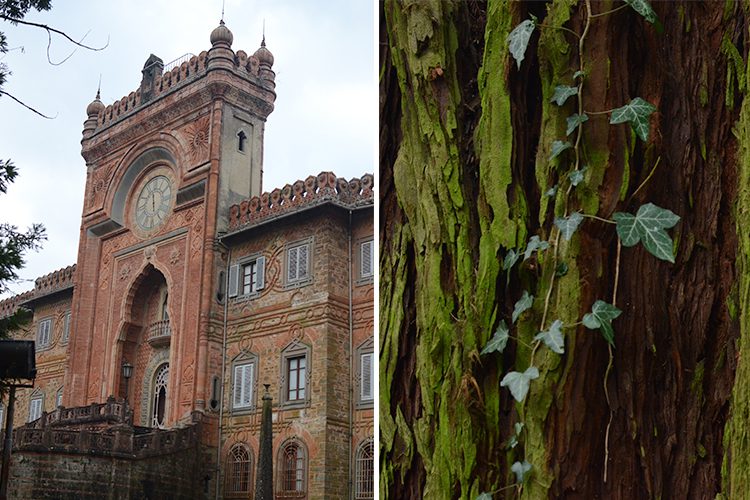
The castle lies at the top of Sammezzano Park’s central hill, overlooking the town below like a silent, stoic patriarch. The park is home to many exotic species of plants, including the species of giant sequoias native to California. One of them, known as “Sequoia Gemella,” or the “Twin Sequoia” in English, is more than 8.4 meters (27 feet) in diameter and 50 meters (164 feet) tall.
From the outside, the castle’s Moorish-style architecture is a mix of Spanish, Arabic, and Oriental influences. Inside “La Sala dei Pavoni,” or “The Room of the Peacocks” in English, is arguably its most beautiful feature, with mosaics of every color stretching from floor to ceiling.
Unfortunately, the castle is currently closed to the public, falling victim to littering and vandalism. One organization, Save Sammezzano, has been fighting to preserve and protect the now abandoned castle and surrounding park. A petition by the group ended with over 30,000 signatures, but the castle is now privately owned, making it difficult for the municipal government institutions to safeguard it. The future for any restoration is uncertain, but the cause has found great support on social media. For now, the castle remains as it has been for many years, the hands on its clock stopped at 11:28, waiting for the day they might turn again.
By Abby Moran
Embrace the uncomfortable, enjoy the bewilderment of studying abroad.
Studying abroad may have been the most difficult thing i have ever done. 21 years of figuring life out, myself out and now a new culture is an incredible adventure. To step away from all that is familiar, to acknowledge that you will get lost mentally, emotionally, and physically but all of this will make you grow in ways you could never imagine is daunting. After a couple weeks in Florence, I am less afraid and regaining pieces of myself I thought would be lost back home forever.
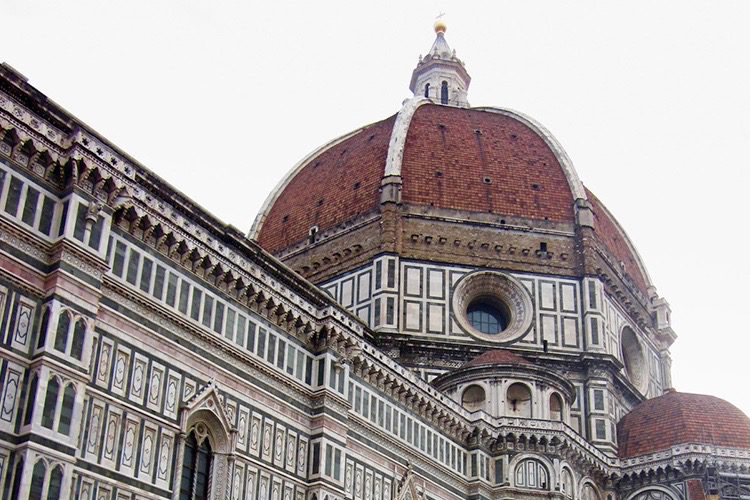
Being in a situation where in order to save time, effort, and my roommate’s energy involves being outgoing, assertive, and confident in new situations has turned out to be the absolute best scenario. I love it. I love walking in the rain here. I love the puzzle of streets that could lead anywhere but often times lead me to the Duomo, that I’ve come to see as a safe haven. I love the different languages filling my ears. The uncertainty of who and what can be encountered around the next corner. Gucci, Prada, Valentino, your shop windows bring a spark of life to my longest walks. Even in the most unfamiliar places we find objects to cling to, people to relate to, and places to become accustomed to.
Home is truly where the heart is and when we open our hearts to the culture and lifestyle of others we are given a priceless gift. Be scared, intimidated, and get completely lost because it is there, in this state of initial uncertainty where we find our strength. Find your home away from home is what study abroad offers, despite the voice in your head that says “but it will be hard.” It’s often said that nothing good comes to those who wait, so let’s proactively reach for that which seems the most intimidating. Find your landmark, in my case the Duomo, and learn something about it instead of just passing through the piazza.
Don’t shoot for the stars, shoot for the Duomo.
By Jess Pitocco
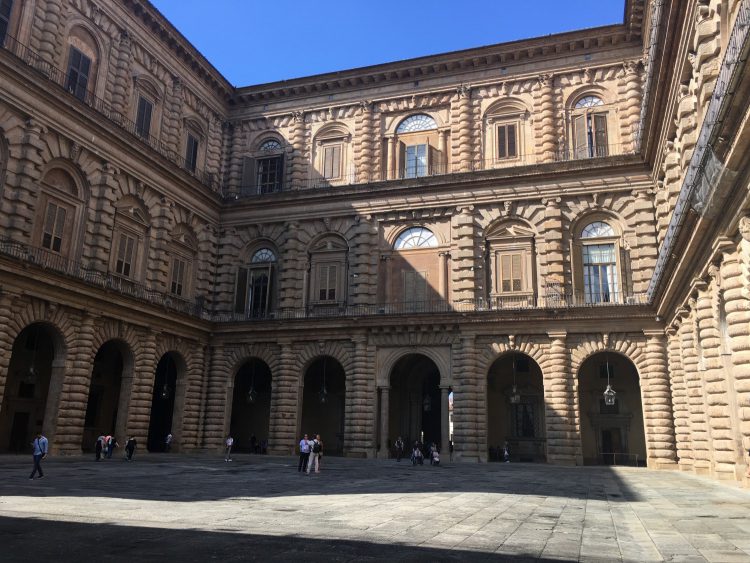
Since January is the coldest month of the year in Florence, it may seem difficult at first to find indoor things to do that don’t include the Uffizi Museum. The city however is full of great indoor activities, here are some ideas of things to do to stay out of the frosty weather.
Obviously, these are not the only indoor activities to do in Florence: you can see a movie at the Odeon Theater or even take a single cooking class at FUA’s culinary department facilities. However, these piazzas, streets and museums offer a range of possibilities for a lazy afternoon on a cold day in Florence. Take the time to explore new museums and places, and don’t forget to bring a hat and scarf!
By Caroline Angelini
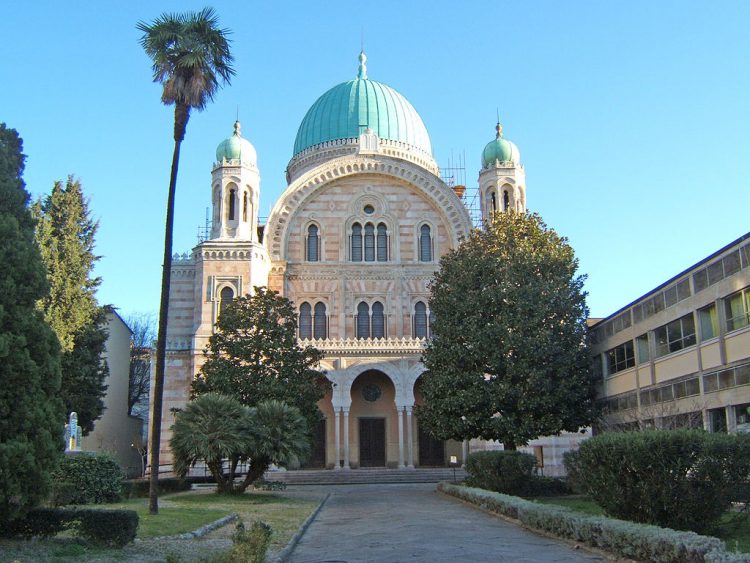
Though Italy is a predominantly Catholic country, its religious landscape represents other traditions as well. The relationship between the Jews and the city of Florence dates back hundreds of years, and this community is one of the focal points discussed during the FUA course “Shoah: The Holocaust in History.”
This course, taught in Fall 2016 by Valentina Nocentini, focuses on the history of the Jews, specifically in Italy, and how their treatment eventually led to the the Holocaust. To give her students a better grasp on exactly what happened to the Jews in Italy during the Holocaust, Prof. Nocentini brought her students to the Tempio Maggiore, or the Great Synagogue of Florence. Based on the experience and how it helped to contextualize the treatment of Jews in Italy, students wrote a reflective assignment as an outcome of the visit.
The Synagogue dating to 1882 is truly breathtaking. The intricate detail of the hand-painted walls, and the ornamentation of the women’s balcony were like nothing else that students had witnessed both in Florence and beyond. The mosaics and frescoes are reminiscent of Christian art, but have their own character that makes them unique to the Jewish culture of the Synagogue.
While the artistic ornamentation was magnificent, the mood that most students had while in the Synagogue shifted once they reached the museum. The Synagogue separates a portion of its space dedicated to the Florentine victims of the Holocaust. There are stone slabs with each victim’s name and videos depicting the lives that they carried out while being exploited during the Shoah. “It was something difficult to experience—the contrast from first seeing the beauty and grandeur of the Synagogue to then learning about how the Jews were treated during the Holocaust,” commented student Emma Dunleavy.
The visit to the Synagogue helped the students of the Shoah course gain a deeper understanding of the past lives of Jews in Florence. It also provided insight into how Florentine and Italian citizens in general aided those in need of protection especially during WWII, which gave students food for thought as they themselves experience daily the hospitality of a foreign host city with whom they must forge a new relationship, one day at a time.
To visit:
The synagogue is located in Via Farini 6, near the Sant’Ambrogio church. Details about visiting hours, synagogue history, and much more can be found on the website of the Jewish community of Florence – moked.it/jewishflorence
By Karla Silva
I grew up in a Brazilian family – we live and breathe soccer. It is like a religion. My parents would set their lives around a soccer game, adjusting their work schedules to watch an important match. There was no such thing as DVR to them– the game always had to be experienced in real time. Soccer games were a time of celebration, where family and friends got together. It was one of my favorite things growing up. And to see that embedded in the Italians, especially the Florentines, is a way to reconnect to my family.
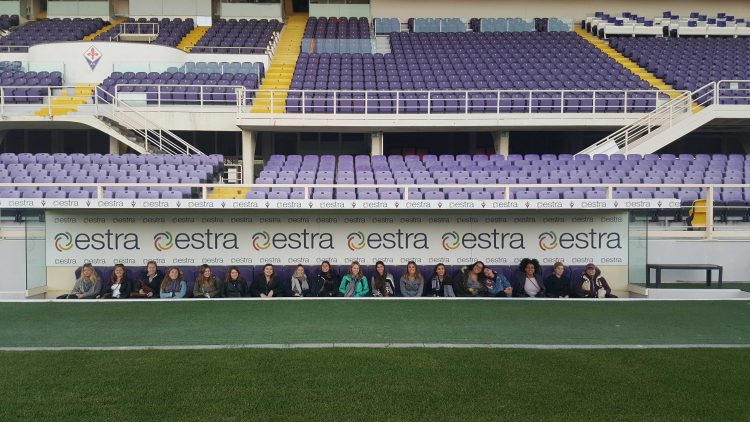
I recently had the honor to go on a special tour of the Stadio Artemi Franchi, home of the ACF Fiorentina soccer team thanks to my Writing for Digital Media course at FUA. You can feel the pride of the stadium’s management team as you walk through the VIP entrance, with its bright white walls and the elegant symbol of the team adorning them: a purple fleur-de-lys inside a gold-lined diamond.
We quickly made our way to the media room, where the press gather together after each match. You can imagine the intensity of representatives of different media outlets fighting to get their questions asked, one jumping over the other to get their burning questions asked for their article.
It takes a lot of work to get a team popular enough for there to be a need for the media room, let alone an audience to watch the game, and we have the team’s Digital Media department to thank for that. To get the word out via countless social media channels and put out content that will appeal to fans of all ages isn’t an easy task. It takes hard work that many do not realize. It made me wonder how much effort truly goes into getting a game to run smoothly, or to construct a large fan base for the team as we make our way out of the media room and into the stadium itself.
I’ve always felt that the locker room is a sacred place for the players. It’s where they get ready, prepare for the upcoming match. They talk strategies, spread words of encouragement. It’s their home. Their private space. And entering that space allowed us to see a personal side that no other fan is able to see. It felt like we were in on a secret that everyone wanted to know.
The Florentines value the sport of soccer, which goes hand in hand with family. It’s impossible to walk down the streets of Florence without seeing a splash of purple here and there. To have the opportunity to walk on the field that the Florentines value so much was an experience I’ll never forget. Though the stadium is on the smaller end, seating around 45,000+ fans, it felt expansive underneath the glowing setting sun. Back home, whenever there was a game, it was always a party. Family and friends, friends of family and even neighbors get together celebrate. The spirits are always high, the energy constantly flowing.
Seeing the stadium empty and quiet, was a new feeling for me. You visualize the loud and high energy of a full stadium in comparison. The lack of cheers and chants made the stadium seem almost peaceful, like the quiet before the storm. We were even given the chance to sit on the players’ bench, which was the perfect end for our visit. Being able to experience the field from the player’s angle was unforgettable, a viewpoint that only a certain select few get to see.
One thing that I noted during our visit was the amount of people it takes to operate the stadium. The fans don’t always know, and neither did I, that the game consists of so much more than just the players. From the coach to the stadium manager, the commentators, the digital media specialist, even the workers who keep the field in top conditions – all of these individuals support the needs of the players and the game itself. The backbone of the stadium is just as important as the team.
I am forever grateful for this opportunity that I have been given. Soccer is a big part of my life and to be able to walk through the inner workings of a stadium and witness how the entire range of stadium workers connect to put on an amazing game for fans was a unique experience that I will cherish.
By Jess Pitocco
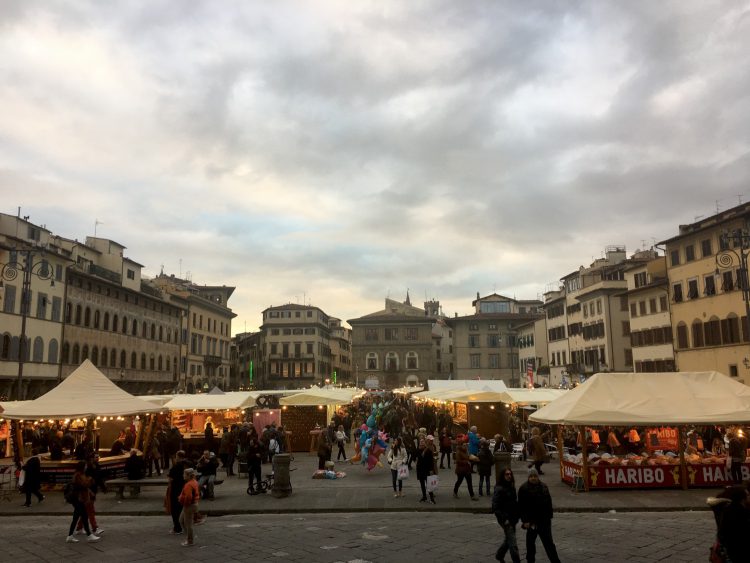
I have only a few days left here in Florence and I am starting to panic. What have I missed? What else can I do? What sights have I not seen? How can I make the most of the short amount of time I have left studying abroad? I know everyone says that time flies by, but I don’t think I really understood that feeling until now. As cliched as it is, I do feel as though this semester went by in the blink of an eye. So how do I savor the tastes, views, and people of Italy with a short amount of time left? After brainstorming, I’ve come up with some solutions for when it feels like it’s too soon to go home.
I am realizing how important Florence has become; it has been such a huge part of my college experience, and I will miss it tremendously. I will miss complaining about the steps on the way to Piazzale Michelangelo, I will miss getting a gelato at La Gelateria dei Neri, and I will miss walking in the shadow of the Duomo and Palazzo Vecchio every day. However, I can’t dwell on how much I will miss a place while I’m still here; starting to miss Florence while still living in Florence is a paradox of the mind that I am not interested in traversing. For now, I will live in the moment and give myself the opportunity to make as many positive, fun and awe-inspiring memories as I can in my final days here.