By Monica Humphries
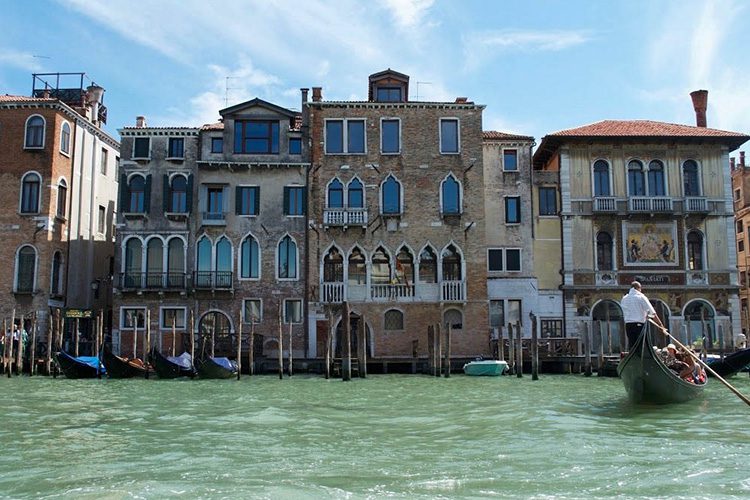
Venice is full of little nooks and crannies but often the beautiful, wider bodies of water are overlooked. This shot was taken from a gondola. The contrasting blues from the water and sky along with the architecture of the buildings and windows captured my vision of Venice. To fully understand Venice you have to be on the water, which is why it was important for me to have a photo from a lower perspective and angled up towards the sky and windows.
Travel Tips:
Known for its gondolas and seafood, Venice feels like a must-do if you’re spending your summer in Florence. But when I opened my map and my budget, I had to ask: one day or two?
Venice is a small city made up of over 100 islands, and although it may seem small from the scope of a map, there’s a lot to do in Venice. Highlights of Venice include watching glass blowing in Murano Island, taking a gondola ride, viewing the contemporary art museums and sipping a Bellini next to the water.
With Venice being so small, one of its challenges is finding a place to stay. If you’re on a student budget there aren’t a lot of options within the city. However, just outside the city there a quite a few places with differing budgets. You can find everything from a typical hostel to a campsite. So pick a place and factor the added time a train ride to the city will take.
Also consider price. Venice is known for luxury. Being a college student, it might be a little more difficult to spend €80 on a boat ride or €30 on dinner. It’s important to consider food and activities when making a decision on how long to stay.
Finally, know what you want to do. Are you planning on getting there at the crack of dawn and staying to see the sunset? Will you venture to any of the farther islands? Are touring the churches important to you? In order to know what you want to do, you have to know a little about the city. Venice is known Biennale, a six-month art festival. Each year it switches between art and architecture (this year is architecture), and it’s held from May to November. But even if you don’t go during festival months, there’s always an open contemporary museum to discover. Another favorite form of art for Venetians is food. Being on the water, indulging in seafood is a must. Outside of seafood, Venice has wonderful Tiramisu, pasta and drinks to enjoy. Finally, Venice is home to Saint Mark’s Basilica. This and a huge piazza are in the heart of the city. You could spend weeks in Venice and still have a full list to do, so if you’re planning on going just for a day, do your research and make a list of the key things you want to get done.
In a city so beautiful you can spend as much or as little time there. I spent only the afternoon, but I felt rushed. I wish my trip could’ve been more relaxed and the commute not as long, however I was satisfied. Just know that you might not accomplish everything in a single day, but you’ll get a wonderful taste of the city.
See more of Florence and Italy at FUA’s FB, Instagram, and Twitter.