written by Ashley Rodio for SPEL: Journalism
Neighborhoods. Something both Denver, my home city, and Florence are all composed of, yet have such different meanings. In Denver, a neighborhood is just where you live. Maybe you are attached to a certain local food joint or park. But in Florence, a neighborhood is where you live. There is an intense sense of pride that comes with the neighborhood you live in as a Florentine, and it’s apparent in every aspect of life. They have personalities, different charms and offerings to locals and tourists alike.
Santa Croce
I live in the Santa Croce neighborhood. It’s my beating heart of Florence, and I can feel the pulse in everything. Below my apartment lays a square of restaurants, vibrant as ever but only at night; it waits to come alive. I hear words in every language, see people of every decent, and smell the vast arrays of cuisine on display. Here lies the Santa Croce Basilica, where I pass on my way to class everyday. I have seen proposals, polo matches, and every celebration under the sun. I sit on the stoop with the painter who lives next door to my apartment. We sip cappuccinos and pet the dogs that trot by, and he tells me about his life in Yugoslavia.
Santo Spirito
I could never write enough about the Santo Spirito neighborhood, the area I frequently brave the cross-river trek to enjoy. My favorite tradition, Sundays in front of the Basilica di Santo Spirito, stems from this neighborhood. At the Sunday market I meet the Florentine vendors. I hear the stories of the lavender man, with fields long spanning the Tuscan countryside. He shows me the lavender soap covers his wife spends hours making. She couldn’t make the trip to the city. The Santo Spirito neighborhood holds the esteemed Pitti Palace, the Boboli gardens sprawling along the rear. I leave this place with a sore neck for days, as I can’t tear my gaze away from the intricate ceiling artworks in the Palace.
Santa Maria Novella
The neighborhood that first greeted me when I stepped out of the train station: Santa Maria Novella. My first introduction to the city I have been calling my newfound home. It stretches beyond the Arno River’s right bank, fitting, as the neighborhood flows with art and culture. Florence’s main exhibition center lies here, forming the Palazzo dei Congressi, the Palazzo degli Affari and the Fortezza da Basso. In front of the Basilica of Santa Maria Novella, the keeper of medieval renaissance art, I sit on the curb and sipped cappuccinos. I watch locals and tourists alike flit by. A new perfume aroma fills the air, presumably from the perfumery. Here, I feel peace.
San Giovanni
The San Giovanni neighborhood, the real beating heart of Florence. The neighborhood with, arguably, the most tourists. This isn’t a bad thing. I watch people who have spent their entire lives saving to experience the Cathedral of Santa Maria del Fiore, mouths agape as they take it all in. The marble of the cathedral gleams as I pass by. I can never take enough pictures. I hear children laugh as they go round and round on the carousel in the historic Piazza della Repubblica. At night it comes alive, with music filling my ears and lights lining the streets.
The first time I really understood the neighborhood pride of Florence was during Calcio Storico, the classic Florentine sport. While violent, the game brings local comradery to light, displaying long fostered honor to the tourists. The parade, held before the first Calcio Storico game, marched through the piazza while I was on my way home. I remember being frozen, so intrigued by the chants, the Italians dressed in their neighborhood colors. Reds, blues, purples flash by, people from the streets joining in. Flags waved, and young children ran alongside their parents, gleaming at who they might one day become. It was incredible. Although I am an American, I was so proud of these people and what they were standing for. It was more than just a game, it was family ties.
I may have only lived in Italy for a couple of months, but the importance of the Florentine neighborhoods has become increasingly prominent to me. This pride, these charms, are irreplaceable, and I’m so lucky to have experienced a piece of each location.
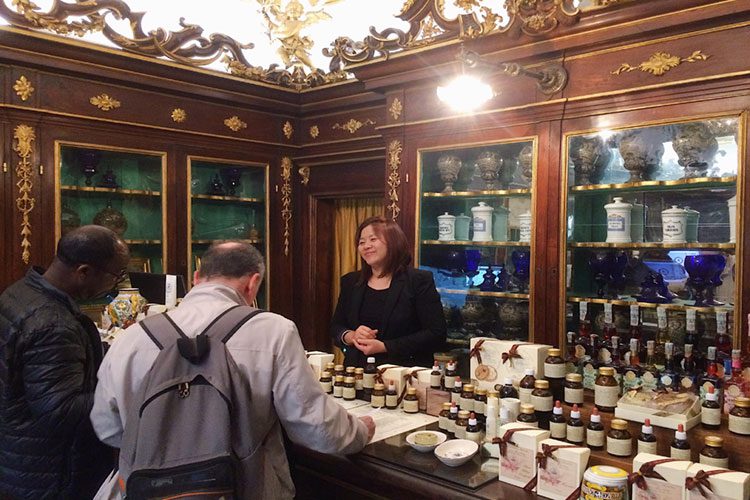 Photo by author