I Wish I’d Been Here When: My Home Was a Nunnery

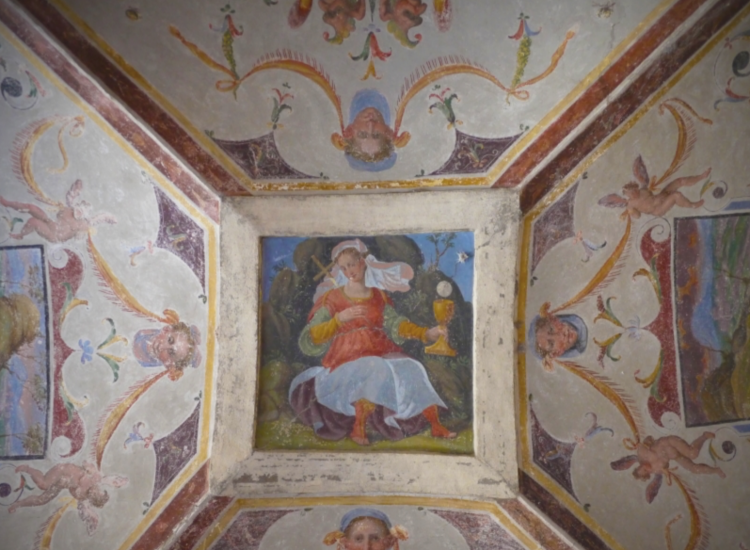
Artwork from my apartment’s walkway depicting angels and other religious imagery. Image courtesy of apartment building.

By Isabel Pellegrino

My apartment used to be a convent dating back to the 15th  century. I can’t help but wonder about the way the nuns lived here. I wish I was able to go back in time to better understand their lives and how they perceived Florence and its future.

I wish I had been in Firenze when nuns gathered in my apartment’s kitchen. In the 15th century, my apartment was a convent. It is hard to picture this space as home to a religious community. While I try to embrace the Italian culture in all of it’s beauty and class, I am not sure the way I live could ever be compared to the grace of a Renaissance nunnery. Yet, here I am. Through an old wooden door, rod iron gates and a few flights of stone stairs, you will find us cooking and practicing our Italian; sometimes we feel like it’s the best we can do to connect with those who occupied this space before us.

During the 15th century, Florentine convents were evolving from small communities to large institutions, according to historian Sharon T. Strocchia in her book “Nuns and Nunneries in Renaissance Florence.” It became common practice for highly- educated unmarried women to congregate in convents. As a result, nunneries became hubs for research, academic dialogue and political influence. As I sit at the kitchen counter of my apartment, I dream of traveling back in time to speak with these women. I can see them now gathering around tables with their noses in books and crosses around their necks. Question after question would flow from me: What is it like to be women leaders of a religion often dominated by men? What do you see your legacy as? What does Firenze mean to you and your faith? How can I honor your lives in my time?

But more than anything else, I wish I had the chance to roam the Florentine streets with them and see the city through their perspective. In the midst of the Renaissance, I wonder how they felt about the art and how it influenced their faith. I wonder if they had any idea of what the convent space would become in the centuries afterwards. While I will never have a time machine during my fleeting few months in Italy, my roommates and I have pledged to take time every day to be grateful for our apartment and our lives in Italy. When we sit around our dinner table and discuss culture, religion, politics and philosophy, it’s almost as if we have been transported back in time by the everlasting art of conversation. I like to imagine the nuns doing exactly this, just centuries ago. Our apartment bridges our times together. So maybe, we aren’t all that disconnected after all.

See more of Florence and Italy at FUA’s FB, Instagram, and Twitter.
Farm to Table Focus: Vivanda

Photo courtesy of FUA

By Anastasia Finney

A typical student living in Florence has likely already seen many of the famous sights, tasted their fair share of Italian food, and interacted with a good amount of locals. However, classes at FUA often include field learning sessions around that city in order to take students off of the usual pathways and into experiences they might have otherwise missed.

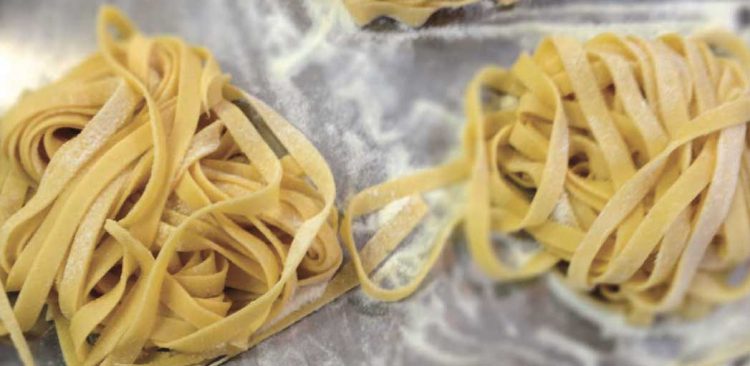
During the “An Introduction to Italian Food Traditions,” taught this past fall semester by Prof. Cecilia Ricci, students often incorporated real food experiences into their learning. Rather than simply receiving long lectures about the food and culture of Italy, the class conducted tastings, cooking projects, and visits to relevant food locations in the city. One such visit took place at a local restaurant in order to analyze fresh pasta. Before embarking to Vivanda, the students first learned about the differences between and characteristics of fresh and dry pasta through a lecture component in class.

Vivanda is a small and cozy restaurant located in Oltrarno, on the other side of the Arno River. It prides itself on organic ingredients, natural wines, fresh pasta production happening right in the restaurant, and options that can please meat-eaters, vegetarians, vegans, and gluten-free people alike. At the restaurant, the class was given three types of pasta to taste: gorgonzola gnocchi, traditional spaghetti, and ricotta and spinach ravioli. They were also served Arialdo wine with the meal.

Student Nick Tyndall shared that the tasting helped his understanding of Italian pasta traditions. “The restaurant had an authentic and inviting ambience, consistent with the best establishments I’ve visited in Florence,” said Tyndall. “We got to see how the staff made the fresh pasta and learned about the company’s food philosophy. The pasta was probably the best I’ve ever had.”

The class had time to enjoy and experience both the food and setting, while also listening to the owner talk about the restaurant. Professor Ricci also talked with the class during the visit about the food tasted and the way it paired with the wine. The students were encouraged to think critically about what they were consuming, in regard to production, presentation, and longstanding Italian traditions. Naturally, the group also got to enjoy the conviviality of delicious food too.

Experiencing a guided tasting in close contact with industry professionals gives a different perspective to daily activities that we all experience, such as trying new restaurants. “I wouldn’t have even known this restaurant existed without this class,” said Tyndall. “Now I definitely want to go back for a full meal!”

Vivanda
Via Santa Monaca 7 (between Pz. S. Spirito and Pz. del Carmine)
For further details visit the restaurant’s website.

See more of Florence at FUA’s FB, Instagram, and Twitter.