Lived Moments

written by Valerie Tiscareno for Special Project: Experiential Learning in Journalism

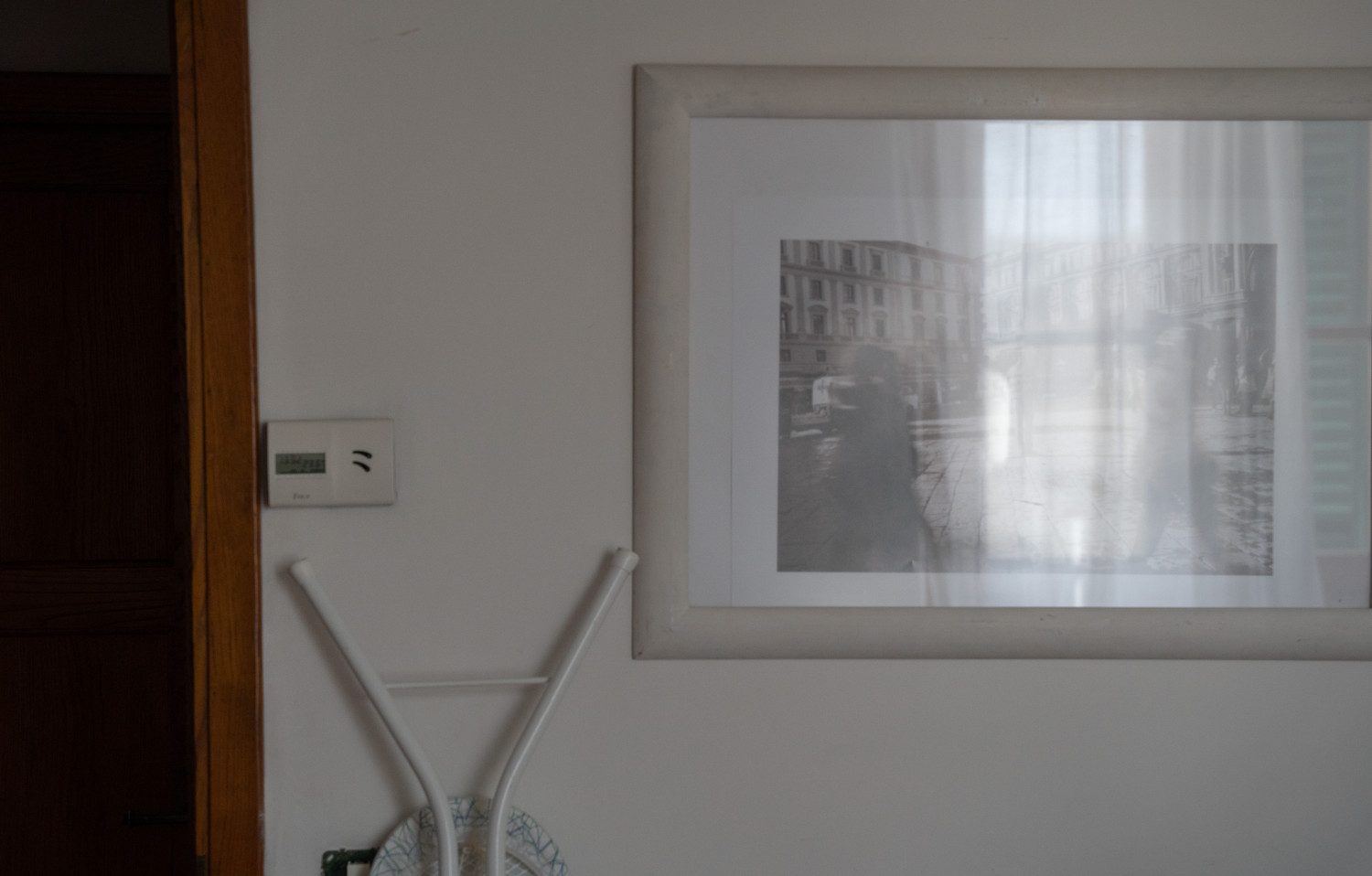
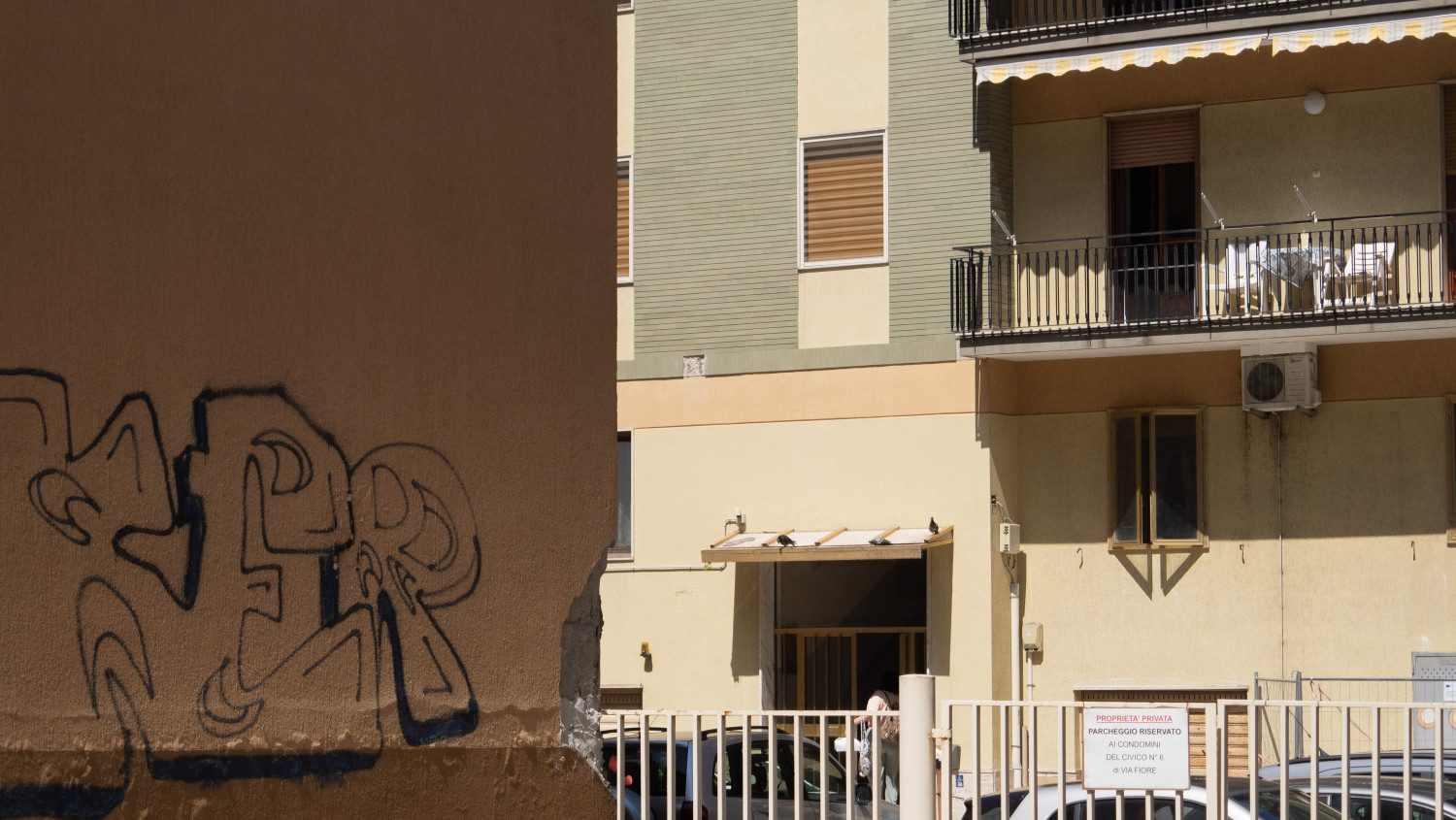
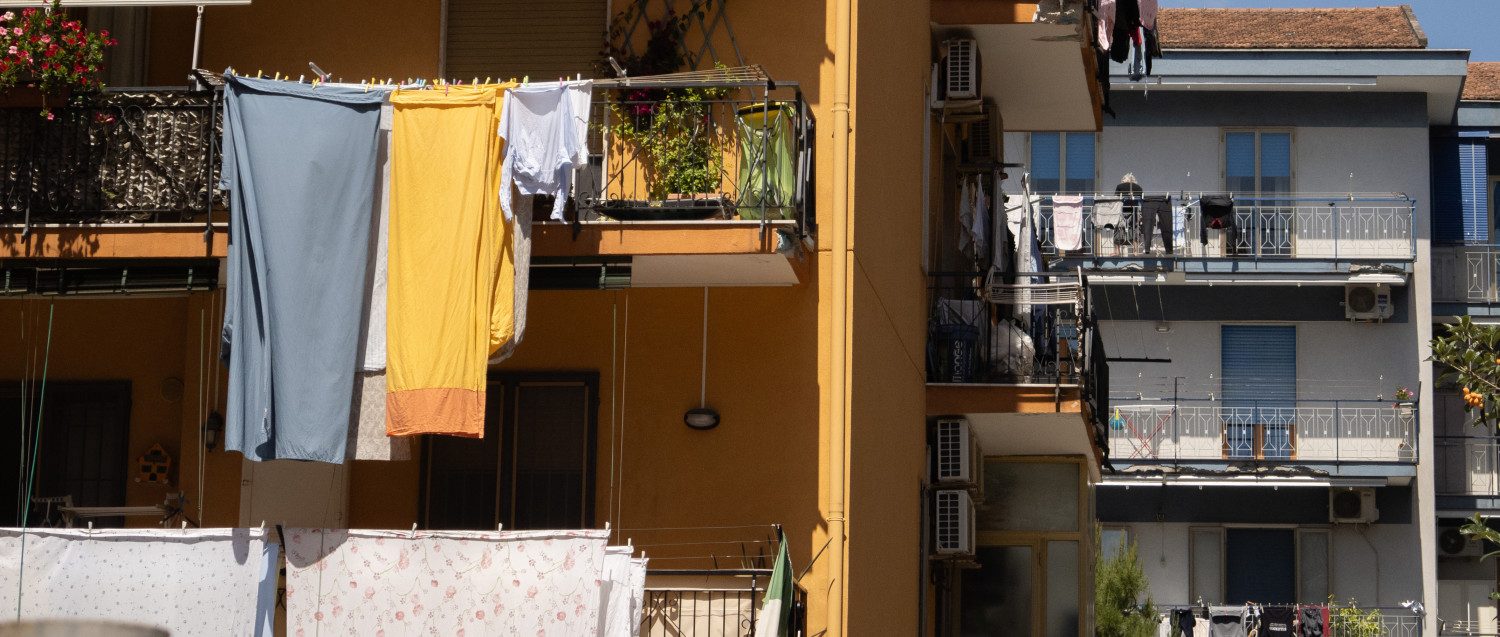
This is a collection of photos showcasing places, things, and experiences that I would have liked to share with my dear friend who passed away in January. He passed away pursuing what he loved: photography. He was 19 years old when the accident happened, 4 months away from his 20th birthday.

We had always talked about the adventures we would go on as photographers. Our aspirations of working for National Geographic, traveling the world and seeing what it had to offer. I had told him my story of giving up my Quinceanera in order to travel in Europe.

I remember one of my last calls with him. I had told him I was finally going to Europe. I remember seeing his smile for one last time. The way his mouth curled up and the indents on his cheeks. That call felt like we were both going towards the path we had both talked about.

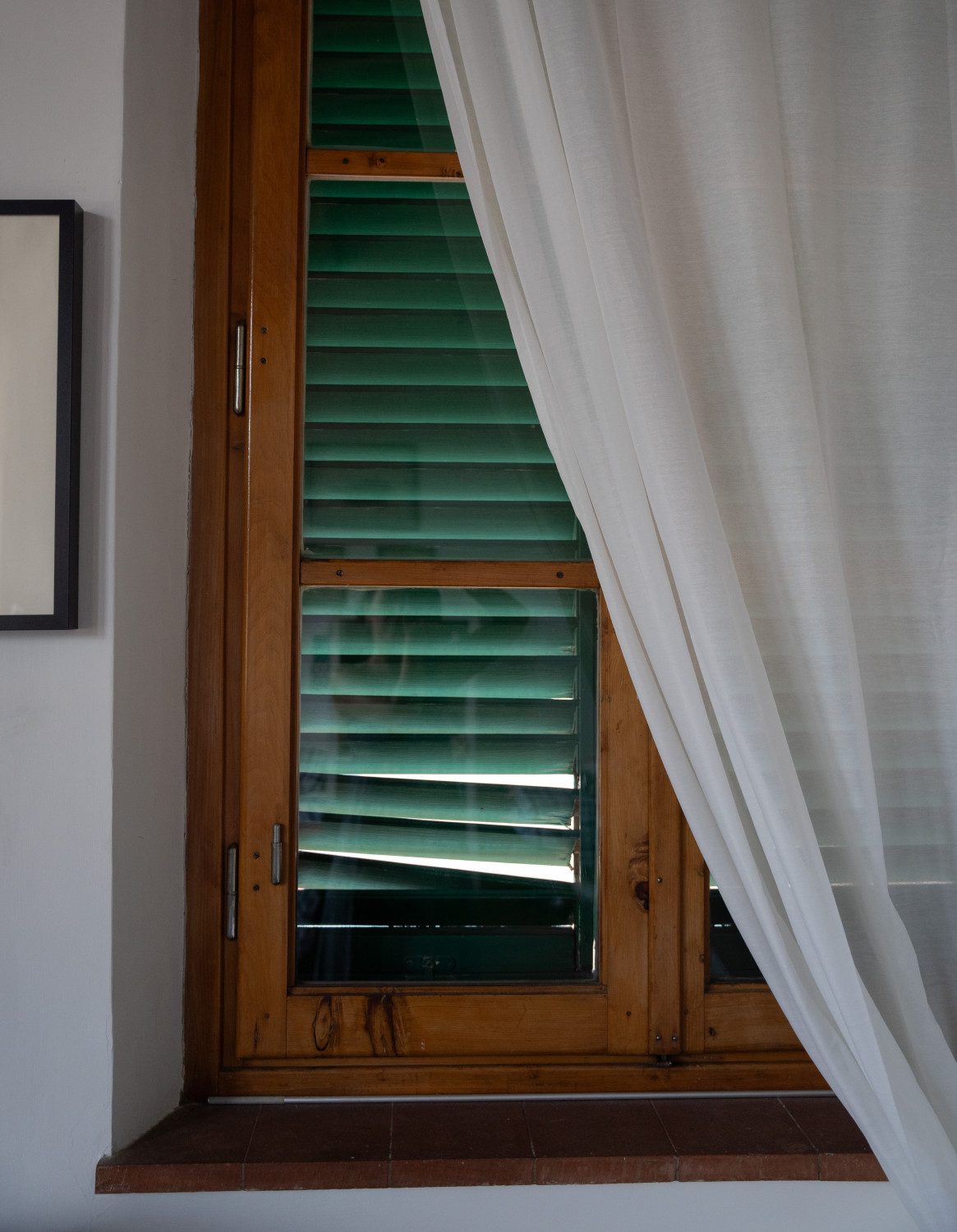
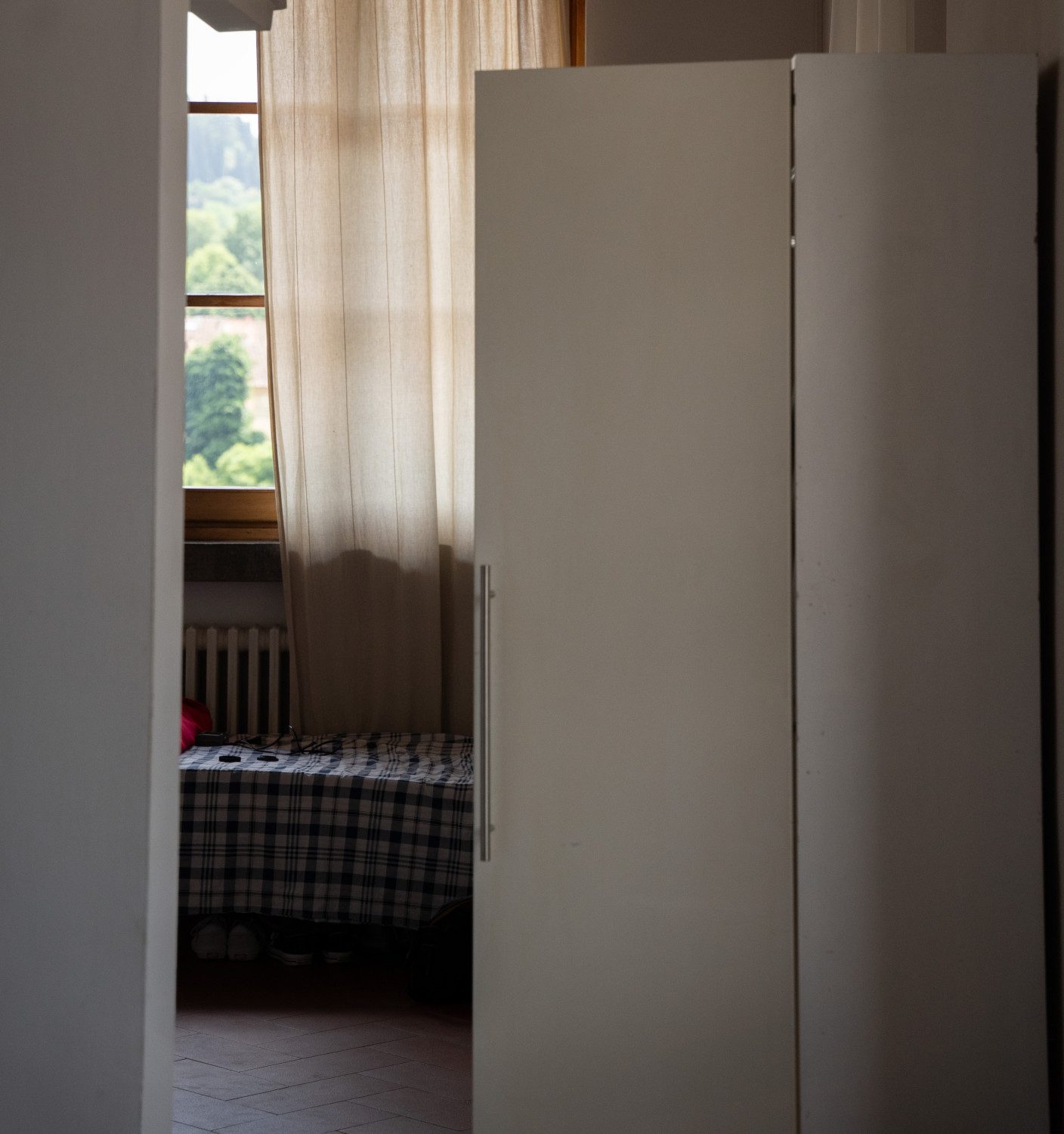
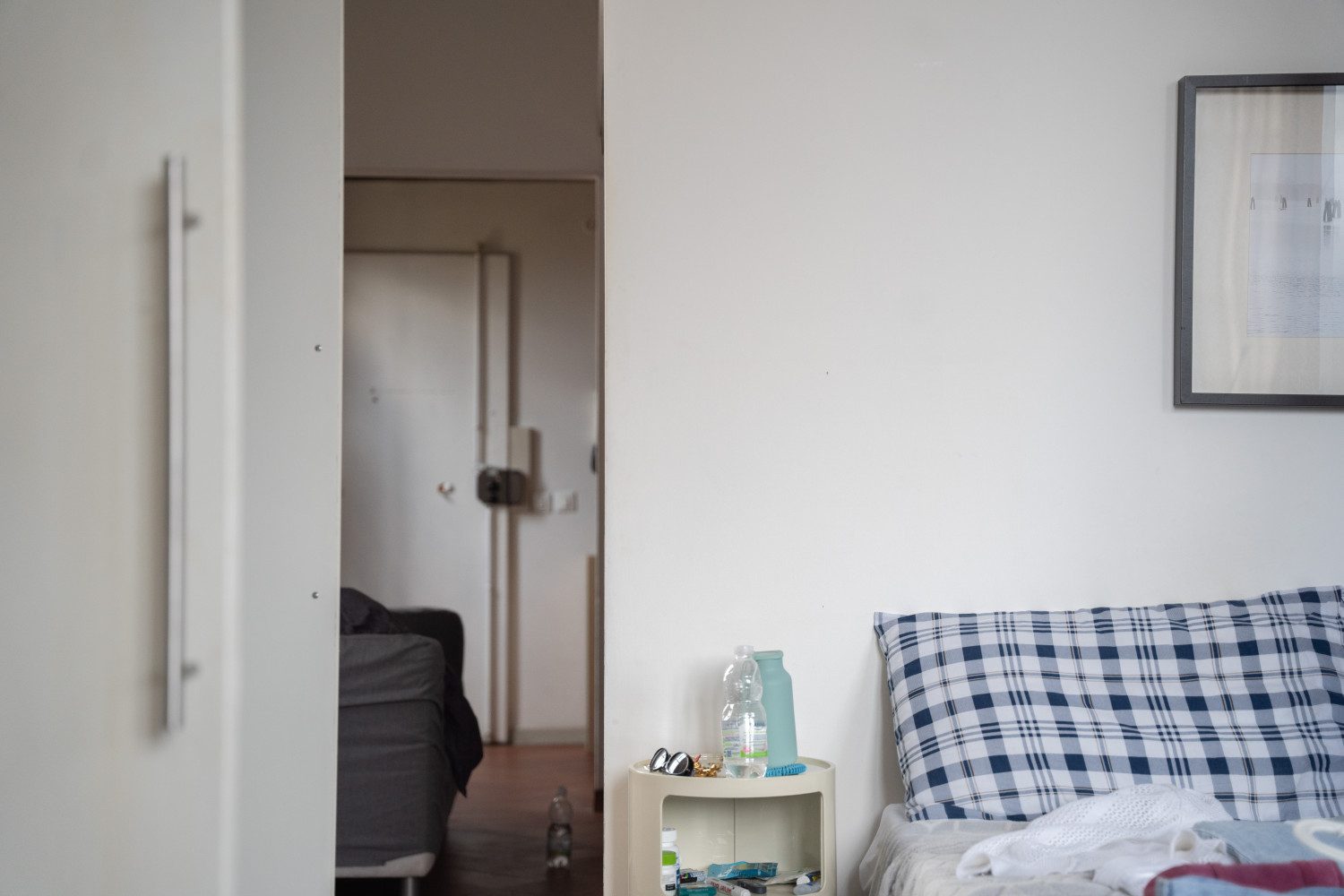
Here now, I am filled with memories of him, of things I wished to tell him. This collection of photos are my last adventure with him.

These photos were shot either how I think he would have taken them, or as photos I would have been excited to share with him. These all have been shot on the camera I met him with.

I remember him meeting me and the first thing we bonded about was photography. The next weekend he drove 4 hours to be able to take photos with me. I remember he thought my camera was a film camera and the disappointment on his face when I told him it was a digital camera.

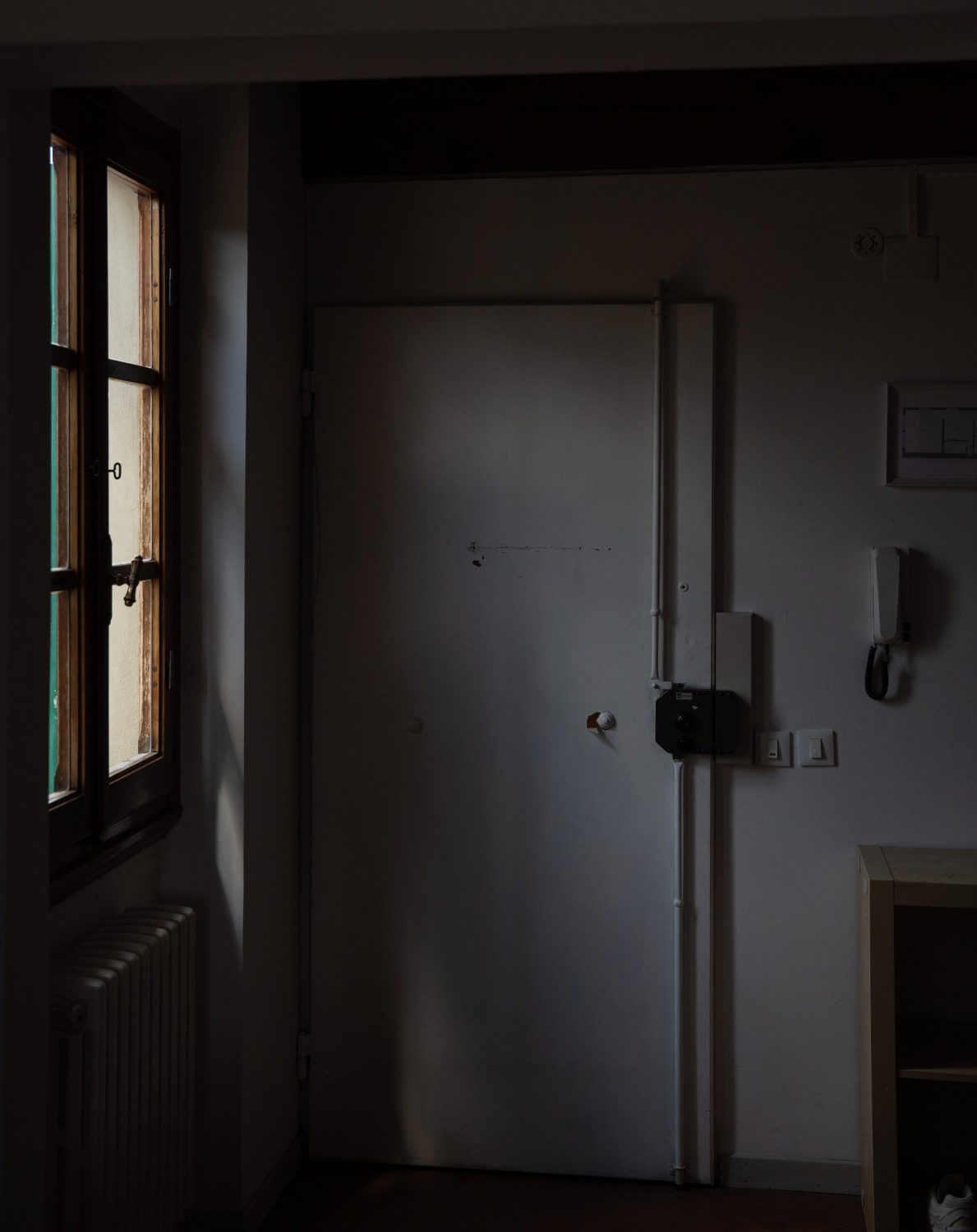
This project is a reflection on the experiences we take for granted as living, but even more so, as lived moments. I challenge viewers not to think about the personal stylization or the absence of people; rather, look closer at how we as people decide to live our lives.

Hidden Gem: Locally Owned Gym in Florence Provides Much Needed Solace

written by Alex Daggett for Special Project: Experiential Learning in Journalism

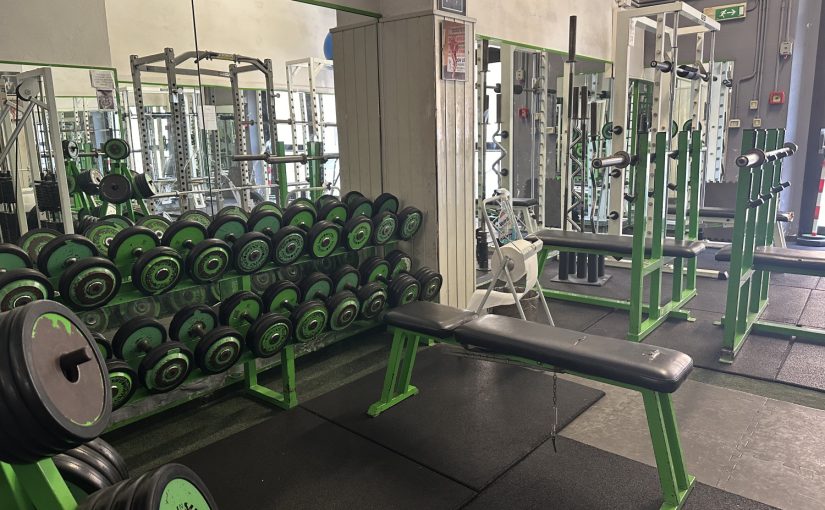
Tucked away on the quiet street, Via del Leone, with a modest sign and entrance, Gym & Tonic is a true, classic testament to athletic performance and bodybuilding. Built on the first floor of a residential building, the space extends to the back with free weights and old school machines adorning the right side. Under a skylit converted garden is a dance studio and boxing area. Certificates, awards, records, and trophies for mens physique occupy the walls everywhere the eye can see, and a sense of community is felt. 

As soon as I arrived in Florence to study abroad for the Summer, I immediately sought after a gym so I could stick to my workout routine.  After some research, there still weren’t any gyms that stood out to me. By pure chance, I happened to walk by Gym & Tonic while exploring the south side of the city, and decided  to take a look around. Immediately upon entering, I was shocked by how seamlessly the whole space was integrated into the classic architecture, nothing looked out of place. I was so used to the concept and sights of large scale commercial gyms where everything looks the same, and this was far from it. Despite the rustic nature of the machinery, everything was clean, and practical. I have been to a non commercial body building gym only once before, and this evoked very similar emotions and feelings, while offering an Italian twist. 

“I’ve been in charge for 26 years, since I inherited the gym from the man who owned before me,” said owner, Francesco Borghesi.

Despite the establishment being older than himself, Borghesi is synonymous with Gym & Tonic in the current date.

“I’ve been lifting weights since I was 15,” Borghesi said. “It’s what I love.” Borghesi provides not only customer relations, but also teaches various courses.

“I am thankful to have many good teachers in my time,”  Borghesi said. “So I try to provide the same to others.”

When I met Borghesi, he was teaching a patron a boxing lesson. Once he was finished, he told me all about the gym. I then bought a membership and got a workout in that day. Since then, I have gone every day and have yet to find a flaw in the gym. The hours are from 10:00 to 20:00, and every time I’m met with an immersive environment full of lively locals. Working out has always been a great escape and opportunity for self focus and reflection, and this is the perfect place for just that. Every time that I go to a commercial gym, it always just feels so clinical and uninviting, but Gym & Tonic offers such a different environment that is refreshing. I am very glad that I found this spot, as it made this international transition a lot easier. 

While it may not be on any travel destinations, or top ten lists, I think that adds to the charm of such an establishment. A place that is largely untouched by tourists offers a level of immersion and authenticity that is hard to come by. For that reason alone, Gym & Tonic is worth checking out, and they even offer day passes for people looking to get a quick lift in. A true hidden gem of Florence, located at Via del Leone 10.

Special Project: Experiential Learning in Journalism – A Writing Journey Through Study Abroad

written by Sophia Koch for Special Project: Experiential Learning in Journalism

I’ve always harbored a deep desire to explore the world. Contemplating my future as a journalist, I’ve often envisioned myself traversing diverse landscapes and culture. Some of my favorite travel experiences have thus far been confined to the United States, with standout destinations including Carmel, California; Maui, Hawaii and Key West, Florida. These travels sparked a realization within me: a profound yearning to delve into travel writing to some extent.

Studying abroad has unveiled a different facet of journalism, exposing me to the intricacies of writing about entirely new cultures, cities, and people.

Upon learning my home institution at the University of Missouri School of Journalism added the Florence study abroad program, I swiftly recognized it as the ideal opportunity. Uncertainty came over me regarding the experience awaiting me in a foreign country at a different university. I wondered whether the instructors would be stringent, what subjects they would cover, and how my Special Project Experiential Learning (SPEL) internship in Journalism would unfold. The SPEL program, offered through Florence University of the Arts – The American University of Florence, provides 3 credits along with real-world reporting and writing experience. The special project course features experiential learning hours with the Community Engagement Member Institutions (CEMI), which are dynamic learning environments created to foster learning through interaction within the community. 

During my second week in Florence, as my first class commenced and I met with Sofia Galli, my supervisor for the SPEL placement, I realized the breadth of knowledge awaiting me. The professors’ expertise and the assignments the instructor tasked me with promised to enrich my understanding of Florence thus being my first time ever in Europe.

Over the past 15 weeks, Professor Galli has assigned me various articles to be published on the institution’s websites. I’ve had the privilege of attending school-sponsored events, such as a book presentation featuring Italian author Caterina Perrone. Alongside attending, I conducted a thorough interview with the author, delving into her book and gaining insights into Florentine history. Hosted by the school’s advisors and students, the article found its place on their website. Another school-sponsored event I had the opportunity to attend was Laura Fauzzi’s art exhibition. Although I’m not a big art enthusiast, learning about the way she creates art through breathing and listening to waves was incredibly intriguing and something I had never encountered before. This experience once again reminded me why I love journalism so much – because it allows me to learn something new every day.

While some events I cover are not in English, initially posing a challenge, I’ve overcome this hurdle with assistance from my advisors and by conducting interviews in English such as the book presentation with Caterina Perrone. This journey has facilitated my growth as a journalist, reinforcing the notion that in this profession, nothing comes easy—a skill set I owe to FUA-AUF and the SPEL placement.

One of my favorite pieces I worked on was a profile of two bachelor’s degree students attending The American University of Florence. They are siblings from Brazil studying culinary arts and fine arts. I had the opportunity to speak with them about their experience living full-time abroad and learn more about their Brazilian culture. Additionally, I participated as a journalist in the Art and Community: Secret Florence Walks course, observing the dynamic interactions between the professor, students, and the urban landscape. Beyond contributing an article to the website and enhancing my portfolio, this experience exponentially deepened my understanding of Florence.

While my SPEL journalism internship is concluding, the whole experience has been transformative. From the picturesque landscapes of Carmel to the vibrant streets of Florence, each experience has shaped my understanding of journalism and ignited my passion for travel writing. Through the SPEL internship, I’ve not only honed my writing skills but also gained invaluable insights into different cultures and storytelling techniques. 
Talking Stones of Florence

Photos by the author

By Aaron Klevan

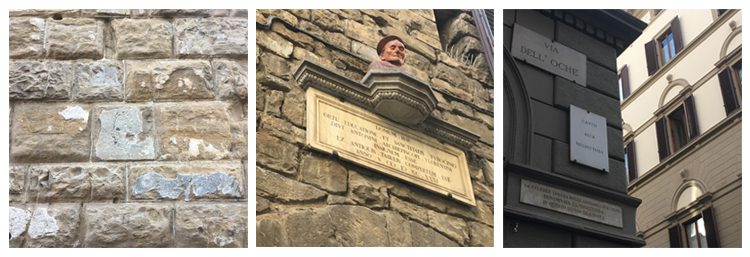
What do Florence’s “talking stones” have to do with modern-day journalism and civic awareness? FUA’s Writing for Digital Media students recently explored connected readings of the city’s political and cultural history through its talking stones. Next time you take a walk around the city center make sure to look up and see if you can spot some.

Florence is a city with a rich history that dates back centuries. One of the unique ways that the city actively communicates its vibrant past is through “talking stones.” These stones, containing inscriptions of both writing and art, are adorned on walls throughout the city and tell Florence’s most fascinating tales. The stones also portray the art of journalism in its truest form, exhibiting many principles still applied today in an authentic breath.

  • The idea of social awareness can be seen in the way the stones project the stories of Florence.
  • The principle of connected reading is presented by the way the stones link current Florentines and visitors to the city’s political past.
  • The stones also share visual information with supplementary images and drawings in addition to pure text.
  • Finally, at the time they were created, the stones were a form of enhanced technology requiring specialized knowledge and methods for chiseling messages into stone.

The first talking stone shown on the left of the photo is one of the first known forms of graffiti, located near the main entrance to Palazzo Vecchio. As the legend goes, it was a self-portrait of Michelangelo. It is a fascinating way to look at the technology artists used at the time, and also offers a glimpse into the booming art community during the Renaissance, connecting people today to those who walked Florence’s streets and drew on its walls in the past.

The second stone is perched atop a bustling intersection near the city center in Via delle Oche. It textually denotes that the building on which it is placed was once home to the prestigious Adimari family, of which Alemanno Adimari was a member. He was a famous Italian Catholic cardinal and archbishop. This stone serves the purpose of displaying the famous residents that played a fundamental role in shaping the city.

The final stone is a beautiful bust and description of Saint Antoninus in Via dello Studio. He was an Italian Dominican friar who ruled as an Archbishop of Florence. This talking stone is found on the exterior façade of the Pierozzi family home. It is a perfect example of combining visual information with written texts, much like an article, that allows viewers to see the subject and read about it.

The city continually talks to us every day through its surfaces, signs, and symbols. What unexpected discoveries have you made through Florence’s talking stones?

See more of Florence at FUA’s FBInstagram, and Twitter.