Home Away From Home

written by anonymous

To be an immigrant’s daughter, there is a certain weight that sits with you. From the day you are born, you’re split in two. To be taught two languages, two cultures, two homelands. In the United States, to be an immigrant is to be lower. To be a Mexican immigrant is to be scum. As I grew up, I was taught to hide my identity. I spoke in English in public and Spanish in private, to favor American pop culture over Mexican. My golden skin was something to be ashamed of, to stay inside more. My locks of curls to be burned and tamed into straightened hair. My heart has always been torn into two.

At home, my family was proud of the life they worked so hard to make for my brothers and I. Now, it is our job to show that we are educated, organized, and hard working; that university is the goal to change the narrative for my family. My mom attended high school in the U.S. and graduated, but it wasn’t until 18 years later when she was 32 years old that she got her bachelor’s degree. She was the first in my family to ever receive a degree in higher education. My mom set the example that anything was possible, that my brothers and I had our futures handed to us; we were supposed to be nothing more than exceptional. In my parent’s eyes, that meant to hide our culture that America saw as less-than.

My brothers and I knew how to play the part; after all, we experienced the everlasting backlashes of America. Our whole lives, we have been told we didn’t belong where generations of my family worked for us to be. I was told to go back where I came from, and countless times I was picked on. Kids would throw my pencil case to the floor, leaving my things scattered, and tell me to pick it up “cleaning lady.” My brother was told to “mow the grass gardener” by a player of the opposite team on the soccer field. My little brother is a clean slate, doesn’t know any Spanish, and has yet to come to understand his culture.

The aggressions are something I’ve realized is my price to pay for living in the United States. Something I’m not sure I’m equipped to take anymore. Since going to university, I’ve been faced with micro aggressions, and it’s now supposed to be my job as the minority to educate my classmates. It’s aggravating, and parts of me wished I had never stepped foot in Missouri. Countless phone calls to my mom asking if I am overreacting or if they are being racist. It’s hard to be in a place that I have worked to be, and yet, in many ways said or unsaid, that I shouldn’t be in. Despite this, I continue my academic career in hopes of raising the percentage of 19% of Latino that have a bachelor’s degree, joining my mom and my older brother and showing my dad that his countless days of sacrifice have amounted to something.

Now, I stand here, not in the U.S. or Mexico, but in Italy, a country that my grandparents would have never imagined one of their grandkids would be in. I’m here interning for a food publication, where I had the opportunity to cover an event dedicated to Latino food. For once, I saw my culture being celebrated on a bigger stage instead of being shamed or transformed into something others could easily grasp. For once, speaking Spanish isn’t alien-like, but a bridge for me to communicate with others. Being Mexican doesn’t mean I’m associated with drugs, gangs, or the lower class. I was told by one of the chefs that, “It’s so wonderful that you’re Mexican. Your culture, your people are so bright, giving, and happy. Thank you for everything you have brought here.”

For once, I was seen for who I am, who my family is, and for how my people are. Parts of me never want to leave Italy with my little time spent here. The problem is, if I stay here, what was all that my family struggled for? To be an immigrant’s daughter is to be split in two.
Home is Where the Heart Is

Photo courtesy of the author

By Amber Wright

If you asked me how many places I’ve called “home,” I would say four – I grew up in California, now live in Washington, worked in Northern Ireland for a few months, and am now studying for four months in Italy. I’ve had to make a home where I am three times since I’ve left where I grew up, and each time my concept of home has changed.

When I first moved to Seattle, it was easy. My close friends in California had all moved, so it was generally painless for me to leave. I found all the things that made me feel comfortable and things that were familiar to me. I found my groove, and I made as many new friends from school as possible to surround myself with.

When I moved to Belfast, it wasn’t so easy. I was very secluded and separated from people where I lived, and the most familiar place I could go was Starbucks thirty minutes away. I hardly met anybody my age while working there and often spent days alone.

As excited as I was to be in Florence for a semester, I was nervous about moving to a new country again. With moving to Florence, I would be here longer and there was an added challenge of the language barrier in trying to make friends. How was I going to meet anybody? I was afraid that I wouldn’t be able to make a home for myself here like I wasn’t able to in Belfast.

Three months later, Italy now feels like home just as much as Seattle does. When I first arrived, I had no idea what to do. I went the first week eating out every night and using a tee-shirt to dry off because I had no idea where a supermarket was or where I could buy a shower towel. Now, after traveling to amazing places like Germany, Croatia, and Spain, I get a sense of comfort, something I never got in Belfast, arriving at Santa Maria Novella Station, walking past the Duomo, and entering my apartment.

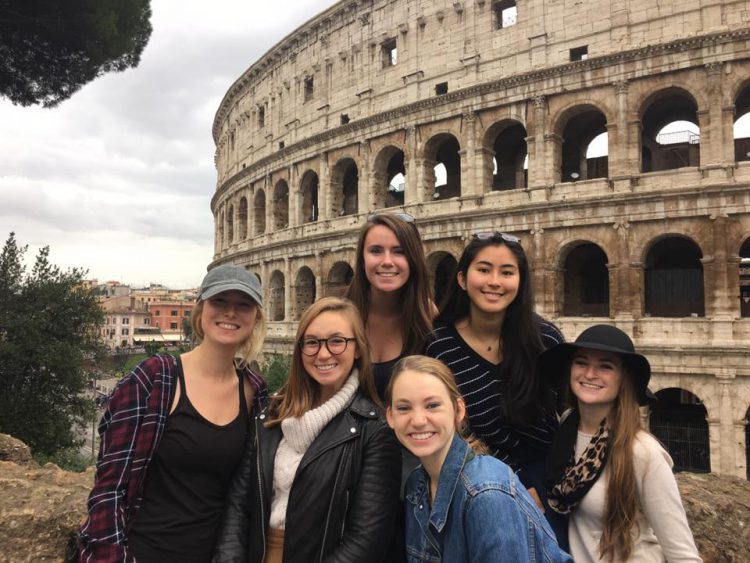
Italy has been very different from anywhere I’ve lived before, landscape, language, and climate-wise, but it has become normal and comfortable for me. However, this sense of comfort hasn’t come from knowing where to buy food or from decorating my room, it’s come from the community I’ve been lucky enough to form here. “Home is where the heart is,” “home is where your family is,” and my mother’s personal favorite, “home is where your momma is,” are popular phrases for a reason. Feeling at home is about the people surrounding and supporting you in that place, whether that be friends or family.

My study abroad program staff and the institution have done an excellent job of bringing students together and creating a community that people feel at home in. From taking day trips to having Thanksgiving dinner together, my program has become my family who I lean on for support.

The relationships you form over study abroad are quick and wild. You form friendships immediately because you all know you’re in the same position – a new country where you don’t know anybody. You go to dinner together that first night, then to Piazzale Michelangelo the next day, and then before you know it you’re exploring Florence with these friends every weekend. These friends will be the ones you climb to the top of the Duomo with and also get lost trying to find that one osteria in the far outskirts of city center. You’ll struggle though your Italian language class, and celebrate together when you have your first successful conversation with a local. You’ll discuss the culture you’re immersing yourself in, and also reminisce about the few things you miss about home. Finally, it’s three months later in December, still with two weeks to go, and you’re already crying thinking about leaving these people and leaving what and who has been home for the past few months.

Home isn’t a thing or a place, but a feeling that you get from the people by your side. My time here in Florence is intertwined with the people I spent it with, and I won’t be able to think about Europe without thinking of them. When I’ll look back on living in Italy and how much I felt at home here, it won’t be because of my apartment on Borgo Pinti. It will be because of the amazing friends and community I had surrounding me here making it feel like home.

See more of Florence at FUA’s FB, Instagram, and Twitter