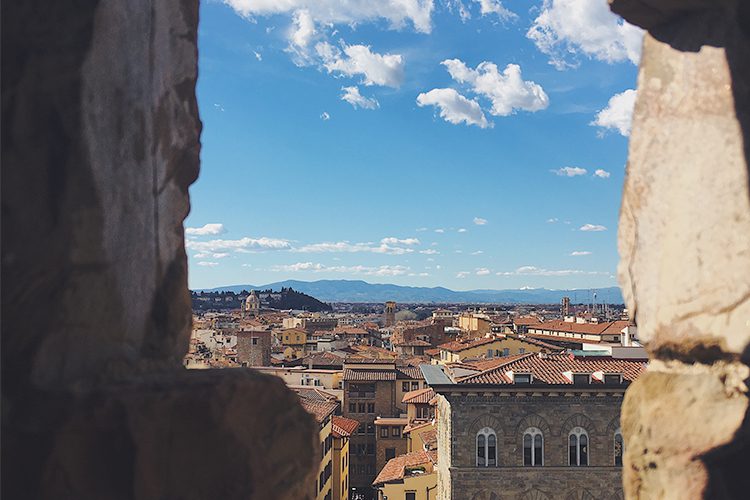
Home is Where the Heart Is

Photo courtesy of the author

By Amber Wright

If you asked me how many places I’ve called “home,” I would say four – I grew up in California, now live in Washington, worked in Northern Ireland for a few months, and am now studying for four months in Italy. I’ve had to make a home where I am three times since I’ve left where I grew up, and each time my concept of home has changed.

When I first moved to Seattle, it was easy. My close friends in California had all moved, so it was generally painless for me to leave. I found all the things that made me feel comfortable and things that were familiar to me. I found my groove, and I made as many new friends from school as possible to surround myself with.

When I moved to Belfast, it wasn’t so easy. I was very secluded and separated from people where I lived, and the most familiar place I could go was Starbucks thirty minutes away. I hardly met anybody my age while working there and often spent days alone.

As excited as I was to be in Florence for a semester, I was nervous about moving to a new country again. With moving to Florence, I would be here longer and there was an added challenge of the language barrier in trying to make friends. How was I going to meet anybody? I was afraid that I wouldn’t be able to make a home for myself here like I wasn’t able to in Belfast.

Three months later, Italy now feels like home just as much as Seattle does. When I first arrived, I had no idea what to do. I went the first week eating out every night and using a tee-shirt to dry off because I had no idea where a supermarket was or where I could buy a shower towel. Now, after traveling to amazing places like Germany, Croatia, and Spain, I get a sense of comfort, something I never got in Belfast, arriving at Santa Maria Novella Station, walking past the Duomo, and entering my apartment.

Italy has been very different from anywhere I’ve lived before, landscape, language, and climate-wise, but it has become normal and comfortable for me. However, this sense of comfort hasn’t come from knowing where to buy food or from decorating my room, it’s come from the community I’ve been lucky enough to form here. “Home is where the heart is,” “home is where your family is,” and my mother’s personal favorite, “home is where your momma is,” are popular phrases for a reason. Feeling at home is about the people surrounding and supporting you in that place, whether that be friends or family.

My study abroad program staff and the institution have done an excellent job of bringing students together and creating a community that people feel at home in. From taking day trips to having Thanksgiving dinner together, my program has become my family who I lean on for support.

The relationships you form over study abroad are quick and wild. You form friendships immediately because you all know you’re in the same position – a new country where you don’t know anybody. You go to dinner together that first night, then to Piazzale Michelangelo the next day, and then before you know it you’re exploring Florence with these friends every weekend. These friends will be the ones you climb to the top of the Duomo with and also get lost trying to find that one osteria in the far outskirts of city center. You’ll struggle though your Italian language class, and celebrate together when you have your first successful conversation with a local. You’ll discuss the culture you’re immersing yourself in, and also reminisce about the few things you miss about home. Finally, it’s three months later in December, still with two weeks to go, and you’re already crying thinking about leaving these people and leaving what and who has been home for the past few months.

Home isn’t a thing or a place, but a feeling that you get from the people by your side. My time here in Florence is intertwined with the people I spent it with, and I won’t be able to think about Europe without thinking of them. When I’ll look back on living in Italy and how much I felt at home here, it won’t be because of my apartment on Borgo Pinti. It will be because of the amazing friends and community I had surrounding me here making it feel like home.

See more of Florence at FUA’s FB, Instagram, and Twitter

Florence in the Rain

Photo by the author
Photo by the author

By Jess Pitocco

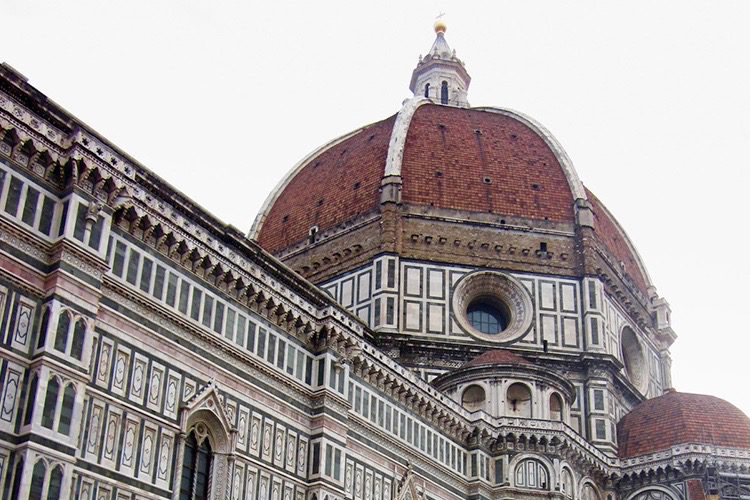
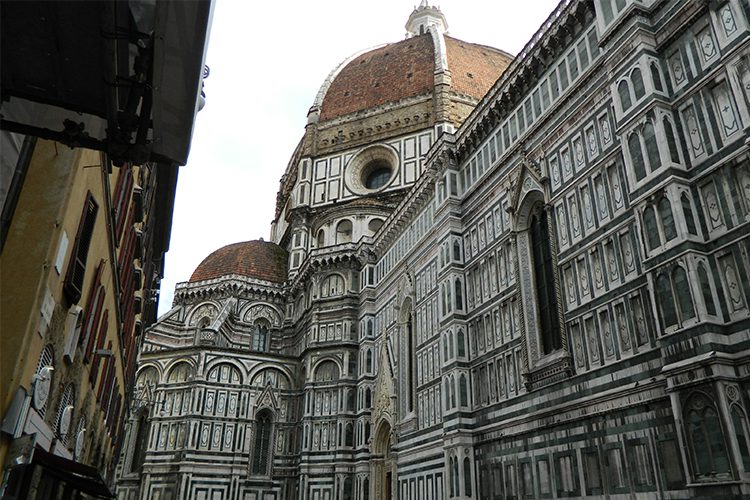
A typical day in Florence looks like this: the Duomo is never shrouded by clouds, the sun always makes the bronze ball on the top of the cupola shine like gold, the streets are filled with bustling people, and in each doorway, a new delicious smell entices you. Florence may seem like just another city of dreams; however, what does it look like when it’s raining?

The contrast can be quite stark, actually. The streets slowly get less crowded as the sky opens up. Ponchos and umbrellas are sold at every corner. The whole city feels like it is in a shadow as people try and find shelter from the storm. And just as the rain pours down and splashes you, the sun peeks through the clouds and you see blue sky. But only for a moment. The rest of the day is cloudy, on and off rain, making the Duomo as gray as the sky.

I find solace on these rare rainy days at small cafes, preferably on a side street. I usually throw on sneakers and try to get through the puddles without making my socks too wet. The rain boots I bought for this occasion have a hole in the sole and are useless when it gets stormy outside. I fast-walk, bringing my backpack and hope that the wifi works today.

Depending on how I feel, I get a cappuccino, coffee, hot chocolate, or tea. It makes my hands sweat and fogs my glasses, but it’s so comforting to me in my soggy clothes that I don’t care. I usually get a snack while I sit and do homework. Sometimes I read, or just relax. At home, where I’m from, rainy days are designated movie/cinema days. Here, I will happily settle for a cute cafe, some sweet treats, and a good book.

Florence, before arriving, had never seemed like a cold season city to me (a fellow FUAer shares how to spend a winter day alone, btw). However, a rainy day can sometimes bring a fall-like atmosphere to the city. People bundle up, briskly walk back and forth to escape the rain; it reminds me of the snowed-in streets of New England where people do the exact same with snowflakes. Either way, some of the gloomiest looking days in Florence make me feel most connected to the city. I found a good reading spot, my favorite coffee, and a comforting ambiance to a city that is most of the time lively and exciting. Rainy days here aren’t sad; they are calm, introspective and more enjoyable than you’d expect. What’s your favorite rainy-day spot?

See more of Florence at FUA’s FB, Instagram, and Twitter


Filistrucchi: Fake Beauty, Real Tradition

Photo by Megan McCall

By Melissa Maize

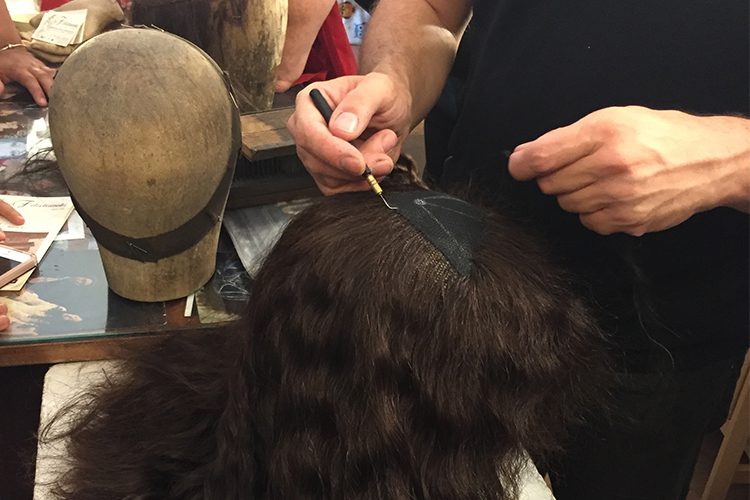
Filistrucchi is a Florentine institution that makes the ordinary, extraordinary. FUA Digital Writing students recently visited the historic theater makeup laboratory and shop. 

If you could be anyone, who would you want to be?

If you could swap faces, swap lives, even for only day, who would you choose? A Duke, a Duchess, Abraham Lincoln? Lady GaGa? At Filistrucchi, you can be anyone.

We all have little things about our appearance we’d like to change- smaller nose, thicker hair, higher cheekbones- and Filistrucchi was built on that need. Established in 1720, it catered to Florentine nobles, providing wigs and make up to suit their stylistic needs. It then developed into one of the leading make-up and hair providers to the Opera and stage, and later cinema. Gaining notoriety as masters of their trade, their clients soon spread as far as New York and Boston.

Perusing photos of their work, the shop owners recount stories of how they transformed men into women, women into men, old into young, the transformations often so complete that the clients’ families didn’t even recognize them.

It’s amazing to think that all that stands between you and complete anonymity is a few layers of make up. It seems to me that Filistrucchi has survived three hundred years and two epic floods not because beauty is timeless, but because the desire to look beautiful is.

See more of Florence and Italy at FUA’s FB, Instagram, andTwitter.

Art History: A Different Perspective

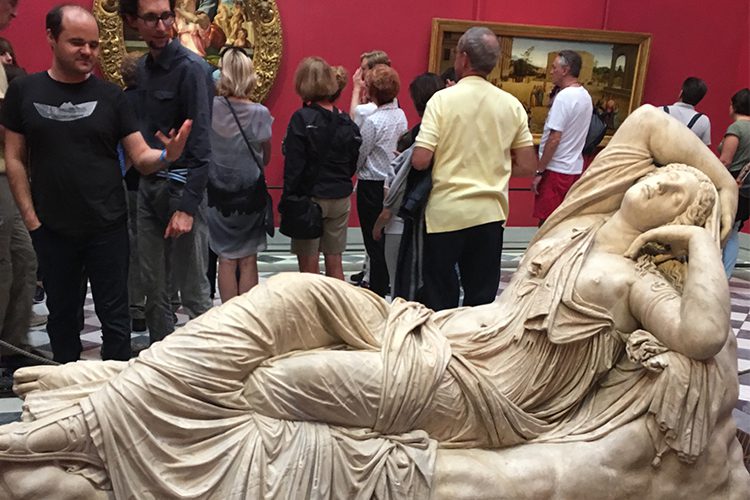
Visitors at the Uffizi. Photo by Jessica Pitocco.

By Nicole DeCosta

Alicia Deakin from London discusses how being in Florence has had a first hand impression on her perspective on Art History.

After the first half of the semester here at Florence University of the Arts, the students seem to be settling in nicely to the bustling lifestyle of classes during the week and exploring on the weekends. Sitting down with 21-year-old Alicia Deakin from Suffolk, England we discussed how she has had to adapt to this cultural change and new lifestyle.

With classes taking place Monday through Friday, Deakin said that her art history class is held twice a week.

“I’m happy that the class meets twice a week. Originally I found myself comparing my schedule to other semester students taking once a week classes, but I quickly realized just how much I enjoyed the class,” said Deakin. “I was feeling super lucky to be able explore the city of Florence and take part in the included field learning city activities offered through the class.”

Taking an art history course through FUA, Deakin said how amazing it was to experience this much raw culture within a class. When asked why this class was her favorite, she said how inspiring it was to be amongst some of the most amazing artwork she’d ever seen.

“Offering me new skills that I have not used in sometime, because I had taken a few years off from University, this class provides me an opportunity to study a new topic that both interests me and excites me,” said Deakin.

Noting the high quality education being provided to her through FUA, Deakin said, “the difference in my classes here from in London are so drastic, it is important to see how much the professors want to engage with you as students, while also wanting you to have the best possible experience in Florence.”

Since Deakin has never studied art history prior to coming to Florence, she said her favorite part is the novelty of the class, learning new topics, while also being placed within the Florentine environment. Knowing she is able to see the art firsthand, Deakin is thankful for the opportunity that FUA has provided her, and being here has allowed her to open her cultural perspective.

Offering students an opportunity to receive a strong education, while also an experience of a lifetime, including travel, cultural exchanges, and new opportunities, attending FUA, Deakin says, “is a once in a lifetime experience!”

See more of Florence and Italy at FUA’s FB, Instagram, and Twitter.

Stepping Back from the Lens: Florence Through My Eyes

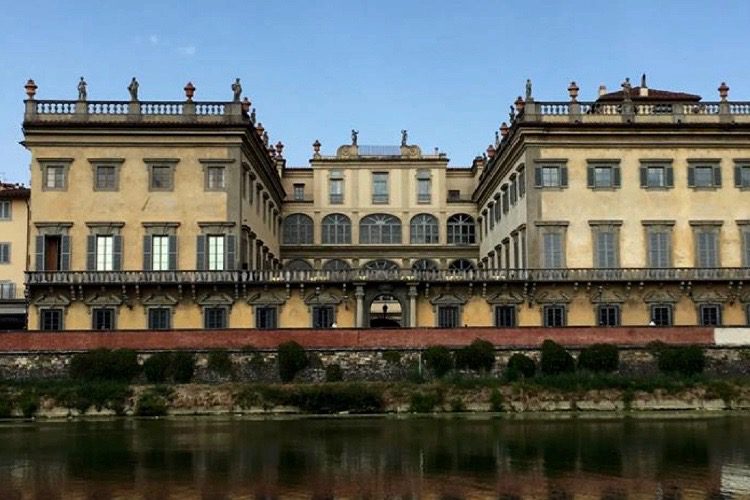
Palazzo Corsini from the Arno River, photo by the author.

By Ryanne Doherty

We all take photos. It’s a part of living in the digital age; everyone keeps a camera right in his or her pocket, and we can capture and share memories in an instant. As convenient as this is, there is a drawback.

Seeing the world through a camera lens can take away from fully experiencing a moment. It causes a person to merely see an image inside a cropped area. By focusing only on the visual, the sounds of a city, the smells of bakeries, and the feel of the air on one’s face are often overlooked.

I am just as guilty of this practice as anyone else. I will walk around Florence’s city center and take a picture of the Duomo or Santa Croce and ignore all other surroundings. For a Writing for Digital Media class assignment, I was actually required to get lost in the city and look only for the visual aspects of Florence. Through this, I was able to see in more detail but unable to fully feel the atmosphere around me.

For an hour, I explored new parts of Florence, but it’s hard to describe where I was. Taking pictures on my old Canon was my only focus and goal. This goal, I believe, caused me to miss out on a full Florentine experience as a new resident of the city.

The following day, however, my focus changed. With my class, I had the opportunity to experience the Arno River with the I Renaioli association. I took a few photos, but for the most part I tried to concentrate on more than just what I could see.

It was a sweltering day in September, and I had already broken out into a sweat on the walk to the riverbank. After a couple minutes on the water, however, a cool breeze shielded the hot sun, and I cooled down significantly. This was a breeze as I had never felt in the city center. Here, I realized the one of the coolest places in Florence at any time may in fact be the surface of the Arno, and I regretted not having taken this excursion earlier.

Paolo, the association representative who rowed the small wooden boat named the Ghibellino, recounted the Florentine history that surrounds the Arno. Some of the history was familiar to me, like the path of the Vasari Corridor through the Ponte Vecchio. Some information was new, like the history and utility of Palazzo Corsini, which is best seen from the Arno. Paolo’s voice was punctuated by the trickle of water as the oar cut through the river or his occasional whistles to rowers ahead of us as we made our way under bridges.

We docked again after an hour or so on the boat, and it was then that I decided I should step away from the camera from time to time. In the week that has passed since then, I have found myself trying to focus on the entire atmosphere of where I am – while it’s nice to have the photos, it is the desire for a new experience that drives us to have an adventure.

See more of Florence and Italy at FUA’s FBInstagram, and Twitter.

A Day Alone in Florence (Winter Ed.)

winter-day-alone-in-florence-fua

By Kevin Coccoluto
Photo by David Weiss

Every so often, I have found myself all alone in Florence for a day and struggled to figure out what to do with my time.  Either my roommates were away or friends would have different class schedules, and I would have time off by myself.  For the few times that this may happen to you, and I have some great suggestions that I’ve tried myself when planning for a day alone in Florence.

If you haven’t fully walked around the city by yourself, I strongly recommend doing so.  Go discover new parts of Florence that you haven’t seen before (I promise there are hundreds of them).  The best part about walking throughout the city alone is that you get to follow your own path and instinct, and you don’t have to follow others.  It is really fun just getting lost within Florence and seeing where you end up.

Florence can be enjoyed any time of the day, during any season of the year. If you’re a warm beverage lover, I suggest stopping in several coffee or tea shops along the way and picking a favorite place that you would want to come back to. The same idea applies for restaurants, relaxation areas, or anything else such as bookstores, shops, a monument… There are thousands of choices in the city.  There is no way you are ever going to see them all in an entire term, but time alone will definitely help shorten the list in one of Italy’s most beautiful cities!

***

FUA Student Life suggestion: Whether for art history classes or city excursions planned with friends, you probably have already planned to see major museums such as the Galleria dell’Accademica, the Uffizi, and Palazzo Pitti. A day alone in Florence is perfect for smaller discoveries, so here’s a winter edition mini-itinerary from our staff as a starter. Create your own and share it with us!

Am: Visit a lesser-known monument such as the Biblioteca Laurenziana at the San Lorenzo complex, designed none other than Michelangelo for the Medici family. Or any of the “small but big” museums of Florence, starting from the La Specola natural museum that features not only animal and mineral specimens but ancient Florentine human anatomy wax models.

Lunch: The Sant’Ambrogio market is smaller than the central San Lorenzo market and features several lunch options inside the market and around the area. Inside the market, Da Rocco is an inexpensive local favorite.

Afternoon: Browse a teahouse such as La Via del Tè or Tealicious or a boutique bakery like the Cantinetta for a warm snack.

Pm: Head over to a bookstore early pm around 5 or 6 to browse titles. Larger bookstores include Feltrinelli Red and IBS, but also check out smaller and artsy spots like Todo Mondo or the Gucci Museum bookshop. Afterwards, you’ll just have to decide where to dine, or you can have a cozy meal at home with roommates and friends on their way back:)

See more of Florence at FUA’s FB, Instagram, and Twitter

Spring Semester Packing

bastah-fly-florence-fua

When coming abroad to Florence for the spring semester, there are a few fashion do’s and dont’s that can come in handy for packing. In every country, dress codes are distinct from that of other cultures and in Italy, well, style has always been a celebrated element! When living abroad, a part of your cultural immersion can also benefit from observing customs related to dress and style habits.

Some general packing tips can be find in our “How Do I Pack?!” post. As for the spring season, here are some tips from fellow FUA students to dressing practically while looking stylish in one of the most iconic Italian cities over the next few months:

1. No workout attire when out of the house: Sweats are a no-no. Locals tend to wear workout attire when they are actually going to exercise. Ladies: during cold weather, stores like Calzedonia carry inexpensive tights with a cashmere blend to pair with a skirt or dress!

2. Shirts with logos: You may feel the urge to bring your favorite club organization or sports team shirts abroad but leave all of that at home. The Italian style is simple but sophisticated; shirts covered in logos will be a huge giveaway.

3. The first portion of the semester may be extra cold. Fitted down jackets/coats are perfect for the cooler weather in Florence, which can get pretty damp in the winter. They keep you warm while still looking stylish like the locals. Streamlined winter wool coats thrown over a nice sweater is always chic as well!

4. Scarves and layering: Bring your favorite scarves from home to throw on with a cute winter sweater or cardigan. Scarves as well as hats add an extra pop to any outfit. Layering also comes in handy as often it can be very cold outside but warm inside school buildings.

5. Once February and early March pass by, the city starts to warm up. Springtime can be fickle so an extra-light umbrella will be handy for the last few months of the semester.

6. Light slacks or springtime pants and jeans are comfortable and stylish choices when paired with a good shirt. Shorts are usually worn in the summertime and in casual situations such as going to the beach rather than in the city. If it’s just too hot and you really want to wear shorts in the late spring, then we advise tailored versions paired with clean-cut sneakers or spring sandals.

6. Flipflops are immediately associated with tourists. When the weather gets hot as summer approaches, open-toed shoes, lighter sneakers, and elegant sandals are some options to consider.

And remember, it’s not too late to tweak your wardrobe once you’re here. You’ll be receiving the FUA student manual that also includes tips on where to shop:) Once in Florence you can also check out the FLY store managed by the students and faculty of FUA’s fashion department FAST where you can find high quality vintage, professional emerging designers, and items designed by FUA students.  The coat in the featured image is from Bastah, a recent emerging designer that exhibited at the store.

See more of Florence at FUA’s FB, Instagram, and Twitter

Duomo: Stories Unseen

museo-opera-del-duomo-firenze-fua-finding-florence-blog

By Lauren Fromin
Photo courtesy of Erica Kavanagh

We all visit the Duomo in Florence but did you know that the museum dedicated to the cathedral has bene recently renovated? The new museum is a breath of fresh air that recounts Florentine history in a beautiful contemporary setting. Flowing through the halls of The Museo dell’Opera del Duomo are stories unseen by most visitors.

As you enter the main hallway to pass through the Museo’s winding exhibitions, you come face-to-face with a smooth, marbled wall with famous Italian names listed gracefully from floor to ceiling. As is familiar in other flagship museums internationally, a similar wall can be found listing the names of that country’s or time period’s greatest artists. Generally, these walls contain 50-100 names. Behold, the wall of greats in this Florence museum. After having a list of over 1,000 names to engrave, due to space constraints…and financial considerations…(engraving is manual labor) a couple hundred of Florence and Italy’s best were etched into the modern design. This depicts the importance and magnitude of Florence’s talents at the height of some of history’s most important art periods.

A surely breathtaking instance is entering the room housing the original facade design of Santa Maria del Fiore. Having to cut four meters from either side to fit into the exhibit, the rendition holds in place replicated statues in their original positions. However, the original statues are placed at ground level directly underneath the replicated version. This placing is intended to offer the viewer an up close perspective of the body of work in its natural, original form – while respecting the perspective of placement high-up on the facade. The Museo hopes to give off two different observations to understand the artists’ creations.

You will definitely have to take a few steps back to admire the facade’s structure completely, but if you step back too many times, you might run into Ghiberti’s bronze Gates to Paradise. The first set of doors engineered by the young artist at the time, in his early 20s, are displayed in glass protectors, adding an even more ‘heavenly’ appeal. The story goes, Ghiberti beat out Brunelleschi in a competition to sculpt the doors for the Battistero (Baptistry). Supposedly Brunelleschi gave up sculpting due to this and went into architecture. Why are they called the Gates to Paradise, you ask? This other story goes that later on in time Michelangelo walked up to them and at first site declared them the doors to heaven. The doors in turn inspired the young Michelangelo to become a sculptor.

Finally, you enter the Pietà room. On display, isolated on one side of this room, though in its full glory, you come across an original Michelangelo masterpiece. Not to be confused with La Pietà, the statue situated in St. Peter’s in Rome, but Pietà Bandini. An equally remarkable piece of work, with an interesting analysis. Michelangelo wanted this sculpture to dress his tomb, in Rome, where he planned to be buried. As you may know, Michelangelo is buried in Florence instead. An old Michelangelo was so keen to perfect this piece, that in the end he forgot one major component to most human forms. One of the legs of Christ is missing entirely in the sculpture. The extremely informed and witty director of the Museo dell’Opera del Duomo, Monsignor Verdon, synthesized in one of his own papers on the subject, that Michelangelo had spent all of his life being the best and creating the most amazing, perfect works of art. But by the time he reached an old age, he had began to question his entire life’s work and wondered if he had lived a life of any real worth. Indirectly, his art suffered under this mindset and this statue now famously represents Michelangelo’s own tribute to his death.

These are just a few of the stories waiting to be heard while visiting Museo dell’Opera del Duomo. Never settle for the work of art itself, but alway seek to understand where is came from and how exactly it came to be what it is. The stories will not only humor you, but surely inspiration will find its way to you as well.

Find out how, when, and what to visit at the Opera del Duomo website (in English).

Tip: A special joint ticket for the current Palazzi Strozzi exhibition also includes entrance to the Opera del Duomo until January 24th!

See more of Florence at FUA’s FB, Instagram, and Twitter.


A Walk a Day: My Firenze

Untitled-2 (1)

By Katherine Meis

Surprisingly, my favorite part about living in Firenze was my walk to class. I took five classes in three different buildings spread across the city. The first building was home to my food and wine classes, the second my Italian class, and in the third, the main campus, I took my writing courses. I lived on Via di Santo Spirito on the other side of the river, so each walk to class took approximately 10-20 minutes. For each building, I had a different route that I gradually learned to take without the use of a map. Though the path I took to each building was different, each route had something in common: I got to walk over the Arno River and pass by multiple beautiful and historical landmarks along my way. This is why my favorite part of living in Firenze was walking to class. It produced a unique experience every single time.

On my way to class on Mondays, I crossed the river and was rewarded with the view of the Ponte Vecchio backdropped by hills in the distance. I then walked through the Santa Maria Novella square and got to see the masses of Italians and tourists coming and leaving the city. Just the other day, I was walking through the square when a group of approximately two hundred Italian soccer fans (as I deduced from their jerseys) walked by me, singing boisterously. I thought to myself, what an exciting place I live in – everything is happening here!

On Tuesdays, I walked along a similar path as Monday and I was treated to the same sight of the mist rising over the Arno River that seems to come straight down from the hills. I usually stopped in a small café to practice my Italian in a short conversation with the barista while ordering a cappuccino and blueberry muffin. While enjoying coffee in Italy is already such a different experience than having a coffee back home, it is made even more unique by the sights and smells of this city that I absorb while sipping my cappuccino.

On Thursdays I took an entirely different path to class. While crossing Ponte Vecchio, it is easy to forget that you are even on a bridge, unless you are in the center where you can see the water on both sides. A thought that has always astounded me while crossing this bridge is how my simple and direct walk to class takes me over the only bridge in Firenze that survived World World II. A simple walk to class became so much more to me, each day of the week.

See more of Florence at FUA’s FB, Instagram, and Twitter.