Time to “Leaf” Home for Florentine Gardens

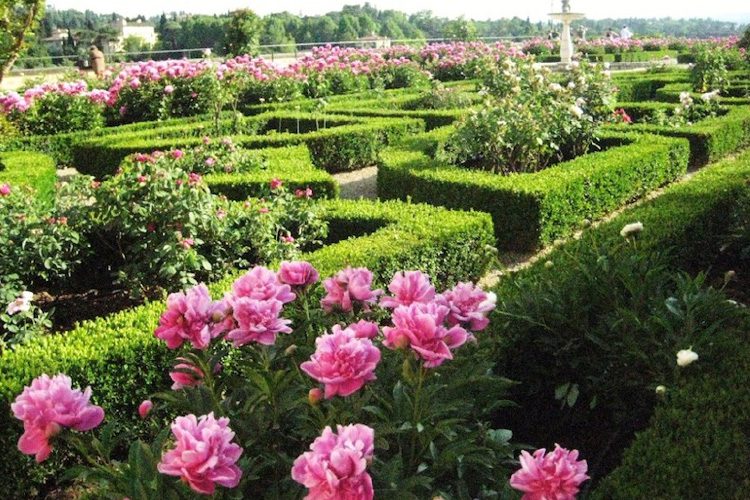
Boboli Garden View

By Samara Rynecki 

Get away from the touristy crowds in the museums and art galleries, and get lost in the green areas of Florence.

These quiet spots can have you feeling relaxed and stress free within minutes. These places are interesting to get lost in and easy to spend hours in. If you want a place where you can feel peaceful and connect with nature, away from the busy and chaotic streets during touristy seasons, then check out these sanctuaries.

There are many options in Florence where you can appreciate the greenery and landscape, They include the Orto Botanico also known as the “Giardino dei Semplici,” the well-known Boboli gardens, the Bardini garden, and Florence Tepidarium at the Giardino di Orticoltura.

Each of these individual gardens is unique in their own, and in Florence. The Orto Botanico is a botanical garden located in Via Micheli, 3. It was originally the Medici family’s medicine garden and one of the oldest in Europe. Today it is a part of the Science of Natural History complex managed by the Italian university in Florence. Boboli is Florence’s grandest palatial garden with an early baroque drama and amazing view of the city. Bardini is not well known despite being connected to Boboli, but its terraced landscape is making a comeback from its previous restoration. The Florence Tepidarium located at the Giardino di Oritcoltura and was the largest greenhouse in Italy when it was built in the late 1800s.

These charming spots for calm walks and cooling off in the heat are going to leave you wishing you were smelling the roses instead of standing in long lines for the major monuments of Florence.

See more of Florence at FUA’s FBInstagram, and Twitter.

Marketing Class Visits Florentine Perfume Company

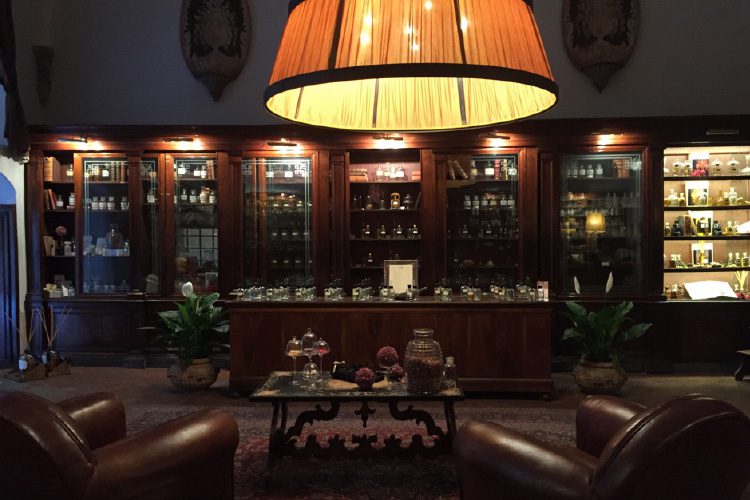
Photo by the author

By Amanda Guido

FUA’s Marketing Mix class visited with a local perfume-maker to discover the marketing practices of a niche industry.

You can smell the rose-scented air even before reaching the street where AquaFlor is located. As you turn onto Borgo Santa Croce, the inviting smell only gets stronger until you find yourself in front of the 15th century Renaissance Palazzo where AquaFlor is located. In case you could not already tell from the image above, this is no ordinary perfume store. AquaFlor is a perfume showroom and laboratory outfitted with olfactory specialists. This is not just a store where you can purchase high quality perfumes, but an experience where you are educated on scents so that you can find the right one for you. Open seven days a week, AquaFlor is truly a hidden gem in the city center of Florence.

During my experience in this magical place, I was given a tour of the grounds from their communications strategies specialist. He explained to us that the perfume industry is growing rapidly, increasing 15% from 2014 to become a 39.2 billion dollar industry. He is taking advantage of this by making AquaFlor different from any other perfumery to create brand recognition and word of mouth advertising.

Clients can spend hours just browsing different scents with the help of experienced olfactory specialists, and create their own scent to take home.

The perfume showroom itself had such a unique aesthetic: classy, put together, and vintage. The first room has diffusers, used to give rooms in the home a pleasant scent. Next, our guide then took us to a room filled with pastel-colored soaps. These are very affordable and would make a great gift for loved ones back home. The third and final room on this floor was where the perfumes are kept. The price point for the perfumes is 140€, but this is a steal considering the quality of the product. Most other perfumes have a high concentration of alcohol and water whereas these have a significantly higher concentration of the actual scent for a longer lasting experience. Even testing the perfume is unique at AquaFlor. The pure scent is concentrated in beakers and a test tube is placed upside down in this scent. You simply smell the inside of the test tube which is meant to give a more accurate feel for what the perfume will smell like when it is worn. Most other retailers spray the perfume on a piece of paper, which is not effective for getting an accurate smell. I personally enjoyed how the rooms were split up by product. From a consumer perspective, this made it easier to shop.

Lastly, we visited the lower level lab. Our guide explained the scientific and chemical aspects of the production process and showed us how the perfumes were made. We also explored scent categories, and the experiential aspect of the visit is a great marketing tool. The Instagram account of AquaFlor is beautifully curated too. You can visit AquaFlor in Borgo Santa Croce 6 in Florence, as well as check out the company’s website.

 Did you know that an FUA alum is a part of the AquaFlor team? Watch this alumni video interview.

See more of Florence at FUA’s FBInstagram, and Twitter.

Il Doppio Bacio

By Christina Trupia 

It is Italian tradition for family and friends to kiss each other on each cheek as a greeting when saying hello or goodbye. If you look around the streets of Florence, you will see this salutation everywhere. Have you adopted this Italian custom or any others yet?

It is the simple gestures that hold a plethora of meanings between those who share them. You can see it between friends passing each other on the street while taking an afternoon stroll, in a restaurant amongst two friends meeting for a meal, or even those departing after a day spent with someone who was once a stranger.  Un doppio bacio, or a double kiss, customarily on the cheek, is a common gesture between those local to the region of the world that I now call home.

Mostly used among those who know each other such as family or close friends, I view this effortless, social gesture as a beautiful and welcoming practice. It is a sign of love and caring for those who have had an impact on your life at some point in time.

Imagine friends from university coming together after years of living distant lives, greeting each other with a double kiss on each cheek as a sign of the relationship they once shared. Perhaps you may see it shared within a family of grandparents, aunts, uncles, nieces, and nephews meeting for a celebration of a new life born into the family. It may even serve as a farewell gesture between a classroom of a small group of students after the completion of a course, or a guide ending their journey with the travelers they have come to know after a full day of touring and adventure in a new place.

It is an engaging tradition that means so much more than a simple handshake or an exchange of words. A small gesture with a heartfelt meaning, the double kiss symbolizes the genuine respect and sentiment we all have for one another.

See more of Florence at FUA’s FBInstagram, and Twitter.

International Women’s Day, Every Day

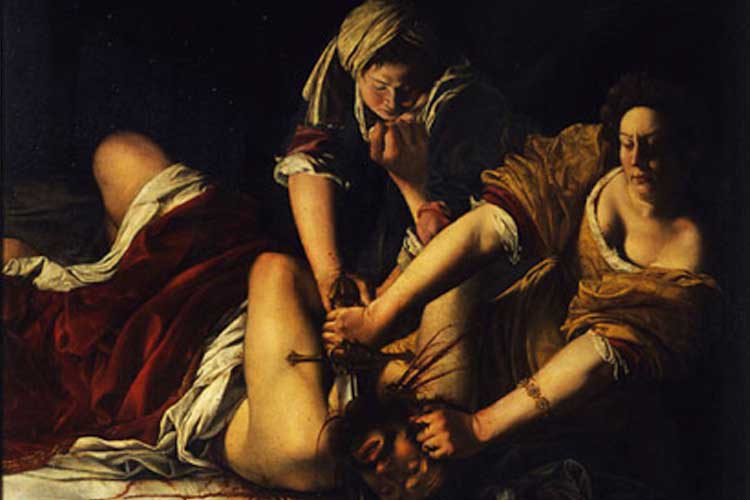
Detail from Judith Beheading Holofernes by Artemisia Gentileschi

By Madison Landau

In today’s society, there seems to be a holiday to celebrate just about anything. There’s a national holiday for Nutella, siblings, and even for French bulldogs.

Here in Italy we recently celebrated on March 8th an important holiday that won’t just be swept under the rug like the others; International Women’s Day was celebrated proudly by allowing free admission to state and municipal museums for women.

Even though Women’s Day is just once a year, you can make exploring female themes in the local culture a regular part of your daily routine. If you like exhibitions, for example, try to find special shows in your area that may focus on female artists or artists who focus on female sources of inspiration.

In Florence, the famed Uffizi Gallery Museum houses historic artists such as Artemisia Gentileschi, who is considered to be one of the most successful painters after the Caravaggio era. It’s important to not just see her artwork, but to know all that went behind it. Being an artist wasn’t easy back in the male-dominated Renaissance era, and being a female artist made recognition much more difficult.

Artemisia overcame such obstacles within her lifetime to achieve the fame she enjoys today, and for women across Italy to have the opportunity to see her artwork firsthand can prove to be a real inspiration for all. At the FUA campus, the Artemisia Room is dedicated to this important artist, and often hosts experiential learning students who collaborate on special projects related to videomaking, visual communication, and journalism.

To commemorate International Women’s Day as more than a “hallmark holiday” shows a great deal of respect to the women of not just Italy but internationally. During your studies and your daily life in Florence, seek to uncover the great as well as lesser-known women who have contributed to the artistic and civic culture of Florence and Tuscany.

See more of Florence at FUA’s 
FBInstagram, and Twitter.

Talking Stones of Florence

Photos by the author

By Aaron Klevan

What do Florence’s “talking stones” have to do with modern-day journalism and civic awareness? FUA’s Writing for Digital Media students recently explored connected readings of the city’s political and cultural history through its talking stones. Next time you take a walk around the city center make sure to look up and see if you can spot some.

Florence is a city with a rich history that dates back centuries. One of the unique ways that the city actively communicates its vibrant past is through “talking stones.” These stones, containing inscriptions of both writing and art, are adorned on walls throughout the city and tell Florence’s most fascinating tales. The stones also portray the art of journalism in its truest form, exhibiting many principles still applied today in an authentic breath.

  • The idea of social awareness can be seen in the way the stones project the stories of Florence.
  • The principle of connected reading is presented by the way the stones link current Florentines and visitors to the city’s political past.
  • The stones also share visual information with supplementary images and drawings in addition to pure text.
  • Finally, at the time they were created, the stones were a form of enhanced technology requiring specialized knowledge and methods for chiseling messages into stone.

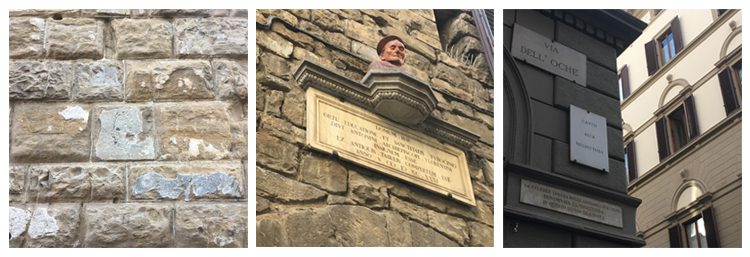
The first talking stone shown on the left of the photo is one of the first known forms of graffiti, located near the main entrance to Palazzo Vecchio. As the legend goes, it was a self-portrait of Michelangelo. It is a fascinating way to look at the technology artists used at the time, and also offers a glimpse into the booming art community during the Renaissance, connecting people today to those who walked Florence’s streets and drew on its walls in the past.

The second stone is perched atop a bustling intersection near the city center in Via delle Oche. It textually denotes that the building on which it is placed was once home to the prestigious Adimari family, of which Alemanno Adimari was a member. He was a famous Italian Catholic cardinal and archbishop. This stone serves the purpose of displaying the famous residents that played a fundamental role in shaping the city.

The final stone is a beautiful bust and description of Saint Antoninus in Via dello Studio. He was an Italian Dominican friar who ruled as an Archbishop of Florence. This talking stone is found on the exterior façade of the Pierozzi family home. It is a perfect example of combining visual information with written texts, much like an article, that allows viewers to see the subject and read about it.

The city continually talks to us every day through its surfaces, signs, and symbols. What unexpected discoveries have you made through Florence’s talking stones?

See more of Florence at FUA’s FBInstagram, and Twitter.

Put your Phone in your Pocket (and get lost!)

Photo by the author

By Madison Landau

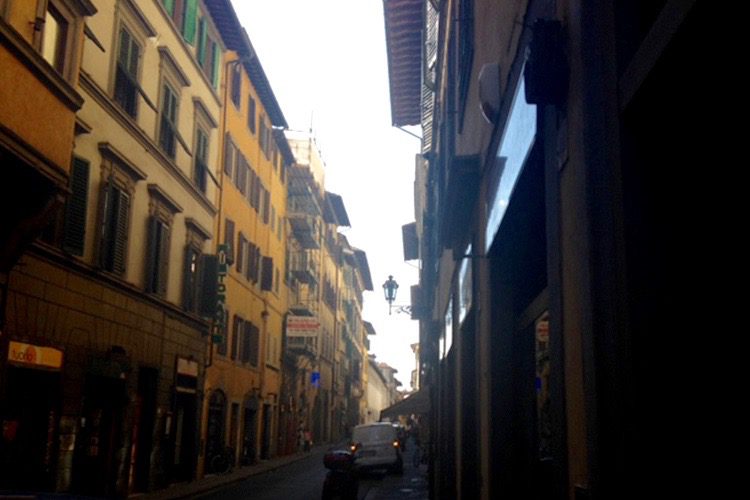
Walking down the streets in an unknown city in a foreign country can seem very overwhelming, especially in Florence’s winding neighborhoods. A great rule of thumb is to let yourself get lost and put your phone away…in trying to find your way back home you might just discover something new.

When arriving in a new country, my first instinct is to take my phone out to see if I have cell service or Wi-Fi. Arriving in Florence for my study abroad semester at FUA was no different, and I held my phone in a death like grip for the first week of living here.

Even though I was provided with great maps of the city by FUA, I still felt as if my phone was my lifeline here in Florence and that without it I would get lost forever among the streets of the city center. Little did I know how much nicer and productive my first week being here would have been if I had just allowed myself to actually get lost.

I had my face buried in my phone, looking at my maps instead of actually taking in my surroundings and understanding the streets of Florence. I didn’t want to feel uncomfortable in this city, yet I was so new to my surroundings that I refused to listen to everyone around me encouraging me to get lost.

My presence here in Florence was artificial in a sense that I really didn’t focus and appreciate where I was until I put my phone away and learned the streets of Florence.

Don’t get me wrong, I was still capturing and recording my moments here in Florence as much as I could. But instead of having my maps app constantly open, I had my camera open, or the TripAdvisor app open.

The difference between being too consumed within your electronics and being just consumed enough is a very delicate and thin line. While you want to photograph and remember every moment you can while you’re here in Florence, it’s so important to make sure you’re actually appreciating where you are and not just focusing on surviving.

Trust me, put the phone away when possible. Don’t just survive day to day while you’re abroad; thrive as much as you can here. Grow as much as you can. Put yourself in a world that you’re not familiar with, and learn to be okay with it.

See more of Florence at FUA’s FB, Instagram, and Twitter.
A Slimmer Suitcase in 3 Steps

Photo by alexis via lifeofpix

By Aidan Loughran

Whether you’re packing for a semester, quarter, or single short session, these suitcase-slimming tips come in handy for everyone and may even provide a head start to making new discoveries at your destination.

As I was preparing to depart for Florence to study abroad for a semester, my main concern through the pre-departure process was how and what I was going to pack. A semester is a long time to be away from home and it is hard to know what will be needed in a new country that you’ve never been to. I know myself fairly well and I knew I would over pack, but I also don’t want to leave anything behind that I may potentially want to wear. Once I started filling up my suitcase, I realized that there were many things I wouldn’t wear and by limiting myself, I ended up packing much lighter than I originally would have. Here are three main tips you may find useful while packing.

1. Slim Down: Buy Vacuum-Sealed Ziploc Bags

These bags saved my life! While I had a decently large suitcase, being a girl, I still packed more than I needed (of course!). I was able to fit about ten, thick sweaters in one of these bags and it shrunk them down a crazy amount. It took up very little space and made ten sweaters look like two.

2. Remove When in Doubt: Toss Any “Maybe” Items

When packing, I have always had the problem of packing “maybes” or “options.” By this I mean packing clothing items that I think I may want to wear, but usually never end up doing so. DO NOT bring these items. You will not end up wearing them. If you don’t wear them at home, you won’t while abroad. Limit yourself.

3. Buy There and Make New Discoveries

Unless you are going to a country that has little access to grocery stores, pharmacies, salons, etc., do not buy your toiletries in advance. It is a waste of space and you can get anything abroad that you will need. Sure, bring along that face or hand cream from your favorite niche brand but otherwise wait to buy items such as mascara, eyeliner, and hair products until you get to your country. Florence for example has Sephora, salons, beauty stores, and interesting local brands. For the guys, there are bespoke barbershops and well-stocked men’s sections at stores. Checking out what’s available can also lead to local discoveries, such as the antiche farmacie, the historic pharmacy shops that produce their own collections, or contemporary perfume makers that you’ll only find in Florence.

I hope these tips will provide you with a simple, easy and slimmed down packing process. Enjoy!

See more of Florence at FUA’s FB, Instagram, and Twitter.

Lose Yourself, Find Your Way

Photo courtesy of FUA

By Abby Moran

Embrace the uncomfortable, enjoy the bewilderment of studying abroad.

Studying abroad may have been the most difficult thing i have ever done. 21 years of figuring life out, myself out and now a new culture is an incredible adventure. To step away from all that is familiar, to acknowledge that you will get lost mentally, emotionally, and physically but all of this will make you grow in ways you could never imagine is daunting. After a couple weeks in Florence, I am less afraid and regaining pieces of myself I thought would be lost back home forever.

Being in a situation where in order to save time, effort, and my roommate’s energy involves being outgoing, assertive, and confident in new situations has turned out to be the absolute best scenario. I love it. I love walking in the rain here. I love the puzzle of streets that could lead anywhere but often times lead me to the Duomo, that I’ve come to see as a safe haven. I love the different languages filling my ears. The uncertainty of who and what can be encountered around the next corner. Gucci, Prada, Valentino, your shop windows bring a spark of life to my longest walks. Even in the most unfamiliar places we find objects to cling to, people to relate to, and places to become accustomed to.

Home is truly where the heart is and when we open our hearts to the culture and lifestyle of others we are given a priceless gift. Be scared, intimidated, and get completely lost because it is there, in this state of initial uncertainty where we find our strength. Find your home away from home is what study abroad offers, despite the voice in your head that says “but it will be hard.” It’s often said that nothing good comes to those who wait, so let’s proactively reach for that which seems the most intimidating. Find your landmark, in my case the Duomo, and learn something about it instead of just passing through the piazza.

Don’t shoot for the stars, shoot for the Duomo.