The Power of Disconnecting

By Murphy Thompson
Photo by Qin Quan Lin

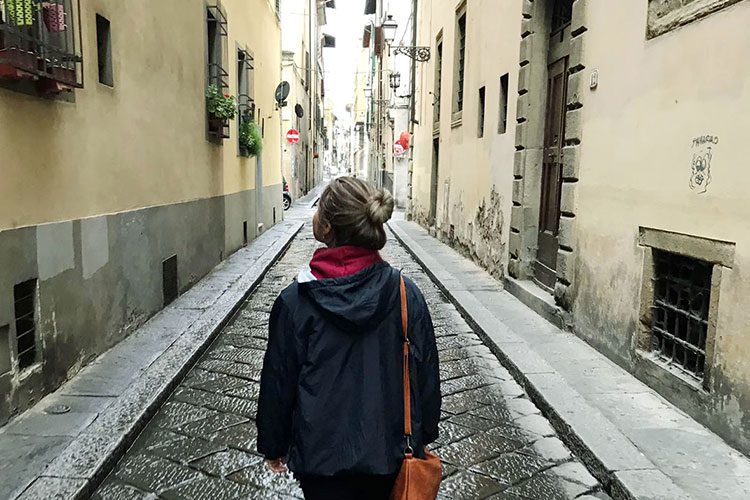
As my plane landed in Florence, I immediately reached for my phone to switch it off airplane mode. To my initial horror, it read “No Service”. A wave of panic rushed over me as I attempted to calculate the texts I would need to send and the posts I would need to like. As I sat in the cab to my new apartment with an unusable phone, I began to truly see and appreciate Florence.

The prioritization of social media drastically takes away from living in the moment. Frequently, I catch myself scrolling through my phone rather than being present. Checking Instagram appears to be therapeutic: you check it when you’re happy, sad, and anything in between. It is harder to concentrate on one task with the temptation of social media within grasp. I am not blind to the fact that this social mutation is detrimental. The misconception is that individuals think they cannot live without connection to social media. The lack of mindfulness is where people go astray; however, the moment at the Florence airport was a wake up call.

Since arriving in Florence, I have noticed that I am checking my phone less. Maybe it’s due to the lack of service, but my mind seems lighter and less worried about what others are doing or posting. In hindsight, social media created an anxiety and fear of missing out. For me, once the step had been taken to disconnect from the virtual world, it was much easier to appreciate what was in front of me.

See more of Florence and Italy at FUA’s FBInstagram, and Twitter.

A Home Away from Home

By Barbara Carranza
Photo by author 

I knew when I applied to the Special Project Experiential Learning (SPEL) Journalism course that Florence  was one of the most beautiful cities in the world. I thought it would be the perfect spot for me: a relaxed, artistic, history-filled setting that would appeal to my old and free-spirited soul. It turns out I was right on the money (and so much more). As I’m getting ready to head back to Charlotte, my heart grows heavy. Although I have only spent two months in Florence, it’s evident to me that I have found a home away from home.

The thought first crossed my mind just a few days after my arrival. I assumed assimilating to a whole new country, language, and culture would naturally take time, but surprisingly, a sense of ease settled in me very quickly. Since I have always been curious about everything, I wondered: is it because Florence is the total opposite of Charlotte, a metropolitan city nearing 1 million inhabitants; or that everything is within walking distance, or maybe it’s the “homey” vibe that Florence just gives off that makes me feel so comfortable here? Whatever the case, it didn’t take long for me to tell my parents and friends that I wanted to move here. It was a big revelation for me because after all of the trips I’ve taken in my life, the closest that I ever came to thinking, “Yeah, I can see myself living here,” was Miami and Los Angeles. Not even Lima, Peru, my birthplace, and where almost all of my relatives live made the cut. Quite the opposite – I’ve repeatedly said that while I love visiting Lima, I could never live there. So when it dawned on me that I could actually picture myself living in Florence, I was shocked, but it was a good, welcoming realization.

Now that my time here is coming to a close, the reasons for my love of Florence have become clearer. I believe one of them is the persevered presence of its antiquity provides me an endless supply of imagination. As a writer, I read and write every day. Staying in Florence gave me a burst of creativity. I wrote articles for FUA during the day, and incessantly wrote my own stories at night. Whether it was in my apartment’s living room with the windows open or in a café down the street by the Duomo, the words poured out of me, and it was simply wonderful.

Another reason for wanting to stay would have to be the breathtaking beauty of the city. Raised in a place where skyscrapers dominate the skyline, Florence offered a nice change of scenery. Instead of having the Bank of America Corporate Center, Duke Energy Center, and Bank of America Stadium in the horizon, there was the Duomo’s terracotta-lined dome, Giotto’s bell tower, Palazzo Vecchio’s Torre di Arnolfo, and the surrounding hills of the valley that the city lies in. At times, it made me feel like I was living hundreds of years ago, when Florence reigned supreme during the Renaissance.

Though I’m happy to return to my family and friends, I’m also sad to leave Florence. I’ll always carry the memories with me. I don’t know when I’ll return, but what I do know is that one day I will.

See more of Florence and Italy at FUA’s FBInstagram, and Twitter.

Bookshops in Florence

By Lillian George

FUA student Lillian George tells us everything we need to know about bookshops in Florence.  

Florence is filled with several historical landmarks, and many people travel from all over the world just to see them. Shopping is also a must whilst you are visiting Europe, but what about books? Sure, go ahead and order your book on Amazon, or your kindle, but are you getting the real experience? Having items shipped to you whilst you are in another country can be expensive, and it can take a few weeks. Going into a bookstore is an experience in itself, and it can really take you into a whole new world.

Just the other day I was walking down the crowded streets of Florence, and I stumbled upon an old bookstore, BM Bookshop. It had a very retro feel to it, just by looking at display in the window. I wanted to walk in, but it seems that the store had been permanently closed. I could tell right away that this bookshop had been around for quite some time. The person working next door could tell I was a student, and she greeted me immediately. I walked over to the friendly woman and introduced myself. I decided to try to talk to her directly about the store, although my Italian is not very good. Luckily, she spoke some English and I was able to learn more about the remarkable BM Bookshop. Talking to someone about this shop and learning as much as I did was a great experience, even if I did manage to go inside the store itself.

BM Bookshop was possibly the oldest English language bookshop in Florence, Italy. It was first introduced about fifty years ago by Libby, an American, and her husband Francesco, an Italian from Florence. The focal point of this store was the huge selection of Italian cookery books, tourist guides and books on art, architecture, design and fashion in English. However, recently (before they shut down) they added French, German and Spanish language sections. BM Bookstore was a sincere and welcoming location for English-speaking people. This bookstore was located in central Florence, and even if you cannot go into the store anymore, I recommend taking the walk over there just to see the history of it all.

The woman I talked to, who preferred to remain anonymous, peaked my interest about this store. Later that day, I went home to do some research. The most recent owner of the shop was John Werich, a young Swedish man who has lived in Florence since 2006. He bought the store because he was looking for a way to put down roots in the city. This store made him feel at home, but it’s sad that the bookshop did not last very long while it was in his possession. He and his family are art lovers, so when he bought this historical place he decided to bring some art into the store. Another interesting fact is that the store was not always called “BM Bookshop”, he renamed it to be “B&M Books and Fine Art”. He decided to rename the shop when he bought it to honor his family’s love for art.

Walking around Florence each day is getting better and better for me. I’m able to navigate the city without GPS now, and it really is becoming home. Finding stores like BM Bookshop is what this city is all about. Just because a place is shut down forever, it doesn’t mean that you can’t learn about it. I am grateful to have met the woman who taught me so much about this little old bookshop with a history behind it.

See more of Florence and Italy at FUA’s FBInstagram, and Twitter.

Quidditch in Florence?

By Guneet Singh
All photos by author

Journalism student Guneet Singh explores her childhood in Florence.

When I chose Florence as my study abroad location, I knew it was a city that would give me a lot of experiences. But one experience I didn’t expect was being able to attend the opening ceremony of the Quidditch World Cup.

Yes, you read that right.

Quidditch, the fictional sport J.K. Rowling created in the Harry Potter series, is a real-life sport that was invented in 2005.

A Potterhead through and through, I couldn’t believe my luck when I found out the event was happening here! I’ve read all the Harry Potter books and as a child, Quidditch was the main sport I really understood.

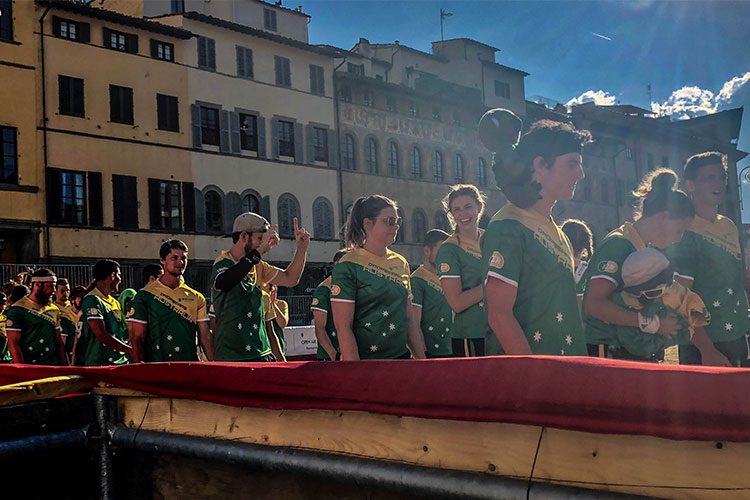
The opening parade itself was a five minute walk from Corso Tintori, one of FUA’s main buildings. I got there early and saw dozens of people in red shirts with the words “International Quidditch Association” sprawled across the back.

This is real.

A couple hundred spectators circled the stadium. I didn’t have a ticket but was standing in the right place at the right time and got in to see the ceremony! I was at the front of a crowd spread out across the sides of the dirt field. Eager fans ranged from toddlers to frantic young adults to those a little older and just curious about what the commotion was about.

Music started and teams entered the stadium slowly. I saw teams from countries all over the world, like New Zealand, Australia and the United States of America. There was a myriad of female players, which only serves as a testament to the diversity and acceptance the Harry Potter series preaches.

It was incredible to see an event like this bring so many people together and it was the best way to kick off my first week in Florence!

The Quidditch World Cup will be happening in Florence until July 2nd.

See more of Florence and Italy at FUA’s FBInstagram, and Twitter.

Pitti Uomo: Keeping Florence a Top Fashion Capital

Photo by author

By Dara Hernandez

FUA Journalism student Dara Hernandez discovers the importance of internationally acclaimed event, Pitti Uomo, and shares her experience walking through the streets of Florence during this four-day fashion extravaganza.

Florence is known around the globe for its beautiful views, structures, art and historic buildings, but some people may not know that it’s also known as a fashion capital of the world.

One of the most important events in fashion is Pitti Uomo, an event that takes place in Florence every year for four days during the months of January and June. Pitti Uomo features men’s clothing and accessories and brings in every big name in menswear whether they are a designer, buyer or creative mind.

This event was founded by Pitti Immagine, a company that organizes international fairs and promotional events in all areas of fashion. Their goal is to select as well as present the highest quality products and the most innovative styles. The reason that Pitti Uomo is so important to Florence is because the company’s origins go back to the early 1950’s where they held their first fashion show in Florence’s very own Sala Bianca in Palazzo Pitti.

The company not only has brought amazing events to the city but has added new dimension to Florence and has distinguished it as a foundation for today’s style. People from all over the globe attend in their search for the newest trends and styles or even simple details that they can take to improve their collections.


Photo by author

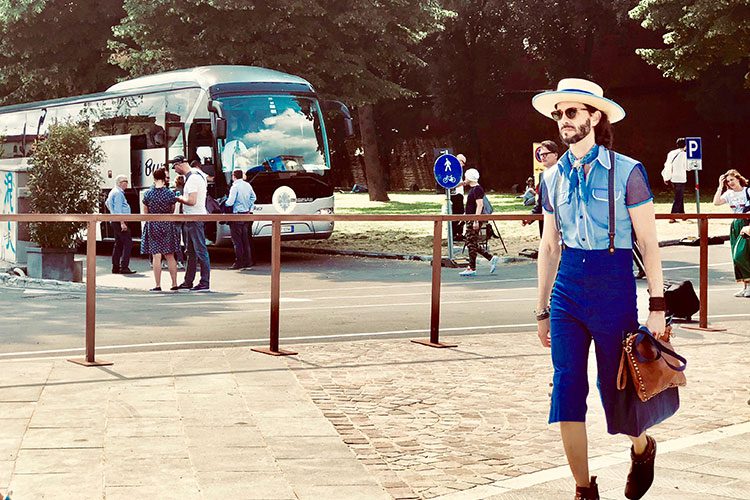
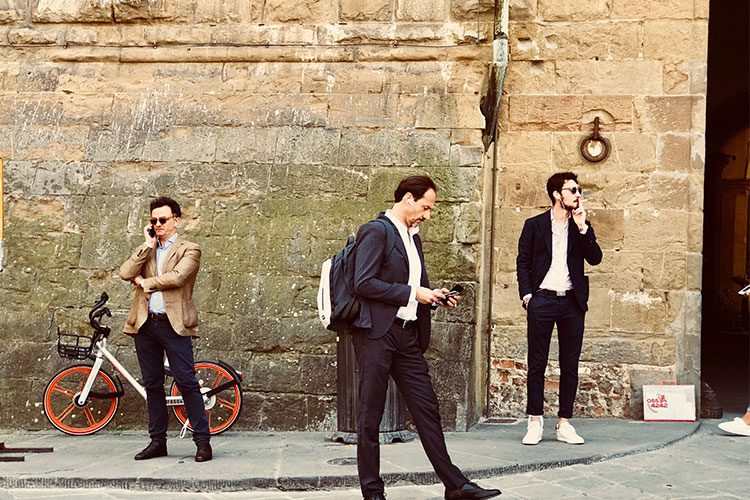
Walking around the city of Florence during Pitti Uomo makes the experience more wonderful than it already is. The city overflows with creativity and hundreds of fashionable men are seen with interesting outfits or fancy suits. The first place I walked through was Piazza della Signoria, where they held the opening ceremony. The attendees could be spotted from a mile away as they walked out of the building in their sharp suits and fancy shoes.

I, then, decided to take a stroll to the Fortezza da Basso and simply walking toward the building was quite the sight to see because it felt as if I were front row in a street fashion show. The outfits in this area were a little more spontaneous. Once I got to the Fortezza, I discovered that this is where they hold most of their main events and it was almost as if I had entered menswear heaven. Of course, many sections were closed off to the public because the event is taken very seriously in the industry but I was able to walk in and see the different stands, clothing racks and large screens showing clips of male models.

Having a fashion event as big as this one is incredible because it is an outlet for people from all over the world to not only attend and gather new ideas but also for individuals to express themselves in a creative way. Fashion is not just about clothing, it’s also about the evolution of style, piecing different garments together and the influence of the culture surrounding it.

Pitti Uomo is the real deal. This month makes it the 92nd edition of the fashion event and the 46th year since it launched in Florence in 1972. The event has grown immensely throughout the years yet remains in the city, maintaining Florence’s fashion capital status worldwide.

See more of Florence and Italy at FUA’s FBInstagram, and Twitter.

La Fiorita: A Florentine Tradition

Photo by author

By Dara Hernandez

Journalism student Dara Hernandez digs deeper into the life of Girolamo Savonarola and the meaning behind the yearly Florentine celebration of “La Fiorita.”

One of the main reasons I was drawn to Italy is for the amount of history that it possesses. Walking through the streets of Florence is like walking through a book with a chapter for every building, every piazza, and every sculpture.

Of Italy’s countless traditions, there is one in particular that has existed since 1498. It is known as Florence’s “La Fiorita” and is meaningful to the people of Florence.

The person who inspired this event was a man named Girolamo Savonarola. He was born September 21, 1452 and grew up to eventually become a Dominican friar and preacher here in Florence. He was an extremely radical preacher yet was loved by many Florentines. At the time, he became well-known for his prophecies of civic glory, destruction of secular art and calls for Christian renewal. He was also notorious for organizing “bonfires of vanities” in which artworks, books, musical instruments and other objects were burned.

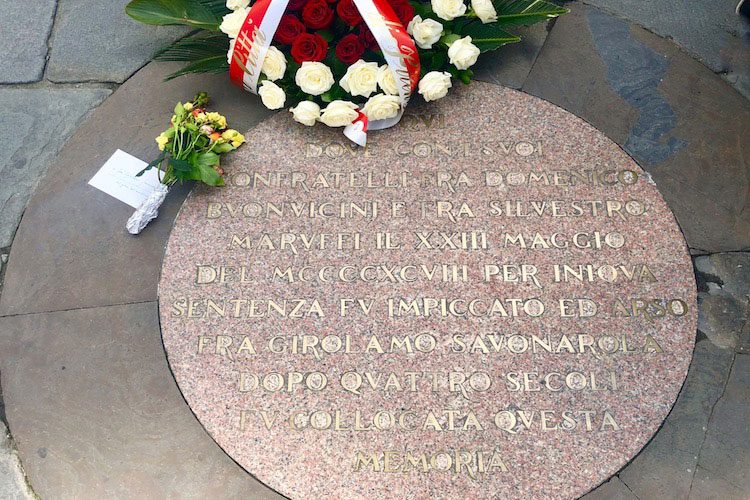
Savonarola’s passion-filled beliefs led him to getting excommunicated by the Pope. He was no longer allowed to participate in services of the church. Regardless, he chose to defy the Pope. Due to issues of this sort, he ended up being hanged and burned along with two followers on May 23, 1498 in Piazza della Signoria. The next day, his followers filled the area with flowers to honor his life and thus the tradition was born.

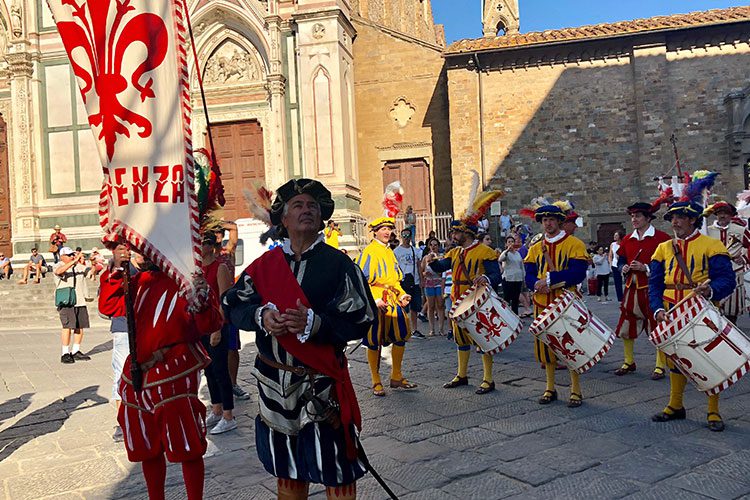
In fact, “La Fiorita” is an entire morning dedicated to the memory of Girolamo Savonarola. The people of Florence begin with a mass, proceed to spread flowers on the ground and finally, hold a costume parade to toss rose petals in the river.

As I was learning more about Savonarola, I found myself constantly wondering why people would praise someone who was famous for the destruction of, what he defined as, immoral art and someone who burned secular objects. However, seeing the roses over the plaque in memory of this man made me realize that not only are people drawn to radical, unordinary humans striving to make a difference, but also that Florentines simply accept Savonarola as part of their history. They recognize that walking through Piazza della Signoria holds stories with meaning that should be remembered.

Therefore, despite the unconventional and radical ways of his preaching, Florentines have continued celebrating his life on May 23, year after year.

See more of Florence and Italy at FUA’s FBInstagram, and Twitter.

Allergies, Ailments, and Ancient Pharmacies

 Photo by author

By Gregg Casazza

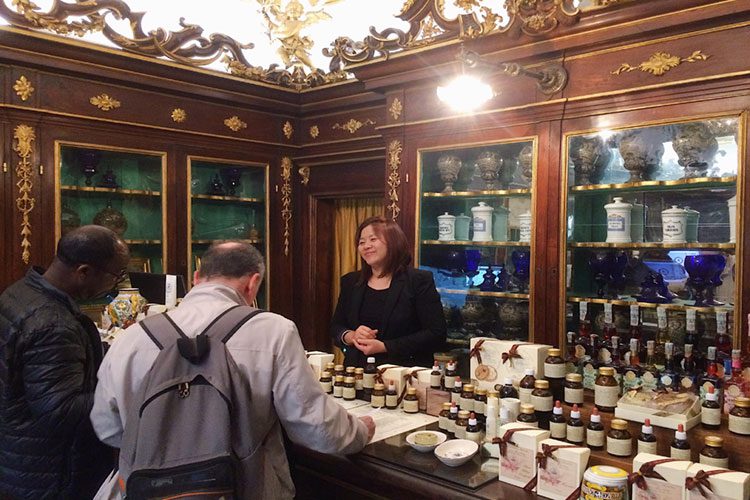
If the thin layer of yellow pollen that covers the city isn’t already enough of an indicator, allergy season is now upon us. Scratchy eyes, sore throats, and stuffy noses seem to plague the entire city. Thanks to the city’s storied past, you can now easily stop by the local farmacia to get the appropriate modern medicine for nearly any ailment. The history of Florence is forever tied with that of the ancient pharmacies, which housed herbal remedies for anything from heartache to the black plague. What is perhaps most astounding about these ancient places of healing is that many are still open and operating today!

The Officina Profumo Farmaceutica di Santa Maria Novella is frequently touristed, and for good reason. This farmacia is the “oldest historic pharmacy in the whole of Europe, active without interruption for almost 4 centuries” as well as, “one of the oldest commercial establishments ever,” according to their website. This establishment began as a convent, with Dominican friars preparing essences, elixirs, ointments, and balsams using high quality ingredients and recipes that can still be found displayed today. The pharmacy is now a luxurious shop, specializing in perfume, as well as a free “museum of tradition.”

Another lesser known farmacia is the Ancient Boar Pharmacy, or Antica Farmacia del Cinghiale. Looking at the earliest official documents, there are mentions that this farmacia dates back to 1752. However, it is believed that it is actually much older. Similar to that of Santa Maria Novella, the early pharmacists made their own remedies, and the first documented pharmacist working, Girolamo Nicolò Branchi della Torre, prepared his own remedies in his private laboratory. His contributions were so notable that he has been accredited with moving the science of healing past the “magic of alchemy” to the science of chemistry. These contributions were so widespread that the Grand Duke of Tuscany asked him to open the first School of Chemistry in Pisa in 1757.

Many ancient pharmacies make up the history of Florence. There is Farmacia SS. Annunziata, which is also still in operation as well, and has been in operation since roughly 1561. They continue to utilize older traditions of preparing products such as tooth paste, shaving lotion, products for hygiene, skin, and galenic prescription (the combination of multiple medecines to increase their potency.) While these ancient pharmacies have changed a great deal in the many centuries since their inception, they have stayed largely the same as well. They may no longer be run by the Dominican monks however, many of the same recipes and natural ingredients are still being used to create their products. These pharmacies might seem ancient, but in a lot of ways they are rather progressive as well by not using animal-testing for their products. Ancient pharmacies are part of Florence’s strong heritage, and with so many still open today, perhaps consider checking one out the next time you suffer from allergies.

See more of Florence and Italy at FUA’s FBInstagram, and Twitter.


Cooking Like A Local

By Molli A. Browne
All photos by the author

Photography student Molli A. Browne shares her farm to table experience cooking like a local.

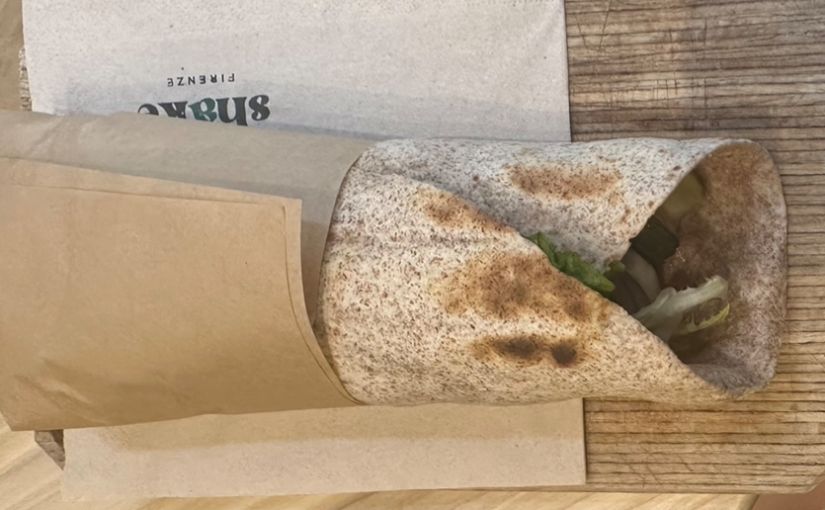
Spring has sprung in Florence and people from all over the world are coming to visit. The streets are crowded and the markets are filled with tourists, locals, and fresh seasonal vegetables. During my first couple of weeks here, I noticed that almost every dish I ordered had zucchini in it. I did my research and quickly realized zucchini is in season from late March to early September. I decided that I should go out on my own and cook a meal like a local. Of course, I had to use zucchini.

As I was walking home from class, I discovered a small fruit and vegetable stand at the end of Borgo Pinti. They had ample amounts of farm fresh zucchini for an incredible price. They also had fresh garlic, lemon and cheese. I used all of these ingredients to make my pasta dish. This dish is spaghetti in a lemon garlic white wine sauce topped with baked zucchini flowers.

See more of Florence and Italy at FUA’s FB, Instagram, and Twitter.


Via dei Malcontenti

Tabarnacle on Via dei Malcontenti

By Molli A. Browne
All photos by the author

Via dei Malcontenti is the street the Florentine prisoners would walk down before being excecuted. Via dei Malcontenti connects Via delle Casine to Piazza Piave. Today, the street consists of apartments, a church, and a school. During the day, the road is quiet and calming. The following set of images are what a prisoner would have seen walking down Via dei Malcontenti before the execution. 

Photography student Molli A. Browne imagines the final moments of a prisoner walking down Via dei Malcontenti.

My time has come.
My darkest day…
I pray for forgiveness, I pray for my sins.
My last chance.
Gone.

See more of Florence and Italy at FUA’s FB, Instagram, and Twitter.

Experiencing a Religion: Welcome to Fiorentina

Photo by Author

By Sean Ahern

Football is not merely a sport here in Florence. It has a much higher purpose than that. The city revolves around the club, the Viola. As a first timer attending a European football game, this was nirvana.

It was a typical Florentine Friday as I enjoyed my one class when my roommate and I decided to get tickets to the Fiorentina and Juventus game during the night. As a football superfan, I was more than willing to partake within this rivalry as I have only seen and heard insane things when it came down to this game. Time moved slowly as my anticipation grew to a fever pitch. Suiting up with my Fiorentina jacket, I was ready to toss away my tourist status and become a local. Walking over to the stadium, I heard the fans’ chants grow louder and louder. This surely was not just another Friday night football game, this was going to be war.

Heading to our seats, we noticed the sheer amount of people that were packed into the stadium and realized that this was something that was not of the ordinary. Excitement filled the stadium while the Fiorentina fans sang the songs of the club. I have personally never heard a louder stadium and the voices grew louder with every shot, every foul, and every pass.

Although Fiorentina lost the game two to nil, the atmosphere is something that I will never forget. It was my first real foray as a citizen of this wonderful city, and even though I will forget the names of the restaurants and the gelato places, I will never forget this game.

See more of Florence and Italy at FUA’s FB, Instagram, and Twitter.