Spilling the Beans: Comparing Café Culture Between Italy and America

Reflecting on the differences between the rushed attitude of coffee drinkers in America, to the relaxed nature of café culture in Italy.

written by Tyler Kirwan for SPEL: Journalism

Cafés in America are quite different to those in Italy on multiple different fronts. The reason why seems to stem from the difference in attitudes on leisure between the two countries.

In July 2023 I visited Italy for the first time. My trip was two weeks long and included four other countries in Europe. So many countries in such a short time that I normally forget to mention some when telling people of the trip. Still, it was amazing, and we spent the bulk of the trip traveling around Italy. We made Rome our home base while in the country, and traveled to Florence and Naples while we were here. Of the three cities, I would with 80% certainty say that Florence was my favorite of the places I visited. Luckily for me, I attended my school’s study abroad fair on a whim one day while walking through our Journalism building, and discovered they offered a semester in Florence with an Internship! How exciting I thought, and spoke with my advisor about the opportunity. Six months later I was applying for the abroad program, and four months after that I was packing my bags. 

Working in coffee for over seven years, I would consider myself a pretty O.K. source of all things encompassing. When you take into account the fact that I am only twenty years old, I feel as though I am allowed even more merit points. I have worked in the coffee scene since I was thirteen. I’ll avoid the long explanation, but basically when I was in eighth grade, I opened up a coffee shop at my local mall and have been pretty interested in coffee and its culture ever since. Following my coffee shop, I was hired as a barista in a small café in my hometown. Six years later and I am still working there, so I feel I know the demographics of ours and other American shops. The types of people who spend time inside sitting down are students, remote workers, families, and friends / dates. (I can never really tell which group people fall into.)

My coffee shop also definitely affiliates itself with the younger audience; a place for self-described indie and emo kids.

The coffee scene in Italy though, now that is an entirely different scene. A ‘Brave New World’, if you will. On my first trip to Italy, it was what obsessed me the most. I remember walking through the train station in Rome after leaving the airport, and an Illy Cafè caught my eye. I was previously familiar with Illy having worked in coffee, but this was an entire shop dedicated to it, and even weirder, everyone was huddled around the counter. I walked over with my bags to see what all the commotion could possibly be over this seemingly-ordinary coffee shop, and was physically taken aback by what has to be the biggest differences between coffee in the States and coffee in Italy. Everyone was standing at a flat bar a little lower than the register and drinking ceramic cups of espresso. Ceramic cups at a train station. This was mind boggling. Why are they all standing around when they could just take it away in a paper cup I wondered. Aren’t they in a hurry?

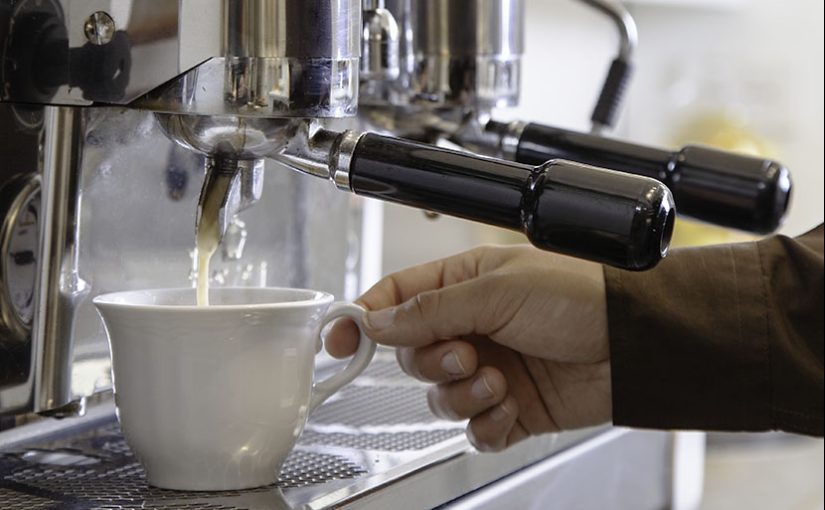
I have come to learn during my time here that Italians have a different relationship with coffee. All this is gathered simply by being an observer, however I believe the following to be true. Italians use a café as a place that is not work, nor home, but its own third thing. When I say cafes, I actually mean bars, as that’s where you can find an elegantly crafted Italian espresso machine sitting alongside a liquor cabinet. They also tend to have pastries and snacks at bars. Tabacchi shops also tend to have espresso machines. The word cafe for me has become an all-encompassing term for coffee shop, bar, tobacco shop – all places in Italy with an espresso machine. The point of all this is to say that Italians treat these third places as hangout spots. These are places to escape work and school, talk to their friends or family, or chat with someone they haven’t seen in a while. They grab a little glass mug of espresso and stand at the counter and catch up. If they know no one there, they lean against the counter and drink their espresso, macchiato, cappuccino, or whatever their preference. It’s not about getting a caffeine boost in a plastic cup, and running as fast as you can to work. The culture is about getting a morning coffee to enjoy and wake up with. A daily ritual, even if short, that can be savored, not rushed.

Now we get back to my previously mentioned demographics. From what I’ve noticed there isn’t much need for cafes with affiliations. Most places offer similar vibes, with the outliers being specialty shops such as bookstores or record store cafes. For my coffee shop at home, to be successful we need an affiliation, a reason for people to specifically come to us. A marketability. Cafes here don’t have much of that. They offer relatively the same menu at the same prices for anyone to come in and enjoy. There are some specific coffee shops whose goal seems to fit a certain market, and one of those Ditta. Ditta Artiginale allows people to sit at tables or bars with laptops or books, and a lot of their customers take that opportunity. To me, they are a very American-oriented shop, and a lot less like a traditional Italian café. Ditta isn’t the only shop like this, there are other places with an American audience, such as Melaleuca, which is an Australian-American brunch café. On Melaleuca’s website, they even ask people to respect their laptop-free days of Friday-Sunday. 

I hope that during the rest of my stay in Florence I can come to learn more of the cafe culture here and maybe a lot of my hypothesis will be disproven by nuances I have yet to uncover. I really do appreciate the way Italians separate life and work, and would love some of that relaxing energy when it comes to my morning coffee in the States.
A Culinary Tour of Florence: Beyond Traditional Italian Cuisine

Exploring the Diverse Food Scene of Florence, from Bistecca to Bao

written by Connor McHugh for SPEL: Journalism

Everyone knows that cultures are defined and characterized greatly by their food. When you think of any given country, your mind almost certainly first goes to the local cuisine of that region. Italy specifically is often considered to have some of the best cuisine on the planet.  However, it is important to understand that even in a country like Italy, the local food is incredibly diverse. We are going to take a look at the many different sides of Florence food and where its place in the overall society sits.

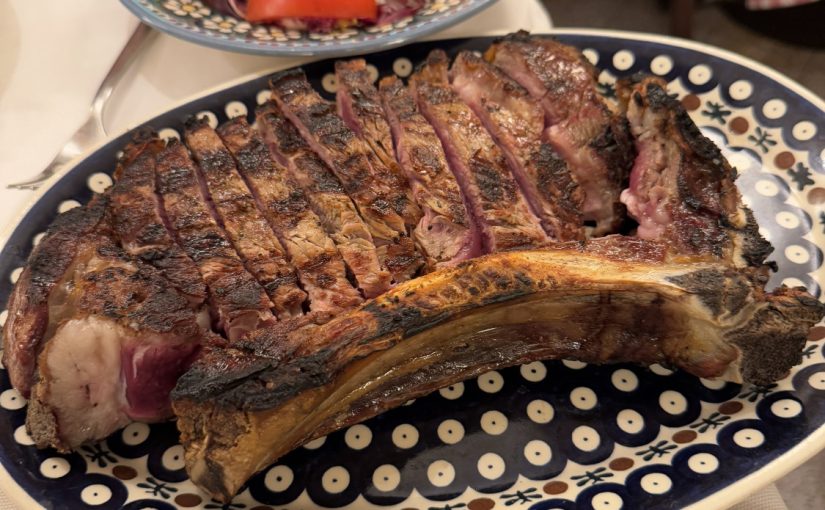
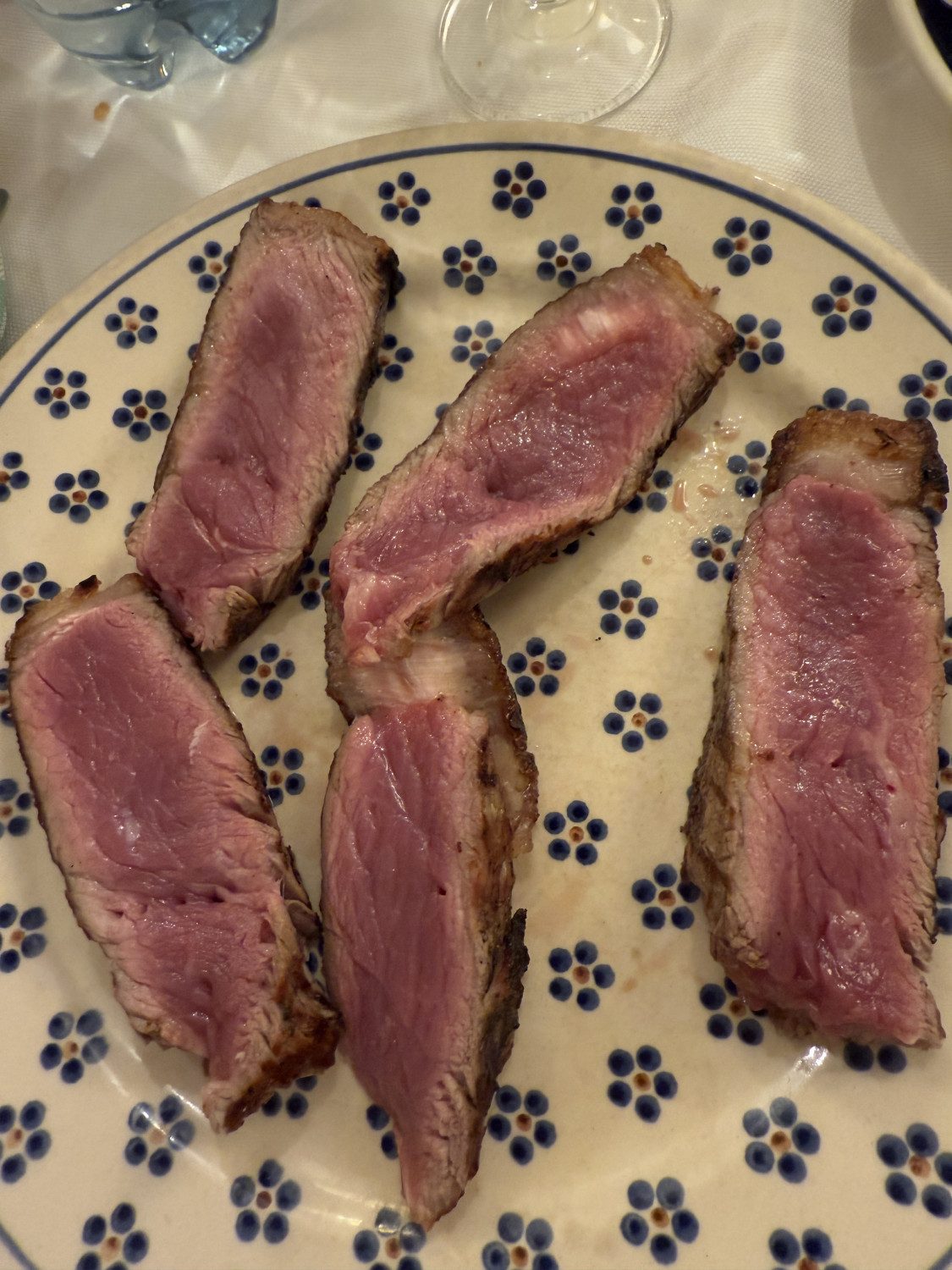
First, it would be blasphemous to not start this with Bistecca alla Fiorentina. The absolute staple and most popular dish of Florence is a sirloin cut of meat that is taken from a young steer or heifer. It is always served rare, as is the tradition and truly the only way to experience it. This steak was one of the best I have ever had, served with grilled potatoes and a salad. By keeping the beef rare, you are able to maintain all of the natural juices and flavors mixed with the loads of salt and seasoning on top. Due to its technical grilling requirements and need to be aged for over two weeks, patrons have to order at least 2 kilos of the meat. So next time you and your gym partner are looking for a good post workout meal, Bistecca alla Fiorentina is the best option.

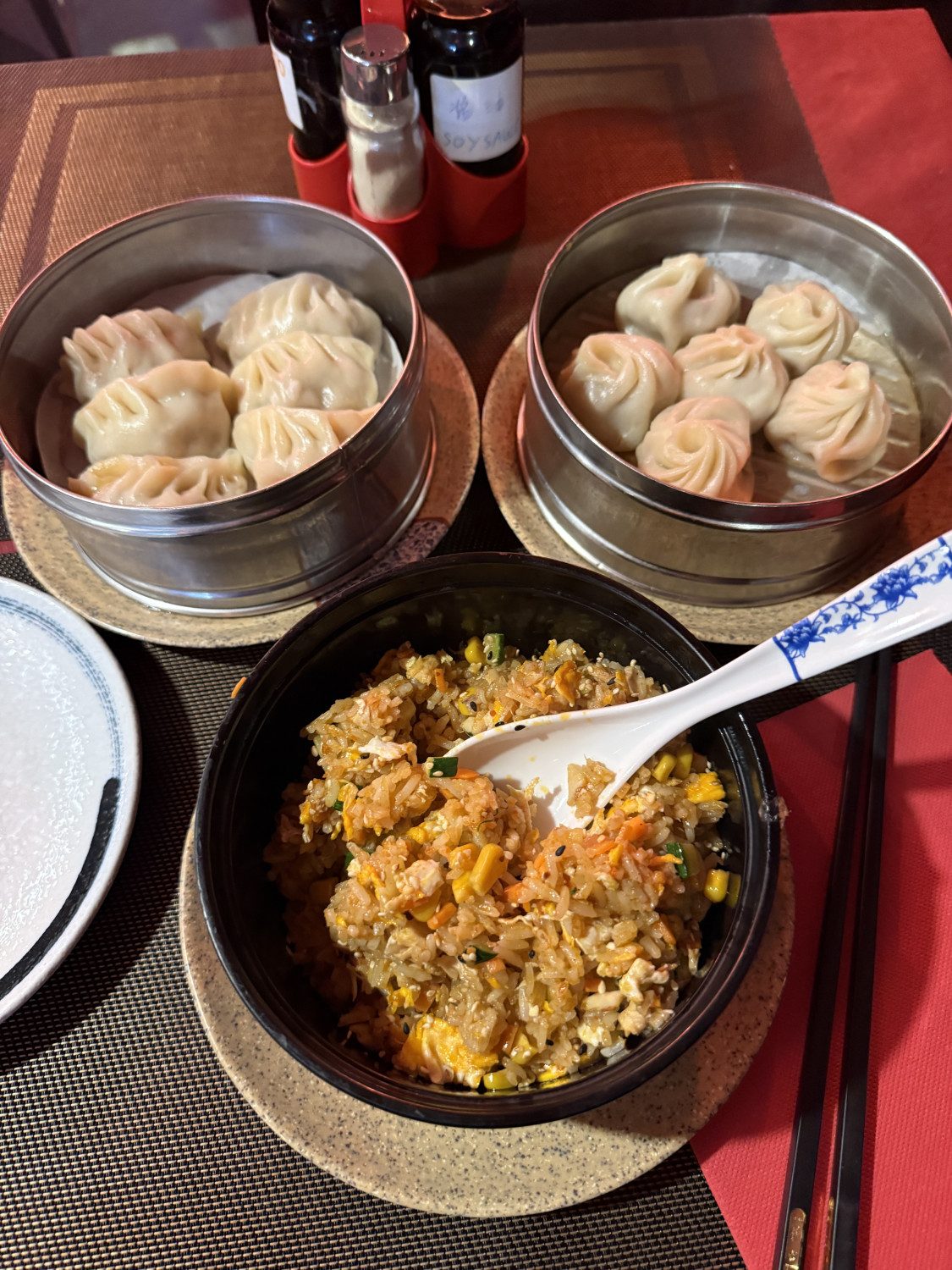
If you walk around Florence’s city centers, you will be met with endless pizzerias and trattorias which of course serve traditional Italian food. Venture a little farther out from the tourist areas, and you can be met with an entirely different world of amazing food options. For example, the thriving traditional Chinese cuisine of Florence. I was pleasantly surprised about the quality of the Chinese food and its authenticity. After a few orders of boazi and dumplings, I was extremely impressed. The outside was the perfect amount of savory and the texture was soft. The pork filling topped it off with its freshness and seasoning. What really sold the deal, however, was the duck rice. It is not often to see duck rice done correctly as many places don’t put much effort into their fried rice varieties. The rice was most definitely 24 hours old (the correct way to make fried rice) and the duck was cooked perfectly. It’s safe to say that I have eaten Chinese food in Florence more than pizza.

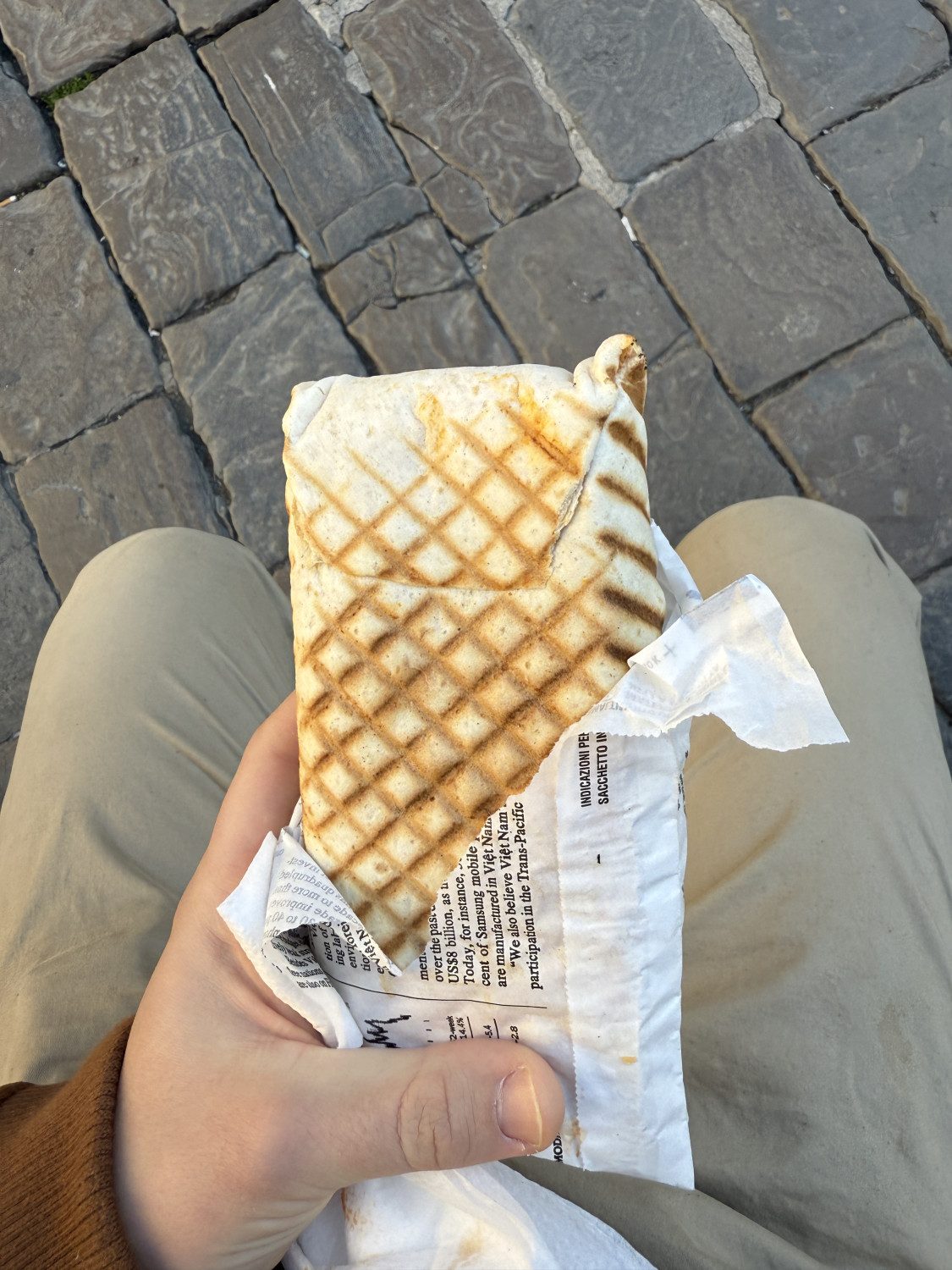
Of course, no European country would be complete without its local kebab spots. The kebab is a dish that can be seen all over the world but is uniquely different at each place. With roots originally in Turkey, the kebab is a simple dish that has an infinite amount of combinations. My kebab was a relatively traditional one, containing shawarma from a doner, and various fresh vegetables and sauces. The two new things that I especially enjoyed about this particular kebab were the jalapeños and fries in the wrap. Of all the different places I have gotten kebabs I have never seen jalapeños as an option. I always make sure to get every topping wherever I go to ensure that I am eating the food as it was truly intended. The jalapeños were a great touch as they added a certain level of acidity to the dish that sometimes kebabs are lacking. I was also surprised to take a bite and find that there were fries inside the wrap. It was an interesting yet welcome addition to the traditional kebab. Sometimes kebabs can be soggy and floppy due to the excess amount of sauce and wet ingredients, but the fries soaked a lot of that up making for an extremely firm and crisp kebab.

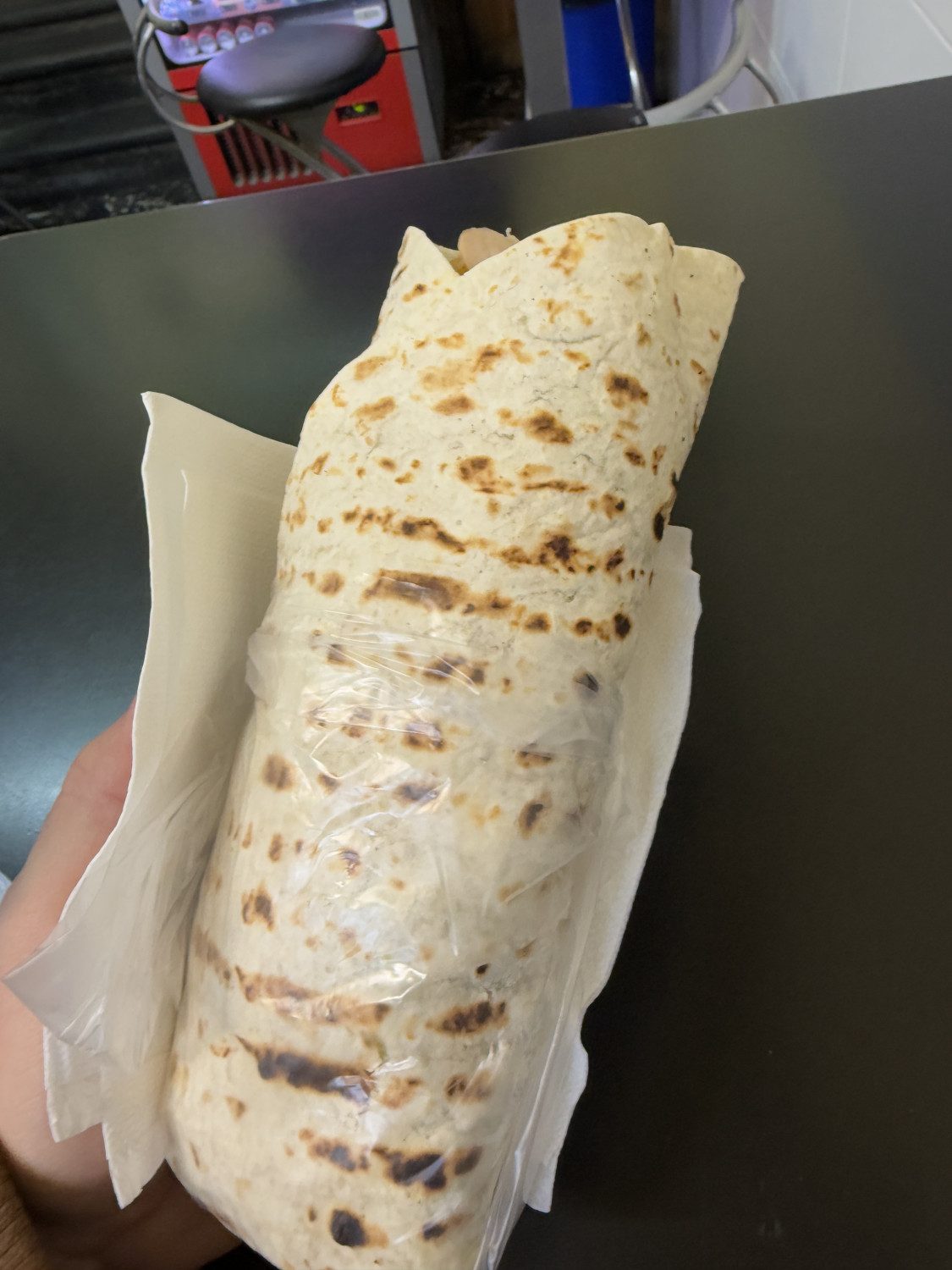
An underrated and often overlooked cuisine in European countries is Mexican. In The United States, you can’t go two blocks without seeing a hole in the wall family-owned Mexican restaurant (or at least a Chipotle). Mexican food in Florence needs to be sought out directly. So that’s what I did, because I cannot survive more than a week without a good burrito. I found a burrito stand and had to see what it was all about. I was both surprised and unsurprised. My hopes were not extremely high, but I was not very impressed with the finished product. My spicy chicken burrito was not spicy at all, which surprised me. Also, I am not sure if this is what I should expect in all tortilla wrapped dishes but there were also fries in my burrito. While I am all for innovation, fries in my Mexican burrito is not something I need. The rice was underwhelming and slightly overcooked. The beans and the chicken were both cooked nicely and tasted pleasant enough. Most likely not something that I would order again unfortunately.

As my first three weeks in Florence conclude, I am proud to have tried a multitude of different cuisines and food options. I know that with the eleven weeks I have remaining, I will find the best of each food that Florence has to offer. All of these different cultures are able to spread and be appreciated through their food, and I feel it is a civic duty to be as diverse in my food choices as possible. My taste buds are especially glad about my goal of being a world citizen.

In a Galaxy Far, Far Away: My First Two Weeks Abroad

written by Charlotte Cicero for SPEL: Journalism

Ciao a tutti, my name is Charlotte Cicero. I’m a junior at the University of Missouri in Columbia, Missouri, and am studying abroad at Florence University of the Arts (FUA) this semester. I’m a Broadcast Journalism major with a minor in Hospitality Management, and this semester, I’ll be writing for this website you’re currently reading, as well as the Blending Magazine. 

I’ve lived in Florence for a little over two weeks now. The adjustment has not been easy, and I think I’m still shocked that I’m finally living this dream that has just felt like some faraway plan for many, many years. 

When I was only 16 years old, I set a plan in motion to study abroad during the spring semester of my junior year. I was sitting in 10th grade English class with my friend Zoe, who said she wanted to go to Spain. We’re 21 now, and I’m going to visit her in Spain in a few weeks. I said I wasn’t sure where I wanted to go yet. After all, I had 4 years… 4 years that flew by incredibly fast.

When I was applying to colleges, I wanted an experience that was going to feel brand new. Living in California my whole life, Missouri was nothing short of new. I didn’t totally notice it at first, but people live differently in Missouri than in California. Life moves at a different pace, driven by different forces and values.

This transition to Florence, however, feels nothing like my transition to college. I’m still trying to decide if that’s a good thing, and I’m hoping it is. I feel these changes in a much different way from how everything felt when I got to Missouri. This transition feels almost unreal, like I am still in the process of, well, processing. 

I walk the same streets every day. I can get to the store, the city center, and all my classes without Google Maps. I feel lucky that these streets feel so safe and familiar, but sadly, not like home. Not yet, at least. 

I get this sense that many people see studying abroad as this competition – to see as many places as possible, take as many weekend trips as you can, and always be going somewhere other than your host city. Yes, realistically speaking, you are spending the majority of your time in your host city during the week, so it makes sense to book that weekend getaway. How can you say no when RyanAir is going viral on TikTok and SMARTTRIP EUROPE has a 10% off code for every trip they offer? 

For me, I want to get to know Florence. Of course, I want to see as much of Europe as my schedule (and wallet) will allow. But there’s something special about talking to the same employee at the coffee shop on your street every morning, sipping your espresso (that you’re still getting used to) as you muster up the courage to practice the new word you learned on Duolingo the previous night. Going to see all the museums that Florence has to offer. Spend as many days as you can in the Boboli Gardens and watch all the sunsets you can watch from Piazzalle Michelangelo. Watching old couples walk down the streets of Florence together, hand-in-hand. Telling random people not to buy from the heaping mounds of gelato because it’s a tourist trap. Helping a family take their Christmas card photo in front of the Duomo. Sitting in a crowded coffee shop full of study-abroad kids who are trying to navigate this crazy adventure. Study abroad kids are going through all the same emotions as you, who need a hug from their mom, who are trying to juggle finding normalcy, independence, and friendship in a place they’ve probably never been. 

I think what we all need to remember is to stop moving for a second. Breathe. Look at the Duomo and just breathe. Look at the dark green window panes on the top floor of every street and breathe. Before going out with your friends on ‘Space Wednesday,’ breathe. Staying present is the only way to appreciate what a gift this moment is, right? Because we don’t even have any idea just how good this is all going to get. 

I’ll see you at the end of the semester.

La última parada

Florence & the moment that changed everything

written by Paula Simon Borja for SPEL: Journalism

En el verano de 2022, tuve el privilegio de viajar 45 días por Europa. Comencé en Madrid, luego recorrí Barcelona, Viena, Budapest, Praga, Berlín, Ámsterdam, París, Roma, Venecia y, finalmente, Florencia. Aunque en ese momento no era plenamente consciente de ello, esa última parada marcaría el cierre perfecto para un viaje que terminó superando todas mis expectativas. Al final de aquel mes, me encontraba exhausta: había subido y bajado de cientos de trenes, me había alojado en hoteles baratos, arrastrado maletas de 20 kilos y me había alimentado principalmente de comida rápida de puestos callejeros. Ya no sentía el impulso de seguir explorando, aunque era absurdo quejarse. Durante esas semanas, tuve la fortuna de admirar algunos de los lugares más hermosos del mundo, de escuchar las canciones más alegres, de reír hasta sentir dolor de estómago y, a su vez, sentir una necesidad profunda de llorar. Florencia, de todos los lugares que visité, fue el que más me conmovió.

In the summer of 2022, I had the privilege of spending 45 days traveling around Europe. I landed in Madrid, then made my way to Barcelona, Vienna, Budapest, Prague, Berlin, Amsterdam, Paris, Rome, Venice, and finally, Florence. What I didn’t know at the time was that I would end the trip with a truly unforgettable experience. By the end of that month, I was utterly exhausted: hopping on and off trains, staying in budget hotels, hauling 44-pound suitcases, and surviving mostly on street food. Honestly, I was running out of steam. It felt almost ridiculous to complain, given how fortunate I was. I had seen some of the world’s most beautiful places, heard the happiest music, laughed until my stomach hurt, and, at times, cried from overwhelming emotions. It was Florence that moved me the most.

Llegué a Florencia sin demasiadas expectativas. Después de haber estado en lugares como París o Roma, pensaba que la ciudad no podía competir con la magnitud histórica y cultural de esos destinos. Mi hermano, un apasionado de la historia, siempre me había hablado de Italia con una devoción casi reverencial. Su fascinación por el Imperio Romano, por los mapas antiguos y por las ciudades históricas es casi obsesiva. Vivió un año en Turín, y su lugar favorito en el mundo es la Plaza de San Marcos, en Venecia. Ese verano, tuve el privilegio de recorrer Italia a través de su ojos, de sus relatos, de sus sentimientos.

I arrived in Florence with little to no expectation. After seeing amazing places like Paris and Rome, I thought, perhaps wrongly, that Florence couldn’t compare in terms of history, culture, or beauty. My brother, however, has an almost obsessive passion for history. He spends hours watching documentaries, drawing ancient cities from old photos, and knows everything there is to know about the Roman Empire. He is utterly obsessed with old maps, especially of ancient cities. He lived in Turin for a year, and his favorite place in the world is Piazza San Marco in Venice. That summer, I had the privilege of seeing Italy through his eyes.

Fuimos al Coliseo en dos ocasiones, exploramos el Vaticano, pasamos casi tres horas bajo el sol abrasante del Foro Romano y contemplamos el atardecer desde el Castillo Sant’Angelo. Fueron experiencias inolvidables. Al día siguiente, llegamos a Florencia. Visitamos el Duomo, recorrimos el museo Uffizi, comimos pizzas y focaccias, nos impresionamos ante el David y volvimos a caminar bajo el sol abrasante ahora en Santo Spirito. En nuestro último día de recorrido, y de viaje en general, mi hermano nos llevó a la Plaza Michelangelo.

We visited the Colosseum twice, explored the Vatican, spent nearly three hours under the scorching sun at the Roman Forum, and watched the sunset from Castel Sant’Angelo. Those were unforgettable experiences. The next day, we arrived in Florence. We toured the Duomo, walked through the Uffizi Gallery, ate pizza and focaccia, were awestruck by the statue of David, and then walked under the hot sun again, this time in Santo Spirito. On our last day in the city, and the last day of the trip, my brother took us to Piazzale Michelangelo.

La subida no fue fácil, pero cada paso valió la pena. Opté por lo que hoy sé que es “el lado correcto”: el que ofrece una vista completa de la ciudad, mientras que el otro, más corto, evita el espectáculo que se despliega frente a ti. Ese día, me encontré en primera fila. La plaza no estaba no estaba demasiado, estaba en su punto justo: un ambiente vibrante, festivo, pero con espacio para sentarse en las famosas escaleras y dejarse envolver por la magia del lugar. En la cima, una banda comenzó a tocar música, canciones populares, algunas de ellas de épocas pasadas. Una de esas canciones, en particular, me dejó sin aliento. No era de mi gusto ni pertenecía a mi estilo musical habitual, pero en ese instante, en ese preciso contexto, la sentí profundamente, hasta lo más íntimo. No pude evitarlo: lloré con una intensidad inesperada, como si ese momento estuviera sanando algo dentro de mí, como si fuera la pieza que me faltaba para sentirme completamente realizada y feliz.

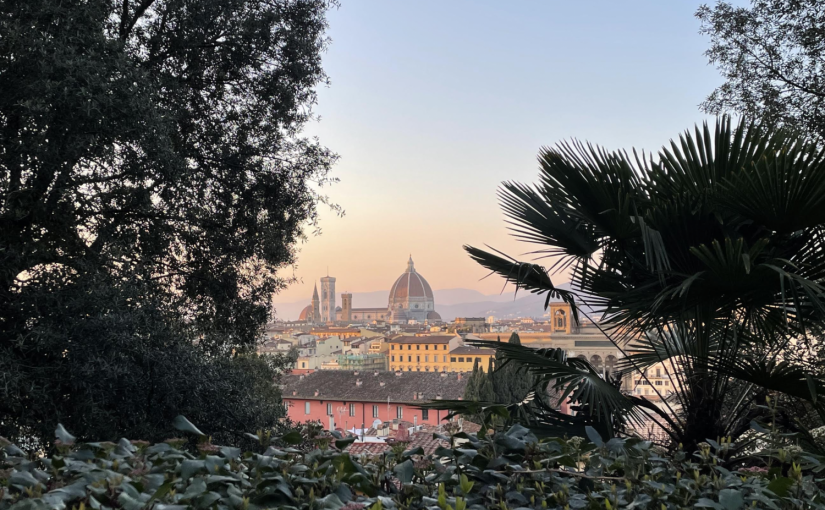
The climb wasn’t easy, but every step was worth it. I took what I now know is “the right path”, the one that offers a full view of the city, while the other, shorter route, turns its back on the spectacle ahead. That day, I was front and center. The square wasn’t too crowded; it was just the right amount of people: lively, festive, but still with space to sit on the famous stairs and let yourself be wrapped up in the magic of the place. At the top, a band started playing music—popular songs, some from past eras. One of those songs, in particular, took my breath away. It wasn’t my usual taste, nor the kind of music I’d typically choose, but in that moment, in that exact place, it moved me deeply. I couldn’t help it: I cried, unexpectedly and intensely, as if that moment was healing something inside me, like it was the missing piece I needed to feel completely whole and happy.

Estaba acompañada de mis hermanos y dos mujeres rumanas que habíamos conocido unos destinos atrás y que decidieron acompañarnos en la última parte del viaje. Compartí esa experiencia con personas que, aunque tal vez por razones distintas, estaban viviendo algo igualmente significativo. En ese momento, todos compartimos una misma emoción, un mismo sentimiento. Es una acción tan común entre los seres humanos que parece casi involuntaria, pero es un privilegio sentir. Es un privilegio llorar, reír, admirar, asombrarse. 

I was with my siblings and two Romanian women we had met a few stops earlier, who decided to join us for the last part of the trip. I shared that experience with people who, although for different reasons, were feeling something just as meaningful. In that moment, we all shared the same emotion, the same feeling. It’s such a common thing among humans that it almost feels automatic, but it’s a privilege to feel. It’s a privilege to cry, to laugh, to appreciate, to be amazed.

Esa escena, esa canción, ese atardecer en la Plaza Michelangelo, fue el cierre perfecto para un viaje que ya había sido extraordinario. Ese momento encapsuló todo lo que había vivido en los 45 días anteriores: los lugares, las personas, los sentimientos, los recuerdos. Fue como si la vida hubiese tomado todo eso y lo hubiera condensado en ese instante, en ese lugar, con esas personas. Ese día comprendí, de manera profunda, que Florencia poseía una magia única. Fue entonces cuando supe que debía regresar, que había vivido algo irrepetible. En diciembre de 2024, cuando decidí buscar la oportunidad de hacer un intercambio académico, no hubo duda de que Florencia sería mi destino. Ahora, todos los días, voy a esa plaza a ver el atardecer, a escuchar música y a compartir un sentimiento de libertad. Abrazo con fuerza el privilegio de revivirlo a diario.

That moment, that song, that sunset in Piazzale Michelangelo, was the perfect ending to a trip that had already been extraordinary. It captured everything I had experienced in the past 45 days: the places, the people, the emotions, the memories. It felt like life had taken all of that and condensed it into one instant, in one place, with those specific people. That day, I deeply understood that Florence had a unique magic. It was then that I knew I had to return, that I had experienced something unforgettable. In December 2024, when I decided to look for a chance to study abroad, there was no question: Florence would be my destination. Now, every day, I go to that place to watch the sunset, listen to music, and share a sense of freedom. It’s a gift I cherish, being able to relive it each day.

Permesso di Soggiorno (Permit to Stay)

SPEL Photography student Donald Blair shares his experience at the Questura in a photo story. 

All photos by Donald Blair

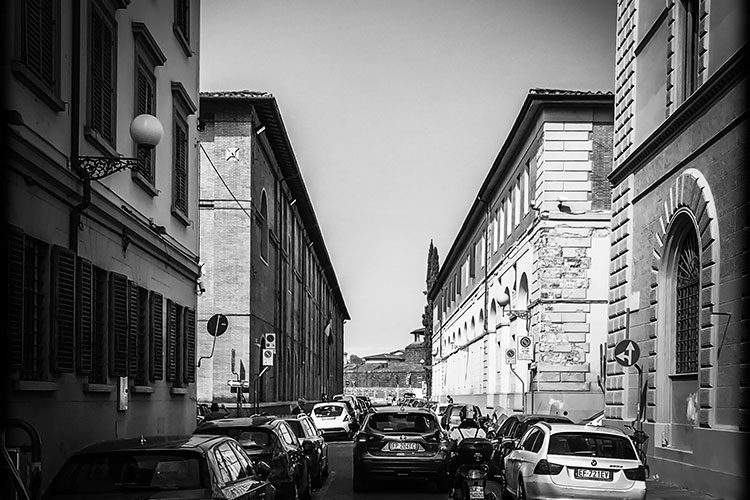
Getting your permesso di soggiorno in Italy means waking up early!
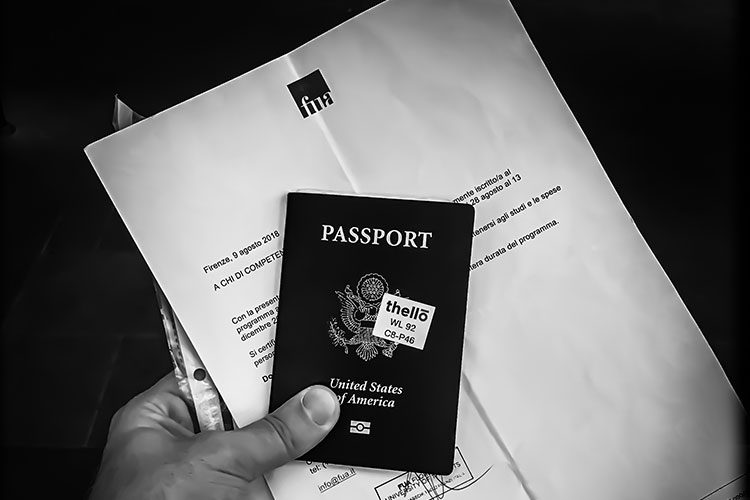
Don’t forget your passport.

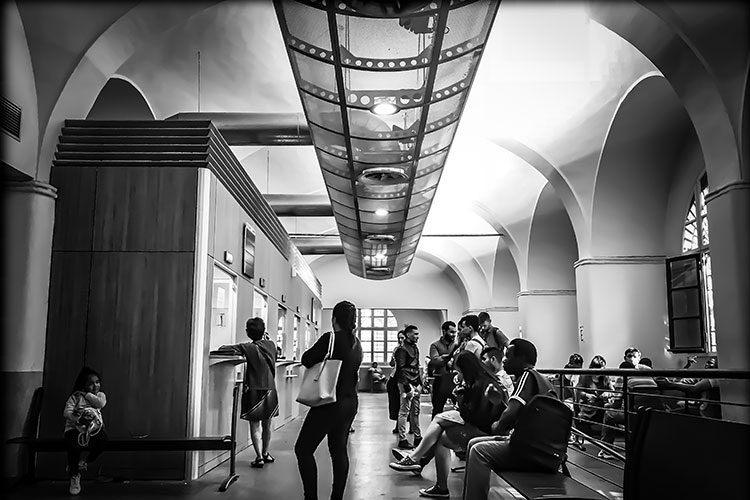
Have a seat, bring a good book, and don’t forget snacks!
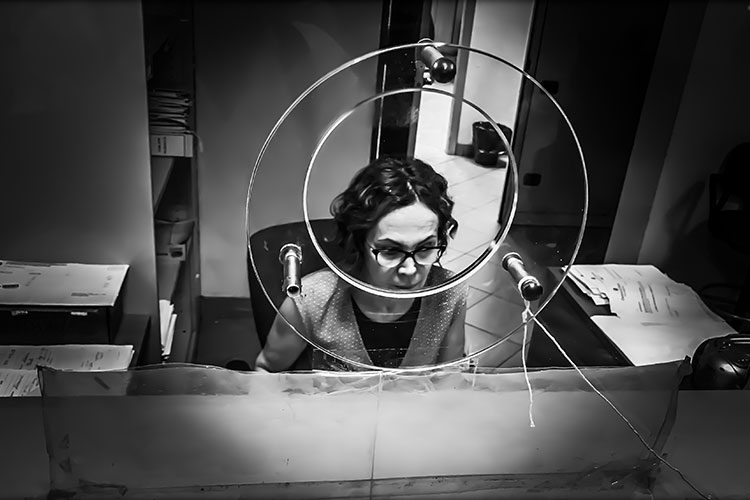
Wait your turn, and be kind.

Once your fingerprints have been taken, you’re all set.
See more of Florence and Italy at FUA’s FBInstagram, and Twitter.

Renaissance Reminiscing: Arte della Lana

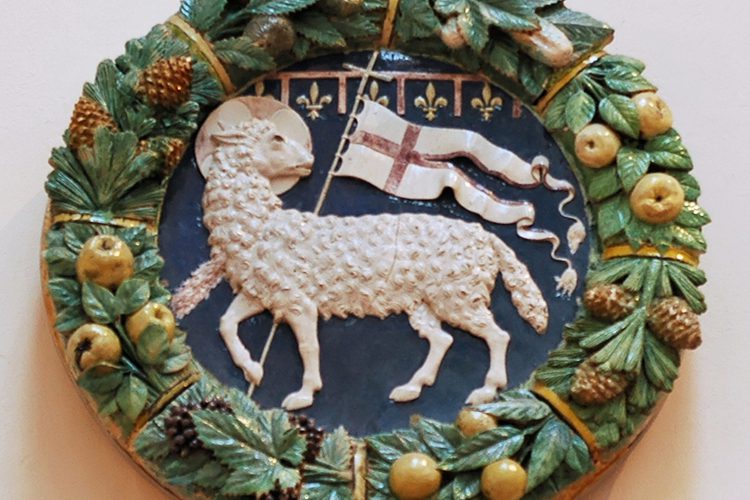
Coat of Arms of the Arte Della Lana, the guild of wool merchants during medieval and Renaissance Florence. Produced by Andrea della Robbia. Photo by Jastrow.

By Bailey Hubacher

If I could travel back in time through this history of Firenze, my first stop would be the Renaissance due to strength and importance of the textile industry.

As both a Fashion Merchandising and Journalism major, I’ve always been interested in the beauty of Italian history. Now, this may sound cliché, but I wish I could have experienced Italian life during the Renaissance period and not just because it was one of the first cities in Europe to experience the beauty of the era. So let me break it down:

During the Renaissance, there were merchants, bankers, and an entrepreneurship tradition that worked together to make some of my personal all-time favorite fabrics: wool and silk. I am obsessed with the textiles in today’s fashion industry, but I can only imagine the beauty and craftsmanship that went into the early wool and silk industries. The whole process of carding, spinning, dyeing, and weaving wool into beautiful garments is amazing, and back in the day artisans made wool that you can only dream of today.

The textile industry in Firenze during the Renaissance made up a lot of the wealth and the city was dependent on the textile workers who specialized in the manufacturing and trading of wool. In fact, one third of the Florentine population was involved in the wool industry. Firenze during this time had guilds and for those of you who don’t know them, guilds were corporations established in the Middle Ages that basically governed the arts and professions.

The guild of the wool merchants was one of the most powerful in Firenze, and alongside the guild of bankers – who, in turn had their own financial networks – they were the powerhouses of wealth during this time. It was an era of prosperity and growth as well as the creation of beautiful art and literature. Who wouldn’t want to experience everything the Renaissance had to offer? It was during this time that some of my favorite fabrics of silk were introduced: lampas, brocades, and velvets. The silk industry experienced an expansion during the 15th century, which was much later than wool, but still a prominent part of this time period.

See more of Florence and Italy at FUA’s FB, Instagram, and Twitter.