Finding Fashion & Finding Florence

written by Mia Romero

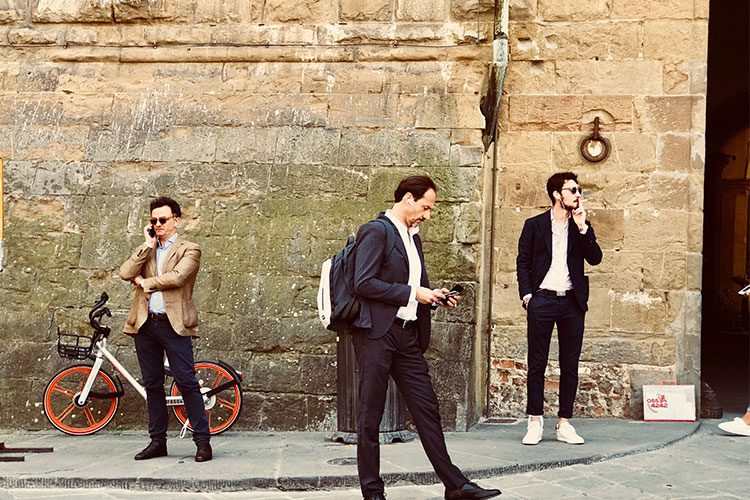
Coming to a new country by yourself can be scary, but learning how to fit into the culture can be even scarier. This is my experience witnessing fashion styles in Florence and learning to adapt to them myself.

Fashion is the style of clothing, hair, makeup, shoes, and so on, used by humans globally to express themselves. Fashion and the idea of fashion goes back centuries, but more specifically, the 19th century. In 1858, Charles Frederick became the first person ever to sew his label into garments he created, thus being the first “fashion designer” as we know it. Since then, fashion and style has elevated, changed, and adapted to different environments and to an array of people.

The biggest elevation of fashion I’ve ever noticed has been coming to Italy from the states. The people in Italy seem well-dressed, put together, and more understanding of expression through fashion. I have not noticed any locals wearing athleisure casually or sleepwear outside of the house, as I would see in America. I believe this is because Europe as a whole houses many of the main fashion capitals of the world. These capitals host weeks out of the year dedicated to showing off creative expression. It is an integral part of their culture and daily lives. It seems to be more respected and understood over here than in America. These events shape the trending styles to come and are watched carefully by locals as well as people all over the world.

I became intrigued with these fashion differences I noticed, so I decided to interview, research, and photograph my surroundings. I have found it extremely fascinating to witness my fellow students from all different parts of the world dressing well to class to fit into Italian style. I would argue none of us would dress as nicely for class at our home colleges.

I had a personal experience of wearing a hoodie and sweatpants around my hotel lobby and getting strange looks from all different types of people, from different areas of the world. It has become a known standard to dress well when out in Italy. After this experience I became much more aware of how I was leaving my apartment as well as how everyone else was.

During this time and the next few days, I was lucky enough to have a conversation with a local about her thoughts on fashion in Florence and Italy as a whole. I met a lady standing in line for a coffee shop who was dressed impeccably. She wore a blazer with dress pants and what looked to be red bottom heels. I could tell this was an expensive and well put together look. I began to tell her about my school journaling assignment and her thoughts on fashion differences worldwide. She explained to me that dressing well had always been the standard for her. She said, “Growing up, my mother and father dressed us in our best and it was expected of us as we grew. This was normal. I never saw my mother without beautiful hair or a nice dress on.” I found it interesting how she explained to me that it was normal to dress nicely and this had been instilled in her since childhood. I believe this to be the disconnect between fashion in Italy from other countries in the world. Parents are less expecting of what their child wears in other countries, thus holding lower standards in my opinion.

Although I discussed this topic with a few other locals, I got very similar responses across the board. The overall consensus being that dressing well had started during childhood and become a social norm. As an American student, I envy the fashion sense these interviewees held. Anyone can buy an expensive outfit, it was the way they styled these outfits that stood out to me. They each had something people around the world try to achieve, which is knowing how to style themselves perfectly. Overall, I grew in my knowledge of stylish appearance and the standards in different parts of the world.
Florentine Fashion: Americans vs. Italians

written by Kenna Hughes

Before I left to come abroad, my Google searches consisted of one thing and one thing only: What to pack for a semester abroad in Italy. Now, I knew all about taking adapters, portable chargers, medicine, and things of that nature. But what I really wanted to know was what clothes to wear in order to blend in with local Italians. 

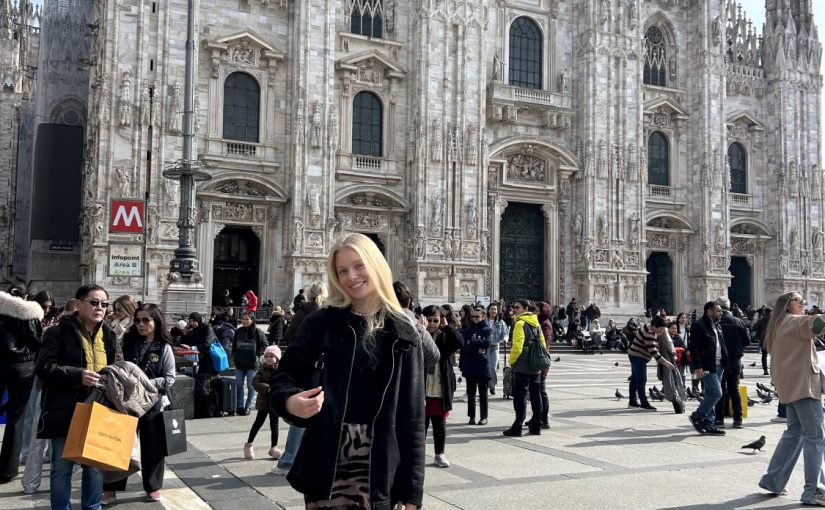
After my research, I concluded that I needed to bring jeans, basic tees, black boots, a trench coat, and all-black skirts and tops for going out. Looking back, I wish I would have done things a little differently. After landing in Italy and observing the fashion here, I can tell an American from an Italian almost instantly. 

Although the clothes I was told to bring from strangers online were perfect staples, I felt as if something was missing. It wasn’t until my fashion walking class at FUA that I realized what it was. Authenticity. 

My three-week course, “Style and the City: Florentine Fashion Walks” taught me how to express myself through fashion. We observed people on the streets, went to authentic markets with vintage clothing, and visited Pitti Palace to see the exhibit on Italian fashion. On day one, I knew this class would inspire me to be more unique, and buy clothes that I like instead of following the seemingly endless cycle of fashion trends. 

Even walking the streets of Florence, you cannot pinpoint any particular trends–especially among local Florentines. No two people are wearing the same item of clothing, or anything remotely close to it. This does not happen with Americans. For example, a friend and I went shopping at Zara about a month ago in Florence. She bought a beautiful brown leather jacket–only to realize every other abroad student was wearing it on the streets, too. It’s interesting how Americans gravitate towards certain items of clothing at these stores–I’ve seen countless American students wearing the same sweaters and jackets from Zara, but no Italians.

Then, a few weeks ago, at the Santo Spirito Market, my friends and I were on the hunt for leather jackets. During our shopping, we passed an American who was wearing one. I made a comment saying, “That style is perfect, I wonder where she got that from.” Without any hesitation, both of my friends remarked that her jacket was actually from a popular shopping website called Princess Polly. Even funnier–both friends that I was with owned the jacket too.

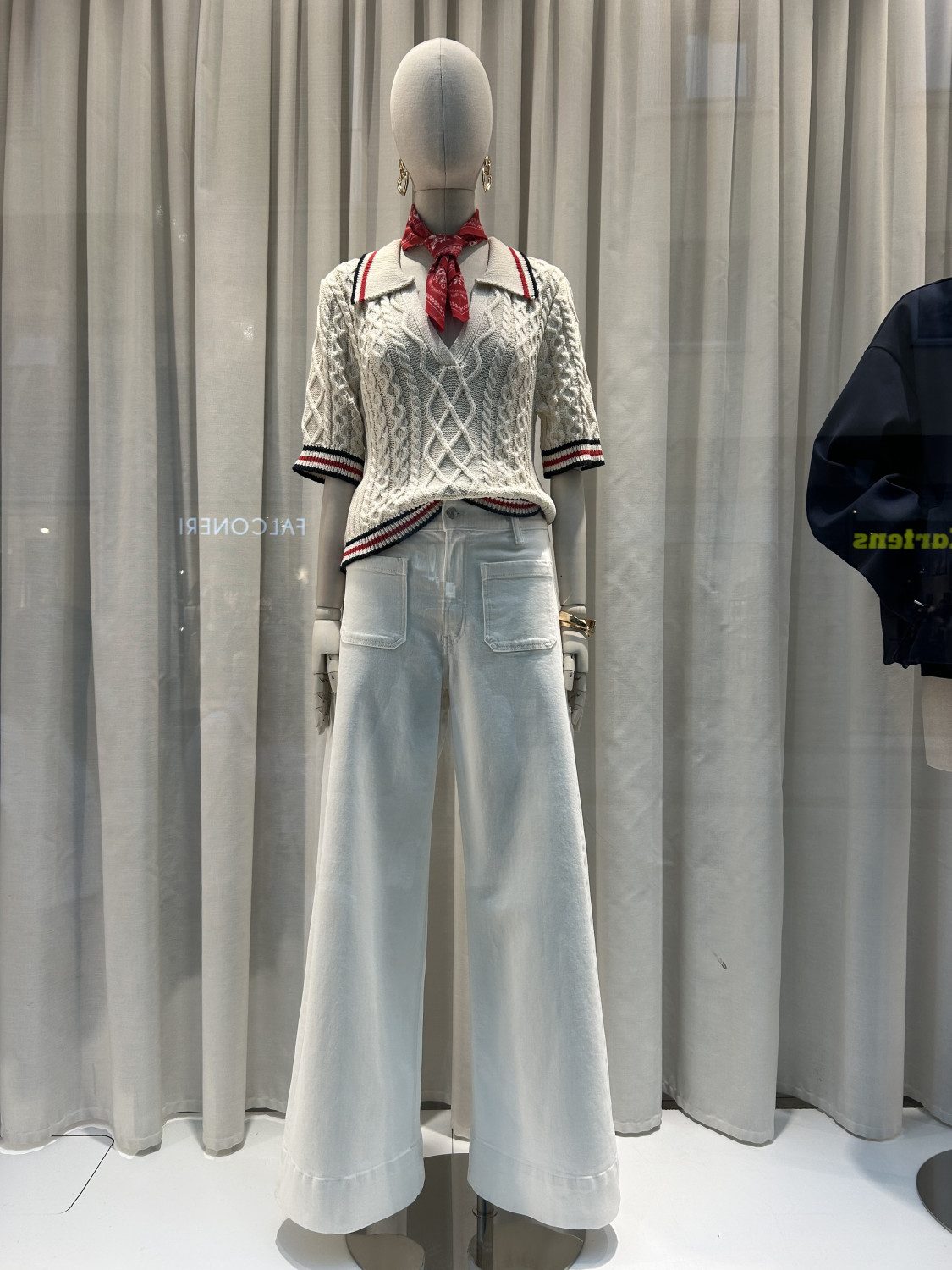
Don’t get it twisted–this is not to say that I don’t indulge in some of the trends myself, or that they are basic or bad in any way. However, if you want to dress more like a true Italian, simply wander around the markets, or visit department stores that are not in the US. Italians also love to accessorize, and dress up an outfit with a neck scarf, sunglasses, fancy belt, or a unique purse.

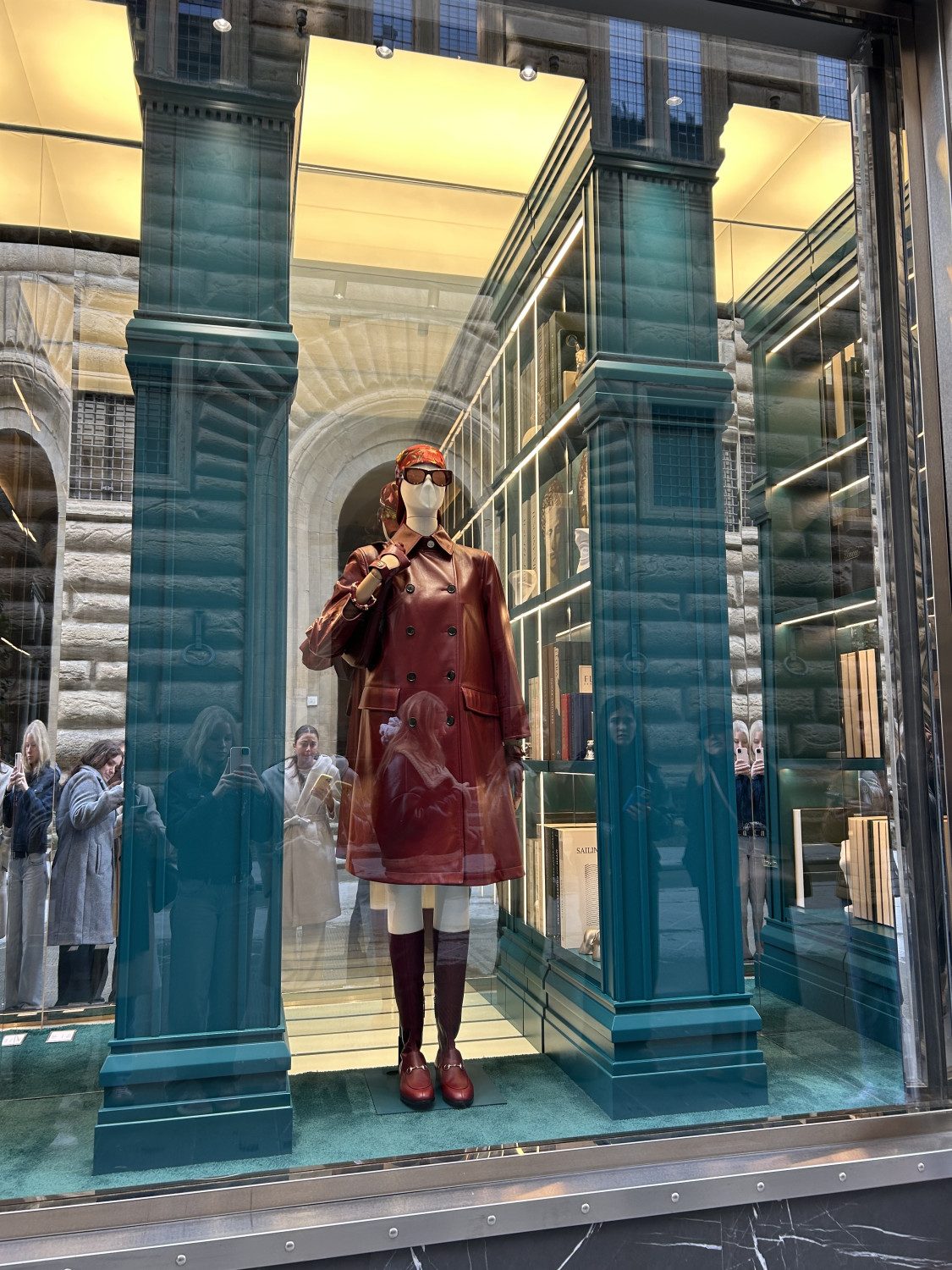
Another thing I like to do in order to gain some inspiration is to look at the mannequins in the stores. They are always dressed so intricately, showcasing many different items of clothing and ways to style it.

Here are a few of my favorites from my time here so far:

All in all, I’m glad I took with me the clothes I did. But I also know now that “blending in” with Italians basically means wearing whatever you feel most confident in. It’s ironic–the way to blend in here is to actually stand out. Every person I see on the streets is wearing something that suits them—and them only. Whether that be a pair of sparkly chunky boots, a purple fur coat, or a statement necklace, each individual person exudes their own aura.

A great example is this woman in the photo below. This is one of my favorite outfits I have seen in Italy. Now you see what I mean about authenticity and having your own style. I just had to snap a picture!

So, the next time you are out on the streets or sitting at a coffee shop, take a look around at everyone who passes by. And when you are at a store contemplating buying something you like because you fear judgement from peers, I urge you to buy it. Be different, be authentic, and enjoy the confidence that fashion gives you.

Bio Fashion Lab: The Thoughtful Retail Experience

written by Lily Carroll for Special Project: Experiential Learning in Journalism

Through experiential learning at FUA-AUF, I’ve gotten the opportunity to interact with Bio Fashion Lab, an independent boutique dedicated to responsible, ethical shopping. The store’s owner, Debora Florio, has spent over nine years in the fashion industry, seven of which were in fast fashion, an industry worth approximately 103 billion U.S. dollars in 2022, projected to reach 291 billion U.S. dollars in 2032, according to PR Newswire. This experience has driven Florio to conduct extensive research, educating herself about consumer behavior, the fashion industry as a whole, and ethical solutions to the extensive problems it creates. With her findings, Florio started Bio Fashion Lab, a space designed to invite others to join in this mission for change. 

Upon receiving a degree in Economics, Florio realized that she wasn’t dissatisfied in this line of work. She says that at the time, unfortunately, shopping for clothes was what brought her the most joy, so she decided to find a job in the fashion industry. Unaware of the many unethical practices implemented in the industry, Florio slowly uncovered the ways we harm people around the world and the environment when we support fast fashion. She learned that these stores use minimal human resources, producing thousands of the same products at low prices, 30% of which wind up in landfills. Just one of the many ways this industry is creating crises everywhere. 

“I realized what was behind the scenes of production in terms of social injustice, and the negative impact that this industry has on the planet, I decided to take action,” Florio said. “I started studying consumer behavior, marketing and whatever lies behind the mechanism that triggers our mind to go and shop for ourselves.”

Florio continued to work in the fashion industry, this time with a seemingly ethical brand. It was there that she met a woman with a crippling shopping addiction, spending thousands of euros a week with no satisfaction, and an insatiable desire that could not be fulfilled. This woman inspired her to create a solution for people to shop responsibly.

So, Bio Fashion Lab was born, to promote emerging, ethical designers using natural materials and equitable production. Offering a healthy way for customers to shop in a manner that does not promote overconsumption, and respects the environment and all who inhabit it.

“Whenever you start to go really deep in the research, you see the truth with your eyes. I’ve never been to Pakistan, Bangladesh, places where these issues are most prevalent, so we do a lot of calls with different unions and government workers on the other side of the world,” Florio proudly states. “We can hear their testimonies and see that it’s quite real. It’s there. When you really understand what’s going on, you can never go back.”

Florio says that the clothes are just a small part of the ways she educates others on the fashion industry, and how we can improve it. Through documentary screenings, workshops, and panels. Bio Fashion Lab strives to educate this generation of consumers to make the right choices. An environment that encourages shoppers to ask themselves, “Do I really need this?” especially when faced with a cheap, overproduced option. Bio Fashion Lab teaches us how to say no, and explore another option.

To learn more about Bio Fashion Lab, visit https://biofashionlab.com/, where you can read about the movement and upcoming events. On Thursday, 13 June, Bio Fashion Lab will host its first fashion show entitled, “Fashion Under Construction,” making light of the construction that currently surrounds the store, highlighting the store’s call for unconventional ways to shop. 

Fashion Takes Initiative on Environmental Protection

written by Isla Herring for Special Project: Experiential Learning in Journalism

Italy is commonly recognized for its significance in the fashion industry and the latest trends, along with the country being the birthplace of many reputable brands. A copious amount of designer brands was created here such as Prada, Gucci, Valentino, Versace, Fendi, and more. Although we recognize these brands for their power in the fashion world, we do not often consider the impact that they make on the planet. Brands today are taking steps to reduce their carbon footprint and take preventative measures for the future. 

Prada has been recognized in the past for its lack of protection of animal welfare by using materials derived from living beings, but recently they have been making strides towards sustainability by using recycled packaging and solar energy. They have also produced two new collections in which they use recycled nylon and recycled gold for their products instead of manufacturing more original materials. They are not only working to combat the backlash from their past methods of clothing production, but they are displaying effort to assist in improving our planet. 

As of December of 2022, Miu Miu, which is owned by the Prada Group, has implemented several sustainable measures such as offsetting emissions, use of solar energy in their buildings, and recycled plastics for their packaging. They also offer an upcycled collection that includes low-impact materials that are not as harmful to the environment. 

Owned by Capri Holdings, Versace, has been an Italian brand with long-standing recognition for its minimized negative impact on the planet. They have implemented numerous responsibly sourced and certified materials into their products throughout the years. They have also limited the use of animal-derived materials and banned furs from their products.

Ferragamo is another brand that has attempted to be conscious of their consumption of animal products. They have an official welfare policy that includes only sourcing wool from non-mulesed sheep as it is the most ethical process. 

Gucci is not specifically labeled as a ‘sustainable brand,’ yet they have been making improvements to their company to be more eco-friendly. They have incorporated materials that are recycled into their products, along with changing their methods of fabric cutting to produce less waste. They are also reducing their emissions and minimizing harmful chemicals in their leather.

Additionally, certain brands have been credited for donating money to environmental conservation projects. Prada has collaborated with the Intergovernmental Oceanographic Commission to support ocean conservation. Versace has also supported this cause by collaborating with organizations like the Green Carpet Fashion Awards. These awards celebrate leaders who are creating transformations to approach and achieve change on behalf of the planet. Fendi partners with various projects such as the World Wide Fund for Nature which supports local communities to conserve natural resources and put policies in place to protect natural habitats. Furthermore, Missoni has involved itself in philanthropic initiatives such as supporting environmental conservation projects. They also collaborated with OrphanAid Africa and have donated earnings made from their products to other charitable causes. 

As a consumer, it is important to be aware of your involvement in the health of the planet. Being mindful of the brands you choose to support can cause change that makes vast differences to the environment. Also, holding companies accountable for their part in the earth’s deterioration can bring about alternate solutions. Designer companies have been able to get away with unethical practices in the past due to their high profit levels, but it is necessary that we credit their current efforts to polish up their methods and materials.

Pitti Uomo: Keeping Florence a Top Fashion Capital

Photo by author

By Dara Hernandez

FUA Journalism student Dara Hernandez discovers the importance of internationally acclaimed event, Pitti Uomo, and shares her experience walking through the streets of Florence during this four-day fashion extravaganza.

Florence is known around the globe for its beautiful views, structures, art and historic buildings, but some people may not know that it’s also known as a fashion capital of the world.

One of the most important events in fashion is Pitti Uomo, an event that takes place in Florence every year for four days during the months of January and June. Pitti Uomo features men’s clothing and accessories and brings in every big name in menswear whether they are a designer, buyer or creative mind.

This event was founded by Pitti Immagine, a company that organizes international fairs and promotional events in all areas of fashion. Their goal is to select as well as present the highest quality products and the most innovative styles. The reason that Pitti Uomo is so important to Florence is because the company’s origins go back to the early 1950’s where they held their first fashion show in Florence’s very own Sala Bianca in Palazzo Pitti.

The company not only has brought amazing events to the city but has added new dimension to Florence and has distinguished it as a foundation for today’s style. People from all over the globe attend in their search for the newest trends and styles or even simple details that they can take to improve their collections.


Photo by author

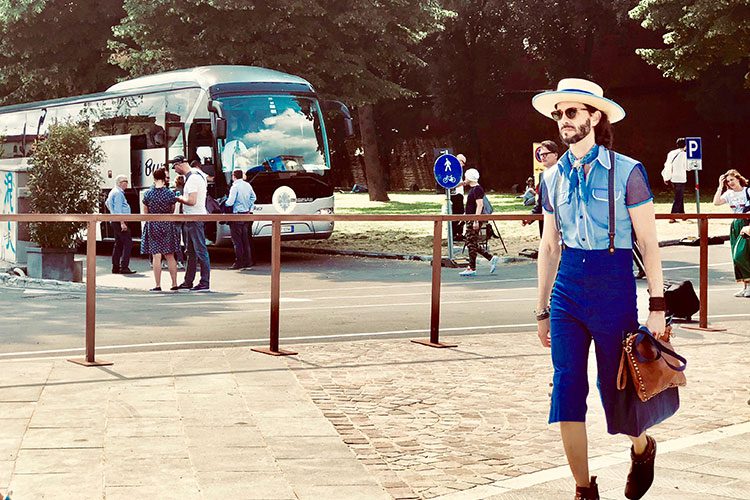
Walking around the city of Florence during Pitti Uomo makes the experience more wonderful than it already is. The city overflows with creativity and hundreds of fashionable men are seen with interesting outfits or fancy suits. The first place I walked through was Piazza della Signoria, where they held the opening ceremony. The attendees could be spotted from a mile away as they walked out of the building in their sharp suits and fancy shoes.

I, then, decided to take a stroll to the Fortezza da Basso and simply walking toward the building was quite the sight to see because it felt as if I were front row in a street fashion show. The outfits in this area were a little more spontaneous. Once I got to the Fortezza, I discovered that this is where they hold most of their main events and it was almost as if I had entered menswear heaven. Of course, many sections were closed off to the public because the event is taken very seriously in the industry but I was able to walk in and see the different stands, clothing racks and large screens showing clips of male models.

Having a fashion event as big as this one is incredible because it is an outlet for people from all over the world to not only attend and gather new ideas but also for individuals to express themselves in a creative way. Fashion is not just about clothing, it’s also about the evolution of style, piecing different garments together and the influence of the culture surrounding it.

Pitti Uomo is the real deal. This month makes it the 92nd edition of the fashion event and the 46th year since it launched in Florence in 1972. The event has grown immensely throughout the years yet remains in the city, maintaining Florence’s fashion capital status worldwide.

See more of Florence and Italy at FUA’s FBInstagram, and Twitter.