The Monster of Florence

“He came up with a perfect plan.”

written by Charlotte Cicero & Guido Togliatti

This blog feature is an exclusive bonus installment to our Spring issue of Blending Magazine. After you finish reading, be sure to explore the rest of the magazine online—just follow this link to download the full Spring 2025 edition:
https://jschoolfua.com/images/BM/BM_151.pdf

Beneath the romantic cobblestones and rolling hills of Florence, Italy, lies one of the most disturbing true crime stories in European history. Between 1968 and 1985, a series of gruesome double homicides occurred in the Tuscan countryside. Il Mostro di Firenze—The Monster of Florence—created a legacy of terror, controversy, and conspiracy, and a decades-long series of unanswered questions.

A Pattern of Death

The first known crime occurred in 1968, though it wasn’t immediately linked to the rest. It wasn’t until a similar attack in 1974 that authorities began to suspect a serial killer might be at large. For 17 years, the murders continued. As media speculation and fear grew, so did the number of victims. 

Il Mostro di Firenze sought out young couples seeking privacy in rural areas and often attacked while the couples were in their cars. Throughout the serial murders, the weapon used was consistently the same—a .22 caliber Beretta pistol. The ritualistic elements in these murders pointed toward a deranged but highly meticulous criminal at work.

Insights from Florence

To better understand the grip this case holds on Florence, we spoke with Fabio Binarelli, a native of Tuscany and professor at The American University of Florence, who offered personal insight into the murders and their legacy. 

Binarelli noted that the killings followed a consistent pattern: the male victim was shot first, followed by the female, who was also often physically mutilated—most often targeting the breast or pelvic region. “That’s what made it feel truly serial,” Binarelli explained. 

The investigation was very complicated. Binarelli explained, “Today everything is on your laptop—but back then, to connect several files of investigation, you had to have one clever investigator who connected places and years with the details.”

Eventually, suspicion fell on Pietro Pacciani, a violent Tuscan farmer with a disturbing history. “The investigation narrowed down to one person specifically and his close circle of friends,”  Binarelli told us. Pacciani had once killed another man out of jealousy and had been known for abusing his wife and daughters. While Pacciani was convicted in 1994, his sentence was overturned in 1996 due to insufficient evidence. 

Adding to the surreal nature of the case, Pacciani created works of art that disturbed the people around him. “Despite being almost illiterate, he had an interesting collection of drawings, and if you see them, they give you chills…” He also wrote poems and read one about brotherhood and love to the court during his trial. “Imagine that,” Binarelli said. “You’re in front of the Supreme Court, answering for eight double murders, and you’re reciting poetry. Something … it’s off.”

Fear, Conspiracy, and Cultural Reflection

The atmosphere in Florence during the years of the murders was palpable. Locals avoided the countryside, and couples were terrified to go out at night. Conspiracy theories flourished—some claiming that Pacciani was merely a pawn for a secret society involved in ritual killings.

Binarelli elaborated, “It was a great opportunity for fictional writers and journalists – they have many conspiracy theories now.” 

American crime writer Douglas Preston famously got caught up in the case while researching in Florence. His book, The Monster of Florence, helped revive international interest, including a speculative link to the Zodiac Killer. Though no solid evidence ever backed this connection, the eerie similarities between the two killers only fueled the fire.

A Lasting Legacy

Beyond the crimes, the case peeled back layers of Tuscany’s cultural identity. “You have the judges: educated Florentines on one side, and on the other, Pietro and his friends, uneducated, rude, and when they were interrogated, they exposed the truths of their places.”

He continued, “Florence is sort of the light in the dark for human civilization. It’s interesting to see this inner struggle in the person of Piaccani, he was a brutal, violent person, a beast, but a beast with creative thoughts. That made him the perfect serial killer.”

Today, the Monster of Florence case remains officially unsolved. An upcoming Netflix docuseries has reignited interest and is set to be available this coming Fall. However, Binarelli says he’s weary about its historical accuracy: “If it’s only four episodes, that’s a lot to cram. I appreciate the artistic reenactment of things, but sometimes they are inaccurate or culturally distant.” 

Most of the tourists who come to Florence for its beauty, art, and history will never know the story that took place in the rolling hills above town. The legacy of Il Mostro di Firenze is a chilling reminder that even the most beautiful places can be harbors of darkness.

My Favorite Outdoor Florentine Spaces

A personal guide on where to be productive in Florence

written by Tyler Kirwan for SPEL Journalism

As of writing this I have less than 12 days left in Florence. While my dwindling time is upsetting, I have been lucky enough to discover some of the beautiful places the city has to offer. When I am not in class, or working for my internship, I enjoy reading, journaling, or just people watching outdoors in the sun-soaked city I have been able to call home for the past few months. I am someone who loses focus quite easily, and it is important for me to be able to be out of my home when I want to be productive. In the states, I spend most of my time when not in class, sitting in coffee shops. Italian culture is a little different when it comes to working in public, particularly coffee shops, and it is less common here to sit inside for a long while and work. The first few weeks I spent here I was overwhelmed with choices on where to spend my leisure time. Now that I have explored more of Florence, I have my version of a comprehensive list of my favorite places. Hopefully anyone reading this can take my advice and give these places a try, especially if they live in the same corner of Florence as I do.

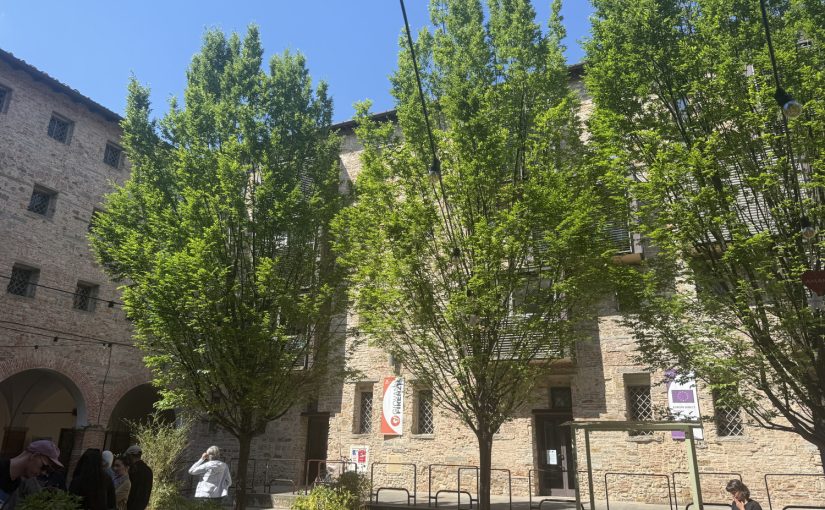
While this list is in no particular order, I am currently writing this from the ‘Piazza Delle Murate,’ so I shall highlight it first. This Piazza contains a coffee shop/restaurant, and the entrance to the Murate Art District – a museum I would highly recommend. I discovered this space after being assigned to write about an exhibit opening at the museum. The coffee shop has Wi-Fi that extends out to the Piazza and I love getting a coffee and sitting outside and reading or writing. There are a lot of tables to sit at, and bringing a friend and having a conversation in the sun is wonderful.

Another one of my favorite locations is ‘Piazza Sant’Ambrogio.’ This Piazza is fun during the day but especially lively during the night. On any given day of the week all types of people are standing around with a drink and their friends chatting it up. This little area is a great place to meet new people, and I enjoy sitting on the church steps with my roommates. We live very close to this square and most nights, at some point we are spending time there. During the day the Piazza is nice as well and features a coffee shop on the corner that is a great place to study, with multiple restaurants very close.

Down the street is another great place called ‘Piazza dei Ciompi.’ The Piazza is surrounded by restaurants, places to drink and has free Wi-Fi. The centerpiece of the Piazza is a set of steps with columns and a roof. I sit on these steps all the time to read or eat a snack I bought nearby. There is a park behind the columns that also features a vintage market surrounding it on some occasions. My roommates have been able to find some nice stuff at the market, so for that reason alone this Piazza is definitely a great place to check out.

Switching from Piazzas, the next place on my list is my favorite park in Florence. ‘Parco Giochi,’ has beautiful trees surrounding it, and plenty of benches to soak up the sun and read a good book. The park also has a playground and a basketball court if either of those things suit your mood. There is even a merry go round in the center which I find quite sweet. If the benches are ever full there is some grass where I personally have napped during a warm day.

The ‘Giardino Lungarno del Tempio’ is a small park located on the riverbank of the Arno. This park is a great place to hang out with a book or with some friends, and at sunset the view of the Ponte Vecchio is phenomenal. One side note is that there is no Wi-Fi. So no laptop work, but definitely a great place to read a book and look at Florence from a unique viewpoint by the water.

The final location on my list of favorite places is actually on the opposite side of Florence than all the previous mentioned. ‘Orti del Parnaso,’ is a city park that looks over all of Florence. This park is easy to get to, as you can either walk there, or take the tram to the ‘Liberta-Parterre’ stop. This is my preferred method as I live a distance from the park, but the view is always worth the trek. Besides the view, the park itself is nice, and has some sculptures and plenty of benches to relax at.

Hopefully my recommendations are helpful to anyone reading and they can enjoy some of what makes these places so special to me. All I have left to say is, go outside, enjoy the beautiful city, and soak up some sun.

Piazza D’Azeglio: The Heartbeat of Florence’s Underground Past

written by Emily Gibson

This blog feature is an exclusive bonus installment to our Spring issue of Blending Magazine. After you finish reading, be sure to explore the rest of the magazine online—just follow this link to download the full Spring 2025 edition:
https://jschoolfua.com/images/BM/BM_151.pdf

An Unexpected Encounter 

How did I end up here, and what do I do now that I am? Surely, this is not that enchanted city where nearly 11 million visit annually, I reasoned. Where are the crowds or the music often needed to drown out the noise of the through traffic? “Michelangelo!” called a woman’s voice. I turned to see what art she could be referring to and was met by a young child with blonde hair and blue eyes running joyfully toward a playset. In a place where tourists spend an average of three billion dollars every year, an experience here, inconspicuous within the Florentine jungle, cost me only time. 

“It’s hallowed ground,” said former Stanford professor and self-made historian Albert Gidari. “You may not know the history in detail or who died and what they did, but you just know, and that feeling conveys the place, so if you want someplace to just reflect for a few minutes on what life was like and why it was important, that’s what spirit is within that park.” 

A Quiet Corner of Buried Defiance 

Piazza Massimo D’Azeglio is a quaint 165-year-old square nestled in the corner of Florence’s city center between Campo Di Marte station and Sant’Ambrogio and, at first glance, a seemingly unusual site for a place where mass tourism has taken a toll. The neighborhood is still inhabited by residents where children play, dogs run, friends converse, and the elderly rest, but when I looked around at the beautiful, historical buildings, some embodying the prestigious liberty style, it was hard for me to imagine war was once present for which cause many lives ended there. 

I shifted my gaze to the heart of the square where water spurted from the beak of a bronze crane — a symbol of good luck — and I wondered whether luck was enough for those brave men and women who once held anti-fascist meetings right here under the nose of the proponents themselves. I tried to imagine myself where I was, only at a time when deafening uncertainty filled the air. 

“Anyone hiding material of any kind useful to the German Armed Forces or the German Nation is liable to be sentenced to death,” stated the Commander General (qtd. in Supporting Radio CORA: ‘resistant’ Arcetri in the memoirs of Michele Della Corte, 17).  

Echoes of Joy Amid Whispers of Loss – WW2 

Initially, I did not perceive the tangible references to a WW2 history still pulsing beneath the surface, but when I saw the children chasing one another up and down the paved piazza, I could not help but reflect on the childish games I once played, such as hide and seek, wherein I knew too well the feeling of rushed adrenaline coupled with fear when my hiding places were eventually found out. In the end, though, it was just a game, and my enemies were still my friends.

Hence, I struggled to picture the square before the 1940s, when there were large iron gates filling the space where the sidewalks now reside, making the park an impossible hideout for 80 years. When the square finally experienced newfound freedom, it came at the expense of Florence’s citizens. The gates were donated and melted to make the weapons forging the real gates around the freedoms of the people as uniformed soldiers of the Nazi Regime filled the city, stripping away what I have often taken for granted: safety, basic rights, and life itself. Many, I learned, would surrender to their cause, but others would stand in opposition, risking it all for hope. 

A Final Transmission of Hope 

A wise man once proved there is no greater love than for a man to lay down his life for a friend. Thus, what Resistance leaders Enrico Bocci, Italo Piccagli, and Luigi Morandi, among others, did on behalf of their friends and beloved city was nothing short of great love. On the fateful day of June 7, 1944, Nazi soldiers raided the top floor of Piazza D’Azeglio 12 — the final hiding place of Radio CORA. Therein, resistance men and women endangered their lives to transmit secret messages and hope to the Italian population. The three partisans were captured, tortured, and killed. 

I walked to the northeastern side of Piazza D’Azeglio to see for myself what remained of those heroes, and I was met by their bronze memorial. I paused for a moment of silence and reflection. 

An Invitation 

My money is useless in D’Azeglio because the peace, joy, and freedom the square offers came at an invaluable investment I may never fully understand. Its rich history whispers through the grounds and nearby corners, where the Jewish synagogue still miraculously illuminates the skyline. Nonetheless, individuals visit D’Azeglio for various reasons, such as convenience and fond pastimes like Florentines Tobias Zerella, Anne Whittaker, and Tommaso Tempesti. Others like Gidari, who dedicated years to uncovering the stories of the resistance movement, visit because the historical site still speaks to them today. In any case, D’Azeglio serves as an invitation to enjoy the present and an opportunity to reflect on the past. Amid all Florence has to offer, I have discovered that if one has the time, Piazza D’Azeglio, the heartbeat of Florence’s underground past, offers an experience that mere money cannot afford. 

“If you’re there for a week or more and want to breathe in Florence, it’s just such a pleasure to go and sit on a bench for an hour or two with a coffee… and watch the real people that live there enjoying their city, and just imagine what the city was like,” said Gidari.

Tearing Up the Checklist: How Studying Abroad in Florence Redefined My Dreams

A student’s journey from rigid plans to spontaneous gratitude reveals the unexpected beauty of slowing down, connecting deeply, and truly living abroad.

written by Connor McHugh for SPEL Journalism

I left O’Hare Airport in Chicago on a flight to Florence, where I made lists of everything I wanted to see and do while abroad. It included trips, events, restaurants, and everything in between. The longer I was in the air, the higher the anticipation of arriving in Italy grew. For my whole life, I have dreamed of traveling the world and seeing every corner the earth has to offer. Studying abroad was my chance to start those dreams.

I had a very specific idea of the type of experience I thought I would have while abroad. I saw myself being out of Florence 5–6 days a week, traveling to a different country each time with brand-new experiences to show for it. After the first three weeks of the semester and not a single new country visited, I realized I may have been overzealous. However, those first three weeks allowed me to fully immerse myself in the city and community of Florence and begin making connections that would end up lasting.

After that came my first time traveling outside Italy for spring break. From Portugal to France and Switzerland, it was an experience I will never forget. As I traveled from country to country, in awe of the breathtaking landscapes and monuments at each place, I couldn’t help but think about the eight-year-old boy who once dreamed of what I was now doing. At the end of the break, I stood on top of the Swiss Alps with ski poles in hand and thought to myself: How did I ever get so lucky? The air felt like invisible gold on my skin as I relished a moment I had long waited for. It began my mission to make sure I lived every day abroad to the absolute best of my ability. I felt I owed it to everyone in my life who had helped me get to this point. I also owed it to the people who would give anything to be in my position.

Recognizing how fortunate I am to live this way gave me a newfound sense of purpose and direction.

Coming off the best week of my life during spring break came the final 11 weeks of the semester. This is when I began to feel more like an expat living in Florence rather than just a tourist. I became familiar with certain spots in town, getting to know workers and owners of all different kinds. It quickly became apparent that the level of hospitality in Florence is unmatched. Anyone would be glad to strike up a conversation with you and give advice on what it means to live in the city and country.

It was about halfway through the semester when I found myself in an actual routine. I had class and work, different places I would eat on certain days, and I would pick up my bags and travel somewhere for the weekend. That routine became a cornerstone of my time in Florence and made me realize that it’s very easy to make anywhere you live feel like home if you try hard enough. People often talk about being homesick and missing that sense of comfort and belonging. To me, home is a place where I know what I’m doing every day of the week. I find comfort in thinking about the next day and knowing what I’m going to be doing—with new experiences sprinkled in here and there.

Paradoxically, it only feels like home once you start trying new things. That way, you can fully understand what it is you want to continue doing. It’s important to try as many things as you can at least once. Of course, the weekends are when routines should be thrown out the window and used as opportunities to travel and go on new adventures.

As I wrap up my semester abroad, I look back on the things I will remember most about my time and what I’ve learned from it. I learned that the things that will have a lasting impact on me are the moments that made me feel an immense sense of gratitude for the life I’m living. In France, I won’t remember the Eiffel Tower as much as I’ll remember playing soccer with local kids on the street. In Switzerland, I won’t remember any specific tricks I did on my skis, but I’ll remember the feeling of spraying my friend with fresh snow. Across every country and city, the moments that leave a lasting impression are the ones you least expect.

That is the beautiful thing about studying abroad—and life in general. People think that in order to make amazing memories, they have to visit the most luxurious destinations and live lavishly. In reality, the more you connect with the local environment and live in the moment, the more you realize how amazing this experience is.

If I had the chance to meet my former self on that plane five months ago, I would have grabbed that sheet of paper and torn it up in front of him. I would have told him not to be so constrained by expectations and plans—and to live every single moment like it matters.

My Italian Roots

written by Guido Togliatti for SPEL: Journalism

My name is Guido Togliatti and I am studying abroad in Florence for the Spring, 2025 semester. Originally, I am from California, but I have Italian ancestry through my Grandfather.

Palmiro Togliatti himself was born in 1893 into a comfortable middle-class household and displayed academic promise from an early age. He earned a law degree at the University of Turin and then served on the front lines during World War I, where he sustained injuries that deepened his commitment to social justice. After the war, he channeled his convictions into journalism—founding the weekly newspaper Il Partito Comunista—and helped organize Italy’s first cohesive communist movement. When Mussolini outlawed the party in 1926, most leaders were arrested, but Togliatti escaped to France and later the Soviet Union, where he navigated the dangerous politics of Stalin’s purges to keep the movement alive.

During the Spanish Civil War, Togliatti helped coordinate aid and volunteers for the Republican side—a chapter of his life that underscored both his political skill and his willingness to risk everything for his beliefs. He returned to Italy in 1944, joining Marshal Badoglio’s transitional government and working to legalize the Communist Party once more. His life nearly ended in 1948, when a young fascist assailant wounded him—an event that triggered mass demonstrations across the country and solidified his status as a symbol of resistance. After his death in 1964, the Soviet city of Stavropol-on-Volga was renamed Tolyatti in his honor, a rare acknowledgment of an Italian figure abroad.

Ultimately, learning this history has deepened my desire to connect with Genoa and to cherish every moment I spend here in Italy. Learning about this made being in Italy even more special for me.

Spilling the Beans: Comparing Café Culture Between Italy and America

Reflecting on the differences between the rushed attitude of coffee drinkers in America, to the relaxed nature of café culture in Italy.

written by Tyler Kirwan for SPEL: Journalism

Cafés in America are quite different to those in Italy on multiple different fronts. The reason why seems to stem from the difference in attitudes on leisure between the two countries.

In July 2023 I visited Italy for the first time. My trip was two weeks long and included four other countries in Europe. So many countries in such a short time that I normally forget to mention some when telling people of the trip. Still, it was amazing, and we spent the bulk of the trip traveling around Italy. We made Rome our home base while in the country, and traveled to Florence and Naples while we were here. Of the three cities, I would with 80% certainty say that Florence was my favorite of the places I visited. Luckily for me, I attended my school’s study abroad fair on a whim one day while walking through our Journalism building, and discovered they offered a semester in Florence with an Internship! How exciting I thought, and spoke with my advisor about the opportunity. Six months later I was applying for the abroad program, and four months after that I was packing my bags. 

Working in coffee for over seven years, I would consider myself a pretty O.K. source of all things encompassing. When you take into account the fact that I am only twenty years old, I feel as though I am allowed even more merit points. I have worked in the coffee scene since I was thirteen. I’ll avoid the long explanation, but basically when I was in eighth grade, I opened up a coffee shop at my local mall and have been pretty interested in coffee and its culture ever since. Following my coffee shop, I was hired as a barista in a small café in my hometown. Six years later and I am still working there, so I feel I know the demographics of ours and other American shops. The types of people who spend time inside sitting down are students, remote workers, families, and friends / dates. (I can never really tell which group people fall into.)

My coffee shop also definitely affiliates itself with the younger audience; a place for self-described indie and emo kids.

The coffee scene in Italy though, now that is an entirely different scene. A ‘Brave New World’, if you will. On my first trip to Italy, it was what obsessed me the most. I remember walking through the train station in Rome after leaving the airport, and an Illy Cafè caught my eye. I was previously familiar with Illy having worked in coffee, but this was an entire shop dedicated to it, and even weirder, everyone was huddled around the counter. I walked over with my bags to see what all the commotion could possibly be over this seemingly-ordinary coffee shop, and was physically taken aback by what has to be the biggest differences between coffee in the States and coffee in Italy. Everyone was standing at a flat bar a little lower than the register and drinking ceramic cups of espresso. Ceramic cups at a train station. This was mind boggling. Why are they all standing around when they could just take it away in a paper cup I wondered. Aren’t they in a hurry?

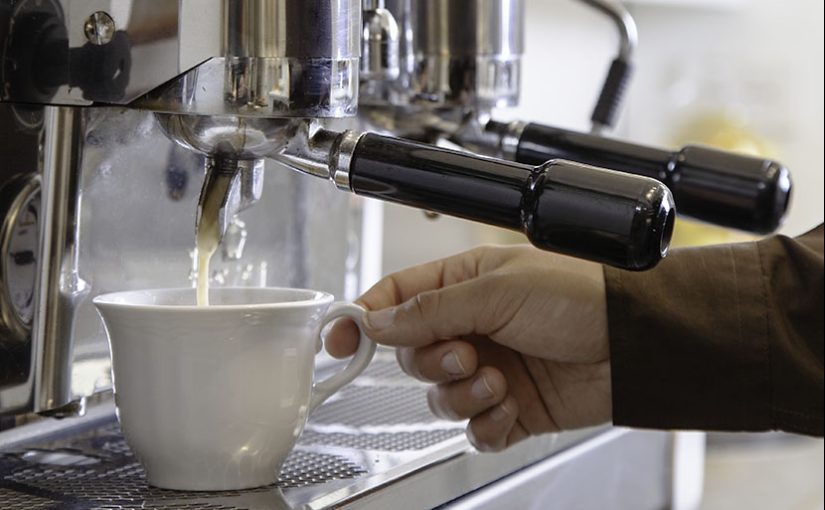
I have come to learn during my time here that Italians have a different relationship with coffee. All this is gathered simply by being an observer, however I believe the following to be true. Italians use a café as a place that is not work, nor home, but its own third thing. When I say cafes, I actually mean bars, as that’s where you can find an elegantly crafted Italian espresso machine sitting alongside a liquor cabinet. They also tend to have pastries and snacks at bars. Tabacchi shops also tend to have espresso machines. The word cafe for me has become an all-encompassing term for coffee shop, bar, tobacco shop – all places in Italy with an espresso machine. The point of all this is to say that Italians treat these third places as hangout spots. These are places to escape work and school, talk to their friends or family, or chat with someone they haven’t seen in a while. They grab a little glass mug of espresso and stand at the counter and catch up. If they know no one there, they lean against the counter and drink their espresso, macchiato, cappuccino, or whatever their preference. It’s not about getting a caffeine boost in a plastic cup, and running as fast as you can to work. The culture is about getting a morning coffee to enjoy and wake up with. A daily ritual, even if short, that can be savored, not rushed.

Now we get back to my previously mentioned demographics. From what I’ve noticed there isn’t much need for cafes with affiliations. Most places offer similar vibes, with the outliers being specialty shops such as bookstores or record store cafes. For my coffee shop at home, to be successful we need an affiliation, a reason for people to specifically come to us. A marketability. Cafes here don’t have much of that. They offer relatively the same menu at the same prices for anyone to come in and enjoy. There are some specific coffee shops whose goal seems to fit a certain market, and one of those Ditta. Ditta Artiginale allows people to sit at tables or bars with laptops or books, and a lot of their customers take that opportunity. To me, they are a very American-oriented shop, and a lot less like a traditional Italian café. Ditta isn’t the only shop like this, there are other places with an American audience, such as Melaleuca, which is an Australian-American brunch café. On Melaleuca’s website, they even ask people to respect their laptop-free days of Friday-Sunday. 

I hope that during the rest of my stay in Florence I can come to learn more of the cafe culture here and maybe a lot of my hypothesis will be disproven by nuances I have yet to uncover. I really do appreciate the way Italians separate life and work, and would love some of that relaxing energy when it comes to my morning coffee in the States.

Bio Fashion Lab: The Thoughtful Retail Experience

written by Lily Carroll for Special Project: Experiential Learning in Journalism

Through experiential learning at FUA-AUF, I’ve gotten the opportunity to interact with Bio Fashion Lab, an independent boutique dedicated to responsible, ethical shopping. The store’s owner, Debora Florio, has spent over nine years in the fashion industry, seven of which were in fast fashion, an industry worth approximately 103 billion U.S. dollars in 2022, projected to reach 291 billion U.S. dollars in 2032, according to PR Newswire. This experience has driven Florio to conduct extensive research, educating herself about consumer behavior, the fashion industry as a whole, and ethical solutions to the extensive problems it creates. With her findings, Florio started Bio Fashion Lab, a space designed to invite others to join in this mission for change. 

Upon receiving a degree in Economics, Florio realized that she wasn’t dissatisfied in this line of work. She says that at the time, unfortunately, shopping for clothes was what brought her the most joy, so she decided to find a job in the fashion industry. Unaware of the many unethical practices implemented in the industry, Florio slowly uncovered the ways we harm people around the world and the environment when we support fast fashion. She learned that these stores use minimal human resources, producing thousands of the same products at low prices, 30% of which wind up in landfills. Just one of the many ways this industry is creating crises everywhere. 

“I realized what was behind the scenes of production in terms of social injustice, and the negative impact that this industry has on the planet, I decided to take action,” Florio said. “I started studying consumer behavior, marketing and whatever lies behind the mechanism that triggers our mind to go and shop for ourselves.”

Florio continued to work in the fashion industry, this time with a seemingly ethical brand. It was there that she met a woman with a crippling shopping addiction, spending thousands of euros a week with no satisfaction, and an insatiable desire that could not be fulfilled. This woman inspired her to create a solution for people to shop responsibly.

So, Bio Fashion Lab was born, to promote emerging, ethical designers using natural materials and equitable production. Offering a healthy way for customers to shop in a manner that does not promote overconsumption, and respects the environment and all who inhabit it.

“Whenever you start to go really deep in the research, you see the truth with your eyes. I’ve never been to Pakistan, Bangladesh, places where these issues are most prevalent, so we do a lot of calls with different unions and government workers on the other side of the world,” Florio proudly states. “We can hear their testimonies and see that it’s quite real. It’s there. When you really understand what’s going on, you can never go back.”

Florio says that the clothes are just a small part of the ways she educates others on the fashion industry, and how we can improve it. Through documentary screenings, workshops, and panels. Bio Fashion Lab strives to educate this generation of consumers to make the right choices. An environment that encourages shoppers to ask themselves, “Do I really need this?” especially when faced with a cheap, overproduced option. Bio Fashion Lab teaches us how to say no, and explore another option.

To learn more about Bio Fashion Lab, visit https://biofashionlab.com/, where you can read about the movement and upcoming events. On Thursday, 13 June, Bio Fashion Lab will host its first fashion show entitled, “Fashion Under Construction,” making light of the construction that currently surrounds the store, highlighting the store’s call for unconventional ways to shop. 

My Family in Florence: Bringing One Home to Another

written by Lily Carroll for Special Project: Experiential Learning in Journalism

When I chose to study abroad in Florence for the entire summer, I took a giant leap out of my comfort zone. Back home in Minnesota, my family is my whole life. As the sixth of seven children, my siblings and parents are my absolute best friends. My few experiences traveling have always been with at least one family member, with the exception of going to and from my campus in Missouri. Being someone who experiences lots of anxiety surrounding separation and travel, I knew that this opportunity would challenge me in the areas that have always restricted me.

Going to school outside of my home state was my initial step toward overcoming my struggles, fostering strength through vulnerability. I grew my independence a tremendous amount and became accustomed to the environment at school. I had gotten so comfortable with my friends, my boyfriend, and my apartment, that the mundane became almost irritating. However, the idea of adventure seemed exhausting. The decision to spend the summer in Italy came with the hopes that some of my loved ones could share in this experience, and I was elated to hear of my family’s plans to visit.

The distance and time change caused me to miss my family very much upon arrival, but in the back of my mind I was already working towards seeing them again, showing them all I’ve learned since being here. Knowing that in a few short weeks I would be able to give my mom a hug and show her my new home would be what I looked forward to most. What I didn’t know was how quickly it would come — in all of the excitement of meeting new people, discovering a whole new culture, and falling in love with my internships and courses, the time flew by. 

Comfort washed over me when I saw my mom’s sweet smile, and I was so relieved to see a familiar face in a place I’m still getting to know. My mom and brother arrived, and I was home again. Together, we ventured to Venice, where we prioritized quality time, relaxation, and taking in the beauty of the water surrounding us. We came back to Florence, and I got to play tour guide for a few days, exploring the things I’ve seen and the things I still had yet to discover. 

We toured the Duomo and Galleria dell’Accademia, bringing life to the landmarks I’ve been passing by for over a month. My family got so excited over things I have gotten so used to. This gave me a newfound appreciation for the city around me and served as a good reminder of how lucky I am to have the opportunity to call this place home for a short period of time. While I am sad to see them go, I feel so lucky to have been able to show them around and combine my two homes for a week of love and appreciation. I will forever cherish our time together, and I can associate this place I love with the people I’ve missed so much.

Lived Moments

written by Valerie Tiscareno for Special Project: Experiential Learning in Journalism

This is a collection of photos showcasing places, things, and experiences that I would have liked to share with my dear friend who passed away in January. He passed away pursuing what he loved: photography. He was 19 years old when the accident happened, 4 months away from his 20th birthday.

We had always talked about the adventures we would go on as photographers. Our aspirations of working for National Geographic, traveling the world and seeing what it had to offer. I had told him my story of giving up my Quinceanera in order to travel in Europe.

I remember one of my last calls with him. I had told him I was finally going to Europe. I remember seeing his smile for one last time. The way his mouth curled up and the indents on his cheeks. That call felt like we were both going towards the path we had both talked about.

Here now, I am filled with memories of him, of things I wished to tell him. This collection of photos are my last adventure with him.

These photos were shot either how I think he would have taken them, or as photos I would have been excited to share with him. These all have been shot on the camera I met him with.

I remember him meeting me and the first thing we bonded about was photography. The next weekend he drove 4 hours to be able to take photos with me. I remember he thought my camera was a film camera and the disappointment on his face when I told him it was a digital camera.

This project is a reflection on the experiences we take for granted as living, but even more so, as lived moments. I challenge viewers not to think about the personal stylization or the absence of people; rather, look closer at how we as people decide to live our lives.

Hidden Gem: Locally Owned Gym in Florence Provides Much Needed Solace

written by Alex Daggett for Special Project: Experiential Learning in Journalism

Tucked away on the quiet street, Via del Leone, with a modest sign and entrance, Gym & Tonic is a true, classic testament to athletic performance and bodybuilding. Built on the first floor of a residential building, the space extends to the back with free weights and old school machines adorning the right side. Under a skylit converted garden is a dance studio and boxing area. Certificates, awards, records, and trophies for mens physique occupy the walls everywhere the eye can see, and a sense of community is felt. 

As soon as I arrived in Florence to study abroad for the Summer, I immediately sought after a gym so I could stick to my workout routine.  After some research, there still weren’t any gyms that stood out to me. By pure chance, I happened to walk by Gym & Tonic while exploring the south side of the city, and decided  to take a look around. Immediately upon entering, I was shocked by how seamlessly the whole space was integrated into the classic architecture, nothing looked out of place. I was so used to the concept and sights of large scale commercial gyms where everything looks the same, and this was far from it. Despite the rustic nature of the machinery, everything was clean, and practical. I have been to a non commercial body building gym only once before, and this evoked very similar emotions and feelings, while offering an Italian twist. 

“I’ve been in charge for 26 years, since I inherited the gym from the man who owned before me,” said owner, Francesco Borghesi.

Despite the establishment being older than himself, Borghesi is synonymous with Gym & Tonic in the current date.

“I’ve been lifting weights since I was 15,” Borghesi said. “It’s what I love.” Borghesi provides not only customer relations, but also teaches various courses.

“I am thankful to have many good teachers in my time,”  Borghesi said. “So I try to provide the same to others.”

When I met Borghesi, he was teaching a patron a boxing lesson. Once he was finished, he told me all about the gym. I then bought a membership and got a workout in that day. Since then, I have gone every day and have yet to find a flaw in the gym. The hours are from 10:00 to 20:00, and every time I’m met with an immersive environment full of lively locals. Working out has always been a great escape and opportunity for self focus and reflection, and this is the perfect place for just that. Every time that I go to a commercial gym, it always just feels so clinical and uninviting, but Gym & Tonic offers such a different environment that is refreshing. I am very glad that I found this spot, as it made this international transition a lot easier. 

While it may not be on any travel destinations, or top ten lists, I think that adds to the charm of such an establishment. A place that is largely untouched by tourists offers a level of immersion and authenticity that is hard to come by. For that reason alone, Gym & Tonic is worth checking out, and they even offer day passes for people looking to get a quick lift in. A true hidden gem of Florence, located at Via del Leone 10.