The Beating Heart Above Florence

A place where sunsets, cameras and people meet to be present

This blog feature is an exclusive bonus installment to our Fall 2025 issue of Blending Magazine. After you finish reading, be sure to explore the rest of the magazine online—just follow this link to download the full Fall 2025 edition:
https://jschoolfua.com/images/BM/BM_151.pdf

written by Maëlys Brunet

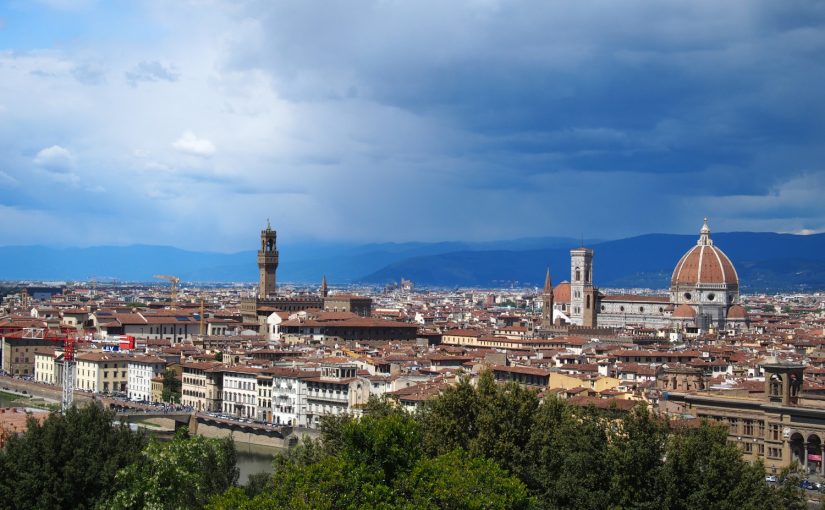
As the city slowly changes from season to season, we are constantly reminded of Piazzale Michelangelo as the beating heart of Florence. Especially during the summer months. The Piazzale remains alive through both tourists and locals, particularly at sunset, as wanderers gather on the steps with a simple glass of wine to listen to a band’s music or take pictures as a souvenir of the moment, as time pauses, just for a moment. This Florence phenomenon stirs curiosity about the aura the city holds in people’s hearts, a current that pulses through and unites communities. 

Piazzale Michelangelo seems nowadays as a rite of passage, a go-to place when visiting Florence to admire the city’s iconic skyline. But what about its history? Built in 1869 by Giuseppe Poggi, it was originally meant to just be a terrace, celebrating Michelangelo’s art. A representation of progress, but also modernity and the future, as Florence was the capital of Italy during that time. Nowadays, we see Piazzale Michelangelo as a place to slow down, reconnect to the beauty of the city, with a crowd to accompany us into this poetic journey. 

The typical route to Piazzale Michelangelo is just as memorable as the view itself. Beginning from the tower of San Niccolò, take the ascending stairs and path between the large trees. The climb begins as we slowly rise above the city of Florence, in anticipation of the view that awaits, as if leading towards something sacred. Then, the main terrace appears, the crowd gets denser, and the city spreads below. In the golden hour of the evening, music plays in the background and people dance to its infectious beat. Monuments wear orange and yellow as the sun begins to set, offering the perfect moment for multiple photoshoots to spontaneously appear. Phones and digital cameras alike click with the same rhythm as conversation or laughs. 

Piazzale Michelangelo is the place where multiple generations meet to capture the essence of Florence. As a guitarist tunes his strings, he shares that although the people there always change, the sunset and view remain a constant. There is poetry when we stare at the landscape, thinking it was approximately the same view as the one our ancestors looked out at centuries ago. People at first come for a simple view, then leave with memories, connections and hearts filled with emotion. Here the sunset isn’t edited, it is put on display, shown in its raw form to its audience.

Looking away from the view and back towards the crowd, students share a bottle of wine, while pizzas are eaten by a family visiting from abroad. All the while, social media enthusiasts are trying to capture the perfect shot. A couple stairs down, people listen to music, dance to the rhythm of guitars and saxophones, and cheers can be heard for a couple that just got engaged. This place holds authentic moments of life and connection that will never be forgotten. 

As night approaches, some remain while others venture further, all the way to San Miniato al Monte – a hidden place above Piazzale Michelangelo – to admire the city from a similar perspective. Apart from the overwhelming crowd and movement, you find peace and quietness, almost like coming out of a dream. Two different atmospheres but only a single feeling remains unchanged: reassurance and interaction. 

In those small interactions, it is where Piazzale Michelangelo holds its core, being something rare and precious to keep hold of. A moment apart from digital, inviting those that gather to be there mentally, with your own thoughts, to live in the moment rather than posting it. The space gathers both past and present. Life and art coexist around a skyline view, with a community to share the same moment with, just for a couple of minutes… or even a couple of hours. 

In an age of constant digital scrolling, Piazzale Michelangelo remains a symbol of the contrary. Not every view needs to be shared or posted on social media, as it must be experienced and lived through the senses and presence of people around us. The difference lies in the fact that the beauty of the square can be shared through both photos and memory, however those emotions we feel when in its presence, cannot be replicated on the digital screen.

When we look at Piazzale Michelangelo, we can see its beauty in the different communities it brings together. Some live in the moment, as a break, an aside, a moment apart from the fast pace of life. We take this moment to slow down, take a step back, and enjoy the present moment with friends, family, or alone. Others may take advantage of the moment by capturing a memory, particularly through digital means, engaging in an online community.

Piazzale Michelangelo explores the possibilities and redefines the opportunity to come together as a community, whether in-person or virtually. This place in Florence demonstrates a new perception of what a community can be, beyond what we are used to seeing, while continuing on the same path of harmony and the search for unforgettable moments. 

The Sound of Florence

written by Alena Pietrini, Clare Kearney & Autumn Verna

This blog feature is an exclusive bonus installment to our Spring issue of Blending Magazine. After you finish reading, be sure to explore the rest of the magazine online—just follow this link to download the full Spring 2025 edition:
https://jschoolfua.com/images/BM/BM_151.pdf

Pinocchio Jazz Club, located in the heart of Florence, serves as a hub for local jazz culture, offering an intimate location for both musicians and audiences. Founded by Costanza Nocentini and Daniele Sordi, the club promotes high-quality jazz music in order to create growth of both classic and emerging talent. Each Saturday, a range of performances play at the club and perform their own original compositions and jazz classics. The famous Pinocchio logo is inspired by pop culture stemming from Florence, creating a sense of community at a very intimate club. Beyond its musical contributions, Pinocchio Jazz Club plays a vital role in preserving Florence’s locality despite the increasing tourist surroundings. The club stands as a testament to Florence’s roots by offering a space for cultural exchange and a deeper connection to music. The Pinocchio Jazz Club stands tall as an important institution for both locals and visitors to celebrate Florence’s dedication to the genre.

Pinocchio Jazz Club is a well known organization located in the heart of Florence. Locals and tourists enjoy this important location for the Florence community. Costanza Nocentini and Daniele Sordi oversee the association and ensure it continues to spread jazz to as many people as possible. Nocentini revealed that the organization was founded with the goal of encouraging the growth of the local jazz community and promoting quality music that stands apart from commercial sounds. That goal has clearly been exceeded, as many jazz stars began their careers at Pinocchio Jazz Club. 

Each Saturday, the club hosts a new musician who brings their own spin on jazz. Some rework classics while others perform original compositions, all contributing to the evolving nature of jazz. Pinocchio Jazz Club isn’t just a venue where people passively watch a performance, it’s a zestful space that comes alive with the effervescence of the music. The club itself sits tucked into a residential part of Florence. The surrounding area has wide streets, more greenery, and a noticeable lack of tourists. It feels like a place where people actually live, not just visit. 

Inside, the setting feels intimate while also being full of enthusiasm. The lighting is vibrant and changes with the vibe of each performance, adding another dimension to them. One of the more iconic details is the famous Pinocchio riding the whale logo, which stands out in the background and reminds you of the novelty and roots of the club. The club is medium-sized, with space for people to sit at tables, making it feel inclusive no matter where you are. The performances range from full-on jam sessions with multiple musicians, to solo acts. 

One of the most striking things about the shows is how often the performers will involve the audience. Since the seating is so close to the performers, it’s impossible for the audience not to get swept up in the passion of the performance. The musicians feed off the audience’s reactions, and the crowd responds in turn, creating a dynamic environment that makes each show feel different and alive. There’s a genuine sense of play between the crowd and the musicians that makes the space feel fun, warm, and communal. It’s a casual crowd as people of all ages come through, some dressed up for a night out, others just stopping by. 

There’s a bar tucked into the back, and the whole place has an effortless local charm. What’s especially cool is that a lot of the musicians don’t seem to be playing off sheet music or pre-planned sets, but are simply riffing and letting the music take shape in real time. This aspect of the club just adds to its electrifying energy. 

 The impact of Pinocchio Jazz Club goes beyond music. It plays a critical role in preserving Florence’s local identity. Many of Florence’s visitors come just to check off the big sights and leave without ever experiencing the soul of the city. The historic center is starting to reflect that, with fast food chains and souvenir shops replacing once locally-run stores. In a city that was once defined by the Renaissance, by pushing boundaries and creating something new, it’s almost upsetting to see it slowly turn into a checklist for tourists. 

Places like Pinocchio Jazz Club push back against that. They give locals and those looking to connect with the city on a deeper level a chance to do so. Pinocchio Jazz Club reminds us of the roots of Florence. Whether you come for the music, vibe, or a break from the city center, there’s something about the club that stays with attendants. Florence will always have to navigate the balance between the old and new, locals and tourists, but places like Pinocchio Jazz Club make that dynamic feel more manageable. 

In the end, what makes Pinocchio Jazz Club so memorable isn’t just the music or the setting, but the sense of being part of something genuine. It’s rare to find places that blend tradition and originality so well, and even rarer to find ones that stay connected to the local community. Whether you’re a long-time jazz fan or just discovering the club, you leave knowing you’ve experienced something special.

Casini Firenze: The Art of Timeless Leather Craftsmanship

written by JJ Anderson, Madeline Hines, Mia Besl & Carys Abbott

This blog feature is an exclusive bonus installment to our Spring issue of Blending Magazine. After you finish reading, be sure to explore the rest of the magazine online—just follow this link to download the full Spring 2025 edition:
https://jschoolfua.com/images/BM/BM_151.pdf

Rooted in Florence’s rich tradition, this brand creates bespoke leather pieces that embody authenticity and artisanal skill, standing apart from fast fashion.

When most people think of Italy’s vibrant fashion industry, names like Prada, Gucci, and Valentino often come to mind. However, for those who truly appreciate the essence of local craftsmanship, there’s a lesser-known, yet highly revered brand, Casini Firenze. Nestled in the heart of Florence, the store is a standout in a city already known for its centuries-old leather craftsmanship.

The city’s longstanding practice of leather craftsmanship dates back to the Middle Ages. Florence was found to be an ideal environment for leather production because the Arno River provided access to water needed for time-consuming, labor-intensive techniques like leather tanning. By the 13th century, the city was renowned for producing high-quality leather goods, particularly for the nobility and elite classes across Europe. Over the centuries, Florentine artisans have continuously developed their methods, perfecting the art of tanning and dyeing leather.

In the aftermath of World War II, passionate leather craftsman. Giorgio Tattanelli, opened his family-run business which he named Casini Firenze. Casini specializes in crafting handmade leather totes, wallets, purses and more using authentic Tuscan leather and centuries-old craftsmanship. They pride themselves in being a limited edition brand, upholding timeless Italian values while creating special pieces for each client.

Amid a global fashion economy dominated by the constant manufacturing of mass-produced garments, the brand stands today as a reserved, yet powerful force in Florence’s underground fashion scene.

The store is located in Piazza Pitti, directly across from the Pitti Palace, making it a convenient stop. Upon entering, you’re welcomed by a glass window display showcasing Jennifer Tantinelli’s latest collection. Almost immediately, a sales attendant greets you, ready to elevate your shopping experience. The staff are experts on Casini products and provide a top-tier luxury service to ensure you leave completely satisfied.

After speaking with a few sales representatives it became clear to us that the brand is far different from the fast fashion stores we walk past daily. Casini Firenze‘s unwavering commitment to quality and authenticity proved a stark contrast to the disposable, fleeting nature of mass-produced clothing. Each piece tells a story of dedication, skill, and a deep respect for traditional Florentine artistry that cannot be replicated by factories or synthetic processes.

Specializing in custom made collections, the brand offers clients the opportunity to personalize a piece’s color and style to suit their individual taste. In addition, it provides bespoke services, allowing customers to design a truly one-of-a-kind bag that reflects their personal style and preferences. Among their most iconic creations is the Infinity Leather Basket Bag, a signature piece in the brand’s collection. This bag is made from leather pieces being meticulously weaved in an infinity pattern around a wooden box, giving the piece its signature basket-like look. This bag is available in seven distinct colors, and the customer even has the luxury of adding customizable elements to the bag.

Obviously, these unique pieces would not be created without the brainpower of new designers of the years. In 2002, Jennifer Tantinelli, granddaughter of the brand’s creator and New York native, took the reins of the family business. A lover of classic fashion, Jennifer was inspired by Audrey Hepburn’s timeless style-a vision that aligned perfectly with Casini’s commitment to tradition and elegance. Jennifer followed her family’s roots back to Italy and under her leadership, Casini Firenze transitioned into a modern-day luxury brand while still honoring its artisanal roots.

Despite facing numerous challenges, most notably the global disruption caused by the COVID-19 pandemic, Jennifer’s vision has allowed the brand to thrive. While the flagship store in Florence closed for nearly two years during the height of the pandemic, Jennifer was able to sustain her business through its location in Palm Beach, Florida.

One of the defining features of Casini Firenze is its commitment to maintaining full control over the production process. Unlike many luxury brands that outsource production, Casini prides itself on being self-reliant. The Tantinelli family makes all the leather products in-house, working with local artisans to ensure each piece reflects the highest standards of craftsmanship. This hands-on approach has allowed the brand to retain its authenticity and the hallmark spirit of Florence’s leather legacy.

A Guided Journey Through the City’s Creative Underground

written by Alison Sweeney

This blog feature is an exclusive bonus installment to our Spring issue of Blending Magazine. After you finish reading, be sure to explore the rest of the magazine online—just follow this link to download the full Spring 2025 edition:
https://jschoolfua.com/images/BM/BM_151.pdf

From literary cafes to rebellious music movements, uncover the lesser-known artistic history behind some of Florence’s modern-day cultural hot spots.

Florence’s Underground Artistic and Creative Scene

Though Florence is known for its Renaissance art, grand architecture, and famous landmarks, the city has a hidden artistic scene that offers a different kind of cultural perspective and experience. While many of the venues that once hosted this creative underground scene have become more commercial over time, their roots tell hidden stories of rebellion, reinvention, and the key to discovering true Italian culture. This travel guide invites you to step into Florence’s underground, not just physically but historically, creatively, and culturally.

Caffé Giubbe Rosse: A Literary Revolution is Brewed 

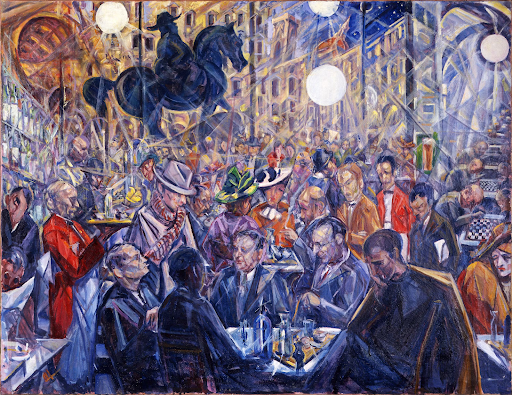
Start your journey at one of the most famous historic literary cafes in Florence, Caffé Giubbe Rosse, where famous poets and writers sat to scribe and exchange radical ideas. According to the article, “Grand Re-opening of Caffé Giubbe Rosse” by Accord Italy Smart Tours, Caffé Giubbe Rosse is located in the Piazza della Republica and was established in 1896 by two German brothers. The cafe earned its current name, meaning Red Jackets, because it was inspired by the red uniform worn by the waiters. 

Caffé Guibbe Rosse grew to become a hub for intellectuals, artists, and writers. The cafe played a pivotal role in the Futurist movement and served as a gathering place for avant-garde thinkers like Baccio Maria Bacci, who looked to challenge traditional artistic roles. 

Today, visitors can still visit the cafe and bar to experience the Italian cultural experience and legacy, where you can find some original Futurist writings still on display! 

Teatro Verdi: Reinventing the Stage

Next, step into the dimly lit Teatro Verdi of the 1980s, where the stage is filled with redefined Italian performance and shortly became a prestigious turnpoint in the uprise of the futurist avant-garde movement. Teatro Verdi transformed into a space for the most sophisticated pop and rock music and for unconventional drama. 

According to the Teatro Verdi website, the theater was inaugurated in 1854 and is the largest “Italian-style” theatre in Tuscany. Located in the historic Santa Croce district, it was built on the remnants of the 14th-century Carcere delle Stinche. In the early 20th century, the theater embraced the futurist avant-garde movement, which challenged traditional theatrical norms. These weren’t just performances but protests, celebrations of youth, and identity in a space of avant-garde reinvention.

Today, Teatro Verdi remains a diverse cultural venue, offering classical music, contemporary performances, and pop and rock concerts, reflecting the artistic landscape Florence has to offer.

Tenax: A Hub for Florence’s New Wave Movement

Last but not least, explore one of the music venues that fueled the cities’ New Wave movement in the 1980s, Tenax. Tenax quickly emerged as a hub for new artists and musicians by influential New Wave and post-punk bands and today remains a symbol of Florence’s alternative music history. Picture this: it’s September 1981, and amid Florence’s enthusiasm for new wave, dark, and punk sounds from the UK, Tenax emerges as a pioneering nightclub. According to the Tenax website, the club was founded by a group of young entrepreneurs and quickly became an innovative and alternative hub for emerging artists, fashion designers, and musicians. Tenax’s stage has hosted an impressive number of acts, including Spandau Ballet, Bauhaus, and New Order, becoming a cornerstone of Italy’s music scene. Bands like Litfibia and Neon, formed in Florence in 1979, found a platform at Tenax for their innovative sounds. 

As the music landscape evolved, Tenax adapted and began to embrace other genres like house music. The club’s ability to reinvent itself while maintaining its core identity has ensured a lasting influence on Florence’s cultural aspect. 

All of these examples of Florence’s underground cultural scene offer a rich and nuanced perspective of the city’s artistic evolution. These places, now more visible, carry with them the same legacy of those underground revolutions. So, next time you find yourself in this beautiful and magnificent city, look closer. Look beyond the espresso machines, beneath the stage lights, and in the echoes and flashing lights, and maybe you’ll find the story of a city whose past reflects a magnificent creative rebellion. 

The Upkeep of a Cemetery Honoring Fallen American Soldiers

written by Ansley Peterson

This blog feature is an exclusive bonus installment to our Spring issue of Blending Magazine. After you finish reading, be sure to explore the rest of the magazine online—just follow this link to download the full Spring 2025 edition:
https://jschoolfua.com/images/BM/BM_151.pdf

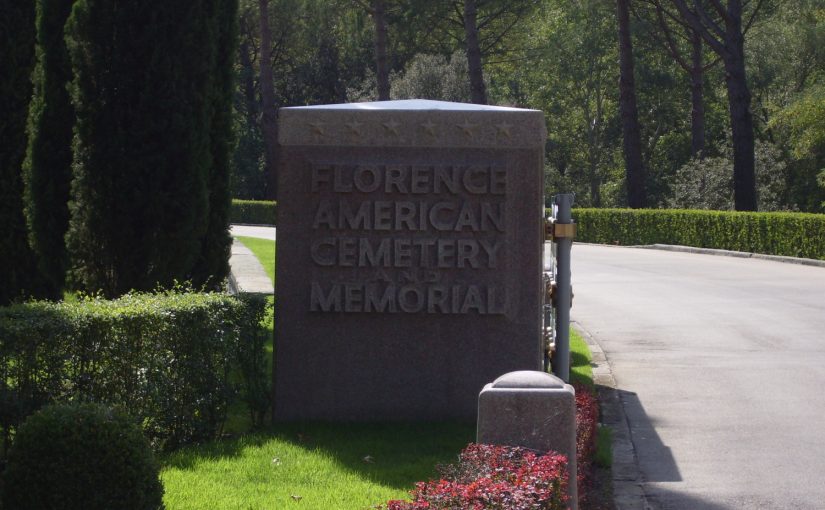
A determined young man in a black puffer jacket nervously clutches a map, tapping his fingers on its cover. An American teenager crouches by a headstone and slowly traces his fingers over the letters of its inscription as his dad watches from afar. An elderly couple stands at the entrance, shoulder to shoulder in awed silence as they look upon rows and rows of graves. They walk slowly, hand in hand, steeling themselves for the journey up the sloping path ahead of them. No matter the reason, it’s 10 a.m. on a Thursday in March and the lives of these strangers all intersect here at the Florence American Cemetery. 

Situated on the Greve River just outside of Florence’s city center, Americans and locals alike make the trip to the cemetery to gain familial closure and to learn more about the historical ties between Italy and the United States. The location of Florence was chosen for a multitude of reasons, starting with its ease of accessibility because of the nearby Santa Maria Novella train station and the bus routes that run with stops at the cemetery throughout the day. Since this is a World War II cemetery, there is a higher likelihood of visitors being descendants of those who have fallen and having memories to share and preserve about those buried here. 

Florence American Cemetery is managed by the American Battle Commission, whose overall mission is to ensure that “time will not dim the glory of their deeds.” Current superintendent Eryth Zecher has been working at the Commission for five years and has been maintaining the Florence American Cemetery for the past year and a half. She explains that the process for choosing the location dates to just after World War II when temporary cemeteries were set up in areas where major battles had just occurred. It was a time of transition when some of the fallen service members were being shipped back to America to their families and the temporary cemeteries were being compared to see which would be best fit for building a permanent cemetery. The Florence location allows a good proximity for visitors, and its rolling Tuscan hills made it a beautiful environment that was deemed fit for the sacrifices of the men killed while liberating nearby cities in the Northern Italian Campaign.

It seems surreal that their bodies eternally rest below the freshly manicured grass, with nothing but a shiny marble cross to signify their life’s worth. Lead gardener, Leonardo has been working with the nature of the cemetery for the past 10 years to keep it as close to the condition as the year that it was founded, in 1960. He polishes the headstones with a sponge and blows off all leaves and debris from each plot. He is passionate about his work and pays close attention to detail because of the gratitude he has for its historical significance. 

“My grandparents were freed by the American soldiers in 1944,” explains Leonardo, “For me, it’s an honor to work here.” 

Small, perfectly shaped Tuscan Cypress trees line the perimeter of the grounds, standing like soldiers at attention over the headstones. Leonardo shares that adult trees don’t grow very well in the cemetery’s environment, so he and his team raise the trees from saplings and keep them looking uniform. They don’t use chemicals on the trees, and everything is done by hand, including removing all weeds from the property. On this blustery, Thursday morning, I watch as two men take turns anchoring down wooden support stakes for smaller trees and chopping off uneven branches. 

The maintenance team and superintendent Zecher work diligently to make sure all the upkeep efforts reflect the promise to the fallen soldier’s families that their loved one’s resting place would be taken care of. The groundskeepers clean the memorial and headstones on a set schedule and work meticulously to keep them in perfect condition. 

“It’s just the ultimate mission to be able to commemorate and honor these service members every day and also work in such a beautiful place,” says Zecher, “I couldn’t find a better way to spend my life than doing this mission.” 

Mystery Meets Mixology

The Evolution of Florence’s Hidden Bars and the Art of Underground Mixology

written by Trinity Conner, Molly FitzGerald, Olivia Adams, Lila Williams & Marisa Jones

This blog feature is an exclusive bonus installment to our Spring issue of Blending Magazine. After you finish reading, be sure to explore the rest of the magazine online—just follow this link to download the full Spring 2025 edition:
https://jschoolfua.com/images/BM/BM_151.pdf

Florence’s artistic spirit isn’t confined to its galleries and historic cafés; it also spills into the city’s underground secret bars—modern-day echoes of Prohibition speakeasies—where secrecy, craftsmanship, and storytelling converge into a singular drinking culture. The hidden bars, like the literary cafés of the past, create an underground atmosphere of exclusivity and creativity, elevating mixology to an art form.

The evolution of Florence’s modern hidden bar scene highlights how these establishments mirror the city’s avant-garde movements by reinventing tradition. Behind unmarked doors and secret entrances, guests enter spaces that showcase both history and innovation.

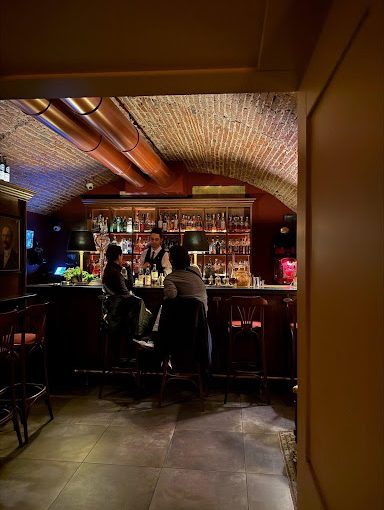
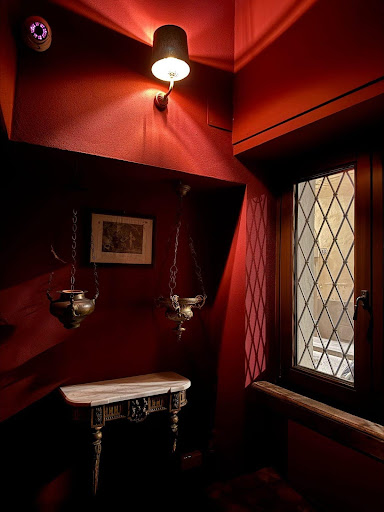
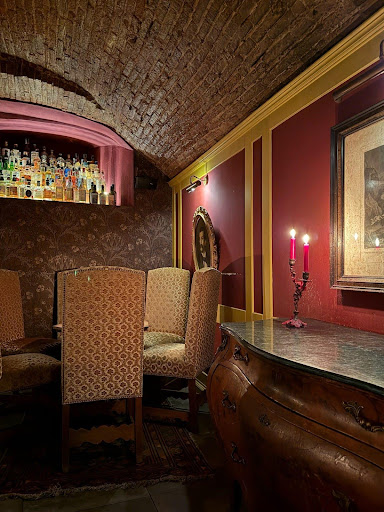
The underground nightlife of the 1980s has evolved into today’s hidden bar scene, shaped by the rise of cocktail culture and modern mixology. One key example of this evolution is Rasputin, Florence’s first hidden bar, discreetly tucked away in Santo Spirito. This underground cellar, with its candlelit tables, antique furnishings, and a rules page on the menu, transports visitors to a vintage atmosphere where handcrafted cocktails strike a balance between tradition and innovation.

Taking a visit to Rasputin feels like traveling back in time, allowing individuals to feel immersed in rich history. Maintaining a strict no-phone policy, discouraging excessive phone usage, and flash photography to keep the experience authentic. These policies enforce full presence, something that is rare in today’s digital world. The hushed conversations, the clinking of glasses, and the soft jazz music in the background make it feel like stepping into another era.

Marco Vinci and Ghermai Zerazion, the co-founders of this hidden gem, came up with the idea to bring a seamless combination of America’s past and present to Florence, Italy. During Prohibition in the United States, the production, sale, and transportation of alcoholic beverages were outlawed. As a result, clandestine bars, now known as speakeasies, sprang up across the country. Therefore, these tucked-away spots were places where people could socialize, dance, and drink bootleg whiskey and gin, despite the looming threat of raids, arrests, and jail time. The consequences were harsh, but the desire was irresistible. Rasputin allows individuals from all over the world an immersive experience of life during this time.

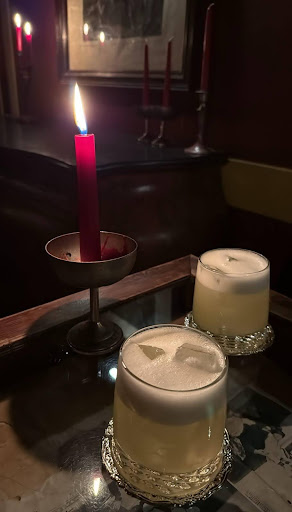
The cocktail menu is as thoughtfully crafted as the space itself, offering a mix of classic recipes with modern twists. The standout for us is “Our Bee’s Knees,” a drink that combines honey, lemon, and lavender into a refreshing and balanced flavor. The foam on top added a nice touch, making it feel both indulgent and relaxing.

The bar also has an impressive selection of over 300 labels, including a wide range of whiskeys, which made the menu feel like more than just a list of drinks—it is an opportunity to learn and explore. Overall, it is a place where the drinks and the atmosphere come together in a way that feels both approachable and special.

Rasputin isn’t just a speakeasy; it’s a hidden world that combines history, mystery, and artistry. If you are looking for a night that blends sophistication with a touch of secrecy, this is a must-visit while in Florence.

Beyond Rasputin, other hidden gems like Vanilla Club Speakeasy capture the charm of the Prohibition era with its password-protected entrance, dark wood interiors, and soft jazz music. The bar’s strict no-phone policy encourages people to experience expertly crafted, Italian-inspired cocktails in an intimate setting.

Beneath Grand Hotel Cavour, The Secret Bar offers an underground lounge experience framed by exposed brick arches and antique chandeliers. Florence’s culture inspires The Secret Bar’s menu, so they transform cocktails into stories that reflect the city’s artistic evolution.

Florence’s hidden bars are more than just places to sip cocktails, they are doorways to another time, where history lines the dimly lit walls and mixology becomes an artful performance. Like the literary cafés of the past, these speakeasies craft narratives with every pour, which blends tradition with innovation in a way that holds Florence’s charm.

Whether you find yourself behind the unmarked doors of Rasputin, sharing secret passwords at Vanilla Club, or uncovering the meaning of The Secret Bar, each visit is an invitation to step beyond the normal. In a city known for preserving its artistic heritage, Florence’s underground bars prove that history isn’t just something to admire; it’s something to taste and experience, one cocktail at a time.

Florentine Streets, Clet’s Canvas

written & photographed by Kathleen Morris

This blog feature is an exclusive bonus installment to our Spring issue of Blending Magazine. After you finish reading, be sure to explore the rest of the magazine online—just follow this link to download the full Spring 2025 edition:
https://jschoolfua.com/images/BM/BM_151.pdf

How many stories can a single office avocado tell?

As I set my laptop onto Clet Abraham’s cluttered desk, I took inventory of its miscellaneous contents: an avocado, a glass with a solitary drop of red wine left behind and an array of art supplies – pencils, cutting tools and scattered pages filled with cartoonish sketches.

I set my cellphone atop a strip of stickers depicting bright pink sausages, thumb hovering over the record button – ready to capture every bit of wisdom from the infamous street artist who I was face-to-face with at last.

The conversation was highly anticipated. Earlier that morning, after exchanging a flurry of WhatsApp messages with an employee at his Florence studio—including a pointed warning not to address him by his full name, Jean-Marie Clet Abraham—I stepped into the cluttered space – I made the trek across Ponte alle Grazie to his studio on a sun-soaked Monday afternoon.

Tiptoeing down the sidewalk, I realized I didn’t need to consult Google Maps to know I had arrived. I followed a wall plastered in a chaotic assortment of stickers – a street artist’s rendition of the yellow brick road.

My instincts were confirmed by the street sign placed just above the door, reimagined to depict a tiny figure flying through the air, its grip tight on the tip of the white arrow.

photo by Kathleen Morris

The use of street signs has become a trademark of Clet’s art.

Originally from France, Clet has now claimed Florence itself as his canvas.

I first encountered his work by the Medici Palace. With crooked eyes and a corkscrew neck, a portrait of childhood whimsy is plastered onto a traffic sign, its head formed by diverging arrows. In the following days, I began to train my vision to spot Clet’s characters tucked into every corner of this historic city.

My article joins countless attempts to profile the elusive artist, who has earned celebrity status (and over 160k Instagram followers) in a destination that echoes with the voices of the Renaissance.

I sought to understand the path of the man who sat across from me, salt-and-pepper hair draped across his forehead and backdropped by a wall of unfinished masterpieces.

The son of creative parents, he recalled his earliest inclination to art.

“When I was young, I used art to be free,” Clet said. “I don’t care about art. I care about freedom.”

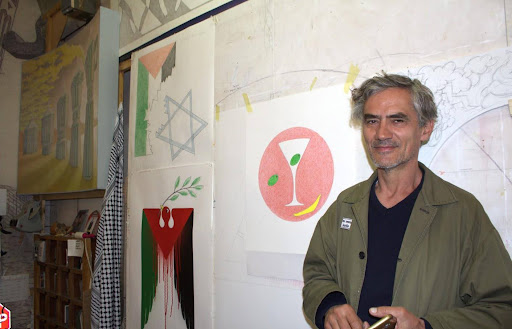
Today, his urban installations serve as an outlet for self-expression and a medium for political commentary. With a rebellious flair, he inspires dialogue about pressing social issues and individual rights. Behind his desk, a sign was spray-painted with the colors of the Palestinian flag. The artwork, created in collaboration with the Art for Gaza Collective, exemplifies Clet’s efforts to garner a reaction from and activate the public.

“I don’t think I am the owner of my ideas,” he mused, reflecting on the essence of collaboration he shares with those who engage with his work. “The ideas pass through me,” he said, describing his ability to sculpt messages and inspire his community to think outside the box.

photo by Kathleen Morris

Clet refuses to be confined by artistic boundaries, finding fulfillment in working beyond the walls of traditional museums.

“I don’t work with galleries,” he underscored. “The best place is always the street.”

Clet navigates the gray area between creating impactful art and defacing public spaces. The allure of street art lies in the ambiguity of this ruleless game – a game that Clet has mastered on a global scale, often operating under the cover of night.

“In the United States, I always [install art] at night because I don’t want the police to stop me,” he revealed. “I don’t want to have a big problem and lose my plane ticket to go back home.”

In a perfect world, city authorities would recognize the positive aspects of his work. He imagines that increased acceptance would act like a “business card,” allowing him to explore cities that are “more difficult, where there is less democracy.”

Until then, Clet can be found cloaked in darkness or in the safety of his studio at Via dell’Olmo, 8r in Florence.

Before I exited his sticker-clad oasis, I gathered two pieces of advice from Clet for aspiring artists: embrace your originality, and when working on the streets, it’s best to be a little drunk.

photo by Kathleen Morris

For more information, visit Clet’s website or follow Clet on Instagram (@cletabraham).

Transportation in Florence: Trading Cars for Cobblestones

written by Ashlyn Roselle

Florence, Italy, widely regarded as the heart of the Renaissance, is a city where the past is not only preserved, but woven into everyday life. The tightly packed cobblestone streets, and historic buildings are unlike the sprawling cities many American students are used to. For those studying abroad, Florence allows cultural immersion, but not without some practical adjustments, especially when it comes to transportation.

Most American cities were designed around the car, Florence however was built centuries ago for pedestrian traffic, carts, and horses. Today, the city’s historic layout remains largely intact, protected by strict preservation laws. The timeless charm that remains in Florence today is beautiful, but creates an unexpected challenge for students abroad. There is a large question mark in everyday life: how do I move through a city that was designed for another era?

Florence’s current layout is rooted in its medieval and Renaissance past. The narrow, winding streets and densely packed buildings are from a city that was never intended for modern day cars. Due to this, much of central Florence is a limited traffic zone (ZTL), where only residents and permitted vehicles are permitted to drive. Public transportation consists of buses and trams, where they travel mostly the outer zones of the city. The inner city is primarily navigated on foot or by bicycle.

For students from the US, where cars are a central part of everyday life, this can be a major shift.

Maddie Oberly, a current FUA student from Connecticut says, “In Connecticut we rely greatly on cars to get us from place to place. However here it was solely on walking and the public transportation systems like the bus.”

The transition can be jarring, but it’s also one of the most rewarding aspects of studying abroad in Florence. Students are able to truly immerse themselves in the city and soak up their surroundings of Renaissance facades and hidden piazzas while strolling to class. The lack of reliance on cars encourages deeper exploration and a more intimate connection to a place.

Another current FUA student, Trace McCament reveals his experience with transportation in Florence thus far. “The amount of walking definitely surprised me, but it’s been super nice to walk around and explore. Before dinner, it’s easy to just stroll around, read menus, and people watch, which is fun.”

Students, like Trace, soon discover that Florence’s compact design works in their favor. Most major landmarks, cafes, apartments, and restaurants are within walkable distance. What initially seems like an inconvenience becomes an unexpected part of the adventure.

Bikes and scooters are immensely popular amongst residents of Florence. There are designated parking zones for both and they are always packed. There are also rentable electric scooters and bikes for tourists, providing modern solutions for longer distances.

The pedestrian-friendly architecture of Florence doesn’t just change how students move, but changes how they live. Walking everywhere promotes physical activity, lowers stress, and encourages spontaneous interactions within the city. The benefits of walking 10,000+ steps per day are incredible, which most individuals struggle to do while in the US if they are not creating intentional time for activity. Many students report feeling healthier, more independent, and more connected to their environment after just a few weeks.

The environmental impact is real. With limited access to cars and a focus on sustainable transport, Florence experiences less traffic, lower air pollution, and an overall more pleasant atmosphere. These conditions create a safer, more accessible environment for students to thrive while abroad.

Studying abroad in Florence offers more than academic credit, it offers a new perspective on urban living. Students gain firsthand insight into how city design influences lifestyle and community. Compared to the wide streets, long commutes, and car dependency of many American cities, Florence demonstrates an older, but highly effective model of urban planning.

That contrast often sparks reflection.

Maddie Oberly admits, “I have honestly loved the exercise aspect of walking and it has been weird to get used to the bus system… but with patience it’s really easy to figure out and utilize in ways that can benefit us as students.”

Adapting to Florence’s pedestrian-focused lifestyle is easier with a few tips:

  1. Plan Ahead – Walking and biking takes time, so build buffer time into your schedule.
  2. Comfort Matters – Invest in a good pair of walking shoes, those 20,000+ step days will sneak up on you!
  3. Learn the Local Routes – Familiarize yourself with your walk to class and apartment for easy navigation.
  4. Embrace the Pace – Allow yourself to slow down and experience the city instead of rushing through it.
  5. Try the Rental Bikes – It’s okay to have a little adventure every now and then, just don’t hit anyone!

Florence’s architecture has preserved history and now shapes modern life. For students abroad, that means adapting to a new way of getting around. It requires you to learn how design and environment influence everything, from mobility to mindset.

By stepping into Florence’s streets, students also step into a bigger conversation about sustainability, community, and how cities can be built around people instead of machines. This is a lesson that reaches far beyond the classroom and one they’ll carry with them long after the semester ends.

Are you guys Nazi’s?

written by Lilly Vergnes

This blog feature is an exclusive bonus installment to our Spring issue of Blending Magazine. After you finish reading, be sure to explore the rest of the magazine online—just follow this link to download the full Spring 2025 edition:
https://jschoolfua.com/images/BM/BM_151.pdf

Lorenzo Carollo grew up in the northern part of Italy, in a small town near Verona. He followed the typical life path of an Italian teen, adding some illegal graffiti work in the mix. After high school, he went on to study History in Padova. You might wonder what kind of hobbies and activities one gets up to in rural northern Italy. For Carollo, he did not have to look far. He works in a mechanical factory, takes an interest in medieval history, plays the bagpipe, and in recent years has become a Skinhead. He has his hair cut short, wears boots and bomber jackets and goes to as many concerts as he can. This is also where I met him, at a concert at the Centro Popolare Autogestito (CPA) in Florence. I personally go to the CPA for its cheap beer and good music. Little did I know, that night’s concert was being played and attended by Skinheads. My first thought and question when I heard ‘Skinhead’ was, Are you guys Nazi’s? They all laughed, and Carollo started to explain the Skinhead movement to me over the loud music. 

Skinheads originated in Britain in the ‘60s. They were primarily influenced by Mod and the Jamaican Rudeboy subcultures, with a working-class pride and rejection of conservatism at the time. The original Skins had a lot of influences from Jamaican music and culture, such as Ska and Reggae. Later, in the ‘80s, a Punk aspect was introduced to the movement, with the working class Punk Rock Oi!. This was then mixed with the Jamaican genres from the previous generation, which was referred to as 2Tone. If these are the origins of the movement, then why do we only now associate Skinheads with white supremacists? 

During that same time in the ‘80s, the movement split up into two very distinct directions: far-right and left/apolitical. Britain’s political climate was precarious, and far-right supporters saw the Skinhead subculture as an opportunity to express their ideology. This spread fast, and by the ‘90s, neo-Nazi and fascist groups existed all over Europe and North America. 

photo by Lilly Vergnes

This is the image we still associate Skinheads with today in the mainstream mindset. However, a reaction to these right-winged groups quickly started. The movement known as Skinheads Against Racial Prejudice (SHARP) was created as an anti-fascist and anti-racist group. Today, they are considered an extension of the original Skinhead culture, the ‘real’ Skins. Skinheads completely deny the fascist groups as part of the movement, even refusing to call them ‘skinheads’ but ‘boneheads’ instead. The Skinheads main ideals are inherently left-wing, although some of them identify as apolitical.

Carollo first became familiar with Skinheads through some people he knew from high school. As a teen, he was interested in forming his own opinions on political matters. He was approached by some guys from a far-right Skinhead group in Vicenza, who wanted him to potentially join their group. After listening to some of the things they had to say, Carollo decided that their opinions did not align with his morals at all. He had a good friend who was black, whom he knew to be a good person, so he thought: how could it be true that all black people were bad? He made up his mind and began associating himself with people from the anti-fascist side of the movement: Skins from a smaller group called the Reggae Lads. Their ideas and morals lined up much more with his own, as he explained, “I could never understand why you would decide to hate. If you see a black man walking on the street who is smiling, you can’t be happy for him just because of the color of his skin? This is so stupid to me.” 

As for myself, I never realized that Skinheads are not what we see in the mainstream media. In reality, it seems like a subculture like many others, with their music, fashion and ideals, even ideals that most people could get behind. They are just as much, if not more, against neo-Nazi’s and facism as anyone else. In some way, they are the ones that are trying to make a positive change in the world.

Hidden but Not a Secret: The Underground World of Mercato delle Cascine

A historic open-air market where Florentines gather to sell and find clothes, food, household items, and anything else you could possibly imagine. There is a vintage presence along with a modernized vision occurring here.

written by Meredith Simpson, Amelia Mora, Alaura Cross, Sabrina Harris & Katie Brooks

This blog feature is an exclusive bonus installment to our Spring issue of Blending Magazine. After you finish reading, be sure to explore the rest of the magazine online—just follow this link to download the full Spring 2025 edition:
https://jschoolfua.com/images/BM/BM_151.pdf

As you enter the 1.5-kilometer-long market, the hum of bargaining surrounds you–an elderly woman haggles over schiacciata bread while a mother negotiates the price of pecorino cheese. The freshly roasted porchetta drifts through the air, mixing with the scent of sun-warmed leather from handcrafted belts displayed on a nearby stall. The sight of endless crowds moving between stalls, clutching canvas bags brimming with colorful produce, is overwhelming. A sense of curiosity stirs inside from the “offerta €1.50” signs. You wonder: Is this an authentic Italian bargain or just a tourist trap?

Il Mercato delle Cascine is the largest and cheapest open-air market in Florence, with its origins traced back to the 19th century. The market started as a place for Florentines to gather weekly to buy necessities at a bargain price. It is located in the biggest park in Florence, Parco delle Cascine, along the Arno River, and remains in the same location. During the ‘80s, the market stood as a place for authentic Italian vendors to come and sell their products to locals. The market’s products reflected Italian craftsmanship, and vendors were often Florentine families who had been selling for generations. Vendors and customers knew each other, and shopping here felt like an extension of local culture rather than a transaction. The market fulfilled every need, from groceries to clothing and household items. You could find a cobbler selling hand-stitched leather shoes beside a seamstress repurposing vintage silk scarves into elegant blouses. It was an integral part of the Florentine community to go and find truly vintage items.

Since the ’80s, the market has grown beyond its original Italian roots, reflecting a wave of globalization. As Florence became a prime tourist destination, its markets shifted to cater to new demands. In the past, every item was locally sourced—whether it was a handmade ceramic bowl or a handwoven scarf. Now, the merchandise tells a different story. There is a new wave of vendors who sell low-grade clothing products for 3-5 euros. These products have been unethically produced, which contradicts the original purpose of the market. A stall once known for vintage linen shirts now sells polyester blouses with “Made in China” labels. Where artisans once handcrafted belts from Tuscan leather, now imitation leather accessories line the tables. They are often indistinguishable from real craftsmanship until you touch the synthetic material.

The arrival of new vendors has shifted products from locally sourced Italian goods to imported fast fashion. These goods have been replacing Italian leather with synthetic fabrics, yet are sold at the same price. One of the many clothing stalls sells dupe designer shoe brands like Alexander McQueen for 10 euros. This “sale” can give the market a less authentic atmosphere and offer these already inexpensive products at a price that feels like a bargain. It’s clear that these items are not vintage, nor are they part of Florence’s rich fashion history. But for many shoppers, price wins over authenticity.

One local who has visited the Cascine market for decades expressed how the impact of new merchandise has changed the market’s motive from what it was supposed to be. It was originally meant to be a place where locals would come to find second-hand items and give them a new life. Under some vendors’ tents, that’s still the case. You can find well-known re-purposed brands like Levi’s and Diesel for an amazing low price. The market is still successful in its own way, but the new generation of vendors has taken advantage of the authenticity as a way to make a profit on mass-produced fashion.

Some may see this shift as an evolution that keeps the market relevant, while others feel it dilutes Florence’s fashion heritage. The market is held only on Tuesdays from 7 a.m. to 2 p.m. and still flourishes today. The food still smells delicious, and the prices are still low. But is a bargain worth the shift in focus?