Il Palio: More than a Horse Race

Photo by the author
Photo by the author

By Monica Humphries

For us, it was a fun race, but for others, it was an event they had waited for all year. From the moment we stepped off the bus in Siena, we learned what the Il Palio means to the city.

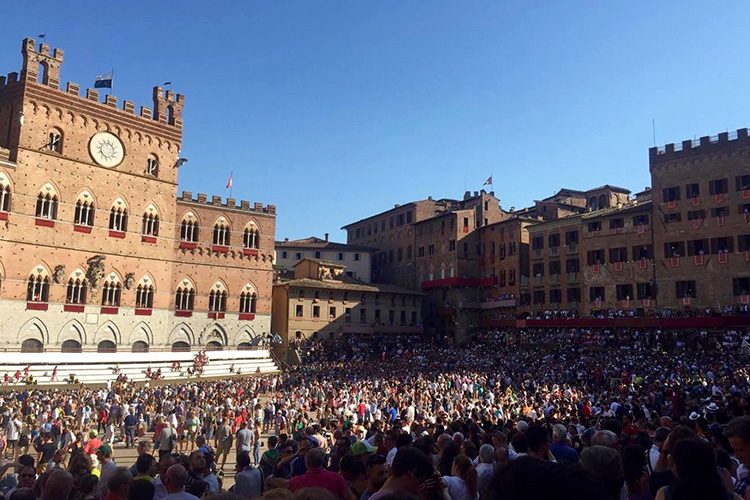
Il Palio is horse race held twice a year in the heart of Siena. Piazza del Campo, the city’s main piazza, transforms into a race track. Dirt is packed down on the cobblestone, and fences are built to create the course. The city is divided into 17 districts (contrade) but only ten districts will compete in the race. The jockeys ride bareback and wear their district’s colors. Throughout the day parades and celebrations take place to prepare for the race. The horses are blessed, the bets are made and everyone gathers to the center for the race to start.

The race isn’t about coming in first but about beating your rival. Everywhere you look you see people with colorful flags tied around their necks, cheering for their district. To truly embrace the race, I picked the Tartuca district to cheer for and wore a yellow and blue flag embellished with a turtle, the district’s symbol.

As thousands trickled into the city center, anticipation slowly built up. The race was three simple laps around the track. Months have gone by in anticipation for those three laps.

Above the crowd I could see the brightly colored jockeys ready to race. Decked in black and white, yellow and red, or blue and white with distinguishing patterns, they all sat on their horses pacing for the start. The rules of the Il Palio involve a complicated tradition for starting the race, so it could start at any moment.

Twenty minutes passed, a shotgun was fire and the race had begun. We could feel a gust of air as the horses passed us. We felt the dirt kicked up from the horses’ hooves. We watched as the horses circled the track and competed to finish first.

When the first horse from the Lupa contrada crossed the finish line, the entire town erupted into emotion. The district hadn’t won a Palio since 1989 so emotions ran high. Immediately people were jumping over fences to congratulate the winning jockey and hug their friends and families. Tears of joy ran down some faces, while others cried with disappointment. Tensions broke out, people hugged and the race was over. People paraded down streets in celebration, while our group stood in amazement. The race itself was incredible, but the aftermath left us in shock. This wasn’t a silly race, but a long-lasting tradition built up over centuries. People took pride in their district and celebrated their culture.

The race itself was short but the day was long. Seeing firsthand a tradition that dates back to the 14th century isn’t an opportunity I come across often. On one hand, it was amazing getting to be a part of the tradition. But on the other, I still felt like an outsider. I had no investments in the race, but felt the heart rise as the horses cross the finish line. At the start of the day, the Il Palio felt so foreign to me, but by the end, I had grasped a better understanding of a city and its culture.

See more of Florence and Italy at FUA’s FBInstagram, and Twitter.

Returning Students: Firenze with Fresh Eyes

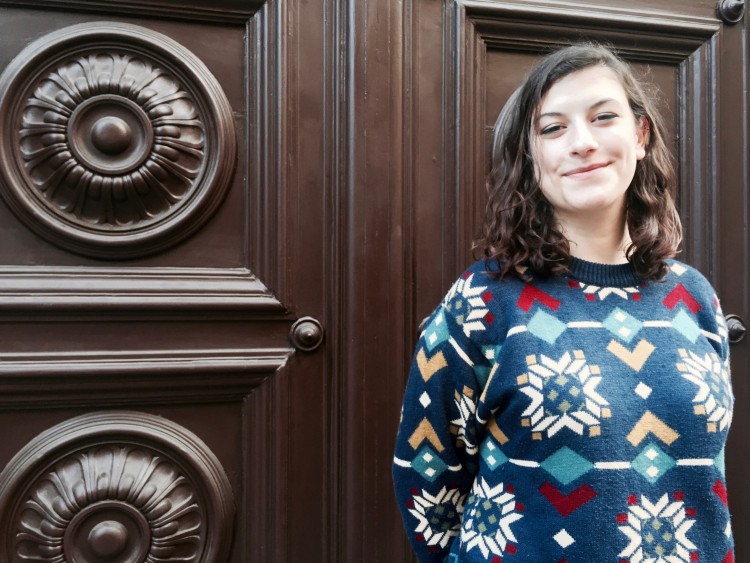
FUA student Erica Kavanagh
Blogpost author E. Kavanagh photographed by M. O’Reilly and L. Karnath

By Erica Kavanagh

After your first session in Florence, as a returning student you probably have seen all the monuments, museums, and historical sights. Those rose-colored glasses begin to fade, and you begin to experience Florence in a new light, as a local resident. Now upon your arrival back to Florence, you could face a few new issues.

For most returning students, one of the hardest adjustment can be the language especially after a holiday away in between academic seasons. Brushing up on your Italian can help for a much smoother transition back to Florence. Without practice, your language skills can and will become rusty. Seek out some fun and unconventional studying tips.

Tips to practice your language skills:

  • Talk to an Italian – For pronunciation sign up for Chat Pal through Student Life
  • Watch a T.V. show – L’italiano in Famiglia helps recap grammar
  • Download a language app – Use Duolingo for vocab exercises
  • Read a children’s book – C’era una Volta un Gatto to improve reading skills
  • Listen to a podcast – For everyday phrases use free Italian Podcasts

With a new perspective, returning students may shed a romanticized image of Florence and experience some not so beautiful aspects. It’s bound to happen, every city and country has its cultural issues that usually differ from a student’s own home country. Experiencing cultural issues can bring back the homesickness that you thought you’d gotten rid of for good, for example.

Think globally, act locally:

  • Live by being an example – Treat others how you would like to be treated
  • Keep an open mind – Have the willingness to learn, be aware of, and talk about issues that you encounter
  • Build relationships – Make a friend from a different cultural background breaks stereotypes
  • Do not let the differences of others affect daily life – Understand that some people cannot be changed, that cultural issues are deep rooted

Florence is a home away from home. For your long-term stay, it is important to have a financial plan. Running out of money can be one of the worst things that can happen while abroad. Little investments can help you save money in the end.

Budget wisely:

  • Stick to local markets – Stay away from expensive imported goods
  • Buy a stove top espresso maker (moka/caffettiera) – Avoid spending money every morning at the bar
  • Cook at home – Save money with home-cooked meals, rather than eating out

After a long holiday at home, students typically revert to their vacation mode/ lifestyle – odd sleeping/waking up habits, eating at anytime of the day, etc. It’s important to get your body and mind on a new academic schedule.

Time management:

  • Readjust your sleep schedule – You’ll get the most out of your morning classes
  • Planning enough time for proper meals – This helps you to strong off strong and avoid getting those beginning of the semester sicknesses such as colds, the flu, etc.
  • Organize – Create a system to maintain on top of school work

Most returning students are eager to catch up with their friends from the previous session. However each new start brings new students. It is just as important to connect with new students as it is with the returning ones. Approaching these encounters aren’t always immediate but are extremely beneficial.

Networking Benefits:

  • New information – New friendships open doors to new academic knowledge
  • Different experiences – Exchanging cultural backgrounds
  • Establishing similarities – Creating study groups or planning trips
  • Revisiting sites – Challenges to enrich old context with new perspective

Everyone studying here wants to make the most of their time in Florence. Sometimes it can be hard for returning students to keep that initial curiosity alive, to continue to experience different parts of the city. However I personally can testify to the importance of further exploring this city. I learn new things everyday. My new roommates introduce me to new cafes and continually teach me how to cook new cuisines. These experiences have shaped the way I view Florence and have helped me overcome potential returning student issues. Every new discovery makes my relationship with the city even more intimate. I am very happy to be in Florence and cannot wait to see what the rest of the season has to offer.

See more of Florence and Italy at FUA’s FB, Instagram, and Twitter.
Street Art: Letting Go

girl-balloon-finding-florence-blog-fua

By Patricia Hoban

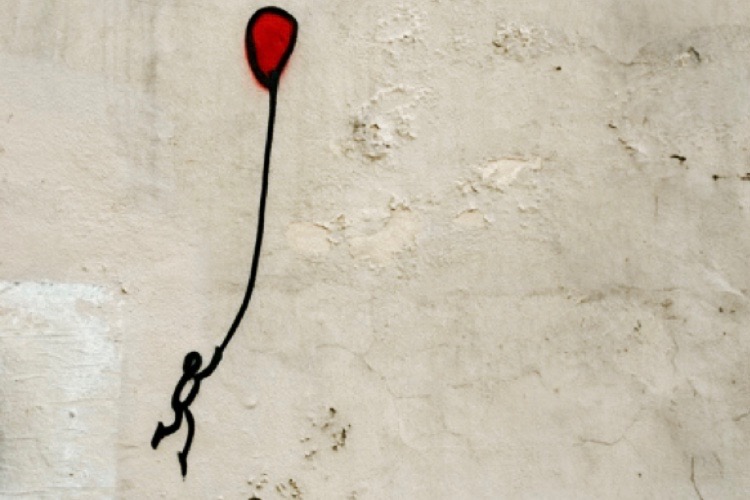
In the Renaissance city of Florence, home to the Uffizi, one of the largest and most famous museums in the world, and pilgrimage site of artists and art lovers alike, I was impressed not only by the greats such as Michelangelo, Masaccio and Masolino, or Giotto, who I was able view just a few minutes from my apartment. I was especially fascinated by street art, and specifically with an example that I attributed as “the girl with the balloon.”

As I walked to class, I often passed by the image of a stick figure with a hand outstretched, grasping at a red balloon. I have studied Banksy at my home university, and know this to be a copy of his work. Banksy, for those of you who are unfamiliar with him, is an anonymous street artist who uses the city as his canvas. The art he creates sends a message to its viewers and brings attention to the problems that are silenced or ignored by society. What does the balloon symbolize, and is the stick figure reaching for it, or letting it go? Each day as I walked by the piece, I juggled with possible meanings.

I, a student who was studying in a foreign country, interpreted the piece to be a girl lost somewhere between holding onto her cultural habits, childhood, and comforts, and letting them go to adopt a new Italian lifestyle. In the beginning of the semester in Florence, I almost always saw the girl reaching for the balloon and holding it tightly. However, as the semester progressed and as I became more confident in providing tourists with directions and grocery shopping at my neighborhood supermarket, what I saw was not a girl reaching for a balloon, but one letting go.

See more of Florence at FUA’s FB, Instagram, and Twitter.