The Beating Heart Above Florence

A place where sunsets, cameras and people meet to be present

This blog feature is an exclusive bonus installment to our Fall 2025 issue of Blending Magazine. After you finish reading, be sure to explore the rest of the magazine online—just follow this link to download the full Fall 2025 edition:
https://jschoolfua.com/images/BM/BM_151.pdf

written by Maëlys Brunet

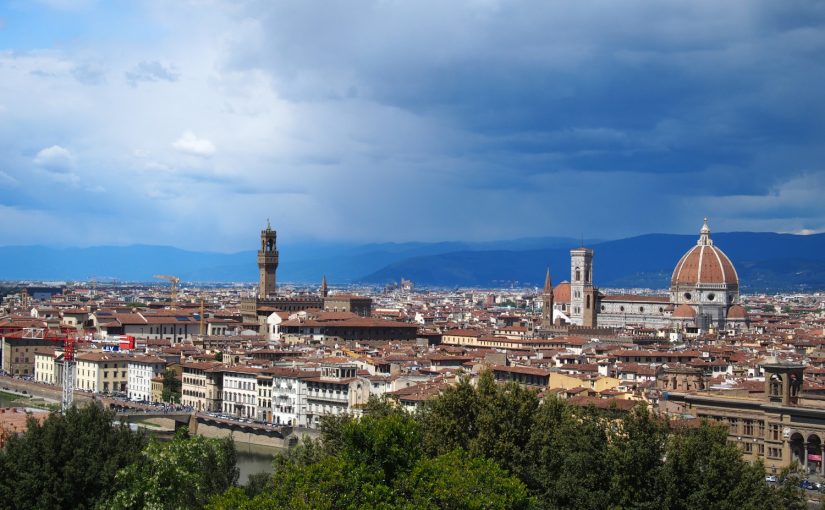
As the city slowly changes from season to season, we are constantly reminded of Piazzale Michelangelo as the beating heart of Florence. Especially during the summer months. The Piazzale remains alive through both tourists and locals, particularly at sunset, as wanderers gather on the steps with a simple glass of wine to listen to a band’s music or take pictures as a souvenir of the moment, as time pauses, just for a moment. This Florence phenomenon stirs curiosity about the aura the city holds in people’s hearts, a current that pulses through and unites communities. 

Piazzale Michelangelo seems nowadays as a rite of passage, a go-to place when visiting Florence to admire the city’s iconic skyline. But what about its history? Built in 1869 by Giuseppe Poggi, it was originally meant to just be a terrace, celebrating Michelangelo’s art. A representation of progress, but also modernity and the future, as Florence was the capital of Italy during that time. Nowadays, we see Piazzale Michelangelo as a place to slow down, reconnect to the beauty of the city, with a crowd to accompany us into this poetic journey. 

The typical route to Piazzale Michelangelo is just as memorable as the view itself. Beginning from the tower of San Niccolò, take the ascending stairs and path between the large trees. The climb begins as we slowly rise above the city of Florence, in anticipation of the view that awaits, as if leading towards something sacred. Then, the main terrace appears, the crowd gets denser, and the city spreads below. In the golden hour of the evening, music plays in the background and people dance to its infectious beat. Monuments wear orange and yellow as the sun begins to set, offering the perfect moment for multiple photoshoots to spontaneously appear. Phones and digital cameras alike click with the same rhythm as conversation or laughs. 

Piazzale Michelangelo is the place where multiple generations meet to capture the essence of Florence. As a guitarist tunes his strings, he shares that although the people there always change, the sunset and view remain a constant. There is poetry when we stare at the landscape, thinking it was approximately the same view as the one our ancestors looked out at centuries ago. People at first come for a simple view, then leave with memories, connections and hearts filled with emotion. Here the sunset isn’t edited, it is put on display, shown in its raw form to its audience.

Looking away from the view and back towards the crowd, students share a bottle of wine, while pizzas are eaten by a family visiting from abroad. All the while, social media enthusiasts are trying to capture the perfect shot. A couple stairs down, people listen to music, dance to the rhythm of guitars and saxophones, and cheers can be heard for a couple that just got engaged. This place holds authentic moments of life and connection that will never be forgotten. 

As night approaches, some remain while others venture further, all the way to San Miniato al Monte – a hidden place above Piazzale Michelangelo – to admire the city from a similar perspective. Apart from the overwhelming crowd and movement, you find peace and quietness, almost like coming out of a dream. Two different atmospheres but only a single feeling remains unchanged: reassurance and interaction. 

In those small interactions, it is where Piazzale Michelangelo holds its core, being something rare and precious to keep hold of. A moment apart from digital, inviting those that gather to be there mentally, with your own thoughts, to live in the moment rather than posting it. The space gathers both past and present. Life and art coexist around a skyline view, with a community to share the same moment with, just for a couple of minutes… or even a couple of hours. 

In an age of constant digital scrolling, Piazzale Michelangelo remains a symbol of the contrary. Not every view needs to be shared or posted on social media, as it must be experienced and lived through the senses and presence of people around us. The difference lies in the fact that the beauty of the square can be shared through both photos and memory, however those emotions we feel when in its presence, cannot be replicated on the digital screen.

When we look at Piazzale Michelangelo, we can see its beauty in the different communities it brings together. Some live in the moment, as a break, an aside, a moment apart from the fast pace of life. We take this moment to slow down, take a step back, and enjoy the present moment with friends, family, or alone. Others may take advantage of the moment by capturing a memory, particularly through digital means, engaging in an online community.

Piazzale Michelangelo explores the possibilities and redefines the opportunity to come together as a community, whether in-person or virtually. This place in Florence demonstrates a new perception of what a community can be, beyond what we are used to seeing, while continuing on the same path of harmony and the search for unforgettable moments. 
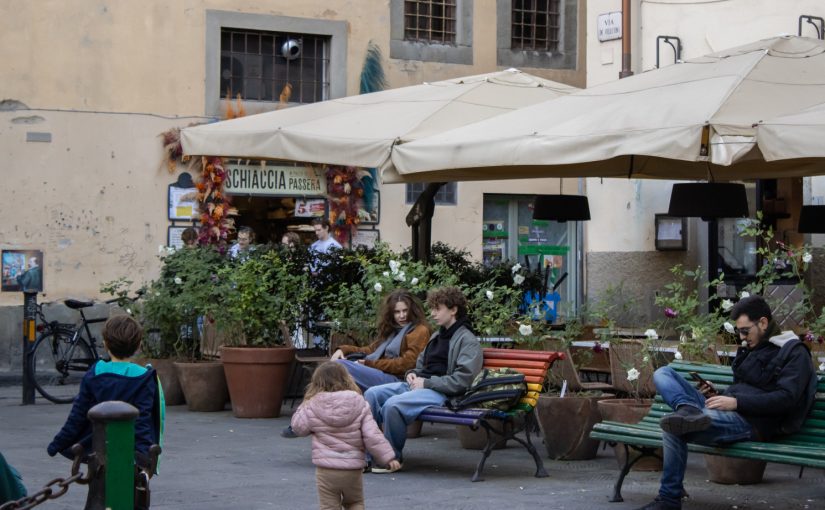
A Love Letter to Piazza della Passera

Thousands of miles from the comfort of my American neighborhood, this small Oltrarno piazza reminds me of home.

written by Savvy Sleevar for SPEL: Journalism

First Flower

Every summer back home, my dad transforms our backyard into a jungle of flowers. Fueled by a stash of seeds that’s been growing in size and variety for years now, zinnias of every color emerge from the ground and run wild along our fenceline. The colorful horde of blooms dominates the yard for months, and bunches of them often make their way to vases on our kitchen windowsill. No matter where I find one, a zinnia always takes me back home.

The first zinnia I encountered in Italy was in a planter box, right in the middle of Florence’s Piazza della Passera. Raspberry pink and thick with itty-bitty petals, it would be a star in my Illinois garden. I texted a photo of it to my dad, and it received its due enthusiasm.

Turns out, I’d become well-acquainted with Piazza della Passera, botanicals and all. This little square, full of fantastic places to eat, grab a drink, and hang out, is just a minute away from my apartment. I walk through it at least twice a day, and through my conversations with Florence residents (plus a helpful glance at The Florentine), I’ve started to piece together the piazza’s history.

Blossoming

Back in the day, I’ve been told, the piazza used to be home to a brothel. Not only does this explain the name “passera,” which has a pretty risqué slang meaning, it also makes the mildly suggestive names of the sandwiches at the nearby Schiaccia Passera even funnier. “Only The Top” is a prime, albeit awkwardly translated example, not to mention my favorite item on the menu.

There is another origin story for how Piazza della Passera got its name, though. It involves a sparrow (“sparrow” is the more direct, PG-rated translation of “passera”) dying in the middle of the piazza hundreds of years ago, instigating the Black Death in Florence — though I personally prefer the raunchier tale.

But no matter how the piazza got its name, its prominence in my neighborhood is undeniable. On weekends, the square is full of Florentines young and old, sampling artisan gelato from Gelateria della Passera, eating a plate of pasta at one of Trattoria 4 Leoni’s outdoor tables, or simply enjoying the night air on the rainbow-colored benches. 

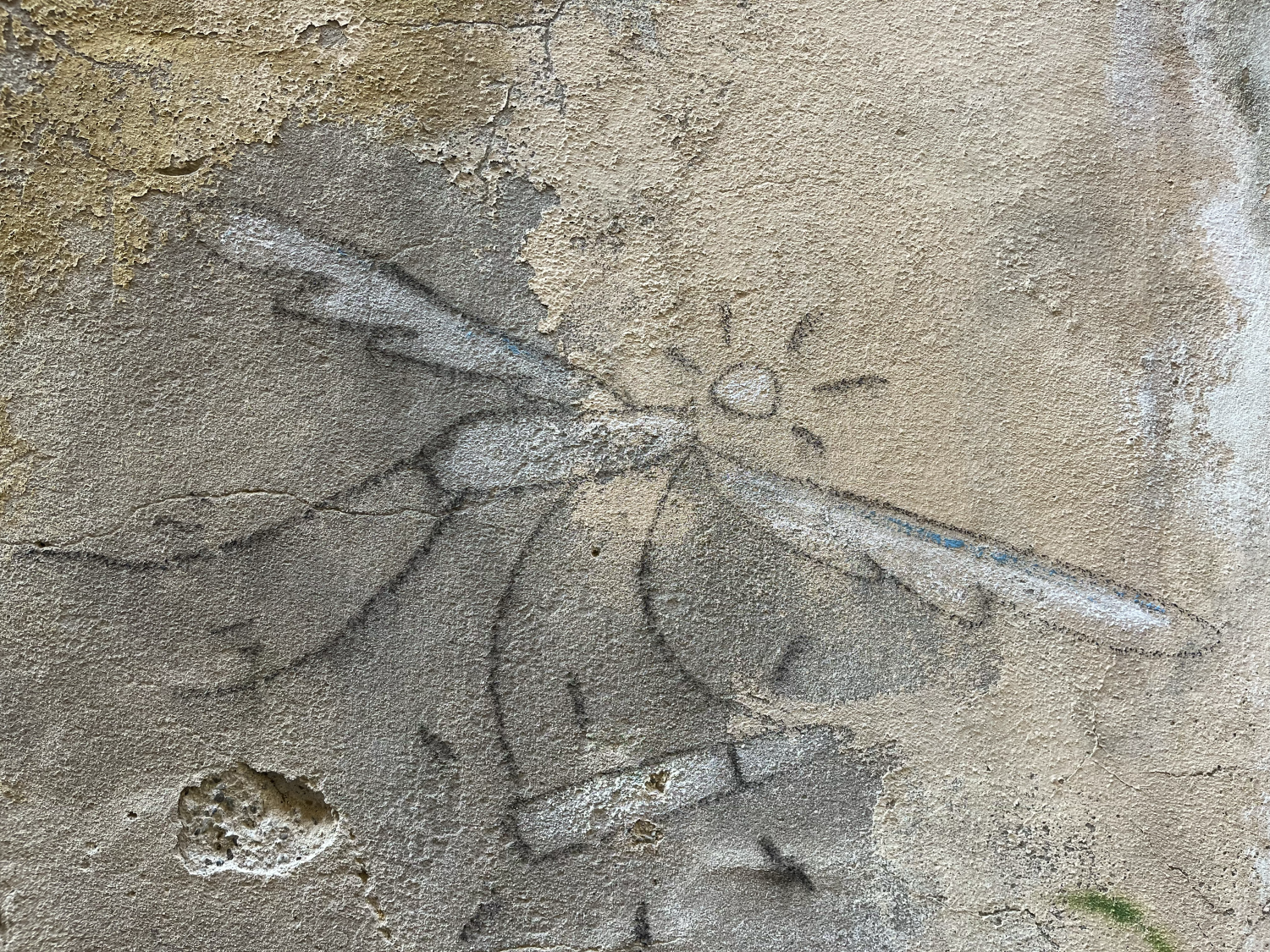
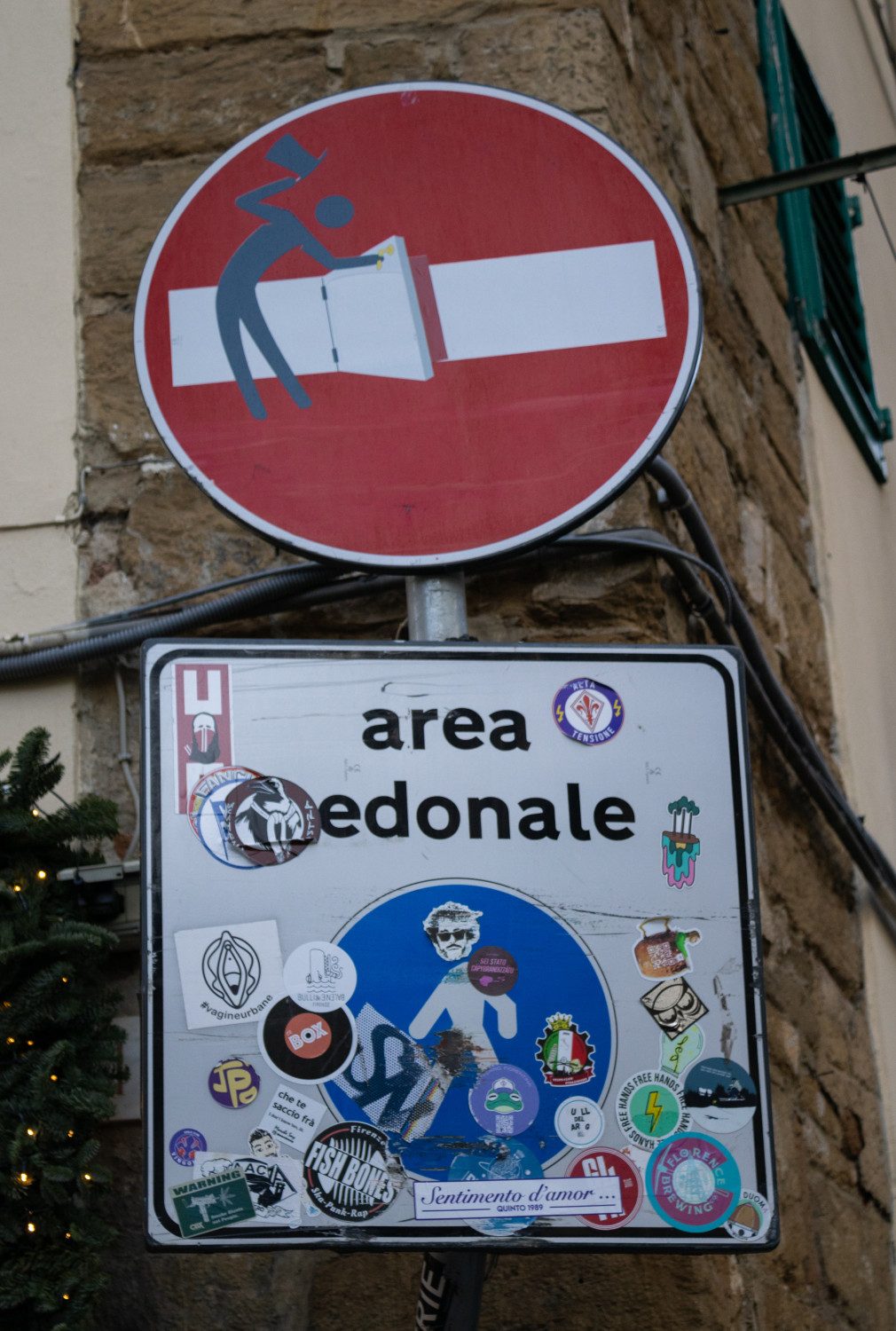
Even beyond the piazza, the eclectic vibe of the main square bleeds into the surrounding streets. Graffiti illustrations decorate almost every building, almost like a trail of breadcrumbs that leads back to my place. Even street signs are canvases for street art, often plastered with layers of stickers and cartoons. And if there’s ever any music in the piazza, the sound of it follows me down the cobblestone street all the way to my apartment.

Still In Bloom

It probably sounds sappy and sentimental, but out of all the sights I’ve seen, and out of all the kind people I’ve met in Italy, the places and faces of the tiny piazza by my apartment have been some of my all-time favorites. The square isn’t grand like Piazza della Signoria, and it may not have the constant stream of foot traffic and street performers that Piazza della Repubblica does, but what it does have is a quintessential Florentine charm that’s hard to put into words.

Through culture shock, travel mishaps, and long days of classes, Piazza della Passera is always there to greet me at the end of my journey home. It’s a familiar landmark that gives me the solace I’m missing. Alternatively, on my particularly good days, when I’ve found a cool new study spot, initiated a successful conversation in Italian, or had an especially fun day in the city, the piazza senses my joy. No matter how I’m feeling, the sight of the square right before I arrive at my front door is something I can rely on.

As for the pink zinnia sprouting in the piazza’s planter box, I was surprised to see the flower remain in its place well into the fall. Thanks to the relatively kind Mediterranean climate, deadheads didn’t appear on the plant until it was almost time for me to start thinking about my upcoming flight home.

When I leave Florence in December after my semester abroad, I have no idea when I’ll be able to return. Until I find the time and funds to travel across the Atlantic again, I’ll only have this image of the city I’ve created for myself, composed of the photos in my camera roll and all the details my faulty memory can hold. I get the feeling, though, that when I see the new batch of zinnias growing in my backyard next summer, I won’t just think of my permanent address, I’ll also think of Piazza della Passera and the home I made for myself in Florence.

Hidden Gem: Locally Owned Gym in Florence Provides Much Needed Solace

written by Alex Daggett for Special Project: Experiential Learning in Journalism

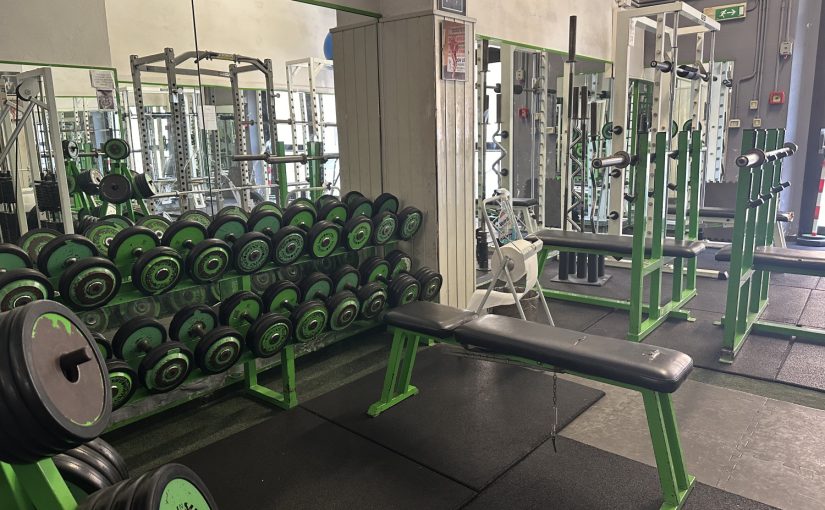
Tucked away on the quiet street, Via del Leone, with a modest sign and entrance, Gym & Tonic is a true, classic testament to athletic performance and bodybuilding. Built on the first floor of a residential building, the space extends to the back with free weights and old school machines adorning the right side. Under a skylit converted garden is a dance studio and boxing area. Certificates, awards, records, and trophies for mens physique occupy the walls everywhere the eye can see, and a sense of community is felt. 

As soon as I arrived in Florence to study abroad for the Summer, I immediately sought after a gym so I could stick to my workout routine.  After some research, there still weren’t any gyms that stood out to me. By pure chance, I happened to walk by Gym & Tonic while exploring the south side of the city, and decided  to take a look around. Immediately upon entering, I was shocked by how seamlessly the whole space was integrated into the classic architecture, nothing looked out of place. I was so used to the concept and sights of large scale commercial gyms where everything looks the same, and this was far from it. Despite the rustic nature of the machinery, everything was clean, and practical. I have been to a non commercial body building gym only once before, and this evoked very similar emotions and feelings, while offering an Italian twist. 

“I’ve been in charge for 26 years, since I inherited the gym from the man who owned before me,” said owner, Francesco Borghesi.

Despite the establishment being older than himself, Borghesi is synonymous with Gym & Tonic in the current date.

“I’ve been lifting weights since I was 15,” Borghesi said. “It’s what I love.” Borghesi provides not only customer relations, but also teaches various courses.

“I am thankful to have many good teachers in my time,”  Borghesi said. “So I try to provide the same to others.”

When I met Borghesi, he was teaching a patron a boxing lesson. Once he was finished, he told me all about the gym. I then bought a membership and got a workout in that day. Since then, I have gone every day and have yet to find a flaw in the gym. The hours are from 10:00 to 20:00, and every time I’m met with an immersive environment full of lively locals. Working out has always been a great escape and opportunity for self focus and reflection, and this is the perfect place for just that. Every time that I go to a commercial gym, it always just feels so clinical and uninviting, but Gym & Tonic offers such a different environment that is refreshing. I am very glad that I found this spot, as it made this international transition a lot easier. 

While it may not be on any travel destinations, or top ten lists, I think that adds to the charm of such an establishment. A place that is largely untouched by tourists offers a level of immersion and authenticity that is hard to come by. For that reason alone, Gym & Tonic is worth checking out, and they even offer day passes for people looking to get a quick lift in. A true hidden gem of Florence, located at Via del Leone 10.