Spilling the Beans: Comparing Café Culture Between Italy and America

Reflecting on the differences between the rushed attitude of coffee drinkers in America, to the relaxed nature of café culture in Italy.

written by Tyler Kirwan for SPEL: Journalism

Cafés in America are quite different to those in Italy on multiple different fronts. The reason why seems to stem from the difference in attitudes on leisure between the two countries.

In July 2023 I visited Italy for the first time. My trip was two weeks long and included four other countries in Europe. So many countries in such a short time that I normally forget to mention some when telling people of the trip. Still, it was amazing, and we spent the bulk of the trip traveling around Italy. We made Rome our home base while in the country, and traveled to Florence and Naples while we were here. Of the three cities, I would with 80% certainty say that Florence was my favorite of the places I visited. Luckily for me, I attended my school’s study abroad fair on a whim one day while walking through our Journalism building, and discovered they offered a semester in Florence with an Internship! How exciting I thought, and spoke with my advisor about the opportunity. Six months later I was applying for the abroad program, and four months after that I was packing my bags. 

Working in coffee for over seven years, I would consider myself a pretty O.K. source of all things encompassing. When you take into account the fact that I am only twenty years old, I feel as though I am allowed even more merit points. I have worked in the coffee scene since I was thirteen. I’ll avoid the long explanation, but basically when I was in eighth grade, I opened up a coffee shop at my local mall and have been pretty interested in coffee and its culture ever since. Following my coffee shop, I was hired as a barista in a small café in my hometown. Six years later and I am still working there, so I feel I know the demographics of ours and other American shops. The types of people who spend time inside sitting down are students, remote workers, families, and friends / dates. (I can never really tell which group people fall into.)

My coffee shop also definitely affiliates itself with the younger audience; a place for self-described indie and emo kids.

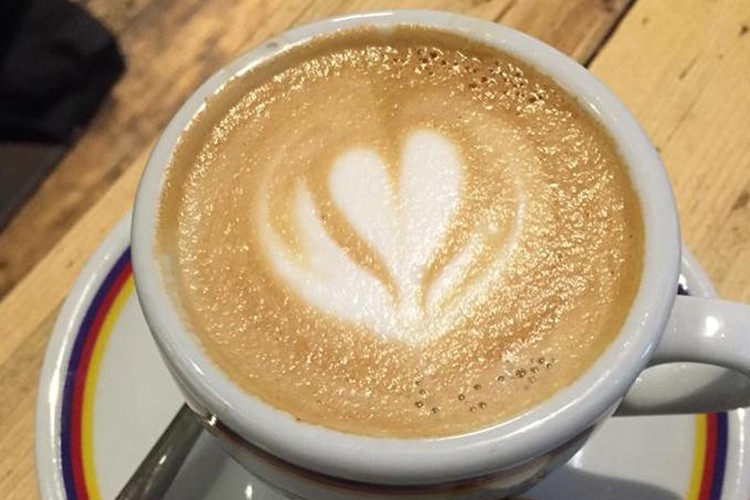
The coffee scene in Italy though, now that is an entirely different scene. A ‘Brave New World’, if you will. On my first trip to Italy, it was what obsessed me the most. I remember walking through the train station in Rome after leaving the airport, and an Illy Cafè caught my eye. I was previously familiar with Illy having worked in coffee, but this was an entire shop dedicated to it, and even weirder, everyone was huddled around the counter. I walked over with my bags to see what all the commotion could possibly be over this seemingly-ordinary coffee shop, and was physically taken aback by what has to be the biggest differences between coffee in the States and coffee in Italy. Everyone was standing at a flat bar a little lower than the register and drinking ceramic cups of espresso. Ceramic cups at a train station. This was mind boggling. Why are they all standing around when they could just take it away in a paper cup I wondered. Aren’t they in a hurry?

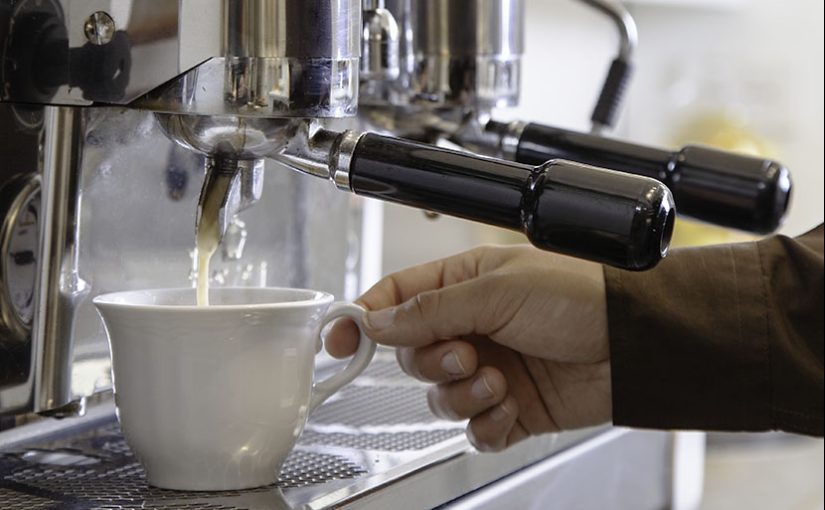
I have come to learn during my time here that Italians have a different relationship with coffee. All this is gathered simply by being an observer, however I believe the following to be true. Italians use a café as a place that is not work, nor home, but its own third thing. When I say cafes, I actually mean bars, as that’s where you can find an elegantly crafted Italian espresso machine sitting alongside a liquor cabinet. They also tend to have pastries and snacks at bars. Tabacchi shops also tend to have espresso machines. The word cafe for me has become an all-encompassing term for coffee shop, bar, tobacco shop – all places in Italy with an espresso machine. The point of all this is to say that Italians treat these third places as hangout spots. These are places to escape work and school, talk to their friends or family, or chat with someone they haven’t seen in a while. They grab a little glass mug of espresso and stand at the counter and catch up. If they know no one there, they lean against the counter and drink their espresso, macchiato, cappuccino, or whatever their preference. It’s not about getting a caffeine boost in a plastic cup, and running as fast as you can to work. The culture is about getting a morning coffee to enjoy and wake up with. A daily ritual, even if short, that can be savored, not rushed.

Now we get back to my previously mentioned demographics. From what I’ve noticed there isn’t much need for cafes with affiliations. Most places offer similar vibes, with the outliers being specialty shops such as bookstores or record store cafes. For my coffee shop at home, to be successful we need an affiliation, a reason for people to specifically come to us. A marketability. Cafes here don’t have much of that. They offer relatively the same menu at the same prices for anyone to come in and enjoy. There are some specific coffee shops whose goal seems to fit a certain market, and one of those Ditta. Ditta Artiginale allows people to sit at tables or bars with laptops or books, and a lot of their customers take that opportunity. To me, they are a very American-oriented shop, and a lot less like a traditional Italian café. Ditta isn’t the only shop like this, there are other places with an American audience, such as Melaleuca, which is an Australian-American brunch café. On Melaleuca’s website, they even ask people to respect their laptop-free days of Friday-Sunday. 

I hope that during the rest of my stay in Florence I can come to learn more of the cafe culture here and maybe a lot of my hypothesis will be disproven by nuances I have yet to uncover. I really do appreciate the way Italians separate life and work, and would love some of that relaxing energy when it comes to my morning coffee in the States.
Espresso Yourself Through Painting


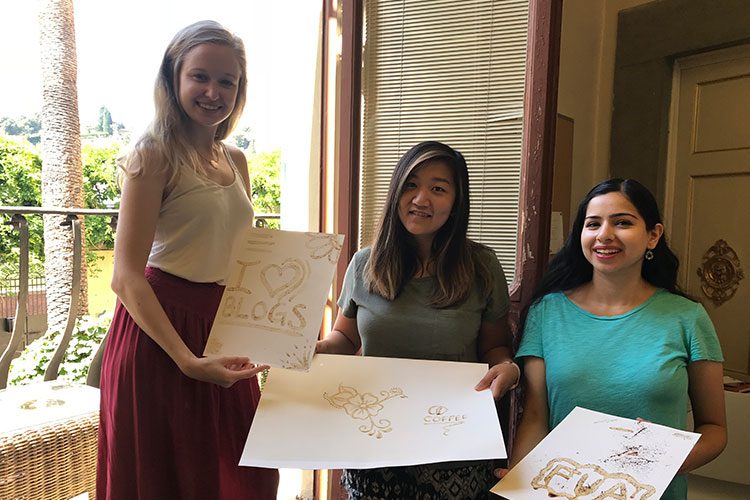
Experiential Learning students Madison Argo, Lia Butterfield, and Guneet Singh.

By Guneet Singh
All photos by author

Journalism student Guneet Singh teaches us how to paint with coffee.

If there’s one thing Florence has a lot of, it’s coffee. You’ve seen the cafes lining every street corner. You’ve noticed the restaurants and even the gelaterias with dozens of coffee options to choose from. But coffee is more than just a caffeinated drink you can use to keep yourself awake.

You can actually use it to paint and that’s what blogger and artist Maham Iftikhar does.

She combines her love for coffee with her passion for art. Her blog contains tons of reviews about different coffee places from around the world and she even teaches people how to paint with coffee. “I encourage people to overcome their fear of mistakes and paint,” Maham said.

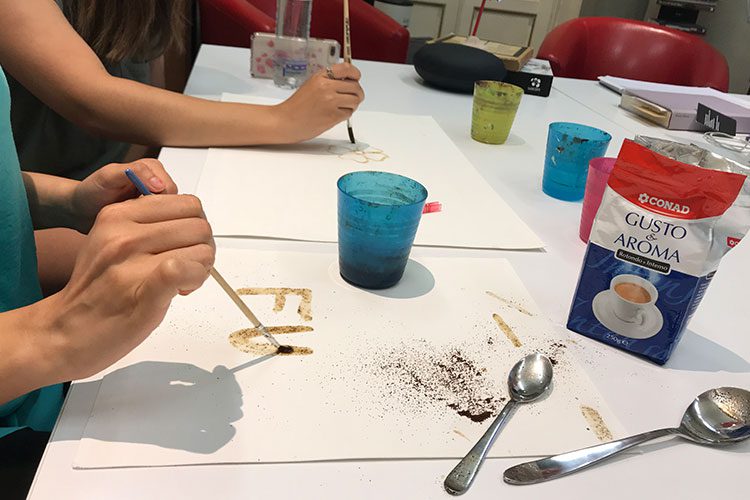
So how exactly can you paint with your morning beverage?? Well, we tried it so you can too!

 1.Get cups of water, paintbrushes and a canvas or piece of paper ready

 2. Take some coffee powder and combine it with water. Instant coffee will get     you quicker results

3. Keep adding powder as you go. The more powder you add, the darker your   “paint” will be. Adding more water will make the color lighter

4. Be prepared to smell like coffee afterwards

So if you ever have too much coffee, don’t let it go to waste! Paint yourself a picture.

Maham also paints with wine, matcha tea and plans to use other natural materials in the future.

See more of Florence and Italy at FUA’s FBInstagram, and Twitter.

Coffee Culture in Florence

coffee-in-florence-blog-fua
Photo by Erin McMahon

By Morgan O’Reilly

Coffee does not limit itself to its basic ingredients and the seemingly fundamental role of stimulating its consumer. Coffee sits in cafe bars under the dull roar of thought-provoking conversation. Coffee occupies cupholders in Manhattan taxis, accompanies egg yolks and condensed milk in Vietnam, and carries ceremonial value in Ethiopia. It can exist as a supportive friend among late-night spreadsheets and early-morning meetings, and its aroma alone can wake a sleepy family on a rainy Saturday morning. Coffee has the power to support entire villages through the harvesting trade, especially with the insurance of the Fair Trade Movement. It is complex and the possibilities for innovation lie infinitely between the harvesting, the roasting, the brewing methods, and the preparation.

The drink originated in the highlands of Ethiopia, where it arrived in the Middle East before spreading to Venice in the 1570s. Coffeehouses later spawned all along its canals before spreading to other major Italian cities like Turin and Rome. Since then, coffee has transcended past its functionality of improving productivity into a rich, diverse, ever evolving culture across the world’s borders.

As a previous barista and hopeful future coffee shop owner, I had a delightful week exploring the coffee culture Florence has to offer.  

Basic Coffee Etiquette in Italy

Coffee culture in Italy stands unprecedented among its neighbors; it is quick and medicinal with little to no fuss over the preparation. Because of its uniqueness, the dreaded ‘tourist’ label can come far too easily. To avoid the foxpaus, here are some observations I’ve compiled:

  1. Any coffee drink containing dairy should only be consumed in the morning, and never after a meal.
  2. Coffee in Italy is enjoyed its simplest and purest form. Caffé shelves leave no space for an array of flavor pumps, so savor your beverage and try to taste all the subtle hints from the brew.
  3. In a traditional Italian bar (neighborhood coffee joint), always check if you need to pay for a receipt first to present to the barista or if you can order first and pay later.
  4. Typically, locals order and drink coffee at the counter. It also costs much less than sit-down coffee in some of the bigger cafes in squares such as Duomo, Repubblica, and Signoria.

Typical menu items

  • Caffè: One shot of espresso
  • Cappuccino: Espresso with foamed milk
  • Caffè Macchiato: Espresso with a dash of milk
  • Latte Macchiato: Hot milk with a dash of coffee
  • Caffè Americano: Espresso with the addition of hot water

Other spin-offs found at most Italian cafes:

  • Caffè Shakerato: A frothy iced coffee drink prepared with ice cubes in a cocktail shaker. Usually served in a martini glass
  • Caffè d’orzo: A caffeine free beverage made from roasted barley
  • Caffè ginseng: Similar to white coffee: a cream, usually of the plant origin, the sugar, the instant coffee and the dry extract of ginseng
  • Marocchino: Popular in Milan, this drink comes in a small glass dusted with cocoa powder, when topped with milk froth and espresso, and topped with some more cocoa powder
  • Cappuccino Viennese: A cappuccino topped with whipped cream and cocoa powder

Pro Tip: My all-time personal favorite is the cold brew, the espresso-ground beans are steeped in cold water for 24 hours. This method results in a less acidic, slightly sweeter drink. I like to pour the black coffee over ice, but a splash of milk or cream is always a good move. You can easily make cold brew at home by steeping the beans in a french press.

The Old School, the Roasters, and the Contemporary:  Without question, every coffeeshop derives from a wide variety of values, customs, and creativity; so in no way can one title sum up an entire business. This being said, these three coffee categories do point to major differences throughout Florence’s coffee scene.

Old School bar/pasticceria
These shops contain classic Italian coffee and fresh pastries. They stick to the roots of Italian coffee culture to provide an authentic, timeless experience.

Example: Pasticceria NencioniOpen for over 60 years, this family-owned Florentine coffee and pastry bar stands as a charming gem with a wide array delicious sweets and quality coffee. Whether it be a profiterole, a mini tart, a croissant, or a slice of cake, this shop will please its guests through their freshly homemade approach and unbeatable tradition.  

Atmosphere: The shop gives off a timeless, charming feel with their beautiful pastries displayed before the customer.

The Roasters
Some roasting companies open stores in the city, so their base value lies on their quality, specialty coffees.

Example: ChiaroScuroThis shop was opened by the roasting company Mokaflor and contains coffees and teas from around the world.  The array of espresso drinks, hot chocolates, and teas proves quite impressive, so don’t be afraid to take your time deciding. Personally, I am fond of the caffè nocciolato, combining their high quality, rich espresso with hazelnut and whipped cream.

Atmosphere: This shop has a homey, old school atmosphere with plenty of seating.

The Contemporary
Many New Age Coffee shops typically value the  Third Wave Coffee movement, in which coffee is treated as a culinary delicacy, like wine, rather than a commodity. The movement lends itself to stronger relationships between coffee growers, traders, and roasters, as well as focusing on direct trade, single origin coffee (as opposed to blends), and high-quality beans. Along with these ideals, they may emphasize fair trade as well as focussing on the unique atmosphere of the space.

Example: Ditta Artigianale. This contemporary coffee shop prides itself in its focus on international coffee blends and brewing methods. Also directly involved in the roasting process, the shop combines the traditional values of Italian coffee culture with the Third Wave movement. The Artigianale baristas are knowledgeable of the bean’s origin and the process to which they receive them, so they gladly welcome conversation over their coffee’s “story.” In fact, the shop itself is designed to welcome this interaction through their lower-than-normal counters and complete visibility between the customer and the barista.

Atmosphere: The shop on Via Dei Neri, in my opinion, gives off a retro vibe with the script typography and industrial lighting. It’s a great place to sit and finish some homework or enjoy friendly conversation while alternative, mellow music fills the space. In contrast, the new Oltrarno location gives off a more posh atmosphere through interesting patterns and lighting, a muted, sophisticated color scheme, and more mature, jazzy playlist.

See more of Florence and Italy at FUA’s FB, Instagram, and Twitter.