Discovering Original Language Movies in Florentine Cinemas

Written by Sophia Koch

There is just something about movie theater popcorn, an ice-cold coke, and relaxing in the cinema chairs, preparing to watch a movie on the big screen. There really aren’t many options in Florence to watch Original Language English movies unless you want to sit in the comfort of your own bed and rent a movie off of Amazon Prime or dig through the Netflix catalog. 

In Florence, opportunities to catch English-speaking movies on the cinema’s grand display are limited. However, there’s a spot that reignites the enchantment of cinema, evoking a cozy, home-like atmosphere—Giunti Odeon. Located next to Palazzo Strozzi, the theater was built in 1922 and has kept its original style since. Odeon offers films only in their original language, which are mostly English. Along with showing movies, the building also has a bistro to enjoy a cappuccino or a spritz. To top it all off, below the theater seats on the ground floor, guests can browse through a variety of bookshelves that were just added when the theater reopened in 2023.

Cinema La Compagnia is located at Via Cavour 50/r and offers a schedule that is extremely diverse with movies shown in their original languages from all over the world. They host many events in addition to movies and documentaries, such as international festivals and press screenings. There is always reduced entry for students, and normal tickets usually cost 6 euro. 

Another theater offering original language movies is Goldoni Cinema, located at Via de Serragli 109. Every Thursday, the theater shows a movie in its original language. Spazio Alfieri, located at Via dell’Ulivo 8 is where cinema lovers can find movies that are combined with drama, music, food, design and visual arts. Here, you can find original language showings, with a wide selection, such as Hollywood movies, art films, documentaries and others screening at the same time. If foreigners want to go to a place to enjoy a movie but also meet locals, Cinema il Portico is a great place to go because all movies are available in original and Italian versions. The theater is located at Via Capo di Mondo 66/68, and they also offer concerts and shows. 

While living in Florence, and if you miss the cinema magic that being in your home city brings, try one of these theaters during your time here. Whether you want to stroll through bookshelves, enjoy a drink at the bar, or meet locals and other cinema lovers, these theaters have what you are looking for.

Florentine Kebabs

Written by Mark Scott

Are you on the way home from a night on the town and looking for a late-night meal? Are you a broke college student, scraping money together to take that trip to Amsterdam? Have you been craving Chipotle since the day you left home? Well, worry no more my friend, I give to the doner kebab.

Though it may not be Chipotle, it’s the next best thing, Mediterranean Chipotle. What is a doner kebab? A doner kebab is a burrito-like dish, which is made up of shaved chicken, cabbage, tomatoes, red onion, lettuce, and french fries. It’s all topped off with a spicy kebab sauce and yogurt. I know the fact that yogurt is mixed in there sounds weird, but trust me they are incredible. All these ingredients are wrapped together inside a flatbread and tin foil, which is then thrown on the grill to be toasted.

Before studying abroad here in Florence, I had never seen or even heard of a doner kebab. Over the 2 months I have been in Florence, I have come to find there is a kebab shop just a stone’s throw from anywhere inside of the city center. The menus of these shops are all almost the same, which is generally the case for the price as well. So what’s the difference between them? What makes a good kebab a good kebab? 

What it boils down to is how it is made, both before and during. Was the chicken shaved right off the rotisserie? Are the fries fresh out of the fryer? How long ago were the vegetables sliced? These are all important questions a kebab consumer must ponder before deciding on which shop to eat at.

Many kebab shops will slice the meat in advance and keep it heated in a pan. Others will fry multiple batches of fries way in advance out of convenience, or use vegetables that come pre sliced and in bags. If you see any of this behavior from a kebab shop, save your 5 euros and run. To make a good kebab, the best kebab you might say, ingredients must be fresh. The chicken must be freshly shaved, the vegetables crisp, and the fries just out of the fryer. This is what makes a good kebab, a good kebab. 

The other fun and interesting aspect of doner kebab shops is the relationship you build with the shop owner if you are a regular at the shop. These guys are busting their hump working 6, maybe even 7 days a week till 4 in the morning just to provide for their families. The overwhelming majority of them are very welcoming, and chatting with customers makes their work easier and more enjoyable. 

Whether you are studying here in Florence or even just visiting, make your way to a doner kebab shop, the right one, that is, you won’t regret it.

Places to Stay When Visiting Your FUA – AUF Student

Written by: Sophia Koch

Finding affordable places to stay for my, oh so ever, broke student budget is one thing that I’ve learned since coming to Italy. I want a place that is in a good location like the city center or at least a five-minute walk to any sort of public transportation to get me to the city center, and I want a place that I can feel comfortable and safe in. Which my guess is, goes for the same as everyone else.

We all know that parents cannot wait to come visit their kids while abroad. It’s the perfect excuse to travel to Europe. I have family coming all next month and I have been getting a billion texts about what hotels they should stay at, which location is better, can the hotel keep their luggage on hold while traveling to a different city, etcetera, etcetera, etcetera. 

Well, I have concluded that to make the students and their families lives easier, I might just list a couple of things to think about when booking places to stay in Florence and possible places you could stay. 

The really good thing I have found out about Florence is that everything is about a 5-to-20-minute walk to each other. But if you are coming to visit a student at Florence University of the Arts – The American University of Florence, staying near the Duomo or the Arno River near Ponte Vecchio always seems like a good option because they are not only great locations to stay for tourists, but is the exact location where the University is located throughout the city. . Most students also live about 10 minutes or less to the Duomo, with the others living closer to the river. 

Hotel Spadai 

Via de’ Martelli, 10, 50129 Firenze Fl

This hotel costs around 370 dollars per night for two people in a standard room. It is literally 100 meters from the Duomo and maybe a 15-minute walk to Ponte Vecchio, plus not even 10 minutes from all the good shopping. I went to look around the hotel and it was not even a minute walk from my apartment. I live around markets, great sandwich places, too close to some gelato places, and right next to a wine window.

There is no parking, if you are renting a car, but I suggest not trying to drive in this city unless you are familiar with it. There is safe access inside the hotel and it is located on a brightly lit street. Plus… there is a free mini bar that is replenished every day.

“First look for what is within their budget, and next what is important to them when it comes to a place to stay, such as location, breakfast, or security,” Lena Carolla, hospitality management major at FUA-AUF said. 

Tornabuoni Suites Collection

Via de’ Tornabuoni, 9, 501000 Firenze Fl

This is the ideal location for anyone who loves fashion or art. Right when you walk outside you see Gucci, Prada, Giorgio Armani andFendi. Within a one kilometer radius you can discover all the artistic cornerstones that have helped make Florence a world-famous city of art and culture. And in just five minutes you’ll be able to reach the Arno River. 

There are multiple types of rooms you can book: Family apartments, double rooms for two, and various other suites if you want to splurge a bit more or have more room. The standard room for two people is about 270 dollars per night.

One thing I have learned is to book early for the cheapest rates and look for special offers or discounts. It never hurts to knock a few dollars off the final price.  

Home & Villas by Marriot Bonvoy: Dimora degli Affreschi (House of Frescoes) Deluxe Apartments 

One other way to really get that feel for Florentine-style living is staying in an apartment or Airbnb type of place. Depending on how many people you are traveling with, Airbnbs can be cheaper, especially if you split the price. 

Located on the ancient Via dei Benci in the district of Santa Croce, near the Arno River, and behind the Horne Museum, Marriott offers a range of 19th-Century 5 story apartments.  Each apartment sleeps 4 people, has 2 bedrooms and costs around 320 euro a night. If you are looking to fit more people, the company offers nine other apartments that larger parties could separate into. 

Near the apartments you can find shopping, markets and a multitude of cafes and bars through the ancient streets. If you cross the river, the Pitti Palace, Boboli Gardens, and the famous Piazzale Michelangelo are just a quick walk away. 

A FUA-AUF student’s  family recently stayed at this apartment and loved how it was run through Marriott, but still was a different experience outside a regular hotel stay.. 

When trying to decide whether to stay at an Airbnb or hotel, you can always ask and think about security in and out of the buildings for safety, amenities, money differences, what will fit your stay more appropriately for what you want to do while in the city.  Florence is a lively city filled with art, culture, great food, and even your own students, so make sure to consider a location close to them as well.

Parco della Rimembranza: Finding Peace in a Restless City

Written by: Margaret Gillam

Like those living in any city, the residents of Florence are no strangers to the hustle and bustle of urban life. As the sun awakens, so do motorcycle engines and bicycle bells. Shop doors line the streets and roll open with raspy creaks that echo unforgivingly down each block. In the winter months, the warmth of the sunshine is a rare gift within the city limits, often hidden by the tall stretch of the closely-knit buildings that structure the city. Although Florence’s liveliness is a beautiful and exciting trait, its lack of stillness and consistent flow of people can become overwhelming at times. Finding time to slip away from the core of the city and into the green of its surrounding hills can strengthen a person’s mind, spirit and physical health. Providing a taste of needed tranquility.

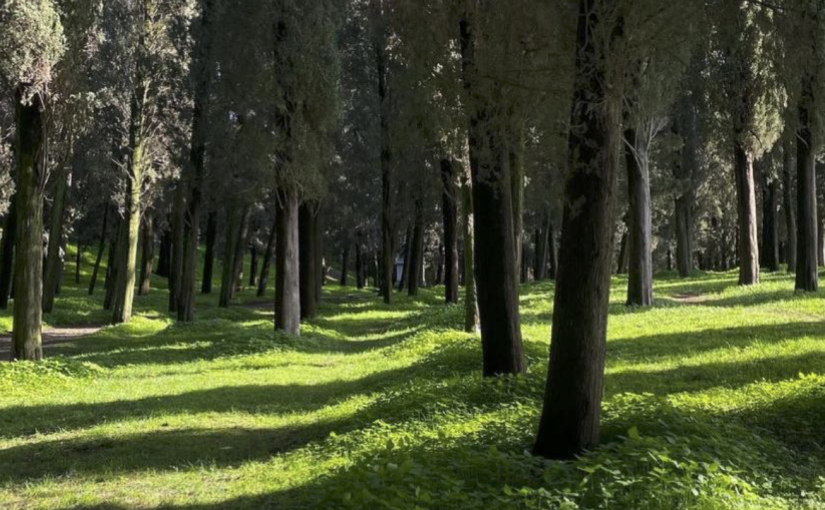
Tucked into the Tuscany region, Florence is surrounded by gentle, rolling hills decorated with farms, vineyards, and orchards. The countryside stretches for miles, offering clean air, tender sunshine and the sweet tune of the Italian Sparrow. Even a moment in this landscape can reduce tension and stress. The “Parco della Rimembranza” is a quiet park located just beyond a steep hill that leads to the Piazzale Michelangelo neighborhood, right outside the city walls. The park is heavily garnished with thick cyprus trees, leaving just enough room for the rich evening sun to paint the park’s blanket of lush grass, with thick, golden stripes. Parco della Rimembranza is a hidden gem that deserves to be both protected and appreciated. As we enter the rainy Spring season, it can be a challenge to find a sunny day. During the next, take some time to refresh yourself. Leave the city behind for a moment and pay a visit to Parco della Rimembranza, reflecting on the peace and natural beauty that the outskirts of Florence has to offer.

Navigating Healthcare While Abroad

Written by: Alice Hamilton

Studying abroad comes with a variety of new experiences and realizations. Everything is so different when living in another country with a very different culture. During your time abroad, you begin to immerse yourself in the culture of Florence and realize how different it is than in the United States. One difference I had to navigate was the healthcare system here in Florence compared to the United States. 

Just two months after arriving in Florence, I underwent a very unique experience and I feel that my story could be of use to others in the future. Due to an infected gallbladder stone, I went through an emergency gallbladder removal procedure. Even after several doctor’s appointments, ER visits, X-rays, CT Scans, and blood work done in the states, I was given no answers as to why I was experiencing sporadic abdominal and back pain. I was sent abroad with a lot of unknowns and a fear that this pain would recur while abroad. 

During my first two weeks in Florence, I underwent a painful flare-up with severe pain, vomiting, and two days of bed rest. I was in need of a doctor but wasn’t quite sure how to get access to one. With the help of the FUA Emergency Hotline, they provided a 24-hour doctor to check up on me in my apartment. This visit resulted in me receiving painkillers, a few prescriptions, and an ultrasound appointment, as well as a doctor’s note for class. 

My next task was to navigate how the pharmacies work in Italy. My doctor prescribed me medications through a documented and stamped piece of paper. You can visit any pharmacy in the city and they fill your prescription, so I found a  local pharmacy, I handed the paper to the pharmacist and they provided me with my prescriptions and a document to send to my insurance. It was as simple as that! 

In regards to my ultrasound, I booked my appointment via phone call and was able to come in within the next few days. Before my visit, I contacted my insurance company and discussed my future visit and where the facility was. I provided the documents my doctor prescribed me and that was all I needed. With the help of the staff there, they helped me locate registration and the waiting room. This singular appointment found the answer I had waited months for, a gallbladder stone. This stone meant that I needed to get the organ removed through a procedure. Even though I was very nervous about getting a medical procedure done in a different country, everything worked out very smoothly. 

I was in contact with the 24-hour doctor as well as FUA’s staff throughout the entire experience. My doctor even helped me get in contact with a private surgeon to plan my surgery date. Unfortunately, my gallbladder had other plans. After a very painful episode, I was rushed to the hospital in an ambulance to Santa Maria Nuova Hospital, which is Florence’s public hospital. Interestingly enough, the cost is widely different in both countries. For serious medical conditions, ambulances in Florence are free of cost. However, in my hometown of Chicago, the cost starts at around $900. 

After being in the hospital for a few hours, I was told that my gallbladder was inflamed and I would need to wait 10-15 days for my surgery. However, my condition did not improve because my liver enzymes were low, which resulted in emergency surgery. My mother luckily booked her flight when she found out I was in the hospital and arrived right before I was prepped for surgery. 

During the surgery, the surgeons discovered my gallbladder was infected, which allowed for a drainage tube. Because of this, I was in the hospital for another three days. During my hospital experience and after I was discharged, I was able to understand how both healthcare systems are set up. Italy believes healthcare should be available to everyone as a basic right. They have a system where both the government and private companies help pay for healthcare. Taxes mainly fund it, but people also pay for some services themselves or through private insurance. On the other hand, the United States mostly has a private healthcare system. It includes public and private insurance providers, employer-sponsored coverage, and government-funded programs like Medicare and Medicaid. 

Through the healthcare system here in Italy, getting this procedure was incredibly affordable and convenient. I am extremely grateful for the amazing doctors and nurses who successfully performed the operation. Through the help of FUA and its amazing staff, I was successfully able to navigate the Italian healthcare system, as well as leave a piece of myself in Florence!

Easter in Italy

Written by: Isla Herring

As a study abroad student in a foreign place, holidays and traditions differentiate between the culture of the United States and Italy. Since my arrival here, I have yet to experience a holiday, and this is a concept that I wanted to learn more about to understand the differences between the locations and their customs for Easter. 

After doing research on Italian Easter traditions, I began to grasp the dissimilarities between the practices of the holiday in different areas of the world. Here in Italy, Easter is observed with a week of processions and rituals such as Holy Thursday and Good Friday, followed by a Sunday feast, and La Pasquetta (little Easter) on Monday. Solem Processions often include people in costumes carrying statues of Christ through the town. In southern Italy, this is especially true and dramatic on islands such as Sicily and Sardinia. 

Here in Italy, Easter is also celebrated with Settimana Santa which begins on Palm Sunday in most places of the country. Palm Sunday is celebrated the Sunday before Easter, which is equivalent in the United States. In Saint Peter’s Square, the Pope leads mass on this day, where the Palms are blessed, and a procession is held. As for Holy Thursday, the Thursday before Easter, is an evening of special masses for the Italian public to attend all throughout the country. 

Good Friday is often observed with the Via Crucis, which is the ritual of the 14 Stations of the Cross. People frequently act out the events in each station while wearing costumes to give the story a more realistic feel. Depending on the region of Italy, Good Friday holds more or less significance to the people. For example, in Trapani, they hold a 24-hour long procession titled the Misteri di Trapani. The largest Via Crucis takes place in Rome by the Colosseum, where a massive cross with burning torches illuminates the city. 

Easter vigil mass is held on Saturday evening, where people bring hard-boiled eggs to be blessed for the holiday. Additionally, in Saint Peter’s Basilica, the Pope gives the Holy Easter Mass for those who are able to attend. As for the rest of the nation, people attend their local churches for mass, but the teachings are cohesive for all. 

In Florence itself, there is a popular event called the Scoppio del Carro, or “explosion of the cart.” Here, a large ox cart is decorated and filled with fireworks as it is pulled through the city to reach its final destination, Piazza del Duomo. Once mass has concluded, an Archbishop ignites the fireworks within the cart by sending a dove-shaped rocket into the air. This causes a massive display of lights for Florence to view, along with a parade filled with people dressed in medieval costumes. 

Following Easter, La Pasquetta is celebrated Easter Monday and is a national holiday in Italy. Commonly, people travel to the countryside where they attend picnics and entertaining activities such as concerts and games. One frequently played game is Punta e Cul, where participants are given an egg and must smash the eggs of the other players. The winner of this game is the person who collected the most cracked eggs from the other members playing. 

As for the food that is consumed on this holiday, the traditions obviously vary across diverse cultures. Here in Italy, one food that is specifically unique, is a dove-shaped Italian cake called Colomba. This cake symbolizes peace and is often compared to a Christmas panettone due to their common dough. This item is particularly challenging to make, so it is often purchased at a grocery store. For the main dish of Easter, traditionally, Italians serve lamb in different preparations depending on the region of the country. The lamb meat is often seen paired with artichokes and potatoes, again, depending on the dish and location. 

Overall, the traditions and practices for Easter in Italy are ones that I had never heard of until studying abroad. Not only does the holiday have differences in numerous countries, within Italy itself, there are various changes that are dependent on regions of the nation. It is important to understand the values of altering destinations across the globe and appreciate the abundance of customs it has to offer. 

Celebrating the Florentine New Year

Written by: Sophia Koch

I have only been living in Florence for the past few weeks, but there is one thing I have learned for certain. Italians are very into honoring traditions and these festivities are passionately celebrated. I myself am big on traditions and look forward to them every year, so while being abroad it makes me feel at home when I get to participate in these occasions. I believe when living in a new city – a new country in my case – one of the best ways to immerse yourself is to discover traditions the locals celebrate. That way you get a more broad experience outside of the typical touristy activities.

Each year, there are various events on March 25, honoring the Florentine New Year.  Starting at the Palagio di Parte Guelfa, a historical parade winds through the city streets, all the way to La Basilica della Santissima Annunziata. The parade honors those from the countryside who went on pilgrimage to pay homage to the sacred effigy of The Madonna. The streets will be filled with medieval dress and music. Candy will be sold and flags will be thrown all over the city. Once the celebration reaches Piazza SS Annunziata, Florentines and visitors feast on Italian cuisine at an outdoor market. Then, later in the night an evening concert can be enjoyed, while observing the frescoes of the Annunciation featured in the church. By visiting Piazza SS Annunziata, you can learn more about this historical event, by locating a plaque that commemorates the decree of suppression of the festival. 

Florentines still celebrate the typical new year on January 1, with fireworks and confetti filling the streets. Additionally, Florence celebrates a more traditional new year on March 25. From the Middle Ages until 1750, March 25 was the day the Church celebrated the Annunciation of the Incarnation received by the Virgin Mary, marking the beginning of spring, which then became the beginning of the civil calendar. The Tuscan capital celebrated this day as New Year’s Day, even though the rest of Italy was following the Gregorian capital, beginning the new year on January 1. 

A decree of the Grand Duke Francis II of Lorraine forced Florentines to use the Gregorian calendar by 1750, which meant their new year would be in effect now on January 1. Since 2000, the Municipality of Florence has included March 25 in the annual calendar of popular festivals, traditions, and official celebrations. 

The month of March honors a lot of special traditions including International Women’s Day and Easter, but if you want to truly celebrate the commencement of Spring and advance your historical and cultural knowledge, Florentine New Year is right around the corner and a perfect way to indulge in Tuscan tradition.

Navigating No Meat in Florence

Written by: Isla Herring

When I stopped eating meat at 11 years old, I never anticipated the challenges it would hand me while in a foreign country. As someone studying abroad who speaks limited Italian, shopping for food and ordering at restaurants is a difficulty I did not quite prepare myself for. 

Italy is commonly recognized for its food, whether it is pizza, pasta, cheese, sandwiches, or soup, the list can go on. I have always heard amazing recommendations about food from Italy and it was something that excited me when looking into studying abroad. Once I arrived here and was faced with menus in languages that I could not understand, I began to worry about how I would manage my diet in Florence. 

My first night in Florence was an experience that has lingered in my head for all of my meals since. I was attempting to read the menu and decipher the codes for allergies that are provided at the end of the page. I saw a number that told me if dishes contained fish, a number for eggs, and many numbers for other allergies and sensitivities, yet I saw no indication that meals contained meat. I decided that my best option would be pasta because I was famished and had hoped that it would be simple enough to understand if it contained meat. 

When the server set my plate down in front of me, my stomach immediately dropped. What I had ordered, thinking it was just a version of a red sauce, contained lumps of meat that I didn’t recognize. I told myself not to panic because this was just a meal, but from the stress of my travels, the lack of food in my body, and being in a place where the servers hardly understood me, I did indeed panic. 

I said to my roommates once the staff had walked away that my food had meat in it and I did not know what to do. Everyone looked at me with a face of concern as they could read the overwhelming emotions coming over me  in that moment.

“Trade with me,” was the first response that I heard. Luckily for me, my roommate ordered a meatless pasta dish and offered to switch with me so that I could get some food in my body. I knew then that going forward I had to make a conscious effort to improve my understanding of the language and vegetarian options while abroad. 

My first step  was to search for how to say, “without meat,” in Italian, which I learned is, “senza carne.” I knew this term would come in handy for me going forward. I also searched for, “fish,” which is, “pesce,” and practiced the pronunciation of these terms. 

After some basic terminology lessons, I wanted to find more places in Florence that were vegetarian or vegan friendly. Although now I felt confident that I could avoid meat, I still wanted meals that were more than just a noodle or a bread. I wanted to find options that still offered me protein and vegetables. 

I did some basic web browsing to see some places that were close enough for me and decently affordable for a student on a budget. The first place that I found was called “#Raw Vegan Firenze,” a restaurant that offers a variety of vegetarian and vegan options for a reasonable price. They have many juice options as well and focus on clean and healthy ingredients. 

The next place that I found was “Brac,” which offers Mediterranean food. It can be slightly pricey, but has many accommodations and vegetarian options for more of a sit-down dinner experience. They are recognized for their vegetarian and vegan options, along with gluten-free accommodations. 

The last place that I want to mention is one that I discovered on my own when strolling around the city. It is called “Shake Cafe,” and it has many options for acai bowls, salads, and wraps that I very much enjoyed. They focus on healthy cuisine, sustainability, and high quality ingredients. The place is very cozy and welcoming and the staff were very understanding and kind. I ordered a falafel wrap that came with onions, beets, greens, hummus, and a lemon vinaigrette.  

I found that there are many places here that offer vegetarian meals that are more than just a salad or a carb. Some quick research immediately made me feel much more comfortable in this new city I call home. I began to make a list in my notes of places that I discovered were viable options for my diet. This way, when I’m in a pinch for food, I know I have places to go to on hand now.

I also did some more research on quality vegetarian protein sources and began to compile a list of these foods as well so I could search for them at restaurants, and grocery stores when cooking for myself. The top searches were foods like, seitan, tofu, lentils, beans, sprouted grains, oats, nuts, and eggs. These have become foods that I focus on when preparing meals and dining out to ensure that my diet is staying balanced with nutrients and substance. 

Overall, the transition to new food is a challenge for everyone, and for those who have dietary restrictions, the process can be even more strenuous. My advice is to do some research and stay optimistic because there are people everywhere who share your same struggles, regardless of language and location. 

Untrue Unreal by Anish Kapoor: An Immersive Experience into Unconventional Realms of Art

By Gabby Burdick

People from all over the world travel to Florence because of its rich artistic history and cultural significance. While it’s more typically known for its dominant voice in Renaissance art, the city still hosts an abundance of newer, more contemporary artists.

Continue reading Untrue Unreal by Anish Kapoor: An Immersive Experience into Unconventional Realms of Art

How Gratitude Shapes Culture Shock: Navigating Overwhelming Unfamiliarity

By Makenna Sowards

Studying abroad is no easy feat. You are dropped into a brand-new world with different etiquette, standards, expectations, and languages. It’s an overwhelming feeling, to say the least. My first week here, I think I saw every one of my new friends cry at some point. 

Continue reading How Gratitude Shapes Culture Shock: Navigating Overwhelming Unfamiliarity