Art History: A Different Perspective

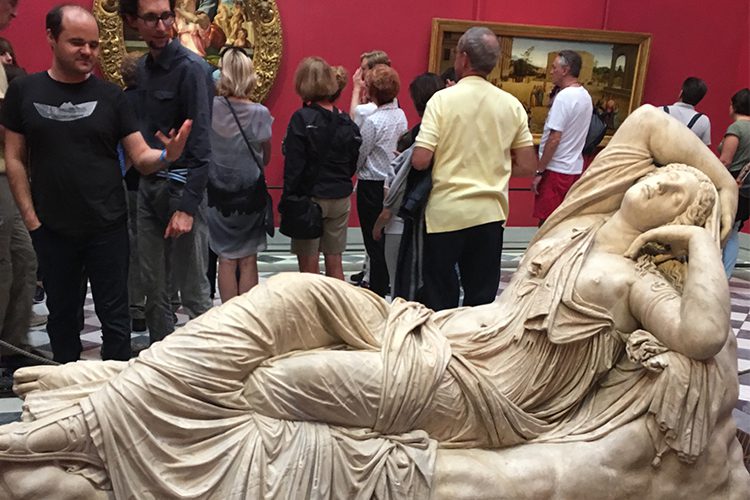
Visitors at the Uffizi. Photo by Jessica Pitocco.

By Nicole DeCosta

Alicia Deakin from London discusses how being in Florence has had a first hand impression on her perspective on Art History.

After the first half of the semester here at Florence University of the Arts, the students seem to be settling in nicely to the bustling lifestyle of classes during the week and exploring on the weekends. Sitting down with 21-year-old Alicia Deakin from Suffolk, England we discussed how she has had to adapt to this cultural change and new lifestyle.

With classes taking place Monday through Friday, Deakin said that her art history class is held twice a week.

“I’m happy that the class meets twice a week. Originally I found myself comparing my schedule to other semester students taking once a week classes, but I quickly realized just how much I enjoyed the class,” said Deakin. “I was feeling super lucky to be able explore the city of Florence and take part in the included field learning city activities offered through the class.”

Taking an art history course through FUA, Deakin said how amazing it was to experience this much raw culture within a class. When asked why this class was her favorite, she said how inspiring it was to be amongst some of the most amazing artwork she’d ever seen.

“Offering me new skills that I have not used in sometime, because I had taken a few years off from University, this class provides me an opportunity to study a new topic that both interests me and excites me,” said Deakin.

Noting the high quality education being provided to her through FUA, Deakin said, “the difference in my classes here from in London are so drastic, it is important to see how much the professors want to engage with you as students, while also wanting you to have the best possible experience in Florence.”

Since Deakin has never studied art history prior to coming to Florence, she said her favorite part is the novelty of the class, learning new topics, while also being placed within the Florentine environment. Knowing she is able to see the art firsthand, Deakin is thankful for the opportunity that FUA has provided her, and being here has allowed her to open her cultural perspective.

Offering students an opportunity to receive a strong education, while also an experience of a lifetime, including travel, cultural exchanges, and new opportunities, attending FUA, Deakin says, “is a once in a lifetime experience!”

See more of Florence and Italy at FUA’s FB, Instagram, and Twitter.
The Pressure to Travel

Photo by the author
Photo by the author

By Jess Pitocco

There is a pressure all study abroad students feel to travel, and travel often. In the months leading up to your departure, you get seemingly hundreds of Facebook invites and messages from travel companies urging you to book trips. Your friends tell you they are jealous of all the countries you will visit, and your older sister will say that traveling during study abroad was the best experience of her entire life.

How do you compete with that? How can you balance classes, getting to know your home city and still travel every weekend? Can you afford the big price tag of traveling from country-to-country seeing the sights?

Studying abroad isn’t about getting the perfect Snapchat story, Instagram post, or foreign fashion. It’s not about impressing your friends back home with how sophisticated and worldly you have become in such a short period of time. It’s about giving yourself the opportunity to explore the world, find yourself, and have a little fun while doing it. The pressure, anxiety, and apprehensiveness that goes along with that are normal. That’s what everyone experiences every day back home. What you have to remember is that this is your experience and your four months to get outside your comfort zone and really enjoy your time here.

So stay home one weekend and try that restaurant you always pass by and smell the goodies in the air. Try that cooking class instead of Skyping home and relaying every moment of your day, instead of actually living in that moment. Give yourself a weekend to be a tourist in your own city, and try to find a favorite spot to write in your journal. And if you do want to travel, do so not because everyone else is doing it. Do it for you.

Personally, I plan on taking advantage of FUA’s optional excursions because of their convenience and quality guides. I will be going on, but not limited to, at least two different trips within Italy: Venice & its Islands, Napoli, Capri and Pompeii, and more. However, I’ve had a lot of fun staying here in Florence for some weekends as well. I love visiting the museums on the first Sunday of every month because all admission is free! I also enjoy bringing a picnic to the Piazzale Michaelangelo to enjoy with the view. Figure out your favorite spot in Florence, and tag #MyFUA to let us know how much you love just being here in the city!

See more of Florence and Italy at FUA’s FB, Instagram, and Twitter.
Pane Sciapo: The Bread Conundrum

Photo by the author
Photo by the author

By Jess Pitocco

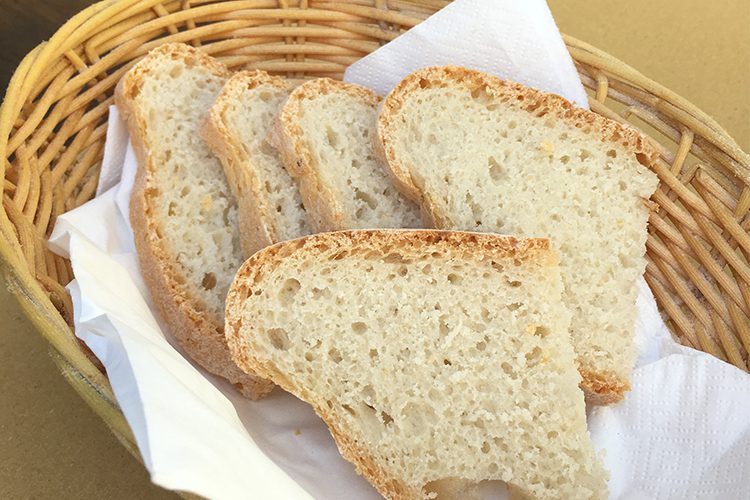
On my first day in Florence, I sat down at a restaurant in the shadow of the Duomo hungry from my flight. I had unpacked and was looking forward to food like a dog looks forward to playing fetch. So when I was brought the bread basket, I devoured each piece and noticed something strange. It was hearty but extremely bland and tasteless. I realized there was no salt! Salt, a seemingly essential ingredient, wasn’t in my first taste of Italian food whatsoever. I didn’t know at the time you should wait to mop up your meal with the bread, an Italian custom I had forgotten in my desperation to get food in my belly. So, after realizing this, I had to find out why the bread was saltless and sciapo (Italian for “bland”).

Chef Pietro Di Marco says the legends of saltless bread vary, and that if asked, every Florentine will give you a different story as to how it happened. A chef his whole life, teaching at Apicius since January, I trust his version of the salt-legend:

Throughout the centuries, the legends have been told. Nothing is on paper, but we all know about the bad blood between (the city of) Pisa and Florence. Pisa, long ago, was the only Tuscan city with access to the sea. Therefore, they were responsible for the distribution, packaging, and taxation of salt for Florence. Florence didn’t want to pay to bake their bread, plus the rivalry and battles between them didn’t help the situation. From there, the evolution of Florentine cuisine began.

The most common dishes involving Tuscan bread (pane toscano), and the most important dishes according to Chef Di Marco, are pappa al pomodoro and ribollita. Pappa al pomodoro is a bread-based tomato soup with herbs and spices, a rich and filling dish invented by Florentine farmers. Ribollita translated means “twice boiled,” and it is another soup reboiled with vegetables (like local white and black cabbage) and poured over bread. Chef Di Marco says it is easy to tell when dishes are made with old-school recipes or new-school recipes: the thickness of the soup, and the ingredients like olive oil, give it away. He says that every chef in Florence knows how to make these dishes, and that without them Florentine cuisine wouldn’t be Florentine cuisine.

Pane toscano can be made in about three hours time and takes a while to rise. This ensures its freshness for days, lasting longer than most bread you get at the supermarket. Its origin is from the province of Lucca, in the town of Altopascio, which still claims its fame to the crunchiest crust and the softest insides of all bread in Italy.

To learn about Tuscan bread, stop by Apicius, the hospitality department at FUA, and get a taste of it where it’s served daily at Ganzo, the Apicius restaurant. And while having a breakfast pastry or dessert at Fedora, the Apicius pastry shop, ask the baking experts there for tips and tidbits about it!

See more of Florence and Italy at FUA’s FB, Instagram, and Twitter.
The Love Affair of Dante and Florence

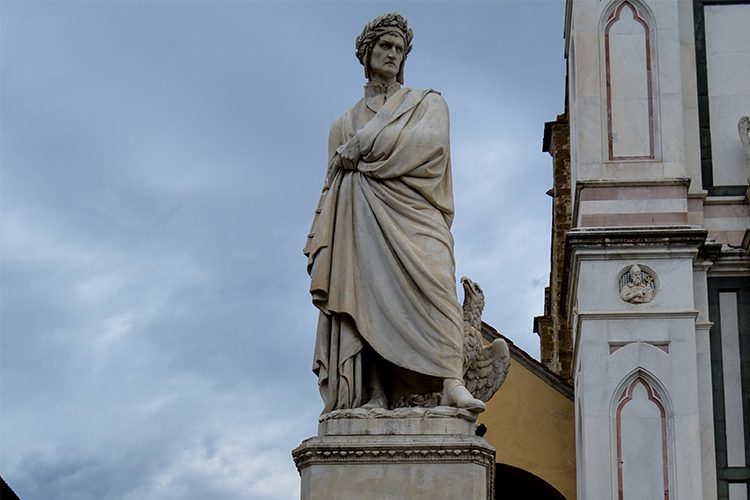
Photo by Amber Wright
Photo by the author

By Amber Wright

Every time I walk down a corridor of the Uffizi, I look Dante in the eye. I bitterly and sarcastically thank him for making me work so hard in the literature class I took my senior year of high school. Oh, The Divine Comedy. I still have the poem on my shelf back in California with copious amounts of notes in the margins, yet somehow I completely forgot Dante himself was a Florentine. Now living in the city’s center, it seems I cannot walk down the road without metaphorically looking Dante in the eye.

It’s not hard to miss the admiration Florence has for the poet. According to FUA faculty member Marta Russo, there are over 100 references to Dante throughout the city. He had a love affair with Florence as you can see in his poems. However, it was not always like this. In Florence, he was involved in a political struggle between the Guelphs and Ghibellines, and these rival parties disagreed on who should hold power in Italy. The Ghibellines supported the Holy Roman Emperor and the Guelphs were in favor of the Pope. Dante himself was a Guelph and was eventually exiled for it, but you wouldn’t know by Florence’s current celebration of the poet.  

The most obvious places to see Dante in Florence are the Uffizi – in the museum’s outdoor gallery of statues – and in front of the Basilica of Santa Croce. As mentioned previously, Dante was exiled from Florence for his political stance among the Guelphs. He never returned, and was buried in Ravenna – this is something Florence is still trying to cope with. According to Prof. Russo, the cities to this day disagree over where his bones should rest. While he isn’t actually buried there, Santa Croce still houses a tomb in his honor.

This love struggle isn’t one-sided: Dante loved his city back then as much as it loves him now. The father of the Italian language references Florence in many passages in The Divine Comedy. In Canto XXVI, Dante proclaims, “Florence, rejoice, now that you have such fame, and over land and sea you spread your wings! The whole Inferno’s ringing with your name!”

He may have been exiled, but his ties to Florence were undying. In fact, if Dante had not been exiled, he may have not written The Divine Comedy at all, says Prof. Russo. It was his exile that made Dante realize and understand his great love for his city. He was able to step back and fully understand the greatness of where he was from, and essentially intertwine this passion into his poem.

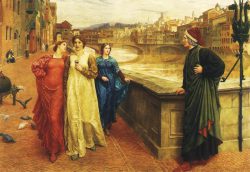
Dante and Beatrice, painting by Henry Holiday

Today, Florence honors Dante with plaques and statues around the city. They are its olive branch to the great poet, and a way to preserve his great history.  I see this preservation not only when I visit the Uffizi, but also when I walk down Via Guelfa. I see his legendary presence on the corner where he first saw his true love Beatrice and am reminded of the ultimate love story that Dante lived, with his native city.

See more of Florence and Italy at FUA’s FB, Instagram, and Twitter.
Your Fall Guide to Fruits and Vegetables in Florence

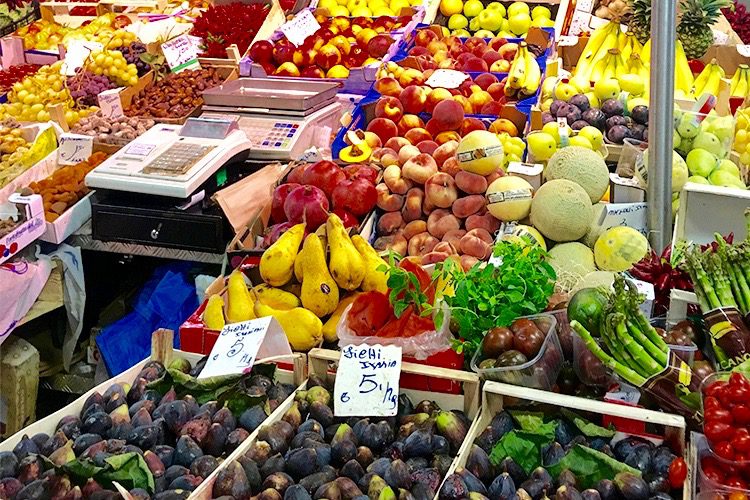
Central Market
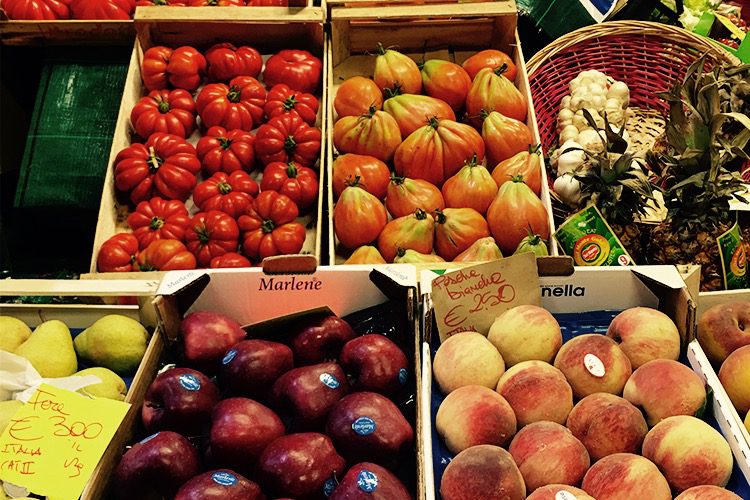
The Central Market, photographed by the author.

By Jess Pitocco

Italy isn’t all about the carbs; fruits and vegetables play a huge role in Italian cuisine. Here’s everything you need to know this fall about the best fruits and veggies in Florence. Check out the best markets, what produce is in-season, and vegetarian-friendly restaurants and recipes!

The high-carbohydrate diet many associate with Italian cuisine is a falsehood: Italians may eat carbs, but their lifestyle, portions, and eating habits are much healthier. That’s why when the New York Times reports on Italian eating habits, the focus is not on how to eat a low-carb diet while traveling, but rather why Italians are some of the healthiest people in the world. Fruits and vegetables, though filled with those ‘nasty’ carbs, are absolutely essential not only to a healthy diet, but also to Italian cuisine. That’s why including some apples, asparagus or zucchini in your basket while on your daily market trip is important to the Italian experience.

If you haven’t been to an Italian local market yet, give yourself an afternoon to go and explore one of the best parts of living in Florence. There are more than four big Florentine markets, not including the San Lorenzo Market, that you should visit to get the best, and freshest, produce (and even some clothing, music, plants and pastry too!)

However, before going to the market, know what fruits and vegetables are in season. Check out this chart to see that apples, blueberries, grapes, tomatoes, green beans, and cucumbers are just some of the fruits and vegetables that are at their best in September.

Want to visit some renowned vegetarian restaurants in Florence? Try Le Fate on Via S. Zanobi, for it’s fully vegan and vegetarian menu inspired by the signs of the zodiac and recommended by Travel + Leisure Magazine. Dolce Vegan and Il Vegetariano both have extensive vegetarian and vegan options as well, both a less than 10 minute walk from one another in the center of Florence. Still want more options? Silvana Vegan is an additional option, on Via dei Neri near the Galileo Museum.

If you don’t want to eat out, FUA Professor Cecilia Ricci, who often teaches food and culture courses, swears by this traditional Italian recipe for fruits and vegetables:

Cold Barley Salad, with Shrimp, Anchovy Fillets, and Cherry Tomatoes

Ingredients:

  • 300 g Pearl barley
  • 200 g Shelled shrimp
  • 15 g Extra-Virgin olive oil
  • 150 g Cherry tomatoes
  • 3-4 leaves of basil, cut in julienne
  • Black pepper
  • Salt
  • 8 Anchovies fillets, preserved under oil

Directions:

Boil the barley in a pot with 1.5lt of water with salt. Once the barley is cooked, strain it and place it to cool down in a bowl. In the meantime, wash and dice the cherry tomatoes. In a casserole pan add the extra-virgin olive oil, heat it at medium temperature, and let the anchovies fillet to melt. Once the anchovies are ready add the shrimp and sauté them in the oil for 2-3 minutes. Add the barley in the casserole, stir and mix all the ingredients together for 5 more minutes. Then, remove all the ingredients from the pan and place them in a bowl, add the diced cherry tomatoes, basil, pepper, salt, and mix. Refrigerate for at least 30-45 minutes before to serve. And enjoy!

After buying your fruits and vegetables, make sure you pay attention to how long they keep. Basically, how long the fruits veggies last is based on where they are from. If they are fresh from the market, your fruits and vegetables can last 3-4 days without rotting or refrigeration. If they are from the supermarket, the produce can go bad within a day or two because it has been refrigerated and prevented from becoming ripe. That way, as soon as they leave the supermarket your fruits and veggies can become ripe faster and ultimately rot faster. Buying fresh produce from the local market is a better way to ensure it will last (and it will taste better too!)

Click here for a guide to eating out in Florence, provided by FUA’s hospitality department.

See more of Florence and Italy at FUA’s FB, Instagram, and Twitter.
Cinque Terre-ible Weather

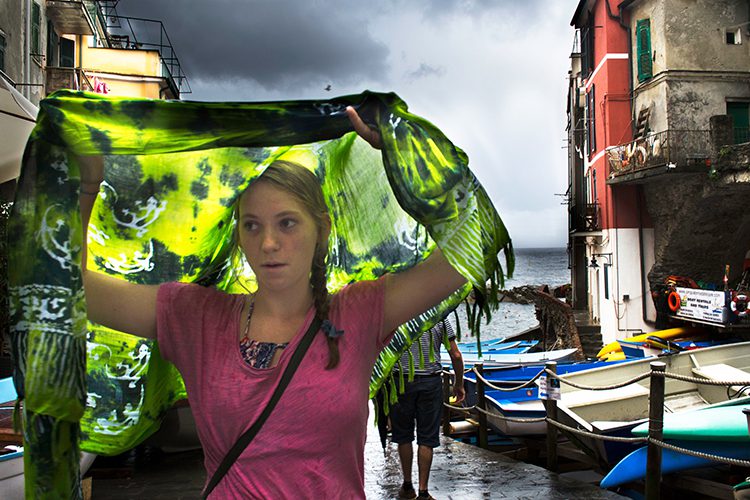
Rain in Cinque Terre, photo by the author.

By Amber Wright

Every photograph, video, and snap chat I have ever seen of Cinque Terre has been stunning. The colors of the buildings, the waves breaking on the rocks, and the sun shining down on the tourists makes it the perfect destination, and I finally had the opportunity to experience it for myself.

However, the sun wasn’t shining, and the water seemed to be more of a sea monster than just the Mediterranean sea. This area is constantly in danger of mudslides and the hiking trails were closed off for the rain that seemed to never stop falling. My weekend that was supposed to be picturesque and dream-like, now had the potential of being ruined by the Cinque Terre-ible weather.

Thankfully, I was sitting at a covered cafe as the rain came down and was able to just take it all in. I surprisingly loved the rain. I felt that the weather was a nice change from the sweltering heat, and my friends and I were not about to let a few raindrops keep us from the sea. It was surreal swimming in the mediterranean for the first time, during a storm no less, and the view of Monterosso from the water was magnificent. I now understood the raving reviews and why this coastal town deserved to be a protected site.

Sanctioned by the United Nations, a World Heritage Site like Cinque Terre is deemed so for its cultural, scientific, or historical significance. Therefore, it’s unsurprising that Italy, being the beautiful and rich country it is, has the largest number of these UNESCO protected sites.

The symbiotic relationship between man and nature is captured in the complex structure and architecture of each village. The steep hills and cliffs are dotted with buildings and agriculture that have been perfectly constructed to withstand the treacherous coastal area.

Monterosso and Vernazza were the first of the five villages built in the eleventh century. The following three villages were soon developed, and later reinforced with barricades and defence towers to combat the attacks from pirates. By the 15th century, Cinque Terre, or “five villages,” was the local term for the villages, and it was known for it’s excellent vino, produced to this day by incredibly determined farmers whose vines seem to grow vertically from the precipitous inclines. Progress halted in the area when mudslides destroyed the local agriculture, but recovered in the mid-18th century. Fast forward to 1997 when it became a protected area and to 1999 when it was officially named a national park. Today, accessibility is limited in Cinque Terre, and other than a train between the five villages, modern infrastructure has had only a hidden presence in this area.

It’s one of the most photographic areas in Italy, but there is so much more to experience than what you’ll see through the lense of your camera or behind your iPhone. Take a look around and understand why this area is deeply cherished. Look up and see the local old ladies people-watching from above, or take the hike to see the sweeping views from above. Take a dip to feel the warmth of the sea and try your hardest not to swallow the brackish water. Climb the stairs to the top of a watch tower and imagine being under attack by pirates.

Lastly, if the weather is bad, embrace it. Not only did the rain not ruin my trip, but it added to the excitement and memories that I’ll have forever. The history and beauty easily shines through, and I cannot wait to go back.

See more of Florence and Italy at FUA’s FBInstagram, and Twitter.

Stepping Back from the Lens: Florence Through My Eyes

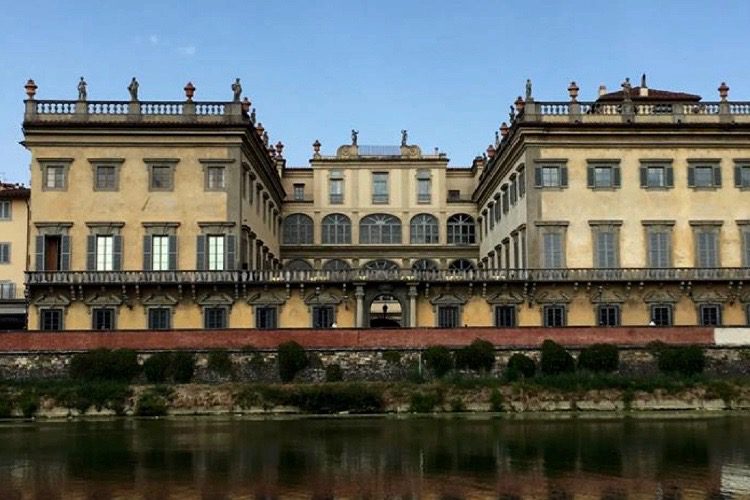
Palazzo Corsini from the Arno River, photo by the author.

By Ryanne Doherty

We all take photos. It’s a part of living in the digital age; everyone keeps a camera right in his or her pocket, and we can capture and share memories in an instant. As convenient as this is, there is a drawback.

Seeing the world through a camera lens can take away from fully experiencing a moment. It causes a person to merely see an image inside a cropped area. By focusing only on the visual, the sounds of a city, the smells of bakeries, and the feel of the air on one’s face are often overlooked.

I am just as guilty of this practice as anyone else. I will walk around Florence’s city center and take a picture of the Duomo or Santa Croce and ignore all other surroundings. For a Writing for Digital Media class assignment, I was actually required to get lost in the city and look only for the visual aspects of Florence. Through this, I was able to see in more detail but unable to fully feel the atmosphere around me.

For an hour, I explored new parts of Florence, but it’s hard to describe where I was. Taking pictures on my old Canon was my only focus and goal. This goal, I believe, caused me to miss out on a full Florentine experience as a new resident of the city.

The following day, however, my focus changed. With my class, I had the opportunity to experience the Arno River with the I Renaioli association. I took a few photos, but for the most part I tried to concentrate on more than just what I could see.

It was a sweltering day in September, and I had already broken out into a sweat on the walk to the riverbank. After a couple minutes on the water, however, a cool breeze shielded the hot sun, and I cooled down significantly. This was a breeze as I had never felt in the city center. Here, I realized the one of the coolest places in Florence at any time may in fact be the surface of the Arno, and I regretted not having taken this excursion earlier.

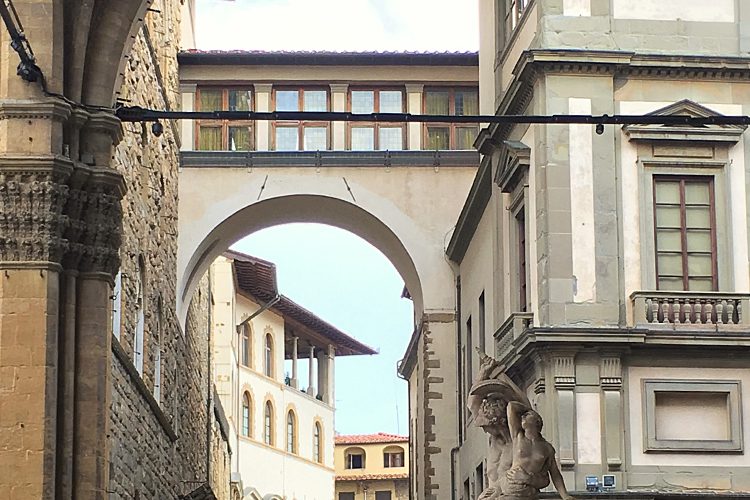
Paolo, the association representative who rowed the small wooden boat named the Ghibellino, recounted the Florentine history that surrounds the Arno. Some of the history was familiar to me, like the path of the Vasari Corridor through the Ponte Vecchio. Some information was new, like the history and utility of Palazzo Corsini, which is best seen from the Arno. Paolo’s voice was punctuated by the trickle of water as the oar cut through the river or his occasional whistles to rowers ahead of us as we made our way under bridges.

We docked again after an hour or so on the boat, and it was then that I decided I should step away from the camera from time to time. In the week that has passed since then, I have found myself trying to focus on the entire atmosphere of where I am – while it’s nice to have the photos, it is the desire for a new experience that drives us to have an adventure.

See more of Florence and Italy at FUA’s FBInstagram, and Twitter.

Il Palio: More than a Horse Race

Photo by the author
Photo by the author

By Monica Humphries

For us, it was a fun race, but for others, it was an event they had waited for all year. From the moment we stepped off the bus in Siena, we learned what the Il Palio means to the city.

Il Palio is horse race held twice a year in the heart of Siena. Piazza del Campo, the city’s main piazza, transforms into a race track. Dirt is packed down on the cobblestone, and fences are built to create the course. The city is divided into 17 districts (contrade) but only ten districts will compete in the race. The jockeys ride bareback and wear their district’s colors. Throughout the day parades and celebrations take place to prepare for the race. The horses are blessed, the bets are made and everyone gathers to the center for the race to start.

The race isn’t about coming in first but about beating your rival. Everywhere you look you see people with colorful flags tied around their necks, cheering for their district. To truly embrace the race, I picked the Tartuca district to cheer for and wore a yellow and blue flag embellished with a turtle, the district’s symbol.

As thousands trickled into the city center, anticipation slowly built up. The race was three simple laps around the track. Months have gone by in anticipation for those three laps.

Above the crowd I could see the brightly colored jockeys ready to race. Decked in black and white, yellow and red, or blue and white with distinguishing patterns, they all sat on their horses pacing for the start. The rules of the Il Palio involve a complicated tradition for starting the race, so it could start at any moment.

Twenty minutes passed, a shotgun was fire and the race had begun. We could feel a gust of air as the horses passed us. We felt the dirt kicked up from the horses’ hooves. We watched as the horses circled the track and competed to finish first.

When the first horse from the Lupa contrada crossed the finish line, the entire town erupted into emotion. The district hadn’t won a Palio since 1989 so emotions ran high. Immediately people were jumping over fences to congratulate the winning jockey and hug their friends and families. Tears of joy ran down some faces, while others cried with disappointment. Tensions broke out, people hugged and the race was over. People paraded down streets in celebration, while our group stood in amazement. The race itself was incredible, but the aftermath left us in shock. This wasn’t a silly race, but a long-lasting tradition built up over centuries. People took pride in their district and celebrated their culture.

The race itself was short but the day was long. Seeing firsthand a tradition that dates back to the 14th century isn’t an opportunity I come across often. On one hand, it was amazing getting to be a part of the tradition. But on the other, I still felt like an outsider. I had no investments in the race, but felt the heart rise as the horses cross the finish line. At the start of the day, the Il Palio felt so foreign to me, but by the end, I had grasped a better understanding of a city and its culture.

See more of Florence and Italy at FUA’s FBInstagram, and Twitter.

Venice in a Day?

Photo by the author
Photo by the author

By Monica Humphries

Venice is full of little nooks and crannies but often the beautiful, wider bodies of water are overlooked. This shot was taken from a gondola. The contrasting blues from the water and sky along with the architecture of the buildings and windows captured my vision of Venice. To fully understand Venice you have to be on the water, which is why it was important for me to have a photo from a lower perspective and angled up towards the sky and windows.

Travel Tips:

Known for its gondolas and seafood, Venice feels like a must-do if you’re spending your summer in Florence. But when I opened my map and my budget, I had to ask: one day or two?

Venice is a small city made up of over 100 islands, and although it may seem small from the scope of a map, there’s a lot to do in Venice. Highlights of Venice include watching glass blowing in Murano Island, taking a gondola ride, viewing the contemporary art museums and sipping a Bellini next to the water.

With Venice being so small, one of its challenges is finding a place to stay. If you’re on a student budget there aren’t a lot of options within the city. However, just outside the city there a quite a few places with differing budgets. You can find everything from a typical hostel to a campsite. So pick a place and factor the added time a train ride to the city will take.

Also consider price. Venice is known for luxury. Being a college student, it might be a little more difficult to spend €80 on a boat ride or €30 on dinner.  It’s important to consider food and activities when making a decision on how long to stay.

Finally, know what you want to do. Are you planning on getting there at the crack of dawn and staying to see the sunset? Will you venture to any of the farther islands? Are touring the churches important to you? In order to know what you want to do, you have to know a little about the city. Venice is known Biennale, a six-month art festival. Each year it switches between art and architecture (this year is architecture), and it’s held from May to November. But even if you don’t go during festival months, there’s always an open contemporary museum to discover. Another favorite form of art for Venetians is food. Being on the water, indulging in seafood is a must. Outside of seafood, Venice has wonderful Tiramisu, pasta and drinks to enjoy. Finally, Venice is home to Saint Mark’s Basilica. This and a huge piazza are in the heart of the city. You could spend weeks in Venice and still have a full list to do, so if you’re planning on going just for a day, do your research and make a list of the key things you want to get done.

In a city so beautiful you can spend as much or as little time there. I spent only the afternoon, but I felt rushed. I wish my trip could’ve been more relaxed and the commute not as long, however I was satisfied. Just know that you might not accomplish everything in a single day, but you’ll get a wonderful taste of the city.

See more of Florence and Italy at FUA’s FBInstagram, and Twitter.

My Transition Place: Arno River & Carraia Bridge

Photo of Ponte alla Carraia by the author

By Monica Humphries

When you step out of your apartment for the very first time, it’s a whirlwind of emotions. You feel enthralled to be in a new place. You feel excited for what the semester has to offer. You feel anxious, confused and eager.

I felt nervous.

Yes there were positive emotions, but buried not-so-deep were my nerves. I was in a foreign country, and the car ride to my apartment left me feeling like I was on the other side of the world.

I can vividly remember our driver taking all 7 students to their apartments. The first one was dropped off right past the Duomo, the second two near the San Lorenzo, a few more in the city center. Then there was me. I could remember crossing a river, going up and down the one-way streets, and finally pulling into a narrow, bike-filled lane right up to apartment number nine. After what must have been a half hour, I was home, but I wasn’t happy.

Although I was just on the other side of the river, I felt like there was a wall dividing me from all of my classmates. I stepped out onto the cobblestone street and immediately was lost. I stumbled my way through the streets until I found the Arno.

Since that first afternoon, the Arno, more specifically the Ponte alla Carraia, which is the bridge that leads to my street, has become my favorite place in Florence.

No matter where I was coming from – class, dinner or a cappuccino, all I had to do was find the river, and I knew exactly where I was. Since moving to Florence, the river is not only beautiful, but it has also become my safety net. A safety net that encourages me to explore and challenge my surroundings.

Curious about the Arno’s history and bridges, I talked to Giulio Vinci, a professor at FUA.

Vinci started at the very beginning. Florence was founded and controlled by the Romans. Romans generally build their cities in the valleys, so Florence followed this tradition and was built in a valley close to the river.

The city was structured in a rectangular shape with two central roads crossing through the city. The city was close to the water, but Florence wasn’t directly on the water, so there wasn’t travel between the sides of the river. Florence began expanding, and the Ponte Vecchio was the first bridge across the Arno. The first occurrence of the bridge was in a painting in 996.

The Ponte alla Carraia bridge is the second oldest bridge in Florence and known for its history of collapsing. Built in 1218 by architect Lapo, it collapsed for the first time in 1274 because of a flood. The bridge was originally built in wood, but it was rebuilt in stone. However, the stone was strong enough to support a crowd and collapsed again. In 1333 another flood struck Florence, and the bridge was once again destroyed. The most recent collapse was during WWII when it was bombed to prevent passage of allied troops from the Nazis in retreat.

Vinci said that tourism has exponentially grown in the past 20 years, and now Florence is a key location for visitors. He made a point to express that the river and its bridges always attract tourists.  Florence is known for its concentration of art, and the bridges are a part of that art. But not everyone, unfortunately, is interested in the art and history behind the bridges, and many prefer to simply use the bridges are picture spots. We’ve lost the meaning of tourism, and traveling today is vastly different from the young aristocrats of the 18th century who often went on year-long Grand Tour to discover the culture of European cities.

Thinking about what Vinci shared helped me appreciate my time here. Sometimes three months seems like forever, but with a city that has enough history for a lifetime, I’m thankful that I will have a chance to immerse myself and retain the details I learn about this city.

Walking home from the interview gave me a chance to reflect on my time here. Although it’s only been a month, I can now continue to expand my safety net to the entire city of Florence.

The bridge is a place of comfort but it’s now a place of curiosity. Each time I walk across the bridge I notice a new detail. I question the statue at the entrance, the crack along the pavement and the windows in the Ponte Vecchio. The comfort I have now encourages me to explore. It’s important that every student finds their Ponte alla Carraia. Whether it’s the San Lorenzo church or carousel in Piazza della Repubblica, we need a monument or location where we feel at home. But part of home is knowing its history and why it’s there. Yes, the pictures we take are important, but the history behind those photographs enrich our experience so much more. Take a second, learn about the area you call home, because you might end up loving the city just a little bit more.

I find comfort in the bridge because that’s where I find confidence. Confidence with directions, confidence in knowing there’s the best gelato place right around the corner, confidence that there will be a beautiful sunrise in the morning and an even prettier sunset at night. Learn about the landmark you call home, and you might end up finding a little confidence in a city full of new experiences.

See more of Florence and Italy at FUA’s FB, Instagram, and Twitter.