Florence Korea Film Festival 2025: Cross-Cultural Shock

written by Megan Cuviello & Ashlyn Loper

This blog feature is an exclusive bonus installment to our Spring issue of Blending Magazine. After you finish reading, be sure to explore the rest of the magazine online—just follow this link to download the full Spring 2025 edition:
https://jschoolfua.com/images/BM/BM_151.pdf

Since the 1980s, Florence has been an epicenter for art and has cultivated a space for individuals to express themselves. With the rebellious spirit of the city, fostering spaces for punk, street and alternative artwork and design, it’s no secret that the city has allowed for the culture within the city walls to flourish. This includes one notable place in Florence, Cinema La Compagnia. Cinema La Compagnia is a cultural venue located in the heart of Florence. The cinema opened in 1921 and was originally called Cinema Modernissimo. Then, between the years 1984 and 1987, it was transformed into the Teatro della Compagnia and eventually came to be what it is today. Cinema La Compagnia is a place where many film festivals and cultural festivals are held, making it the epicenter to showcase the art and talent of different cultures within the city of Florence.

The Florence Korea Film Festival 2025 was held at Cinema La Compagnia in Spring, 2025. It was a ten-day affair to showcase the different types of South Korean films, such as historical films, documentaries, short films, and many more of the South Korean culture. It showcased many independent films and filmmakers and allowed time for audience interaction with the filmmakers. This film festival has been held in Florence over the past two decades, and people from all over Europe, the United States and all over the world come to see the culture displayed at the Cinema La Compagnia through the Florence Korea Film Festival. 

Throughout the ten-day festival, we were able to attend multiple times to engage with individuals from all walks of life. On our first trip to the festival, we were introduced to the Florence Korean Film Festival Management Coordinator, Caterina Migliarini. We got to visit with Migliarini as she gave us an in-depth look into the festival while also introducing us to some of the history of Cinema La Compagnia. Migliarini stated, “People from all over come to the Cinema to see the Florence Korean Film Festival. People from Estonia, the Czech Republic and even India,” showing the cultural diversity that is welcomed into spaces of this nature. Migliarini also stated, “The beauty of the cinema is not just for the younger generation – it is for the elders and older generations.” This sparked conversation within our group as we reflected on the generations that had walked through Cinema La Compagnia at different times in history. Migliarini shared that it is one of her favorite places, if not her favorite place, in all of Florence, as she lives just down the street. Migliarini continued to share about how “the Cinema brings in Korean culture to other places” and the connections Cinema La Compagnia has with various universities, such as the European University Institute and also our very own FUA & AUF campus.

On our next trip to the Cinema La Compagnia and the Florence Korean Film Festival, we were able to attend a masterclass led by famous director Na Hong-jin. This South Korean film director was debuting his new film “The Wailing”. During this masterclass, we were able to learn more about his film detailing a Japanese man’s arrival in a small community. Through the masterclass, Hong-Jin’s passion for his work truly shone and allowed everyone in the room to grasp his concept. This also shed light on the true meaning of the independent film and allowed for a deeper understanding and appreciation that goes into all of the films shown in the festival.

Overall, the Florence Korea Film Festival at Cinema La Compagnia has opened its doors to a wide array of individuals and the artistry behind the independent films shown. While this film festival is just one effort in the continuance of the rich cultural heritage behind Cinema La Compagnia, it is also one of the many pieces to Florence’s cultural preservation and cross-cultural engagement. Everyone should take the opportunity to continue to support local and independent filmmakers, along with exploring the Florence Korea Film Festival for the 24th annual exhibition in 2026.

Finding Fashion & Finding Florence

written by Mia Romero

Coming to a new country by yourself can be scary, but learning how to fit into the culture can be even scarier. This is my experience witnessing fashion styles in Florence and learning to adapt to them myself.

Fashion is the style of clothing, hair, makeup, shoes, and so on, used by humans globally to express themselves. Fashion and the idea of fashion goes back centuries, but more specifically, the 19th century. In 1858, Charles Frederick became the first person ever to sew his label into garments he created, thus being the first “fashion designer” as we know it. Since then, fashion and style has elevated, changed, and adapted to different environments and to an array of people.

The biggest elevation of fashion I’ve ever noticed has been coming to Italy from the states. The people in Italy seem well-dressed, put together, and more understanding of expression through fashion. I have not noticed any locals wearing athleisure casually or sleepwear outside of the house, as I would see in America. I believe this is because Europe as a whole houses many of the main fashion capitals of the world. These capitals host weeks out of the year dedicated to showing off creative expression. It is an integral part of their culture and daily lives. It seems to be more respected and understood over here than in America. These events shape the trending styles to come and are watched carefully by locals as well as people all over the world.

I became intrigued with these fashion differences I noticed, so I decided to interview, research, and photograph my surroundings. I have found it extremely fascinating to witness my fellow students from all different parts of the world dressing well to class to fit into Italian style. I would argue none of us would dress as nicely for class at our home colleges.

I had a personal experience of wearing a hoodie and sweatpants around my hotel lobby and getting strange looks from all different types of people, from different areas of the world. It has become a known standard to dress well when out in Italy. After this experience I became much more aware of how I was leaving my apartment as well as how everyone else was.

During this time and the next few days, I was lucky enough to have a conversation with a local about her thoughts on fashion in Florence and Italy as a whole. I met a lady standing in line for a coffee shop who was dressed impeccably. She wore a blazer with dress pants and what looked to be red bottom heels. I could tell this was an expensive and well put together look. I began to tell her about my school journaling assignment and her thoughts on fashion differences worldwide. She explained to me that dressing well had always been the standard for her. She said, “Growing up, my mother and father dressed us in our best and it was expected of us as we grew. This was normal. I never saw my mother without beautiful hair or a nice dress on.” I found it interesting how she explained to me that it was normal to dress nicely and this had been instilled in her since childhood. I believe this to be the disconnect between fashion in Italy from other countries in the world. Parents are less expecting of what their child wears in other countries, thus holding lower standards in my opinion.

Although I discussed this topic with a few other locals, I got very similar responses across the board. The overall consensus being that dressing well had started during childhood and become a social norm. As an American student, I envy the fashion sense these interviewees held. Anyone can buy an expensive outfit, it was the way they styled these outfits that stood out to me. They each had something people around the world try to achieve, which is knowing how to style themselves perfectly. Overall, I grew in my knowledge of stylish appearance and the standards in different parts of the world.

Art as Protest

The Political Undercurrents of Florence’s Futurism Movement and Its Impact in the Modern World

written by Susana Colunga

This blog feature is an exclusive bonus installment to our Spring issue of Blending Magazine. After you finish reading, be sure to explore the rest of the magazine online—just follow this link to download the full Spring 2025 edition:
https://jschoolfua.com/images/BM/BM_151.pdf

Florence has long been known as the cradle of the Renaissance, a symbol of classical beauty and deep cultural tradition. But by the 20th century, the city; like much of Italy, was ready for a leap into modernity. This transformation came with the rise of Futurism, one of the most radical and revolutionary artistic movements of the time.

Founded by Filippo Tommaso Marinetti on February 20, 1909, Futurism challenged Italy’s cultural conservatism and aligned itself with bold political change. The movement rejected traditional ideologies like conservatism, liberalism, and socialism, instead celebrating a new vision that emphasized speed, innovation, violence, and the power of the individual.

Futurism aimed to destroy the past in order to build a new, dynamic future.

The movement began with Marinetti’s Manifesto of Futurism, a provocative call to artists around the world to embrace modernity and abandon outdated ways of thinking. It inspired creatives and politicians alike, offering a blueprint for revolution and renewal. For Futurists, artists were not just visionaries they were leaders, responsible for reshaping the political and cultural landscape.

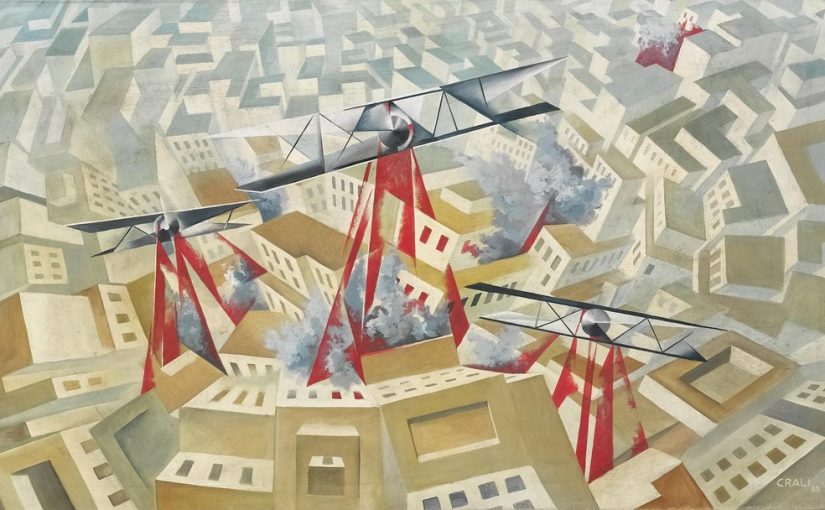
In Florence, Futurism quickly aligned with the rise of Fascism and the political career of Benito Mussolini. As Marinetti publicly supported Mussolini, many Futurist artists followed, embracing violence and destruction as necessary tools for building a new world. Their art reflected this ideology through militaristic and nationalistic themes, visible in poetry, posters, and especially painting. In his manifesto, Marinetti famously called war “the world’s only hygiene.”

The relationship between Futurism and Fascism intensified during World War I. Marinetti and his followers supported Italy’s entry into the war, and some even volunteered to fight.

However, rather than ushering in the radical transformation they envisioned, the war left Italy politically and economically devastated. This collapse only deepened the Futurists’ desire to rebuild a powerful, modern nation.

In 1919, Futurists carried out one of their most notorious acts: the burning of the socialist newspaper Avanti! in Milan. Led by Marinetti, the group set fire to the newspaper’s offices, seeing it as a symbolic act of defiance and alignment with Fascist ideals. Their commitment to political violence only grew, and by the March on Rome in 1922, which brought Mussolini to power, many Futurists believed they had finally achieved the society they had long imagined. But over time, Fascism became more institutionalized and authoritarian, drifting away from the chaotic, revolutionary energy of Futurism. Eventually, the two movements diverged, with Fascism absorbing some Futurist aesthetics but abandoning its more radical artistic ideals.

Still, Futurism’s legacy didn’t disappear. In the 1970s and 1980s, its influence reappeared in various political and artistic movements, particularly through its aesthetic and ideological emphasis on dynamism and transformation. One example is the Italian Autonomia
Movement of the 1970s, a radical leftist collective of students and workers who rejected both capitalism and communism. Their use of bold typography, manifestos, and dynamic visual styles clearly echoed Futurist strategies. Elements of Futurist design found their way into underground magazines, protest posters, and political demonstrations.

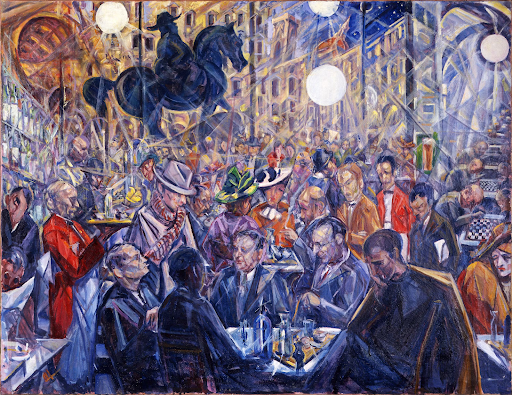
Similarly, radical architecture groups such as Superstudio and Archizoom (active from the 1960s to 1980s in Florence) embraced Futurist ideals of destruction and renewal. Their futuristic designs, filled with utopian and dystopian visions, critiqued capitalist consumer culture and proposed bold alternatives to conventional architecture. These movements emerged from Florence’s long-standing tradition of underground intellectual exchange, dating back to the literary cafes of the 19th century, where artists challenged the dominant norms of their time.

Futurism was more than an art movement, it was a cultural and political force that left a lasting imprint on Florence, Italy, and beyond. From its revolutionary beginnings to its entanglement with Fascism, and later its echoes in radical protests and design, Futurism showed how deeply political ideology can shape artistic expression. Even today, we can trace the movement’s legacy in the ways artists challenge norms and imagine new futures, often in the same underground spaces where past movements once thrived.

Finding A Home In Florence

written by Brooke Beste for SPEL: Public Relations

Living abroad isn’t always picture-perfect. Through culture shock, homesickness, and self-discovery, I’ve learned that finding “home” in Florence takes time, patience, and an open heart. This is my journey.

I have currently been away from home for 13 weeks… not that I’m counting. While being away and immersing myself in a new culture, I’ve discovered that I value energy and the overall ambiance of my environment. I love to observe and analyze culture, food, individual attitudes, and especially fashion. Over time, I’ve found my favorite places—and a few dislikes—within Florence. I’ve explored other countries and experienced different ways of life, but I’ve come to a solid conclusion: the way Italians live is unlike anywhere else I’ve visited. 

While Florence is often portrayed through the lens of grand cathedrals and iconic artwork, I’ve learned that the real soul of the city is found in its quiet corners, local rituals, and everyday encounters. As a student living and studying here, I’ve discovered that capturing these moments through photography offers a more intimate and authentic narrative of Florence—one that goes far beyond the postcard image. 

At first, the locals gave me a hard time. From graffiti that read “Yankee Go Home” to the frustration of not understanding the Italian language, I genuinely felt like an outsider during those first few weeks. However, that all began to change once I started school. I suddenly had a

community of individuals around me who wanted to grow and learn just as much as I did. I began to understand the way of life in Italy. 

I started feeling comfortable ordering at restaurants and learning the etiquette of being in Italian society. By week eight, I finally felt like I had a grip on the reality of Florence. I realized the importance of leaving the house looking presentable and enjoying my food inside the restaurant instead of ordering it to go. These small changes made me feel more connected, intentional, and at ease in my new environment. 

Still, being homesick has been a complicated emotion to process. Sometimes it makes me feel guilty. I’m the baby of my family and incredibly close to them—they truly are my best friends. I’ve never been away from them for this long. I miss the simple things: my favorite dark blue suede couch in the living room and Chipotle just down the street. 

But when I sit with these thoughts, I can’t help but smile. How lucky am I to live in the heart of Florence, surrounded by my friends? Within just a few miles, I can be at the train station with endless possibilities. This once-in-a-lifetime opportunity has taught me so much about gratitude—how to thoroughly soak up the Italian sun and appreciate the unique beauty of my life this semester. 

Florence doesn’t offer the same activities my home city of St. Louis once did, and that’s okay. I now walk everywhere, eat pasta shamelessly every day, and leave the house feeling confident in my ability to handle whatever problems the day brings. Florence has shown me how to slow down my overthinking mind. It’s helped me discover where I find happiness and what interests me. It’s allowed me to feel more mature and make decisions supporting my well-being. 

As I approach the end of this study abroad journey, I feel deep appreciation. The excellent professors and advisors I’ve met have shown me how much kindness and intellectual curiosity matter in helping students succeed and stay on the right path. The learning experience of being a twenty-something in Florence has shown me that finding a “home” is more than a physical place to sleep and eat—it’s about the culture, the time, and the personal growth you experience along the way.

Florence has become a part of me. And in its own way, it has become home.

Mystery Meets Mixology

The Evolution of Florence’s Hidden Bars and the Art of Underground Mixology

written by Trinity Conner, Molly FitzGerald, Olivia Adams, Lila Williams & Marisa Jones

This blog feature is an exclusive bonus installment to our Spring issue of Blending Magazine. After you finish reading, be sure to explore the rest of the magazine online—just follow this link to download the full Spring 2025 edition:
https://jschoolfua.com/images/BM/BM_151.pdf

Florence’s artistic spirit isn’t confined to its galleries and historic cafés; it also spills into the city’s underground secret bars—modern-day echoes of Prohibition speakeasies—where secrecy, craftsmanship, and storytelling converge into a singular drinking culture. The hidden bars, like the literary cafés of the past, create an underground atmosphere of exclusivity and creativity, elevating mixology to an art form.

The evolution of Florence’s modern hidden bar scene highlights how these establishments mirror the city’s avant-garde movements by reinventing tradition. Behind unmarked doors and secret entrances, guests enter spaces that showcase both history and innovation.

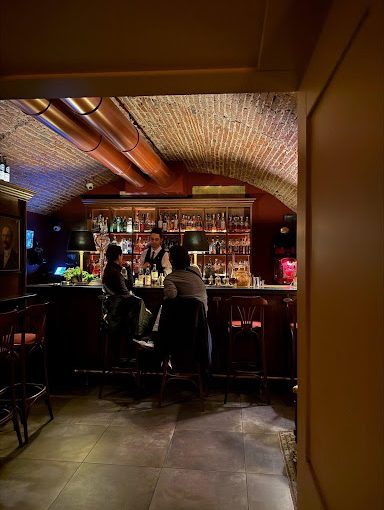
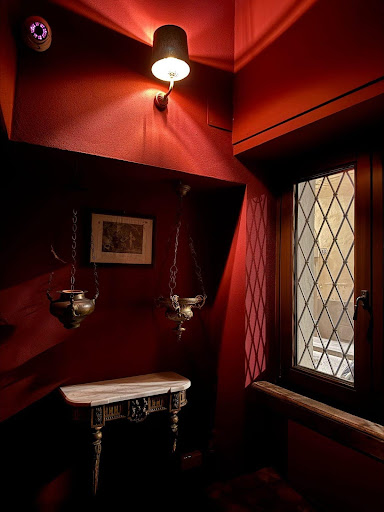
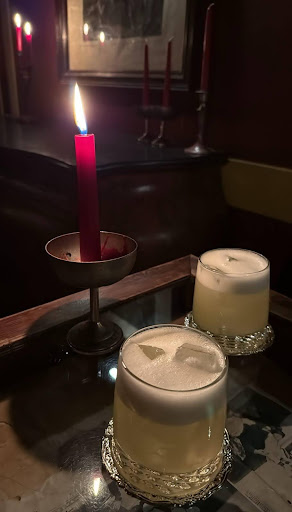
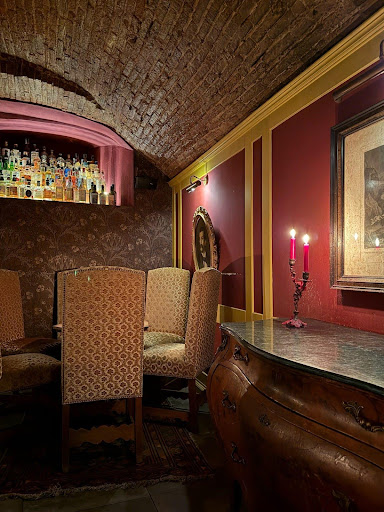
The underground nightlife of the 1980s has evolved into today’s hidden bar scene, shaped by the rise of cocktail culture and modern mixology. One key example of this evolution is Rasputin, Florence’s first hidden bar, discreetly tucked away in Santo Spirito. This underground cellar, with its candlelit tables, antique furnishings, and a rules page on the menu, transports visitors to a vintage atmosphere where handcrafted cocktails strike a balance between tradition and innovation.

Taking a visit to Rasputin feels like traveling back in time, allowing individuals to feel immersed in rich history. Maintaining a strict no-phone policy, discouraging excessive phone usage, and flash photography to keep the experience authentic. These policies enforce full presence, something that is rare in today’s digital world. The hushed conversations, the clinking of glasses, and the soft jazz music in the background make it feel like stepping into another era.

Marco Vinci and Ghermai Zerazion, the co-founders of this hidden gem, came up with the idea to bring a seamless combination of America’s past and present to Florence, Italy. During Prohibition in the United States, the production, sale, and transportation of alcoholic beverages were outlawed. As a result, clandestine bars, now known as speakeasies, sprang up across the country. Therefore, these tucked-away spots were places where people could socialize, dance, and drink bootleg whiskey and gin, despite the looming threat of raids, arrests, and jail time. The consequences were harsh, but the desire was irresistible. Rasputin allows individuals from all over the world an immersive experience of life during this time.

The cocktail menu is as thoughtfully crafted as the space itself, offering a mix of classic recipes with modern twists. The standout for us is “Our Bee’s Knees,” a drink that combines honey, lemon, and lavender into a refreshing and balanced flavor. The foam on top added a nice touch, making it feel both indulgent and relaxing.

The bar also has an impressive selection of over 300 labels, including a wide range of whiskeys, which made the menu feel like more than just a list of drinks—it is an opportunity to learn and explore. Overall, it is a place where the drinks and the atmosphere come together in a way that feels both approachable and special.

Rasputin isn’t just a speakeasy; it’s a hidden world that combines history, mystery, and artistry. If you are looking for a night that blends sophistication with a touch of secrecy, this is a must-visit while in Florence.

Beyond Rasputin, other hidden gems like Vanilla Club Speakeasy capture the charm of the Prohibition era with its password-protected entrance, dark wood interiors, and soft jazz music. The bar’s strict no-phone policy encourages people to experience expertly crafted, Italian-inspired cocktails in an intimate setting.

Beneath Grand Hotel Cavour, The Secret Bar offers an underground lounge experience framed by exposed brick arches and antique chandeliers. Florence’s culture inspires The Secret Bar’s menu, so they transform cocktails into stories that reflect the city’s artistic evolution.

Florence’s hidden bars are more than just places to sip cocktails, they are doorways to another time, where history lines the dimly lit walls and mixology becomes an artful performance. Like the literary cafés of the past, these speakeasies craft narratives with every pour, which blends tradition with innovation in a way that holds Florence’s charm.

Whether you find yourself behind the unmarked doors of Rasputin, sharing secret passwords at Vanilla Club, or uncovering the meaning of The Secret Bar, each visit is an invitation to step beyond the normal. In a city known for preserving its artistic heritage, Florence’s underground bars prove that history isn’t just something to admire; it’s something to taste and experience, one cocktail at a time.

The Art of Getting Lost in Florence

written by Talia Velazquez for SPEL: Public Relations

A reflection on how exploring Florence encourages spontaneity and discovery, highlighting the city’s charm in its unpredictability and the value of wandering off the beaten path to uncover hidden gems and unique experiences.

They say, “You don’t know what you’ve got until it’s gone.” I would say they are right about everything… except Florence. I’ve known all along. 

Every weekend that I pack a bag and leave for some new, exciting city, I feel a little sad–not because I don’t want to explore, but because I already miss home. Not my home-home. My Florence home. My creaky-ceilinged apartment with the mural above my bed. The little store I pass every morning on my way to class, where the dogs are always lounging by the window like they’re in on some secret. And let’s not forget the cobblestone streets that have tested my ankles more times than I can count but somehow still feel charming. There’s something about the worn-out texture of this city that makes it feel alive in a way my clean, polished hometown never could. It’s these small, oddly specific details that have worked their way into my daily rhythm–and now, I can’t imagine my life here without them. 

At first glance, Florence was a maze. I had no idea how to get anywhere without my GPS, and honestly, I treated that little blue dot like my personal life raft. My classes were a 20-30 minute walk from my apartment, and I’d just stare at my phone, hoping it would lead me safely to my destination. One day, my phone died mid-walk; I had no choice but to try to figure out my way back without it. And, in those 30 minutes of trying to “not panic,” I found three new cafes, a few tiny shops, and a quiet little park I had no clue was just around the corner from where I lived. 

It was an accident–but one of the best accidents of my life. 

Since then, I made a habit of getting lost on purpose. I made it a rule: no GPS. I embraced getting lost. Florence rewards you for it, like it’s daring you to wander. Around every corner, there’s something new–an old man selling fresh strawberries, a second hand bookstore with handwritten notes tucked inside the margins, a view from a bridge I’ve never crossed before that feels like a scene out of a movie. These little treasures wouldn’t exist if I stayed on the beaten path, glued to my phone or my to-do list. These are things I’d never find back home. Things I might never find again, even here.

Every single day since I arrived in Florence, I’ve stumbled upon something new. It’s become my daily ritual–taking a different route, looking up instead of at my feet, discovering the city for the first time all over again. My roommates and I even started this funny little game: “What place did you find today?” We know the answer will always be something we’ll all end up visiting together at some point. Florence is like a love letter to curiosity–always waiting to reveal something amazing if you’re just open enough to look. 

When I’m away on weekends, I miss that. I miss the random joy of wandering with no plan, of not knowing where I’m going, but finding something unexpected around every turn. I miss my roommates, too. Staying up late with people from all over the world, talking about nothing but everything at the same time. Swapping stories, comparing cultures, laughing about weird language slip-ups or marveling at the strange, wonderful ways we have all changed since we got here. I miss that feeling. The feeling that even when I have no clue where I’m headed, I know exactly where I belong. 

Florence has made me softer and more spontaneous. Less scared of being unprepared. I’ve stopped trying to plan for everything. I’ve started letting the city guide me, saying “yes” to more things than I ever would have back home: spontaneous dinners with new friends, tagging along with people who seem to have an endless supply of places to explore, or even just stepping out of my comfort zone and taking a walk down a street I’ve never been down before. I’ve learned that you don’t need to have every moment mapped out to make it count. Florence has shown me more than I ever could have scheduled into an itinerary. 

And here’s the thing: I thought I’d get tired of it. I thought the charm would fade, the magic would wear off. I mean, how many breathtaking sunsets over the Arno can one person handle, right? But now here’s the truth: Florence hasn’t gotten old. It’s only gotten more real. It’s not perfect–far from it. The roads are bumpy, the traffic is chaotic, and sometimes it feels like I’m living in a postcard that’s a little too messy to be real. But that’s the beauty of it. It’s raw. It’s alive. It’s a city that doesn’t apologize for being exactly what it is. And because of that, I’ve learned to stop trying to have everything perfectly planned out. Because life isn’t about following a schedule–it’s about the moments in between. The unexpected discoveries. The conversations that stretch until 2 a.m. The way the city feels like it’s breathing with you, not just around you. 

I look back and realize: I’ll never be 19 in Florence again. I’ll never walk these streets in the same way, with the same people, in this same moment. And honestly? I wouldn’t want to. Florence has given me a version of myself that I never expected to find–a version that can be spontaneous, that can wander without a destination, and that can embrace the unknown. That’s what Florence has taught me: to say yes to the journey, to find beauty in the detours, and to never be afraid of getting lost. Because sometimes, getting lost can lead you to exactly where you need to be.

Florentine Streets, Clet’s Canvas

written & photographed by Kathleen Morris

This blog feature is an exclusive bonus installment to our Spring issue of Blending Magazine. After you finish reading, be sure to explore the rest of the magazine online—just follow this link to download the full Spring 2025 edition:
https://jschoolfua.com/images/BM/BM_151.pdf

How many stories can a single office avocado tell?

As I set my laptop onto Clet Abraham’s cluttered desk, I took inventory of its miscellaneous contents: an avocado, a glass with a solitary drop of red wine left behind and an array of art supplies – pencils, cutting tools and scattered pages filled with cartoonish sketches.

I set my cellphone atop a strip of stickers depicting bright pink sausages, thumb hovering over the record button – ready to capture every bit of wisdom from the infamous street artist who I was face-to-face with at last.

The conversation was highly anticipated. Earlier that morning, after exchanging a flurry of WhatsApp messages with an employee at his Florence studio—including a pointed warning not to address him by his full name, Jean-Marie Clet Abraham—I stepped into the cluttered space – I made the trek across Ponte alle Grazie to his studio on a sun-soaked Monday afternoon.

Tiptoeing down the sidewalk, I realized I didn’t need to consult Google Maps to know I had arrived. I followed a wall plastered in a chaotic assortment of stickers – a street artist’s rendition of the yellow brick road.

My instincts were confirmed by the street sign placed just above the door, reimagined to depict a tiny figure flying through the air, its grip tight on the tip of the white arrow.

photo by Kathleen Morris

The use of street signs has become a trademark of Clet’s art.

Originally from France, Clet has now claimed Florence itself as his canvas.

I first encountered his work by the Medici Palace. With crooked eyes and a corkscrew neck, a portrait of childhood whimsy is plastered onto a traffic sign, its head formed by diverging arrows. In the following days, I began to train my vision to spot Clet’s characters tucked into every corner of this historic city.

My article joins countless attempts to profile the elusive artist, who has earned celebrity status (and over 160k Instagram followers) in a destination that echoes with the voices of the Renaissance.

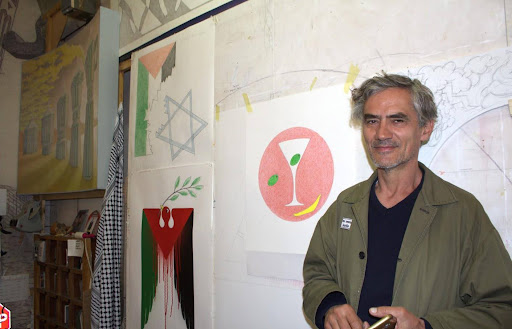
I sought to understand the path of the man who sat across from me, salt-and-pepper hair draped across his forehead and backdropped by a wall of unfinished masterpieces.

The son of creative parents, he recalled his earliest inclination to art.

“When I was young, I used art to be free,” Clet said. “I don’t care about art. I care about freedom.”

Today, his urban installations serve as an outlet for self-expression and a medium for political commentary. With a rebellious flair, he inspires dialogue about pressing social issues and individual rights. Behind his desk, a sign was spray-painted with the colors of the Palestinian flag. The artwork, created in collaboration with the Art for Gaza Collective, exemplifies Clet’s efforts to garner a reaction from and activate the public.

“I don’t think I am the owner of my ideas,” he mused, reflecting on the essence of collaboration he shares with those who engage with his work. “The ideas pass through me,” he said, describing his ability to sculpt messages and inspire his community to think outside the box.

photo by Kathleen Morris

Clet refuses to be confined by artistic boundaries, finding fulfillment in working beyond the walls of traditional museums.

“I don’t work with galleries,” he underscored. “The best place is always the street.”

Clet navigates the gray area between creating impactful art and defacing public spaces. The allure of street art lies in the ambiguity of this ruleless game – a game that Clet has mastered on a global scale, often operating under the cover of night.

“In the United States, I always [install art] at night because I don’t want the police to stop me,” he revealed. “I don’t want to have a big problem and lose my plane ticket to go back home.”

In a perfect world, city authorities would recognize the positive aspects of his work. He imagines that increased acceptance would act like a “business card,” allowing him to explore cities that are “more difficult, where there is less democracy.”

Until then, Clet can be found cloaked in darkness or in the safety of his studio at Via dell’Olmo, 8r in Florence.

Before I exited his sticker-clad oasis, I gathered two pieces of advice from Clet for aspiring artists: embrace your originality, and when working on the streets, it’s best to be a little drunk.

photo by Kathleen Morris

For more information, visit Clet’s website or follow Clet on Instagram (@cletabraham).

Transportation in Florence: Trading Cars for Cobblestones

written by Ashlyn Roselle

Florence, Italy, widely regarded as the heart of the Renaissance, is a city where the past is not only preserved, but woven into everyday life. The tightly packed cobblestone streets, and historic buildings are unlike the sprawling cities many American students are used to. For those studying abroad, Florence allows cultural immersion, but not without some practical adjustments, especially when it comes to transportation.

Most American cities were designed around the car, Florence however was built centuries ago for pedestrian traffic, carts, and horses. Today, the city’s historic layout remains largely intact, protected by strict preservation laws. The timeless charm that remains in Florence today is beautiful, but creates an unexpected challenge for students abroad. There is a large question mark in everyday life: how do I move through a city that was designed for another era?

Florence’s current layout is rooted in its medieval and Renaissance past. The narrow, winding streets and densely packed buildings are from a city that was never intended for modern day cars. Due to this, much of central Florence is a limited traffic zone (ZTL), where only residents and permitted vehicles are permitted to drive. Public transportation consists of buses and trams, where they travel mostly the outer zones of the city. The inner city is primarily navigated on foot or by bicycle.

For students from the US, where cars are a central part of everyday life, this can be a major shift.

Maddie Oberly, a current FUA student from Connecticut says, “In Connecticut we rely greatly on cars to get us from place to place. However here it was solely on walking and the public transportation systems like the bus.”

The transition can be jarring, but it’s also one of the most rewarding aspects of studying abroad in Florence. Students are able to truly immerse themselves in the city and soak up their surroundings of Renaissance facades and hidden piazzas while strolling to class. The lack of reliance on cars encourages deeper exploration and a more intimate connection to a place.

Another current FUA student, Trace McCament reveals his experience with transportation in Florence thus far. “The amount of walking definitely surprised me, but it’s been super nice to walk around and explore. Before dinner, it’s easy to just stroll around, read menus, and people watch, which is fun.”

Students, like Trace, soon discover that Florence’s compact design works in their favor. Most major landmarks, cafes, apartments, and restaurants are within walkable distance. What initially seems like an inconvenience becomes an unexpected part of the adventure.

Bikes and scooters are immensely popular amongst residents of Florence. There are designated parking zones for both and they are always packed. There are also rentable electric scooters and bikes for tourists, providing modern solutions for longer distances.

The pedestrian-friendly architecture of Florence doesn’t just change how students move, but changes how they live. Walking everywhere promotes physical activity, lowers stress, and encourages spontaneous interactions within the city. The benefits of walking 10,000+ steps per day are incredible, which most individuals struggle to do while in the US if they are not creating intentional time for activity. Many students report feeling healthier, more independent, and more connected to their environment after just a few weeks.

The environmental impact is real. With limited access to cars and a focus on sustainable transport, Florence experiences less traffic, lower air pollution, and an overall more pleasant atmosphere. These conditions create a safer, more accessible environment for students to thrive while abroad.

Studying abroad in Florence offers more than academic credit, it offers a new perspective on urban living. Students gain firsthand insight into how city design influences lifestyle and community. Compared to the wide streets, long commutes, and car dependency of many American cities, Florence demonstrates an older, but highly effective model of urban planning.

That contrast often sparks reflection.

Maddie Oberly admits, “I have honestly loved the exercise aspect of walking and it has been weird to get used to the bus system… but with patience it’s really easy to figure out and utilize in ways that can benefit us as students.”

Adapting to Florence’s pedestrian-focused lifestyle is easier with a few tips:

  1. Plan Ahead – Walking and biking takes time, so build buffer time into your schedule.
  2. Comfort Matters – Invest in a good pair of walking shoes, those 20,000+ step days will sneak up on you!
  3. Learn the Local Routes – Familiarize yourself with your walk to class and apartment for easy navigation.
  4. Embrace the Pace – Allow yourself to slow down and experience the city instead of rushing through it.
  5. Try the Rental Bikes – It’s okay to have a little adventure every now and then, just don’t hit anyone!

Florence’s architecture has preserved history and now shapes modern life. For students abroad, that means adapting to a new way of getting around. It requires you to learn how design and environment influence everything, from mobility to mindset.

By stepping into Florence’s streets, students also step into a bigger conversation about sustainability, community, and how cities can be built around people instead of machines. This is a lesson that reaches far beyond the classroom and one they’ll carry with them long after the semester ends.

Are you guys Nazi’s?

written by Lilly Vergnes

This blog feature is an exclusive bonus installment to our Spring issue of Blending Magazine. After you finish reading, be sure to explore the rest of the magazine online—just follow this link to download the full Spring 2025 edition:
https://jschoolfua.com/images/BM/BM_151.pdf

Lorenzo Carollo grew up in the northern part of Italy, in a small town near Verona. He followed the typical life path of an Italian teen, adding some illegal graffiti work in the mix. After high school, he went on to study History in Padova. You might wonder what kind of hobbies and activities one gets up to in rural northern Italy. For Carollo, he did not have to look far. He works in a mechanical factory, takes an interest in medieval history, plays the bagpipe, and in recent years has become a Skinhead. He has his hair cut short, wears boots and bomber jackets and goes to as many concerts as he can. This is also where I met him, at a concert at the Centro Popolare Autogestito (CPA) in Florence. I personally go to the CPA for its cheap beer and good music. Little did I know, that night’s concert was being played and attended by Skinheads. My first thought and question when I heard ‘Skinhead’ was, Are you guys Nazi’s? They all laughed, and Carollo started to explain the Skinhead movement to me over the loud music. 

Skinheads originated in Britain in the ‘60s. They were primarily influenced by Mod and the Jamaican Rudeboy subcultures, with a working-class pride and rejection of conservatism at the time. The original Skins had a lot of influences from Jamaican music and culture, such as Ska and Reggae. Later, in the ‘80s, a Punk aspect was introduced to the movement, with the working class Punk Rock Oi!. This was then mixed with the Jamaican genres from the previous generation, which was referred to as 2Tone. If these are the origins of the movement, then why do we only now associate Skinheads with white supremacists? 

During that same time in the ‘80s, the movement split up into two very distinct directions: far-right and left/apolitical. Britain’s political climate was precarious, and far-right supporters saw the Skinhead subculture as an opportunity to express their ideology. This spread fast, and by the ‘90s, neo-Nazi and fascist groups existed all over Europe and North America. 

photo by Lilly Vergnes

This is the image we still associate Skinheads with today in the mainstream mindset. However, a reaction to these right-winged groups quickly started. The movement known as Skinheads Against Racial Prejudice (SHARP) was created as an anti-fascist and anti-racist group. Today, they are considered an extension of the original Skinhead culture, the ‘real’ Skins. Skinheads completely deny the fascist groups as part of the movement, even refusing to call them ‘skinheads’ but ‘boneheads’ instead. The Skinheads main ideals are inherently left-wing, although some of them identify as apolitical.

Carollo first became familiar with Skinheads through some people he knew from high school. As a teen, he was interested in forming his own opinions on political matters. He was approached by some guys from a far-right Skinhead group in Vicenza, who wanted him to potentially join their group. After listening to some of the things they had to say, Carollo decided that their opinions did not align with his morals at all. He had a good friend who was black, whom he knew to be a good person, so he thought: how could it be true that all black people were bad? He made up his mind and began associating himself with people from the anti-fascist side of the movement: Skins from a smaller group called the Reggae Lads. Their ideas and morals lined up much more with his own, as he explained, “I could never understand why you would decide to hate. If you see a black man walking on the street who is smiling, you can’t be happy for him just because of the color of his skin? This is so stupid to me.” 

As for myself, I never realized that Skinheads are not what we see in the mainstream media. In reality, it seems like a subculture like many others, with their music, fashion and ideals, even ideals that most people could get behind. They are just as much, if not more, against neo-Nazi’s and facism as anyone else. In some way, they are the ones that are trying to make a positive change in the world.

Preparing for Florence: A Student’s Guide to Study Abroad at FUA

written by Savannah Carley for SPEL: Public Relations

A student-written guide to studying abroad in Florence, offering practical tips on packing, planning, and adjusting to life at FUA through personal experience.

Before I left for my study abroad program, my search history was filled with “What to pack for Florence, Italy” and “Best tips for studying abroad.” Every video and article gave the same advice: bring a portable charger, pack basics, and buy toiletries once you arrive. While these tips were helpful, I still felt uncertain. How many clothes should I really bring for six weeks? What would it feel like to land in a brand-new country? 

I remember wishing I had someone who had just done this to walk me through every step. While a lot of studying abroad depends on personal preferences and unexpected moments, I hope this guide offers advice that goes beyond the usual checklist you’ll find on social media. 

Here are some of the most helpful things I learned while preparing for my own study abroad experience. 

Plan Ahead Early 

My biggest piece of advice may sound simple, but it’s essential: do not wait until the last minute. This includes everything from sorting out academics and booking flights to making sure you have the right chargers and adapters. 

Start with your academics. Make sure your courses align with your goals and will transfer properly. Research programs thoroughly and don’t hesitate to ask questions. There are so many unique and specialized opportunities out there. Sometimes, just talking to someone can lead you to a class that’s a perfect fit that you might have otherwise overlooked. 

Stay in close contact with your home university to confirm credit transfers and requirements. Once academics are settled, take care of travel documents. Make sure your passport is valid and check whether you’ll need a visa based on your program’s length. 

After that, book your flights. Having your plans finalized will make everything else smoother. One tip: research your connection airports. I didn’t and ended up with an impossible layover in Paris. Knowing what to expect can ease a lot of stress, especially if it’s your first time abroad. 

Research Florence and Italian Life

Before you start packing, take time to learn about Florence. This can include anything about the culture, neighborhoods, public transit, tipping, or even how grocery stores work. The more familiar you are with daily life, the easier the transition will be. It’ll also help you pack smarter and with more intention. 

Packing 

Packing can be stressful, especially for a country you’ve never visited. For clothes, think layers and neutrals you can mix and match. Italy in early summer starts off cool but heats up fast. I relied on linen pants, airy skirts, and flowy dresses. Here’s what worked for me for six weeks in the summer, though I tend to overpack: 

● 10 Tops: Tanks, basics, flowy shirts 

● 3 Shorts: Linen, denim, patterned 

● 4 Pants: Jeans, linen, lightweight trousers 

● 5 Skirts: 3 long, 2 short 

● 3 Outerwear pieces: Jean jacket, sweater, linen cover-up 

● 4 Dresses: 2 long, 2 short 

● Comfy wear: Leggings, sweatshirt, pajamas 

● Shoes: 1 pair of tennis shoes, 1 pair of sandals 

Beyond clothes, don’t forget the essentials. You’ll use your phone constantly for maps, photos, and travel info, so bring a portable charger. Also bring multiple European plug adapters and extra cords in case one breaks. A small first aid kit with basics like Advil, cold medicine, band-aids, and any personal prescriptions is also a lifesaver. If you plan to buy toiletries in Florence, pack enough to get you through the first few days. You’ll be adjusting and might not get to the store right away. 

I also recommend bringing something to document your experience. For me, that was my camera. For you, it might be a journal, a sketchbook, or even voice notes on your phone. Having a way to capture your thoughts and small moments will help you slow down and appreciate your time abroad even more. A little intention in your packing can go a long way. Focus on comfort, versatility, and what makes you feel at home abroad. 

Final Prep 

Before you travel, make copies of your important documents, like your passport. I also created a printed list of important contacts, both for my program and back home, as well as key addresses. I kept it in my carry-on in case my phone died while traveling. Having a physical backup gave me peace of mind and ensured I wouldn’t be completely lost without my phone.

As your departure approaches, take time to prepare your mindset. The first few days may feel overwhelming. That’s normal. You will adjust. Learning a few basic Italian phrases can boost your confidence and show respect. I also recommend making a short bucket list of what you want to accomplish while abroad. It helps you stay excited and intentional. But, also stay open to spontaneous experiences. Those are often the most memorable. Most importantly, stay present. This is a once-in-a-lifetime opportunity! 

Final Thoughts 

Studying abroad in Florence has been one of the best decisions I’ve ever made. It can feel overwhelming at first, but every step you take to prepare will make your time abroad smoother. No guide can prepare you for everything, but I hope this one helps you feel more grounded and excited. Be curious, stay open, and give yourself grace. You’re about to begin something unforgettable!