Gelato can be found in virtually every street corner in Florence. As a Florentine delicacy, locals and visitors stroll the streets with a cone in hand no matter the season. Over the years, because of its touristic popularity, traditional, quality gelato has become more and more of a rarity. We sat down with Vetulio Bondi, owner of I Gelati del Bondi and president of the Florence Gelato Association, to gain insight into recognizing quality, authentic gelato in Florence. Bondi has also taught a gelato making course at Apicius. We’ve narrowed down our interview with him into 3 simple steps to keep handy when trying out new gelaterie.
1. Read the Ingredients
Fresh, authentic gelato should not need any preservatives or extra fat. The main ingredient should be fresh milk and the sugar used should lead to a smooth, “warm” gelato, as opposed to a sweeter, colder treat that was popular in the 80s.
Bondi also attributes his high quality gelato to his strong relationships with the hazelnut, pistachio, and produce farmers that he works with.
2. Order In-Season Flavors
It is easy to overlook the environmental difference of ordering mango sorbet in the winter as opposed to pear. Bondi prefers serving in-season, local flavors to cut down on food miles. “In Europe, we try to follow the seasons, so in the summer, it is much better to eat the peach sorbet than the mango sorbet because the mangos will be coming from Brazil, so it can cause pollution and peach sorbet, melon sorbet, watermelon sorbet, and plum sorbet is amazing.” If you want to know what is in season when, here is a list.
3. “When You See a Mountain, Turn Around”
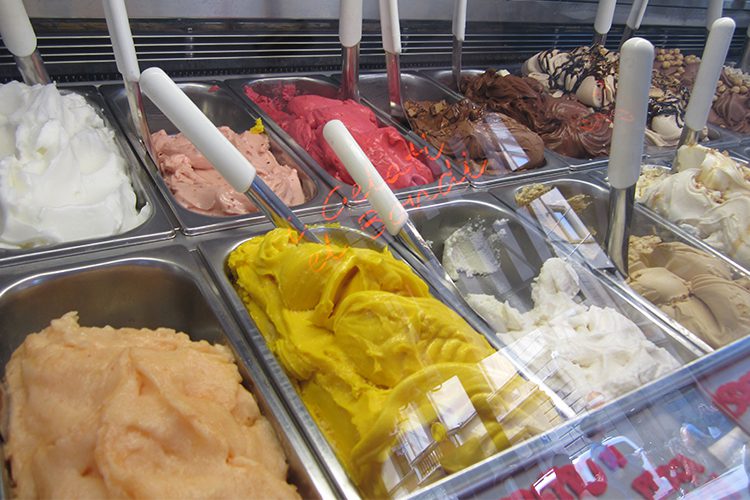
Like any tourist destination, flashy fakes are everywhere. When looking for authentic gelato shops, steer clear of the mountain-high, neon window displays. These are often made with artificial flavors, colors, oil, and fat. You want to spend your time seeking out neutral colored, simpler displays. Some places will cover the gelato with lids, which usually means they made it that morning.
If you have time, stop by I Gelati del Bondi. Our personal favorites are his peach, salted caramel, pistachio, hazelnut chocolate, or cherry.
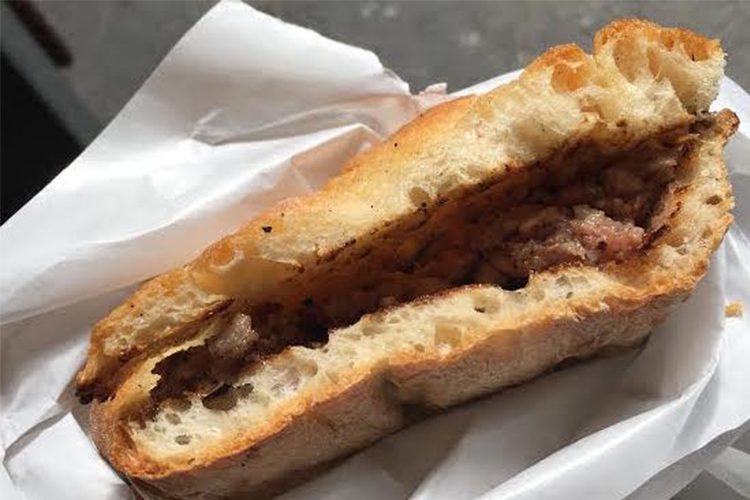
Schiacciata sandwich in Florence. Photo by the authors.
By Deborah Glasso, Leanora Karnath, Morgan O’Reilly
Schiacciata is a typical flatbread of the Tuscany region used to prepare panini. In English, the word translates to “crushed” or “flattened.” If you’ve lived in the Tuscany region, unsalted bread is probably what first comes to mind when thinking of bread products. In contrast, schiacciata is sprinkled with coarse salt grains, giving consumers a burst of flavor coupled with other ingredients in a panino. Made with flour, yeast, water, salt, and olive oil, traditional schiacciata should be crispy, but not hard. Also, the olive oil should not produce a greasy feeling but be enough to complement the mix of ingredients.
After learning about schiacciata in Florence, we decided to extend our research one step further with some tastings and then compare our findings.
Morgan – soft or crispy?
After living in Florence for three months, I have fallen in love with Schiacciata. From trying too many places than I would like to admit, I realized I prefer a crispier crust with a fluffy center as opposed to a thinner, chewier flatbread I usually get at All’Antico Vinaio. My personal favorite spot is Sandwichic because they use just enough olive oil and salt to make the flatbread crispy and flavorful. The Oil Shoppe also deserves a mention for their softer, circular schiacciata that I also enjoy.
SandwiChic: Via San Gallo, 3 Al’Antico Vinaio: Via dei Neri, 74/R
Lea – olive oil in each bite
After trying many different panino shops, I found Due Sorsi e un Boccone (“two sips and a bite”) which has become my favorite place for a quick bite. I was happy to discover the consumers were mostly Italian which has always been helpful to seek out local spots. I love how the schiacciata is crispy but not too hard as I’ve tried some places where the schiacciata can scrape the roof of my mouth, leaving an unpleasant sensation. I also view the schiacciata as characteristic of the traditional staple because of its olive oil you can taste with each bite. The taste does not distract from any of the other ingredients but enhances the overall experience of eating a panino and indulging your taste buds.
Due Sorsi e un Boccone: Via degli Alfani, 105
Deborah – great ingredients, great sandwiches
Being a Florentine, I believe that All’Antico Vinaio is one of the few places that offers good street food. The schiacciata is crushed with sbriciolona, a cured meat with fennel seeds, so we can say it is a must-try in Florence.
The Prosciutteria is another great place to try this traditional Tuscan favorite, just a few doors down from All’Antico Vinaio. Vinaino Di Parte Guelfa also offers tasty sandwiches with typical Tuscan and Florentine ingredients.
Vinaino Di Parte Guelfa: Via Val di Lamona, 6 La Prosciutteria: Via dei Neri, 54r
Our Findings
From recommendations of professors and other locals, our tastings led us to the discovery that despite schiacciata’s status as a Tuscan staple, various places prepare the bread in different ways. While some may be very crispy on the outside, others are softer which results in a more chewy bite. The “best” panino shop is subjective because people enjoy their breads in different ways. The staple has evolved and each panino shop has their own take on how to prepare it.
Photo by Davide Raguda via unsplash.com – Leaning Tower of Pisa
By Morgan O’Reilly
When studying abroad in as beautiful an area as Tuscany, the opportunities for rich history and scenic views lie just outside Florence’s city walls. Students can find three unique towns within the area between Florence and the coast.
Pisa
Students from Florence can easily catch a 50 minute train ride into this small city for a full or half day or history, art, and great food. Marta Russo, an FUA faculty member who lived in Pisa for 19 years, has kindly provided a local perspective on this famous little town. Aside from the infamous Leaning Tower, some other beautiful sites include the Piazza dei Cavalieri and Piazza Martiri della Libertà. She recommends a nice stroll along the Lungarni (sidewalks along the river), where one can see the Chiesa della Spina, originally built on the river bank of the Arno and later rebuilt on a higher level. Two other churches visitors can visit are Chiesa Santa Caterina and Chiesa di San Francesco.
All of the good restaurants in Pisa are located near the market squares Piazza delle Vettovaglie and Piazza Sant’Omobono, according to Russo. These include La Mescita and Il Campano, among others. For a good panini, Il Crudo in Piazza della Berlina (aka Piazza Cairoli) of Il Montino in Via Monte; where the local specialty is focaccia con la cecina, a traditional dish made with chickpea flour, water, and olive oil, which is baked and stuffed into a flour focaccia bread.
For those interested in art, Russo recommends checking out the current exhibition at Palazzo Blue, the venue exhibiting the major art shows of great painters of the past (like Picasso or Modigliani.) One thing visitors don’t know is that there is a Keith Haring mural painting on the side of the Chiesa di Sant’Antonio, so there is even some modern art in this culturally rich city.
Lucca
A small town to the west of Florence, Lucca radiates rich history, art, scenic views, beautiful churches, and plenty of greenery. High walls surround the city, eluding military history dating back to 200 A.C, now provide visitors with a beautiful walking path, picnic spots, and playgrounds for a relaxed afternoon under the shade of their chestnut trees.
The beautiful churches of Lucca include the San Michele in Foro Church, the San Martino Cathedral, and the Church and Baptistery of San Giovanni and Reparata. All originally built before the 14th century, these Romanesque monuments are not to be missed.
The Piazza dell’ Anfiteatro, a former Roman amphitheatre, now holds restaurants, cafe’s, and shops along its oval-shaped frame. In July, the piazza makes a perfect venue for open-air music performances.
To end a day of sightseeing and strolling around the city’s walls, visitors can climb the Guinigi Tower’s 130 steps for spectacular views of the historic city.
Livorno
An understated small port city on the western coast of Tuscany, Livorno holds great seafood, majestic panoramic views, a Venetian-style neighborhood, and a short train ride from Santa Maria Novella.
Piccola Venezia, or little Venice, is a fun pocket of Livorno crossed with small canals built during the 17th century using Venetian methods of reclaiming land from the sea. Whether via foot path or by boat, the canals provide picturesque scenes of the city with nice waterside cafes interspersed.
The Terrazza Mascagni is a popular spot in the city where guests can discover panoramic views of the beautiful city. Built in the 1920s, this dazzling terrace captivates its visitors with the seafront as well as the cityscape, perfect for sunset after a long day of exploration.
Coffee does not limit itself to its basic ingredients and the seemingly fundamental role of stimulating its consumer. Coffee sits in cafe bars under the dull roar of thought-provoking conversation. Coffee occupies cupholders in Manhattan taxis, accompanies egg yolks and condensed milk in Vietnam, and carries ceremonial value in Ethiopia. It can exist as a supportive friend among late-night spreadsheets and early-morning meetings, and its aroma alone can wake a sleepy family on a rainy Saturday morning. Coffee has the power to support entire villages through the harvesting trade, especially with the insurance of the Fair Trade Movement. It is complex and the possibilities for innovation lie infinitely between the harvesting, the roasting, the brewing methods, and the preparation.
The drink originated in the highlands of Ethiopia, where it arrived in the Middle East before spreading to Venice in the 1570s. Coffeehouses later spawned all along its canals before spreading to other major Italian cities like Turin and Rome. Since then, coffee has transcended past its functionality of improving productivity into a rich, diverse, ever evolving culture across the world’s borders.
As a previous barista and hopeful future coffee shop owner, I had a delightful week exploring the coffee culture Florence has to offer.
Basic Coffee Etiquette in Italy
Coffee culture in Italy stands unprecedented among its neighbors; it is quick and medicinal with little to no fuss over the preparation. Because of its uniqueness, the dreaded ‘tourist’ label can come far too easily. To avoid the foxpaus, here are some observations I’ve compiled:
Any coffee drink containing dairy should only be consumed in the morning, and never after a meal.
Coffee in Italy is enjoyed its simplest and purest form. Caffé shelves leave no space for an array of flavor pumps, so savor your beverage and try to taste all the subtle hints from the brew.
In a traditional Italian bar (neighborhood coffee joint), always check if you need to pay for a receipt first to present to the barista or if you can order first and pay later.
Typically, locals order and drink coffee at the counter. It also costs much less than sit-down coffee in some of the bigger cafes in squares such as Duomo, Repubblica, and Signoria.
Typical menu items
Caffè: One shot of espresso
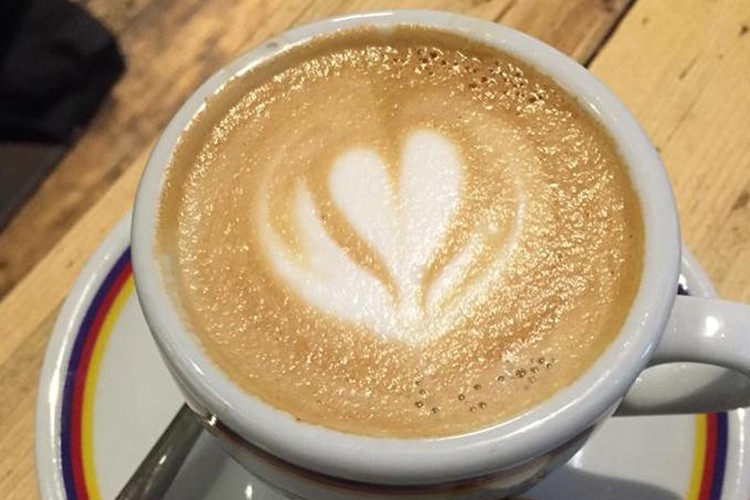
Cappuccino: Espresso with foamed milk
Caffè Macchiato: Espresso with a dash of milk
Latte Macchiato: Hot milk with a dash of coffee
Caffè Americano:Espresso with the addition of hot water
Other spin-offs found at most Italian cafes:
Caffè Shakerato: A frothy iced coffee drink prepared with ice cubes in a cocktail shaker. Usually served in a martini glass
Caffè d’orzo: A caffeine free beverage made from roasted barley
Caffè ginseng: Similar to white coffee: a cream, usually of the plant origin, the sugar, the instant coffee and the dry extract of ginseng
Marocchino: Popular in Milan, this drink comes in a small glass dusted with cocoa powder, when topped with milk froth and espresso, and topped with some more cocoa powder
Cappuccino Viennese: A cappuccino topped with whipped cream and cocoa powder
Pro Tip: My all-time personal favorite is the cold brew, the espresso-ground beans are steeped in cold water for 24 hours. This method results in a less acidic, slightly sweeter drink. I like to pour the black coffee over ice, but a splash of milk or cream is always a good move. You can easily make cold brew at home by steeping the beans in a french press.
The Old School, the Roasters, and the Contemporary: Without question, every coffeeshop derives from a wide variety of values, customs, and creativity; so in no way can one title sum up an entire business. This being said, these three coffee categories do point to major differences throughout Florence’s coffee scene.
Old School bar/pasticceria These shops contain classic Italian coffee and fresh pastries. They stick to the roots of Italian coffee culture to provide an authentic, timeless experience.
Example: Pasticceria Nencioni. Open for over 60 years, this family-owned Florentine coffee and pastry bar stands as a charming gem with a wide array delicious sweets and quality coffee. Whether it be a profiterole, a mini tart, a croissant, or a slice of cake, this shop will please its guests through their freshly homemade approach and unbeatable tradition.
Atmosphere: The shop gives off a timeless, charming feel with their beautiful pastries displayed before the customer.
The Roasters Some roasting companies open stores in the city, so their base value lies on their quality, specialty coffees.
Example: ChiaroScuro. This shop was opened by the roasting company Mokaflor and contains coffees and teas from around the world. The array of espresso drinks, hot chocolates, and teas proves quite impressive, so don’t be afraid to take your time deciding. Personally, I am fond of the caffè nocciolato, combining their high quality, rich espresso with hazelnut and whipped cream.
Atmosphere: This shop has a homey, old school atmosphere with plenty of seating.
The Contemporary Many New Age Coffee shops typically value the Third Wave Coffee movement, in which coffee is treated as a culinary delicacy, like wine, rather than a commodity. The movement lends itself to stronger relationships between coffee growers, traders, and roasters, as well as focusing on direct trade, single origin coffee (as opposed to blends), and high-quality beans. Along with these ideals, they may emphasize fair trade as well as focussing on the unique atmosphere of the space.
Example: Ditta Artigianale. This contemporary coffee shop prides itself in its focus on international coffee blends and brewing methods. Also directly involved in the roasting process, the shop combines the traditional values of Italian coffee culture with the Third Wave movement. The Artigianale baristas are knowledgeable of the bean’s origin and the process to which they receive them, so they gladly welcome conversation over their coffee’s “story.” In fact, the shop itself is designed to welcome this interaction through their lower-than-normal counters and complete visibility between the customer and the barista.
Atmosphere: The shop on Via Dei Neri, in my opinion, gives off a retro vibe with the script typography and industrial lighting. It’s a great place to sit and finish some homework or enjoy friendly conversation while alternative, mellow music fills the space. In contrast, the newOltrarno location gives off a more posh atmosphere through interesting patterns and lighting, a muted, sophisticated color scheme, and more mature, jazzy playlist.
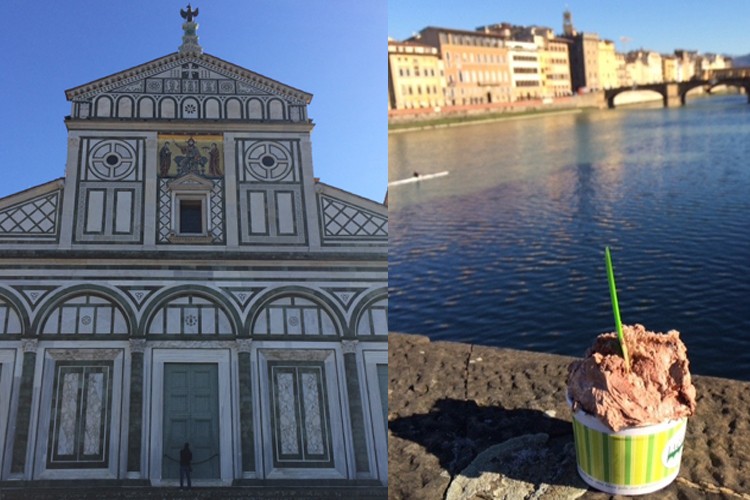
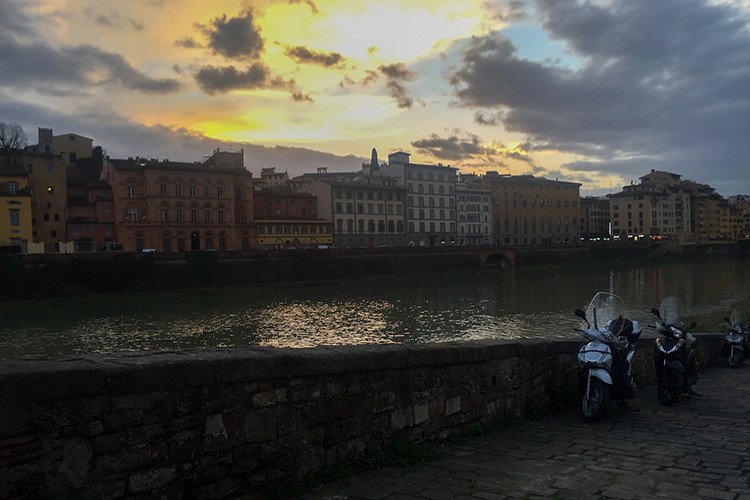
Left, San Miniato al Monte; Right, gelato from La Carraia with a beautiful view. Photos by author.
By Emma Vogel
Contrary to popular belief, not everything worth seeing in Florence is on the north side of the Arno river. Here are some of the hidden gems I’ve discovered living beyond the river, or as the locals call it, the “Oltrarno” or in an even further colloquial way, “Diladdarno.”
I was confused the first day I arrived at my apartment in Florence. Where was the Duomo? The Ponte Vecchio? The statue of David? Okay, I wasn’t quite so naive as to expect all of those Florentine staples right outside of my apartment door, but I knew I was in a different part of Florence than I had seen when searching Google Images. It took me only a few minutes of wandering to realize that I lived on the south side of the Arno river, and it took only a few days after that to fall in love with where I live. Sure, what draws most people to Florence is the bustling Piazza della Repubblica, the magnificent Duomo, and the incredibly famous Palazzo Vecchio, but there’s much more to see than what the tourist guides suggest. There’s a whole hidden part of Florence with charming artisan shops, authentic Italian cuisine, and hip cafés filled with locals that you can find by simply crossing one of the many bridges. Here are the best parts of Oltrarno that I’ve discovered so far.
Food
Oltrarno has some of the best restaurants in all of Florence. With a multitude of choices from family-owned restaurants to trendy eateries, I find a new favorite restaurant every day. So far my top picks include: GustaPizza (not surprising as it is loved by abroad students, tourists, and locals alike), Osteria Santo Spirito (great sit-down spot), Club Paradiso (owned by an Italian couple, the wife cooks the food, the husband is the waiter, and the menu changes everyday!) As for gelato, Gelateria Carraia never disappoints and has been a local favorite for years (a wide variety of flavors and generous portions.)
Pro Tip: You can compare southern Italian pizza styles in the neighborhod. After GustaPizza, check out O’ Munaciello and Da Gherardo (don’t let the plain website fool you, the place is tiny but packs a punch!).
Santo Spirito: A Place to See
Crossing the Ponte Vecchio into Oltrarno brings you to the center of the most authentic artisan shops in Florence. Walking down Via Romana, you pass stores selling handmade leather shoes, fresh pasta and olive oil, and art galleries. Past the artisan shops you can find Santo Spirito, arguably the hippest neighborhood in Florence. Piazza Santo Spirito is filled with cute cafes and trendy restaurants known for apertivo and, of course, the famous Basilica di Santo Spirito. The square has a daily market open until 2 p.m. where you can find fresh produce sold by neighborhood locals. A short hike from there brings you to the breathtaking Piazzale Michelangelo where you have a view of the entire city. A little farther up the hill you can find San Miniato al Monte, one of the most beautiful and unique churches in Florence.
Pro Tip: Santo Spirito is the iconic square of the Oltrarno area. Also try exploring the tiny Piazza della Passera for funky restaurants and great gelato. Piazza del Carmine (also home to the Brancacci Chapel) and Piazza Tasso are also interesting squares with a great local vibe.
Although Florence’s most famous monuments are undeniably amazing, it’s more than worth it to escape the crowds of tourists to explore the hidden beauty and authenticity that is Oltrarno.
When first arriving in Florence, it’s normal to feel like a tourist. Here are some tips on how to live like a local.
Florence, upon first glance, can overwhelm its visitors as they crane their anxious heads above the sea of selfie sticks and open maps, search for a restaurant sans menu photos, and squeeze through the awing crowds in the main squares of the city. Among the excited tourists, it’s important to keep in mind that a majority of people you pass by call this city home.
Firenze has so much more to offer than temporary housing for weekdays. Culture and favorite cafes and park benches with carvings live here. Children and dogs play in the streets as their parents chat with the friendly market booth owners. Familiar calls of “Buongiorno” ring through the narrow alleyways, artisans flaunt their daily food creations, and 20somethings socialize on the steps of Santo Spirito.
Learning to see Florence through the eyes of a local
Appreciating Firenze as a home can help create an authentic study abroad experience. Finding the best panini places and venturing past the piazzas will come with time, but there are some things you can do to help feel like a local in the city.
Talk to your professors
Even if not all of your instructors were born in the city, chances are they have lived here long enough to be considered a local in terms of their favorite activities. A short conversation about their ideal day will provide great insider tips while getting to know your instructors on a more personal basis.
Strike up conversations with small business owners and workers
On your next pit stop for lunch, whether in Italian or English, introduce yourself to the people behind the counter. Step out of your comfort zone and ask them how they are doing, if they have any recommendations, and what their ideal day in Florence would be. Forming relationships with local italians can immensely help authenticate your Florentine experience.
Search online for local advice
Although forming relationships with locals will prove incredibly helpful, the internet is also full of blog posts, reviews, and ‘top 10’s’ for the exact purpose to share local knowledge. Some great places to start are The Girl in Florence blog, filled with restaurant reviews and things to do off the beaten path, this Unusual Florence guide, and even Tripadvisor (Making sure to measure opinions carefully. Try the place. Do you agree with other clients’ opinions?).
Tips from a Florentine local:
Native Florentine and Marketing professor Paolo Fiorini kindly gave some insight in creating an authentic experience.
What would be your ideal day in the city?
Go out in the morning with my family to the Central market and buy typical food products. Stop at a restaurant/panino place and eat then walk in the center of the city looking at exhibition or other events
What eateries and activities would you recommend for someone visiting the city?
Well, this is a complex question. It depends on what you want to eat. If you search traditional food like lampredotto or trippa for me the best place is Il Magazzino, pasta at La casalinga, bistecca at Pandemonio, wine and cheese at Le Volpi e l’uva, and then other hundreds of eateries. Place to visit: Galleria dell’Accademia, Galleria Palatina at Palazzo Pitti, Palazzo Davanzati, exhibitions at Palazzo Strozzi, and all major churches
In closing, he shares that the best way to make your experience unforgettable istry to live as a Florentine. Buy traditional food and cook it with local people, learn basic Italian and try to speak it, relax and understand our “lifestyle.”
From personal exploring, I have stumbled across a couple great places, including Sandwichic on Via San Gallo, which provides delicious and different sandwiches and a bottle of water for €2,50 with your FUA ID, and Da’Vinattieri, with a fennel spread that will change your life. Other recommended places I have yet to venture to include Amble, an eclectic lunch spot where you can buy the vintage furniture at the cafe and Ino, another seemingly awesome spot that uses top-notch ingredients.
Although you may only inhabit Florence for a few short weeks or months, putting in the effort and opening yourself up to new, authentic experiences can turn your perspective of this city from the eyes of a tourist to the eyes of a local.
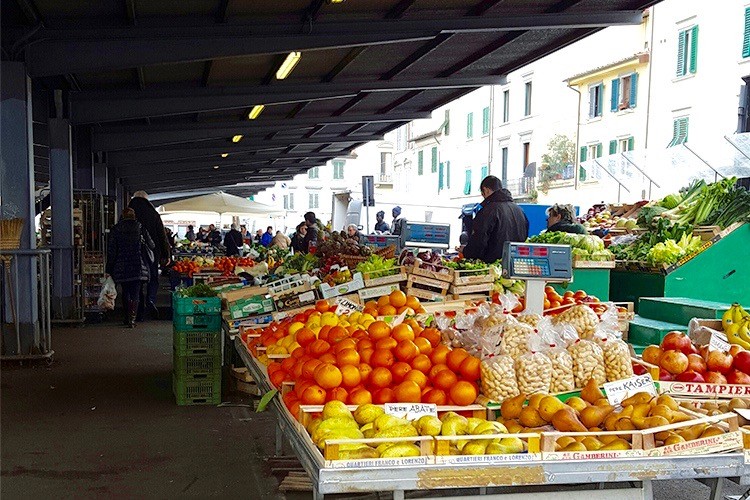
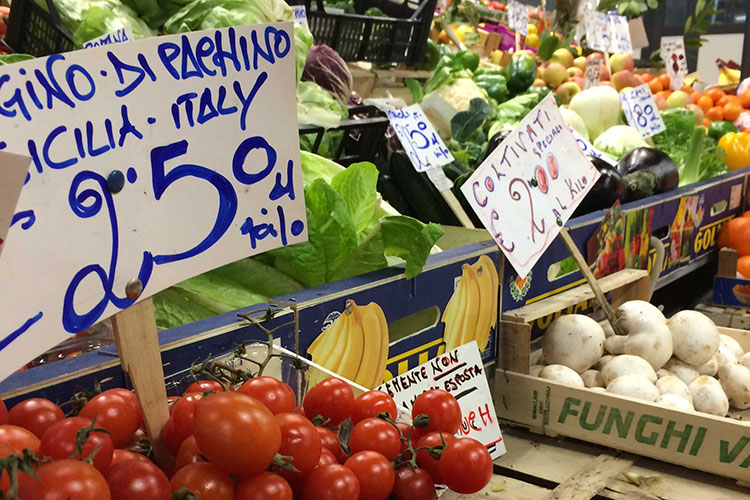
In Florence, venturing into the market isn’t simply about buying food, but it’s also about being part of an authentic experience. You’ll be surrounded by Italian speakers, vibrant colors and something new on every corner to indulge your senses. Vendors can tell you the origin of the foods whether an item comes from the northern regions of Italy or right here in Tuscany. You’ll develop a deeper appreciation and closer connection to these Italian products. Markets are also a great place to observe local life and even practice the language.
You probably heard about the popular San Lorenzo Market before even stepping off the plane to Florence, but there are many more options to purchase groceries in the in the city center.
Sant’Ambrogio Designed by Giuseppe Mengoni and built in 1873, the Mercato di Sant’Ambrogio is home to a selection of fresh fruits, vegetables, meat and fish, breads, and pasta that may offer more advantageous prices than the San Lorenzo Market. The market is both indoors and outdoors, open every day 7am-2pm except on Sunday. It’s about 15 minutes away from the Duomo.
Santo Spirito Every third Sunday of the month, the square hosts an organic food market from 9am to 7pm. You can browse through various stalls of local food purveyors.
Fruit and vegetable grocers: Fruttivendolo Around the city you’ll find fruttivendoli or ortofrutta shops specialized in fruits and vegetables. Everyone has their favorite based on their neighborhood or shopping preferences, try asking professors or new acquaintances at which shops they like to buy their frutta e verdure (fruit and vegetables)!
How to Shop – An Essential Guide
Be sustainable and bring along a reusable grocery shopper bag.
Bring cash instead of relying on a credit card as most vendors only accept cash.
Don’t touch the fruits and vegetables without asking. Tell the vendor what you want. They’ll either give you it or hand you a plastic bag to pick it up before it’s weighed.
Don’t forget to keep an eye out for seasonal fruits and vegetables. Eating seasonally is key to Italian cuisine and the market is a great place to experiment with products that vary as the weather changes.
Know how much you want and how to say it. Although some vendors will know English, this won’t be the case in all situations. I would like… Vorrei…(i.e. I would like 2 apples. Vorrei due mele) Can you give me..? Mi da…? (i.e. Can you give me 2 apple? Mi da due mele?) One Uno Two Due Three Tre Four Quattro Five Cinque 1 pound= about a half a kilogram Mezzo chilo For cured meats, the etto, or 100 grams, is a common unit of measure.
If you don’t see something on the list that you want to purchase, look up the translation and write it down. Don’t worry if you’re having trouble saying something in Italian, or indicating the item that you wish to purchase.
Shopping at local markets is a great option for making dinner at home with friends, preparing fresh packed lunches to enjoy in between classes, or to have healthy snacks on hand such as perfectly ripe fruit. In addition to shopping locally, you can also check out the Apicius CiboChat blog for student reviews of local restaurants, bakeries, gelato shops, and much more.
Imagine dining on the top floor of a department store, overlooking a famous Piazza in one direction and a historic Church in the other. Imagine walking into class and technically analyzing a glass of wine. Imagine sitting around a kitchen table, with a home-cooked meal, made by you and your roommates. Now imagine all three of these combined, that picture is only a part of the food experience in Italy. Italy is not defined by endless pasta dishes and bottomless cappuccinos, but by the ingredients. The ingredients may play a small part in these dishes and drinks, but together they are a recipe for inexplicable taste .
Over the weekend I ventured out of Florence to meet my family in Sicily. After touring Mt. Etna, our tour guide recommended we try cannoli at a nearby pastry shop. I do not normally like cannoli. However, one bite out of my sister’s pistachio cannoli, and my dad was reaching back into his wallet. The quality of the ingredients here are incredibly high, the palate is continuously discovering new flavor dimensions.
My roommate had a vegetable vocabulary of broccoli before coming abroad. Now I like to cook, and when I do I always pair my fish or poultry with a vegetable. She has taken pride out of sending her mom a picture of each new vegetable she tries and they laugh because who would’ve thought something so raw and natural could taste so good. But paired with DOP extra virgin olive oil, almost anything tastes good. It will be a challenge when I go back home and have to invest more time in testing which brands taste the best.