Along the Lungomare in Livorno

Photo courtesy of FUA

By Steven Scaglione

Italy is famous for its food, but did you know that each region, and even more specifically, each city, has their own specialties? When in Italy make sure to try some of these typical dishes that you won’t be able to find back home. This week’s focus is on the Tuscan port town of Livorno.

On the second day of what was planned to be a nine-day bike tour, I finally reached Tuscany’s beautiful port city of Livorno. I had been riding for about four hours, with frayed nerves from sharing the road rather unevenly with trucks of various sizes. It felt nice to pop the kickstand and sit among the trees in Parco Pertini, one of Livorno’s few green spaces just outside the city center while I reflected on my simple priorities for today: find some food, then find the sea.

After checking into a bed-and-breakfast with some difficulty (this key is for the front door?), I was ready to explore the city. With my first priority in mind, I set out to find a 5&5 (cinque e cinque) sandwich: a popular Livornese street food specialty consisting of a savory chick pea flour “cake” topped with olive oil and black pepper then placed between flat schiaccia bread.

To find the best 5&5 around, I was directed by some Livornese locals to go to “da Gagarin,” a torteria near Livorno’s own Mercato Centrale. The building was confusingly nondescript, and I’m still not sure if it has a sign on its storefront or not. But the best advertising a restaurant can have is a line of customers leading down the block, and when I saw this, I knew I was in the right spot.

Edible treasures in tow, I set my sights on the sea, looking to watch the sunset as the waves crashed on the rocks. Two enormous cruise ships sat docked in the city’s port like man-made whales with waterslides and a few freighters sailed steadily on the horizon.

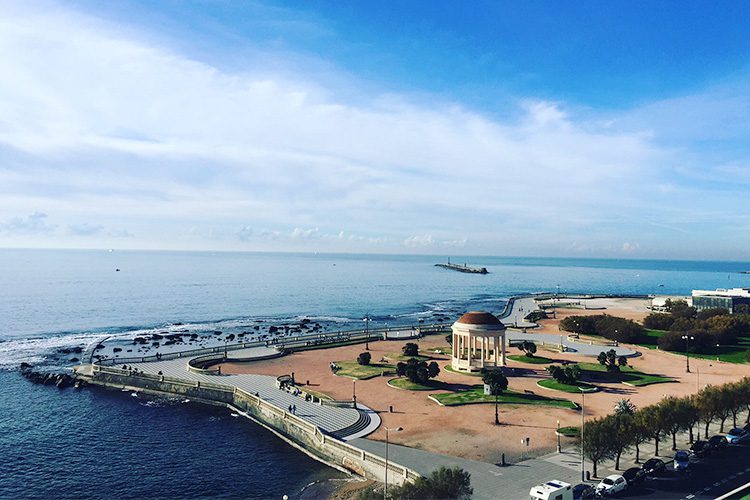
Passing behind the Aquarium of Livorno, the ground under my feet seemed to morph, the familiar gravel being replaced by a seaside checkerboard of black-and-white tiles – something straight out of “Alice in Wonderland.” What was happening? Were all those hours of biking getting to me? Maybe so, but my eyes weren’t failing; these tiles were just some of the thousands composing Livorno’s stunning lungomare, or boardwalk, near Terrazza Mascagni.

The sun was going down in a ball of orange flame, setting the sky ablaze in wispy waves of pink and purple. The freighters turned on their lights to blink their presence cautiously. I unwrapped my sandwich, eating it from the paper wrapping while sitting on the concrete railing of the lungomare and thought about my trip so far. Tomorrow I would start heading south, toward Grosseto and its vineyards along the way. But tonight, just for tonight, I would sit among these black-and-white tiles until dark, watching those blinking lights and listening to the sound of the waves.
See more of Florence at FUA’s FBInstagram, and Twitter.

Italian Food and the Art of Waiting

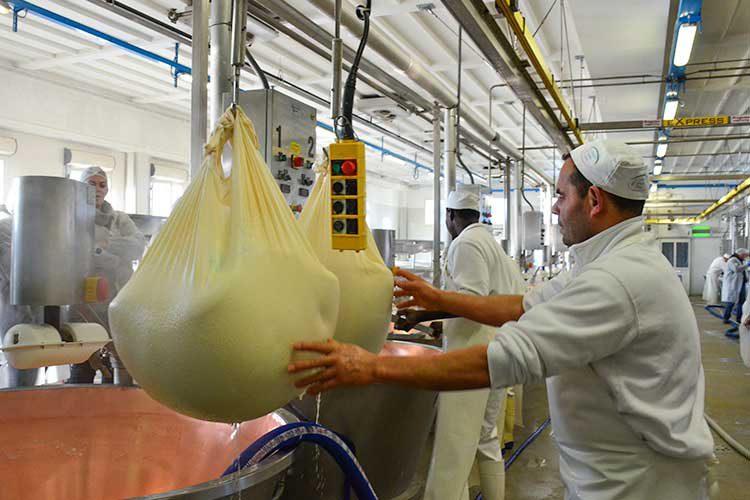
Parmigiano Reggiano cheese production

By Emily Entwistle

Italian culture includes many artisan traditions, crafts, and skills. The globalized world can make it hard to preserve such traditions, which are important to maintain and practice traditions.

As part of my time in Florence I have learned about many unique, artisanal food processes. I’ve even visited production facilities in Modena and Parma for a field learning activity. The simple but lengthy processes that these artisans use to produce cheese, balsamic vinegar, and prosciutto are impressive. The extra care and time it takes to organically produce these foods seems like a challenge, but they are worth it. The rules, regulations, and standards set for these producers could seem like a bureaucratic nightmare, but they are implemented to insure that producers stay true to the craft.

There are aged balsamic vinegars that are 20, 50, and even 100 years old. The D.O.P. balsamic vinegars take an extremely long time to age, and once every year they move the balsamic from one wooden barrel to another. Consider also that there is such a huge difference between Parmigiano Reggiano and parmesan. Real Parmigiano Reggiano is aged for a minimum of 12 months, and according to most, the best is 22 to 24 months old. Making artisanal products is a waiting game. For prosciutto, producers add salt and wait. For Parmigiano, they add salt and wait. To make balsamic vinegar, they put the grape juice in a barrel and wait. The key is patience, and when the item is finally ready, it is amazing to say the least. Producing these foods is even a year-round job. Parmigiano Reggiano producers for example work every single day of the year, even on holidays, to keep their process completely natural and authentic.

While a higher cost of these products may seem too high for some people, buying quality foods is extremely important. Not only are they better for you, but they support the special skills of smaller producers. And the food is worth the extra money for the taste alone. After directly visiting production facilities, I have gained a greater appreciation for the craft of food artisans.

See more of Florence at FUA’s FBInstagram, and Twitter.

Farm to Table Focus: Vivanda

Photo courtesy of FUA

By Anastasia Finney

A typical student living in Florence has likely already seen many of the famous sights, tasted their fair share of Italian food, and interacted with a good amount of locals. However, classes at FUA often include field learning sessions around that city in order to take students off of the usual pathways and into experiences they might have otherwise missed.

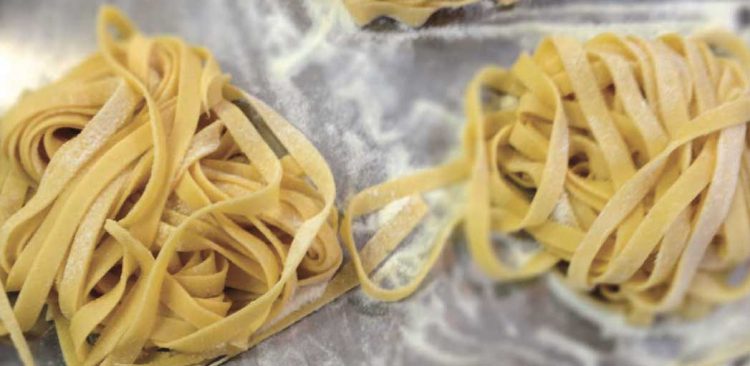
During the “An Introduction to Italian Food Traditions,” taught this past fall semester by Prof. Cecilia Ricci, students often incorporated real food experiences into their learning. Rather than simply receiving long lectures about the food and culture of Italy, the class conducted tastings, cooking projects, and visits to relevant food locations in the city. One such visit took place at a local restaurant in order to analyze fresh pasta. Before embarking to Vivanda, the students first learned about the differences between and characteristics of fresh and dry pasta through a lecture component in class.

Vivanda is a small and cozy restaurant located in Oltrarno, on the other side of the Arno River. It prides itself on organic ingredients, natural wines, fresh pasta production happening right in the restaurant, and options that can please meat-eaters, vegetarians, vegans, and gluten-free people alike. At the restaurant, the class was given three types of pasta to taste: gorgonzola gnocchi, traditional spaghetti, and ricotta and spinach ravioli. They were also served Arialdo wine with the meal.

Student Nick Tyndall shared that the tasting helped his understanding of Italian pasta traditions. “The restaurant had an authentic and inviting ambience, consistent with the best establishments I’ve visited in Florence,” said Tyndall. “We got to see how the staff made the fresh pasta and learned about the company’s food philosophy. The pasta was probably the best I’ve ever had.”

The class had time to enjoy and experience both the food and setting, while also listening to the owner talk about the restaurant. Professor Ricci also talked with the class during the visit about the food tasted and the way it paired with the wine. The students were encouraged to think critically about what they were consuming, in regard to production, presentation, and longstanding Italian traditions. Naturally, the group also got to enjoy the conviviality of delicious food too.

Experiencing a guided tasting in close contact with industry professionals gives a different perspective to daily activities that we all experience, such as trying new restaurants. “I wouldn’t have even known this restaurant existed without this class,” said Tyndall. “Now I definitely want to go back for a full meal!”

Vivanda
Via Santa Monaca 7 (between Pz. S. Spirito and Pz. del Carmine)
For further details visit the restaurant’s website.

See more of Florence at FUA’s FB, Instagram, and Twitter.

Florence in the Rain

Photo by the author
Photo by the author

By Jess Pitocco

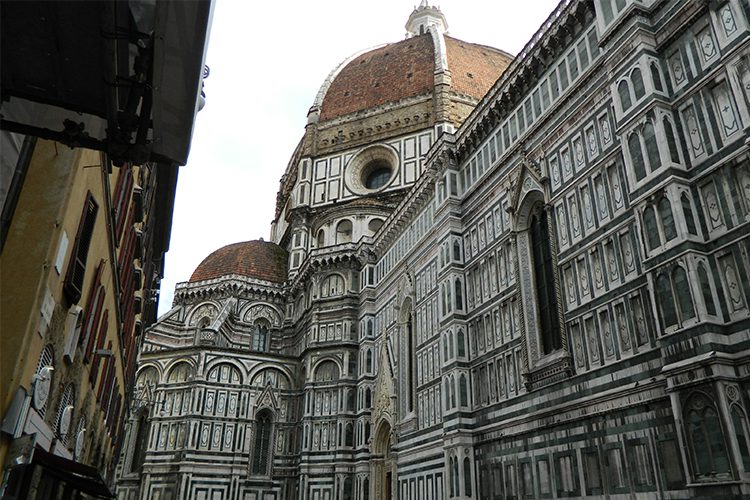
A typical day in Florence looks like this: the Duomo is never shrouded by clouds, the sun always makes the bronze ball on the top of the cupola shine like gold, the streets are filled with bustling people, and in each doorway, a new delicious smell entices you. Florence may seem like just another city of dreams; however, what does it look like when it’s raining?

The contrast can be quite stark, actually. The streets slowly get less crowded as the sky opens up. Ponchos and umbrellas are sold at every corner. The whole city feels like it is in a shadow as people try and find shelter from the storm. And just as the rain pours down and splashes you, the sun peeks through the clouds and you see blue sky. But only for a moment. The rest of the day is cloudy, on and off rain, making the Duomo as gray as the sky.

I find solace on these rare rainy days at small cafes, preferably on a side street. I usually throw on sneakers and try to get through the puddles without making my socks too wet. The rain boots I bought for this occasion have a hole in the sole and are useless when it gets stormy outside. I fast-walk, bringing my backpack and hope that the wifi works today.

Depending on how I feel, I get a cappuccino, coffee, hot chocolate, or tea. It makes my hands sweat and fogs my glasses, but it’s so comforting to me in my soggy clothes that I don’t care. I usually get a snack while I sit and do homework. Sometimes I read, or just relax. At home, where I’m from, rainy days are designated movie/cinema days. Here, I will happily settle for a cute cafe, some sweet treats, and a good book.

Florence, before arriving, had never seemed like a cold season city to me (a fellow FUAer shares how to spend a winter day alone, btw). However, a rainy day can sometimes bring a fall-like atmosphere to the city. People bundle up, briskly walk back and forth to escape the rain; it reminds me of the snowed-in streets of New England where people do the exact same with snowflakes. Either way, some of the gloomiest looking days in Florence make me feel most connected to the city. I found a good reading spot, my favorite coffee, and a comforting ambiance to a city that is most of the time lively and exciting. Rainy days here aren’t sad; they are calm, introspective and more enjoyable than you’d expect. What’s your favorite rainy-day spot?

See more of Florence at FUA’s FB, Instagram, and Twitter


Experiencing Eataly: Italy & the Global Market

Photo by Jess Pitocco

By Anastasia Finney

An FUA Marketing class goes inside the food retail business through a site visit at Eataly Florence.

Studying abroad at Florence University of the Arts is truly an experience like no other.  Oftentimes, this is due simply to the location of this institution in the heart of Florence, allowing effective and memorable learning outside the traditional classroom walls.

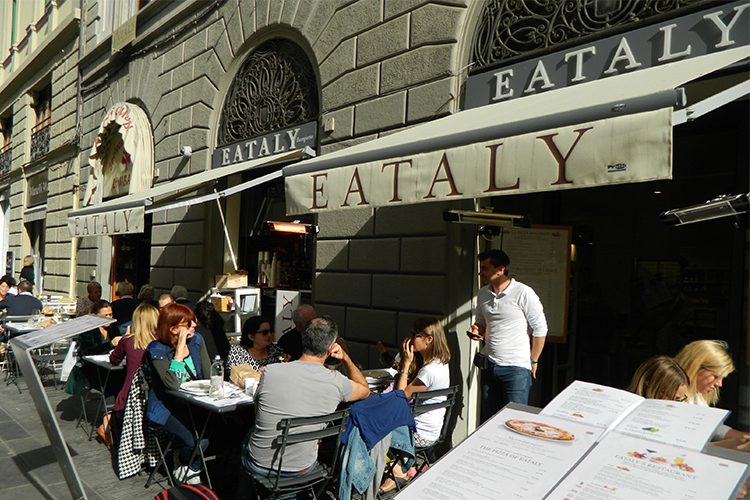
An “Introduction to Marketing” class taught by Professor Andrea Adams experienced a site visit this fall to local Eataly store.  Eataly is a food retailer, comprised of grocery markets and restaurants, that focuses on selling quality Italian goods to an international market.  According to the website, the Eataly mission is “to demonstrate that high-quality Italian food and drink are at hand.”  Eataly also highlights that they not only focus on Italian food itself, but also “living the Italian way” in terms of taking the time to enjoy this high-quality and local food.

The marketing class was able to go on a tour of the Eataly facilities, as well meet with a store manager to get an insider’s perspective.  “We got to learn about an Italian business through an international marketing perspective,” said student Nicholas Tyndall.  “I got a new view on how Italian businesses are vying to compete in an evolving global marketplace.”

Founded in 2007, Eataly has already grown exponentially and received international attention.  The most recent addition to the company is a second New York City store in downtown Manhattan, opened in August 2016, which has received excitement and positive reviews.  The students in this marketing class were able to see Eataly here in its founding country, as well as see how it has already influenced their home countries.

Besides in Italy and the United States, Eataly has locations in Brazil, Japan, South Korea, United Arab Emirates, Germany, and Turkey.  From the presentation, Tyndall said the most interesting thing he learned was “how far Eataly has already spread across the globe and how aggressive its expansion plans are for the future.”  The company plans to open additional stores across the United States, as well as expand into Canada, Mexico, France, Russia, China, Australia, and more.

The marketing class also received student cards from Eataly to experiment with the customer experience of benefits and discounts, ranging from bakery items to restaurant meals.

“I like that FUA really emphasizes this kind of experiential learning,” Tyndall concluded.  “It makes the material much more interesting and helps you to explore Florence itself.”

Interested in visiting Eataly?  The main store is on Via de’ Martelli, 22, right by the Duomo.  There is also a smaller Eataly marketplace within the Mercato Centrale – Via dell’Ariento, 50123 Firenze.

See more of Florence at FUA’s FB, Instagram, and Twitter.

A Local & Two Foreigners: Our Favorite Places in Florence

Photo by the authors

By Amber Wright, Deborah Galasso, Jess Pitocco

Our mission this week between the three of us, Amber Wright, Deborah Galasso, and Jess Pitocco, was to write down the places that best symbolize or represent Florence, Italy. It proved to be pretty difficult; there are thousands of unique bars, monuments, churches and museums to visit in the city. It could take years to explore all that Florence has to offer! Even so, from each of our own perspectives, domestic and abroad, we chose our favorite spots in Florence.

Florence from the perspective of a local, Deborah Galasso, is full of art, culture, and cappuccino. Her favorite parks, restaurants and artistics centers that, in her opinion, best describe the culture and feeling of Florence, Italy:

  1. Villa Bardini is a magical place where I go frequently. Today, it is an exhibition center that hosts temporary shows. Villa Bardini is a beautiful garden setting, and can be visited today separately with the same ticket that you would purchase at the Boboli Gardens.
  2. Opera di Firenze is another particular place I visit as a fan of art, theater, and Florence’s musical works. I like the unusual and modern structure, and the theater’s interior is spacious and gorgeously decorated.
  3. I always go to Anfiteatro Romano alle Cascine because I love art. This amphitheater located in the Cascine Park, and takes us back to past times. It’s a historic space for indoor and outdoor events in Florence, the best ones are featured in the summer.
  4. Giardino del Drago, near Via Bolognese and a part of the Giardiano dell’Orticultura, is a relaxing place that makes you admire the beauty of Florence from another point of view. The distinctive and artistic statue in the shape of a dragon is at the center, and gives the garden its name. It is a place I visited as a child and remember fondly to this day.
  5. Chiosco is a small bar/kiosk along the Arno near St. Niccolò. It’s great especially in the summer, because you can observe the river while having aperitivo. The bar is close to the Arno, is full of lights, and has a fun atmosphere.”

Florence from our perspective, Amber and Jess, two study abroad students, is a bit different. These five places represent Florence for us because they are landmarks to help us get home, great food and shopping, and places that make Florence feel like home since we’ve arrived.

  1. We pass Piazza Gaetano Salvemini every day on our way to class at FUA’s J School. Whether in the morning or at night, there are always a myriad of characters in the Piazza, from tourists to locals. The old men play chess near the bike racks everyday, and the dog owners are followed by their pooches without leashes. There are helpful places on the edges of the palazzo: an ATM, Tabacchi, and 99 cent store. It is a place where everyone gathers for errands and meals!
  2. Sant’Ambrogio Market is the most authentic market we have found in Florence, and conveniently one of us lives across the street from it. We love ordering a cappuccino at the bar inside, while listening to impromptu performances of the violinist and cellist in the center of the market. This indoor-outdoor market is cheaper than Central Market and offers everything from clothing, antiques, to any type of produce and food you could imagine – a gem for foodies!
  3. La Milkeria is a small boutique coffee shop on Borgo degli Albizi. Every so often when we’re missing home, we go in there and get a good ol’ bagel. It’s our little secret how often we go in there to get a taste of home!
  4. Walking east on that street, you’ll come to Piazza di San Pier Maggiore. This square used to be the home of the Church of San Pier Maggiore. While it no longer stands, the reconstructed arches of the church still outline the square. There is a fresh produce stand in front of the arches that is the perfect place to grab a piece of fruit on your way to class. We love stopping in this square to imagine what it used to look like!
  5. Lastly, our favorite part of Florence are our own streets. We walk home and every time we stroll down our roads, we stumble upon a new shop or new restaurant. We continue to discover a mix of small boutiques, local restaurants, and vintage shops in our own corner of Florence. As we get closer to our homes, street art and familiar places welcome us home – our favorite places in Florence.

See more of Florence and Italy at FUA’s FBInstagram, and Twitter.

Pane Sciapo: The Bread Conundrum

Photo by the author
Photo by the author

By Jess Pitocco

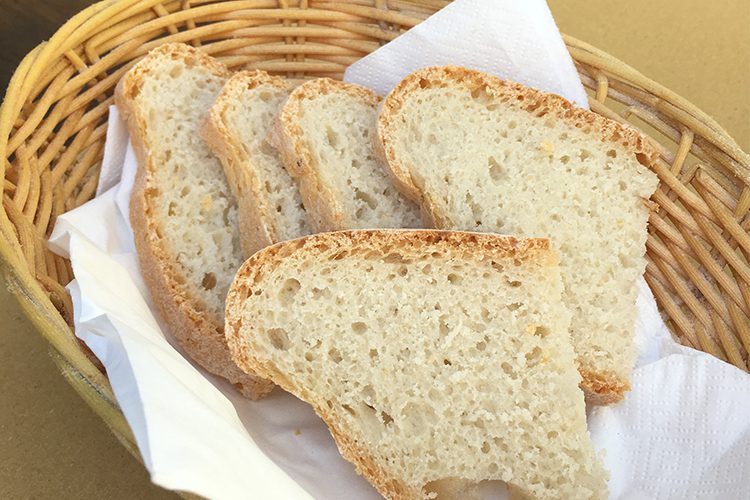
On my first day in Florence, I sat down at a restaurant in the shadow of the Duomo hungry from my flight. I had unpacked and was looking forward to food like a dog looks forward to playing fetch. So when I was brought the bread basket, I devoured each piece and noticed something strange. It was hearty but extremely bland and tasteless. I realized there was no salt! Salt, a seemingly essential ingredient, wasn’t in my first taste of Italian food whatsoever. I didn’t know at the time you should wait to mop up your meal with the bread, an Italian custom I had forgotten in my desperation to get food in my belly. So, after realizing this, I had to find out why the bread was saltless and sciapo (Italian for “bland”).

Chef Pietro Di Marco says the legends of saltless bread vary, and that if asked, every Florentine will give you a different story as to how it happened. A chef his whole life, teaching at Apicius since January, I trust his version of the salt-legend:

Throughout the centuries, the legends have been told. Nothing is on paper, but we all know about the bad blood between (the city of) Pisa and Florence. Pisa, long ago, was the only Tuscan city with access to the sea. Therefore, they were responsible for the distribution, packaging, and taxation of salt for Florence. Florence didn’t want to pay to bake their bread, plus the rivalry and battles between them didn’t help the situation. From there, the evolution of Florentine cuisine began.

The most common dishes involving Tuscan bread (pane toscano), and the most important dishes according to Chef Di Marco, are pappa al pomodoro and ribollita. Pappa al pomodoro is a bread-based tomato soup with herbs and spices, a rich and filling dish invented by Florentine farmers. Ribollita translated means “twice boiled,” and it is another soup reboiled with vegetables (like local white and black cabbage) and poured over bread. Chef Di Marco says it is easy to tell when dishes are made with old-school recipes or new-school recipes: the thickness of the soup, and the ingredients like olive oil, give it away. He says that every chef in Florence knows how to make these dishes, and that without them Florentine cuisine wouldn’t be Florentine cuisine.

Pane toscano can be made in about three hours time and takes a while to rise. This ensures its freshness for days, lasting longer than most bread you get at the supermarket. Its origin is from the province of Lucca, in the town of Altopascio, which still claims its fame to the crunchiest crust and the softest insides of all bread in Italy.

To learn about Tuscan bread, stop by Apicius, the hospitality department at FUA, and get a taste of it where it’s served daily at Ganzo, the Apicius restaurant. And while having a breakfast pastry or dessert at Fedora, the Apicius pastry shop, ask the baking experts there for tips and tidbits about it!

See more of Florence and Italy at FUA’s FB, Instagram, and Twitter.

Your Fall Guide to Fruits and Vegetables in Florence

Central Market
The Central Market, photographed by the author.

By Jess Pitocco

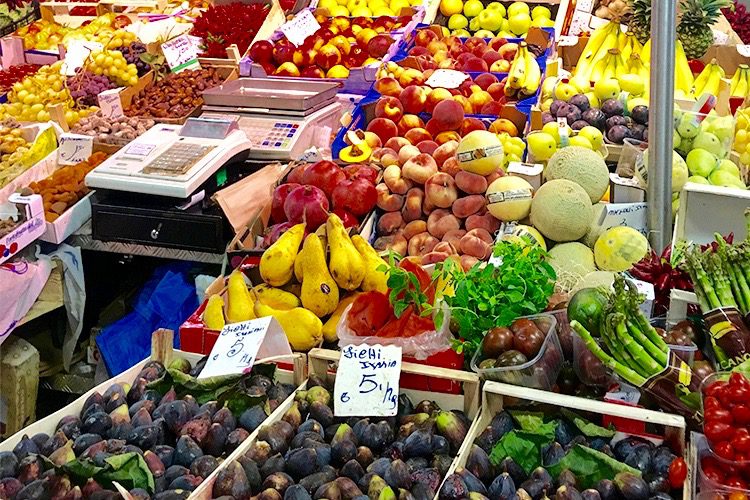
Italy isn’t all about the carbs; fruits and vegetables play a huge role in Italian cuisine. Here’s everything you need to know this fall about the best fruits and veggies in Florence. Check out the best markets, what produce is in-season, and vegetarian-friendly restaurants and recipes!

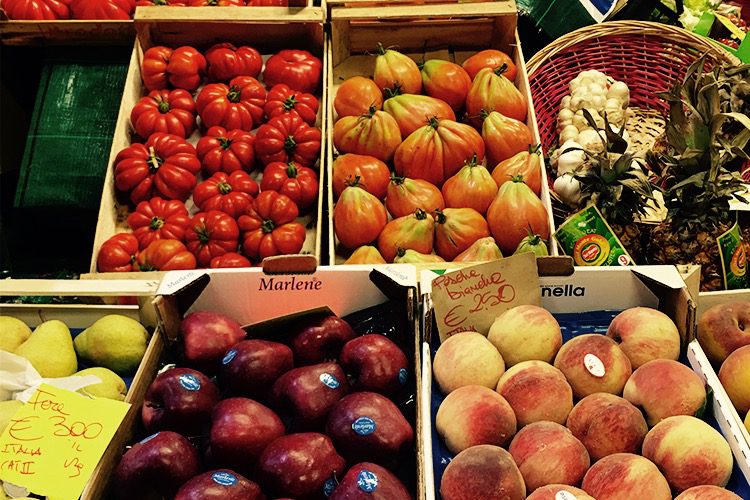
The high-carbohydrate diet many associate with Italian cuisine is a falsehood: Italians may eat carbs, but their lifestyle, portions, and eating habits are much healthier. That’s why when the New York Times reports on Italian eating habits, the focus is not on how to eat a low-carb diet while traveling, but rather why Italians are some of the healthiest people in the world. Fruits and vegetables, though filled with those ‘nasty’ carbs, are absolutely essential not only to a healthy diet, but also to Italian cuisine. That’s why including some apples, asparagus or zucchini in your basket while on your daily market trip is important to the Italian experience.

If you haven’t been to an Italian local market yet, give yourself an afternoon to go and explore one of the best parts of living in Florence. There are more than four big Florentine markets, not including the San Lorenzo Market, that you should visit to get the best, and freshest, produce (and even some clothing, music, plants and pastry too!)

However, before going to the market, know what fruits and vegetables are in season. Check out this chart to see that apples, blueberries, grapes, tomatoes, green beans, and cucumbers are just some of the fruits and vegetables that are at their best in September.

Want to visit some renowned vegetarian restaurants in Florence? Try Le Fate on Via S. Zanobi, for it’s fully vegan and vegetarian menu inspired by the signs of the zodiac and recommended by Travel + Leisure Magazine. Dolce Vegan and Il Vegetariano both have extensive vegetarian and vegan options as well, both a less than 10 minute walk from one another in the center of Florence. Still want more options? Silvana Vegan is an additional option, on Via dei Neri near the Galileo Museum.

If you don’t want to eat out, FUA Professor Cecilia Ricci, who often teaches food and culture courses, swears by this traditional Italian recipe for fruits and vegetables:

Cold Barley Salad, with Shrimp, Anchovy Fillets, and Cherry Tomatoes

Ingredients:

  • 300 g Pearl barley
  • 200 g Shelled shrimp
  • 15 g Extra-Virgin olive oil
  • 150 g Cherry tomatoes
  • 3-4 leaves of basil, cut in julienne
  • Black pepper
  • Salt
  • 8 Anchovies fillets, preserved under oil

Directions:

Boil the barley in a pot with 1.5lt of water with salt. Once the barley is cooked, strain it and place it to cool down in a bowl. In the meantime, wash and dice the cherry tomatoes. In a casserole pan add the extra-virgin olive oil, heat it at medium temperature, and let the anchovies fillet to melt. Once the anchovies are ready add the shrimp and sauté them in the oil for 2-3 minutes. Add the barley in the casserole, stir and mix all the ingredients together for 5 more minutes. Then, remove all the ingredients from the pan and place them in a bowl, add the diced cherry tomatoes, basil, pepper, salt, and mix. Refrigerate for at least 30-45 minutes before to serve. And enjoy!

After buying your fruits and vegetables, make sure you pay attention to how long they keep. Basically, how long the fruits veggies last is based on where they are from. If they are fresh from the market, your fruits and vegetables can last 3-4 days without rotting or refrigeration. If they are from the supermarket, the produce can go bad within a day or two because it has been refrigerated and prevented from becoming ripe. That way, as soon as they leave the supermarket your fruits and veggies can become ripe faster and ultimately rot faster. Buying fresh produce from the local market is a better way to ensure it will last (and it will taste better too!)

Click here for a guide to eating out in Florence, provided by FUA’s hospitality department.

See more of Florence and Italy at FUA’s FB, Instagram, and Twitter.

Venice in a Day?

Photo by the author
Photo by the author

By Monica Humphries

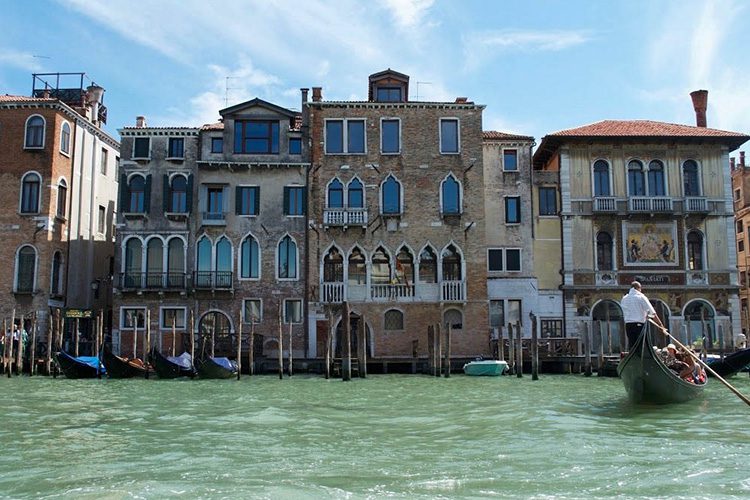
Venice is full of little nooks and crannies but often the beautiful, wider bodies of water are overlooked. This shot was taken from a gondola. The contrasting blues from the water and sky along with the architecture of the buildings and windows captured my vision of Venice. To fully understand Venice you have to be on the water, which is why it was important for me to have a photo from a lower perspective and angled up towards the sky and windows.

Travel Tips:

Known for its gondolas and seafood, Venice feels like a must-do if you’re spending your summer in Florence. But when I opened my map and my budget, I had to ask: one day or two?

Venice is a small city made up of over 100 islands, and although it may seem small from the scope of a map, there’s a lot to do in Venice. Highlights of Venice include watching glass blowing in Murano Island, taking a gondola ride, viewing the contemporary art museums and sipping a Bellini next to the water.

With Venice being so small, one of its challenges is finding a place to stay. If you’re on a student budget there aren’t a lot of options within the city. However, just outside the city there a quite a few places with differing budgets. You can find everything from a typical hostel to a campsite. So pick a place and factor the added time a train ride to the city will take.

Also consider price. Venice is known for luxury. Being a college student, it might be a little more difficult to spend €80 on a boat ride or €30 on dinner.  It’s important to consider food and activities when making a decision on how long to stay.

Finally, know what you want to do. Are you planning on getting there at the crack of dawn and staying to see the sunset? Will you venture to any of the farther islands? Are touring the churches important to you? In order to know what you want to do, you have to know a little about the city. Venice is known Biennale, a six-month art festival. Each year it switches between art and architecture (this year is architecture), and it’s held from May to November. But even if you don’t go during festival months, there’s always an open contemporary museum to discover. Another favorite form of art for Venetians is food. Being on the water, indulging in seafood is a must. Outside of seafood, Venice has wonderful Tiramisu, pasta and drinks to enjoy. Finally, Venice is home to Saint Mark’s Basilica. This and a huge piazza are in the heart of the city. You could spend weeks in Venice and still have a full list to do, so if you’re planning on going just for a day, do your research and make a list of the key things you want to get done.

In a city so beautiful you can spend as much or as little time there. I spent only the afternoon, but I felt rushed. I wish my trip could’ve been more relaxed and the commute not as long, however I was satisfied. Just know that you might not accomplish everything in a single day, but you’ll get a wonderful taste of the city.

See more of Florence and Italy at FUA’s FBInstagram, and Twitter.

Exploring Culture Through Italian Cuisine

Photo by the author
Photo by the author

By Morgan O’Reilly

With clamped eyelids and the flicker of a burning candle, I contemplated my wish. As my life’s dream reemerged back into my conscious thought, my eyes flicked open, I peeked at the wax “10” in front of me, and I blew. Underneath, in place of a conventional birthday cake, lay a cannoli; I looked up from the red checkerboard table and saw my cheering family under the light of the Macaroni Grill sign. My wish was to travel;  little did I know that I would be enjoying an authentic Italian meal in Florence only 10 years later.

Growing up, I had always loved food. I sat at dinner tables scooping mussels from shells and openly trying international cuisine. To this day, I actively search for new flavor combinations and cooking techniques. Despite my culinary openness,  my perception of Italian cooking has changed dramatically since my arrival in Florence. I grew up with the mac and cheese, breadsticks, and spaghetti of Italian restaurant chains back home; and despite trying my hand in Italian home cooking, I really didn’t know what the “real thing” entailed. For me, I was coming to the land of bread, cheese, and pasta; and I was 100% fine with that.

Upon arrival, I aimlessly wandered Florence’s winding streets as I gripped my list of recommended panino and aperitivo places. After tasting some of Italy’s fresh pasta and coming to the harsh realization that meatballs are not an actual thing here, I realized how skewed my perception on this lifestyle was. My day to day life in town surprisingly never included the bread or pasta-induced food comas of the “Italian” food that I was accustomed to, and instead, I felt physically and mentally satisfied with what I was putting into my body. In fact, although the study abroad 15 has proved an irritating reality, I have never felt as good about the food I was consuming.  

After a few weeks, once the initial excitement died down, I started to eat in more. Whether at the farmer’s market or grocery store, I slowly began appreciating the seasonality and freshness of what I was consuming. Although eating in does not seem like the optimal way to seize the day while abroad, learning to utilize fresh, regional ingredients in simple recipes gave me a deeper appreciation for the food I was eating and for Italian culture. My roommates and I have made everything from roasted vegetables to pork chops to shrimp with lemon asparagus; and the simple act of learning to work with seasonal, simple ingredients has shown me more about Italian culture than I would have ever expected.

Looking back, my experience with food while abroad and my deeper appreciation for what I eat has mirrored my sense of appreciation for all aspects of culture. Like expanding my knowledge on the slow food movement, biodynamic farming, and the third wave coffee movement through conversations with locals, I have learned to step out of my comfort zone and challenge my perception of Italy, travelling, and on life in general. This experience has opened my eyes to finding value and culture in the tiniest of details; whether it be a tablespoon of olive oil, my daily walk past the Santa Croce, or a genuine conversation with friends from around the world. Above all else, studying abroad has taught me to openly seek out culture in every aspect of living, and it is something I cannot wait to apply beyond the walls of the city I now call my home.

See more of Florence and Italy at FUA’s FB, Instagram, and Twitter.