Il Palio: More than a Horse Race

Photo by the author
Photo by the author

By Monica Humphries

For us, it was a fun race, but for others, it was an event they had waited for all year. From the moment we stepped off the bus in Siena, we learned what the Il Palio means to the city.

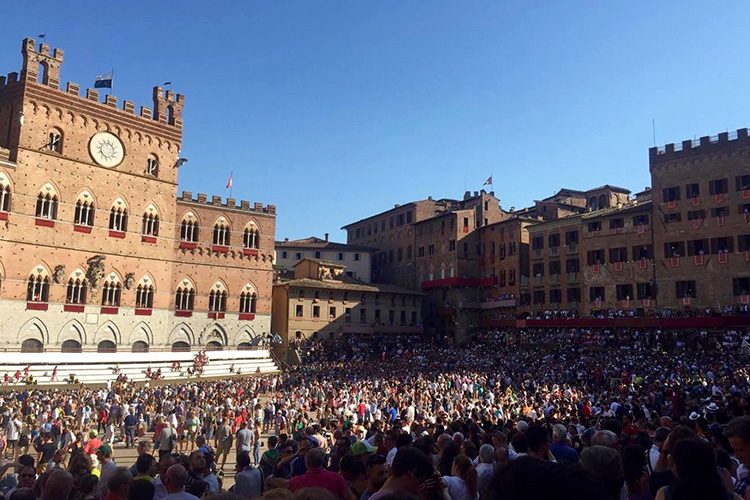
Il Palio is horse race held twice a year in the heart of Siena. Piazza del Campo, the city’s main piazza, transforms into a race track. Dirt is packed down on the cobblestone, and fences are built to create the course. The city is divided into 17 districts (contrade) but only ten districts will compete in the race. The jockeys ride bareback and wear their district’s colors. Throughout the day parades and celebrations take place to prepare for the race. The horses are blessed, the bets are made and everyone gathers to the center for the race to start.

The race isn’t about coming in first but about beating your rival. Everywhere you look you see people with colorful flags tied around their necks, cheering for their district. To truly embrace the race, I picked the Tartuca district to cheer for and wore a yellow and blue flag embellished with a turtle, the district’s symbol.

As thousands trickled into the city center, anticipation slowly built up. The race was three simple laps around the track. Months have gone by in anticipation for those three laps.

Above the crowd I could see the brightly colored jockeys ready to race. Decked in black and white, yellow and red, or blue and white with distinguishing patterns, they all sat on their horses pacing for the start. The rules of the Il Palio involve a complicated tradition for starting the race, so it could start at any moment.

Twenty minutes passed, a shotgun was fire and the race had begun. We could feel a gust of air as the horses passed us. We felt the dirt kicked up from the horses’ hooves. We watched as the horses circled the track and competed to finish first.

When the first horse from the Lupa contrada crossed the finish line, the entire town erupted into emotion. The district hadn’t won a Palio since 1989 so emotions ran high. Immediately people were jumping over fences to congratulate the winning jockey and hug their friends and families. Tears of joy ran down some faces, while others cried with disappointment. Tensions broke out, people hugged and the race was over. People paraded down streets in celebration, while our group stood in amazement. The race itself was incredible, but the aftermath left us in shock. This wasn’t a silly race, but a long-lasting tradition built up over centuries. People took pride in their district and celebrated their culture.

The race itself was short but the day was long. Seeing firsthand a tradition that dates back to the 14th century isn’t an opportunity I come across often. On one hand, it was amazing getting to be a part of the tradition. But on the other, I still felt like an outsider. I had no investments in the race, but felt the heart rise as the horses cross the finish line. At the start of the day, the Il Palio felt so foreign to me, but by the end, I had grasped a better understanding of a city and its culture.

See more of Florence and Italy at FUA’s FBInstagram, and Twitter.

Venice in a Day?

Photo by the author
Photo by the author

By Monica Humphries

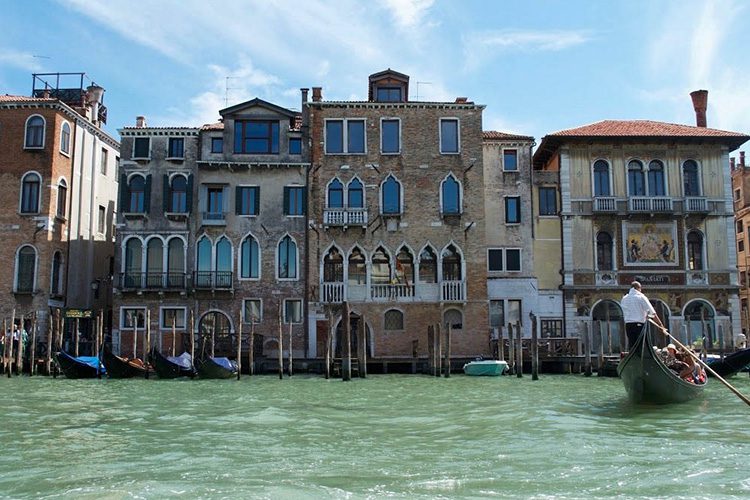
Venice is full of little nooks and crannies but often the beautiful, wider bodies of water are overlooked. This shot was taken from a gondola. The contrasting blues from the water and sky along with the architecture of the buildings and windows captured my vision of Venice. To fully understand Venice you have to be on the water, which is why it was important for me to have a photo from a lower perspective and angled up towards the sky and windows.

Travel Tips:

Known for its gondolas and seafood, Venice feels like a must-do if you’re spending your summer in Florence. But when I opened my map and my budget, I had to ask: one day or two?

Venice is a small city made up of over 100 islands, and although it may seem small from the scope of a map, there’s a lot to do in Venice. Highlights of Venice include watching glass blowing in Murano Island, taking a gondola ride, viewing the contemporary art museums and sipping a Bellini next to the water.

With Venice being so small, one of its challenges is finding a place to stay. If you’re on a student budget there aren’t a lot of options within the city. However, just outside the city there a quite a few places with differing budgets. You can find everything from a typical hostel to a campsite. So pick a place and factor the added time a train ride to the city will take.

Also consider price. Venice is known for luxury. Being a college student, it might be a little more difficult to spend €80 on a boat ride or €30 on dinner.  It’s important to consider food and activities when making a decision on how long to stay.

Finally, know what you want to do. Are you planning on getting there at the crack of dawn and staying to see the sunset? Will you venture to any of the farther islands? Are touring the churches important to you? In order to know what you want to do, you have to know a little about the city. Venice is known Biennale, a six-month art festival. Each year it switches between art and architecture (this year is architecture), and it’s held from May to November. But even if you don’t go during festival months, there’s always an open contemporary museum to discover. Another favorite form of art for Venetians is food. Being on the water, indulging in seafood is a must. Outside of seafood, Venice has wonderful Tiramisu, pasta and drinks to enjoy. Finally, Venice is home to Saint Mark’s Basilica. This and a huge piazza are in the heart of the city. You could spend weeks in Venice and still have a full list to do, so if you’re planning on going just for a day, do your research and make a list of the key things you want to get done.

In a city so beautiful you can spend as much or as little time there. I spent only the afternoon, but I felt rushed. I wish my trip could’ve been more relaxed and the commute not as long, however I was satisfied. Just know that you might not accomplish everything in a single day, but you’ll get a wonderful taste of the city.

See more of Florence and Italy at FUA’s FBInstagram, and Twitter.

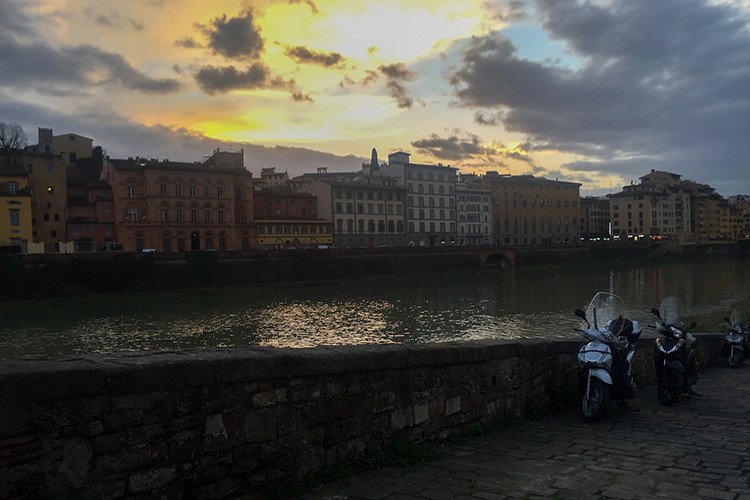
My Transition Place: Arno River & Carraia Bridge

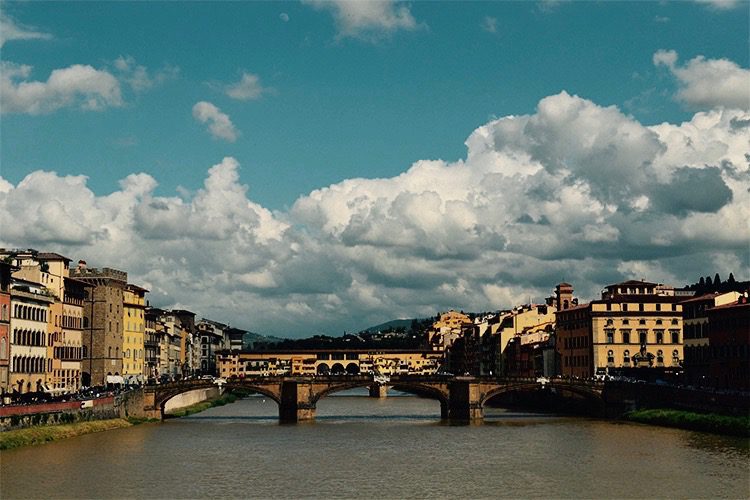
Photo of Ponte alla Carraia by the author

By Monica Humphries

When you step out of your apartment for the very first time, it’s a whirlwind of emotions. You feel enthralled to be in a new place. You feel excited for what the semester has to offer. You feel anxious, confused and eager.

I felt nervous.

Yes there were positive emotions, but buried not-so-deep were my nerves. I was in a foreign country, and the car ride to my apartment left me feeling like I was on the other side of the world.

I can vividly remember our driver taking all 7 students to their apartments. The first one was dropped off right past the Duomo, the second two near the San Lorenzo, a few more in the city center. Then there was me. I could remember crossing a river, going up and down the one-way streets, and finally pulling into a narrow, bike-filled lane right up to apartment number nine. After what must have been a half hour, I was home, but I wasn’t happy.

Although I was just on the other side of the river, I felt like there was a wall dividing me from all of my classmates. I stepped out onto the cobblestone street and immediately was lost. I stumbled my way through the streets until I found the Arno.

Since that first afternoon, the Arno, more specifically the Ponte alla Carraia, which is the bridge that leads to my street, has become my favorite place in Florence.

No matter where I was coming from – class, dinner or a cappuccino, all I had to do was find the river, and I knew exactly where I was. Since moving to Florence, the river is not only beautiful, but it has also become my safety net. A safety net that encourages me to explore and challenge my surroundings.

Curious about the Arno’s history and bridges, I talked to Giulio Vinci, a professor at FUA.

Vinci started at the very beginning. Florence was founded and controlled by the Romans. Romans generally build their cities in the valleys, so Florence followed this tradition and was built in a valley close to the river.

The city was structured in a rectangular shape with two central roads crossing through the city. The city was close to the water, but Florence wasn’t directly on the water, so there wasn’t travel between the sides of the river. Florence began expanding, and the Ponte Vecchio was the first bridge across the Arno. The first occurrence of the bridge was in a painting in 996.

The Ponte alla Carraia bridge is the second oldest bridge in Florence and known for its history of collapsing. Built in 1218 by architect Lapo, it collapsed for the first time in 1274 because of a flood. The bridge was originally built in wood, but it was rebuilt in stone. However, the stone was strong enough to support a crowd and collapsed again. In 1333 another flood struck Florence, and the bridge was once again destroyed. The most recent collapse was during WWII when it was bombed to prevent passage of allied troops from the Nazis in retreat.

Vinci said that tourism has exponentially grown in the past 20 years, and now Florence is a key location for visitors. He made a point to express that the river and its bridges always attract tourists.  Florence is known for its concentration of art, and the bridges are a part of that art. But not everyone, unfortunately, is interested in the art and history behind the bridges, and many prefer to simply use the bridges are picture spots. We’ve lost the meaning of tourism, and traveling today is vastly different from the young aristocrats of the 18th century who often went on year-long Grand Tour to discover the culture of European cities.

Thinking about what Vinci shared helped me appreciate my time here. Sometimes three months seems like forever, but with a city that has enough history for a lifetime, I’m thankful that I will have a chance to immerse myself and retain the details I learn about this city.

Walking home from the interview gave me a chance to reflect on my time here. Although it’s only been a month, I can now continue to expand my safety net to the entire city of Florence.

The bridge is a place of comfort but it’s now a place of curiosity. Each time I walk across the bridge I notice a new detail. I question the statue at the entrance, the crack along the pavement and the windows in the Ponte Vecchio. The comfort I have now encourages me to explore. It’s important that every student finds their Ponte alla Carraia. Whether it’s the San Lorenzo church or carousel in Piazza della Repubblica, we need a monument or location where we feel at home. But part of home is knowing its history and why it’s there. Yes, the pictures we take are important, but the history behind those photographs enrich our experience so much more. Take a second, learn about the area you call home, because you might end up loving the city just a little bit more.

I find comfort in the bridge because that’s where I find confidence. Confidence with directions, confidence in knowing there’s the best gelato place right around the corner, confidence that there will be a beautiful sunrise in the morning and an even prettier sunset at night. Learn about the landmark you call home, and you might end up finding a little confidence in a city full of new experiences.

See more of Florence and Italy at FUA’s FB, Instagram, and Twitter.
Uffizi: Innocent Bystanders

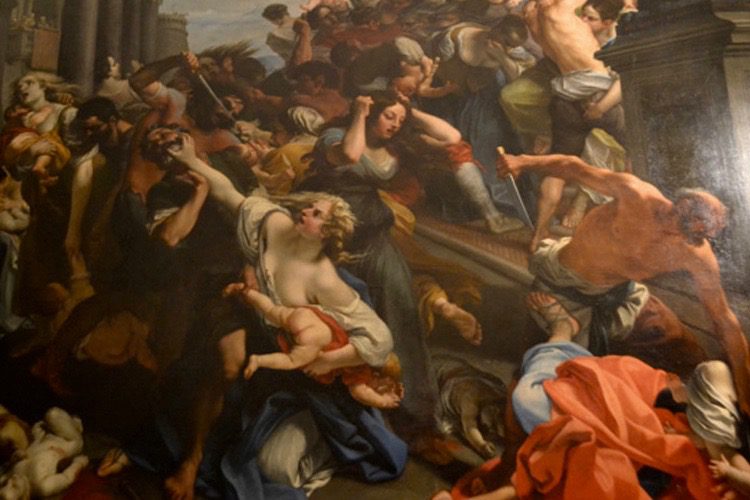
Marco Benefial’s “Massacre of the Innocents,” Uffizi Gallery. Photo by the author.

By Kaly Nasiff

The Uffizi is known for its popular paintings, but the museum is also filled with hidden treasures. This is my reaction to a lesser known painting called “Massacre of the Innocents” by Marco Benefial.

Not much is known about Marco Benefial’s “Massacre of the Innocents,” except that it was painted in the 1700s. When I saw it at the Uffizi Gallery I knew nothing about it. I had spent the afternoon being overwhelmed by the artworks that line nearly every inch of the Uffizi. The bright colors of this painting initially caught my attention, but upon further inspection, I realized that fiery women were fighting off savage men in order to save their children. I immediately fell in love with the determined faces of these women. They did not care that the men were larger and stronger than they were; they fought back with a passion that I found invigorating.

Looking around me, no one seemed to be as captivated with the painting as I was. I knew it was not one of the more famous paintings in the gallery, but I did not understand how anyone could ignore these women. Sure, they did not look like “Birth of Venus,” but to me they were more interesting. I was struck by the huge difference when I saw Sandro Botticelli’s Venus just minutes later. There was a crowd of people around the painting trying to get pictures of and with Venus. While it is a beautiful and famous painting, nothing about “Birth of Venus” made me feel what “Massacre of the Innocents” did. Venus is stunning but almost standoffish, and seems to be there to have others look at her. Meanwhile the women in Benefial’s painting were not placed in the painting for anyone’s benefit. They were meant to be appreciated for their determination rather than their beauty. I can only imagine and guess what Benefial was thinking when he painted these women, but I hope that he was trying to represent them as I saw them.

See more of Florence and Italy at FUA’s FB, Instagram, and Twitter.


Art: Spiritual Guards in Florence

Photo by Monica Humphries

By Camila Ibarra Gallego

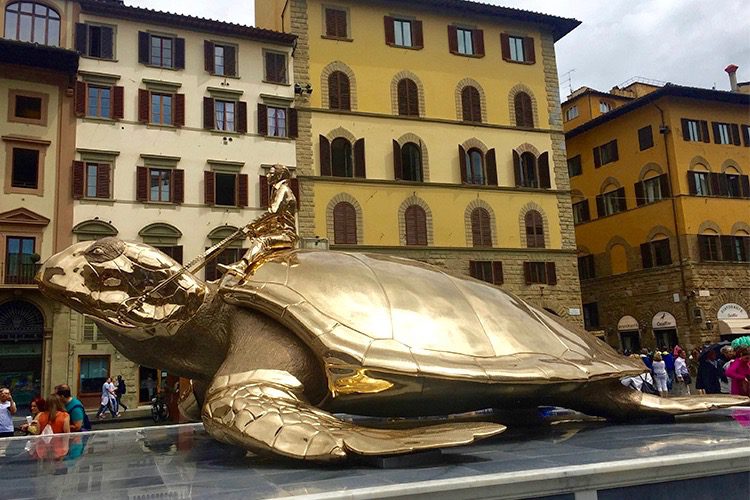
On a sunny day in Firenze it’s hard to miss the bright, bronze sculptures sitting in Piazza della Signoria. But what might be even more shocking is how modern they look contrasted to the sculptures from centuries ago. Pieces from Jan Fabre’s exhibition can be found all over Florence. Find out why they’re here.

Many of you have probably been wondering what the heck a giant sea turtle is doing in the middle of Piazza della Signoria. That’s exactly what passed through my mind the morning I took my usual route to class and saw this big, shiny sculpture I had never seen before. So I decided to do some research to find out what this whole thing was about and share it with everyone who may be as flabbergasted as I was.

Jan Fabre (born in 1958) is a Belgian artist, playwright, stage director, choreographer, and designer. He is having an art exhibition here in Florence called Spiritual Guards. The exhibition is sponsored by the City of Florence, and it is be located between Forte Belvedere, Palazzo Vecchio, and Piazza della Signoria. It is said to be one of the most complex and complicated exhibitions in public spaces created by Jan Fabre. The exhibition will also host hundreds of works done by Fabre between 1978 to 2016 such as bronze sculptures, like the man riding the turtle, installations of beetle shells, wax sculptures, and documentary films of his performances.

The sculpture standing in the middle of the piazza is called Searching for Utopia. On top of the turtle sits a man holding on to reins. This man is the representation of the equestrian statue that was given to Grand Duke Cosimo I, a member of the Medici family and the Grand Duke of Tuscany, which was created by Giambologna.

As I stood there looking at the big turtle, I thought about how the artist paid attention to every detail on the turtle’s shell and on the man riding it. This sculpture is a cross between classical art and contemporary art.

I watched as people gathered around and took selfies with their selfie sticks. Many who just arrived in the city probably don’t realize that this statue has not been there for a while, and think that it is a piece of art that is part of the piazza. I see how they just stand in awe and admire the shiny gold piece of bronze, which looks a lot like Crush, the turtle from Finding Nemo. Children run around the installation and inspect it from every angle, probably wishing they could slide down the turtle’s shell or act as the captain of the ship.

Now every time you walk pass by this shiny, big sculpture and find a person who is just as confused as you were, you will be able to explain to some extent what it is about. If you are interested, Palazzo Vecchio is hosting a series of sculptures interacting with the frescoes and artifacts housed in some rooms to the public. Then check out the entire Fabre exhibition at Fort Belvedere. Fabre will be displayed in Florence until Oct 2. Spiritual Guards is a great art exhibition for those who love imagination and beauty. 

See more of Florence and Italy at FUA’s FB, Instagram, and Twitter.
Lorenzo the Gondolier

Photo by GaborfromHungary via Morguefile.com

By Mikayla Rendall

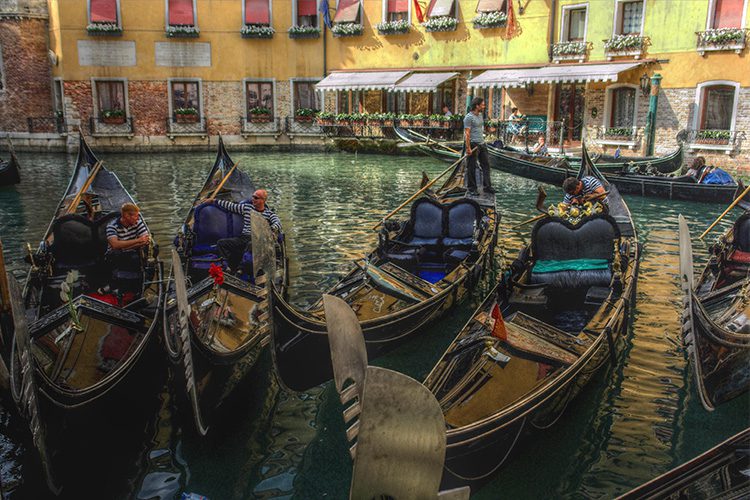
Certain things and places become the cultural icons of a city. It’s enough to mention the David, Duomo, and Boboli Gardens for most travelers to immediately associate them to Florence; they’ve become by now not only icons of culture but also mass tourism. Venice, another highly visited Italian city, immediately conjures up Piazza San Marco, canals, gondolas, and lavish Carnevale celebrations. FUA student Mikayla Rendall took tourism a step further by not only going on a gondola ride but interviewing the gondoliere for his perspective as a Venetian local.

When did you become a gondolier?
I was born and raised in Venice and started giving gondola rides about eight years ago. I‘m now living on the other side of Venice because of the high expenses of living on the canal.

What made you decide to become a gondolier?
I love being on the water. Venice is beautiful and after living here for 33 years I knew this was something I want to do for a long time.

How did you learn this craft?
I learned as young man since my father had his own gondola but I got my own license to become a professional gondolier later on.

What year did the gondolas originate?
They are extremely old and go back to the 11th century, but there have been many changes over time time to make them stronger and larger.

What are the gondolas made of?
Gondolas are a flat-bottomed boat made of many pieces and eight different types of wood. The oar of the gondola is made from beech and are made for the narrow canals in Venice and quick maneuvers.

How deep are the canals?
The grand canal is around 18-20 feet and most other canals are about 8 feet. When high tide comes sometimes we cannot provide rides because the water is too high and the boats don’t fit under the bridges. The water levels keep getting higher so now no one can live on the first floor of the apartments that are on the canal.

What does this mean for the future?
Gondola rides may not be available on city canals if water levels keep rising. We will not fit under the bridges because they are not high enough and the boat is tall in the front and back.

What is the busiest season for gondola rides?
Carnival in February is a busy time for tourists and in the spring. Gondola rides are requested solely by tourists, most locals don’t get on.

How often do you work and for how long?
During busy days I will work up to six times every week. I usually work ten-hour days. On the slower months, I work less so my schedule is always changing.

What is your favorite part about being a gondolier?
Getting to know people from all around the world and showing them the beauty of Venice.

See more of Florence and Italy at FUA’s FB, Instagram, and Twitter.
 

Tuscan Day Trips: Going West

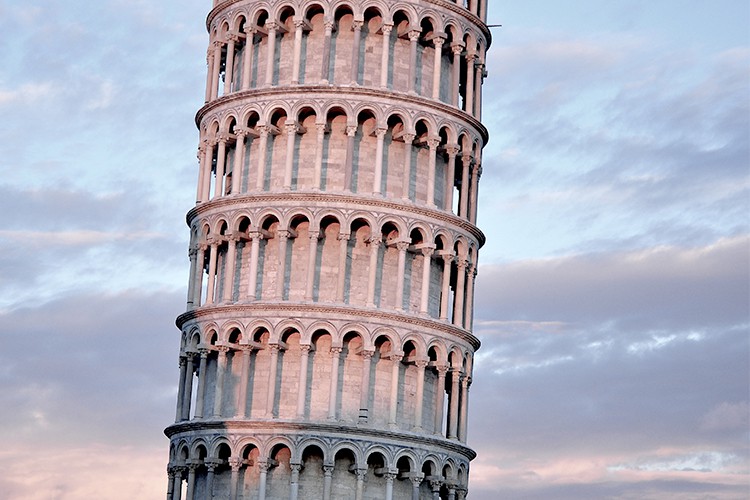
leaning tower of pisa
Photo by Davide Raguda via unsplash.com – Leaning Tower of Pisa

By Morgan O’Reilly

When studying abroad in as beautiful an area as Tuscany, the opportunities for rich history and scenic views lie just outside Florence’s city walls. Students can find three unique towns within the area between Florence and the coast.

Pisa

Students from Florence can easily catch a 50 minute train ride into this small city for a full or half day or history, art, and great food. Marta Russo, an FUA faculty member who lived in Pisa for 19 years, has kindly provided a local perspective on this famous little town. Aside from the infamous Leaning Tower, some other beautiful sites include the Piazza dei Cavalieri and Piazza Martiri della Libertà. She recommends a nice stroll along the Lungarni (sidewalks along the river), where one can see the Chiesa della Spina, originally built on the river bank of the Arno and later rebuilt on a higher level. Two other churches visitors can visit are Chiesa Santa Caterina and Chiesa di San Francesco.

All of the good restaurants in Pisa are located near the market squares Piazza delle Vettovaglie and Piazza Sant’Omobono, according to Russo. These include La Mescita and Il Campano, among others. For a good panini, Il Crudo in Piazza della Berlina (aka Piazza Cairoli) of Il Montino in Via Monte; where the local specialty is focaccia con la cecina, a traditional dish made with chickpea flour, water, and olive oil, which is baked and stuffed into a flour focaccia bread.

For those interested in art, Russo recommends checking out the current exhibition at Palazzo Blue, the venue exhibiting the major art shows of great painters of the past (like Picasso or Modigliani.) One thing visitors don’t know is that there is a Keith Haring mural painting on the side of the Chiesa di Sant’Antonio, so there is even some modern art in this culturally rich city.

Lucca

A small town to the west of Florence, Lucca radiates rich history, art, scenic views, beautiful churches, and plenty of greenery. High walls surround the city, eluding military history dating back to 200 A.C, now provide visitors with a beautiful walking path, picnic spots, and playgrounds for a relaxed afternoon under the shade of their chestnut trees.

The beautiful churches of Lucca include the San Michele in Foro Church, the San Martino Cathedral, and the Church and Baptistery of San Giovanni and Reparata. All originally built before the 14th century, these Romanesque monuments are not to be missed.

The Piazza dell’ Anfiteatro, a former Roman amphitheatre, now holds restaurants, cafe’s, and shops along its oval-shaped frame. In July, the piazza makes a perfect venue for open-air music performances.

To end a day of sightseeing and strolling around the city’s walls, visitors can climb the Guinigi Tower’s 130 steps for spectacular views of the historic city.

Livorno

An understated small port city on the western coast of Tuscany, Livorno holds great seafood, majestic panoramic views, a Venetian-style neighborhood, and a short train ride from Santa Maria Novella.

Piccola Venezia, or little Venice, is a fun pocket of Livorno crossed with small canals built during the 17th century using Venetian methods of reclaiming land from the sea. Whether via foot path or by boat, the canals provide picturesque scenes of the city with nice waterside cafes interspersed.

The Terrazza Mascagni is a popular spot in the city where guests can discover panoramic views of the beautiful city. Built in the 1920s, this dazzling terrace captivates its visitors with the seafront as well as the cityscape, perfect for sunset after a long day of exploration.

See more of Florence and Italy at FUA’s FB, Instagram, and Twitter.
Hello From the Other Side (of the Arno)

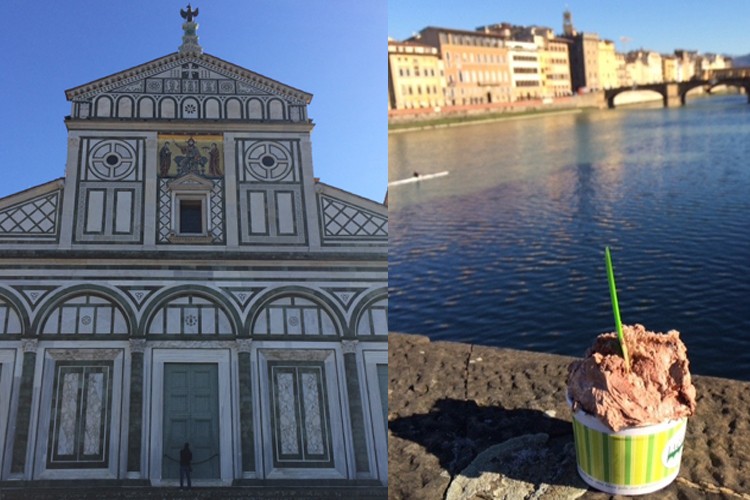
Visiting San Miniato al Monte, Enjoying gelato from Gelateria Carraia
Left, San Miniato al Monte; Right, gelato from La Carraia with a beautiful view. Photos by author.

By Emma Vogel

Contrary to popular belief, not everything worth seeing in Florence is on the north side of the Arno river. Here are some of the hidden gems I’ve discovered living beyond the river, or as the locals call it, the “Oltrarno” or in an even further colloquial way, “Diladdarno.”

I was confused the first day I arrived at my apartment in Florence. Where was the Duomo? The Ponte Vecchio? The statue of David? Okay, I wasn’t quite so naive as to expect all of those Florentine staples right outside of my apartment door, but I knew I was in a different part of Florence than I had seen when searching Google Images. It took me only a few minutes of wandering to realize that I lived on the south side of the Arno river, and it took only a few days after that to fall in love with where I live. Sure, what draws most people to Florence is the bustling Piazza della Repubblica, the magnificent Duomo, and the incredibly famous Palazzo Vecchio, but there’s much more to see than what the tourist guides suggest. There’s a whole hidden part of Florence with charming artisan shops, authentic Italian cuisine, and hip cafés filled with locals that you can find by simply crossing one of the many bridges. Here are the best parts of Oltrarno that I’ve discovered so far.

Food

Oltrarno has some of the best restaurants in all of Florence. With a multitude of choices from family-owned restaurants to trendy eateries, I find a new favorite restaurant every day. So far my top picks include: GustaPizza (not surprising as it is loved by abroad students, tourists, and locals alike), Osteria Santo Spirito (great sit-down spot), Club Paradiso (owned by an Italian couple, the wife cooks the food, the husband is the waiter, and the menu changes everyday!) As for gelato, Gelateria Carraia never disappoints and has been a local favorite for years (a wide variety of flavors and generous portions.)

Pro Tip: You can compare southern Italian pizza styles in the neighborhod. After GustaPizza, check out O’ Munaciello and Da Gherardo (don’t let the plain website fool you, the place is tiny but packs a punch!).

Santo Spirito: A Place to See

Crossing the Ponte Vecchio into Oltrarno brings you to the center of the most authentic artisan shops in Florence. Walking down Via Romana, you pass stores selling handmade leather shoes, fresh pasta and olive oil, and art galleries. Past the artisan shops you can find Santo Spirito, arguably the hippest neighborhood in Florence. Piazza Santo Spirito is filled with cute cafes and trendy restaurants known for apertivo and, of course, the famous Basilica di Santo Spirito. The square has a daily market open until 2 p.m. where you can find fresh produce sold by neighborhood locals. A short hike from there brings you to the breathtaking Piazzale Michelangelo where you have a view of the entire city. A little farther up the hill you can find San Miniato al Monte, one of the most beautiful and unique churches in Florence.

Pro Tip: Santo Spirito is the iconic square of the Oltrarno area. Also try exploring the tiny Piazza della Passera for funky restaurants and great gelato. Piazza del Carmine (also home to the Brancacci Chapel) and Piazza Tasso are also interesting squares with a great local vibe.

Although Florence’s most famous monuments are undeniably amazing, it’s more than worth it to escape the crowds of tourists to explore the hidden beauty and authenticity that is Oltrarno.

See more of Florence and Italy at FUA’s FB, Instagram, and Twitter.
Florence Through the Eyes of a Local

The Arno River, photo by the author

By Morgan O’Reilly

When first arriving in Florence, it’s normal to feel like a tourist. Here are some tips on how to live like a local. 

Florence, upon  first glance, can overwhelm its visitors as they crane their anxious heads above the sea of selfie sticks and open maps, search for a restaurant sans menu photos, and  squeeze through the awing crowds in the main squares of the city. Among the excited tourists, it’s important to keep in mind that a majority of people you pass by call this city home.

Firenze has so much more to offer than temporary housing for weekdays. Culture and favorite cafes and park benches with carvings live here. Children and dogs play in the streets as their parents chat with the friendly market booth owners. Familiar calls of “Buongiorno” ring through the narrow alleyways, artisans flaunt their daily food creations, and 20somethings socialize on the steps of Santo Spirito.

Learning to see Florence through the eyes of a local

Appreciating Firenze as a home can help create an authentic study abroad experience. Finding the best panini places and venturing past the piazzas will come with time, but there are some things you can do to help feel like a local in the city.

Talk to your professors

Even if not all of your instructors were born in the city, chances are they have lived here long enough to be considered a local in terms of their favorite activities. A short conversation about their ideal day will provide great insider tips while getting to know your instructors on a more personal basis.

Strike up conversations with small business owners and workers

On your next pit stop for lunch, whether in Italian or English, introduce yourself to the people behind the counter. Step out of your comfort zone and ask them how they are doing, if they have any recommendations, and what their ideal day in Florence would be. Forming relationships with local italians can immensely help authenticate your Florentine experience.

Search online for local advice

Although forming relationships with locals will prove incredibly helpful, the internet is also full of blog posts, reviews, and ‘top 10’s’ for the exact purpose to share local knowledge. Some great places to start are The Girl in Florence blog, filled with restaurant reviews and things to do off the beaten path, this Unusual Florence guide, and even Tripadvisor (Making sure to measure opinions carefully. Try the place. Do you agree with other clients’ opinions?).

Tips from a Florentine local:

Native Florentine and Marketing professor Paolo Fiorini kindly gave some insight in creating an authentic experience.

What would be your ideal day in the city?

Go out in the morning with my family to the Central market and buy typical food products. Stop at a restaurant/panino place and eat then walk in the center of the city looking at exhibition or other events

What eateries and activities would you recommend for someone visiting the city?

Well, this is a complex question. It depends on what you want to eat. If you search traditional food like lampredotto or trippa for me the best place is Il Magazzino, pasta at La casalinga, bistecca at Pandemonio, wine and cheese at Le Volpi e l’uva, and then other hundreds of eateries. Place to visit: Galleria dell’Accademia, Galleria Palatina at Palazzo Pitti, Palazzo Davanzati, exhibitions at Palazzo Strozzi, and all major churches

In closing, he shares that the best way to make your experience unforgettable is try to live as a Florentine. Buy traditional food and cook it with local people, learn basic Italian and try to speak it, relax and understand our “lifestyle.”

From personal exploring, I have stumbled across a couple great places, including  Sandwichic on Via San Gallo, which provides delicious and different sandwiches and a bottle of water for 2,50 with your FUA ID, and Da’Vinattieri, with a fennel spread that will change your life. Other recommended places I have yet to venture to include Amble, an eclectic lunch spot where you can buy the vintage furniture at the cafe and Ino, another seemingly awesome spot that uses top-notch ingredients.

Although you may only inhabit Florence for a few short weeks or months, putting in the effort and opening yourself up to new, authentic experiences can turn your perspective of this city from the eyes of a tourist to the eyes of a local.  

See more of Florence and Italy at FUA’s FB, Instagram, and Twitter.
Florence: A Contemporary Canvas

Street art of the Mona Lisa

Contributed by the Fall ’15 Web & Social Marketing Class

Though Florence has become renowned for its rich culture in historic art, there is a wave of contemporary artists leaving their mark on the city. Taking their talents to the streets and alleyways, Florence has become a canvas for these emerging artists. You cannot walk more than a few blocks without seeing at least one piece of art plastered along the walls. A common theme amongst many pieces throughout town are historical figures in scuba gear underwater. It is known as “L’Arte Sa Nuotare,” which roughly translates to “Art Knows How to Swim.” The artist, Blub, remains anonymous to this day. Though reserved in identity, this artist is making strives in the contemporary art scene this is should prove to have lasting influence on the city of Florence.

Blub is just one of the several street artists in Florence. What examples can you found in and around the city in terms of street art, museums, cultural centers, and local galleries? The history of art has an incredibly important presence in Florence due to the innovations and inventions that happened right here. Yet at times we can get overwhelmed by the weight of Florentine history. Art is alive and ongoing, it is not bound by time periods, as Maurizio Nannucci wrote with neon lighting, “All art has been contemporary.”

See more of Florence and Italy at FUA’s FB, Instagram, and Twitter.