Live Music Evenings in Florence


By Madison Starkey

Florence is home to a rich live music scene waiting to be discovered. Madison checked out NoF, a locals’ favorite in the artsy San Frediano neighborhood in the Oltrarno, where the vocals and beat made for an unforgettable experience to be remembered. 

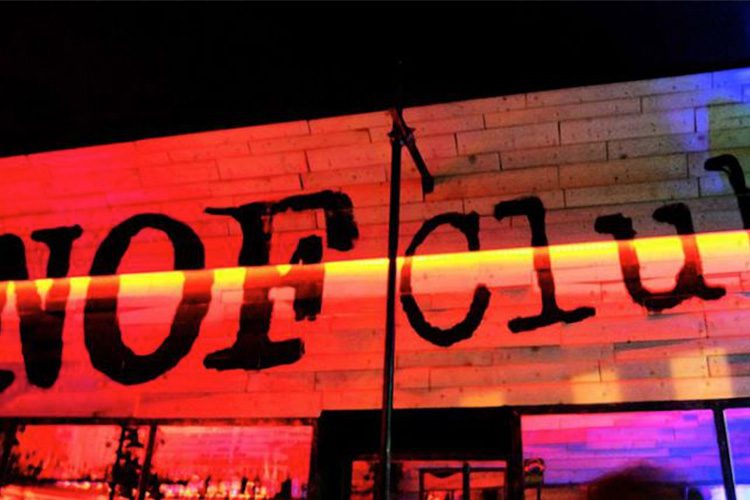
NoF is where good vibes are plenty and musicians from “all corners and crossroads of the globe” are hosted weekly. My friends and I have the good fortune of living just a block away from this cool and confident live jazz club in the Oltrarno neighborhood. We recently caught a performance that I know will be one of my favorite memories of Florence. A young woman with dark hair, black boots, and the strongest, most vibrant voice I’ve ever heard provided the vocals for this unforgettable evening. The night was unforgettable, due to her captivating talent and due to the fact that we stumbled across it by pure chance. We had originally intended to walk past NoF, but the voice of the singer, the rhythm the drummer was banging out, and the smooth, deep sounds emanating from the guitarist’s strings captured us before we could do so. Instead, we wandered, dreamlike, into NoF, and weaved our way through the small crowd to the front of the stage.

And that is where we stayed.

I so vividly remember that night, that music, and stealing glances at my friends faces and enjoying their facial expressions: they were as entranced as I was. The woman’s voice was deep, smooth, and seductive even with the most upbeat songs. The band played mostly jazz music and re-vamped versions of classic hits. I failed to find out what the artist or band’s name was, unfortunately, but I know I’ll be revisiting that night in years to come. In my reveries, one moment I’m taking notes at University, the next, I’m back in that dark wood-panelled room, unable to stop myself from swaying to my imagined, but once real music.

NoF
Borgo S. Frediano 17red
See more of Florence at FUA’s FBInstagram, and Twitter.

Time to “Leaf” Home for Florentine Gardens

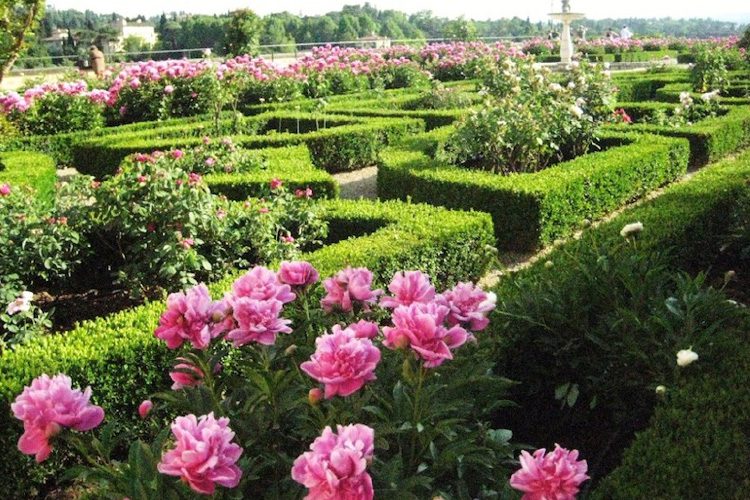
Boboli Garden View

By Samara Rynecki 

Get away from the touristy crowds in the museums and art galleries, and get lost in the green areas of Florence.

These quiet spots can have you feeling relaxed and stress free within minutes. These places are interesting to get lost in and easy to spend hours in. If you want a place where you can feel peaceful and connect with nature, away from the busy and chaotic streets during touristy seasons, then check out these sanctuaries.

There are many options in Florence where you can appreciate the greenery and landscape, They include the Orto Botanico also known as the “Giardino dei Semplici,” the well-known Boboli gardens, the Bardini garden, and Florence Tepidarium at the Giardino di Orticoltura.

Each of these individual gardens is unique in their own, and in Florence. The Orto Botanico is a botanical garden located in Via Micheli, 3. It was originally the Medici family’s medicine garden and one of the oldest in Europe. Today it is a part of the Science of Natural History complex managed by the Italian university in Florence. Boboli is Florence’s grandest palatial garden with an early baroque drama and amazing view of the city. Bardini is not well known despite being connected to Boboli, but its terraced landscape is making a comeback from its previous restoration. The Florence Tepidarium located at the Giardino di Oritcoltura and was the largest greenhouse in Italy when it was built in the late 1800s.

These charming spots for calm walks and cooling off in the heat are going to leave you wishing you were smelling the roses instead of standing in long lines for the major monuments of Florence.

See more of Florence at FUA’s FBInstagram, and Twitter.

Marketing Class Visits Florentine Perfume Company

Photo by the author

By Amanda Guido

FUA’s Marketing Mix class visited with a local perfume-maker to discover the marketing practices of a niche industry.

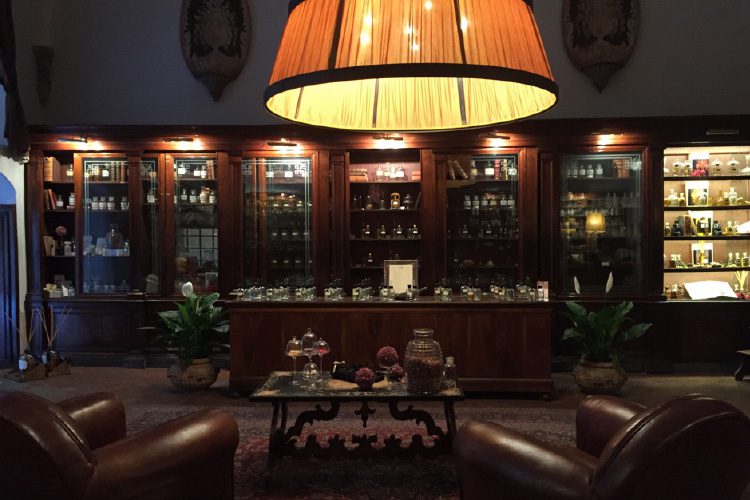
You can smell the rose-scented air even before reaching the street where AquaFlor is located. As you turn onto Borgo Santa Croce, the inviting smell only gets stronger until you find yourself in front of the 15th century Renaissance Palazzo where AquaFlor is located. In case you could not already tell from the image above, this is no ordinary perfume store. AquaFlor is a perfume showroom and laboratory outfitted with olfactory specialists. This is not just a store where you can purchase high quality perfumes, but an experience where you are educated on scents so that you can find the right one for you. Open seven days a week, AquaFlor is truly a hidden gem in the city center of Florence.

During my experience in this magical place, I was given a tour of the grounds from their communications strategies specialist. He explained to us that the perfume industry is growing rapidly, increasing 15% from 2014 to become a 39.2 billion dollar industry. He is taking advantage of this by making AquaFlor different from any other perfumery to create brand recognition and word of mouth advertising.

Clients can spend hours just browsing different scents with the help of experienced olfactory specialists, and create their own scent to take home.

The perfume showroom itself had such a unique aesthetic: classy, put together, and vintage. The first room has diffusers, used to give rooms in the home a pleasant scent. Next, our guide then took us to a room filled with pastel-colored soaps. These are very affordable and would make a great gift for loved ones back home. The third and final room on this floor was where the perfumes are kept. The price point for the perfumes is 140€, but this is a steal considering the quality of the product. Most other perfumes have a high concentration of alcohol and water whereas these have a significantly higher concentration of the actual scent for a longer lasting experience. Even testing the perfume is unique at AquaFlor. The pure scent is concentrated in beakers and a test tube is placed upside down in this scent. You simply smell the inside of the test tube which is meant to give a more accurate feel for what the perfume will smell like when it is worn. Most other retailers spray the perfume on a piece of paper, which is not effective for getting an accurate smell. I personally enjoyed how the rooms were split up by product. From a consumer perspective, this made it easier to shop.

Lastly, we visited the lower level lab. Our guide explained the scientific and chemical aspects of the production process and showed us how the perfumes were made. We also explored scent categories, and the experiential aspect of the visit is a great marketing tool. The Instagram account of AquaFlor is beautifully curated too. You can visit AquaFlor in Borgo Santa Croce 6 in Florence, as well as check out the company’s website.

 Did you know that an FUA alum is a part of the AquaFlor team? Watch this alumni video interview.

See more of Florence at FUA’s FBInstagram, and Twitter.

Along the Lungomare in Livorno

Photo courtesy of FUA

By Steven Scaglione

Italy is famous for its food, but did you know that each region, and even more specifically, each city, has their own specialties? When in Italy make sure to try some of these typical dishes that you won’t be able to find back home. This week’s focus is on the Tuscan port town of Livorno.

On the second day of what was planned to be a nine-day bike tour, I finally reached Tuscany’s beautiful port city of Livorno. I had been riding for about four hours, with frayed nerves from sharing the road rather unevenly with trucks of various sizes. It felt nice to pop the kickstand and sit among the trees in Parco Pertini, one of Livorno’s few green spaces just outside the city center while I reflected on my simple priorities for today: find some food, then find the sea.

After checking into a bed-and-breakfast with some difficulty (this key is for the front door?), I was ready to explore the city. With my first priority in mind, I set out to find a 5&5 (cinque e cinque) sandwich: a popular Livornese street food specialty consisting of a savory chick pea flour “cake” topped with olive oil and black pepper then placed between flat schiaccia bread.

To find the best 5&5 around, I was directed by some Livornese locals to go to “da Gagarin,” a torteria near Livorno’s own Mercato Centrale. The building was confusingly nondescript, and I’m still not sure if it has a sign on its storefront or not. But the best advertising a restaurant can have is a line of customers leading down the block, and when I saw this, I knew I was in the right spot.

Edible treasures in tow, I set my sights on the sea, looking to watch the sunset as the waves crashed on the rocks. Two enormous cruise ships sat docked in the city’s port like man-made whales with waterslides and a few freighters sailed steadily on the horizon.

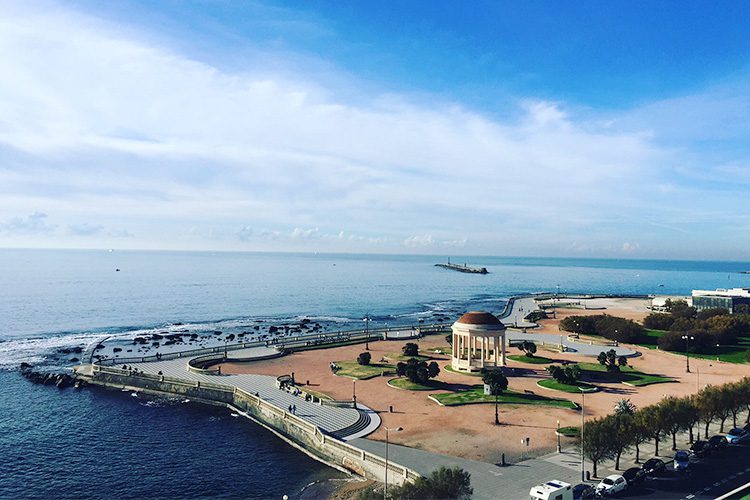
Passing behind the Aquarium of Livorno, the ground under my feet seemed to morph, the familiar gravel being replaced by a seaside checkerboard of black-and-white tiles – something straight out of “Alice in Wonderland.” What was happening? Were all those hours of biking getting to me? Maybe so, but my eyes weren’t failing; these tiles were just some of the thousands composing Livorno’s stunning lungomare, or boardwalk, near Terrazza Mascagni.

The sun was going down in a ball of orange flame, setting the sky ablaze in wispy waves of pink and purple. The freighters turned on their lights to blink their presence cautiously. I unwrapped my sandwich, eating it from the paper wrapping while sitting on the concrete railing of the lungomare and thought about my trip so far. Tomorrow I would start heading south, toward Grosseto and its vineyards along the way. But tonight, just for tonight, I would sit among these black-and-white tiles until dark, watching those blinking lights and listening to the sound of the waves.

See more of Florence at FUA’s FBInstagram, and Twitter.

Talking Stones of Florence

Photos by the author

By Aaron Klevan

What do Florence’s “talking stones” have to do with modern-day journalism and civic awareness? FUA’s Writing for Digital Media students recently explored connected readings of the city’s political and cultural history through its talking stones. Next time you take a walk around the city center make sure to look up and see if you can spot some.

Florence is a city with a rich history that dates back centuries. One of the unique ways that the city actively communicates its vibrant past is through “talking stones.” These stones, containing inscriptions of both writing and art, are adorned on walls throughout the city and tell Florence’s most fascinating tales. The stones also portray the art of journalism in its truest form, exhibiting many principles still applied today in an authentic breath.

  • The idea of social awareness can be seen in the way the stones project the stories of Florence.
  • The principle of connected reading is presented by the way the stones link current Florentines and visitors to the city’s political past.
  • The stones also share visual information with supplementary images and drawings in addition to pure text.
  • Finally, at the time they were created, the stones were a form of enhanced technology requiring specialized knowledge and methods for chiseling messages into stone.

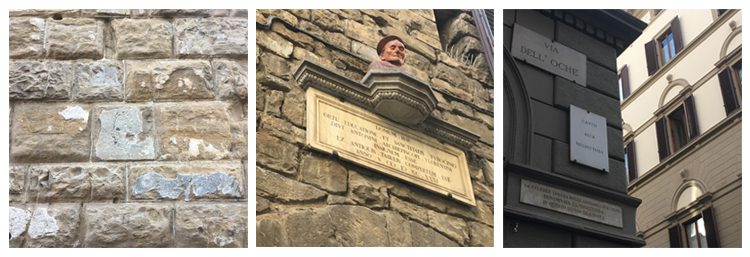
The first talking stone shown on the left of the photo is one of the first known forms of graffiti, located near the main entrance to Palazzo Vecchio. As the legend goes, it was a self-portrait of Michelangelo. It is a fascinating way to look at the technology artists used at the time, and also offers a glimpse into the booming art community during the Renaissance, connecting people today to those who walked Florence’s streets and drew on its walls in the past.

The second stone is perched atop a bustling intersection near the city center in Via delle Oche. It textually denotes that the building on which it is placed was once home to the prestigious Adimari family, of which Alemanno Adimari was a member. He was a famous Italian Catholic cardinal and archbishop. This stone serves the purpose of displaying the famous residents that played a fundamental role in shaping the city.

The final stone is a beautiful bust and description of Saint Antoninus in Via dello Studio. He was an Italian Dominican friar who ruled as an Archbishop of Florence. This talking stone is found on the exterior façade of the Pierozzi family home. It is a perfect example of combining visual information with written texts, much like an article, that allows viewers to see the subject and read about it.

The city continually talks to us every day through its surfaces, signs, and symbols. What unexpected discoveries have you made through Florence’s talking stones?

See more of Florence at FUA’s FBInstagram, and Twitter.

Castello di Sammezzano

Photos courtesy of the author

By Steven Scaglione

Sometimes the well-traveled roads lead to unexpected finds, such as the Sammezzano Castle that is at the center of a movement to save a now-abandoned architectural gem.

After stepping out of a two-story charter bus in little Leccio, Italy, I took a breath and surveyed my surroundings. I was at The Mall, which is not a luxury shopping mall but a luxury shopping “destination,” specializing in high fashion brands like Salvatore Ferragamo, Burberry and – maybe more fittingly named – Billionaire started by Italian entrepreneur Flavio Briatore. Though the stores would not open for another 20 minutes, already a line of eager shoppers had neatly queued in front of the Gucci and Prada outlets, talking among themselves with an electric excitement. Soon they would be pulling green suits and bright dresses from the racks, but I would not be among them. I was headed for a different kind of treasure: Sammezzano Castle, only a short hike away.

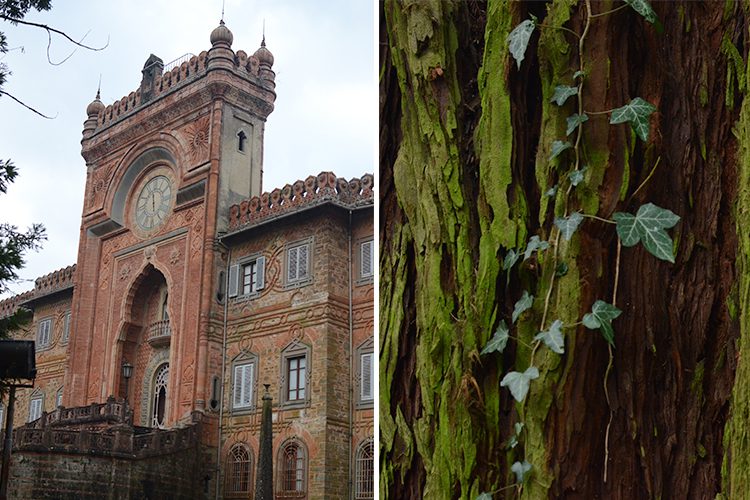
The castle lies at the top of Sammezzano Park’s central hill, overlooking the town below like a silent, stoic patriarch. The park is home to many exotic species of plants, including the species of giant sequoias native to California. One of them, known as “Sequoia Gemella,” or the “Twin Sequoia” in English, is more than 8.4 meters (27 feet) in diameter and 50 meters (164 feet) tall.

From the outside, the castle’s Moorish-style architecture is a mix of Spanish, Arabic, and Oriental influences. Inside “La Sala dei Pavoni,” or “The Room of the Peacocks” in English, is arguably its most beautiful feature, with mosaics of every color stretching from floor to ceiling.

Unfortunately, the castle is currently closed to the public, falling victim to littering and vandalism. One organization, Save Sammezzano, has been fighting to preserve and protect the now abandoned castle and surrounding park. A petition by the group ended with over 30,000 signatures, but the castle is now privately owned, making it difficult for the municipal government institutions to safeguard it. The future for any restoration is uncertain, but the cause has found great support on social media. For now, the castle remains as it has been for many years, the hands on its clock stopped at 11:28, waiting for the day they might turn again.

See more of Florence at FUA’s FB, Instagram, and Twitter.

Surviving the Cold: Florence’s Indoor Activities

Photo by the author
Photo by the author

By Jess Pitocco

Since January is the coldest month of the year in Florence, it may seem difficult at first to find indoor things to do that don’t include the Uffizi Museum. The city however is full of great indoor activities, here are some ideas of things to do to stay out of the frosty weather.

  1. Palazzo Strozzi is a great place to spend a day indoors without getting bored! Currently, the Ai Weiwei exhibit is being shown until January 22th, 2016 and is a great way to look at some modern art (instead of the Renaissance art you are used to seeing.) The Strozzi Café is open Tuesday throughSunday from 8:00 AM to 00:30AM (Monday until 8:00 PM) and serves breakfast, lunch, cocktails and dinner. It’s a great place not only to bang out a homework assignment or study for finals but also to experience some wine tasting and classic Italian cuisine. There are even a bookshop and a contemporary space to hang out on the bottom floor. Palazzo Strozzi is truly a great place to spend an afternoon sight-seeing, eating and studying.
  2. If you haven’t visited the Gucci Museum yet in one of your fashion classes, it is a great place to learn more not only about fashion but also about Hollywood. The museum has everything from a history of bags, their double G logo, and even dresses for the stars. The Gucci Museum also includes a great café and bookshop to hang out in. In the same Piazza della Signora, the Palazzo Vecchio stands tall. I know that even though I’ve lived here for months I still haven’t had time to see some of Florence’s most beautiful monuments. If you haven’t seen Palazzo Vecchio, it is worth the look. You can see it’s glorious rooms, gold-plated ceilings, and even climb the tower to see a beautiful view of the city. Afterwards, you can dine at the restaurant/café on the top level overlooking the piazza and its many statues below. Definitely take the time to explore this Piazza della Signora because it’s wonders and museums are unique and grand.
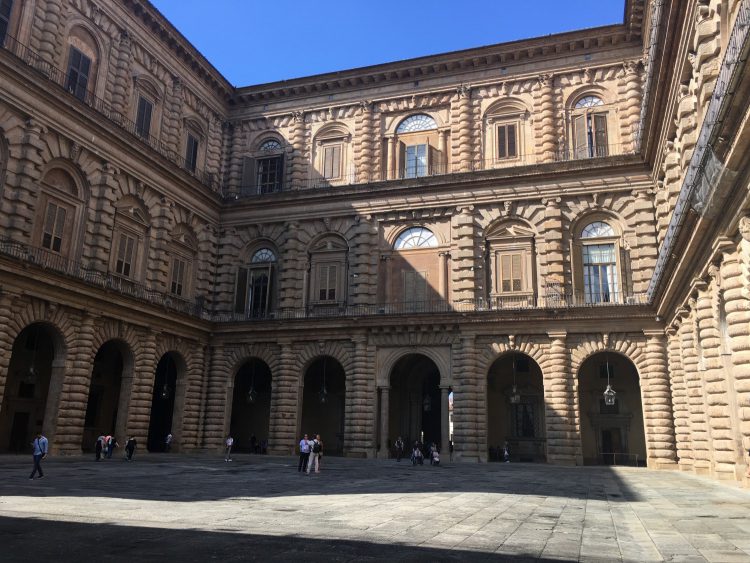
  3. Palazzo Pitti is known for the sprawling Boboli Gardens, however, these gardens are not the most enticing in the cold. What you may not know is that the Pitti Palace is a series of 6 museums and gardens, not just the Boboli Gardens. Take an afternoon to explore these museums: The Palatine Museum, The Gallery of Modern Art, The Costume Gallery, The Medici Treasury, and the Porcelain Museum. Among the galleries and museums that range from jewels to plates, there is a wonderful little restaurant and café on the entrance floor to relax, do homework, or write in your journal. To explore Pitti Palace is to absorb all facets of Florentine culture from art to history.
  4. The new Museo degli Innocenti is something interesting and unusual to check out. The former abandoned children’s hospital established in the Renaissance still continues to help Florentine families today through social services and educational programs. The new museum in Piazza Santissima Annunziata will highlight the building’s works, architecture and documentary records which make the Institute’s heritage so unique. The institution’s history and many original paintings tell of the people who lived in the Hospital, so this is a great, unique spot to visit in order to discover a different perspective of Florence.
  5. The Salvatore Ferragamo Museum is another great spot to explore art and fashion, with multiple exhibits that not only focus on the shoes of the stars but also experimental and international fashion and art. Along Via de’ Tornabuoni there are endless shopping opportunities to stop in on your way back from the museum. The list includes Valentino, Burberry, Tiffany, Co., Fendi, Montblanc, Giorgio Armani, Prada and even Gucci again. Not only do these high-end shops stretch seemingly a mile long starting at the Salvatore Ferragamo Museum, but there are also more manageable spots to shop Tod’s, Olfattorio, and more. Take an afternoon or evening to window shop and explore one of the coolest and most progressive museums I’ve ever seen.
  6. La Specola, the Museum of Natural History in Florence, is another great spot for a day indoors. This museum features Medici collections of fossils, treasures, animals, minerals, exotic plants; there are 24 rooms of zoology and 10 of wax modelling. There is also the Hall of Skeletons featuring over 3,000 archaeological finds! Open year-round and on Via Romana near the Pitti Palace, this museum is definitely worth a look inside for a totally different view of Florence’s scientific findings and discoveries.

Obviously, these are not the only indoor activities to do in Florence: you can see a movie at the Odeon Theater or even take a single cooking class at FUA’s culinary department facilities. However, these piazzas, streets and museums offer a range of possibilities for a lazy afternoon on a cold day in Florence. Take the time to explore new museums and places, and don’t forget to bring a hat and scarf!

See more of Florence at FUA’s FB, Instagram, and Twitter.

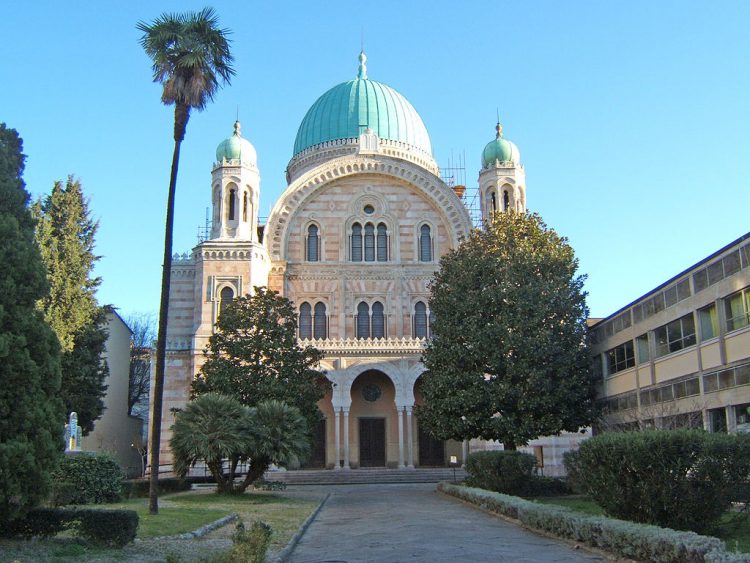
The Great Synagogue of Florence

Image by Wikimedia Commons user Toksave

By Caroline Angelini

Though Italy is a predominantly Catholic country, its religious landscape represents other traditions as well. The relationship between the Jews and the city of Florence dates back hundreds of years, and this community is one of the focal points discussed during the FUA course “Shoah: The Holocaust in History.”

This course, taught in Fall 2016 by Valentina Nocentini, focuses on the history of the Jews, specifically in Italy, and how their treatment eventually led to the the Holocaust. To give her students a better grasp on exactly what happened to the Jews in Italy during the Holocaust, Prof. Nocentini brought her students to the Tempio Maggiore, or the Great Synagogue of Florence. Based on the experience and how it helped to contextualize the treatment of Jews in Italy, students wrote a reflective assignment as an outcome of the visit.

The Synagogue dating to 1882 is truly breathtaking. The intricate detail of the hand-painted walls, and the ornamentation of the women’s balcony were like nothing else that students had witnessed both in Florence and beyond. The mosaics and frescoes are reminiscent of Christian art, but have their own character that makes them unique to the Jewish culture of the Synagogue.

While the artistic ornamentation was magnificent, the mood that most students had while in the Synagogue shifted once they reached the museum. The Synagogue separates a portion of its space dedicated to the Florentine victims of the Holocaust. There are stone slabs with each victim’s name and videos depicting the lives that they carried out while being exploited during the Shoah. “It was something difficult to experience—the contrast from first seeing the beauty and grandeur of the Synagogue to then learning about how the Jews were treated during the Holocaust,” commented student Emma Dunleavy.

The visit to the Synagogue helped the students of the Shoah course gain a deeper understanding of the past lives of Jews in Florence. It also provided insight into how Florentine and Italian citizens in general aided those in need of protection especially during WWII, which gave students food for thought as they themselves experience daily the hospitality of a foreign host city with whom they must forge a new relationship, one day at a time.

To visit:
The synagogue is located in Via Farini 6, near the Sant’Ambrogio church. Details about visiting hours, synagogue history, and much more can be found on the website of the Jewish community of Florence – moked.it/jewishflorence

See more of Florence at FUA’s FB, Instagram, and Twitter.