Surviving the Cold: Florence’s Indoor Activities

Photo by the author
Photo by the author

By Jess Pitocco

Since January is the coldest month of the year in Florence, it may seem difficult at first to find indoor things to do that don’t include the Uffizi Museum. The city however is full of great indoor activities, here are some ideas of things to do to stay out of the frosty weather.

  1. Palazzo Strozzi is a great place to spend a day indoors without getting bored! Currently, the Ai Weiwei exhibit is being shown until January 22th, 2016 and is a great way to look at some modern art (instead of the Renaissance art you are used to seeing.) The Strozzi Café is open Tuesday throughSunday from 8:00 AM to 00:30AM (Monday until 8:00 PM) and serves breakfast, lunch, cocktails and dinner. It’s a great place not only to bang out a homework assignment or study for finals but also to experience some wine tasting and classic Italian cuisine. There are even a bookshop and a contemporary space to hang out on the bottom floor. Palazzo Strozzi is truly a great place to spend an afternoon sight-seeing, eating and studying.
  2. If you haven’t visited the Gucci Museum yet in one of your fashion classes, it is a great place to learn more not only about fashion but also about Hollywood. The museum has everything from a history of bags, their double G logo, and even dresses for the stars. The Gucci Museum also includes a great café and bookshop to hang out in. In the same Piazza della Signora, the Palazzo Vecchio stands tall. I know that even though I’ve lived here for months I still haven’t had time to see some of Florence’s most beautiful monuments. If you haven’t seen Palazzo Vecchio, it is worth the look. You can see it’s glorious rooms, gold-plated ceilings, and even climb the tower to see a beautiful view of the city. Afterwards, you can dine at the restaurant/café on the top level overlooking the piazza and its many statues below. Definitely take the time to explore this Piazza della Signora because it’s wonders and museums are unique and grand.
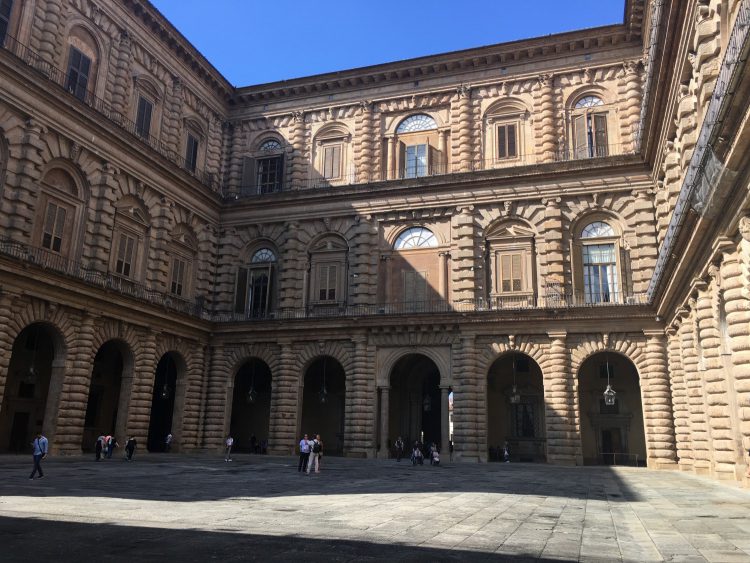
  3. Palazzo Pitti is known for the sprawling Boboli Gardens, however, these gardens are not the most enticing in the cold. What you may not know is that the Pitti Palace is a series of 6 museums and gardens, not just the Boboli Gardens. Take an afternoon to explore these museums: The Palatine Museum, The Gallery of Modern Art, The Costume Gallery, The Medici Treasury, and the Porcelain Museum. Among the galleries and museums that range from jewels to plates, there is a wonderful little restaurant and café on the entrance floor to relax, do homework, or write in your journal. To explore Pitti Palace is to absorb all facets of Florentine culture from art to history.
  4. The new Museo degli Innocenti is something interesting and unusual to check out. The former abandoned children’s hospital established in the Renaissance still continues to help Florentine families today through social services and educational programs. The new museum in Piazza Santissima Annunziata will highlight the building’s works, architecture and documentary records which make the Institute’s heritage so unique. The institution’s history and many original paintings tell of the people who lived in the Hospital, so this is a great, unique spot to visit in order to discover a different perspective of Florence.
  5. The Salvatore Ferragamo Museum is another great spot to explore art and fashion, with multiple exhibits that not only focus on the shoes of the stars but also experimental and international fashion and art. Along Via de’ Tornabuoni there are endless shopping opportunities to stop in on your way back from the museum. The list includes Valentino, Burberry, Tiffany, Co., Fendi, Montblanc, Giorgio Armani, Prada and even Gucci again. Not only do these high-end shops stretch seemingly a mile long starting at the Salvatore Ferragamo Museum, but there are also more manageable spots to shop Tod’s, Olfattorio, and more. Take an afternoon or evening to window shop and explore one of the coolest and most progressive museums I’ve ever seen.
  6. La Specola, the Museum of Natural History in Florence, is another great spot for a day indoors. This museum features Medici collections of fossils, treasures, animals, minerals, exotic plants; there are 24 rooms of zoology and 10 of wax modelling. There is also the Hall of Skeletons featuring over 3,000 archaeological finds! Open year-round and on Via Romana near the Pitti Palace, this museum is definitely worth a look inside for a totally different view of Florence’s scientific findings and discoveries.

Obviously, these are not the only indoor activities to do in Florence: you can see a movie at the Odeon Theater or even take a single cooking class at FUA’s culinary department facilities. However, these piazzas, streets and museums offer a range of possibilities for a lazy afternoon on a cold day in Florence. Take the time to explore new museums and places, and don’t forget to bring a hat and scarf!
See more of Florence at FUA’s FB, Instagram, and Twitter.

My Journal: A Priceless Souvenir

Photo courtesy of the author

By Amber Wright

“I’m a fickle girl who falls in love easily. It’s happened about a million times since I started my study abroad journey four months ago. I get off the bus/plane/train and it’s love at first sight. No matter where I am, every street, corner shop, and coffee bar seem as if they’re covered in gold. In Siena, I fell in love faster than the horses ran in the Palio di Siena, and in Cinque Terre I could feel the warmth of the sun all through my body – at least for the ten minutes it was out. I’m in love, and I can’t imagine leaving this feeling behind.” – A reflection from my personal journal.

It wasn’t until a month after arriving in Italy that I realized I hadn’t actually bought any souvenirs. At first, I was a little bummed I didn’t buy a bunch of things from the places that I had been exploring, but as I thought about it more, I was thankful I didn’t. Being abroad did not have to be something I did to acquire things. I didn’t have the budget for that, nor did I want to have to carry pointless souvenirs. Instead, I had accumulated memories, feelings, and stories. I hadn’t wasted any time in souvenir shops, instead I was just present where I was spending money on museums and experiences rather than keychains.

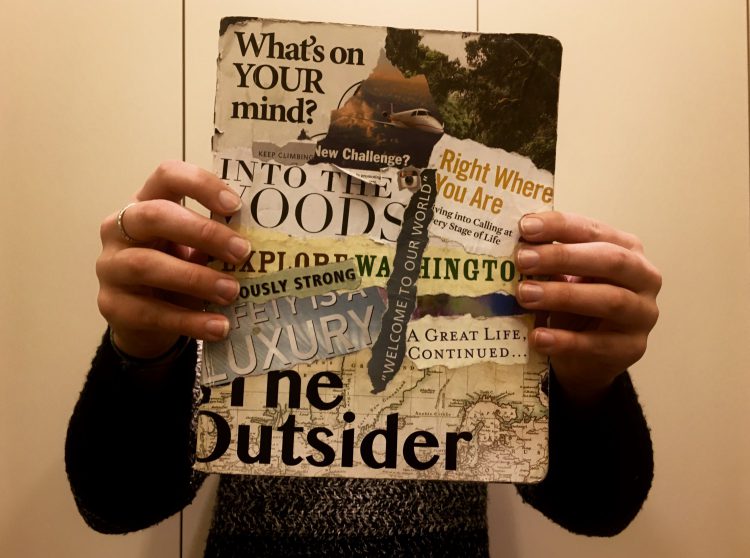
I’m one of those individuals who has always kept a journal in some form or fashion. I also have a problem because when I see a new one that catches my eye, I have to have it – which also means I have about a hundred half-finished notebooks. My travel writing class here at FUA requires you to keep a journal for class, which I’m very thankful for. I get so caught up in the exciting day to day, that I often don’t take a breather or moment to reflect. Being held accountable on a constant basis, to journal makes me sit every so often and really reflect on what I’m seeing, doing, and encountering. I have a running list of “things I’ve learned traveling,” “places I need to go back to,” and “favorite memories.” I also have multiple entries about things I’m missing from home, things encountered that I dislike, and general grievances from that day. It’s me and my thoughts put down onto paper, and nothing could accurately represent my time abroad more than this journal.

My journal has actually become the best souvenir I could have asked for. In it now holds the memory of when I went wine tasting for the first time in beautiful Vinci in Tuscany, and I absolutely did not like the glass I had. In addition to my memories of living and studying in Florence, it contains the story of when I went to Portugal with my best friends and walked home in the rain, lost, but somehow wound  up in front of a beautiful monastery. It holds the account of each outlandish costume I ran into in Barcelona on Halloween. My journal is also full of visuals – i.e. funny photostrips from the photobooth across from a favorite pizza slice stop in Florence – every photo features at least one friend taking an overly ambitious bite.

Other than the photostrips, I would say you can’t buy memories. Your thoughts and memories will last longer than any tee-shirt or key chain would. Invest in a journal and constantly reflect and write down what has been happening during your studies abroad. Keep a list of your favorite spots in Florence and jot down the funny moments you have with your friends on the train. Write down how the interior of Santa Croce made you feel, and what you thought about the view from the Duomo. Instead of just being able to say you’ve been to this place and purchased a trinket, a journal will reveal the true fruits of your experiences. It will safeguard your memories, thoughts, feelings, and lessons all associated with a new place, and it will be completely priceless.

See more of Florence at FUA’s FB, Instagram, and Twitter

What to Do in Florence with only a Few Days Left

Photo by the author
Photo by the author

By Jess Pitocco

I have only a few days left here in Florence and I am starting to panic. What have I missed? What else can I do? What sights have I not seen? How can I make the most of the short amount of time I have left studying abroad? I know everyone says that time flies by, but I don’t think I really understood that feeling until now. As cliched as it is, I do feel as though this semester went by in the blink of an eye. So how do I savor the tastes, views, and people of Italy with a short amount of time left? After brainstorming, I’ve come up with some solutions for when it feels like it’s too soon to go home.

  1. Revisit your favorite places! Take a couple days, in between studying for finals of course, and revisit your favorite spots. Don’t take them for granted. Give yourself time to appreciate each and every store, restaurant, and museum that touched your heart. Commit them to memory, even take pictures, so that these places will never leave you. My favorite restaurant, Ristorante Il Paiolo on Via del Corso, will be my first stop; their fare is the most authentic that I’ve found in Florence! Plus, every time I go I’m greeted with the warmest of smiles and the most gracious service.
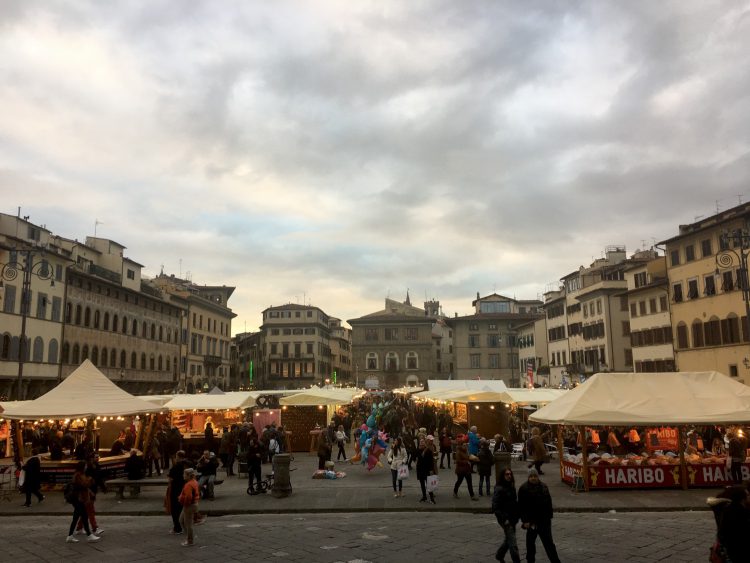
  2. Do something you aren’t able to at home; take an Italian cooking class, visit an enoteca that you haven’t ventured to yet, visit that famous museum you’ve missed. Give yourself a day to explore where you haven’t explored, and find a store you haven’t entered, maybe even taste a new dinner entree you haven’t tried yet! The Christmas market in the Piazza Santa Croce is a perfect place to spend some quality time exploring; not just for the food, but for the lights and the Christmas/winter season spirit.
  3. Speaking of trying new things, try and get lost in your city. Florence, for me, has plenty of side streets filled to the brim with cute boutiques and galleries to discover. Every time I find a new area of the city, or a new street I haven’t walked down, I get excited. On the side street Borgo Pinti, finding the small Mrs. Macis clothing boutique lead me to one of the most creative fashion finds I’ve seen in Florence. Carla Macis, the store owner, makes gorgeous dresses with prints on them from 1980s Italian stamps; truly unique! In these last weeks, I will not hesitate to go off the beaten path and explore what I haven’t yet.
  4. Take a chance; get a haircut, buy that dress you’ve been eyeing for weeks in that store window, or even write that blog you’ve always wanted to start. Give yourself something to remember Florence by; whether that be a journal, a piece of street art, or a pair of shoes, don’t forget to give yourself some kind of souvenir. My recommendation is not to buy yourself a magnet of the Duomo, however, it is to find something that means a lot to you. My souvenir will be spending a Saturday at the San Ambrogio market: getting a meal there, relaxing with coffee, and exploring the wares and produce. That entire day will be filled with journal writing and picture-taking. It was the first thing I visited in Florence and was in awe of Italian culture. Now I will end my study abroad experience in the market, like a bookend to my amazing experience. So whether you find an object that reminds you of a certain day or memory, or even going to get your nails done with your closest friend you’ve made abroad; give yourself something to take back with you, you won’t regret it.

I am realizing how important Florence has become; it has been such a huge part of my college experience, and I will miss it tremendously. I will miss complaining about the steps on the way to Piazzale Michelangelo, I will miss getting a gelato at La Gelateria dei Neri, and I will miss walking in the shadow of the Duomo and Palazzo Vecchio every day. However, I can’t dwell on how much I will miss a place while I’m still here; starting to miss Florence while still living in Florence is a paradox of the mind that I am not interested in traversing. For now, I will live in the moment and give myself the opportunity to make as many positive, fun and awe-inspiring memories as I can in my final days here.

See more of Florence at FUA’s FB, Instagram, and Twitter

Home is Where the Heart Is

Photo courtesy of the author

By Amber Wright

If you asked me how many places I’ve called “home,” I would say four – I grew up in California, now live in Washington, worked in Northern Ireland for a few months, and am now studying for four months in Italy. I’ve had to make a home where I am three times since I’ve left where I grew up, and each time my concept of home has changed.

When I first moved to Seattle, it was easy. My close friends in California had all moved, so it was generally painless for me to leave. I found all the things that made me feel comfortable and things that were familiar to me. I found my groove, and I made as many new friends from school as possible to surround myself with.

When I moved to Belfast, it wasn’t so easy. I was very secluded and separated from people where I lived, and the most familiar place I could go was Starbucks thirty minutes away. I hardly met anybody my age while working there and often spent days alone.

As excited as I was to be in Florence for a semester, I was nervous about moving to a new country again. With moving to Florence, I would be here longer and there was an added challenge of the language barrier in trying to make friends. How was I going to meet anybody? I was afraid that I wouldn’t be able to make a home for myself here like I wasn’t able to in Belfast.

Three months later, Italy now feels like home just as much as Seattle does. When I first arrived, I had no idea what to do. I went the first week eating out every night and using a tee-shirt to dry off because I had no idea where a supermarket was or where I could buy a shower towel. Now, after traveling to amazing places like Germany, Croatia, and Spain, I get a sense of comfort, something I never got in Belfast, arriving at Santa Maria Novella Station, walking past the Duomo, and entering my apartment.

Italy has been very different from anywhere I’ve lived before, landscape, language, and climate-wise, but it has become normal and comfortable for me. However, this sense of comfort hasn’t come from knowing where to buy food or from decorating my room, it’s come from the community I’ve been lucky enough to form here. “Home is where the heart is,” “home is where your family is,” and my mother’s personal favorite, “home is where your momma is,” are popular phrases for a reason. Feeling at home is about the people surrounding and supporting you in that place, whether that be friends or family.

My study abroad program staff and the institution have done an excellent job of bringing students together and creating a community that people feel at home in. From taking day trips to having Thanksgiving dinner together, my program has become my family who I lean on for support.

The relationships you form over study abroad are quick and wild. You form friendships immediately because you all know you’re in the same position – a new country where you don’t know anybody. You go to dinner together that first night, then to Piazzale Michelangelo the next day, and then before you know it you’re exploring Florence with these friends every weekend. These friends will be the ones you climb to the top of the Duomo with and also get lost trying to find that one osteria in the far outskirts of city center. You’ll struggle though your Italian language class, and celebrate together when you have your first successful conversation with a local. You’ll discuss the culture you’re immersing yourself in, and also reminisce about the few things you miss about home. Finally, it’s three months later in December, still with two weeks to go, and you’re already crying thinking about leaving these people and leaving what and who has been home for the past few months.

Home isn’t a thing or a place, but a feeling that you get from the people by your side. My time here in Florence is intertwined with the people I spent it with, and I won’t be able to think about Europe without thinking of them. When I’ll look back on living in Italy and how much I felt at home here, it won’t be because of my apartment on Borgo Pinti. It will be because of the amazing friends and community I had surrounding me here making it feel like home.

See more of Florence at FUA’s FB, Instagram, and Twitter

Florence in the Rain

Photo by the author
Photo by the author

By Jess Pitocco

A typical day in Florence looks like this: the Duomo is never shrouded by clouds, the sun always makes the bronze ball on the top of the cupola shine like gold, the streets are filled with bustling people, and in each doorway, a new delicious smell entices you. Florence may seem like just another city of dreams; however, what does it look like when it’s raining?

The contrast can be quite stark, actually. The streets slowly get less crowded as the sky opens up. Ponchos and umbrellas are sold at every corner. The whole city feels like it is in a shadow as people try and find shelter from the storm. And just as the rain pours down and splashes you, the sun peeks through the clouds and you see blue sky. But only for a moment. The rest of the day is cloudy, on and off rain, making the Duomo as gray as the sky.

I find solace on these rare rainy days at small cafes, preferably on a side street. I usually throw on sneakers and try to get through the puddles without making my socks too wet. The rain boots I bought for this occasion have a hole in the sole and are useless when it gets stormy outside. I fast-walk, bringing my backpack and hope that the wifi works today.

Depending on how I feel, I get a cappuccino, coffee, hot chocolate, or tea. It makes my hands sweat and fogs my glasses, but it’s so comforting to me in my soggy clothes that I don’t care. I usually get a snack while I sit and do homework. Sometimes I read, or just relax. At home, where I’m from, rainy days are designated movie/cinema days. Here, I will happily settle for a cute cafe, some sweet treats, and a good book.

Florence, before arriving, had never seemed like a cold season city to me (a fellow FUAer shares how to spend a winter day alone, btw). However, a rainy day can sometimes bring a fall-like atmosphere to the city. People bundle up, briskly walk back and forth to escape the rain; it reminds me of the snowed-in streets of New England where people do the exact same with snowflakes. Either way, some of the gloomiest looking days in Florence make me feel most connected to the city. I found a good reading spot, my favorite coffee, and a comforting ambiance to a city that is most of the time lively and exciting. Rainy days here aren’t sad; they are calm, introspective and more enjoyable than you’d expect. What’s your favorite rainy-day spot?

See more of Florence at FUA’s FB, Instagram, and Twitter


My Love of Slow Tourism

Photo by the author
Photo by the author

By Amber Wright

I’m a slow tourist. You won’t see me power walking from monument to monument or rushing to get through a museum because there are still three other places I need to get to that day. This is the main reason that studying in Italy was right for me. At the start of my program I had four whole months to see Italy for what it really is. I had 106 days to get to know the heartbeat of the city and understand the area.

The art and detail put into everything in Italy is astounding. You can’t capture this with your camera and you won’t be able to see it all with a short walking tour through city center. I walk by the Duomo every day, twice a day, and because of my busy schedule between classes and my experiential learning tasks, I never really stop to admire it. I glance up and think how beautiful it is, but that’s the extent of it. Because I walk by these monuments so often, I tend to take them for granted, and I have to intentionally take time to go experience them and just be engrossed by the beauty. 

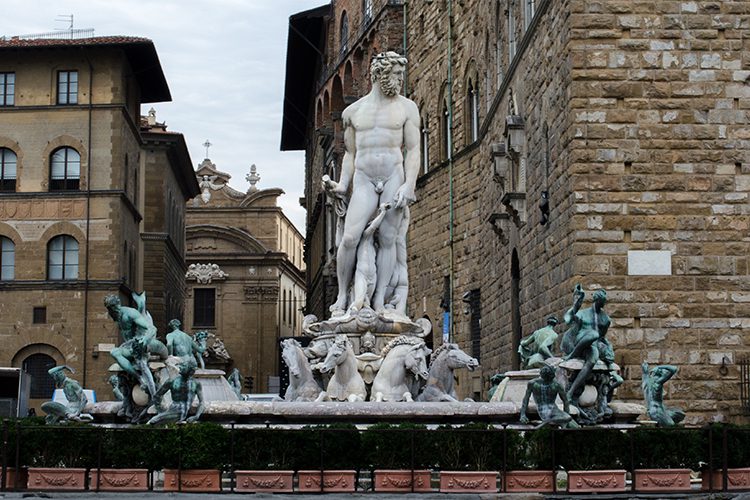
As for my slow tourist style and as weird as it sounds, steps are my favorite thing in Italy. I love sitting on the steps of Santa Croce in the morning, before all the other tourists wake up, and then heading to Piazza Della Signoria for the Fountain of Neptune. The steps of Santo Spirito are the perfect place to enjoy a pizza at sunset and the steps of the Duomo at midnight are worth missing a few hours of sleep for. These steps are where I sit for hours, slow down, and take in every detail of Florence.

As for seeing every detail, Stendhal Syndrome is real. It’s a funny diagnosis of being absolutely overwhelmed by beauty, and it’s hard not to believe its real. However, when it was first diagnosed, it was to tourists who had spent all day in the heat, running from place to place, looking up at the monuments. Its no wonder they felt dizzy. 

Don’t rush to do everything, like the diagnosed tourists, just to say you did it. Take time to experience and be in the moment of the places you go. Slow down and etch the details of Santa Croce, The Fountain of Neptune, and Duomo into your memory – these are the moments you will take home with you and remember forever.

Time may feel like its against you, but Italy isn’t a sprint. As a student here, my time is a marathon that I’m soaking up every moment of.

See more of Florence and Italy at FUA’s FBInstagram, and Twitter.

The Side Effects of Traveling

Photo courtesy of the author

By Jess Pitocco

From Florence, it only takes an hour and a half to fly to Paris, France. From Paris to Lisbon, Portugal, it only takes two hours to fly. From there, it takes another two hours to fly to Barcelona, Spain. In my personal experience, I have never been at such ease while traveling by plane. Italy’s central location made it an easy jumping-off point for my ten-day trip to these places over the fall break. While I was at ease traveling, what I didn’t expect were the side effects of all that country-hopping.

My room was filled to the brim with laundry, and my brain was filled with anxiety about homework as classes geared up for the homestretch of the fall semester. I had been so used to switching languages that I resorted back to English instead of Italian when ordering a pizza. I had gotten so little sleep on my travels that I was constantly tired and needed three cappuccinos a morning to stay awake for class. The blisters on my feet were excessive, and my bank account was drained from eating out for every meal while away.

I was overwhelmed, and I still am. While traveling, you learn so much about yourself. You learn how to navigate a city without a data plan. You learn how to let go of the little things that go wrong, like losing jewelry or getting stopped at the airport for having too many liquids in your carry-on. You learn how to stand in a line without getting too impatient with the wait. You learn how to pack for ten days in a bag built for two.

What you don’t learn is how to cope with all that change, both physically and mentally. Now that I am back in my temporary home of Florence, I cannot help but think how much more I want to see and how much more I want to travel. However, my body cannot take the lack of sleep and bad eating habits, and my mind cannot handle the stress of prolonged travel. I missed my routine in Florence; getting my coffee in the morning, walking to class, having dinner with my roommates, and even taking a shower without using miniature travel bottles. Traveling overall was an extremely positive experience. But, traveling is also a double-edged sword: I loved exploring the world, but I craved the stability of cooking in my own kitchen and sitting down to watch Netflix before bed.

I wouldn’t regret traveling, and wouldn’t discourage anyone from doing so. However, some words of wisdom: if I had stayed in one place longer I think I would have had a much more relaxing journey. I wish I had foreseen the complications, and taken it easier. I didn’t need to see four museums in Barcelona, but I did so anyway despite my body telling me to slow down. My advice for a long trip? Take it one day at a time, the world will still be there tomorrow.

See more of Florence and Italy at FUA’s FBInstagram, and Twitter.

A Local & Two Foreigners: Our Favorite Places in Florence

Photo by the authors

By Amber Wright, Deborah Galasso, Jess Pitocco

Our mission this week between the three of us, Amber Wright, Deborah Galasso, and Jess Pitocco, was to write down the places that best symbolize or represent Florence, Italy. It proved to be pretty difficult; there are thousands of unique bars, monuments, churches and museums to visit in the city. It could take years to explore all that Florence has to offer! Even so, from each of our own perspectives, domestic and abroad, we chose our favorite spots in Florence.

Florence from the perspective of a local, Deborah Galasso, is full of art, culture, and cappuccino. Her favorite parks, restaurants and artistics centers that, in her opinion, best describe the culture and feeling of Florence, Italy:

  1. Villa Bardini is a magical place where I go frequently. Today, it is an exhibition center that hosts temporary shows. Villa Bardini is a beautiful garden setting, and can be visited today separately with the same ticket that you would purchase at the Boboli Gardens.
  2. Opera di Firenze is another particular place I visit as a fan of art, theater, and Florence’s musical works. I like the unusual and modern structure, and the theater’s interior is spacious and gorgeously decorated.
  3. I always go to Anfiteatro Romano alle Cascine because I love art. This amphitheater located in the Cascine Park, and takes us back to past times. It’s a historic space for indoor and outdoor events in Florence, the best ones are featured in the summer.
  4. Giardino del Drago, near Via Bolognese and a part of the Giardiano dell’Orticultura, is a relaxing place that makes you admire the beauty of Florence from another point of view. The distinctive and artistic statue in the shape of a dragon is at the center, and gives the garden its name. It is a place I visited as a child and remember fondly to this day.
  5. Chiosco is a small bar/kiosk along the Arno near St. Niccolò. It’s great especially in the summer, because you can observe the river while having aperitivo. The bar is close to the Arno, is full of lights, and has a fun atmosphere.”

Florence from our perspective, Amber and Jess, two study abroad students, is a bit different. These five places represent Florence for us because they are landmarks to help us get home, great food and shopping, and places that make Florence feel like home since we’ve arrived.

  1. We pass Piazza Gaetano Salvemini every day on our way to class at FUA’s J School. Whether in the morning or at night, there are always a myriad of characters in the Piazza, from tourists to locals. The old men play chess near the bike racks everyday, and the dog owners are followed by their pooches without leashes. There are helpful places on the edges of the palazzo: an ATM, Tabacchi, and 99 cent store. It is a place where everyone gathers for errands and meals!
  2. Sant’Ambrogio Market is the most authentic market we have found in Florence, and conveniently one of us lives across the street from it. We love ordering a cappuccino at the bar inside, while listening to impromptu performances of the violinist and cellist in the center of the market. This indoor-outdoor market is cheaper than Central Market and offers everything from clothing, antiques, to any type of produce and food you could imagine – a gem for foodies!
  3. La Milkeria is a small boutique coffee shop on Borgo degli Albizi. Every so often when we’re missing home, we go in there and get a good ol’ bagel. It’s our little secret how often we go in there to get a taste of home!
  4. Walking east on that street, you’ll come to Piazza di San Pier Maggiore. This square used to be the home of the Church of San Pier Maggiore. While it no longer stands, the reconstructed arches of the church still outline the square. There is a fresh produce stand in front of the arches that is the perfect place to grab a piece of fruit on your way to class. We love stopping in this square to imagine what it used to look like!
  5. Lastly, our favorite part of Florence are our own streets. We walk home and every time we stroll down our roads, we stumble upon a new shop or new restaurant. We continue to discover a mix of small boutiques, local restaurants, and vintage shops in our own corner of Florence. As we get closer to our homes, street art and familiar places welcome us home – our favorite places in Florence.

See more of Florence and Italy at FUA’s FBInstagram, and Twitter.

The Pressure to Travel

Photo by the author
Photo by the author

By Jess Pitocco

There is a pressure all study abroad students feel to travel, and travel often. In the months leading up to your departure, you get seemingly hundreds of Facebook invites and messages from travel companies urging you to book trips. Your friends tell you they are jealous of all the countries you will visit, and your older sister will say that traveling during study abroad was the best experience of her entire life.

How do you compete with that? How can you balance classes, getting to know your home city and still travel every weekend? Can you afford the big price tag of traveling from country-to-country seeing the sights?

Studying abroad isn’t about getting the perfect Snapchat story, Instagram post, or foreign fashion. It’s not about impressing your friends back home with how sophisticated and worldly you have become in such a short period of time. It’s about giving yourself the opportunity to explore the world, find yourself, and have a little fun while doing it. The pressure, anxiety, and apprehensiveness that goes along with that are normal. That’s what everyone experiences every day back home. What you have to remember is that this is your experience and your four months to get outside your comfort zone and really enjoy your time here.

So stay home one weekend and try that restaurant you always pass by and smell the goodies in the air. Try that cooking class instead of Skyping home and relaying every moment of your day, instead of actually living in that moment. Give yourself a weekend to be a tourist in your own city, and try to find a favorite spot to write in your journal. And if you do want to travel, do so not because everyone else is doing it. Do it for you.

Personally, I plan on taking advantage of FUA’s optional excursions because of their convenience and quality guides. I will be going on, but not limited to, at least two different trips within Italy: Venice & its Islands, Napoli, Capri and Pompeii, and more. However, I’ve had a lot of fun staying here in Florence for some weekends as well. I love visiting the museums on the first Sunday of every month because all admission is free! I also enjoy bringing a picnic to the Piazzale Michaelangelo to enjoy with the view. Figure out your favorite spot in Florence, and tag #MyFUA to let us know how much you love just being here in the city!

See more of Florence and Italy at FUA’s FB, Instagram, and Twitter.

Pane Sciapo: The Bread Conundrum

Photo by the author
Photo by the author

By Jess Pitocco

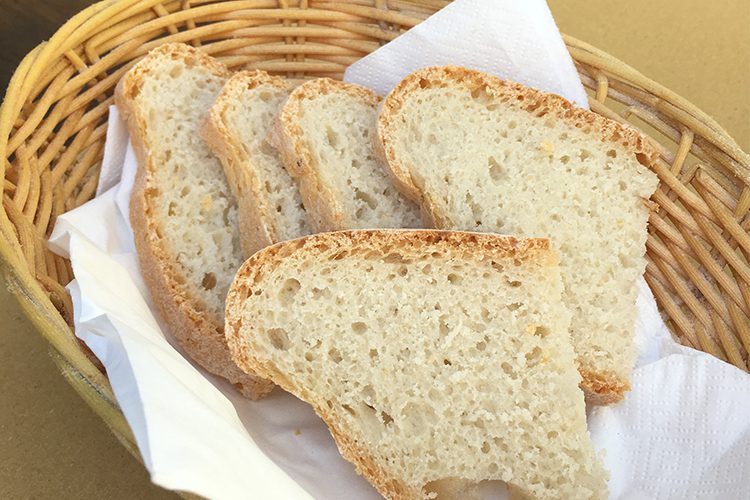
On my first day in Florence, I sat down at a restaurant in the shadow of the Duomo hungry from my flight. I had unpacked and was looking forward to food like a dog looks forward to playing fetch. So when I was brought the bread basket, I devoured each piece and noticed something strange. It was hearty but extremely bland and tasteless. I realized there was no salt! Salt, a seemingly essential ingredient, wasn’t in my first taste of Italian food whatsoever. I didn’t know at the time you should wait to mop up your meal with the bread, an Italian custom I had forgotten in my desperation to get food in my belly. So, after realizing this, I had to find out why the bread was saltless and sciapo (Italian for “bland”).

Chef Pietro Di Marco says the legends of saltless bread vary, and that if asked, every Florentine will give you a different story as to how it happened. A chef his whole life, teaching at Apicius since January, I trust his version of the salt-legend:

Throughout the centuries, the legends have been told. Nothing is on paper, but we all know about the bad blood between (the city of) Pisa and Florence. Pisa, long ago, was the only Tuscan city with access to the sea. Therefore, they were responsible for the distribution, packaging, and taxation of salt for Florence. Florence didn’t want to pay to bake their bread, plus the rivalry and battles between them didn’t help the situation. From there, the evolution of Florentine cuisine began.

The most common dishes involving Tuscan bread (pane toscano), and the most important dishes according to Chef Di Marco, are pappa al pomodoro and ribollita. Pappa al pomodoro is a bread-based tomato soup with herbs and spices, a rich and filling dish invented by Florentine farmers. Ribollita translated means “twice boiled,” and it is another soup reboiled with vegetables (like local white and black cabbage) and poured over bread. Chef Di Marco says it is easy to tell when dishes are made with old-school recipes or new-school recipes: the thickness of the soup, and the ingredients like olive oil, give it away. He says that every chef in Florence knows how to make these dishes, and that without them Florentine cuisine wouldn’t be Florentine cuisine.

Pane toscano can be made in about three hours time and takes a while to rise. This ensures its freshness for days, lasting longer than most bread you get at the supermarket. Its origin is from the province of Lucca, in the town of Altopascio, which still claims its fame to the crunchiest crust and the softest insides of all bread in Italy.

To learn about Tuscan bread, stop by Apicius, the hospitality department at FUA, and get a taste of it where it’s served daily at Ganzo, the Apicius restaurant. And while having a breakfast pastry or dessert at Fedora, the Apicius pastry shop, ask the baking experts there for tips and tidbits about it!

See more of Florence and Italy at FUA’s FB, Instagram, and Twitter.