Curious about how to make the most out of your time during a study abroad experience? Here are five suggestions to help with time management
The moment I landed in Florence, my gut sank as I felt a countdown start in my head. I had only eleven weeks for this once-in-a-lifetime semester abroad. How could I have a fulfilling and satisfying experience in such a short time span, when my friends, who spent nearly five months abroad, said even that wasn’t enough?
I had spent the last few months anxiously anticipating the trip. The Florence Bucket List I had written in my notes app was full of foods to try, cities to visit, and attractions to see. But the ticking clock weighed on me. I had ten weeks, really, as I had to travel home for a week to take the Law School Admissions Test. Nine weeks, if I considered the time commitment of studying for the test and working through the law school application process. On top of that, I would have to balance my academic workload with my free time. I couldn’t imagine that this was enough time to do the things I wanted or settle in, let alone feel like a local.
Although nervous at first, I learned to balance my time and how to make the most of every precious moment. While there are some items on my bucket list that I will have to save for another time, I have had a much more rewarding experience than I ever imagined I could have had.
If you are considering a semester in Florence and are worried about squeezing it all in, here are five tips to help you avoid FOMO and make the most of your time abroad.
1) Don’t Make Escapism a Habit
It’s tempting to retreat into the comfort of TikTok or Netflix, especially when you are adjusting to your new city or just feeling tired. But you didn’t come to Florence to sit on the couch. Push yourself to get up and go to check out that cool market you heard about, even when it’s easier to stay inside.
2) Set (Reasonable) Goals for Your Days
It’s overwhelming to balance academics, social life, and exploring Florence. Set easy goals that will enrich your days without adding too much stress to your life. Go write your essay at a new cafe or go on a walk in a new part of town while you call your friends back home! It is easier than you may think to incorporate new experiences into your daily life.
3) Make Local Spots Feel Like Home
Create routines that will connect you to the city. Find your favorite cafe, make friends with the barista, or frequent a local butcher for your meat. These habits will help you feel integrated into your community, and even start to feel like a local.
4) Be Selectively Spontaneous
Have fun! Say yes to a last minute day trip or a post-dinner gelato run. But also learn when to say no. You can always have a late night at the club with your friends back at home, but you can’t always visit the Leaning Tower of Pisa. Learn how to have fun without jeopardizing the experiences unique to your time in Florence.
5) Actively Reflect on your Experiences
Okay, I know it sounds cheesy, but taking time to reflect on each day will help you feel more accomplished! Whether it’s through journaling, calling home, or looking back through your pictures of the day, take the time to cherish the memories you have made each day.
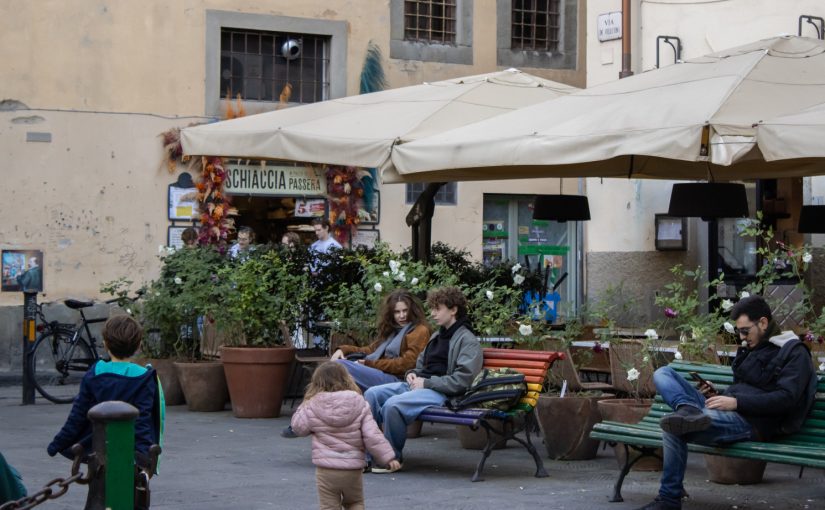
Thousands of miles from the comfort of my American neighborhood, this small Oltrarno piazza reminds me of home.
written by Savvy Sleevar for SPEL: Journalism
First Flower
Every summer back home, my dad transforms our backyard into a jungle of flowers. Fueled by a stash of seeds that’s been growing in size and variety for years now, zinnias of every color emerge from the ground and run wild along our fenceline. The colorful horde of blooms dominates the yard for months, and bunches of them often make their way to vases on our kitchen windowsill. No matter where I find one, a zinnia always takes me back home.
The first zinnia I encountered in Italy was in a planter box, right in the middle of Florence’s Piazza della Passera. Raspberry pink and thick with itty-bitty petals, it would be a star in my Illinois garden. I texted a photo of it to my dad, and it received its due enthusiasm.
Turns out, I’d become well-acquainted with Piazza della Passera, botanicals and all. This little square, full of fantastic places to eat, grab a drink, and hang out, is just a minute away from my apartment. I walk through it at least twice a day, and through my conversations with Florence residents (plus a helpful glance at The Florentine), I’ve started to piece together the piazza’s history.
Blossoming
Back in the day, I’ve been told, the piazza used to be home to a brothel. Not only does this explain the name “passera,” which has a pretty risqué slang meaning, it also makes the mildly suggestive names of the sandwiches at the nearby Schiaccia Passera even funnier. “Only The Top” is a prime, albeit awkwardly translated example, not to mention my favorite item on the menu.
There is another origin story for how Piazza della Passera got its name, though. It involves a sparrow (“sparrow” is the more direct, PG-rated translation of “passera”) dying in the middle of the piazza hundreds of years ago, instigating the Black Death in Florence — though I personally prefer the raunchier tale.
But no matter how the piazza got its name, its prominence in my neighborhood is undeniable. On weekends, the square is full of Florentines young and old, sampling artisan gelato from Gelateria della Passera, eating a plate of pasta at one of Trattoria 4 Leoni’s outdoor tables, or simply enjoying the night air on the rainbow-colored benches.
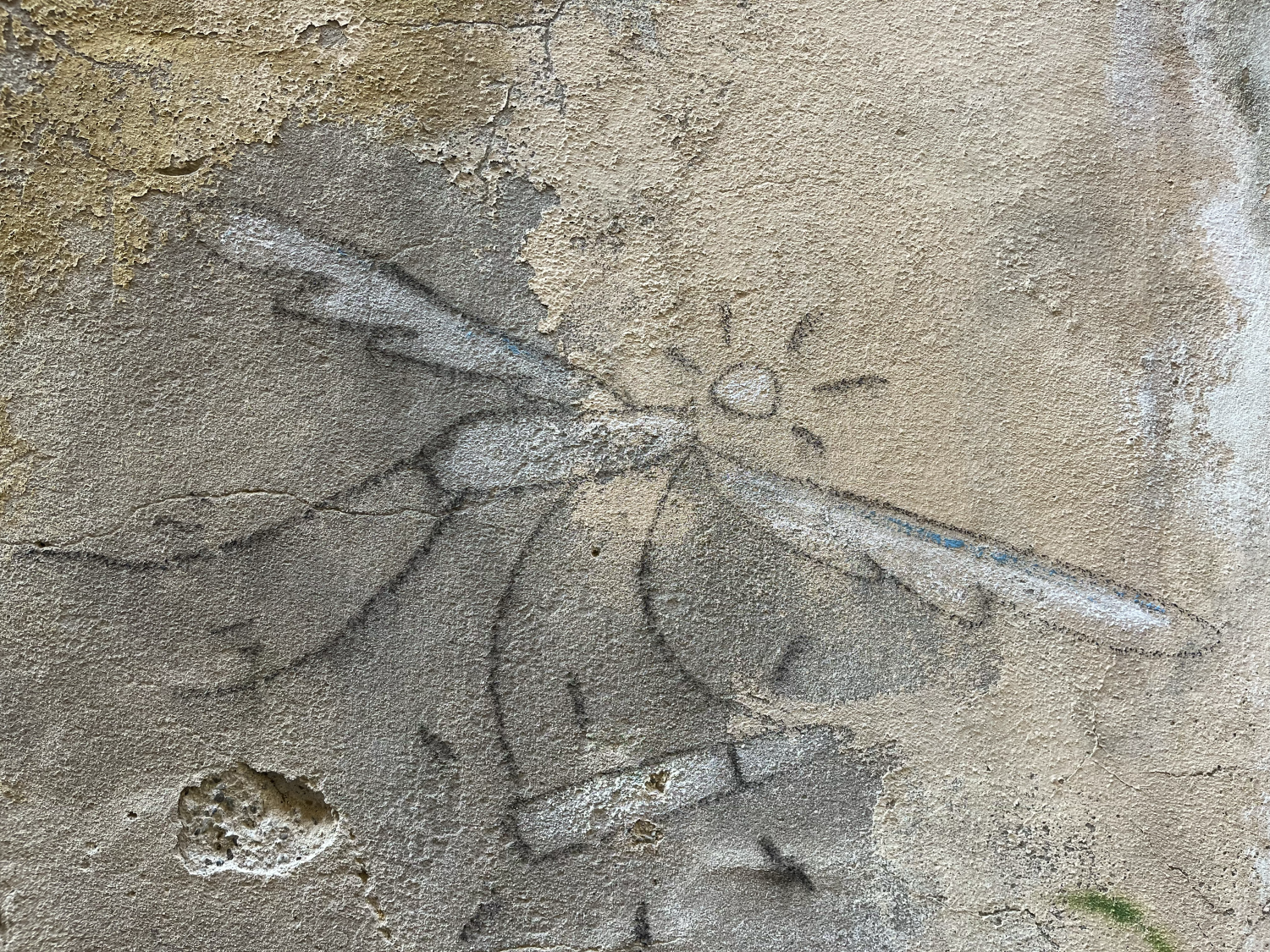
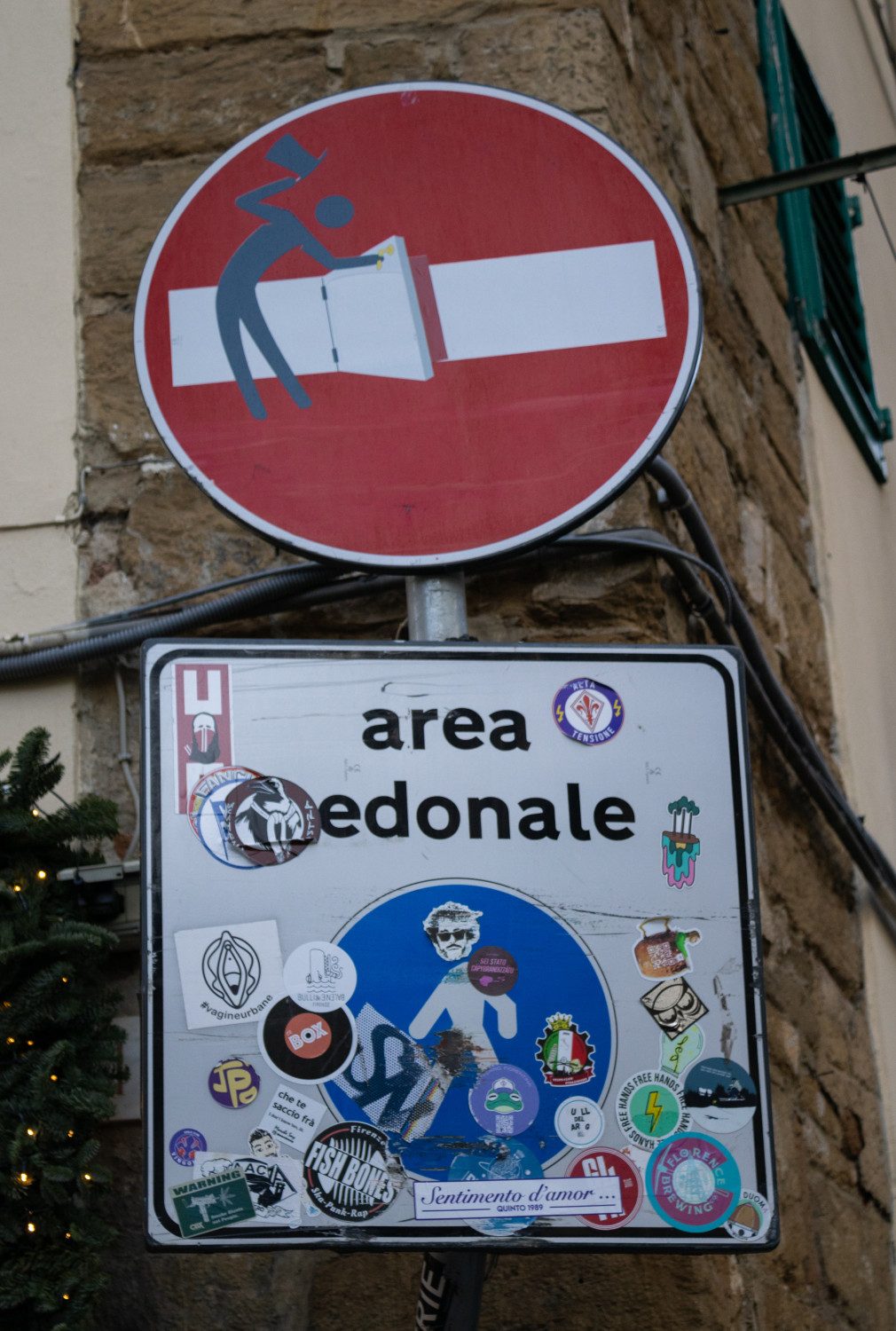
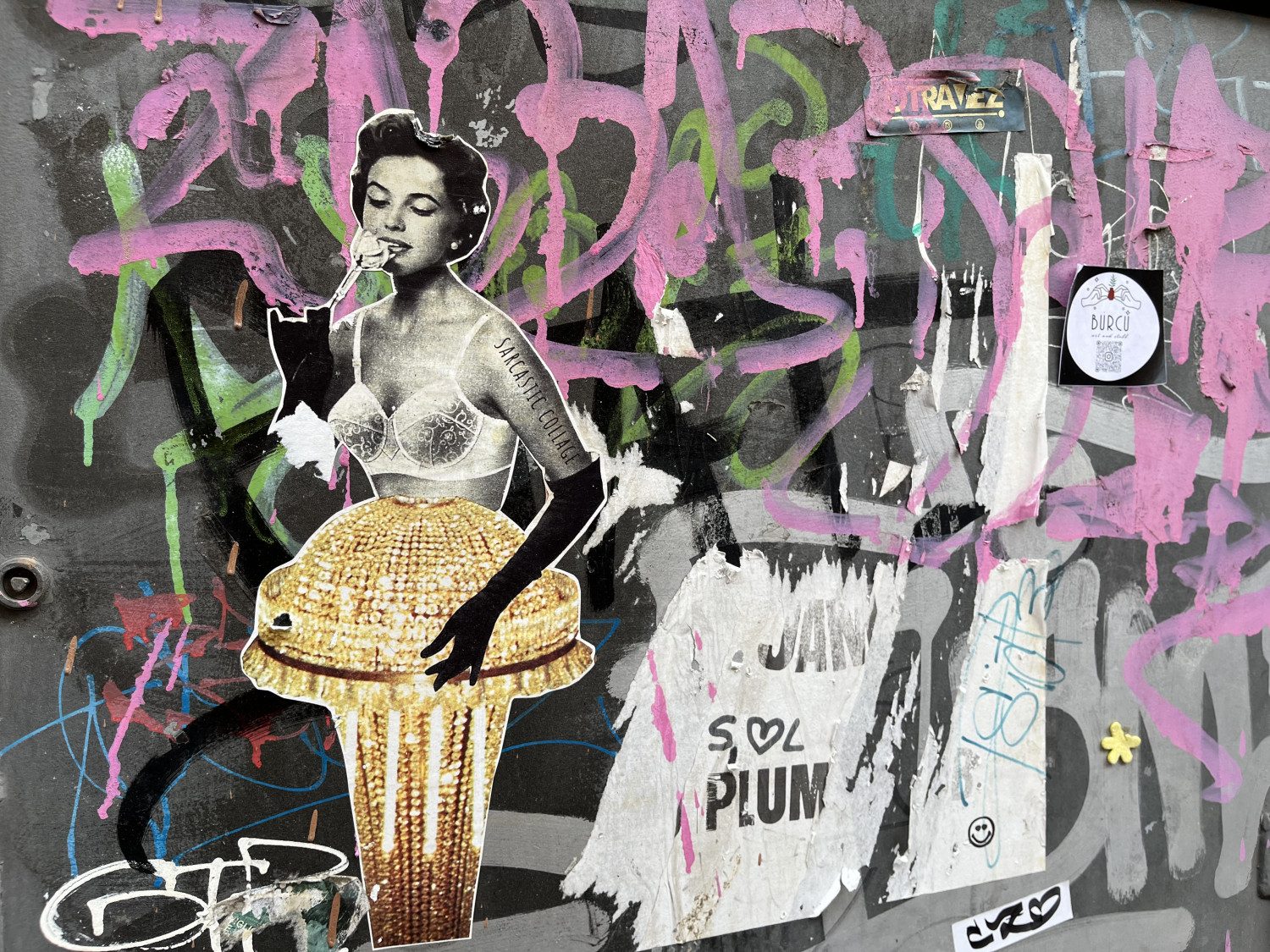
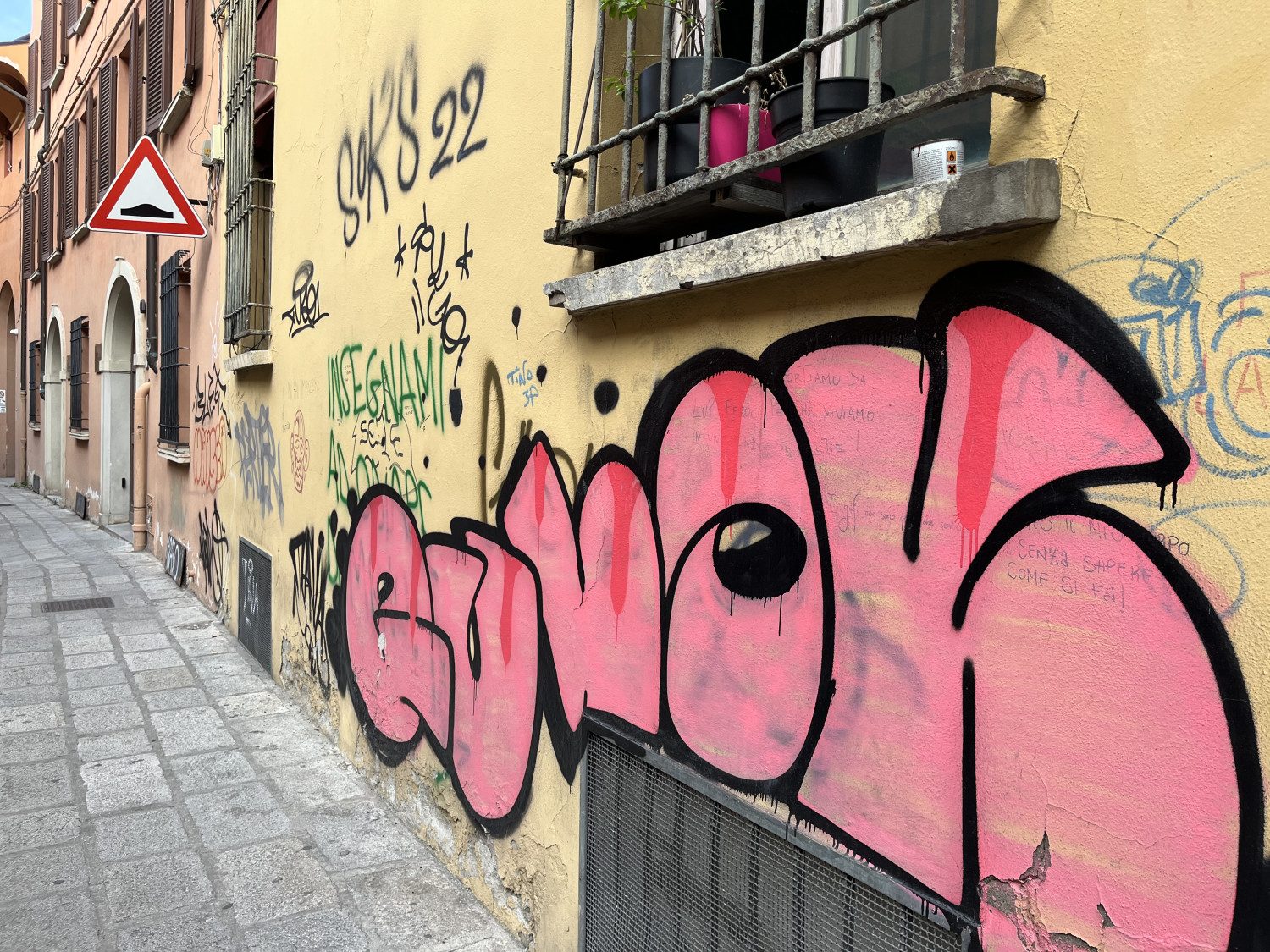
Even beyond the piazza, the eclectic vibe of the main square bleeds into the surrounding streets. Graffiti illustrations decorate almost every building, almost like a trail of breadcrumbs that leads back to my place. Even street signs are canvases for street art, often plastered with layers of stickers and cartoons. And if there’s ever any music in the piazza, the sound of it follows me down the cobblestone street all the way to my apartment.
Still In Bloom
It probably sounds sappy and sentimental, but out of all the sights I’ve seen, and out of all the kind people I’ve met in Italy, the places and faces of the tiny piazza by my apartment have been some of my all-time favorites. The square isn’t grand like Piazza della Signoria, and it may not have the constant stream of foot traffic and street performers that Piazza della Repubblica does, but what it does have is a quintessential Florentine charm that’s hard to put into words.
Through culture shock, travel mishaps, and long days of classes, Piazza della Passera is always there to greet me at the end of my journey home. It’s a familiar landmark that gives me the solace I’m missing. Alternatively, on my particularly good days, when I’ve found a cool new study spot, initiated a successful conversation in Italian, or had an especially fun day in the city, the piazza senses my joy. No matter how I’m feeling, the sight of the square right before I arrive at my front door is something I can rely on.
As for the pink zinnia sprouting in the piazza’s planter box, I was surprised to see the flower remain in its place well into the fall. Thanks to the relatively kind Mediterranean climate, deadheads didn’t appear on the plant until it was almost time for me to start thinking about my upcoming flight home.
When I leave Florence in December after my semester abroad, I have no idea when I’ll be able to return. Until I find the time and funds to travel across the Atlantic again, I’ll only have this image of the city I’ve created for myself, composed of the photos in my camera roll and all the details my faulty memory can hold. I get the feeling, though, that when I see the new batch of zinnias growing in my backyard next summer, I won’t just think of my permanent address, I’ll also think of Piazza della Passera and the home I made for myself in Florence.
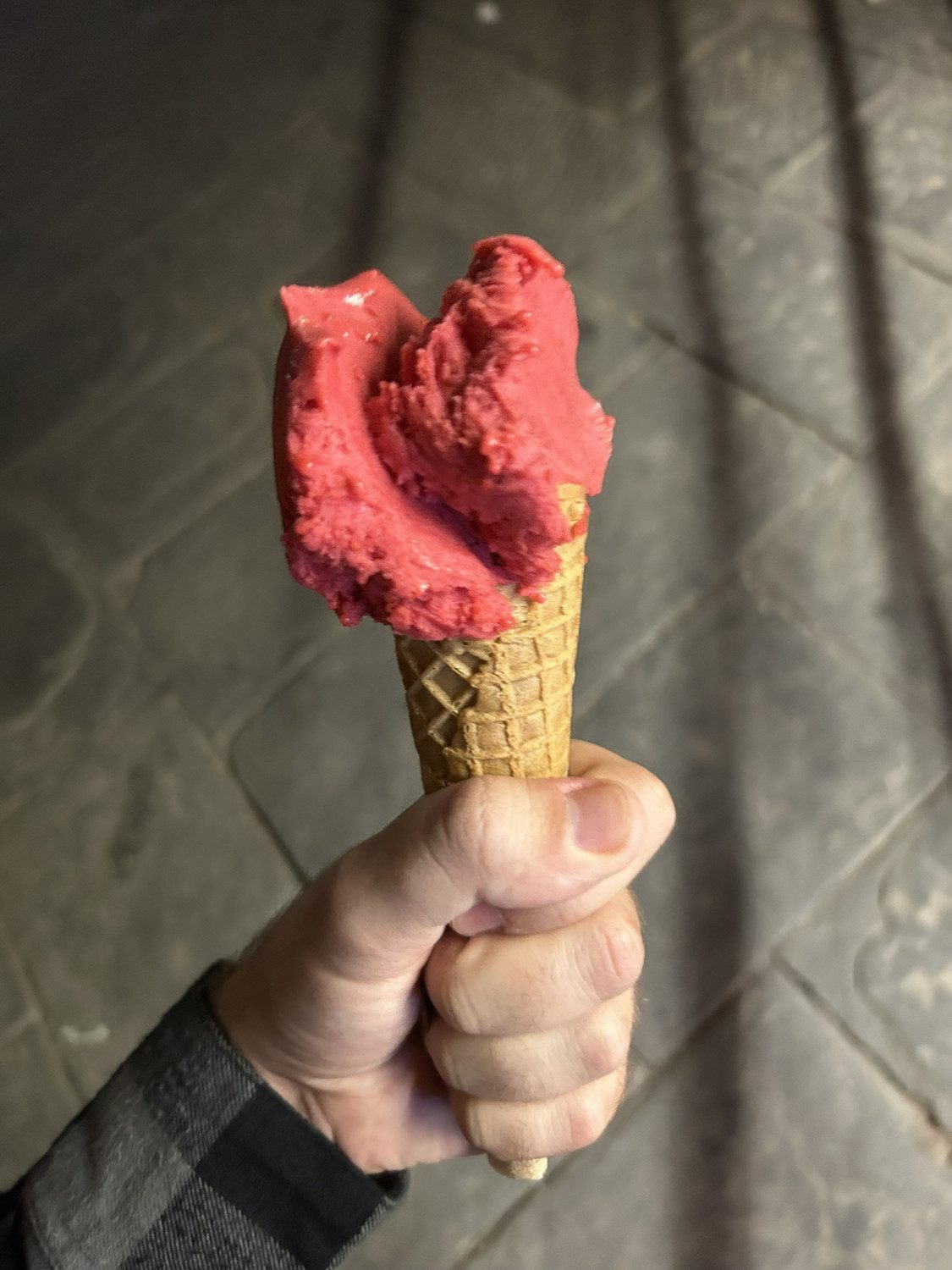
Gelato. I love it, you love it. If you don’t, yes you do. Despite early onset lactose intolerance, I will continue to eat gelato until I can no longer. The dairy-based treat is so good, it seems almost bestowed upon humanity by some higher power, like God extending his outstretched hand to Adam. If you ask me, though, gelato slots above Michelangelo’s Sistine Chapel frescoes on the ranking of greatest human achievements – it probably lands somewhere between the printing press and the motorized carriage.
Who invented this frozen delicacy? Some say the ancient Chinese, some say the Persians, I say some very enlightened individuals. As far as Italy is concerned, it is believed that Florentine architect Bernardo Buontalenti may have invented a version of modern ice cream in the 16th century. We know that the Sicilians got their hands on some sorbet around the 17th century, and from there it spread to the rest of the mainland peninsula.
Like many modern creations, gelato has a vague and fragmented history that will probably never be neatly defined and sorted out. All that matters for us here in the 21st century is that it was made by someone, somewhere, at some point. But what are the best gelato flavors? What are the best flavor combinations? Should it be consumed in a cone, or in a cup? Where should one go to consume such a dessert? After two months of living in Florence, I can confidently say there is no one more qualified to answer these questions than me, a man with zero culinary experience whatsoever.
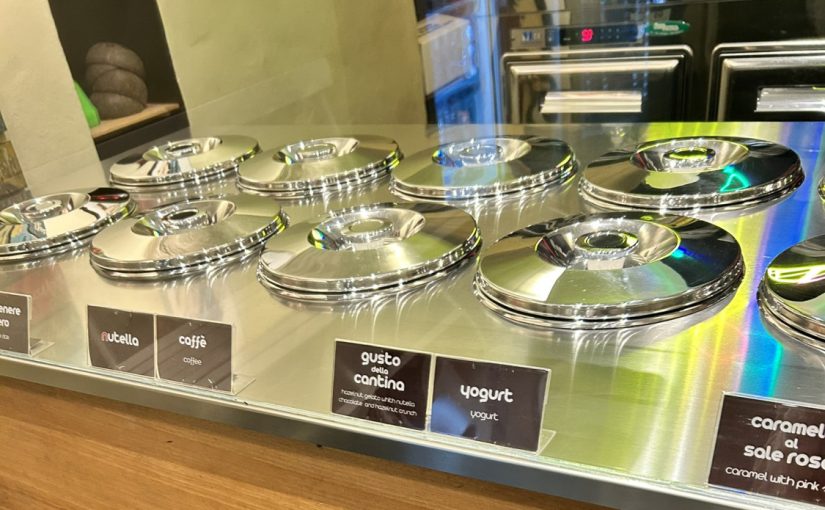
First off, it should be common knowledge at this point to avoid the gelato piled high in the storefront displays, usually with some bits and bobs of fruit or baked goods added for good measure. The best gelato I have found is the kind that you can’t see, hidden underneath the lids of steel containers. While not as visually exciting as the mountains of frozen, multi-colored dessert, the concealed nature of this more authentic gelato makes it perhaps more enticing. The reveal of your treat only upon its placement into your container of choice builds anticipation within your very being for the next ten minutes you will spend consuming it.
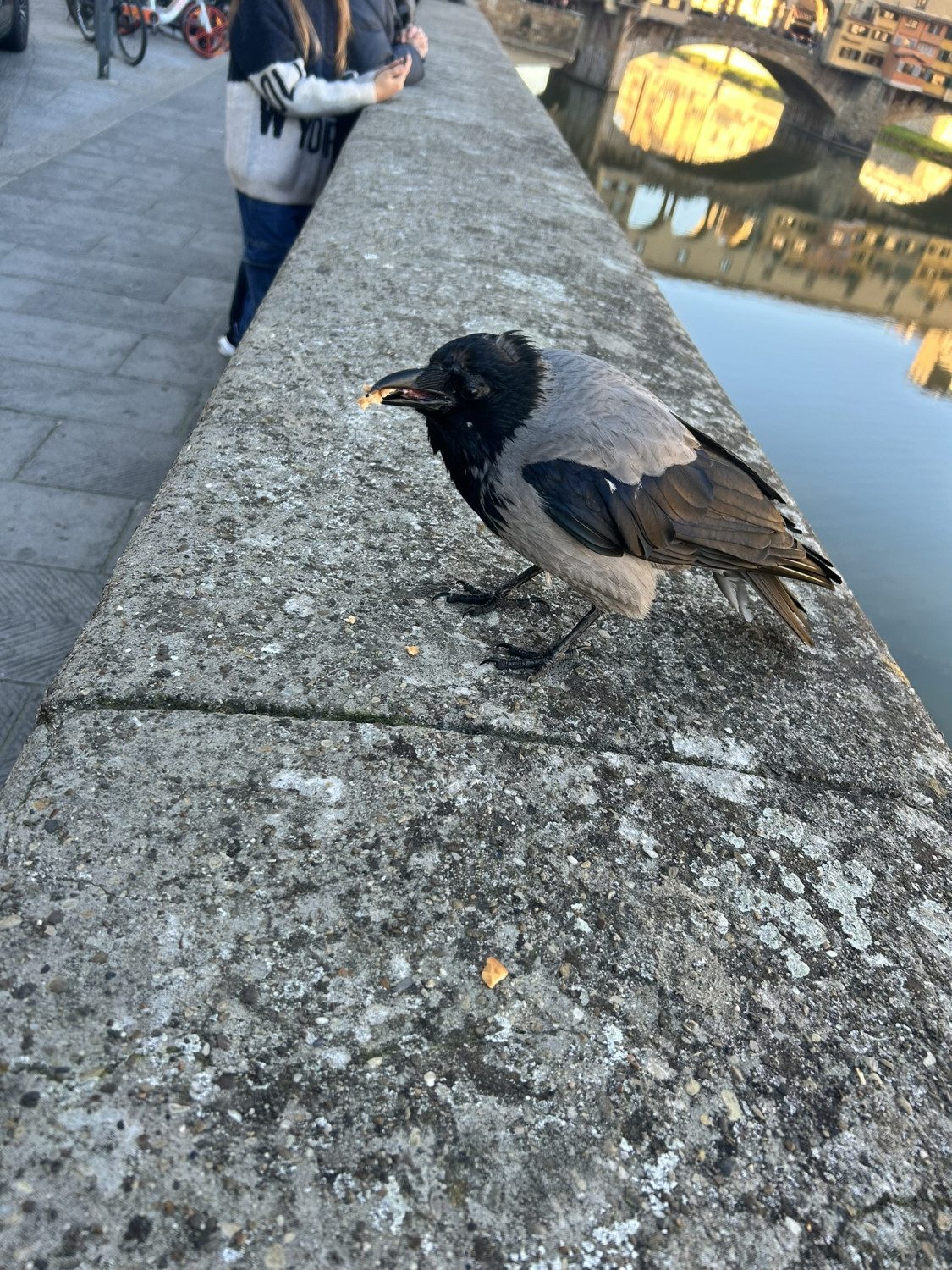
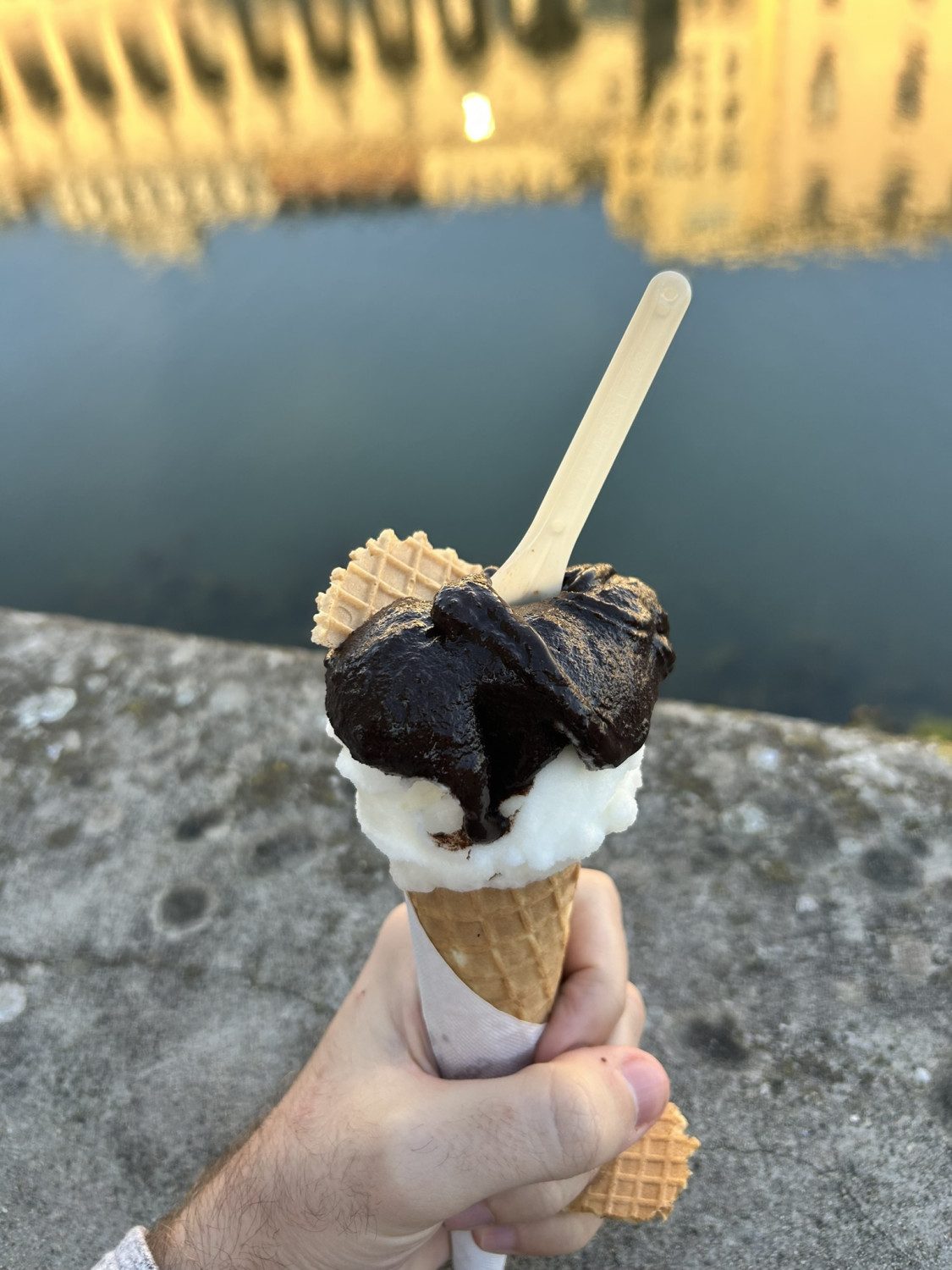
The cone vs. cup debate is one stretching back generations, and I am here to settle it once and for all. For clarity’s sake, I come from the U.S., and in the States, when you get an ice cream cone, you are rarely, if ever, provided with a spoon; licking up the ice cream is your only option. As one can imagine, in the summertime, this results in frequent, tragic messes. The ice cream spilled in the car strikes fear in the hearts of all American parents, and the weak, thin napkins ice cream shops provide are of no help. So my mind was blown the first time I ordered a cone of gelato and was given a complementary spoon. Needless to say, this changes the game completely, as you combine the convenience of the cup with the playfulness of the cone. It’s for that reason that the cone is definitely superior; the toastiness of the cone combines exquisitely with the sweetness of your gelato. Plus, you can break off a piece of your cone and offer it to a nearby bird, and now you have a companion with your gelato as well.
The phrase “less is more” does not apply to American ice cream; for us, more is more. Here, I will invoke my beloved Portillo’s, a chain restaurant native to the Chicagoland area that has been providing my people with beef, hot dogs, and french fries for generations. The beautiful folks at Portillo’s serve an item called the chocolate cake shake, which, of course, is a chocolate ice cream shake with an entire slice of cake mixed in. My personal preference is actually the strawberry lemon cake shake, which is the same thing but with strawberry ice cream and lemon cake. The Midwestern specialty is “food that will put you into a coma.” Suffice it to say, the no-frills, toppings-less style of ice cream here in Italy was a distinct change of pace in my frozen dessert palette. I haven’t seen a single sprinkle since I left home!
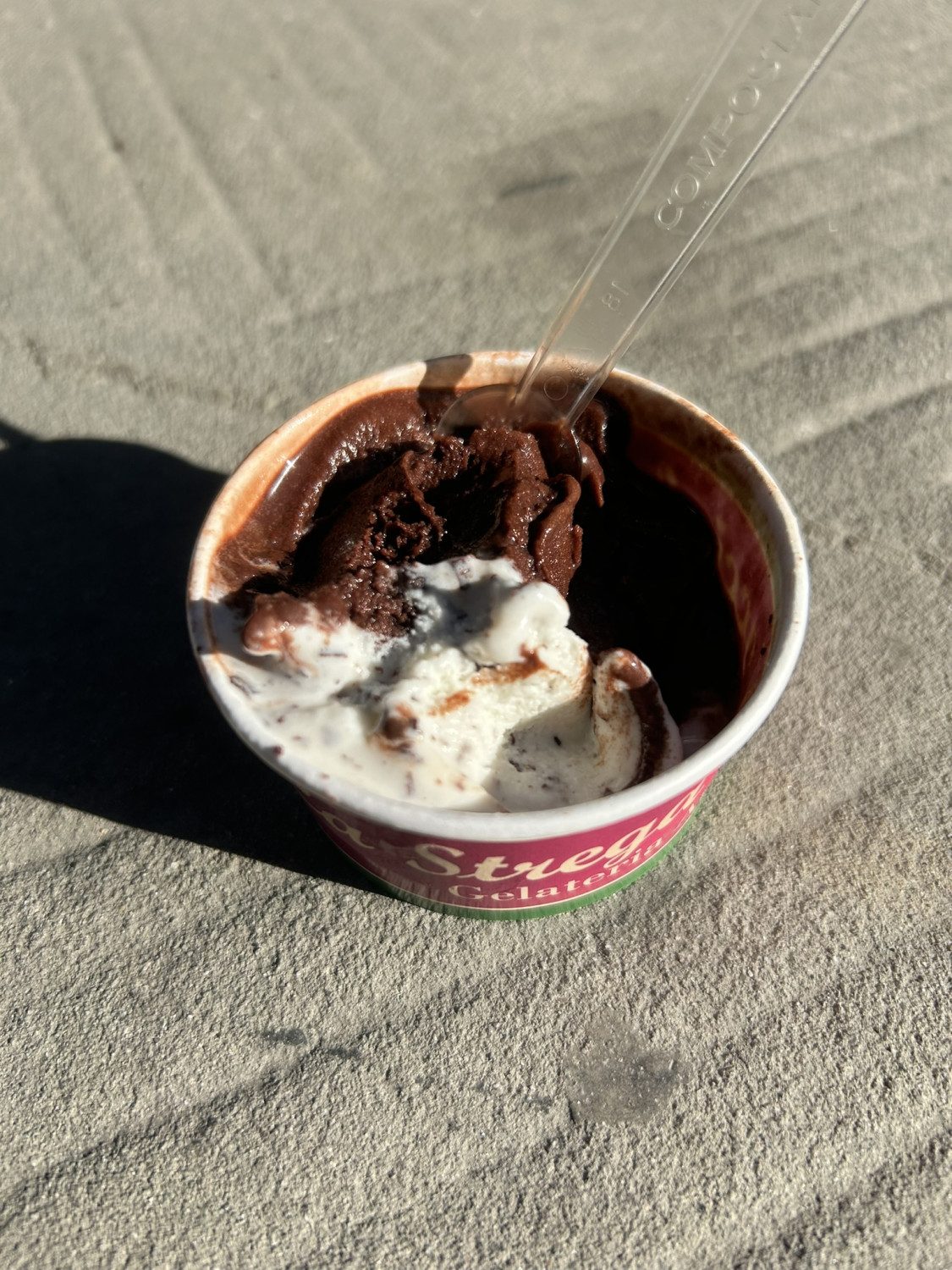
If you’re talking gelato flavors, I find that contrast is really the way to go when looking for the perfect combination. Personally, I am a dark chocolate champion. The bitterness of dark chocolate mixes best with the bright, sweet flavors found in most other gelato. Dark chocolate plus a fruit flavor is the strongest base for your gelato. I fear I may never again have quite as transcendent an experience as the first bite of dark chocolate and raspberry gelato. Strawberry would be a close runner-up with the raspberry, but you could of course sub in mango, orange, lemon, passionfruit, pomegranate, or even pear, which I did find at one spot. For sour and sweet, lemon and raspberry is the clear combination to go with.
There are a number of quality gelato spots across Florence, many with their own unique flavors and styles. Unfortunately, in just 10 weeks of being here, I have not had the opportunity to sample all of them, but here are some of the best that I have found. La Strega Nocciola, just south of Ponte Vecchio, has a white chocolate and cinnamon flavor that so closely imitates the taste of Cinnamon Toast Crunch it is eerie. I am not even sure if they have Cinnamon Toast Crunch available in Italy, but it is one of the premiere cereals, so having it codified into gelato form is truly a marvel of modern technology. In Piazza Della Passera, you can find the aptly named Gelateria Della Passera. They have a number of unique flavors, including the aforementioned pear, but the Monna Lisa, which somehow works in apple sauce, walnuts, and fleur d’oranger, is the clear standout. Grom’s Crema di Grom is a great toasty flavor that almost tastes like a s’more (do they make s’mores in Italy?).
Some other standout locations: there are two places named Cantina di Gelato, one south of the river on Via dei Bardi and one on Borgo la Croce. North of the Duomo are two spots, another La Strega Nocciola and Carabè on via Ricasoli. There are two shops adjacent to each other in Piazza di San Pier Maggiore, David La Gelateria and Rivareno. La Sorbettiera next to Piazza Torquato Tasso for people further away from the city center. As bonus shoutouts, outside of Florence, I loved the Gelati e Granit in Lucca and La Sorbetteria Castiglione in Bologna.
That’s everything I have absorbed about the intricate world of gelato in just over two months in Florence. I have certainly gained a newfound respect and admiration for the Italian renditions on the dairy treat, though I had no doubt that I would when I arrived here. Though, I cannot say that I fully have converted to the Italian mindset; I still find myself craving a chocolate cake shake from time to time.
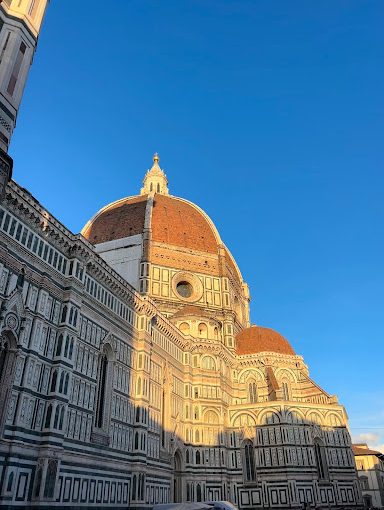
Just in time for winter, Florence’s holiday markets have been set up across the city. Here, residents and tourists alike can see the accumulation of different cultures, foods, crafts, and cheers within these stalls. The Santa Croce market takes place in the square of the Basilica di Santa Croce, with German-style stalls selling all different types of things.
The first place I make a quick pit stop at is this stall shown in the image below, where they sell little ceramic pieces. Here I take a look at the small houses and mushrooms that people often put in their garden, however, that’s not what I’m most excited about. Rather, I take a look at the bells that they are selling. Each one is engraved and painted with different patterns. I don’t know if they’re meant to be, but I know that my mom would love one of these to put on her Christmas tree. We have a long-standing tradition of collecting ornaments from every place we travel to, and since this is my first time away from home for the holidays, I want her to know that I am thinking of her.
After I pay the vendor and leave the stall, a drink hub with three steaming pots catches my eye. I walked over there expecting hot chocolate but was instead introduced to an Italian holiday staple, mulled wine. I decided to buy a cup. One, because it’s freezing, and two, because it smells really good. This is my first time buying this drink, and when I take a sip I can understand its popularity. It is mildly fruity and mildly sweet, but the taste of the wine is still there. By the time I finish my cup, I’m warmed, the sweetness of the wine and temperature working in tandem.
Afterward, I make my rounds through the remaining stalls. There is this stall that sells the most beautiful paper lanterns, but they only take cash and I don’t have any on me. After some looking, I decided to head home for the day and revisit this market later in the day.
As I’m leaving though I’m stopped by the muffled sound of a beautiful strong voice filling the air. I removed the headphones I had been wearing, which had Christmas music blasting, and was greeted by an opera singer. She isn’t wearing anything fancy, just a winter coat and curly hair, but she sings like no other person I’ve heard before. It’s gorgeous.
Later, I came back with my friend and we decided to window shop some more. She ends up getting a bratwurst and I go with the trusted potato spiral that I often get at my hometown’s local fair. They aren’t the same thing, that’s for sure. But, the taste of fried potatoes on a stick reminds me of home and how I’m leaving soon. I also end up getting a cream puff; one about the size of my fist and it is absolutely delectable. When we sit down to eat our food on the wooden benches they have supplied, she and I are separated by an accordion and trumpet player, who goes up to some customers asking for spare change. As I near the end of my residency here in Florence, I think I’m starting to realize that that’s what I’m going to miss most about Florence. The music.
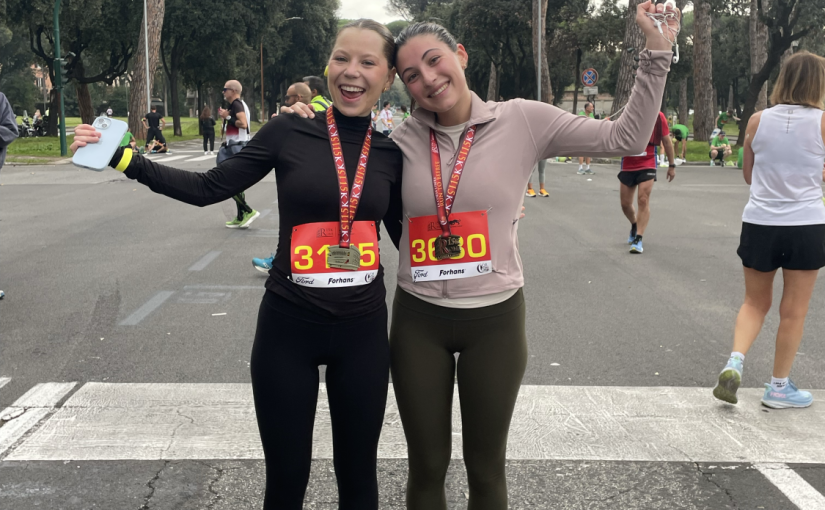
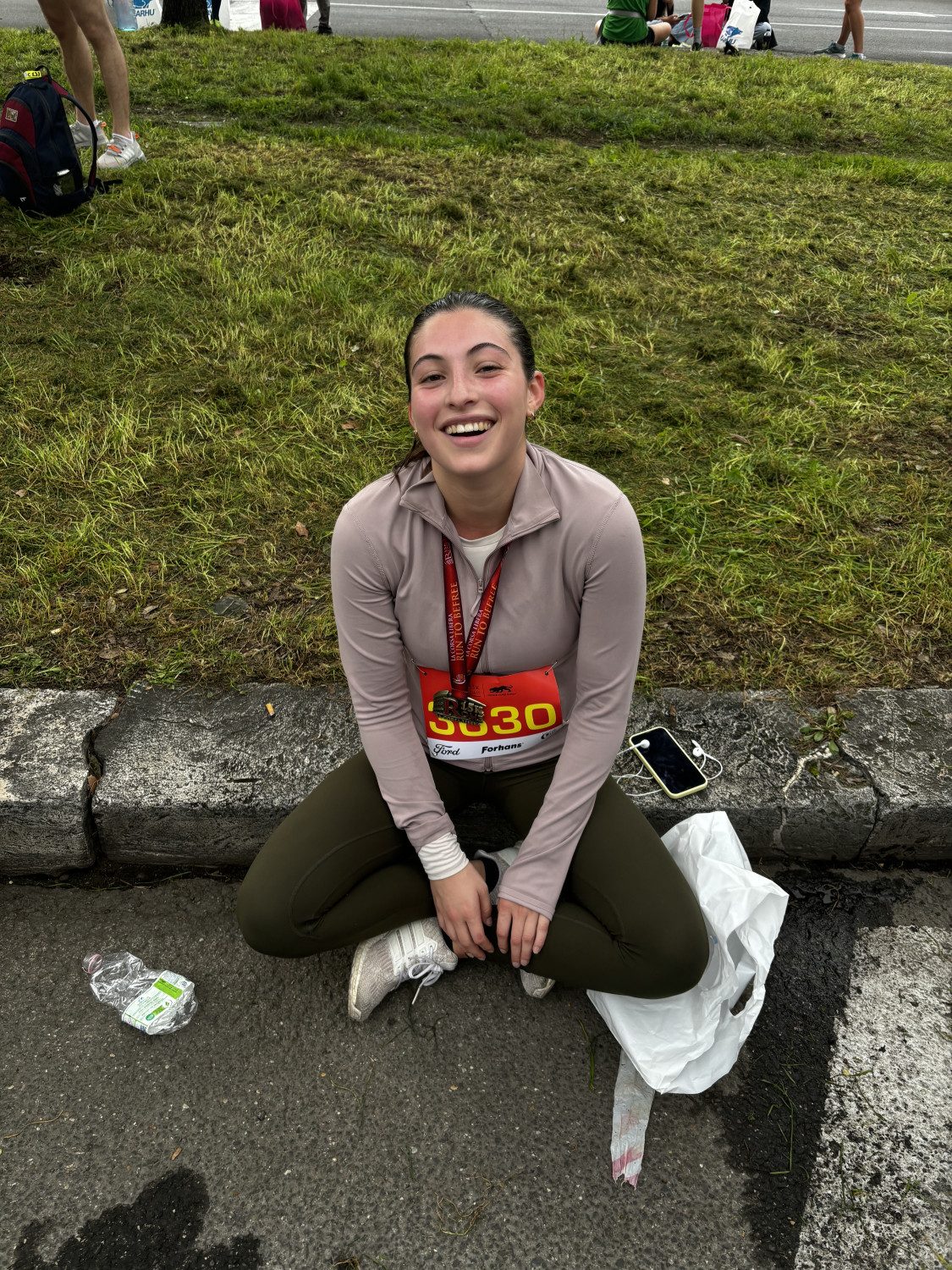
Ser un corredor requiere destreza mental. Los profesionales no me dejarán mentir: es un ejercicio que demanda rigor físico, disciplina y un enorme control sobre la cabeza. Al correr, la capacidad de mantener la concentración y gestionar el dolor es lo que marca la diferencia entre el éxito y el fracaso. Es cierto que para todos los deportes de alto rendimiento es importante entender el poder que tiene la mente sobre el cuerpo, pero, ¿qué es lo que tiene este de particular? Debo decir que no soy experta en el tema: Roma fue el primer acercamiento al mundo de las carreras.
Running requires mental skill. The pros won’t let me lie; it’s an exercise that demands physical toughness, discipline, and a ton of mental control. When you run, the ability to stay focused and manage the pain is what really separates success from failure. It’s true that in any high-performance sport, understanding the power of the mind over the body is crucial, but what makes running stand out? I’ll be honest—I’m no expert on this: Rome was my first real introduction to the world of running.
En agosto conocí a una mexicana en el centro de Florencia. Durante la conversación me platicó que recién había empezado a correr y que había iniciado un club para todos los interesados en el deporte. Dos días más tarde pagué la carrera de 15 kilómetros en Roma que se llevaría a cabo el domingo 10 de noviembre, lo cual me dejaba con menos de tres meses para entrenar. Septiembre fue de viajes y fiestas, y luego llegó octubre con algo peor: la postergación. Me amarraba a la cama en las mañanas, y en las noches cualquier excusa era lo suficientemente buena. Al parecer, correr era algo fuera de mi liga aún siendo una persona inclinada al deporte. Que curioso, ¿no? Parecería que podríamos colocar “correr” en una categoría separada de las demás, como si las demandas fueran sólo para unos cuantos valientes.
In August, I met a Mexican woman in downtown Florence. During our conversation, she told me she had just started running and had even started a running club for anyone interested in the sport. Two days later, I signed up for a 15-kilometer race in Rome that was set for Sunday, November 10, leaving me with less than three months to train. September was all about travel and partying, and then came October, bringing something worse: procrastination. I’d get stuck in bed in the mornings, and at night, any excuse seemed good enough. It felt like running was just out of my league, even though I’m someone who usually loves sports. Funny, right? It’s like we could put “running” in a category of its own, as if the demands were only for a select few brave souls.
Algunos dirán que lo más difícil son los entrenamientos, y no se equivocan. Cada kilómetro es una experiencia nueva: los primeros tres son fáciles, engaña la falsa sensación de que la energía durará para siempre; poco a poco las piernas se debilitan, el cuerpo se vuelve más pesado. Llegar al kilómetro cinco es un reto y después al seis, al siete, ocho… y así sucesivamente. Aunque es cierto que el cuerpo se acostumbra, la cabeza nunca para de gritar. El secreto es tener a alguien cerca, un compañero a quien seguir, alguien que empuje y motive, el vivo recordatorio de la importancia de seguir adelante cuando el cuerpo comienza a ceder a la presión de la cabeza. Establecer los días y el horario de entrenamiento ayudará con esa tan necesitada preparación mental. También el desayuno, por ejemplo, puede marcar la diferencia: uno lleno de azúcar y carbohidratos será el combustible perfecto.
Some people will say that the hardest part is the training, and they’re not wrong. Every mile is a whole new experience: the first three are easy, tricking you into thinking the energy will last forever. But little by little, your legs start to weaken, your body gets heavier. Reaching mile four is a challenge, and then comes six, eight, ten… and it just keeps going. While it’s true that the body adapts, the mind never stops screaming. The trick is having someone by your side, a buddy to follow, someone who pushes and motivates you—living proof of how important it is to keep going when your body starts to give in to the pressure from your head. Setting specific training days and times helps with the mental preparation you’ll need. Even breakfast, for example, can make a huge difference: one packed with sugar and carbs will give you the perfect fuel.
Cuando entrenas es imposible no conocer la marca por kilómetro, mucho menos si el camino es uno conocido, pero en un escenario nuevo las cosas son distintas: te abres a la posibilidad de ignorar la distancia. Aquí entra en juego el tiempo. Aquel que pasa siempre a la misma velocidad, ya sea que permitamos hundirnos en las afectaciones que provoca o no. Para un corredor, el tiempo es imposible de ignorar: conoce perfectamente cuántos minutos le toma recorrer cierta distancia. La marca del kilómetro ya no será medida por el recurrente camino sino por lo que tarda usualmente en completarlo. Dependerá de la particularidad dentro de cada corredor tomar esto como un regalo o como una tortura. Para mí, fue un regalo inesperado. La novedad de los paisajes me forzó a contar con el tiempo para medir la distancia, y cuando uno piensa en una hora y media la vida pasa más rápido que cuando piensa en 15 kilómetros.
When you train, it’s impossible not to keep track of your pace per mile, especially if the route is familiar. But in a new setting, things change: you open yourself up to the possibility of ignoring the distance. That’s where time comes into play. Time always moves at the same pace, whether we let ourselves get lost in the impact it has on us or not. For a runner, time is impossible to ignore: you know exactly how many minutes it takes to cover a certain distance. The mile marker is no longer measured by the same old route, but by how long it usually takes you to complete it. Whether you see this as a gift or a torture depends on the runner’s mindset. For me, it was an unexpected gift. The novelty of the scenery forced me to rely on time to measure the distance, and when you focus on an hour and a half, life passes by faster than when you’re thinking about 10 miles.
Nunca corras la misma cantidad de kilómetros que los que te tocarán en la carrera. Otra conocidísima instrucción de los profesionales. Yo la seguí a ciegas. No por ser fiel a las creencias restrictivas del deporte o por ser una persona compulsiva al seguir las reglas, sino porque el cuerpo lo pedía a gritos. La cabeza también, y con un poco más de intensidad. En una gran cantidad de entrenamientos me pidió parar y yo cedí sin cuestionarlo, como si de no hacerlo estuviera engañándome a mí misma. Como si una parte de mí se separará en dos, desatando una gran pelea entre el cuerpo y la mente, y que horrible traición darle la espalda a tu fiel compañera. Tu cabeza se deslinda de las acciones del cuerpo, hasta que en algún punto se convierten en algo tan ajeno que roza lo involuntario, lo automático. Si logras pasar el umbral de los gritos, las acciones involuntarias del cuerpo son otro gran regalo.
Never run the same number of miles in training as you’ll do in the race. Another piece of advice from the pros. I followed it blindly. Not because I was strictly adhering to the sport’s rules or because I’m compulsive about following instructions, but because my body was screaming for it. So was my mind, and with even more intensity. During many of my training sessions, my mind begged me to stop, and I gave in without questioning it—like I’d be fooling myself if I didn’t. It felt like a part of me was splitting in two, unleashing a huge battle between body and mind. And what a horrible betrayal it is to turn your back on your loyal companion. Your mind detaches from your body’s actions, until at some point, they become so foreign that it feels almost involuntary, automatic. If you manage to push past the threshold of the screaming, the body’s involuntary actions become another great gift.
La semana antes de la carrera es la más importante. Aquí deberás cuidar con más atención las comidas, las horas de sueño y el rigor de los entrenamientos: ¿cómo se siente el estómago por la mañana después de comer ciertos alimentos? ¿Ese gel energético es el correcto, lo necesito realmente? ¿Cuáles son los calentamientos que a mí me funcionan? ¿Cómo me siento corriendo junto a una compañera? ¿La música es lo suficientemente motivante o podré soportar el unísono de la respiración? Tomaré este momento para dar un consejo de principiante: la música es el mejor amigo de un corredor. La razón, supongo, recae en lo tedioso y repetitivo que son los movimientos. Correr es un deporte, me atreveré a decir, monótono. La música, con su ritmo y energía, no solo distrae, sino que también puede ayudar a mantener un paso constante y a darle a cada zancada un propósito, transformando el esfuerzo en algo más llevadero y, a veces, si realmente te lo propones, disfrutable.
The week before the race is the most important. This is when you need to pay extra attention to your meals, sleep schedule, and the intensity of your training: How does your stomach feel in the morning after eating certain foods? Is that energy gel the right one, and do I really need it? What warm-ups work best for me? How do I feel running alongside a training partner? Is the music motivating enough, or will I be able to handle the sound of my own breathing? Here’s a piece of advice from a beginner: music is a runner’s best friend. The reason, I suppose, lies in how tedious and repetitive the movements can be. Running, I dare say, is a monotonous sport. Music, with its rhythm and energy, doesn’t just distract you; it can also help you maintain a steady pace and give each stride a sense of purpose, making the effort more bearable and, sometimes, if you really commit to it, even enjoyable.
Llega el día y los nervios son incontrolables, o quizás, para algunos suertudos, ese sentimiento predominante es la emoción. De cualquier manera, será un impulso que deberás usar a tu favor. Llega prevenido ante cualquier circunstancia: la ropa cómoda y un clima favorable son algunos de los pequeños placeres que la vida te regala y uno solo aprecia cuando faltan. La repetitiva pero contundente recomendación es una buena lista de canciones. Aquellas te llevarán por el camino, pues tienen la capacidad de hacerte sentir invencible. En mi caso, cada canción fue meticulosamente seleccionada y acomodada en un orden que reconoceré como obsesivo: ¿cómo quiero empezar? ¿Qué emoción será la predominante en el minuto 30 y cuál será la canción correcta para representarla? ¿Cuál es la indicada para cerrar y cuál es la parte específica que deberá estar sonando mientras cruzo la meta?
The day arrives, and the nerves are out of control, or maybe, for some lucky ones, that dominant feeling is excitement. Either way, it’s an energy you’ll need to channel to your advantage. Be prepared for any circumstance: comfortable clothing and favorable weather are some of life’s small pleasures that you only truly appreciate when they’re missing. One piece of advice you’ll hear over and over is to have a solid playlist. Those songs will carry you through, because they have the power to make you feel invincible. For me, each song was carefully selected and arranged in an order I’ll admit was a bit obsessive: How do I want to start? What emotion will dominate at the 30-minute mark, and what’s the right song to match it? Which track should close out the race, and what specific part of the song should be playing when I cross the finish line?
No importa cuanto intentes controlar el momento, las cosas saldrán diferentes a lo que imaginas. La mente tiene el poder inmensurable de dar lugar, sobre cualquier otra cosa, a emociones completamente abrumadoras. En mi caso, los sentimientos no esperan a nadie y no frenan por nada. Sale una canción que recuerda a una persona o a un momento en específico, y la mente se inunda de memorias incómodas, alegres, dolorosas, o incluso de una tremenda nostalgia, entonces pega el momento incontrolablemente correcto y se clava un nudo en la garganta, el dolor de las piernas es diminuto junto a la nube de emociones que se acomodan en el pecho, todo se siente infinito y el lugar te recuerda al enorme privilegio de estar, de vivir, de escuchar y de sentir, de la incomparable capacidad del cuerpo para mantener un movimiento demandante por tanto tiempo y lo amable que es la cabeza cuando uno más la necesita. Llegar a la meta te recubre en un sentimiento de satisfacción que hace que todo el recorrido haya valido la pena. Prometo que lo volverás a hacer. Volverás a sufrir, pero también volverás a sentir.
No matter how much you try to control the moment, things will always turn out differently than you imagine. The mind has this immeasurable power to give way, above all else, to emotions that can completely overwhelm you. In my case, feelings don’t wait for anyone and they don’t hold back for anything. A song comes on that reminds you of a person or a specific moment, and your mind floods with memories—awkward, joyful, painful, or even filled with a deep sense of nostalgia. Then, the perfect, uncontrollable moment hits, and a lump forms in your throat. The pain in your legs feels insignificant next to the storm of emotions settling in your chest. Everything feels infinite, and your surroundings remind you of the immense privilege of being alive, of living, of hearing, of feeling, and of the body’s incomparable ability to keep moving for so long. The mind, in those moments, is gentle with you when you need it most. Crossing the finish line wraps you in a feeling of satisfaction that makes the entire journey worth it. I promise, you’ll do it again. You’ll suffer again, but you’ll also feel it all again.
What do you get when you mix a dead phone, a missed train, and a first-time solo traveler stuck in Bologna? A recipe for disaster — and resilience.
written by Savvy Sleevar for SPEL: Journalism
Flying Solo
Before I embarked on my semester-long journey to study abroad in Florence, I had never stepped foot outside the United States. Earlier this year, I had no passport, no overnight flights to speak of, and almost no solo travel experience. Before Italy, my most notable independent excursion was a quick trip to Chicago, which definitely involved a frantic sprint to my platform to catch the Amtrak train home. So, when I finally had a free day to travel during fall break, I figured I should start small.
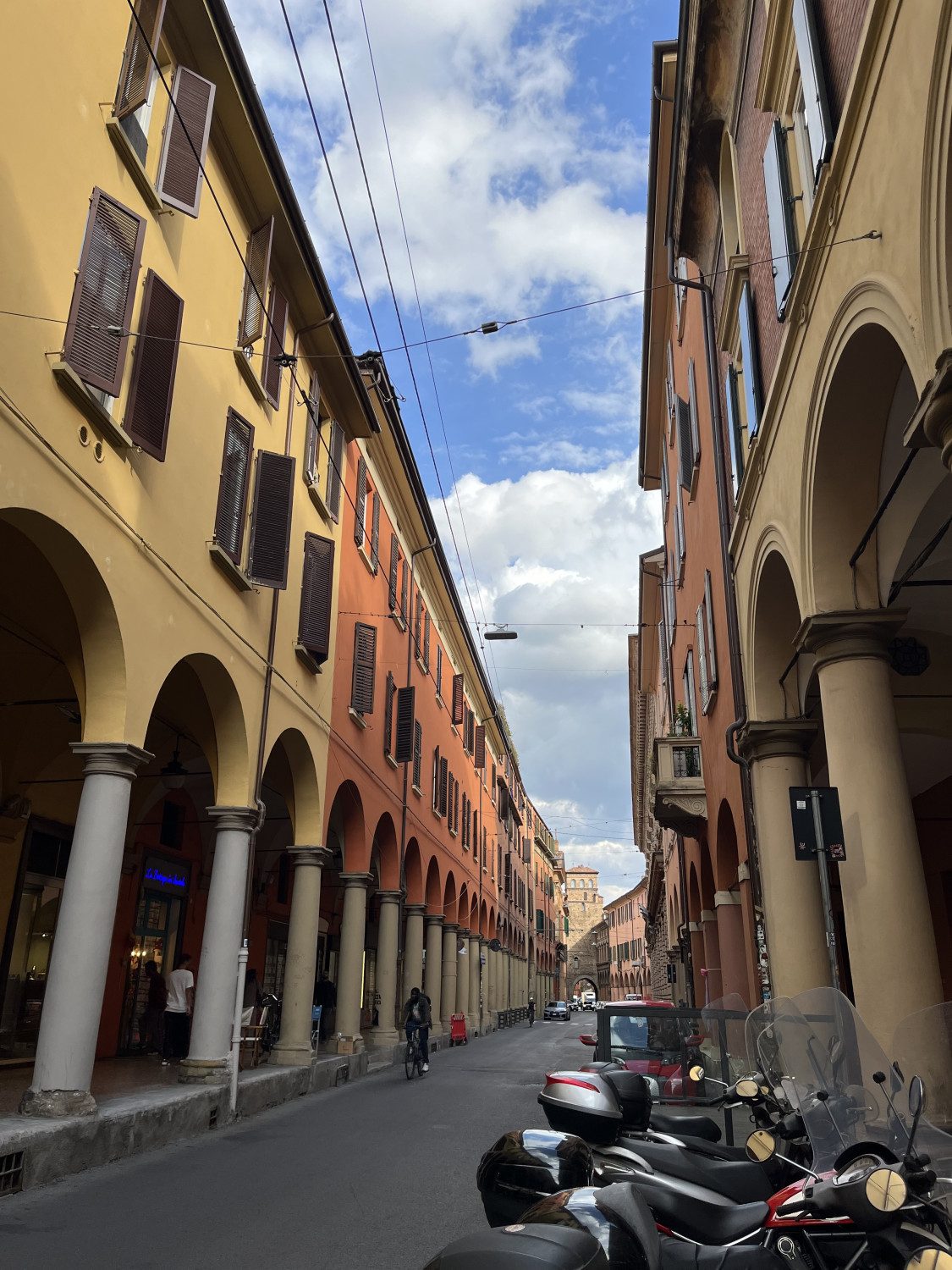
Bologna, Italy was my natural first choice. It’s just over 100 kilometers from Florence, and a round-trip Regionale train ticket only put me back about 20 euros. Not only was Bologna a safe bet for Baby’s First Italian Day Trip, the city itself is stunning. After I spent the afternoon perusing the local markets, wandering through the miles of colonnades in the city center, and standing awestruck inside Basilica di San Petronio, I wanted to get a glimpse of Bologna from above. But with the famous Asinelli Tower closed for maintenance, Torre dell’Orologio was the only way to get the bird’s-eye view of the city that I was after.
To get to the top of Torre dell’Orologio, the historic clock tower in Bologna’s main square, you need to sign a waiver. The staircase that takes you to the rooftop looks ancient, and it’s steeper than a heavy-duty step ladder. Put simply, you can’t afford to fall. So very, very carefully, I climbed up the steps, putting all my faith in the wooden railing and any remaining traction on my threadbare, 4-year-old HOKAs.
Once I reached the top, though, my precarious journey up the stairs was quickly forgotten. Immediately, I was enraptured by the view.
New Heights
Hey, I say to a low-resolution image of Mom on my phone screen.
Hi, Savvy, she replies. How’s Bologna?
I flip my camera around, replacing the image of my face with the view in front of me.
Oh, WOW! she says.
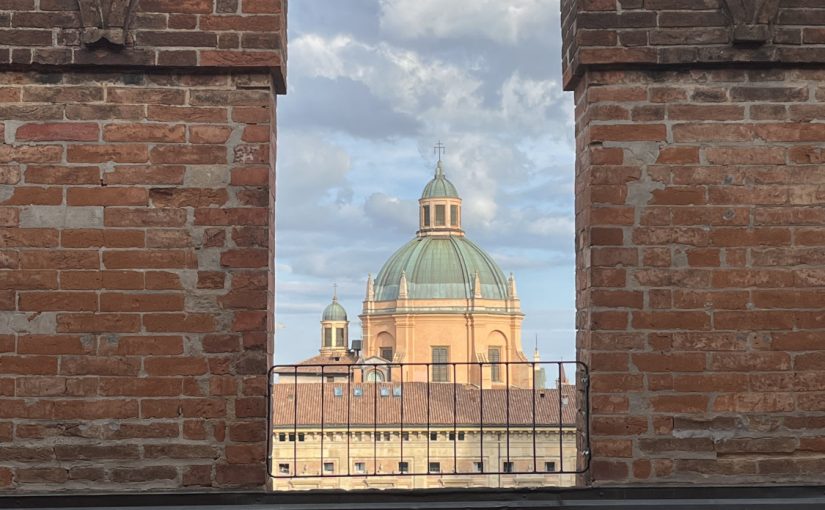
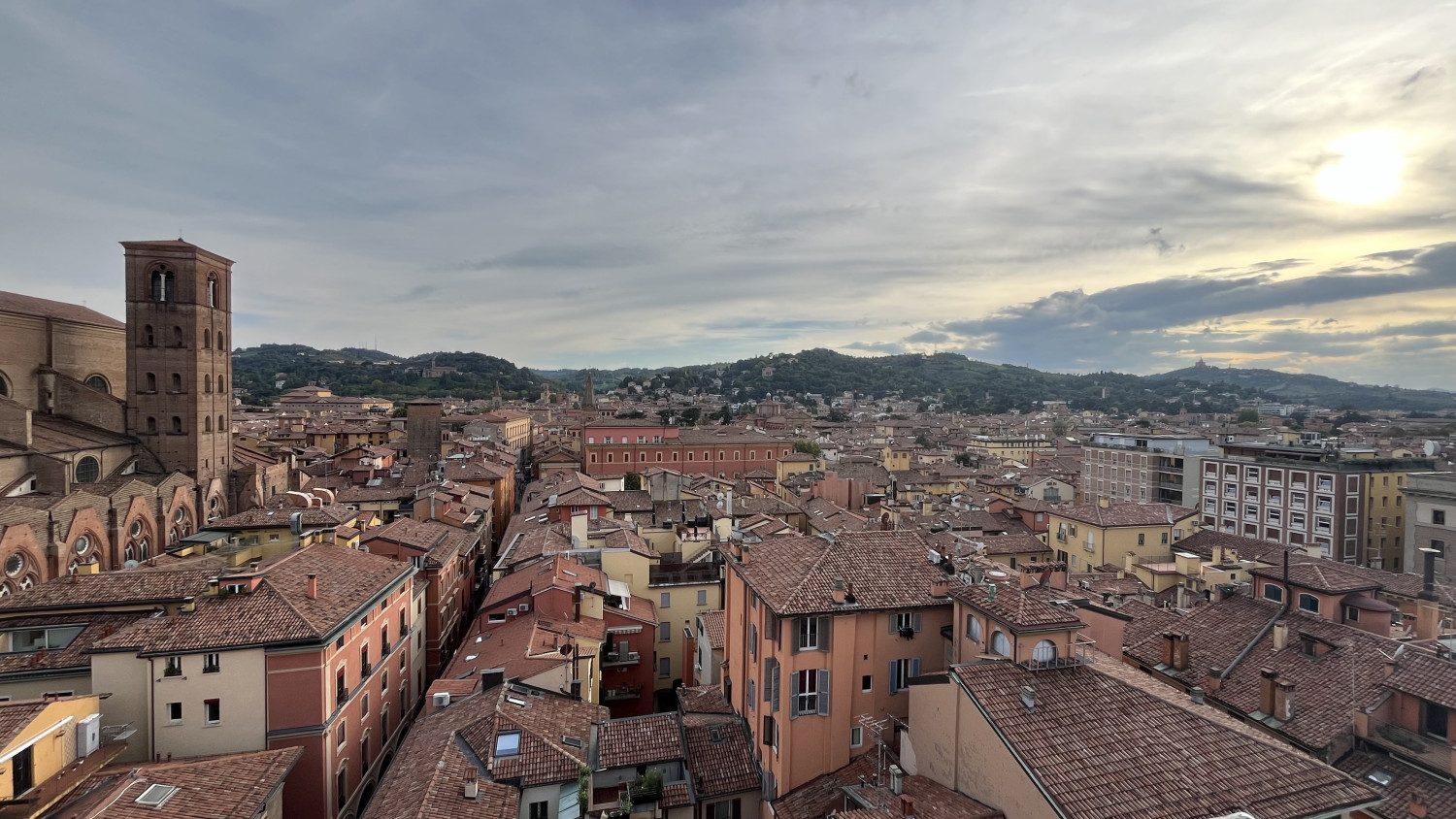
I spin my phone around to show her the city from every angle, and nearly 8,000 kilometers apart, Mom and I take in the scenery together. We look out at the tiled rooftops on Bologna’s countless amber buildings, the distant green hills speckled with homes and churches, and the statuesque towers and domes beyond the main square. I could have stayed up there all evening, taking endless pictures of the panoramic view, but I knew I had more to see at ground level. After hanging up with Mom and taking one last look at the breathtaking Bolognese skyline, I made my descent.
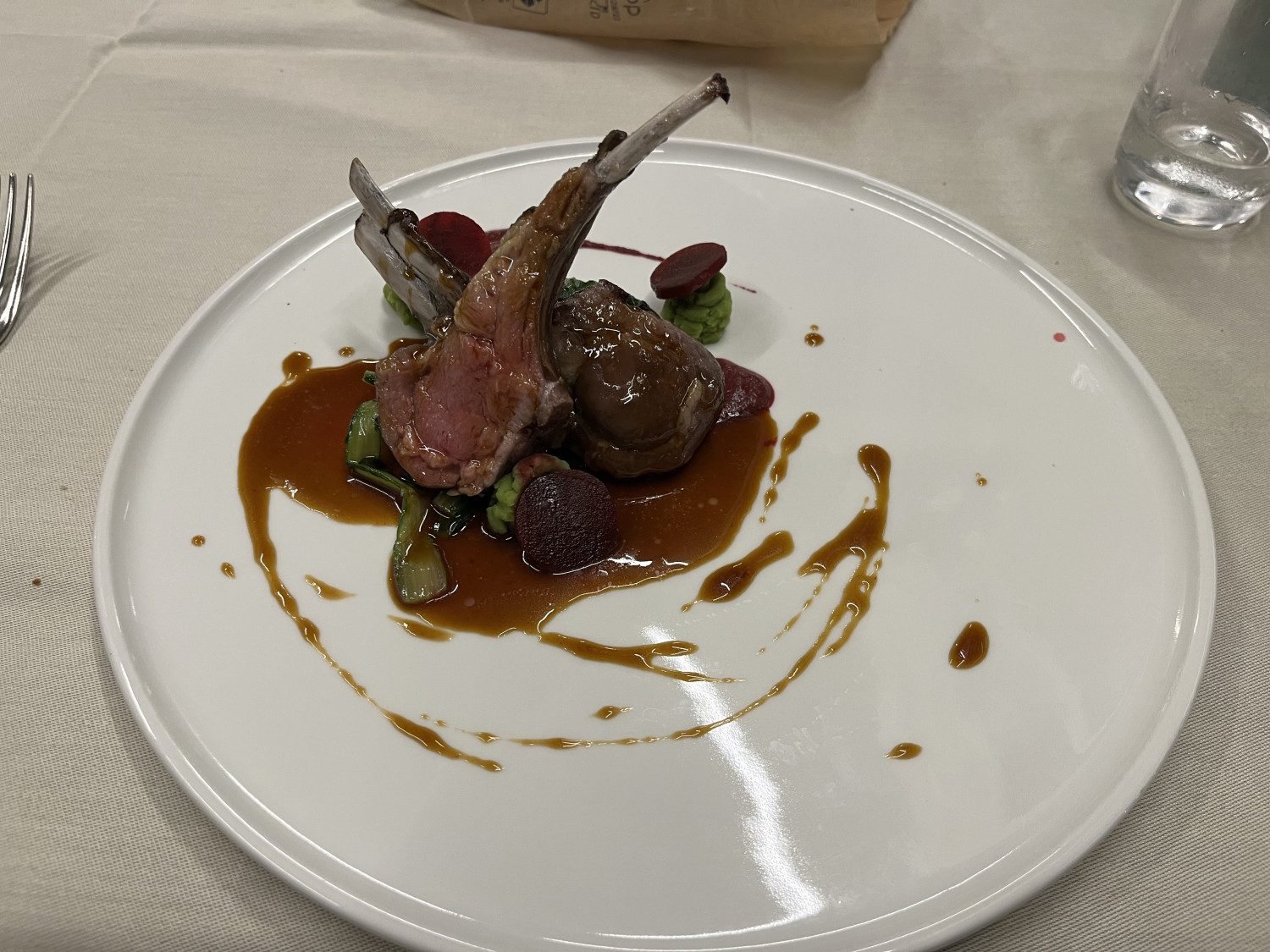
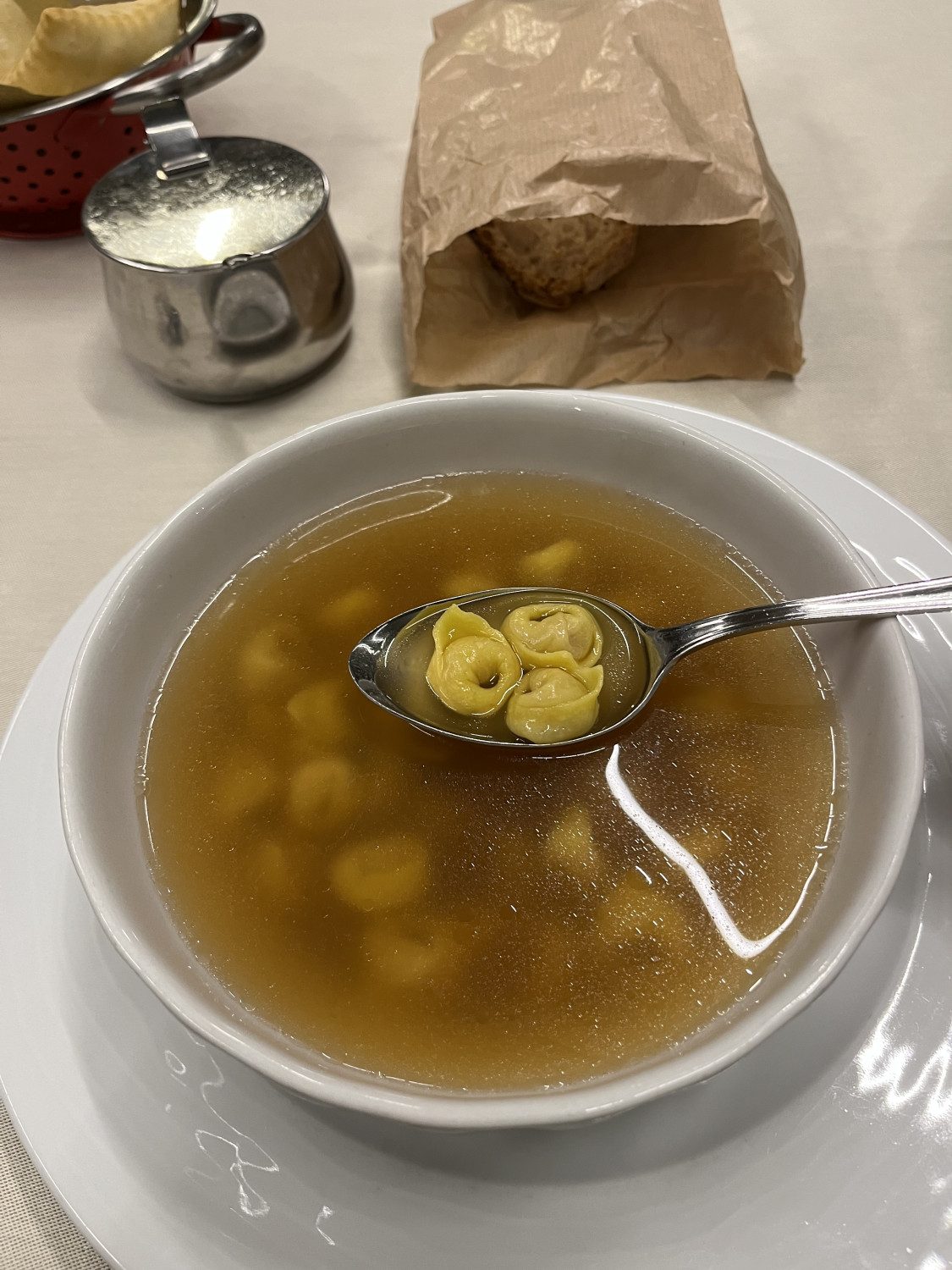
For the rest of the day, I soaked up as much of the city as I could. I people-watched in the square, craned my neck to see the frescoed ceilings in the extensive municipal art gallery, sipped a spritz at Serre dei Giardini Margherita, and savored incredible food. Earlier in the day, I ate lunch at Ahimè, sampling duck and porcini mushroom filled ravioli — and a single oyster just for fun. For dinner, I treated myself to Trattoria Da Me; I tried a regional specialty, tortellini in brodo, and I absolutely devoured a plate of lamb chops, beetroot, and chicory.
My adventures in the world of Bolognese cuisine were exceptionally rewarding. However, they were also doing quite a number on my bank account, so I begrudgingly declined dessert after dinner. Besides, I didn’t have much time left now that night had fallen, knowing I had a train to catch, and soon.
So, with a full belly and the haze of sleepiness starting to creep in, I hopped on a bike and set off for the station, determined to get there on time. My train was the last one bound for Florence’s Santa Maria Novella station that night, so when I reached Platform 1 with some time to spare, I felt a wave of relief.
The feeling wouldn’t last.
A Daring Escape
During one of my three-week intensive courses at Florence University of the Arts – The American University of Florence, we briefly went over the Italian words for cardinal directions. Nord is north, sud is south, est is east, and ovest is west. Pretty straightforward. Unfortunately for me, though, I didn’t recall this key Italian vocab until after my train disappeared from the Departures screen.
What was going on? I’m at Platform 1, but a train still hasn’t come and gone. Am I where I’m supposed to be right now?
Spoiler alert: I wasn’t. Like, not even close.
Turns out, my train had arrived at Platform 1 Est, leaving without me as I waited with false confidence on the opposite end of the station. Once I realized I definitely wasn’t in the right place, I finally saw the sign behind me on a pillar near my platform. Ovest, it read. Ovest? Oh NO.
Thus began my scramble to find any other conceivable way back home. As much as I enjoyed my day there, I was not sleeping in Bologna — but my phone sure wanted to. During my feverish stress walk around the station, my phone decided that this was the perfect time to die. I had already maxed out the juice on my portable charger, and I didn’t think it would be necessary to bring a charging brick. Surely I’d be on my train home by the time my phone is in danger of dying anyway, I thought. No need to bring it.
Yeah, right.
I probably looked like a lost puppy, wandering around outside the station, seeing if any of the employees at nearby hotels would lend me a charger, even if I couldn’t produce a room key. I quickly realized this was a waste of time and decided to shift gears after choking up in front of a concierge. Even though I knew full well that there weren’t any more trains bound for Florence until the next morning, I tried the station’s customer service desk. They didn’t have a charger to spare, but the men behind the desk did give me a little bit of hope. There was a bus station nearby, and from what they recalled, there should be some late-night trips to Florence. Thank goodness.
The trouble was, the directions to the station that they gave me were either too vague or simply didn’t process through my frantic brain correctly. Regardless, my search for a bus home wasn’t going well at all. And this time, I couldn’t quite choke back the tears as I paced down the street. I flagged down a police officer, hoping he could give me a sense of where on Earth I should be going before the waterworks really started. Luckily, his directions were much clearer, and I headed in the direction of the station as fast as my feet could carry me.
A quick note: The folks who work security at the Bologna Central Bus Station are not in charge of the bus schedule or ticket management; anything outside of protecting the area isn’t really part of their job description. However, they’ll evidently help you if you’re scared, alone, and in desperate need of a charger. Thanks to them, I was able to breathe just enough life back into my phone to book a FlixBus ticket to Florence. And because everything about me screamed American, I wound up in a very impassioned conversation about U.S. politics with Fabio, a security guy who made me feel way less alone in the midst of my chaotic night.
After what felt like forever, my bus arrived. I was on my way back to my host city at last, slated to arrive at Piazzale Montelungo. I felt the tension in my body slowly beginning to fade, and I fell asleep almost as soon as we reached the highway.
Crash Landing
When I woke up to the shuffling feet of disembarking passengers around 1 a.m., we were most certainly not at Piazzale Montelungo. Instead, the bus took us to Villa Costanza and made a quick getaway.
Villa Costanza, which felt just as desolate as a middle-of-nowhere rest stop in the Midwest, was a two-hour walk from my apartment. It was too late to catch a tram, there wasn’t a rentable bike in sight, and the nighttime chill was just intense enough to make me shiver in my short sleeves as I tried to troubleshoot. Oh, and did I mention my phone blew through its meager charge and died again? Fantastic.
With no other transportation options at my disposal, my next task was to procure an obscenely expensive late-night cab. Running on fumes, I awkwardly approached the other stragglers at the station one by one, squeaking out “inglese?” in the hope that I could explain my plight and ask to borrow someone’s phone. After a couple awkward attempts, I finally found someone who patiently watched me fumble around with their cell as I secured my ride.
The cab was there within minutes, and I could finally see the light at the end of the tunnel. As we sped down the nearly empty streets, I looked out the tinted windows, wondering how I would’ve ever managed to make this trip on foot, especially in the dead of night. Before I knew it, we arrived at the piazza by my apartment, but I couldn’t tell if I was more exhausted or elated. I used my final ounce of energy to walk to my building and trudge up the four flights of stairs, reaching my door at a cool 2 a.m. Needless to say, I was wiped, sleeping well into the afternoon the next day.
The way I see it, though, I can look at my trip to Bologna in one of two ways. On the one hand, I had to shell out a bunch of extra money to get back to Florence, I had my first real cry of the semester in Piazza delle Medaglie D’Oro, and I made more than enough travel mistakes to make myself question whether I’m even cut out for solo travel to begin with.
But on the other hand, the trip itself was fabulous, and it doesn’t deserve to be spoiled by a rocky trip home. And even though I was the one who got myself into this whole mess in the first place, I also proved that I was capable of getting myself out of it. I was overwhelmed and felt a little clueless, sure, but I promised myself that when I fell asleep that night, it would be back in Florence — and I kept that promise. I navigated the curveballs, I wasn’t too proud to ask for help, and someway, somehow, I managed to make it home.
It’s a little counterintuitive, but there’s something good about doing things wrong. It teaches you how to do things right, even if you have to learn the hard way. In that spirit, I’m confident my next trip to Bologna will be super smooth, especially after working through what felt like every possible worst case scenario the first time around. But even if things do go south in Bologna (or anywhere I visit, really) I know now that I have what it takes to persevere and get home in one piece, even if it means taking a route I didn’t expect. After all, where’s the fun in traveling if you don’t bring back a good story?
While I may be spending four months abroad to immerse myself in new, foreign cultures, I find it difficult to keep myself from indulging in my home country’s most popular pastime. American football is an exciting, dramatic, slightly barbaric–definitely dangerous–sport, but it’s ours, darn it. My hometown Chicago Bears are 4-2 this season, a feat that on the surface may not seem wildly impressive, but for the Bears it feels like a small miracle. Lucky for me, their Week 6 game in London was just a short plane ride away.
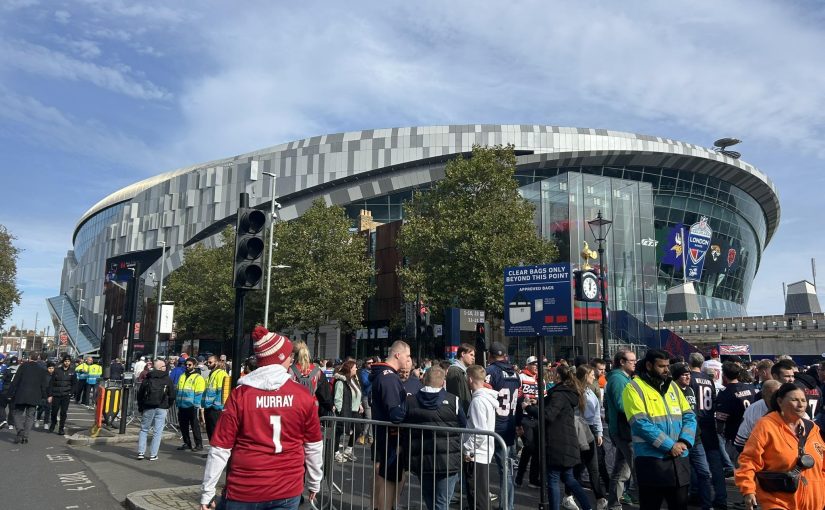
As most fans back in the States were still fast asleep, I was riding the London Tube to Tottenham Hotspur Stadium. This arena is typically used for the classic English sport, but today it would house a bunch of Americans tossing the pigskin around. A funny thing about the NFL in London is how many expats attend who are not actually fans of either team playing. I made it my mission to find a jersey for each of the 32 teams before I entered the stadium. Bears jerseys were rampant across the city the whole weekend, and I noted Eagles, 49ers, Jets, and Seahawks before I stepped off the train.
There is a certain maximalist quality to American football that permeates into all aspects of the sport. Teams employ a roster of 53 players each, and those players are divided into three different teams within. Unlike most sports, where points are scored one at a time, football awards points in chunks of two, three, six, seven, or eight. Players wear bulky pads and helmets that make them appear more like post-apocalyptic gladiators than athletes. Every Sunday, fans in the stands don ridiculous costumes while cheering the entire game, many of them legends in their respective fanbase, then return to their normal lives the next day as if nothing happened.
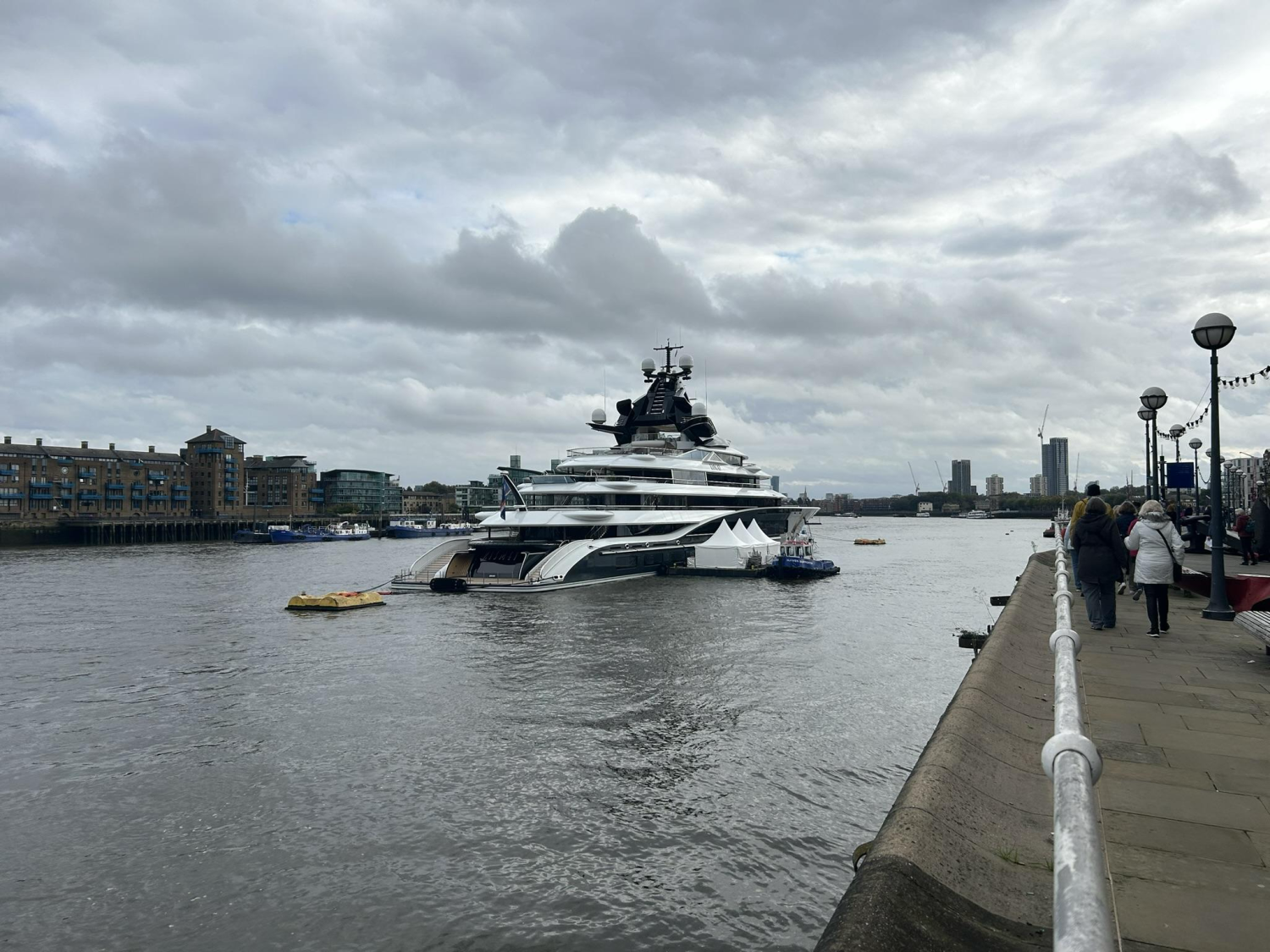
Shad Khan’s superyacht, Kismet, parked in the River Thames struck me as an extension of the sport’s megalomaniacal streak. If you were the owner of the Jacksonville Jaguars and worth somewhere in the tens of billions, wouldn’t you also take your 400-foot pleasure barge across an entire ocean and park it in the heart of a metropolis to watch your 1-5 football team play?
Of course, English football (soccer as we “Yanks” would call it) has its own mania around it which surpasses that of its western counterpart. The Tottenham residents were largely unfazed as the seemingly endless procession of fans traveled north on High Road to the arena. For them, this must have been no different than any other Spurs game day, just with different jerseys. For me, the 30 minute walk was a brand new experience. I’m used to being stuck in cars, jamming up the highway into the city, then spending the better part of an hour hunting for a parking spot that won’t cost an arm and a leg. The chance to walk about and explore the area offered exciting new opportunities. I bought an overpriced sandwich from a street vendor, an even more overpriced commemorative Chicago Bears beanie, and listened to the tranquil tones of religious extremists on every corner warning about the rapture that would surely come if we don’t repent soon (this had something to do with football I suppose).
I joined in with a group of older English fellows who, like me, had taken on the challenge of spotting merchandise for each franchise. I soon narrowed it down to just two teams that I had yet to see: the Tennessee Titans and the Houston Texans. A #8 Will Levis jersey spotted off in the distance made Houston the big losers of my exercise. The Texans are only as old as I am, so I can’t blame them for having subpar international appeal.
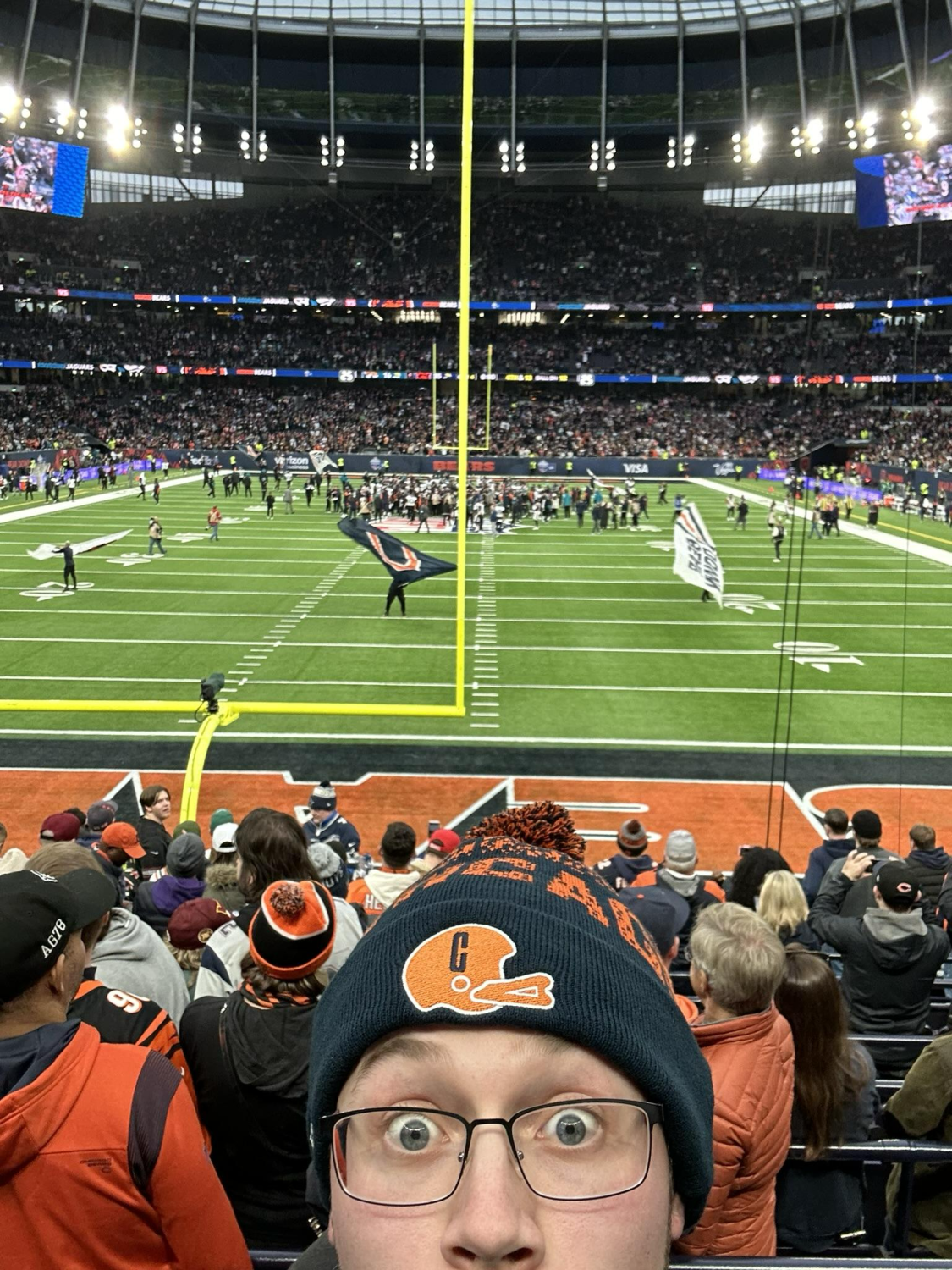
At 12:30, the gates opened and the fans started pouring inside. I found my seat behind the south end zone and took in the sights. Despite the Jaguars having games in London every season, Bears fans handily outnumbered them, with the stands blanketed in navy and orange. Playing on the screens in the arena was a PSA-style video explaining the rules of football, and I chuckled to myself realizing how silly the particulars of the game really are when summarized in this manner. After settling in, I watched the players warm up and waited for the opening kickoff.
After a slow start, the Bears found their stride and bested Jacksonville 35-16. After a full week of anticipation, seeing your team score five touchdowns in person makes you believe you are untouchable, unassailable. I felt like I could walk right up to Buckingham Palace and claim it as my own. Luckily, I instead settled for a corner table at a pub down the road and a chicken sandwich. I struck up a conversation with an Englishman, his wife, and a couple of American tourists. The Englishman was recounting his origins with the team, how the famous Super Bowl-winning 1985 Bears captured his imagination as a kid and converted him into a diehard fan, despite never stepping foot in Chicago. I heard stories of other local fans who, pre-Internet, would make international calls to Chicago numbers on game days to ask what the score was.
There are many aspects of football that can do nothing but draw an individual’s ire. The sport itself is violent, with the potential to cause serious physical and mental harm. The draft system is fairly archaic and arguably exploitative of young players entering the league. The whole endeavour, ultimately, is a thinly-veiled cash grab, with major American universities functioning more like professional football franchises with education as a side gig. But on a baseline level, it is truly remarkable how much football, and sporting as a whole, can bring disparate individuals together. There are consistent trends across the world of crime rates dropping in cities when the local sports team is performing well. For me, I doubt I would have found my way to London were it not for my team coming to town. I certainly wouldn’t have ended up in a dingy bar at the end of the night, surrounded by locals from a country brand new to me. At that time, sitting next to a sleeping cat on a stack of speakers, and watching a broadcast of teams playing halfway across the world, I felt the most at-home as I’ve been during my study abroad journey.
When I wake, the black-out curtains of my apartment that are cracked only let in a sliver of light to let me know a new day has come. I’ll lay in bed for a couple (see: 30) more minutes and then decide it’s time to go face what has come to greet me. Today is Tuesday, so it’s my slow morning. Normally, I will make myself breakfast, but Conad was busy last night with locals, tourists, and students alike shopping, so I figured I’ll go out for breakfast before my anatomy class later in the evening.
I make my way to Le Vespe Cafe, a little American breakfast spot off of Via Ghibellina and where I find myself if I ever miss a taste of home. Currently, I’m studying abroad until mid-December, and I’ve been here since mid-September. Slight homesickness is a part of the gig, I fear. When I step outside of my apartment, I catch a glimpse of the Duomo, not even five minutes away from my front door. Despite my sentimentality, I will miss it greatly when I am gone. My ten minute walk to Le Vespe is accompanied by October rain, and the pumpkin latte I end up getting reminds me of how beautiful it is to have rain during the fall.
I still have a couple of hours before my next class, and there are a couple of things I want to do today before my three and a half hour lecture.
The first place I want to go to is the Boboli Gardens. For my 8 am class, Grow, Cook, Heal, Therapy for Wellbeing, that I have on Wednesdays, we have an assignment where my group must tour four different gardens from different neighborhoods. Then, we must take and upload photos as well as a brief history and description of the grounds (as you can see, nothing too bad).
My twenty minute walk to the gardens features a major staple in Florence, as we (me and my friends) cross the Golden Bridge. It’s hectic and loud and crowded, and by far has one of the most beautiful views of the Arno River I have seen. Still, hold onto your phone and your friends- with these conditions losing one of these is not unlikely.
Boboli Gardens comes attached with a ten dollar entrance fee for the day. We enter through the Pitti Palace, but skip that tour because that isn’t what I’m here for. Instead, we climb the slanted, small, long stairs to the beginning of the garden’s grounds. It’s beautiful here, undeniably so, with a beautiful clearing for the main statues and ponds. To the left and right, the grounds spread out behind a wall of shrubs, with a maze to get into and out of those sections of the garden. If you continue straight all the way to the top, however, you see one of the best views in Florence (apart from the top of the Duomo).
This picture does not do this view justice.
For a moment, I forget about the assignment and just stare. I’m in Italy, I’m in Florence. And the bustling cityscape, the rolling countryside behind it, that’s been my home. For the rest of my life I can know for myself that I, at one point in the distant past, lived there. The beauty of the art, the people (most of them), the food, my friends. It’s just-
Beautiful.
I finish up taking notes of the different architecture and landscapes, then I make my way to my second destination before my anatomy class.
There’s this little record store called Contempo Records that I pass everyday on my way to FUA’s lecture halls. Everyday I pass it, I want to go inside. I don’t have a record player, but my sister does. I know she will appreciate a little memento. I walk inside and am greeted with spiraling ceilings and records stacked to the nines. I don’t end up getting anything, but it makes me feel at home.
After enduring my three hour lecture, I know that it’s time for me to get some homework done. FUA has a library in the same building, but it closes at 6pm and my class is done at 6:55. So I go to, quite genuinely, my favorite place in the city.
The Giunti Odeon Libreria e Cinema is a bookstore/movie theater. Up in the rafters, there are old theater seats for visitors to read or work on homework while a movie plays in the background. Almost always it’s really, really warm inside and almost never can you hear the movie. I love it.
I sit there and work till about 8:30 pm, which is when I make my way back to my apartment. My friends and I have decided to cook ourselves dinner, with some gnocchi pasta, green beans, and focaccia. Before I head inside, I take one last look at the Duomo. How can anyone not be romantic about Florenzia? I wonder.
En el verano de 2022, tuve el privilegio de viajar 45 días por Europa. Comencé en Madrid, luego recorrí Barcelona, Viena, Budapest, Praga, Berlín, Ámsterdam, París, Roma, Venecia y, finalmente, Florencia. Aunque en ese momento no era plenamente consciente de ello, esa última parada marcaría el cierre perfecto para un viaje que terminó superando todas mis expectativas. Al final de aquel mes, me encontraba exhausta: había subido y bajado de cientos de trenes, me había alojado en hoteles baratos, arrastrado maletas de 20 kilos y me había alimentado principalmente de comida rápida de puestos callejeros. Ya no sentía el impulso de seguir explorando, aunque era absurdo quejarse. Durante esas semanas, tuve la fortuna de admirar algunos de los lugares más hermosos del mundo, de escuchar las canciones más alegres, de reír hasta sentir dolor de estómago y, a su vez, sentir una necesidad profunda de llorar. Florencia, de todos los lugares que visité, fue el que más me conmovió.
In the summer of 2022, I had the privilege of spending 45 days traveling around Europe. I landed in Madrid, then made my way to Barcelona, Vienna, Budapest, Prague, Berlin, Amsterdam, Paris, Rome, Venice, and finally, Florence. What I didn’t know at the time was that I would end the trip with a truly unforgettable experience. By the end of that month, I was utterly exhausted: hopping on and off trains, staying in budget hotels, hauling 44-pound suitcases, and surviving mostly on street food. Honestly, I was running out of steam. It felt almost ridiculous to complain, given how fortunate I was. I had seen some of the world’s most beautiful places, heard the happiest music, laughed until my stomach hurt, and, at times, cried from overwhelming emotions. It was Florence that moved me the most.
Llegué a Florencia sin demasiadas expectativas. Después de haber estado en lugares como París o Roma, pensaba que la ciudad no podía competir con la magnitud histórica y cultural de esos destinos. Mi hermano, un apasionado de la historia, siempre me había hablado de Italia con una devoción casi reverencial. Su fascinación por el Imperio Romano, por los mapas antiguos y por las ciudades históricas es casi obsesiva. Vivió un año en Turín, y su lugar favorito en el mundo es la Plaza de San Marcos, en Venecia. Ese verano, tuve el privilegio de recorrer Italia a través de su ojos, de sus relatos, de sus sentimientos.
I arrived in Florence with little to no expectation. After seeing amazing places like Paris and Rome, I thought, perhaps wrongly, that Florence couldn’t compare in terms of history, culture, or beauty. My brother, however, has an almost obsessive passion for history. He spends hours watching documentaries, drawing ancient cities from old photos, and knows everything there is to know about the Roman Empire. He is utterly obsessed with old maps, especially of ancient cities. He lived in Turin for a year, and his favorite place in the world is Piazza San Marco in Venice. That summer, I had the privilege of seeing Italy through his eyes.
Fuimos al Coliseo en dos ocasiones, exploramos el Vaticano, pasamos casi tres horas bajo el sol abrasante del Foro Romano y contemplamos el atardecer desde el Castillo Sant’Angelo. Fueron experiencias inolvidables. Al día siguiente, llegamos a Florencia. Visitamos el Duomo, recorrimos el museo Uffizi, comimos pizzas y focaccias, nos impresionamos ante el David y volvimos a caminar bajo el sol abrasante ahora en Santo Spirito. En nuestro último día de recorrido, y de viaje en general, mi hermano nos llevó a la Plaza Michelangelo.
We visited the Colosseum twice, explored the Vatican, spent nearly three hours under the scorching sun at the Roman Forum, and watched the sunset from Castel Sant’Angelo. Those were unforgettable experiences. The next day, we arrived in Florence. We toured the Duomo, walked through the Uffizi Gallery, ate pizza and focaccia, were awestruck by the statue of David, and then walked under the hot sun again, this time in Santo Spirito. On our last day in the city, and the last day of the trip, my brother took us to Piazzale Michelangelo.
La subida no fue fácil, pero cada paso valió la pena. Opté por lo que hoy sé que es “el lado correcto”: el que ofrece una vista completa de la ciudad, mientras que el otro, más corto, evita el espectáculo que se despliega frente a ti. Ese día, me encontré en primera fila. La plaza no estaba no estaba demasiado, estaba en su punto justo: un ambiente vibrante, festivo, pero con espacio para sentarse en las famosas escaleras y dejarse envolver por la magia del lugar. En la cima, una banda comenzó a tocar música, canciones populares, algunas de ellas de épocas pasadas. Una de esas canciones, en particular, me dejó sin aliento. No era de mi gusto ni pertenecía a mi estilo musical habitual, pero en ese instante, en ese preciso contexto, la sentí profundamente, hasta lo más íntimo. No pude evitarlo: lloré con una intensidad inesperada, como si ese momento estuviera sanando algo dentro de mí, como si fuera la pieza que me faltaba para sentirme completamente realizada y feliz.
The climb wasn’t easy, but every step was worth it. I took what I now know is “the right path”, the one that offers a full view of the city, while the other, shorter route, turns its back on the spectacle ahead. That day, I was front and center. The square wasn’t too crowded; it was just the right amount of people: lively, festive, but still with space to sit on the famous stairs and let yourself be wrapped up in the magic of the place. At the top, a band started playing music—popular songs, some from past eras. One of those songs, in particular, took my breath away. It wasn’t my usual taste, nor the kind of music I’d typically choose, but in that moment, in that exact place, it moved me deeply. I couldn’t help it: I cried, unexpectedly and intensely, as if that moment was healing something inside me, like it was the missing piece I needed to feel completely whole and happy.
Estaba acompañada de mis hermanos y dos mujeres rumanas que habíamos conocido unos destinos atrás y que decidieron acompañarnos en la última parte del viaje. Compartí esa experiencia con personas que, aunque tal vez por razones distintas, estaban viviendo algo igualmente significativo. En ese momento, todos compartimos una misma emoción, un mismo sentimiento. Es una acción tan común entre los seres humanos que parece casi involuntaria, pero es un privilegio sentir. Es un privilegio llorar, reír, admirar, asombrarse.
I was with my siblings and two Romanian women we had met a few stops earlier, who decided to join us for the last part of the trip. I shared that experience with people who, although for different reasons, were feeling something just as meaningful. In that moment, we all shared the same emotion, the same feeling. It’s such a common thing among humans that it almost feels automatic, but it’s a privilege to feel. It’s a privilege to cry, to laugh, to appreciate, to be amazed.
Esa escena, esa canción, ese atardecer en la Plaza Michelangelo, fue el cierre perfecto para un viaje que ya había sido extraordinario. Ese momento encapsuló todo lo que había vivido en los 45 días anteriores: los lugares, las personas, los sentimientos, los recuerdos. Fue como si la vida hubiese tomado todo eso y lo hubiera condensado en ese instante, en ese lugar, con esas personas. Ese día comprendí, de manera profunda, que Florencia poseía una magia única. Fue entonces cuando supe que debía regresar, que había vivido algo irrepetible. En diciembre de 2024, cuando decidí buscar la oportunidad de hacer un intercambio académico, no hubo duda de que Florencia sería mi destino. Ahora, todos los días, voy a esa plaza a ver el atardecer, a escuchar música y a compartir un sentimiento de libertad. Abrazo con fuerza el privilegio de revivirlo a diario.
That moment, that song, that sunset in Piazzale Michelangelo, was the perfect ending to a trip that had already been extraordinary. It captured everything I had experienced in the past 45 days: the places, the people, the emotions, the memories. It felt like life had taken all of that and condensed it into one instant, in one place, with those specific people. That day, I deeply understood that Florence had a unique magic. It was then that I knew I had to return, that I had experienced something unforgettable. In December 2024, when I decided to look for a chance to study abroad, there was no question: Florence would be my destination. Now, every day, I go to that place to watch the sunset, listen to music, and share a sense of freedom. It’s a gift I cherish, being able to relive it each day.
Throughout the United States, car-based infrastructure reigns supreme. But here in Florence, all I need for a quick commute, a trip to the market, or just a leisurely day exploring the city, is a bicycle.
written by Savvy Sleevar for SPEL: Journalism
Shifting Gears
Back home in Illinois, it takes me 30 minutes to get from my house to work on a bike. 25 if I’m really booking it. That’s 5 miles, 4 busy, multi-lane streets, 3 bridges, 2 zip codes, and 1 water bottle’s worth of riding. The trail system in my town provides me with a safe path for most of my trip, and the canopy of trees overhead grants me a much-needed respite from the boiling Midwestern sun as I ride. But even the most bike-friendly route to work includes a sprawl of asphalt parking lots and the off chance of being hit by a car on College Avenue or Jumer Drive. Without the security of the trail (unless you’re a professional, Tour de France-level cyclist), it’s eat or be eaten out on the road.
An ocean away from my hometown, in Florence it takes me less than 15 minutes to get almost anywhere I need to go. Granted, that’s partially because I’m in a city. It’s also because skinny, one-way streets dominate the urban landscape here. If a car finds itself behind me on the street and doesn’t have the room to pass me for a few blocks, there are no funny looks from the drivers. I’m rarely honked at and never relegated to the sidewalks — I can’t be, they’re microscopic anyhow. I have the right of way. I can ride in the street without fear of a car hitting me, and I can park in more places than a car ever could. When you’re on a bike in Italy, how can it feel like it’s eat or be eaten when you’re at the top of the food chain?
In Florence, riding a bike isn’t just a way to get exercise, it’s a key to the city. For a cash-poor college student whose time management is a little worse for wear and whose legs are still getting used to the sheer amount of walking that’s almost synonymous with European living, a bicycle for me might as well be a shiny new Vespa, ready to ferry me to new places, new people, and new experiences that I’d never encounter back home.
No More Training Wheels
The first time I tried to rent a bike in Florence, I was in rough shape. I didn’t know my class would be taking a 30-plus-minute walk at the end of the lecture that day, and while my grandma’s vintage brown sandals looked super cute with my outfit, they were threatening to cover the soles of my feet with blisters. Long story short, I adopted something of a nonchalant hobble by the time class was dismissed. I was way out of my way, it was blazing hot, and there was absolutely no way I was walking home, not like this.
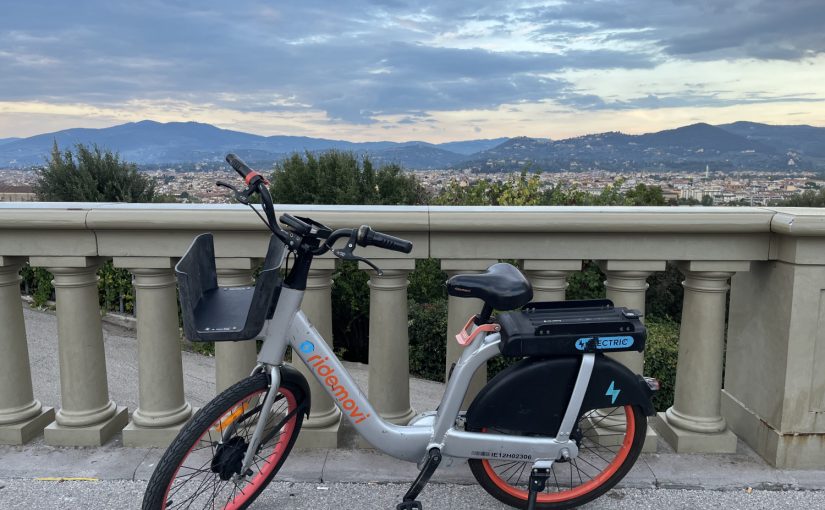
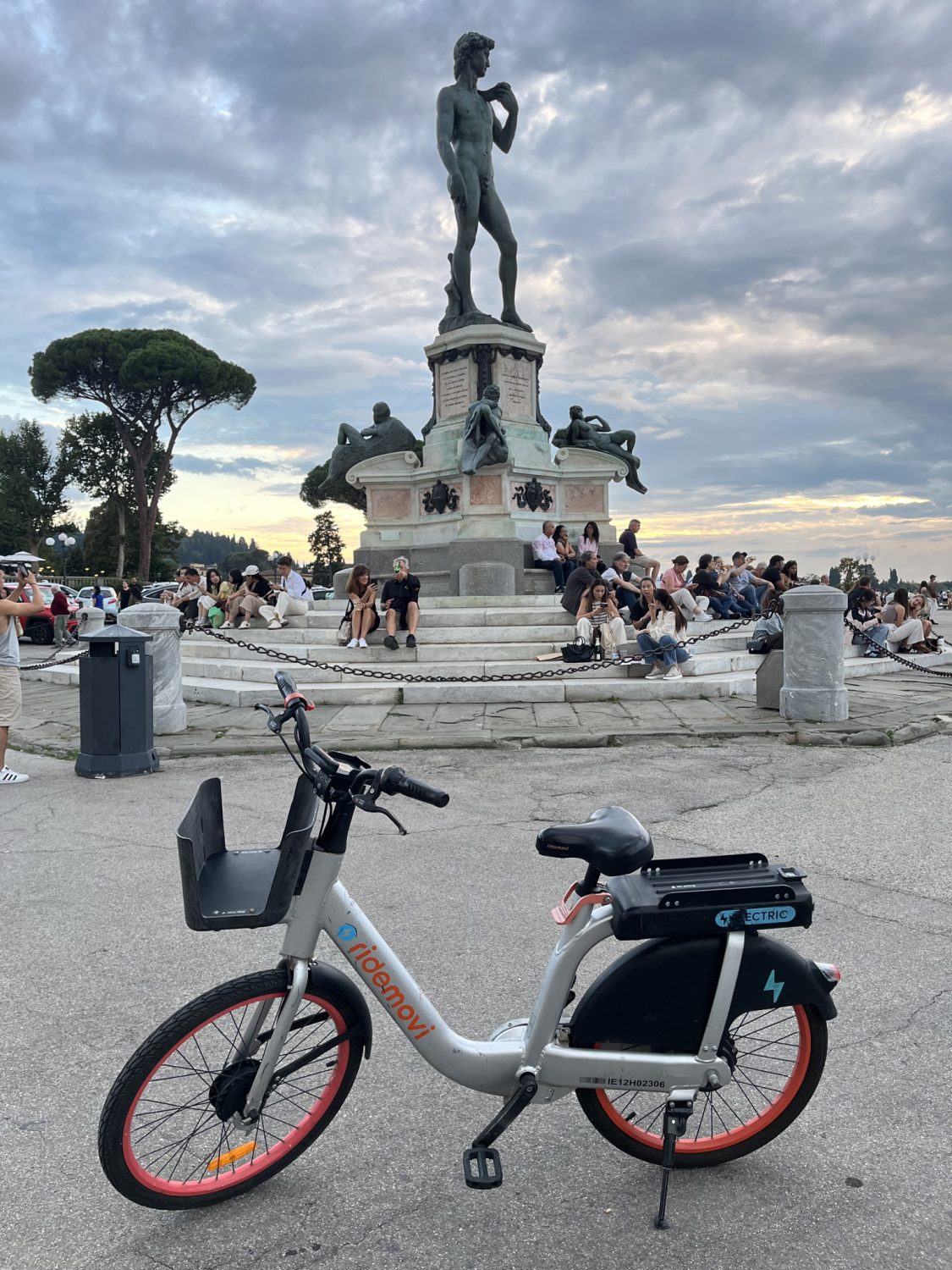
When I saw the orange and silver frame of a rentable bike, casually parked on the curb, I made a beeline for it. I hadn’t spent the summer riding around on my swanky blue Huffy for nothing. I intended to do some cycling in Italy, and there was no better time to start.
Well, my time to start ended up feeling more like a time to start, then stop, then start, then stop again.
What I didn’t realize when I unlocked the bike was that a.) it would talk to me and b.) it was electric. While manual bikes are no problem for me, I had never used an electric one before. So as I’m trying to mount this talking Italian bicycle, I get spooked by the momentum boost it gives me as soon as my feet hit the pedals. I quickly lose my balance, making an ungraceful dismount. All of a sudden, I’m a 5-year-old girl again, learning to ride without training wheels in my driveway. But this time, Mom and Dad aren’t here with me to give me a push. Just the occasional passersby on the sidewalk, all of whom minded their own business, but definitely watched me try and fail to get myself situated on the bike seat an embarrassing number of times.
After a few more attempts, I finally get on the bike and stay there, gingerly pedaling as it propels me down the cobbled street. Thousands of miles from home and 16 years after my training wheels first came off, I was learning to ride a bike again.
Picking Up Speed
Soon, I began riding everywhere. I’ll fill the front basket with groceries, my purse, or a tote bag, and then I’ll set off for class, a quick lunch, a leisurely dinner, an outing to the market — any reason to get on a bike is reason enough for me.
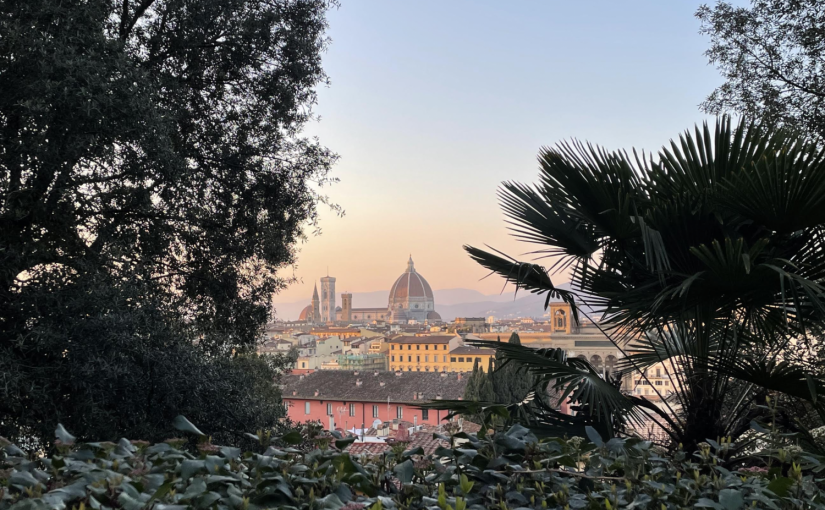
By no means am I the perfect European cyclist. So far, I have accidentally hit one tourist in a crowded piazza, lost my balance and hopped off the bike mid-ride at least twice, and I just recently figured out how to ring my bell. Even so, riding a bike here has felt miraculous. My first week or so in Florence was dominated by the unforgiving September heat, culture shock, and the overall sense that I was stuck in survival mode until further notice. But that very first time I cycled here, I decided to take a long route home. The road I was on spit me out onto a paved street by the river; I felt my first cool breeze in days rushing through my hair, and as I whizzed down the street, I saw the Duomo peek out from behind the buildings on the north side of the Arno.
For the first time, I didn’t feel like I was in survival mode. I wasn’t just visiting Florence, I was living here. I was riding down the street in my host city, soaking up the view, the sunshine, the essence of this new home away from home.