The Only Guide You’ll Ever Need to Study Spots in Florence

written by Charlotte Cicero for SPEL: Journalism

Whether you’re studying, reading, or grabbing a quick pick me up, this guide will cover everything from ambiance to music, to table sizes, food options, opening and closing hours, book selections, places to meet people, and of course, an honest personal opinion. 

Rivarno – Meals, bright, happy, peaceful 

If you’re looking for a spot off the river to do some homework while enjoying some delicious sandwiches and tarts, Rivarno is your spot. Get there early as this place gets crowded and bring your noise cancelling headphones. 

Fedora – Lively, indoor/outdoor, pastries and sandwiches

Of course, I’m partially biased being a student of FUA, but Fedora is one of my favorite spots on this list. Located on Via Ricasoli just 5 minutes from the Duomo, Fedora offers pastries made by students, for students. Locals will also come to dine for dinner and lunch. When the weather’s nice, you can take a seat outside on comfortable couches or desks. Coffee is delicious and pastries are consistently fresh and yummy.

Bar Grano – Indoor, bar/coffee/pastries/meals, lively 

If you’re looking for a spot to grab a glass of wine and people watch, with some great music, Bar Grano is your place. I sat by the window on a small desk and enjoyed a glass of Pinot while studying, it’s not too loud but enough ambiance to where you can focus. Would recommend to anyone looking for a place to focus while enjoying yourself. 

La Menagere – Brunch, fun, decorative 

Although expensive, Menagere has many cute spots to sit in, with every room representing different colors and flowers. Well-lit and lively with great service. I’ve heard that the dinner here is sub-par, but the pastries are lovely and the coffee is great. I recommend an early morning breakfast or mid-day aperitivo. 

Cat Cafe – Activity-based, coffee/pastries/sandwiches

As long as you’re not allergic to cats, Cat Cafe is a great option to study and read, while snuggling with some cute cats. I did get scratched within my first few moments there but had a great time. The cats are friendly and will crawl onto your laptops (or into your bag), I had a delicious Cafe Orzo and Americano.

Move On – Bar/restaurant, nighttime 

Opening later in the day, Move On is the kind of place that knows exactly what it wants to be, and clearly had a very specific vision. A record store, restaurant, and bar, Move On has a usual quiet ambiance (when there isn’t a football game on) with different rooms upstairs and downstairs. You can enjoy a glass of wine, dinner, or snacks while overlooking the Duomo and listening to some great music.

Todo Modo – Bookstore, coffee/bar/restaurant

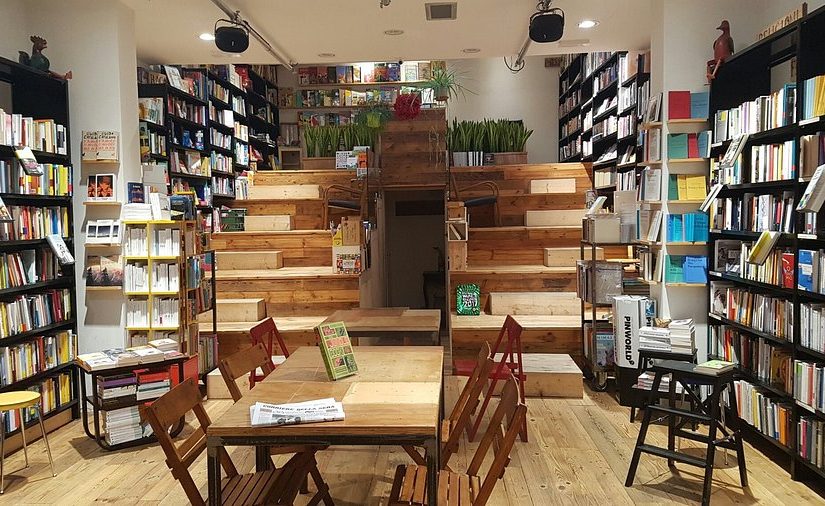
Not far off the Ponte Vecchio, this is the hidden ‘coffee shop’ gem of Florence. Todo Modo has the most interesting and cool design, with an ascending staircase full of books that harbors study seats with hanging tables amidst hundreds of books in English and Italian. When you first walk in it’ll look just like a bookstore, but the further you walk, it becomes a restaurant and study spot. If you want to stay for lunch, make a reservation. Get there earlier, preferably on weekdays, as this place is completely packed on Sunday afternoons.

La Cite – Bookstore, live music, pastries/food/coffee, indoor/outdoor

Another hidden gem across the bridge from the Duomo, my friends and I stumbled across La Cite on our way to dinner. Inside we found 3 upstairs and downstairs study areas, a group of friends playing piano, and everyone enjoying food, wine, and coffee. There are couches, desks, board games, books in Italian, and sometimes live musicians. I recommend the Cafe Orzo or any of the creative cakes they have on display.

25Hours Hotel – Restaurant/bar, coffee/pastries, bright 

Less than 10 minutes from the train station, 25Hours is an eclectically decorated hotel with a coffee shop and restaurant. The clear ceiling provides beautiful natural light to anyone trying to relax, and the decor of the hotel lobby provides a great ambiance for meetings – perfect place to meet up with a friend for aperitivo. I enjoy their selection of hot teas, Italian cookies, and of course, Cafe Orzo. 
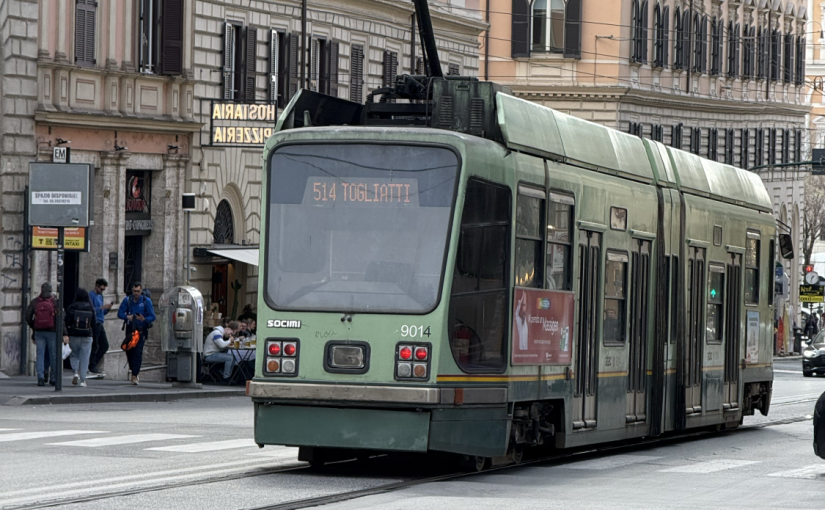
My Italian Roots

written by Guido Togliatti for SPEL: Journalism

My name is Guido Togliatti and I am studying abroad in Florence for the Spring, 2025 semester. Originally, I am from California, but I have Italian ancestry through my Grandfather.

Palmiro Togliatti himself was born in 1893 into a comfortable middle-class household and displayed academic promise from an early age. He earned a law degree at the University of Turin and then served on the front lines during World War I, where he sustained injuries that deepened his commitment to social justice. After the war, he channeled his convictions into journalism—founding the weekly newspaper Il Partito Comunista—and helped organize Italy’s first cohesive communist movement. When Mussolini outlawed the party in 1926, most leaders were arrested, but Togliatti escaped to France and later the Soviet Union, where he navigated the dangerous politics of Stalin’s purges to keep the movement alive.

During the Spanish Civil War, Togliatti helped coordinate aid and volunteers for the Republican side—a chapter of his life that underscored both his political skill and his willingness to risk everything for his beliefs. He returned to Italy in 1944, joining Marshal Badoglio’s transitional government and working to legalize the Communist Party once more. His life nearly ended in 1948, when a young fascist assailant wounded him—an event that triggered mass demonstrations across the country and solidified his status as a symbol of resistance. After his death in 1964, the Soviet city of Stavropol-on-Volga was renamed Tolyatti in his honor, a rare acknowledgment of an Italian figure abroad.

Ultimately, learning this history has deepened my desire to connect with Genoa and to cherish every moment I spend here in Italy. Learning about this made being in Italy even more special for me.

Tuscan Leather

written by Pedro Calderon for SPEL: Public Relations

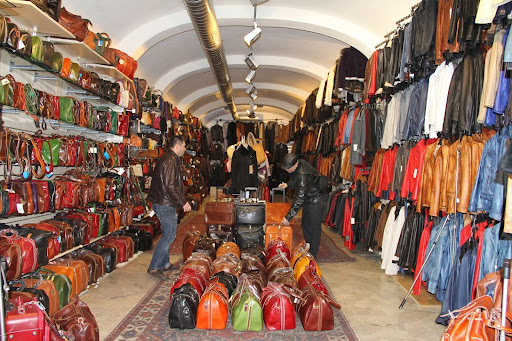
If you take just a 10-minute walk through the center of Florence, you will immediately notice a wide variety of storefronts: trattorias, gelaterias, and souvenir shops. Among these, leather goods shops are particularly prominent, and for good reason. Many of these shops offer a range of products such as leather jackets, accessories, bags, wallets, shoes, belts, and countless other items in practically every color you can imagine. Italy, especially the region of Tuscany, is known for its high-quality leather and craftsmanship, thanks to a long tradition of being a central market for trade.

One of the best places to find leather goods is the Mercato di San Lorenzo, located next to the Mercato Centrale, just a 7-minute walk from the Piazza del Duomo. Inside the Mercato Centrale, you will find vendors selling fresh produce and meat, as well as restaurants upstairs offering delicious local cuisine and an excellent selection of wines. Outside, the Mercato di San Lorenzo is lined with vendors selling souvenirs like key chains, miniature statues, postcards, shirts, sweaters, scarves, and an impressive selection of leather goods. While these shops are plentiful with colors and designs, real leather lovers may want to wander outside of the Mercato Centrale area to find family-run boutiques. Some of the highest rated, and local favorites include Casini (Piazza de Pitti, 30, Firenze), Bemporad (Via Calzaiuoli 11/15/17/B Firenze), Giorgio 1966 Leather Store (Via del Canto dei Nelli 34, Florence), Pierotucci (via Lungo L’Ema 17, Ponte a Ema, Florence), and Benheart. 

Tuscan leather is sourced from local cattle, and the region’s pastures are ideal for raising them. The same cattle that contribute to Florence’s famous Bistecca alla Fiorentina also provide the high-quality hides used in artisanal leather products. This connection between the livestock and leather industries reinforces a sustainable tradition where nothing goes to waste, blending the region’s culinary and artisanal excellence into one cultural experience.

The area’s tradition of leather working dates back to the 13th century. Leather working was already popular in the 1200s in the Republic of Pisa, and after Florence conquered Pisa in the 1400s, many wealthy business owners decided to establish leather production operations in and around Florence; this practice has remained stable despite economic cycles. Professional leather workers can have successful careers as pattern makers, prototype makers, product developers, accessories designers, and fashion entrepreneurs. Modern luxury brands based in Florence, such as Gucci, Ferragamo, Pucci and Cavalli, specialize in high-quality leather goods. Today, local artisans are often hired to collaborate with high-end fashion houses on specialty accessory designs.

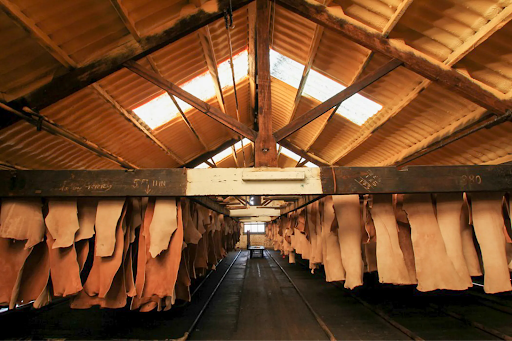
The leather making process begins in a tannery, where the hide is processed using vegetable tannins to get its color. The tanning agent, called liquor, is made from a mixture of ground tree bark, twigs, leaves, and water, and other ingredients to form the desired color. But before this step, the raw hides must be prepared by tanning or drying them with salt to preserve their properties. The hides are then rehydrated to make it easier to remove the hair on the surface, exposing the leather’s natural grain, texture, and softness. They are then pre-tanned with natural tannins and then fully vegetable-tanned using the liquor. Finally, the hides are dried and classified based on their appearance and quality, determining how and for what they will be used. The entire process can take 20 to 40 days to complete. Although centuries old, the process has been made more efficient by technological advancements. In the Arno Valley near Pisa alone, there are hundreds of leather factories and workshops.

Leather is prized for its many qualities, including flexibility, strength, elasticity, malleability, and breathability. There are generally four types of leather that consumers encounter. The highest quality is full-grain leather, which is the top layer of leather and shows off the natural properties of the leather, sometimes even imperfections. Top-grain leather, which is smoother and cheaper than full-grain leather, is still considered high quality. Genuine leather, the most common and affordable type, is what is usually found in everyday designs and souvenirs, although it is considered the lowest quality. Finally, suede is a soft, velvety type of leather often used for footwear and upholstery.

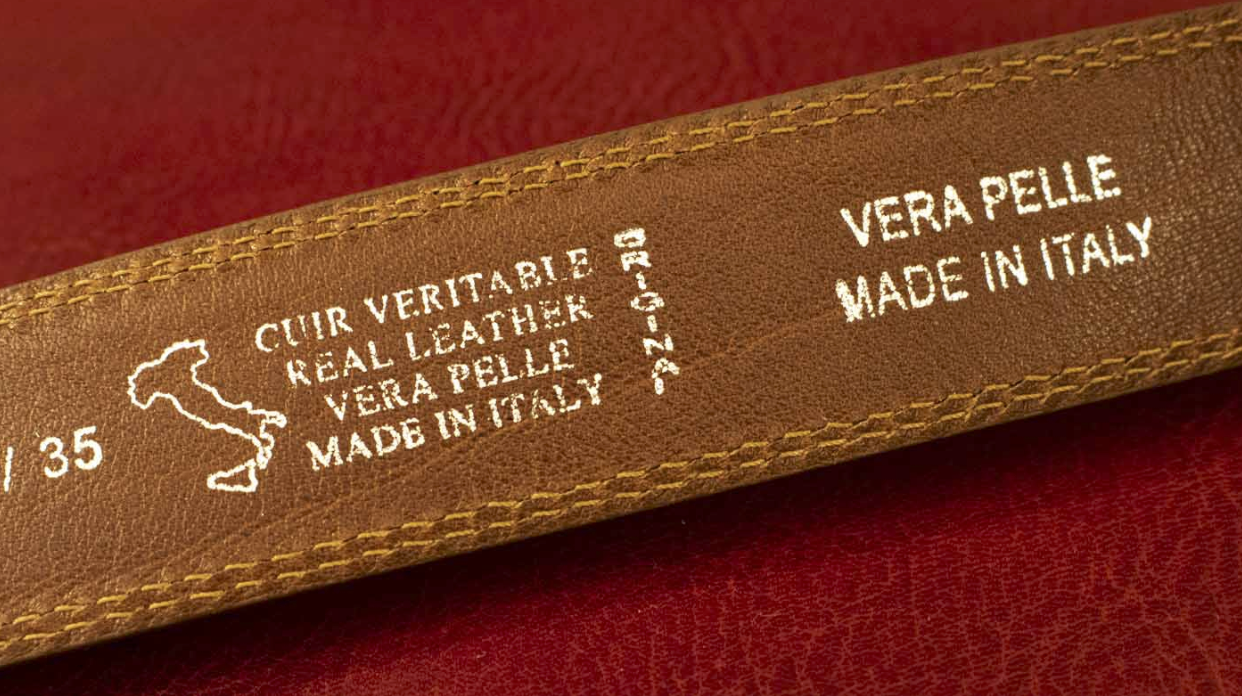
I always recommend purchasing leather products with the “Made in Italy” label to support local artisans and the economy. Although cash is often preferred, most vendors accept cards. Leather is a perfect and useful souvenir or gift for anyone visiting Florence and wanting to take home a piece of Tuscany. It is a product that lasts almost a lifetime.

Bio Fashion Lab: The Thoughtful Retail Experience

written by Lily Carroll for Special Project: Experiential Learning in Journalism

Through experiential learning at FUA-AUF, I’ve gotten the opportunity to interact with Bio Fashion Lab, an independent boutique dedicated to responsible, ethical shopping. The store’s owner, Debora Florio, has spent over nine years in the fashion industry, seven of which were in fast fashion, an industry worth approximately 103 billion U.S. dollars in 2022, projected to reach 291 billion U.S. dollars in 2032, according to PR Newswire. This experience has driven Florio to conduct extensive research, educating herself about consumer behavior, the fashion industry as a whole, and ethical solutions to the extensive problems it creates. With her findings, Florio started Bio Fashion Lab, a space designed to invite others to join in this mission for change. 

Upon receiving a degree in Economics, Florio realized that she wasn’t dissatisfied in this line of work. She says that at the time, unfortunately, shopping for clothes was what brought her the most joy, so she decided to find a job in the fashion industry. Unaware of the many unethical practices implemented in the industry, Florio slowly uncovered the ways we harm people around the world and the environment when we support fast fashion. She learned that these stores use minimal human resources, producing thousands of the same products at low prices, 30% of which wind up in landfills. Just one of the many ways this industry is creating crises everywhere. 

“I realized what was behind the scenes of production in terms of social injustice, and the negative impact that this industry has on the planet, I decided to take action,” Florio said. “I started studying consumer behavior, marketing and whatever lies behind the mechanism that triggers our mind to go and shop for ourselves.”

Florio continued to work in the fashion industry, this time with a seemingly ethical brand. It was there that she met a woman with a crippling shopping addiction, spending thousands of euros a week with no satisfaction, and an insatiable desire that could not be fulfilled. This woman inspired her to create a solution for people to shop responsibly.

So, Bio Fashion Lab was born, to promote emerging, ethical designers using natural materials and equitable production. Offering a healthy way for customers to shop in a manner that does not promote overconsumption, and respects the environment and all who inhabit it.

“Whenever you start to go really deep in the research, you see the truth with your eyes. I’ve never been to Pakistan, Bangladesh, places where these issues are most prevalent, so we do a lot of calls with different unions and government workers on the other side of the world,” Florio proudly states. “We can hear their testimonies and see that it’s quite real. It’s there. When you really understand what’s going on, you can never go back.”

Florio says that the clothes are just a small part of the ways she educates others on the fashion industry, and how we can improve it. Through documentary screenings, workshops, and panels. Bio Fashion Lab strives to educate this generation of consumers to make the right choices. An environment that encourages shoppers to ask themselves, “Do I really need this?” especially when faced with a cheap, overproduced option. Bio Fashion Lab teaches us how to say no, and explore another option.

To learn more about Bio Fashion Lab, visit https://biofashionlab.com/, where you can read about the movement and upcoming events. On Thursday, 13 June, Bio Fashion Lab will host its first fashion show entitled, “Fashion Under Construction,” making light of the construction that currently surrounds the store, highlighting the store’s call for unconventional ways to shop. 

The Digital Pen: How Digital Platforms Shape Our Words and Ideas

written by Madison Baldwin for the course, Writing for Digital Media

In the age of the internet, the digital pen has emerged as a powerful force, shaping the way we communicate, express ourselves, and share ideas. From the humble beginnings of email and online chat rooms, to the wide reach of social media and blogging, digital platforms have become the canvas upon which our words and ideas are painted. However, as we navigate this new world of online communication, we must stop to consider the impact it has on our everyday communication, our thinking, and our society at large. 

One of the most distinct aspects of the digital pen’s influence is its power to equalize expression. With the click of a button, digital platforms have given voice to millions who may have otherwise not been seen or heard. Anyone with access to the internet can become a published author, sharing their thoughts and experiences with a global audience. This accessibility has sparked a renaissance of creativity, fostering diverse perspectives and narratives. Bloggers, podcasters, and YouTubers have become modern-day storytellers, shaping public discussion and challenging traditional media channels. 

However, this new level of expression comes with its own set of challenges. There have been rising concerns about the quality and authenticity of online content. Since publishing is so easily accessible to everyone, it has led to the spread of misinformation, making it challenging to determine fact from fiction. Misinformation spreads like wildfire, amplified by algorithms that prioritize engagement over accuracy. The digital pen, once proclaimed as a tool for empowerment, can also be wielded as a weapon of manipulation and deceit. 

Moreover, digital platforms have fundamentally altered the way we interact with language, producing new forms of expression and communication. Emojis, abbreviations, and memes have become integral parts of our online communication, allowing us to convey complex emotions and ideas in a matter of characters. While these innovations can enhance communication in the digital realm, they also risk destroying the depth of human expression. The internet is fundamentally changing the way we write and speak, blurring the lines between formal and informal language and challenging traditional notions of grammar and style.

Furthermore, the monetization of online content has introduced commercial interests into the world of creativity. Influencers and content creators navigate a landscape driven by likes, shares, and sponsorships, sometimes prioritizing popularity over authenticity. The pursuit of virality can compromise artistic integrity, as creators tailor their content to fit the algorithms rather than their own creative vision. 

Despite these challenges, the digital pen remains a powerful tool for self-expression and connection. Online communities and social movements have harnessed the power of digital platforms to gain support, raise awareness, and create positive social changes.

As we navigate this evolving landscape, it is imperative that we use the potential of the digital pen to build a more inclusive, equitable, and empathetic world. By discerning credible sources, engaging in meaningful dialogue, and embracing the diversity of voices online, we can use digital platforms to foster genuine connections and collective understanding. In conclusion, the digital pen has revolutionized the way we communicate and create, shaping our words and ideas in ways previously unimaginable.

While it presents opportunities for empowerment and expression, it also poses challenges regarding authenticity, quality, and commercialization. As we continue to navigate this digital frontier, let us approach it with critical thinking, empathy, and responsibility, ensuring that our words and ideas contribute positively to the collective conversation of humanity.

Why Santo Spirito is a Visitor’s Best Introduction to Florence

By Becca Baitel

Firenze’s Santo Spirito neighborhood has an unparalleled, captivating charm which truly encapsulates the authentic Florentine experience. Walking down the street on a typical day, visitors can hear the sounds of bustling, open-air markets, smells of fresh produce, and the warm, inviting melody of church bells. Tucked away on the south side of the Arno River in the Oltrarno quarter, Santo Spirito is most notably home to the Basilica Santo Spirito, or the Church of the Holy Spirit. Donning a Renaissance architecture style, the church attracts the public on every day of the week except Wednesdays when it is closed. Behind its noticeably unadorned exterior in comparison to many other Florentine churches, its true beauty is displayed inside where visitors can discover some of Michelangelo’s earliest work, as well as the unique design and columns by architect, Filippo Brunelleschi. The Basilica faces the main square, which alone boasts plenty of trattorias, markets, galleries, and shops, catering to every age and interest. With its convenient location steps from the esteemed Ponte Vecchio and Ponte Santa Trinita bridges, Santo Spirito is a must-see for every traveler and student alike.

Continue reading Why Santo Spirito is a Visitor’s Best Introduction to Florence

A Viewing of Gris-Eye

By Shelby A. Winter

“Interpretation is the revenge of the intellectual upon art.” 
Susan Sontag

On November 6th, 2019, Antonia Comi displayed her artwork at Florence University of the Arts (FUA), an American University in Florence, Italy. As a novice art writer, I chose to attend this show blind, hoping to simply see the walls of paintings and drawings without being influenced by too much information on the artist and the intentions behind her artwork.

Continue reading A Viewing of Gris-Eye