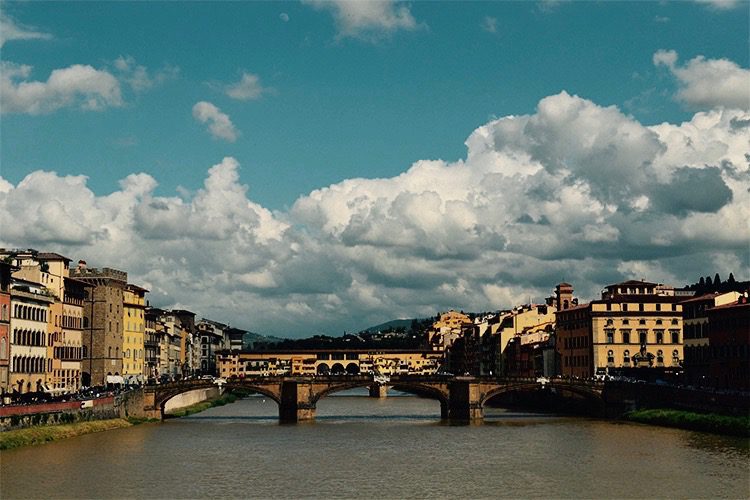
Uffizi: Innocent Bystanders

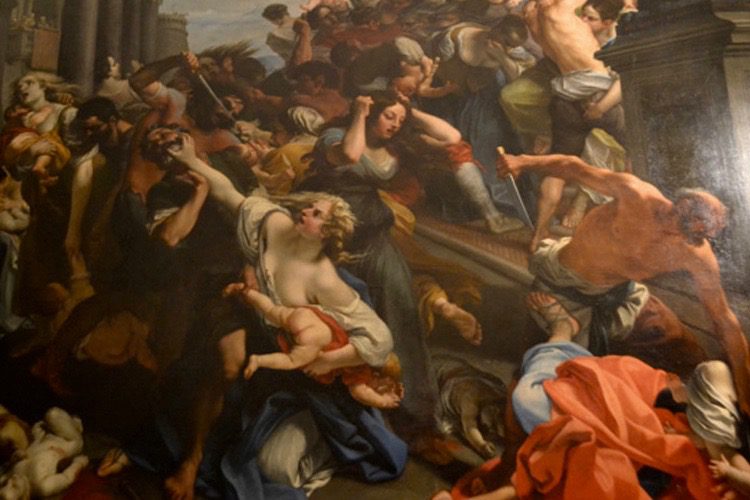
Marco Benefial’s “Massacre of the Innocents,” Uffizi Gallery. Photo by the author.

By Kaly Nasiff

The Uffizi is known for its popular paintings, but the museum is also filled with hidden treasures. This is my reaction to a lesser known painting called “Massacre of the Innocents” by Marco Benefial.

Not much is known about Marco Benefial’s “Massacre of the Innocents,” except that it was painted in the 1700s. When I saw it at the Uffizi Gallery I knew nothing about it. I had spent the afternoon being overwhelmed by the artworks that line nearly every inch of the Uffizi. The bright colors of this painting initially caught my attention, but upon further inspection, I realized that fiery women were fighting off savage men in order to save their children. I immediately fell in love with the determined faces of these women. They did not care that the men were larger and stronger than they were; they fought back with a passion that I found invigorating.

Looking around me, no one seemed to be as captivated with the painting as I was. I knew it was not one of the more famous paintings in the gallery, but I did not understand how anyone could ignore these women. Sure, they did not look like “Birth of Venus,” but to me they were more interesting. I was struck by the huge difference when I saw Sandro Botticelli’s Venus just minutes later. There was a crowd of people around the painting trying to get pictures of and with Venus. While it is a beautiful and famous painting, nothing about “Birth of Venus” made me feel what “Massacre of the Innocents” did. Venus is stunning but almost standoffish, and seems to be there to have others look at her. Meanwhile the women in Benefial’s painting were not placed in the painting for anyone’s benefit. They were meant to be appreciated for their determination rather than their beauty. I can only imagine and guess what Benefial was thinking when he painted these women, but I hope that he was trying to represent them as I saw them.

See more of Florence and Italy at FUA’s FB, Instagram, and Twitter.


Lorenzo the Gondolier

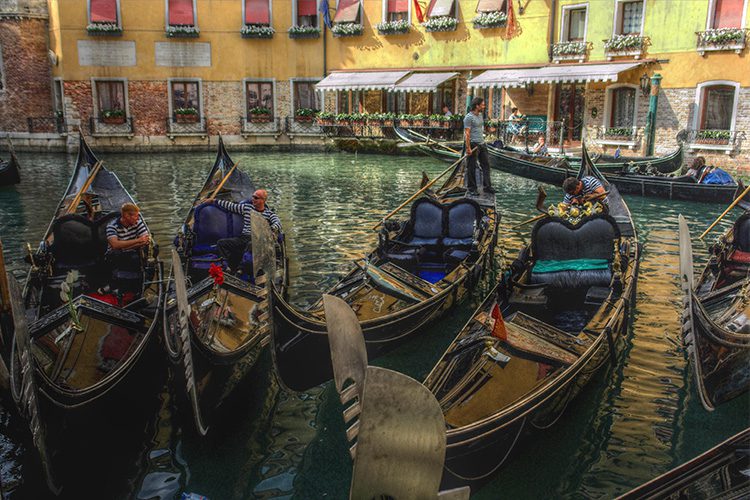
Photo by GaborfromHungary via Morguefile.com

By Mikayla Rendall

Certain things and places become the cultural icons of a city. It’s enough to mention the David, Duomo, and Boboli Gardens for most travelers to immediately associate them to Florence; they’ve become by now not only icons of culture but also mass tourism. Venice, another highly visited Italian city, immediately conjures up Piazza San Marco, canals, gondolas, and lavish Carnevale celebrations. FUA student Mikayla Rendall took tourism a step further by not only going on a gondola ride but interviewing the gondoliere for his perspective as a Venetian local.

When did you become a gondolier?
I was born and raised in Venice and started giving gondola rides about eight years ago. I‘m now living on the other side of Venice because of the high expenses of living on the canal.

What made you decide to become a gondolier?
I love being on the water. Venice is beautiful and after living here for 33 years I knew this was something I want to do for a long time.

How did you learn this craft?
I learned as young man since my father had his own gondola but I got my own license to become a professional gondolier later on.

What year did the gondolas originate?
They are extremely old and go back to the 11th century, but there have been many changes over time time to make them stronger and larger.

What are the gondolas made of?
Gondolas are a flat-bottomed boat made of many pieces and eight different types of wood. The oar of the gondola is made from beech and are made for the narrow canals in Venice and quick maneuvers.

How deep are the canals?
The grand canal is around 18-20 feet and most other canals are about 8 feet. When high tide comes sometimes we cannot provide rides because the water is too high and the boats don’t fit under the bridges. The water levels keep getting higher so now no one can live on the first floor of the apartments that are on the canal.

What does this mean for the future?
Gondola rides may not be available on city canals if water levels keep rising. We will not fit under the bridges because they are not high enough and the boat is tall in the front and back.

What is the busiest season for gondola rides?
Carnival in February is a busy time for tourists and in the spring. Gondola rides are requested solely by tourists, most locals don’t get on.

How often do you work and for how long?
During busy days I will work up to six times every week. I usually work ten-hour days. On the slower months, I work less so my schedule is always changing.

What is your favorite part about being a gondolier?
Getting to know people from all around the world and showing them the beauty of Venice.

See more of Florence and Italy at FUA’s FB, Instagram, and Twitter.
 

The Intricacies of Life in a Renaissance City

duomo-finding-florence-blog-fua

By Leanora Karnath

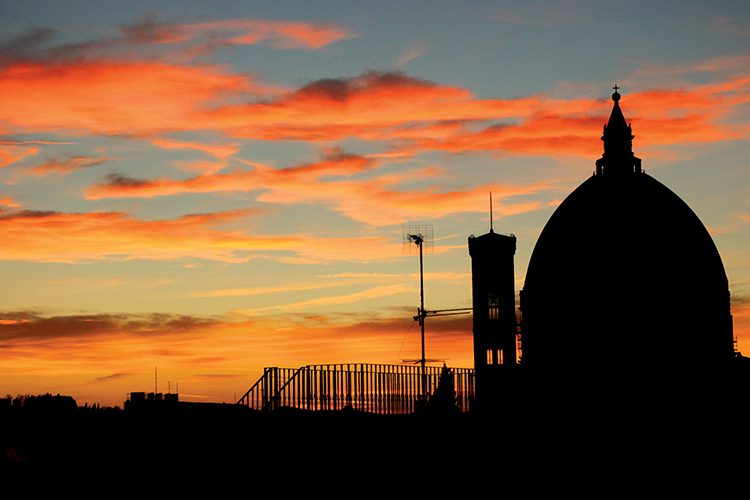
White marble, red and green lines of color, ornate details covering every inch of its facade, copper ball protruding into the sky. Before arriving for the semester, I knew of Santa Maria del Fiore Cathedral, better known as the Duomo of Florence, but little about its historical or cultural significance within Italy as a European country. My feelings towards one of Florence’s most popular landmarks have evolved throughout my time abroad.

When I first saw the church, I was astounded by its massive size. I strained my neck, scanning the entire length of the front side with hungry eyes. I saw the Duomo in its entirety– the lines of color, the white marble, and the large wooden doors.

After the thrill of the first sighting, I learned that people use the church as a meeting point which frustrated me. Whenever someone said to meet by the Duomo, my body grew tense. Where? I thought. This thing is too big.

I soon became accustomed to walking past the Duomo each day. I hadn’t thought much about the church after my first month abroad other than wishing it wasn’t my usual route to class when flocks of tourists visited, making my route longer than usual.

As I stepped away from the Duomo, I realized its functional purpose. When I would become lost around Florence, I simply walked down a few streets and waited to see the Duomo’s copper ball and spherical top. Though I was aware of the Duomo’s presence, I solely viewed it for its practical use.

My indifference began to shift right before my parents’ visit halfway through the semester. Because of my dad’s interest in architecture and history, he read a book about the Duomo before his arrival entitled Brunelleschi’s Dome: How a Renaissance Genius Reinvented Architecture. He asked me, “Did you know they didn’t even use buttresses to support the weight of the Duomo? And that the copper ball fell off in the 1500’s?” I didn’t. I felt ashamed that I had failed to learn much about a monument that stands only five minutes away from my apartment.

As the lines became longer for everything in April, I knew it was time I climbed the Duomo. I purchased my ticket, woke up early on a Wednesday morning, and waited in line. As I began walking up the steep steps, a rush of energy overwhelmed my body. I thought of all the people who did the same hundreds of years ago, the ones who dedicated their lives to create such a beautiful combination of art and architecture to create a place for worship. And, now I was climbing to the top.

Later that same day, I entered the Museo dell’Opera del Duomo and marveled at the displays and the information that accompanied them. It was fascinating to learn about the comprehensive history behind such an influential monument that I was lucky to see on a daily basis. I stepped out of the museum and the Duomo greeted me; my mouth immediately curled into a smile. Wow, I thought.

As I reflect on the semester, I have realized that the Duomo isn’t simply one singular piece of architecture that can be absorbed and processed from one sighting. It’s comprised of many pieces and the tiniest of details: the distinct expressions on the face of numerous statues, the marbled spirals in the windows, the gold streaks of the paintings. I neglected to see all of these intricacies when I first arrived.

These intricacies have not only been present in the Duomo’s structure but also my daily life in Florence: the scent of finocchiona floating in the air as I pass a panino shop, the familiar faces of street musicians, a small piece of colorful street art poking out from the ground.

The church that was once a nuisance to walk around has become a reassuring point of reference, a sign that I had returned home after a long day or weekend of traveling, and a sense of stability in a semester that presented new experiences and challenges each week. During my last few weeks in Florence, I take a little extra time to find a small detail that had previously gone unnoticed. It never fails.

See more of Florence and Italy at FUA’s FB, Instagram, and Twitter.
Seizing the Florentine Moment

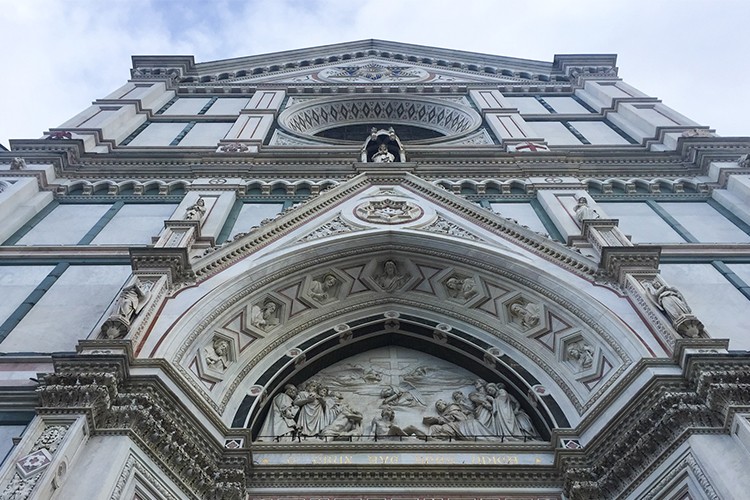
Facade of the Basilicata di Santa Croce
Examining the detail of the Santa Croce church, photo by Morgan O’Reilly

By Morgan O’Reilly

It’s 8:30 on a February morning as I swiftly dodge bikes and local pedestrians on my way to class. The damp chill of Florentine air jostles my bones as my tired eyes stare downwards at the passing cobblestone. The frigid gust of wind and the loom of tardiness pick up my weary feet and hurl them toward the next stone, until suddenly a crack on the sidewalk catches my foot and I trip. Only then do I look up from my monotonous routine and spot a little, hidden bakery; a woman laughing with her daughter; the incredible detail on the Santa Croce archways; and a side of Florence I had neglected to notice.

Falling into a routine comes naturally when settling in Florence: you find the quickest routes, the cheap panini places, and a couple go-to evening spots. Although finding some favorite places will help with your acclimation to the new environment, it is also  important to keep exploring the city and appreciating new sights each day. Yes, many weekends will be spent crossing off travel bucket lists, but weekends should also lend themselves to new Florentine discoveries. The city cannot be fully appreciated in one, momentous layer. It opens itself up to its guest every day; tripping and confusing its inhabitants and then strategically placing a hidden gem right in their winding paths

Finding a new sight a day, or moreover, appreciating a new sight a day, can transform the city from a world renowned bustle to a personalized home. Form a realistic plan of things you want to see, do and eat, and try to knock off a few each week.  Reach out to your professors and locals for their recommendations. Even on your walk back from class, pay extra attention to the detail on the Duomo; the finely cured meats at your favorite panini spot; the muffled italian chatter in the Oblate Library; veins on statues; love locks on fences; foam on your cappuccino. Explore the Uffizi over and over again, visit Oltrarno’s gardens, grottos, and local eateries, and find those special details and locations you would have overlooked if you hadn’t payed active attention.

The simple act of opening one’s senses to new discoveries can not only act as a mantra for an immensely enriching Florentine experience, it also lends itself to a life of new discovery and appreciation. Begin to notice, to see the overlooked, and to experience the little moments that make Florence so unprecedented.  

See more of Florence and Italy at FUA’s FB, Instagram, and Twitter.
Florence: A Contemporary Canvas

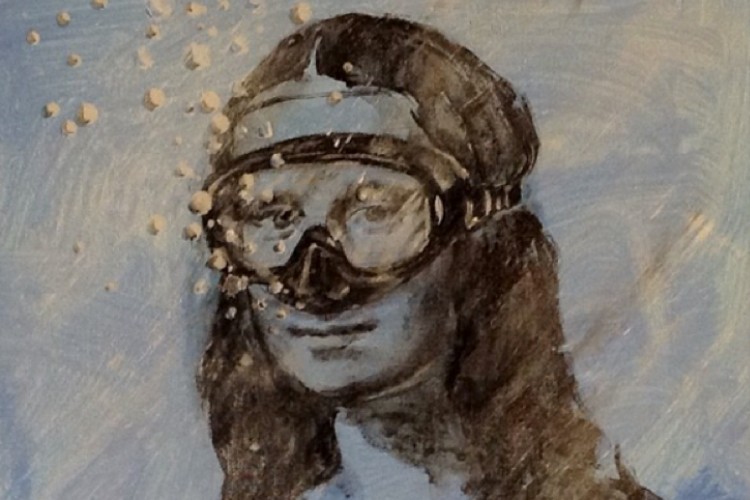
Street art of the Mona Lisa

Contributed by the Fall ’15 Web & Social Marketing Class

Though Florence has become renowned for its rich culture in historic art, there is a wave of contemporary artists leaving their mark on the city. Taking their talents to the streets and alleyways, Florence has become a canvas for these emerging artists. You cannot walk more than a few blocks without seeing at least one piece of art plastered along the walls. A common theme amongst many pieces throughout town are historical figures in scuba gear underwater. It is known as “L’Arte Sa Nuotare,” which roughly translates to “Art Knows How to Swim.” The artist, Blub, remains anonymous to this day. Though reserved in identity, this artist is making strives in the contemporary art scene this is should prove to have lasting influence on the city of Florence.

Blub is just one of the several street artists in Florence. What examples can you found in and around the city in terms of street art, museums, cultural centers, and local galleries? The history of art has an incredibly important presence in Florence due to the innovations and inventions that happened right here. Yet at times we can get overwhelmed by the weight of Florentine history. Art is alive and ongoing, it is not bound by time periods, as Maurizio Nannucci wrote with neon lighting, “All art has been contemporary.”

See more of Florence and Italy at FUA’s FB, Instagram, and Twitter.
David’s Right Hand

david-michelangelo-florence-fua

By Jess Mitchell
Photo courtesy of FUA

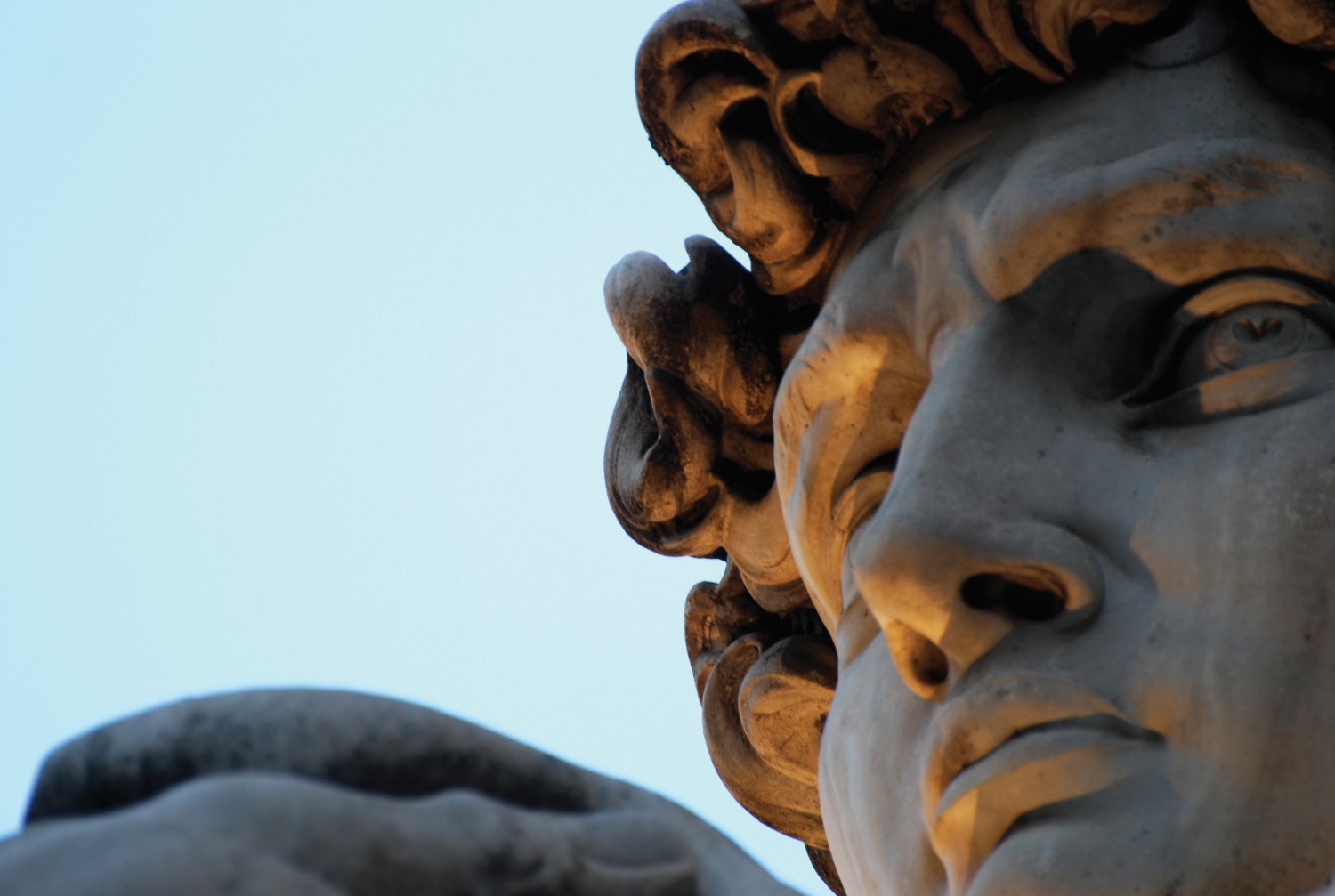
More than the paintings, more than the architecture, nothing fascinated me more than David’s right hand.

It was the veins that interested me. They slithered down his arm and bulged around his knuckles. They were different from the veins that popped out of the papery skin of the elderly. These veins were visible because of strain, I thought, the work of a shepherd. I wanted to run my finger along the hand and feel the life that pulsed from it.

Art is like magic. It draws on the life we know and adds elements from another place or dimension or world, so that when we walk past a piece, the familiar and the alien work together to capture our attention.

It took a while for that magic to work on me when I went to the Uffizi and Academia. But then I met David. The hand, the veins, the eyes that you wished would glance at you, they wove a story together. There was a sense of life, of a miracle, right before me, and it demanded a response.

My response was to become a photojournalist.

Throughout the Academia and Uffizi, I began to see the statues and paintings as snapshots in time. They were the best types of models because they never sneezed or blinked. I could shoot around them, stare at them for uncomfortably long periods of time, and dig up their stories. David’s story was that he had arrived at the stream to pick his stones to fight Goliath, and he paused in his work to survey his home as he prepared for battle.

Art asks us to meet it halfway, in a special place between reality and imagination. I met art through a right hand, a camera, and a story. And through them, I saw beauty.

Suggestions:

The original David statue sculpted by Michelangelo is housed at the Galleria dell’Accademia. Copies of the statue can be also admired in panoramic locations such as Palazzo Vecchio (where it was originally placed) and Piazzale Michelangelo.

Details on the background, creative process, and historic currents of Michelangelo’s David provided by the Accademica can be consulted before visiting the statue.

See more of Florence at FUA’s FB, Instagram, and Twitter.
From Da Vinci to Mac: Creative Connections

Untitled-2

Tuscans like Leonardo da Vinci created a connection between the arts and sciences that continues to inspire global brands like Apple.

Leonardo da Vinci was one Tuscan who blurred the boundaries between the worlds of science and art. Little did he know that the world would be referencing his great work well into the 21st century.

His influence on brands such as Apple began with his use of the “golden ratio,” a ratio that dates back to the 3rd century BC. The “golden ratio” is a concept used to achieve, what is considered, perfect balance and beauty. This concept is still used today in order to create precise and relative designs. Apple is known to have used the ratio in several of its products, such as the iCloud logo. The company logo is also thought to have been designed with the ratio in mind but a Quora  discussion online seems to debunk this theory.

Leonardo Da Vinci, Dante Alighieri, Brunelleschi, Michelangelo, and Galileo, are some Tuscan names that can be identified internationally through their renowned works that have all held an impact within the modern-day use in the arts and sciences. These individuals were able to blur the boundaries of cultures by studying profusely and realizing the subtle connections between the inspiration that had been sought by artists, and the teachings that are required for educating oneself. Their ability to wonder, think, and ponder the scientific ideas they were posed with, broke barriers and created bridges between two very different disciplines.

The culture of art and science that Italy has to offer has made a strong impact for the world and its future. Maybe you too, during your term abroad, can develop such studies that will break boundaries and bridge the two worlds of arts and science. Inspiration is everywhere, even in FUA’s very own DIVA campus where Michelangelo’s Tondo Doni was originally housed before its permanent installation at the Uffizi!

See more of Florence at FUA’s FB, Instagram, and Twitter.
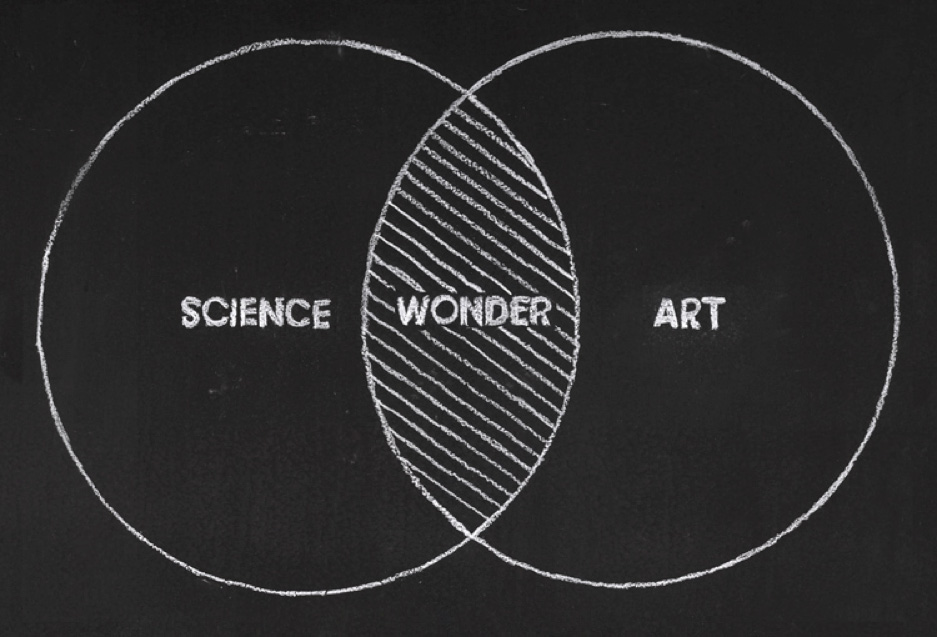
Image credit: Venn diagram image courtesy of the Imaginary Foundation.