Farm to Table Focus: Vivanda

Photo courtesy of FUA

By Anastasia Finney

A typical student living in Florence has likely already seen many of the famous sights, tasted their fair share of Italian food, and interacted with a good amount of locals. However, classes at FUA often include field learning sessions around that city in order to take students off of the usual pathways and into experiences they might have otherwise missed.

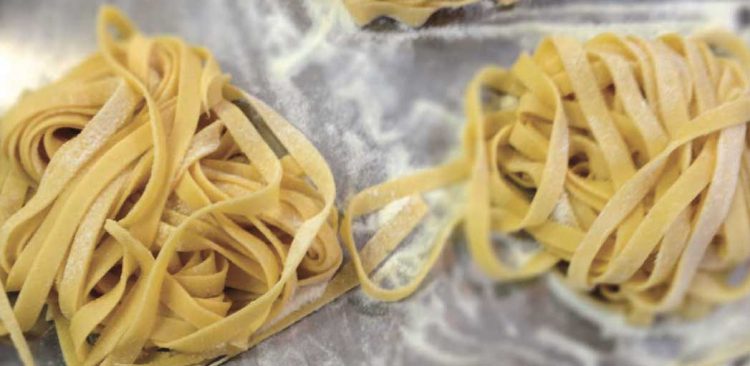
During the “An Introduction to Italian Food Traditions,” taught this past fall semester by Prof. Cecilia Ricci, students often incorporated real food experiences into their learning. Rather than simply receiving long lectures about the food and culture of Italy, the class conducted tastings, cooking projects, and visits to relevant food locations in the city. One such visit took place at a local restaurant in order to analyze fresh pasta. Before embarking to Vivanda, the students first learned about the differences between and characteristics of fresh and dry pasta through a lecture component in class.

Vivanda is a small and cozy restaurant located in Oltrarno, on the other side of the Arno River. It prides itself on organic ingredients, natural wines, fresh pasta production happening right in the restaurant, and options that can please meat-eaters, vegetarians, vegans, and gluten-free people alike. At the restaurant, the class was given three types of pasta to taste: gorgonzola gnocchi, traditional spaghetti, and ricotta and spinach ravioli. They were also served Arialdo wine with the meal.

Student Nick Tyndall shared that the tasting helped his understanding of Italian pasta traditions. “The restaurant had an authentic and inviting ambience, consistent with the best establishments I’ve visited in Florence,” said Tyndall. “We got to see how the staff made the fresh pasta and learned about the company’s food philosophy. The pasta was probably the best I’ve ever had.”

The class had time to enjoy and experience both the food and setting, while also listening to the owner talk about the restaurant. Professor Ricci also talked with the class during the visit about the food tasted and the way it paired with the wine. The students were encouraged to think critically about what they were consuming, in regard to production, presentation, and longstanding Italian traditions. Naturally, the group also got to enjoy the conviviality of delicious food too.

Experiencing a guided tasting in close contact with industry professionals gives a different perspective to daily activities that we all experience, such as trying new restaurants. “I wouldn’t have even known this restaurant existed without this class,” said Tyndall. “Now I definitely want to go back for a full meal!”

Vivanda
Via Santa Monaca 7 (between Pz. S. Spirito and Pz. del Carmine)
For further details visit the restaurant’s website.
See more of Florence at FUA’s FB, Instagram, and Twitter.

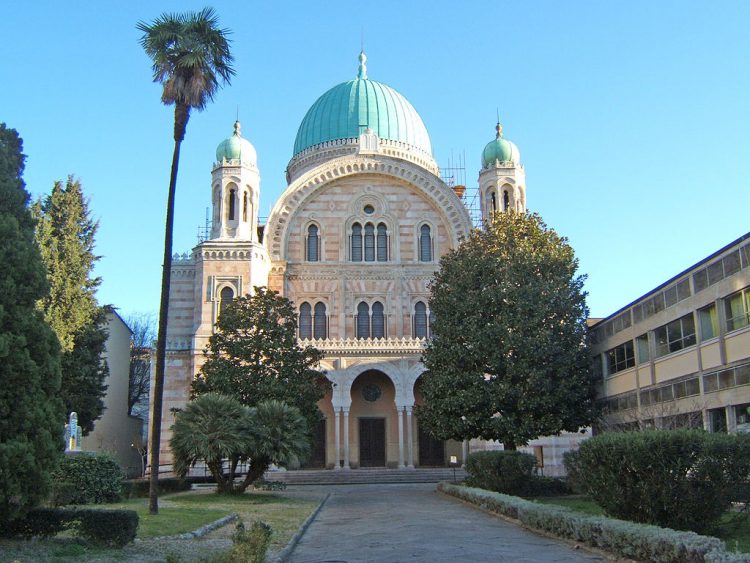
The Great Synagogue of Florence

Image by Wikimedia Commons user Toksave

By Caroline Angelini

Though Italy is a predominantly Catholic country, its religious landscape represents other traditions as well. The relationship between the Jews and the city of Florence dates back hundreds of years, and this community is one of the focal points discussed during the FUA course “Shoah: The Holocaust in History.”

This course, taught in Fall 2016 by Valentina Nocentini, focuses on the history of the Jews, specifically in Italy, and how their treatment eventually led to the the Holocaust. To give her students a better grasp on exactly what happened to the Jews in Italy during the Holocaust, Prof. Nocentini brought her students to the Tempio Maggiore, or the Great Synagogue of Florence. Based on the experience and how it helped to contextualize the treatment of Jews in Italy, students wrote a reflective assignment as an outcome of the visit.

The Synagogue dating to 1882 is truly breathtaking. The intricate detail of the hand-painted walls, and the ornamentation of the women’s balcony were like nothing else that students had witnessed both in Florence and beyond. The mosaics and frescoes are reminiscent of Christian art, but have their own character that makes them unique to the Jewish culture of the Synagogue.

While the artistic ornamentation was magnificent, the mood that most students had while in the Synagogue shifted once they reached the museum. The Synagogue separates a portion of its space dedicated to the Florentine victims of the Holocaust. There are stone slabs with each victim’s name and videos depicting the lives that they carried out while being exploited during the Shoah. “It was something difficult to experience—the contrast from first seeing the beauty and grandeur of the Synagogue to then learning about how the Jews were treated during the Holocaust,” commented student Emma Dunleavy.

The visit to the Synagogue helped the students of the Shoah course gain a deeper understanding of the past lives of Jews in Florence. It also provided insight into how Florentine and Italian citizens in general aided those in need of protection especially during WWII, which gave students food for thought as they themselves experience daily the hospitality of a foreign host city with whom they must forge a new relationship, one day at a time.

To visit:
The synagogue is located in Via Farini 6, near the Sant’Ambrogio church. Details about visiting hours, synagogue history, and much more can be found on the website of the Jewish community of Florence – moked.it/jewishflorence

See more of Florence at FUA’s FB, Instagram, and Twitter.

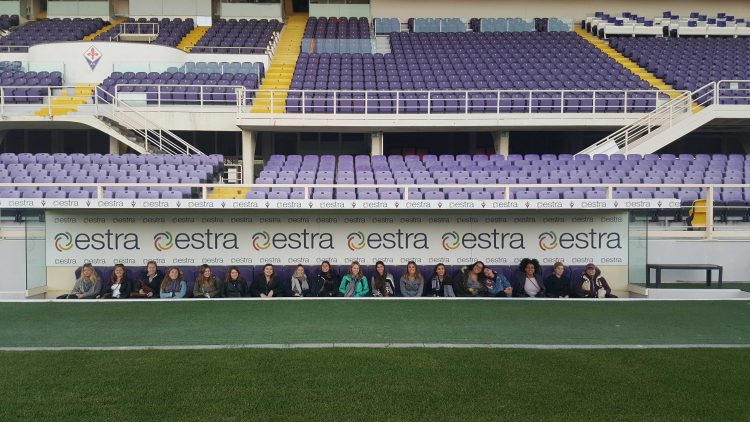
ACF Fiorentina: Florence’s Soccer Team

Photo by Beatrice Santini

By Karla Silva

I grew up in a Brazilian family – we live and breathe soccer. It is like a religion. My parents would set their lives around a soccer game, adjusting their work schedules to watch an important match. There was no such thing as DVR to them– the game always had to be experienced in real time. Soccer games were a time of celebration, where family and friends got together. It was one of my favorite things growing up. And to see that embedded in the Italians, especially the Florentines, is a way to reconnect to my family.

I recently had the honor to go on a special tour of the Stadio Artemi Franchi, home of the ACF Fiorentina soccer team thanks to my Writing for Digital Media course at FUA. You can feel the pride of the stadium’s management team as you walk through the VIP entrance, with its bright white walls and the elegant symbol of the team adorning them: a purple fleur-de-lys inside a gold-lined diamond.

We quickly made our way to the media room, where the press gather together after each match. You can imagine the intensity of representatives of different media outlets fighting to get their questions asked, one jumping over the other to get their burning questions asked for their article.

It takes a lot of work to get a team popular enough for there to be a need for the media room, let alone an audience to watch the game, and we have the team’s Digital Media department to thank for that. To get the word out via countless social media channels and put out content that will appeal to fans of all ages isn’t an easy task. It takes hard work that many do not realize. It made me wonder how much effort truly goes into getting a game to run smoothly, or to construct a large fan base for the team as we make our way out of the media room and into the stadium itself.

I’ve always felt that the locker room is a sacred place for the players. It’s where they get ready, prepare for the upcoming match. They talk strategies, spread words of encouragement. It’s their home. Their private space. And entering that space allowed us to see a personal side that no other fan is able to see. It felt like we were in on a secret that everyone wanted to know.

The Florentines value the sport of soccer, which goes hand in hand with family. It’s impossible to walk down the streets of Florence without seeing a splash of purple here and there. To have the opportunity to walk on the field that the Florentines value so much was an experience I’ll never forget. Though the stadium is on the smaller end, seating around 45,000+ fans, it felt expansive underneath the glowing setting sun. Back home, whenever there was a game, it was always a party. Family and friends, friends of family and even neighbors get together celebrate. The spirits are always high, the energy constantly flowing.

Seeing the stadium empty and quiet, was a new feeling for me. You visualize the loud and high energy of a full stadium in comparison. The lack of cheers and chants made the stadium seem almost peaceful, like the quiet before the storm. We were even given the chance to sit on the players’ bench, which was the perfect end for our visit. Being able to experience the field from the player’s angle was unforgettable, a viewpoint that only a certain select few get to see.

One thing that I noted during our visit was the amount of people it takes to operate the stadium. The fans don’t always know, and neither did I, that the game consists of so much more than just the players. From the coach to the stadium manager, the commentators, the digital media specialist, even the workers who keep the field in top conditions – all of these individuals support the needs of the players and the game itself. The backbone of the stadium is just as important as the team.

I am forever grateful for this opportunity that I have been given. Soccer is a big part of my life and to be able to walk through the inner workings of a stadium and witness how the entire range of stadium workers connect to put on an amazing game for fans was a unique experience that I will cherish.

See more of Florence at FUA’s FB, Instagram, and Twitter

Art’s Greatest Spy: Exploring the Museo Casa Siviero

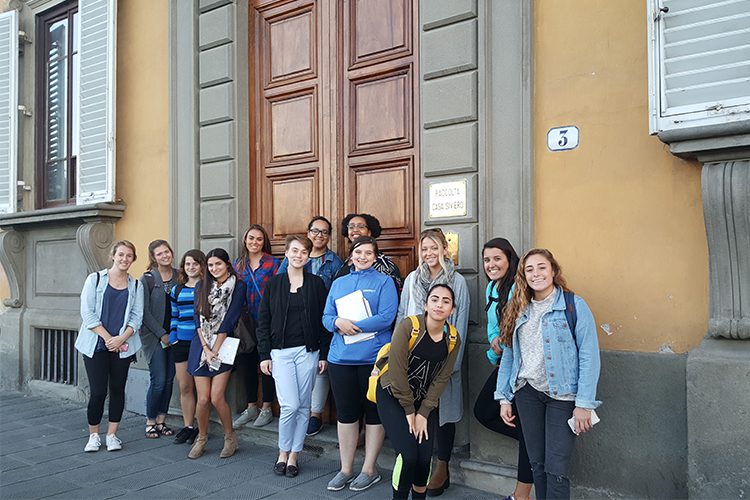
FUA digital writing students visit Casa Siviero. Photo by Beatrice Santini.

By Leeya Mengistu

A Florentine home-turned-museum houses the intriguing story of a man whose involvement in WWII and fascism in Italy made a priceless contribution to Italian art.

Lungarno Serristori 1 is nondescript in the way that every historical home in Florence blends into the Renaissance landscape of the city. The exterior is a faded shade of yellow. The front courtyard is shaded by trees and the driveway covered in gravel. The building itself is styled the typical Florentine architecture. But the former owner of the home, as well as the treasures that lie inside, are what draws visitors from around the world.

Meticulously cared for by the Amici dei Musei e dei Monumenti Fiorentini, the Museo Casa Siviero hosts the memory and history of classical art’s 007 figure: a man whose reputation as a smartly dressed, valiant ladies’ man is surprisingly much less known than James Bond’s.

Rodolfo Siviero’s two-story estate is home to an exciting legacy. The basement holds a museum of his life and achievements, while the main floor holds the personal art collection of Siviero, who wanted to be remembered for his achievements as a collector as well as his achievements as a spy. The pieces include weapons, paintings, sculptures whose cultural and historical significance attributed to their owner are priceless.

But how did a failed art historian become a national hero?

Siviero, born in 1911, began as a humble humanistic studies major at the University of Florence with dreams of working in art history. Instead, life led him to the fascist Italian secret service, where he became an agent going undercover to recover beloved pieces from the Nazi party. His largest mission in 1937 brought him to Berlin, where he collected intelligence undercover as a persona very close to himself: a student pursuing art history.

A few years later, Siviero joined the resistance in Italy and became an anti-fascist. He began to monitor the movements of artwork stolen by the Germans. This time he worked from the home at Lungarno Serristori after previous owner and dear friend, Jewish artist Giorgio Castelfranco, fled Florence in fear of the incoming Nazis.

It wasn’t long before he was captured and tortured in the Villa Triste, or the Sad House, by the Fascist military in 1944. Committed to the role, he resisted relentless interrogation and won back his freedom. Even today it is still unknown whether Siviero himself was truly with or against the National Fascist Party.

Of course, Siviero’s work was not in vain. Around 200 pieces of artwork recovered by the spy are currently hosted or archived in Florence’s world-famous Uffizi Gallery.

Although anxious to secure his status in the Italian art history world, Siviero remained an obscure figure during his time. An interesting fact, he loved women and a letter to Hollywood’s popular blonde bombshell, Jean Harlow, was reciprocated with autographed photo. Siviero eventually retired his life of espionage and returned to a traditional job in the arts: President of the Accademica delle Arti del Disegno. He maintained the position until his death in 1983, and his home was given to the Tuscan Region in order to keep the legacy alive for generations to come.

Museo Casa Rodolfo Siviero
Lungarno Serristori, 1-3
Free entry, see the below site for opening times.
www.museocasasiviero.it

See more of Florence at FUA’s FB, Instagram, and Twitter

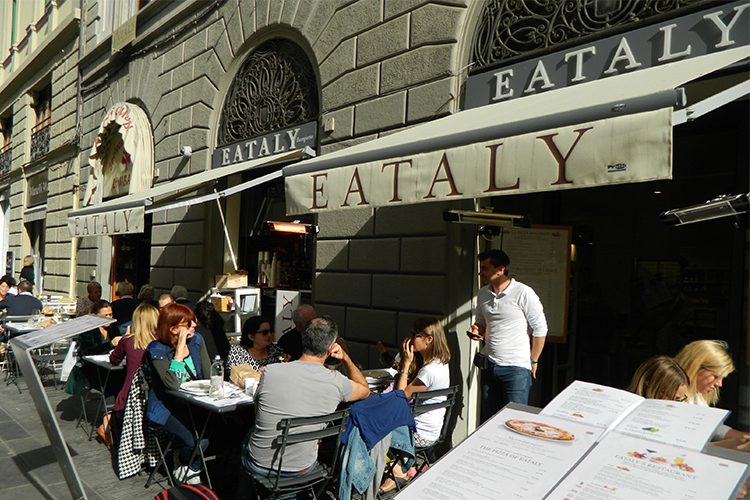
Experiencing Eataly: Italy & the Global Market

Photo by Jess Pitocco

By Anastasia Finney

An FUA Marketing class goes inside the food retail business through a site visit at Eataly Florence.

Studying abroad at Florence University of the Arts is truly an experience like no other.  Oftentimes, this is due simply to the location of this institution in the heart of Florence, allowing effective and memorable learning outside the traditional classroom walls.

An “Introduction to Marketing” class taught by Professor Andrea Adams experienced a site visit this fall to local Eataly store.  Eataly is a food retailer, comprised of grocery markets and restaurants, that focuses on selling quality Italian goods to an international market.  According to the website, the Eataly mission is “to demonstrate that high-quality Italian food and drink are at hand.”  Eataly also highlights that they not only focus on Italian food itself, but also “living the Italian way” in terms of taking the time to enjoy this high-quality and local food.

The marketing class was able to go on a tour of the Eataly facilities, as well meet with a store manager to get an insider’s perspective.  “We got to learn about an Italian business through an international marketing perspective,” said student Nicholas Tyndall.  “I got a new view on how Italian businesses are vying to compete in an evolving global marketplace.”

Founded in 2007, Eataly has already grown exponentially and received international attention.  The most recent addition to the company is a second New York City store in downtown Manhattan, opened in August 2016, which has received excitement and positive reviews.  The students in this marketing class were able to see Eataly here in its founding country, as well as see how it has already influenced their home countries.

Besides in Italy and the United States, Eataly has locations in Brazil, Japan, South Korea, United Arab Emirates, Germany, and Turkey.  From the presentation, Tyndall said the most interesting thing he learned was “how far Eataly has already spread across the globe and how aggressive its expansion plans are for the future.”  The company plans to open additional stores across the United States, as well as expand into Canada, Mexico, France, Russia, China, Australia, and more.

The marketing class also received student cards from Eataly to experiment with the customer experience of benefits and discounts, ranging from bakery items to restaurant meals.

“I like that FUA really emphasizes this kind of experiential learning,” Tyndall concluded.  “It makes the material much more interesting and helps you to explore Florence itself.”

Interested in visiting Eataly?  The main store is on Via de’ Martelli, 22, right by the Duomo.  There is also a smaller Eataly marketplace within the Mercato Centrale – Via dell’Ariento, 50123 Firenze.

See more of Florence at FUA’s FB, Instagram, and Twitter.

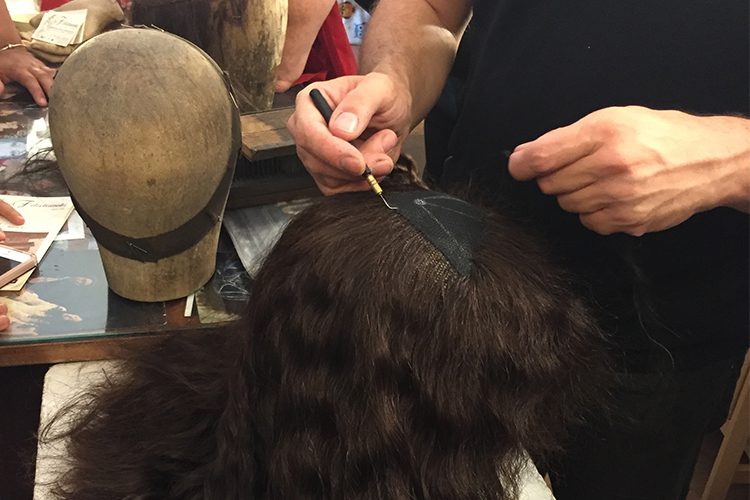
Filistrucchi: Fake Beauty, Real Tradition

Photo by Megan McCall

By Melissa Maize

Filistrucchi is a Florentine institution that makes the ordinary, extraordinary. FUA Digital Writing students recently visited the historic theater makeup laboratory and shop. 

If you could be anyone, who would you want to be?

If you could swap faces, swap lives, even for only day, who would you choose? A Duke, a Duchess, Abraham Lincoln? Lady GaGa? At Filistrucchi, you can be anyone.

We all have little things about our appearance we’d like to change- smaller nose, thicker hair, higher cheekbones- and Filistrucchi was built on that need. Established in 1720, it catered to Florentine nobles, providing wigs and make up to suit their stylistic needs. It then developed into one of the leading make-up and hair providers to the Opera and stage, and later cinema. Gaining notoriety as masters of their trade, their clients soon spread as far as New York and Boston.

Perusing photos of their work, the shop owners recount stories of how they transformed men into women, women into men, old into young, the transformations often so complete that the clients’ families didn’t even recognize them.

It’s amazing to think that all that stands between you and complete anonymity is a few layers of make up. It seems to me that Filistrucchi has survived three hundred years and two epic floods not because beauty is timeless, but because the desire to look beautiful is.

See more of Florence and Italy at FUA’s FB, Instagram, andTwitter.

Art History: A Different Perspective

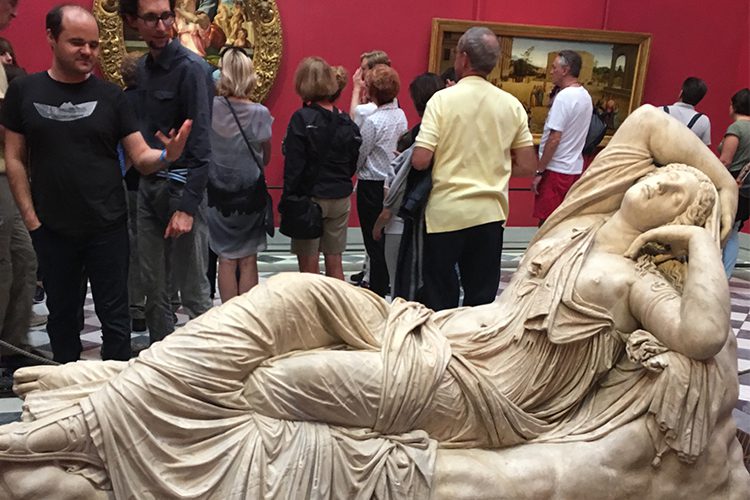
Visitors at the Uffizi. Photo by Jessica Pitocco.

By Nicole DeCosta

Alicia Deakin from London discusses how being in Florence has had a first hand impression on her perspective on Art History.

After the first half of the semester here at Florence University of the Arts, the students seem to be settling in nicely to the bustling lifestyle of classes during the week and exploring on the weekends. Sitting down with 21-year-old Alicia Deakin from Suffolk, England we discussed how she has had to adapt to this cultural change and new lifestyle.

With classes taking place Monday through Friday, Deakin said that her art history class is held twice a week.

“I’m happy that the class meets twice a week. Originally I found myself comparing my schedule to other semester students taking once a week classes, but I quickly realized just how much I enjoyed the class,” said Deakin. “I was feeling super lucky to be able explore the city of Florence and take part in the included field learning city activities offered through the class.”

Taking an art history course through FUA, Deakin said how amazing it was to experience this much raw culture within a class. When asked why this class was her favorite, she said how inspiring it was to be amongst some of the most amazing artwork she’d ever seen.

“Offering me new skills that I have not used in sometime, because I had taken a few years off from University, this class provides me an opportunity to study a new topic that both interests me and excites me,” said Deakin.

Noting the high quality education being provided to her through FUA, Deakin said, “the difference in my classes here from in London are so drastic, it is important to see how much the professors want to engage with you as students, while also wanting you to have the best possible experience in Florence.”

Since Deakin has never studied art history prior to coming to Florence, she said her favorite part is the novelty of the class, learning new topics, while also being placed within the Florentine environment. Knowing she is able to see the art firsthand, Deakin is thankful for the opportunity that FUA has provided her, and being here has allowed her to open her cultural perspective.

Offering students an opportunity to receive a strong education, while also an experience of a lifetime, including travel, cultural exchanges, and new opportunities, attending FUA, Deakin says, “is a once in a lifetime experience!”

See more of Florence and Italy at FUA’s FB, Instagram, and Twitter.

Your Fall Guide to Fruits and Vegetables in Florence

Central Market
The Central Market, photographed by the author.

By Jess Pitocco

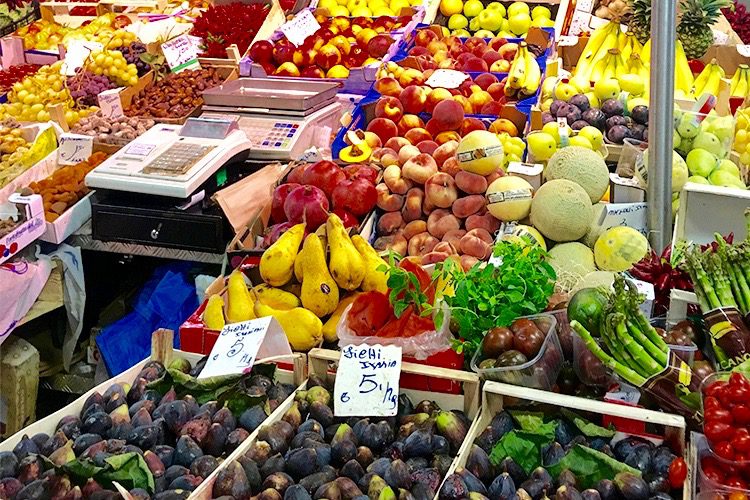
Italy isn’t all about the carbs; fruits and vegetables play a huge role in Italian cuisine. Here’s everything you need to know this fall about the best fruits and veggies in Florence. Check out the best markets, what produce is in-season, and vegetarian-friendly restaurants and recipes!

The high-carbohydrate diet many associate with Italian cuisine is a falsehood: Italians may eat carbs, but their lifestyle, portions, and eating habits are much healthier. That’s why when the New York Times reports on Italian eating habits, the focus is not on how to eat a low-carb diet while traveling, but rather why Italians are some of the healthiest people in the world. Fruits and vegetables, though filled with those ‘nasty’ carbs, are absolutely essential not only to a healthy diet, but also to Italian cuisine. That’s why including some apples, asparagus or zucchini in your basket while on your daily market trip is important to the Italian experience.

If you haven’t been to an Italian local market yet, give yourself an afternoon to go and explore one of the best parts of living in Florence. There are more than four big Florentine markets, not including the San Lorenzo Market, that you should visit to get the best, and freshest, produce (and even some clothing, music, plants and pastry too!)

However, before going to the market, know what fruits and vegetables are in season. Check out this chart to see that apples, blueberries, grapes, tomatoes, green beans, and cucumbers are just some of the fruits and vegetables that are at their best in September.

Want to visit some renowned vegetarian restaurants in Florence? Try Le Fate on Via S. Zanobi, for it’s fully vegan and vegetarian menu inspired by the signs of the zodiac and recommended by Travel + Leisure Magazine. Dolce Vegan and Il Vegetariano both have extensive vegetarian and vegan options as well, both a less than 10 minute walk from one another in the center of Florence. Still want more options? Silvana Vegan is an additional option, on Via dei Neri near the Galileo Museum.

If you don’t want to eat out, FUA Professor Cecilia Ricci, who often teaches food and culture courses, swears by this traditional Italian recipe for fruits and vegetables:

Cold Barley Salad, with Shrimp, Anchovy Fillets, and Cherry Tomatoes

Ingredients:

  • 300 g Pearl barley
  • 200 g Shelled shrimp
  • 15 g Extra-Virgin olive oil
  • 150 g Cherry tomatoes
  • 3-4 leaves of basil, cut in julienne
  • Black pepper
  • Salt
  • 8 Anchovies fillets, preserved under oil

Directions:

Boil the barley in a pot with 1.5lt of water with salt. Once the barley is cooked, strain it and place it to cool down in a bowl. In the meantime, wash and dice the cherry tomatoes. In a casserole pan add the extra-virgin olive oil, heat it at medium temperature, and let the anchovies fillet to melt. Once the anchovies are ready add the shrimp and sauté them in the oil for 2-3 minutes. Add the barley in the casserole, stir and mix all the ingredients together for 5 more minutes. Then, remove all the ingredients from the pan and place them in a bowl, add the diced cherry tomatoes, basil, pepper, salt, and mix. Refrigerate for at least 30-45 minutes before to serve. And enjoy!

After buying your fruits and vegetables, make sure you pay attention to how long they keep. Basically, how long the fruits veggies last is based on where they are from. If they are fresh from the market, your fruits and vegetables can last 3-4 days without rotting or refrigeration. If they are from the supermarket, the produce can go bad within a day or two because it has been refrigerated and prevented from becoming ripe. That way, as soon as they leave the supermarket your fruits and veggies can become ripe faster and ultimately rot faster. Buying fresh produce from the local market is a better way to ensure it will last (and it will taste better too!)

Click here for a guide to eating out in Florence, provided by FUA’s hospitality department.

See more of Florence and Italy at FUA’s FB, Instagram, and Twitter.

Cinque Terre-ible Weather

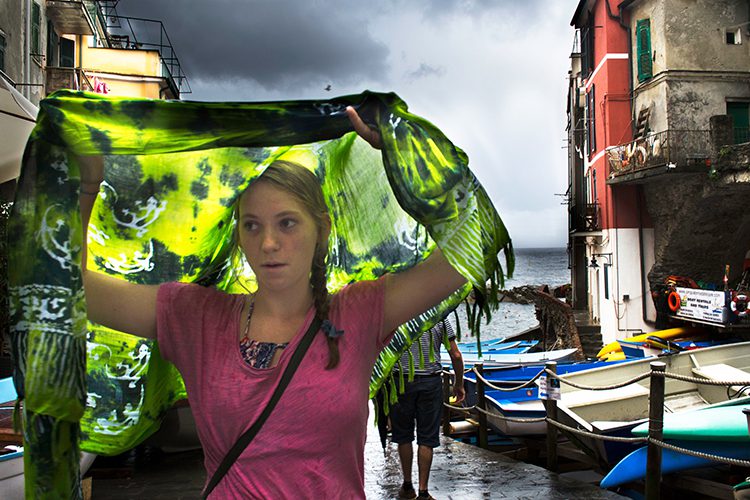
Rain in Cinque Terre, photo by the author.

By Amber Wright

Every photograph, video, and snap chat I have ever seen of Cinque Terre has been stunning. The colors of the buildings, the waves breaking on the rocks, and the sun shining down on the tourists makes it the perfect destination, and I finally had the opportunity to experience it for myself.

However, the sun wasn’t shining, and the water seemed to be more of a sea monster than just the Mediterranean sea. This area is constantly in danger of mudslides and the hiking trails were closed off for the rain that seemed to never stop falling. My weekend that was supposed to be picturesque and dream-like, now had the potential of being ruined by the Cinque Terre-ible weather.

Thankfully, I was sitting at a covered cafe as the rain came down and was able to just take it all in. I surprisingly loved the rain. I felt that the weather was a nice change from the sweltering heat, and my friends and I were not about to let a few raindrops keep us from the sea. It was surreal swimming in the mediterranean for the first time, during a storm no less, and the view of Monterosso from the water was magnificent. I now understood the raving reviews and why this coastal town deserved to be a protected site.

Sanctioned by the United Nations, a World Heritage Site like Cinque Terre is deemed so for its cultural, scientific, or historical significance. Therefore, it’s unsurprising that Italy, being the beautiful and rich country it is, has the largest number of these UNESCO protected sites.

The symbiotic relationship between man and nature is captured in the complex structure and architecture of each village. The steep hills and cliffs are dotted with buildings and agriculture that have been perfectly constructed to withstand the treacherous coastal area.

Monterosso and Vernazza were the first of the five villages built in the eleventh century. The following three villages were soon developed, and later reinforced with barricades and defence towers to combat the attacks from pirates. By the 15th century, Cinque Terre, or “five villages,” was the local term for the villages, and it was known for it’s excellent vino, produced to this day by incredibly determined farmers whose vines seem to grow vertically from the precipitous inclines. Progress halted in the area when mudslides destroyed the local agriculture, but recovered in the mid-18th century. Fast forward to 1997 when it became a protected area and to 1999 when it was officially named a national park. Today, accessibility is limited in Cinque Terre, and other than a train between the five villages, modern infrastructure has had only a hidden presence in this area.

It’s one of the most photographic areas in Italy, but there is so much more to experience than what you’ll see through the lense of your camera or behind your iPhone. Take a look around and understand why this area is deeply cherished. Look up and see the local old ladies people-watching from above, or take the hike to see the sweeping views from above. Take a dip to feel the warmth of the sea and try your hardest not to swallow the brackish water. Climb the stairs to the top of a watch tower and imagine being under attack by pirates.

Lastly, if the weather is bad, embrace it. Not only did the rain not ruin my trip, but it added to the excitement and memories that I’ll have forever. The history and beauty easily shines through, and I cannot wait to go back.

See more of Florence and Italy at FUA’s FBInstagram, and Twitter.

Stepping Back from the Lens: Florence Through My Eyes

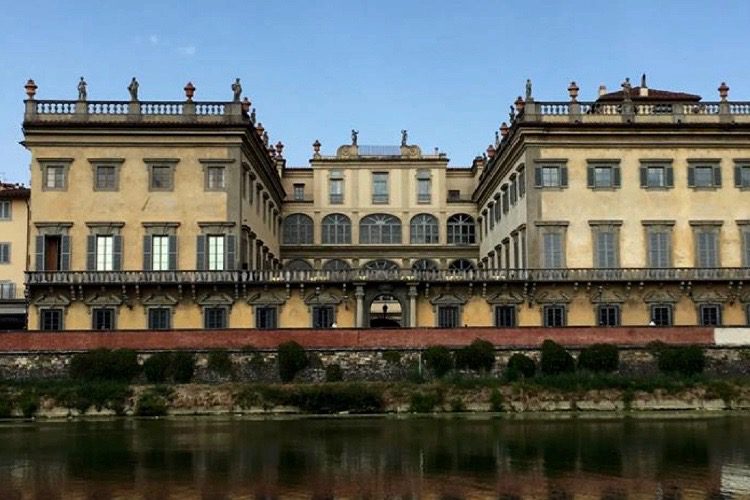
Palazzo Corsini from the Arno River, photo by the author.

By Ryanne Doherty

We all take photos. It’s a part of living in the digital age; everyone keeps a camera right in his or her pocket, and we can capture and share memories in an instant. As convenient as this is, there is a drawback.

Seeing the world through a camera lens can take away from fully experiencing a moment. It causes a person to merely see an image inside a cropped area. By focusing only on the visual, the sounds of a city, the smells of bakeries, and the feel of the air on one’s face are often overlooked.

I am just as guilty of this practice as anyone else. I will walk around Florence’s city center and take a picture of the Duomo or Santa Croce and ignore all other surroundings. For a Writing for Digital Media class assignment, I was actually required to get lost in the city and look only for the visual aspects of Florence. Through this, I was able to see in more detail but unable to fully feel the atmosphere around me.

For an hour, I explored new parts of Florence, but it’s hard to describe where I was. Taking pictures on my old Canon was my only focus and goal. This goal, I believe, caused me to miss out on a full Florentine experience as a new resident of the city.

The following day, however, my focus changed. With my class, I had the opportunity to experience the Arno River with the I Renaioli association. I took a few photos, but for the most part I tried to concentrate on more than just what I could see.

It was a sweltering day in September, and I had already broken out into a sweat on the walk to the riverbank. After a couple minutes on the water, however, a cool breeze shielded the hot sun, and I cooled down significantly. This was a breeze as I had never felt in the city center. Here, I realized the one of the coolest places in Florence at any time may in fact be the surface of the Arno, and I regretted not having taken this excursion earlier.

Paolo, the association representative who rowed the small wooden boat named the Ghibellino, recounted the Florentine history that surrounds the Arno. Some of the history was familiar to me, like the path of the Vasari Corridor through the Ponte Vecchio. Some information was new, like the history and utility of Palazzo Corsini, which is best seen from the Arno. Paolo’s voice was punctuated by the trickle of water as the oar cut through the river or his occasional whistles to rowers ahead of us as we made our way under bridges.

We docked again after an hour or so on the boat, and it was then that I decided I should step away from the camera from time to time. In the week that has passed since then, I have found myself trying to focus on the entire atmosphere of where I am – while it’s nice to have the photos, it is the desire for a new experience that drives us to have an adventure.

See more of Florence and Italy at FUA’s FBInstagram, and Twitter.