Orto Botanico & La Specola: Venturing Away From Main Monuments

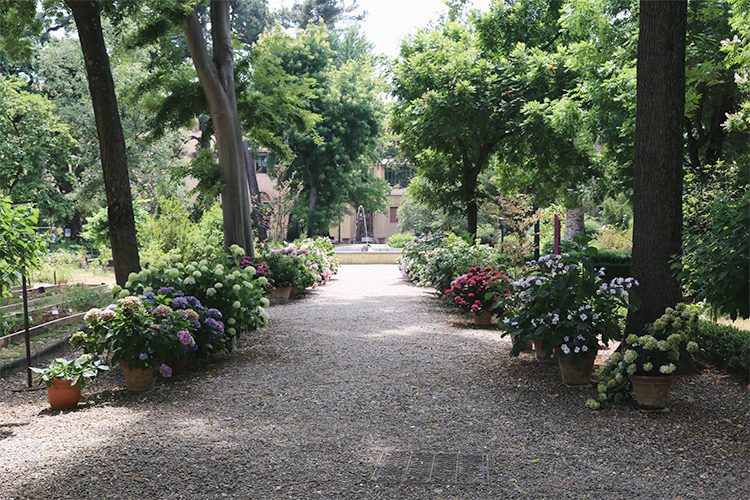
Orto Botanico, photo by the author

By Shelby Olson

As an intern, I had the opportunity to sneak away from the crowded monuments of Florence while still getting a taste of the history and culture. I visited the Giardino dei Semplici and Museo Zoologico La Specola and gained wonderful insight on what early Florence was like.

If you venture away from the main monuments in Florence, you will soon realize that Florence has much more to offer. Outside of the architecture and art, Florence presents its people and tourists alike, with beautiful gardens and museums. Being a visitor from a small town in the United States, this city has already shown its beautiful crafted and cultivated atmosphere in the span of three weeks. This past weekend, I had the opportunity to visit the Giardino dei Semplici and the Museo Zoologico La Specola. Not only are both of these places beautiful, interesting, and free of crowds, but they cost much less than the main points of interest in Florence.

First, I visited the Giardino dei Semplici which was founded in 1545 by the Medici family for medicinal research. The garden is 23,000 square metres but it is divided into smaller and larger avenues and is home to medicinal plants, flowers, spices, trees, etc. The garden contains both a greenhouse and hothouse used to cultivate special plants and the hothouse is one of the largest in Italy. The hothouse takes special care of tropical plants that have been used in both food and medicinal products.
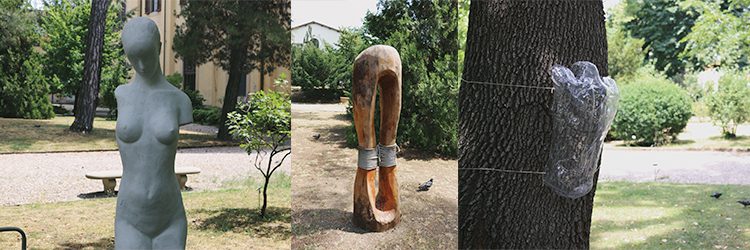
Art at the garden, photos by the author

Plants and flowers are not the only thing the garden has to offer. When I first walked in, my attention was directed towards the large fountain placed in the middle of the garden. The farther I ventured into the garden, the more art pieces I came across such as a statue of a woman, female figures placed on trees, and a wooden sculpture. Although the garden is famous for its medicinal plants, the art within the garden is not something to brush aside.

Next, I ventured to the Museo Zoologico La Specola which immediately caught my eye when I was looking up things to do in Florence, pre-arrival. The Museo Zoologico La Specola was started by the Medici family and is now the oldest public museum in Europe. The museum is made up of 34 rooms; 24 rooms are dedicated to zoology, consisting of taxidermy specimens and the other 10 rooms are dedicated to wax modeling, consisting of anatomical waxworks started by Ludovico Cigoli.

The zoology rooms are best known for the hippopotamus, which used to live in the Boboli gardens and was later donated to the museum. The waxwork rooms are known for displaying old-fashioned women with their ribcages and stomachs open for the public to see. Some of the most important pieces in the wax modeling rooms were created by Clemente Susini, one of the best Florentine wax modelers. His works are not limited to the Specola museum and can be seen in many other museums throughout the world.

I would highly recommend venturing out of the centre of Florence by visiting these two locations and getting a new taste of Florence’s history.

How to Visit:

Giardino dei Simplici: Via Pier Antonio Micheli, 3, 50121 Firenze
The Giardino dei Semplici ticket costs €3 and is open everyday except Wednesday, from 10AM-7PM.

Museo Zoologico La Specola: Via Romana, 17, 50125 Firenze
The Museo Zoologico La Specola ticket costs €5.50 for ages 6-18 and €9 for full price, along with discounts for families and groups. It is open Tuesday-Sunday from 10:30AM-5:30PM.

See more of Florence and Italy at FUA’s FB, Instagram, and Twitter.
Fashion Innovation: 9 Decades of Gucci

By Lauren Miller
Photo by Jordyn Asakowicz

The innovation theme of our latest magazine continues with our radio podcasts. How did Gucci gain its sudden ascent in the fashion world in the past few seasons? Lauren Miller investigates the evolution of Gucci’s history and the brand’s new creative director Alessandro Michele who has all the editors and influencers buzzing about his collections.

Music courtesy by FUA Music Production Course students:
Mason Bikshorn, John Filippo
“The Jazz Age 1920s”
“Soundscape of World War II,” standard Youtube License.
“Wipeout” by The Beach Boys

I Wish I Was There When: Piano Invented in Florence

By Lauren Miller

We’re thrilled to introduce our new blog sound bytes featuring original podcast content produced by the FUA Broadcasting New Media course! In the “I Wish I Was There When…” series, FUAers present about landmark moments for the city of Florence told firsthand. In this inaugural radio story,  we reveal how the first piano was invented in Florence in the 18th century by Bartolomeo Cristofori.

Music credit:
Table for Four
Written and performed by CrusaderBeach

Italian Food and the Art of Waiting

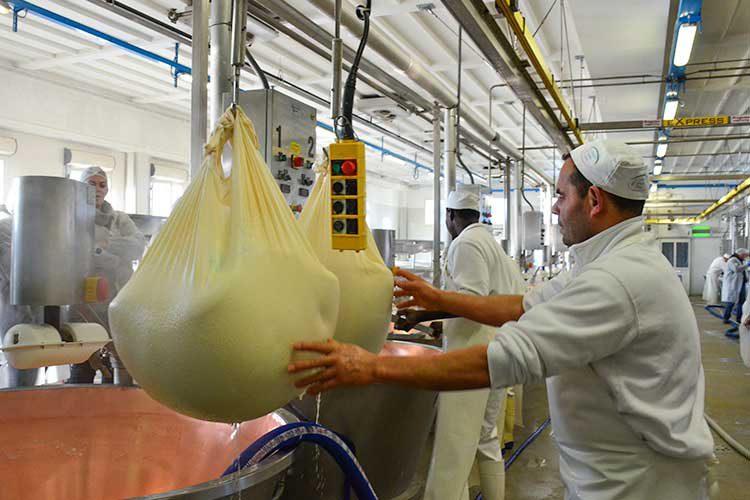
Parmigiano Reggiano cheese production

By Emily Entwistle

Italian culture includes many artisan traditions, crafts, and skills. The globalized world can make it hard to preserve such traditions, which are important to maintain and practice traditions.

As part of my time in Florence I have learned about many unique, artisanal food processes. I’ve even visited production facilities in Modena and Parma for a field learning activity. The simple but lengthy processes that these artisans use to produce cheese, balsamic vinegar, and prosciutto are impressive. The extra care and time it takes to organically produce these foods seems like a challenge, but they are worth it. The rules, regulations, and standards set for these producers could seem like a bureaucratic nightmare, but they are implemented to insure that producers stay true to the craft.

There are aged balsamic vinegars that are 20, 50, and even 100 years old. The D.O.P. balsamic vinegars take an extremely long time to age, and once every year they move the balsamic from one wooden barrel to another. Consider also that there is such a huge difference between Parmigiano Reggiano and parmesan. Real Parmigiano Reggiano is aged for a minimum of 12 months, and according to most, the best is 22 to 24 months old. Making artisanal products is a waiting game. For prosciutto, producers add salt and wait. For Parmigiano, they add salt and wait. To make balsamic vinegar, they put the grape juice in a barrel and wait. The key is patience, and when the item is finally ready, it is amazing to say the least. Producing these foods is even a year-round job. Parmigiano Reggiano producers for example work every single day of the year, even on holidays, to keep their process completely natural and authentic.

While a higher cost of these products may seem too high for some people, buying quality foods is extremely important. Not only are they better for you, but they support the special skills of smaller producers. And the food is worth the extra money for the taste alone. After directly visiting production facilities, I have gained a greater appreciation for the craft of food artisans.

See more of Florence at FUA’s FBInstagram, and Twitter.

International Women’s Day, Every Day

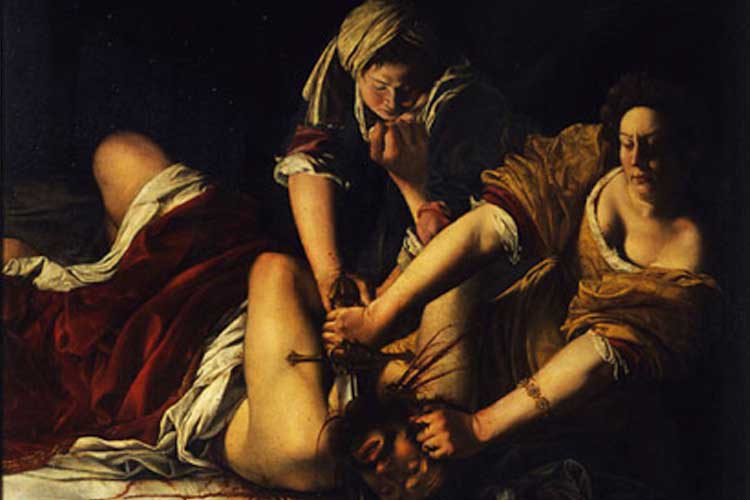
Detail from Judith Beheading Holofernes by Artemisia Gentileschi

By Madison Landau

In today’s society, there seems to be a holiday to celebrate just about anything. There’s a national holiday for Nutella, siblings, and even for French bulldogs.

Here in Italy we recently celebrated on March 8th an important holiday that won’t just be swept under the rug like the others; International Women’s Day was celebrated proudly by allowing free admission to state and municipal museums for women.

Even though Women’s Day is just once a year, you can make exploring female themes in the local culture a regular part of your daily routine. If you like exhibitions, for example, try to find special shows in your area that may focus on female artists or artists who focus on female sources of inspiration.

In Florence, the famed Uffizi Gallery Museum houses historic artists such as Artemisia Gentileschi, who is considered to be one of the most successful painters after the Caravaggio era. It’s important to not just see her artwork, but to know all that went behind it. Being an artist wasn’t easy back in the male-dominated Renaissance era, and being a female artist made recognition much more difficult.

Artemisia overcame such obstacles within her lifetime to achieve the fame she enjoys today, and for women across Italy to have the opportunity to see her artwork firsthand can prove to be a real inspiration for all. At the FUA campus, the Artemisia Room is dedicated to this important artist, and often hosts experiential learning students who collaborate on special projects related to videomaking, visual communication, and journalism.

To commemorate International Women’s Day as more than a “hallmark holiday” shows a great deal of respect to the women of not just Italy but internationally. During your studies and your daily life in Florence, seek to uncover the great as well as lesser-known women who have contributed to the artistic and civic culture of Florence and Tuscany.

See more of Florence at FUA’s 
FBInstagram, and Twitter.

Castello di Sammezzano

Photos courtesy of the author

By Steven Scaglione

Sometimes the well-traveled roads lead to unexpected finds, such as the Sammezzano Castle that is at the center of a movement to save a now-abandoned architectural gem.

After stepping out of a two-story charter bus in little Leccio, Italy, I took a breath and surveyed my surroundings. I was at The Mall, which is not a luxury shopping mall but a luxury shopping “destination,” specializing in high fashion brands like Salvatore Ferragamo, Burberry and – maybe more fittingly named – Billionaire started by Italian entrepreneur Flavio Briatore. Though the stores would not open for another 20 minutes, already a line of eager shoppers had neatly queued in front of the Gucci and Prada outlets, talking among themselves with an electric excitement. Soon they would be pulling green suits and bright dresses from the racks, but I would not be among them. I was headed for a different kind of treasure: Sammezzano Castle, only a short hike away.

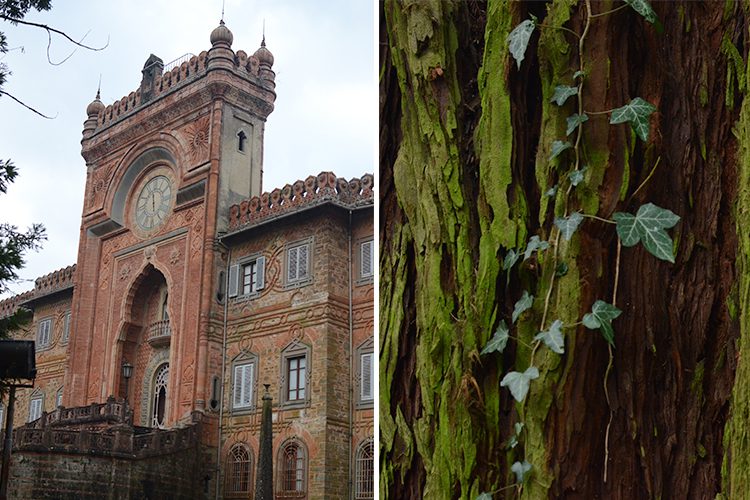
The castle lies at the top of Sammezzano Park’s central hill, overlooking the town below like a silent, stoic patriarch. The park is home to many exotic species of plants, including the species of giant sequoias native to California. One of them, known as “Sequoia Gemella,” or the “Twin Sequoia” in English, is more than 8.4 meters (27 feet) in diameter and 50 meters (164 feet) tall.

From the outside, the castle’s Moorish-style architecture is a mix of Spanish, Arabic, and Oriental influences. Inside “La Sala dei Pavoni,” or “The Room of the Peacocks” in English, is arguably its most beautiful feature, with mosaics of every color stretching from floor to ceiling.

Unfortunately, the castle is currently closed to the public, falling victim to littering and vandalism. One organization, Save Sammezzano, has been fighting to preserve and protect the now abandoned castle and surrounding park. A petition by the group ended with over 30,000 signatures, but the castle is now privately owned, making it difficult for the municipal government institutions to safeguard it. The future for any restoration is uncertain, but the cause has found great support on social media. For now, the castle remains as it has been for many years, the hands on its clock stopped at 11:28, waiting for the day they might turn again.

See more of Florence at FUA’s FB, Instagram, and Twitter.
Lose Yourself, Find Your Way

Photo courtesy of FUA

By Abby Moran

Embrace the uncomfortable, enjoy the bewilderment of studying abroad.

Studying abroad may have been the most difficult thing i have ever done. 21 years of figuring life out, myself out and now a new culture is an incredible adventure. To step away from all that is familiar, to acknowledge that you will get lost mentally, emotionally, and physically but all of this will make you grow in ways you could never imagine is daunting. After a couple weeks in Florence, I am less afraid and regaining pieces of myself I thought would be lost back home forever.

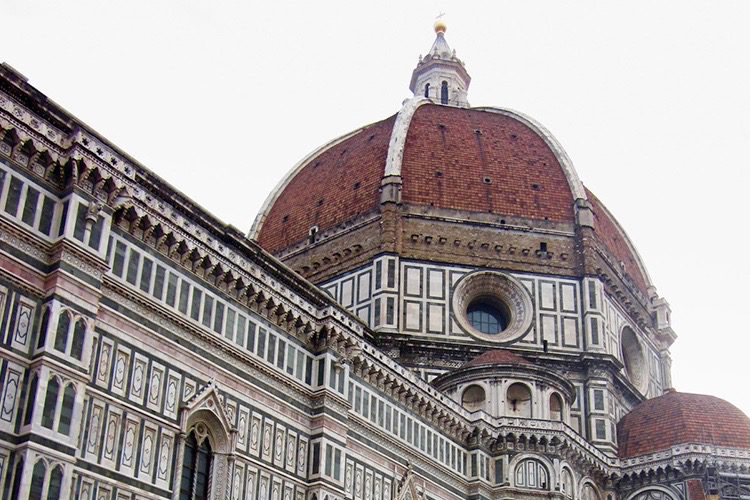
Being in a situation where in order to save time, effort, and my roommate’s energy involves being outgoing, assertive, and confident in new situations has turned out to be the absolute best scenario. I love it. I love walking in the rain here. I love the puzzle of streets that could lead anywhere but often times lead me to the Duomo, that I’ve come to see as a safe haven. I love the different languages filling my ears. The uncertainty of who and what can be encountered around the next corner. Gucci, Prada, Valentino, your shop windows bring a spark of life to my longest walks. Even in the most unfamiliar places we find objects to cling to, people to relate to, and places to become accustomed to.

Home is truly where the heart is and when we open our hearts to the culture and lifestyle of others we are given a priceless gift. Be scared, intimidated, and get completely lost because it is there, in this state of initial uncertainty where we find our strength. Find your home away from home is what study abroad offers, despite the voice in your head that says “but it will be hard.” It’s often said that nothing good comes to those who wait, so let’s proactively reach for that which seems the most intimidating. Find your landmark, in my case the Duomo, and learn something about it instead of just passing through the piazza.

Don’t shoot for the stars, shoot for the Duomo.