A Guided Journey Through the City’s Creative Underground

written by Alison Sweeney

This blog feature is an exclusive bonus installment to our Spring issue of Blending Magazine. After you finish reading, be sure to explore the rest of the magazine online—just follow this link to download the full Spring 2025 edition:
https://jschoolfua.com/images/BM/BM_151.pdf

From literary cafes to rebellious music movements, uncover the lesser-known artistic history behind some of Florence’s modern-day cultural hot spots.

Florence’s Underground Artistic and Creative Scene

Though Florence is known for its Renaissance art, grand architecture, and famous landmarks, the city has a hidden artistic scene that offers a different kind of cultural perspective and experience. While many of the venues that once hosted this creative underground scene have become more commercial over time, their roots tell hidden stories of rebellion, reinvention, and the key to discovering true Italian culture. This travel guide invites you to step into Florence’s underground, not just physically but historically, creatively, and culturally.

Caffé Giubbe Rosse: A Literary Revolution is Brewed 

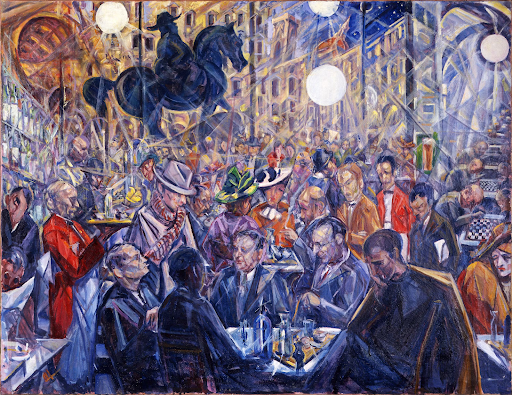
Start your journey at one of the most famous historic literary cafes in Florence, Caffé Giubbe Rosse, where famous poets and writers sat to scribe and exchange radical ideas. According to the article, “Grand Re-opening of Caffé Giubbe Rosse” by Accord Italy Smart Tours, Caffé Giubbe Rosse is located in the Piazza della Republica and was established in 1896 by two German brothers. The cafe earned its current name, meaning Red Jackets, because it was inspired by the red uniform worn by the waiters. 

Caffé Guibbe Rosse grew to become a hub for intellectuals, artists, and writers. The cafe played a pivotal role in the Futurist movement and served as a gathering place for avant-garde thinkers like Baccio Maria Bacci, who looked to challenge traditional artistic roles. 

Today, visitors can still visit the cafe and bar to experience the Italian cultural experience and legacy, where you can find some original Futurist writings still on display! 

Teatro Verdi: Reinventing the Stage

Next, step into the dimly lit Teatro Verdi of the 1980s, where the stage is filled with redefined Italian performance and shortly became a prestigious turnpoint in the uprise of the futurist avant-garde movement. Teatro Verdi transformed into a space for the most sophisticated pop and rock music and for unconventional drama. 

According to the Teatro Verdi website, the theater was inaugurated in 1854 and is the largest “Italian-style” theatre in Tuscany. Located in the historic Santa Croce district, it was built on the remnants of the 14th-century Carcere delle Stinche. In the early 20th century, the theater embraced the futurist avant-garde movement, which challenged traditional theatrical norms. These weren’t just performances but protests, celebrations of youth, and identity in a space of avant-garde reinvention.

Today, Teatro Verdi remains a diverse cultural venue, offering classical music, contemporary performances, and pop and rock concerts, reflecting the artistic landscape Florence has to offer.

Tenax: A Hub for Florence’s New Wave Movement

Last but not least, explore one of the music venues that fueled the cities’ New Wave movement in the 1980s, Tenax. Tenax quickly emerged as a hub for new artists and musicians by influential New Wave and post-punk bands and today remains a symbol of Florence’s alternative music history. Picture this: it’s September 1981, and amid Florence’s enthusiasm for new wave, dark, and punk sounds from the UK, Tenax emerges as a pioneering nightclub. According to the Tenax website, the club was founded by a group of young entrepreneurs and quickly became an innovative and alternative hub for emerging artists, fashion designers, and musicians. Tenax’s stage has hosted an impressive number of acts, including Spandau Ballet, Bauhaus, and New Order, becoming a cornerstone of Italy’s music scene. Bands like Litfibia and Neon, formed in Florence in 1979, found a platform at Tenax for their innovative sounds. 

As the music landscape evolved, Tenax adapted and began to embrace other genres like house music. The club’s ability to reinvent itself while maintaining its core identity has ensured a lasting influence on Florence’s cultural aspect. 

All of these examples of Florence’s underground cultural scene offer a rich and nuanced perspective of the city’s artistic evolution. These places, now more visible, carry with them the same legacy of those underground revolutions. So, next time you find yourself in this beautiful and magnificent city, look closer. Look beyond the espresso machines, beneath the stage lights, and in the echoes and flashing lights, and maybe you’ll find the story of a city whose past reflects a magnificent creative rebellion. 
You Don’t Just Study Abroad…You Study Yourself Too

Discover the three transformative life lessons that I learned during my six-week study abroad experience at Florence University of the Arts that I would not have been able to comprehend if I had stayed home this summer.

When I boarded the plane to Florence, Italy, for a six-week study abroad experience with Florence University of the Arts (FUA), I knew I was going to grow academically and professionally. I enrolled in a three-week course and worked a public relations internship covering diverse community events, conducting research, and collaborating with interns from various departments.

But as much as I learned in classrooms and internship meetings, some of the most valuable lessons came from simply assessing myself and my surroundings while living abroad. Here are are the three main insights I gained in Florence that no textbook could teach:

1. Discomfort is a Great Teacher

Moving across the globe from my familiar Michigan environment was the first jolt of discomfort. I was no longer just a few hours from home like I am for college, instead an entire ocean! That kind of distance forces a newfound level of independence. Whether it becomes overwhelming or empowering is up to you.

There were emotional hurdles, like the occasional hits of homesickness. And then there were the practical challenges, such as navigating a foreign metro system when my international phone plan suddenly stopped working, or trying to communicate professionally at public events where most attendees spoke only Italian. Getting lost, whether physically or in conversations, became something I eventually grew more comfortable with. That said, safety always comes first and keeping your guard up where it’s due is essential. No adventure is worth compromising your instincts or well-being.

Every time I stepped outside of my comfort zone within reason, not once did I regret pushing through the fear. Because if you’re always comfortable, you’re probably not going to grow in the long run.

2. Everyone You Meet Carries a Story Worth Hearing, Including You

During my stay in Florence, I shared a multi-room apartment with eleven roommates from across the U.S. and Australia. We came from all different walks of life…a few older than me, others navigating their very first trip abroad alone. Our most valuable times spent together weren’t always the last-minute weekend trips or shared meals, but the simple conversations where we opened up and shared pieces of our individual stories. There were times when I realized how much of my own life I’ve taken for granted, or received advice from a unique perspective I have not heard previously.

However, one of the most unexpected and memorable interactions happened when I was completely alone.

After finishing a long day working a community event, I treated myself to dinner at Sgrano, a fully gluten-free restaurant in the city. I sat at a table for one and ordered a sandwich followed by a slice of gluten-free chocolate cake. As I was enjoying my dessert, I suddenly heard a voice from the table next to me say, “You know, chocolate cake isn’t really eaten at this hour.”

I looked over and laughed, lightheartedly replying, “Oh well, I guess it’s exposed I’m a tourist.”

To my surprise, my response opened the door to a long, meaningful conversation with the couple seated beside me. What started as small talk of where we’re from turned into an hour-long discussion about life. They shared how they met, talked about their children (who were around my age), their constant travels, hobbies, and asked about my studies and experience abroad. 

Before we left, they unexpectedly paid for my entire meal and said, “Thank you. This felt like we were talking to our kids again.”

While studying abroad, you quickly learn that people will respond to you in all kinds of ways. Some welcome you with open arms, some are simply curious, and others may not understand you right away. Whether it’s a five-minute chat with a roommate in passing or a shared meal with strangers who feel like a touch of family by the end, every interaction holds the potential to teach you something. If you listen more and assume less, you’ll find stories worth hearing; and you’ll begin to recognize that your own story is worth sharing, too.

3. Gratitude Deepens With Distance

Perhaps the most profound lesson of all: travel is a privilege and I do not take that lightly. Not everyone gets the opportunity to live in a foreign country, to immerse themselves in a new culture, or to step outside their familiar world long enough to see it differently. That constant awareness has grounded me throughout the whole experience.

It’s funny how being far away can actually bring you closer to what matters most. With every breathtaking view and every delicious meal, there was also a small part of me that was growing a deeper appreciation for home. The gift of distance doesn’t just create space, it creates clarity too.

This experience also gave me a new appreciation for myself. I’m proud of the courage it took to get on that plane, to navigate unfamiliar places, to build friendships with strangers, and to stay open to every lesson. The version of me who returns home is definitely not the same as the one who left. And that’s something I’ll be forever grateful for.

Recently, I stumbled upon a writing assignment from my senior year of high school, where I had to create a bucket list of dreams to accomplish over the next ten years. On that list were the names of European countries scribbled more as wishes than actual plans. At the time, the thought of visiting these places felt distant, like fantasies reserved for “someday.”

Now, having lived those dreams, It has reminded me that what once felt out of reach can become reality when you stay open, curious, and brave enough to say yes.

So here’s what I’ve learned: always show up. And never forget to look up; whether at the architecture, the people, the unfamiliar streets, and everything in between. Life has an interesting way of leading you exactly where you’re meant to go.

The Upkeep of a Cemetery Honoring Fallen American Soldiers

written by Ansley Peterson

This blog feature is an exclusive bonus installment to our Spring issue of Blending Magazine. After you finish reading, be sure to explore the rest of the magazine online—just follow this link to download the full Spring 2025 edition:
https://jschoolfua.com/images/BM/BM_151.pdf

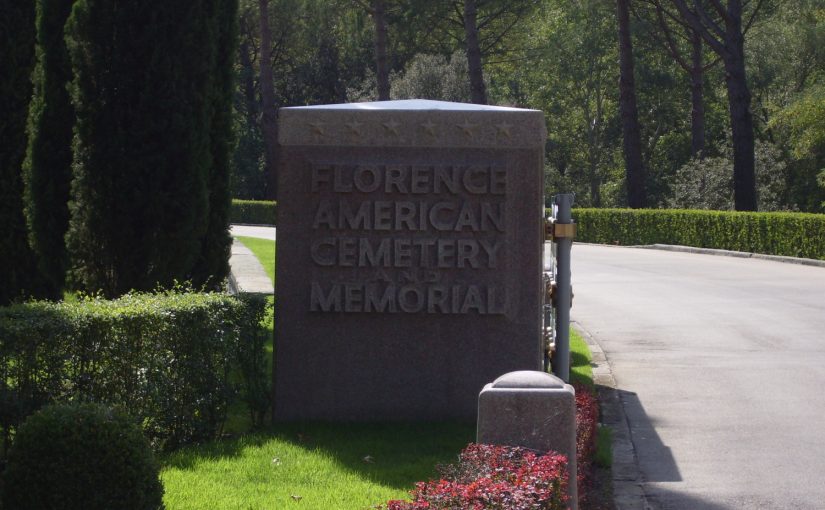
A determined young man in a black puffer jacket nervously clutches a map, tapping his fingers on its cover. An American teenager crouches by a headstone and slowly traces his fingers over the letters of its inscription as his dad watches from afar. An elderly couple stands at the entrance, shoulder to shoulder in awed silence as they look upon rows and rows of graves. They walk slowly, hand in hand, steeling themselves for the journey up the sloping path ahead of them. No matter the reason, it’s 10 a.m. on a Thursday in March and the lives of these strangers all intersect here at the Florence American Cemetery. 

Situated on the Greve River just outside of Florence’s city center, Americans and locals alike make the trip to the cemetery to gain familial closure and to learn more about the historical ties between Italy and the United States. The location of Florence was chosen for a multitude of reasons, starting with its ease of accessibility because of the nearby Santa Maria Novella train station and the bus routes that run with stops at the cemetery throughout the day. Since this is a World War II cemetery, there is a higher likelihood of visitors being descendants of those who have fallen and having memories to share and preserve about those buried here. 

Florence American Cemetery is managed by the American Battle Commission, whose overall mission is to ensure that “time will not dim the glory of their deeds.” Current superintendent Eryth Zecher has been working at the Commission for five years and has been maintaining the Florence American Cemetery for the past year and a half. She explains that the process for choosing the location dates to just after World War II when temporary cemeteries were set up in areas where major battles had just occurred. It was a time of transition when some of the fallen service members were being shipped back to America to their families and the temporary cemeteries were being compared to see which would be best fit for building a permanent cemetery. The Florence location allows a good proximity for visitors, and its rolling Tuscan hills made it a beautiful environment that was deemed fit for the sacrifices of the men killed while liberating nearby cities in the Northern Italian Campaign.

It seems surreal that their bodies eternally rest below the freshly manicured grass, with nothing but a shiny marble cross to signify their life’s worth. Lead gardener, Leonardo has been working with the nature of the cemetery for the past 10 years to keep it as close to the condition as the year that it was founded, in 1960. He polishes the headstones with a sponge and blows off all leaves and debris from each plot. He is passionate about his work and pays close attention to detail because of the gratitude he has for its historical significance. 

“My grandparents were freed by the American soldiers in 1944,” explains Leonardo, “For me, it’s an honor to work here.” 

Small, perfectly shaped Tuscan Cypress trees line the perimeter of the grounds, standing like soldiers at attention over the headstones. Leonardo shares that adult trees don’t grow very well in the cemetery’s environment, so he and his team raise the trees from saplings and keep them looking uniform. They don’t use chemicals on the trees, and everything is done by hand, including removing all weeds from the property. On this blustery, Thursday morning, I watch as two men take turns anchoring down wooden support stakes for smaller trees and chopping off uneven branches. 

The maintenance team and superintendent Zecher work diligently to make sure all the upkeep efforts reflect the promise to the fallen soldier’s families that their loved one’s resting place would be taken care of. The groundskeepers clean the memorial and headstones on a set schedule and work meticulously to keep them in perfect condition. 

“It’s just the ultimate mission to be able to commemorate and honor these service members every day and also work in such a beautiful place,” says Zecher, “I couldn’t find a better way to spend my life than doing this mission.” 

Florence Korea Film Festival 2025: Cross-Cultural Shock

written by Megan Cuviello & Ashlyn Loper

This blog feature is an exclusive bonus installment to our Spring issue of Blending Magazine. After you finish reading, be sure to explore the rest of the magazine online—just follow this link to download the full Spring 2025 edition:
https://jschoolfua.com/images/BM/BM_151.pdf

Since the 1980s, Florence has been an epicenter for art and has cultivated a space for individuals to express themselves. With the rebellious spirit of the city, fostering spaces for punk, street and alternative artwork and design, it’s no secret that the city has allowed for the culture within the city walls to flourish. This includes one notable place in Florence, Cinema La Compagnia. Cinema La Compagnia is a cultural venue located in the heart of Florence. The cinema opened in 1921 and was originally called Cinema Modernissimo. Then, between the years 1984 and 1987, it was transformed into the Teatro della Compagnia and eventually came to be what it is today. Cinema La Compagnia is a place where many film festivals and cultural festivals are held, making it the epicenter to showcase the art and talent of different cultures within the city of Florence.

The Florence Korea Film Festival 2025 was held at Cinema La Compagnia in Spring, 2025. It was a ten-day affair to showcase the different types of South Korean films, such as historical films, documentaries, short films, and many more of the South Korean culture. It showcased many independent films and filmmakers and allowed time for audience interaction with the filmmakers. This film festival has been held in Florence over the past two decades, and people from all over Europe, the United States and all over the world come to see the culture displayed at the Cinema La Compagnia through the Florence Korea Film Festival. 

Throughout the ten-day festival, we were able to attend multiple times to engage with individuals from all walks of life. On our first trip to the festival, we were introduced to the Florence Korean Film Festival Management Coordinator, Caterina Migliarini. We got to visit with Migliarini as she gave us an in-depth look into the festival while also introducing us to some of the history of Cinema La Compagnia. Migliarini stated, “People from all over come to the Cinema to see the Florence Korean Film Festival. People from Estonia, the Czech Republic and even India,” showing the cultural diversity that is welcomed into spaces of this nature. Migliarini also stated, “The beauty of the cinema is not just for the younger generation – it is for the elders and older generations.” This sparked conversation within our group as we reflected on the generations that had walked through Cinema La Compagnia at different times in history. Migliarini shared that it is one of her favorite places, if not her favorite place, in all of Florence, as she lives just down the street. Migliarini continued to share about how “the Cinema brings in Korean culture to other places” and the connections Cinema La Compagnia has with various universities, such as the European University Institute and also our very own FUA & AUF campus.

On our next trip to the Cinema La Compagnia and the Florence Korean Film Festival, we were able to attend a masterclass led by famous director Na Hong-jin. This South Korean film director was debuting his new film “The Wailing”. During this masterclass, we were able to learn more about his film detailing a Japanese man’s arrival in a small community. Through the masterclass, Hong-Jin’s passion for his work truly shone and allowed everyone in the room to grasp his concept. This also shed light on the true meaning of the independent film and allowed for a deeper understanding and appreciation that goes into all of the films shown in the festival.

Overall, the Florence Korea Film Festival at Cinema La Compagnia has opened its doors to a wide array of individuals and the artistry behind the independent films shown. While this film festival is just one effort in the continuance of the rich cultural heritage behind Cinema La Compagnia, it is also one of the many pieces to Florence’s cultural preservation and cross-cultural engagement. Everyone should take the opportunity to continue to support local and independent filmmakers, along with exploring the Florence Korea Film Festival for the 24th annual exhibition in 2026.

Finding Fashion & Finding Florence

written by Mia Romero

Coming to a new country by yourself can be scary, but learning how to fit into the culture can be even scarier. This is my experience witnessing fashion styles in Florence and learning to adapt to them myself.

Fashion is the style of clothing, hair, makeup, shoes, and so on, used by humans globally to express themselves. Fashion and the idea of fashion goes back centuries, but more specifically, the 19th century. In 1858, Charles Frederick became the first person ever to sew his label into garments he created, thus being the first “fashion designer” as we know it. Since then, fashion and style has elevated, changed, and adapted to different environments and to an array of people.

The biggest elevation of fashion I’ve ever noticed has been coming to Italy from the states. The people in Italy seem well-dressed, put together, and more understanding of expression through fashion. I have not noticed any locals wearing athleisure casually or sleepwear outside of the house, as I would see in America. I believe this is because Europe as a whole houses many of the main fashion capitals of the world. These capitals host weeks out of the year dedicated to showing off creative expression. It is an integral part of their culture and daily lives. It seems to be more respected and understood over here than in America. These events shape the trending styles to come and are watched carefully by locals as well as people all over the world.

I became intrigued with these fashion differences I noticed, so I decided to interview, research, and photograph my surroundings. I have found it extremely fascinating to witness my fellow students from all different parts of the world dressing well to class to fit into Italian style. I would argue none of us would dress as nicely for class at our home colleges.

I had a personal experience of wearing a hoodie and sweatpants around my hotel lobby and getting strange looks from all different types of people, from different areas of the world. It has become a known standard to dress well when out in Italy. After this experience I became much more aware of how I was leaving my apartment as well as how everyone else was.

During this time and the next few days, I was lucky enough to have a conversation with a local about her thoughts on fashion in Florence and Italy as a whole. I met a lady standing in line for a coffee shop who was dressed impeccably. She wore a blazer with dress pants and what looked to be red bottom heels. I could tell this was an expensive and well put together look. I began to tell her about my school journaling assignment and her thoughts on fashion differences worldwide. She explained to me that dressing well had always been the standard for her. She said, “Growing up, my mother and father dressed us in our best and it was expected of us as we grew. This was normal. I never saw my mother without beautiful hair or a nice dress on.” I found it interesting how she explained to me that it was normal to dress nicely and this had been instilled in her since childhood. I believe this to be the disconnect between fashion in Italy from other countries in the world. Parents are less expecting of what their child wears in other countries, thus holding lower standards in my opinion.

Although I discussed this topic with a few other locals, I got very similar responses across the board. The overall consensus being that dressing well had started during childhood and become a social norm. As an American student, I envy the fashion sense these interviewees held. Anyone can buy an expensive outfit, it was the way they styled these outfits that stood out to me. They each had something people around the world try to achieve, which is knowing how to style themselves perfectly. Overall, I grew in my knowledge of stylish appearance and the standards in different parts of the world.

Art as Protest

The Political Undercurrents of Florence’s Futurism Movement and Its Impact in the Modern World

written by Susana Colunga

This blog feature is an exclusive bonus installment to our Spring issue of Blending Magazine. After you finish reading, be sure to explore the rest of the magazine online—just follow this link to download the full Spring 2025 edition:
https://jschoolfua.com/images/BM/BM_151.pdf

Florence has long been known as the cradle of the Renaissance, a symbol of classical beauty and deep cultural tradition. But by the 20th century, the city; like much of Italy, was ready for a leap into modernity. This transformation came with the rise of Futurism, one of the most radical and revolutionary artistic movements of the time.

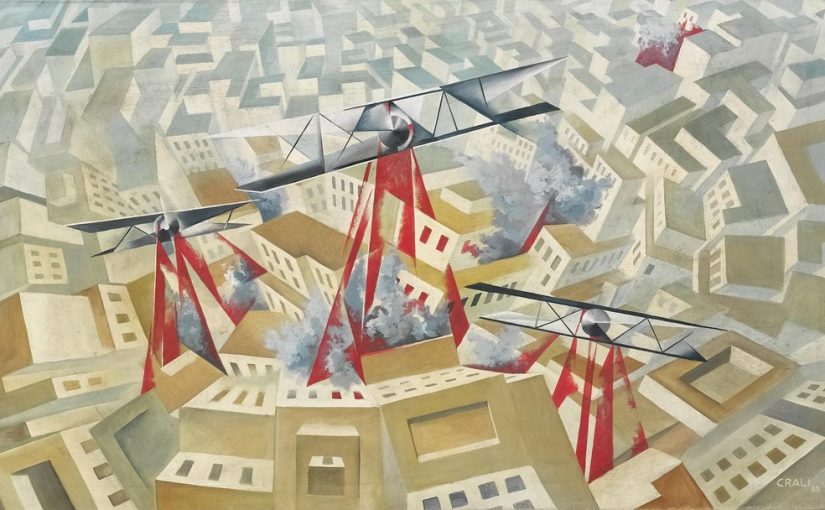
Founded by Filippo Tommaso Marinetti on February 20, 1909, Futurism challenged Italy’s cultural conservatism and aligned itself with bold political change. The movement rejected traditional ideologies like conservatism, liberalism, and socialism, instead celebrating a new vision that emphasized speed, innovation, violence, and the power of the individual.

Futurism aimed to destroy the past in order to build a new, dynamic future.

The movement began with Marinetti’s Manifesto of Futurism, a provocative call to artists around the world to embrace modernity and abandon outdated ways of thinking. It inspired creatives and politicians alike, offering a blueprint for revolution and renewal. For Futurists, artists were not just visionaries they were leaders, responsible for reshaping the political and cultural landscape.

In Florence, Futurism quickly aligned with the rise of Fascism and the political career of Benito Mussolini. As Marinetti publicly supported Mussolini, many Futurist artists followed, embracing violence and destruction as necessary tools for building a new world. Their art reflected this ideology through militaristic and nationalistic themes, visible in poetry, posters, and especially painting. In his manifesto, Marinetti famously called war “the world’s only hygiene.”

The relationship between Futurism and Fascism intensified during World War I. Marinetti and his followers supported Italy’s entry into the war, and some even volunteered to fight.

However, rather than ushering in the radical transformation they envisioned, the war left Italy politically and economically devastated. This collapse only deepened the Futurists’ desire to rebuild a powerful, modern nation.

In 1919, Futurists carried out one of their most notorious acts: the burning of the socialist newspaper Avanti! in Milan. Led by Marinetti, the group set fire to the newspaper’s offices, seeing it as a symbolic act of defiance and alignment with Fascist ideals. Their commitment to political violence only grew, and by the March on Rome in 1922, which brought Mussolini to power, many Futurists believed they had finally achieved the society they had long imagined. But over time, Fascism became more institutionalized and authoritarian, drifting away from the chaotic, revolutionary energy of Futurism. Eventually, the two movements diverged, with Fascism absorbing some Futurist aesthetics but abandoning its more radical artistic ideals.

Still, Futurism’s legacy didn’t disappear. In the 1970s and 1980s, its influence reappeared in various political and artistic movements, particularly through its aesthetic and ideological emphasis on dynamism and transformation. One example is the Italian Autonomia
Movement of the 1970s, a radical leftist collective of students and workers who rejected both capitalism and communism. Their use of bold typography, manifestos, and dynamic visual styles clearly echoed Futurist strategies. Elements of Futurist design found their way into underground magazines, protest posters, and political demonstrations.

Similarly, radical architecture groups such as Superstudio and Archizoom (active from the 1960s to 1980s in Florence) embraced Futurist ideals of destruction and renewal. Their futuristic designs, filled with utopian and dystopian visions, critiqued capitalist consumer culture and proposed bold alternatives to conventional architecture. These movements emerged from Florence’s long-standing tradition of underground intellectual exchange, dating back to the literary cafes of the 19th century, where artists challenged the dominant norms of their time.

Futurism was more than an art movement, it was a cultural and political force that left a lasting imprint on Florence, Italy, and beyond. From its revolutionary beginnings to its entanglement with Fascism, and later its echoes in radical protests and design, Futurism showed how deeply political ideology can shape artistic expression. Even today, we can trace the movement’s legacy in the ways artists challenge norms and imagine new futures, often in the same underground spaces where past movements once thrived.

Finding A Home In Florence

written by Brooke Beste for SPEL: Public Relations

Living abroad isn’t always picture-perfect. Through culture shock, homesickness, and self-discovery, I’ve learned that finding “home” in Florence takes time, patience, and an open heart. This is my journey.

I have currently been away from home for 13 weeks… not that I’m counting. While being away and immersing myself in a new culture, I’ve discovered that I value energy and the overall ambiance of my environment. I love to observe and analyze culture, food, individual attitudes, and especially fashion. Over time, I’ve found my favorite places—and a few dislikes—within Florence. I’ve explored other countries and experienced different ways of life, but I’ve come to a solid conclusion: the way Italians live is unlike anywhere else I’ve visited. 

While Florence is often portrayed through the lens of grand cathedrals and iconic artwork, I’ve learned that the real soul of the city is found in its quiet corners, local rituals, and everyday encounters. As a student living and studying here, I’ve discovered that capturing these moments through photography offers a more intimate and authentic narrative of Florence—one that goes far beyond the postcard image. 

At first, the locals gave me a hard time. From graffiti that read “Yankee Go Home” to the frustration of not understanding the Italian language, I genuinely felt like an outsider during those first few weeks. However, that all began to change once I started school. I suddenly had a

community of individuals around me who wanted to grow and learn just as much as I did. I began to understand the way of life in Italy. 

I started feeling comfortable ordering at restaurants and learning the etiquette of being in Italian society. By week eight, I finally felt like I had a grip on the reality of Florence. I realized the importance of leaving the house looking presentable and enjoying my food inside the restaurant instead of ordering it to go. These small changes made me feel more connected, intentional, and at ease in my new environment. 

Still, being homesick has been a complicated emotion to process. Sometimes it makes me feel guilty. I’m the baby of my family and incredibly close to them—they truly are my best friends. I’ve never been away from them for this long. I miss the simple things: my favorite dark blue suede couch in the living room and Chipotle just down the street. 

But when I sit with these thoughts, I can’t help but smile. How lucky am I to live in the heart of Florence, surrounded by my friends? Within just a few miles, I can be at the train station with endless possibilities. This once-in-a-lifetime opportunity has taught me so much about gratitude—how to thoroughly soak up the Italian sun and appreciate the unique beauty of my life this semester. 

Florence doesn’t offer the same activities my home city of St. Louis once did, and that’s okay. I now walk everywhere, eat pasta shamelessly every day, and leave the house feeling confident in my ability to handle whatever problems the day brings. Florence has shown me how to slow down my overthinking mind. It’s helped me discover where I find happiness and what interests me. It’s allowed me to feel more mature and make decisions supporting my well-being. 

As I approach the end of this study abroad journey, I feel deep appreciation. The excellent professors and advisors I’ve met have shown me how much kindness and intellectual curiosity matter in helping students succeed and stay on the right path. The learning experience of being a twenty-something in Florence has shown me that finding a “home” is more than a physical place to sleep and eat—it’s about the culture, the time, and the personal growth you experience along the way.

Florence has become a part of me. And in its own way, it has become home.

Mystery Meets Mixology

The Evolution of Florence’s Hidden Bars and the Art of Underground Mixology

written by Trinity Conner, Molly FitzGerald, Olivia Adams, Lila Williams & Marisa Jones

This blog feature is an exclusive bonus installment to our Spring issue of Blending Magazine. After you finish reading, be sure to explore the rest of the magazine online—just follow this link to download the full Spring 2025 edition:
https://jschoolfua.com/images/BM/BM_151.pdf

Florence’s artistic spirit isn’t confined to its galleries and historic cafés; it also spills into the city’s underground secret bars—modern-day echoes of Prohibition speakeasies—where secrecy, craftsmanship, and storytelling converge into a singular drinking culture. The hidden bars, like the literary cafés of the past, create an underground atmosphere of exclusivity and creativity, elevating mixology to an art form.

The evolution of Florence’s modern hidden bar scene highlights how these establishments mirror the city’s avant-garde movements by reinventing tradition. Behind unmarked doors and secret entrances, guests enter spaces that showcase both history and innovation.

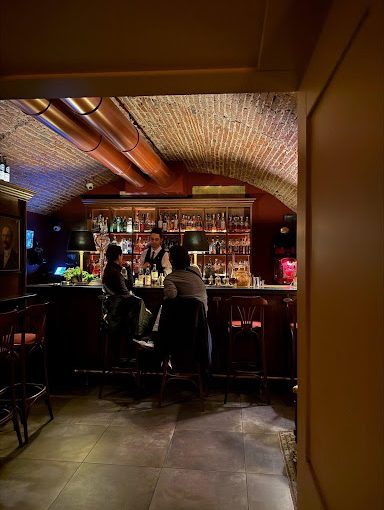
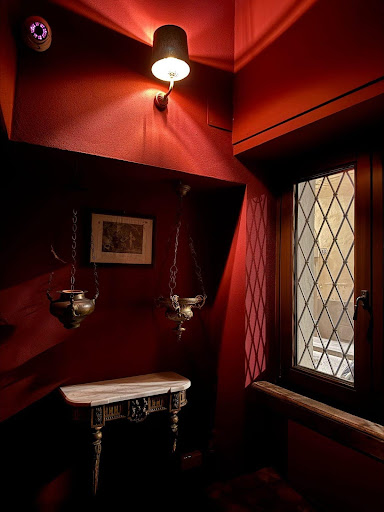
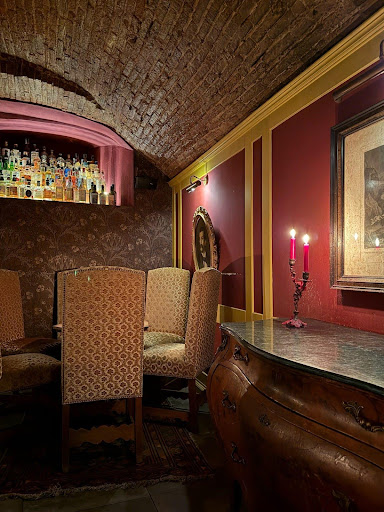
The underground nightlife of the 1980s has evolved into today’s hidden bar scene, shaped by the rise of cocktail culture and modern mixology. One key example of this evolution is Rasputin, Florence’s first hidden bar, discreetly tucked away in Santo Spirito. This underground cellar, with its candlelit tables, antique furnishings, and a rules page on the menu, transports visitors to a vintage atmosphere where handcrafted cocktails strike a balance between tradition and innovation.

Taking a visit to Rasputin feels like traveling back in time, allowing individuals to feel immersed in rich history. Maintaining a strict no-phone policy, discouraging excessive phone usage, and flash photography to keep the experience authentic. These policies enforce full presence, something that is rare in today’s digital world. The hushed conversations, the clinking of glasses, and the soft jazz music in the background make it feel like stepping into another era.

Marco Vinci and Ghermai Zerazion, the co-founders of this hidden gem, came up with the idea to bring a seamless combination of America’s past and present to Florence, Italy. During Prohibition in the United States, the production, sale, and transportation of alcoholic beverages were outlawed. As a result, clandestine bars, now known as speakeasies, sprang up across the country. Therefore, these tucked-away spots were places where people could socialize, dance, and drink bootleg whiskey and gin, despite the looming threat of raids, arrests, and jail time. The consequences were harsh, but the desire was irresistible. Rasputin allows individuals from all over the world an immersive experience of life during this time.

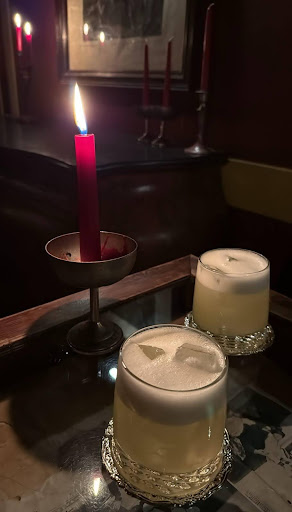
The cocktail menu is as thoughtfully crafted as the space itself, offering a mix of classic recipes with modern twists. The standout for us is “Our Bee’s Knees,” a drink that combines honey, lemon, and lavender into a refreshing and balanced flavor. The foam on top added a nice touch, making it feel both indulgent and relaxing.

The bar also has an impressive selection of over 300 labels, including a wide range of whiskeys, which made the menu feel like more than just a list of drinks—it is an opportunity to learn and explore. Overall, it is a place where the drinks and the atmosphere come together in a way that feels both approachable and special.

Rasputin isn’t just a speakeasy; it’s a hidden world that combines history, mystery, and artistry. If you are looking for a night that blends sophistication with a touch of secrecy, this is a must-visit while in Florence.

Beyond Rasputin, other hidden gems like Vanilla Club Speakeasy capture the charm of the Prohibition era with its password-protected entrance, dark wood interiors, and soft jazz music. The bar’s strict no-phone policy encourages people to experience expertly crafted, Italian-inspired cocktails in an intimate setting.

Beneath Grand Hotel Cavour, The Secret Bar offers an underground lounge experience framed by exposed brick arches and antique chandeliers. Florence’s culture inspires The Secret Bar’s menu, so they transform cocktails into stories that reflect the city’s artistic evolution.

Florence’s hidden bars are more than just places to sip cocktails, they are doorways to another time, where history lines the dimly lit walls and mixology becomes an artful performance. Like the literary cafés of the past, these speakeasies craft narratives with every pour, which blends tradition with innovation in a way that holds Florence’s charm.

Whether you find yourself behind the unmarked doors of Rasputin, sharing secret passwords at Vanilla Club, or uncovering the meaning of The Secret Bar, each visit is an invitation to step beyond the normal. In a city known for preserving its artistic heritage, Florence’s underground bars prove that history isn’t just something to admire; it’s something to taste and experience, one cocktail at a time.

The Art of Getting Lost in Florence

written by Talia Velazquez for SPEL: Public Relations

A reflection on how exploring Florence encourages spontaneity and discovery, highlighting the city’s charm in its unpredictability and the value of wandering off the beaten path to uncover hidden gems and unique experiences.

They say, “You don’t know what you’ve got until it’s gone.” I would say they are right about everything… except Florence. I’ve known all along. 

Every weekend that I pack a bag and leave for some new, exciting city, I feel a little sad–not because I don’t want to explore, but because I already miss home. Not my home-home. My Florence home. My creaky-ceilinged apartment with the mural above my bed. The little store I pass every morning on my way to class, where the dogs are always lounging by the window like they’re in on some secret. And let’s not forget the cobblestone streets that have tested my ankles more times than I can count but somehow still feel charming. There’s something about the worn-out texture of this city that makes it feel alive in a way my clean, polished hometown never could. It’s these small, oddly specific details that have worked their way into my daily rhythm–and now, I can’t imagine my life here without them. 

At first glance, Florence was a maze. I had no idea how to get anywhere without my GPS, and honestly, I treated that little blue dot like my personal life raft. My classes were a 20-30 minute walk from my apartment, and I’d just stare at my phone, hoping it would lead me safely to my destination. One day, my phone died mid-walk; I had no choice but to try to figure out my way back without it. And, in those 30 minutes of trying to “not panic,” I found three new cafes, a few tiny shops, and a quiet little park I had no clue was just around the corner from where I lived. 

It was an accident–but one of the best accidents of my life. 

Since then, I made a habit of getting lost on purpose. I made it a rule: no GPS. I embraced getting lost. Florence rewards you for it, like it’s daring you to wander. Around every corner, there’s something new–an old man selling fresh strawberries, a second hand bookstore with handwritten notes tucked inside the margins, a view from a bridge I’ve never crossed before that feels like a scene out of a movie. These little treasures wouldn’t exist if I stayed on the beaten path, glued to my phone or my to-do list. These are things I’d never find back home. Things I might never find again, even here.

Every single day since I arrived in Florence, I’ve stumbled upon something new. It’s become my daily ritual–taking a different route, looking up instead of at my feet, discovering the city for the first time all over again. My roommates and I even started this funny little game: “What place did you find today?” We know the answer will always be something we’ll all end up visiting together at some point. Florence is like a love letter to curiosity–always waiting to reveal something amazing if you’re just open enough to look. 

When I’m away on weekends, I miss that. I miss the random joy of wandering with no plan, of not knowing where I’m going, but finding something unexpected around every turn. I miss my roommates, too. Staying up late with people from all over the world, talking about nothing but everything at the same time. Swapping stories, comparing cultures, laughing about weird language slip-ups or marveling at the strange, wonderful ways we have all changed since we got here. I miss that feeling. The feeling that even when I have no clue where I’m headed, I know exactly where I belong. 

Florence has made me softer and more spontaneous. Less scared of being unprepared. I’ve stopped trying to plan for everything. I’ve started letting the city guide me, saying “yes” to more things than I ever would have back home: spontaneous dinners with new friends, tagging along with people who seem to have an endless supply of places to explore, or even just stepping out of my comfort zone and taking a walk down a street I’ve never been down before. I’ve learned that you don’t need to have every moment mapped out to make it count. Florence has shown me more than I ever could have scheduled into an itinerary. 

And here’s the thing: I thought I’d get tired of it. I thought the charm would fade, the magic would wear off. I mean, how many breathtaking sunsets over the Arno can one person handle, right? But now here’s the truth: Florence hasn’t gotten old. It’s only gotten more real. It’s not perfect–far from it. The roads are bumpy, the traffic is chaotic, and sometimes it feels like I’m living in a postcard that’s a little too messy to be real. But that’s the beauty of it. It’s raw. It’s alive. It’s a city that doesn’t apologize for being exactly what it is. And because of that, I’ve learned to stop trying to have everything perfectly planned out. Because life isn’t about following a schedule–it’s about the moments in between. The unexpected discoveries. The conversations that stretch until 2 a.m. The way the city feels like it’s breathing with you, not just around you. 

I look back and realize: I’ll never be 19 in Florence again. I’ll never walk these streets in the same way, with the same people, in this same moment. And honestly? I wouldn’t want to. Florence has given me a version of myself that I never expected to find–a version that can be spontaneous, that can wander without a destination, and that can embrace the unknown. That’s what Florence has taught me: to say yes to the journey, to find beauty in the detours, and to never be afraid of getting lost. Because sometimes, getting lost can lead you to exactly where you need to be.

Florentine Streets, Clet’s Canvas

written & photographed by Kathleen Morris

This blog feature is an exclusive bonus installment to our Spring issue of Blending Magazine. After you finish reading, be sure to explore the rest of the magazine online—just follow this link to download the full Spring 2025 edition:
https://jschoolfua.com/images/BM/BM_151.pdf

How many stories can a single office avocado tell?

As I set my laptop onto Clet Abraham’s cluttered desk, I took inventory of its miscellaneous contents: an avocado, a glass with a solitary drop of red wine left behind and an array of art supplies – pencils, cutting tools and scattered pages filled with cartoonish sketches.

I set my cellphone atop a strip of stickers depicting bright pink sausages, thumb hovering over the record button – ready to capture every bit of wisdom from the infamous street artist who I was face-to-face with at last.

The conversation was highly anticipated. Earlier that morning, after exchanging a flurry of WhatsApp messages with an employee at his Florence studio—including a pointed warning not to address him by his full name, Jean-Marie Clet Abraham—I stepped into the cluttered space – I made the trek across Ponte alle Grazie to his studio on a sun-soaked Monday afternoon.

Tiptoeing down the sidewalk, I realized I didn’t need to consult Google Maps to know I had arrived. I followed a wall plastered in a chaotic assortment of stickers – a street artist’s rendition of the yellow brick road.

My instincts were confirmed by the street sign placed just above the door, reimagined to depict a tiny figure flying through the air, its grip tight on the tip of the white arrow.

photo by Kathleen Morris

The use of street signs has become a trademark of Clet’s art.

Originally from France, Clet has now claimed Florence itself as his canvas.

I first encountered his work by the Medici Palace. With crooked eyes and a corkscrew neck, a portrait of childhood whimsy is plastered onto a traffic sign, its head formed by diverging arrows. In the following days, I began to train my vision to spot Clet’s characters tucked into every corner of this historic city.

My article joins countless attempts to profile the elusive artist, who has earned celebrity status (and over 160k Instagram followers) in a destination that echoes with the voices of the Renaissance.

I sought to understand the path of the man who sat across from me, salt-and-pepper hair draped across his forehead and backdropped by a wall of unfinished masterpieces.

The son of creative parents, he recalled his earliest inclination to art.

“When I was young, I used art to be free,” Clet said. “I don’t care about art. I care about freedom.”

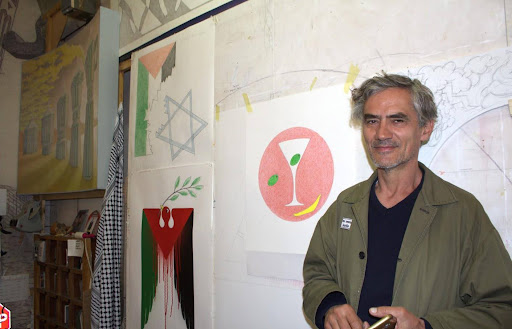
Today, his urban installations serve as an outlet for self-expression and a medium for political commentary. With a rebellious flair, he inspires dialogue about pressing social issues and individual rights. Behind his desk, a sign was spray-painted with the colors of the Palestinian flag. The artwork, created in collaboration with the Art for Gaza Collective, exemplifies Clet’s efforts to garner a reaction from and activate the public.

“I don’t think I am the owner of my ideas,” he mused, reflecting on the essence of collaboration he shares with those who engage with his work. “The ideas pass through me,” he said, describing his ability to sculpt messages and inspire his community to think outside the box.

photo by Kathleen Morris

Clet refuses to be confined by artistic boundaries, finding fulfillment in working beyond the walls of traditional museums.

“I don’t work with galleries,” he underscored. “The best place is always the street.”

Clet navigates the gray area between creating impactful art and defacing public spaces. The allure of street art lies in the ambiguity of this ruleless game – a game that Clet has mastered on a global scale, often operating under the cover of night.

“In the United States, I always [install art] at night because I don’t want the police to stop me,” he revealed. “I don’t want to have a big problem and lose my plane ticket to go back home.”

In a perfect world, city authorities would recognize the positive aspects of his work. He imagines that increased acceptance would act like a “business card,” allowing him to explore cities that are “more difficult, where there is less democracy.”

Until then, Clet can be found cloaked in darkness or in the safety of his studio at Via dell’Olmo, 8r in Florence.

Before I exited his sticker-clad oasis, I gathered two pieces of advice from Clet for aspiring artists: embrace your originality, and when working on the streets, it’s best to be a little drunk.

photo by Kathleen Morris

For more information, visit Clet’s website or follow Clet on Instagram (@cletabraham).