written by Jack Wardynski for SPEL: Journalism
Gelato. I love it, you love it. If you don’t, yes you do. Despite early onset lactose intolerance, I will continue to eat gelato until I can no longer. The dairy-based treat is so good, it seems almost bestowed upon humanity by some higher power, like God extending his outstretched hand to Adam. If you ask me, though, gelato slots above Michelangelo’s Sistine Chapel frescoes on the ranking of greatest human achievements – it probably lands somewhere between the printing press and the motorized carriage.
Who invented this frozen delicacy? Some say the ancient Chinese, some say the Persians, I say some very enlightened individuals. As far as Italy is concerned, it is believed that Florentine architect Bernardo Buontalenti may have invented a version of modern ice cream in the 16th century. We know that the Sicilians got their hands on some sorbet around the 17th century, and from there it spread to the rest of the mainland peninsula.
Like many modern creations, gelato has a vague and fragmented history that will probably never be neatly defined and sorted out. All that matters for us here in the 21st century is that it was made by someone, somewhere, at some point. But what are the best gelato flavors? What are the best flavor combinations? Should it be consumed in a cone, or in a cup? Where should one go to consume such a dessert? After two months of living in Florence, I can confidently say there is no one more qualified to answer these questions than me, a man with zero culinary experience whatsoever.
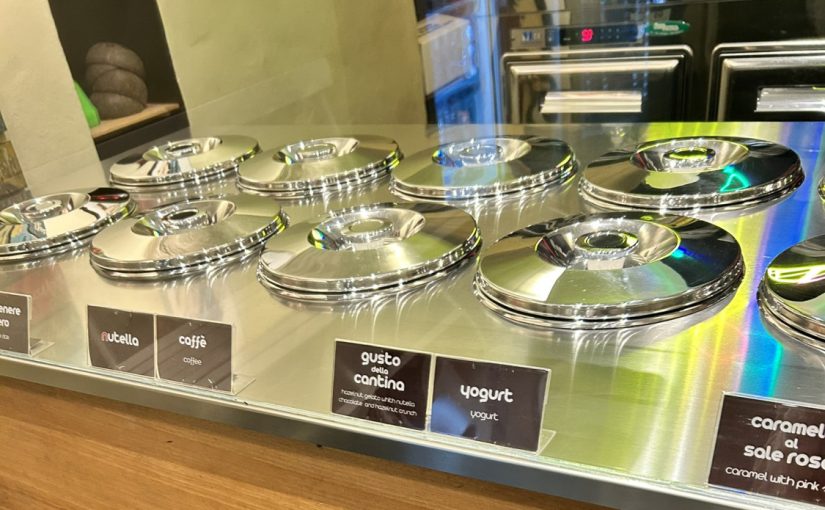
First off, it should be common knowledge at this point to avoid the gelato piled high in the storefront displays, usually with some bits and bobs of fruit or baked goods added for good measure. The best gelato I have found is the kind that you can’t see, hidden underneath the lids of steel containers. While not as visually exciting as the mountains of frozen, multi-colored dessert, the concealed nature of this more authentic gelato makes it perhaps more enticing. The reveal of your treat only upon its placement into your container of choice builds anticipation within your very being for the next ten minutes you will spend consuming it.
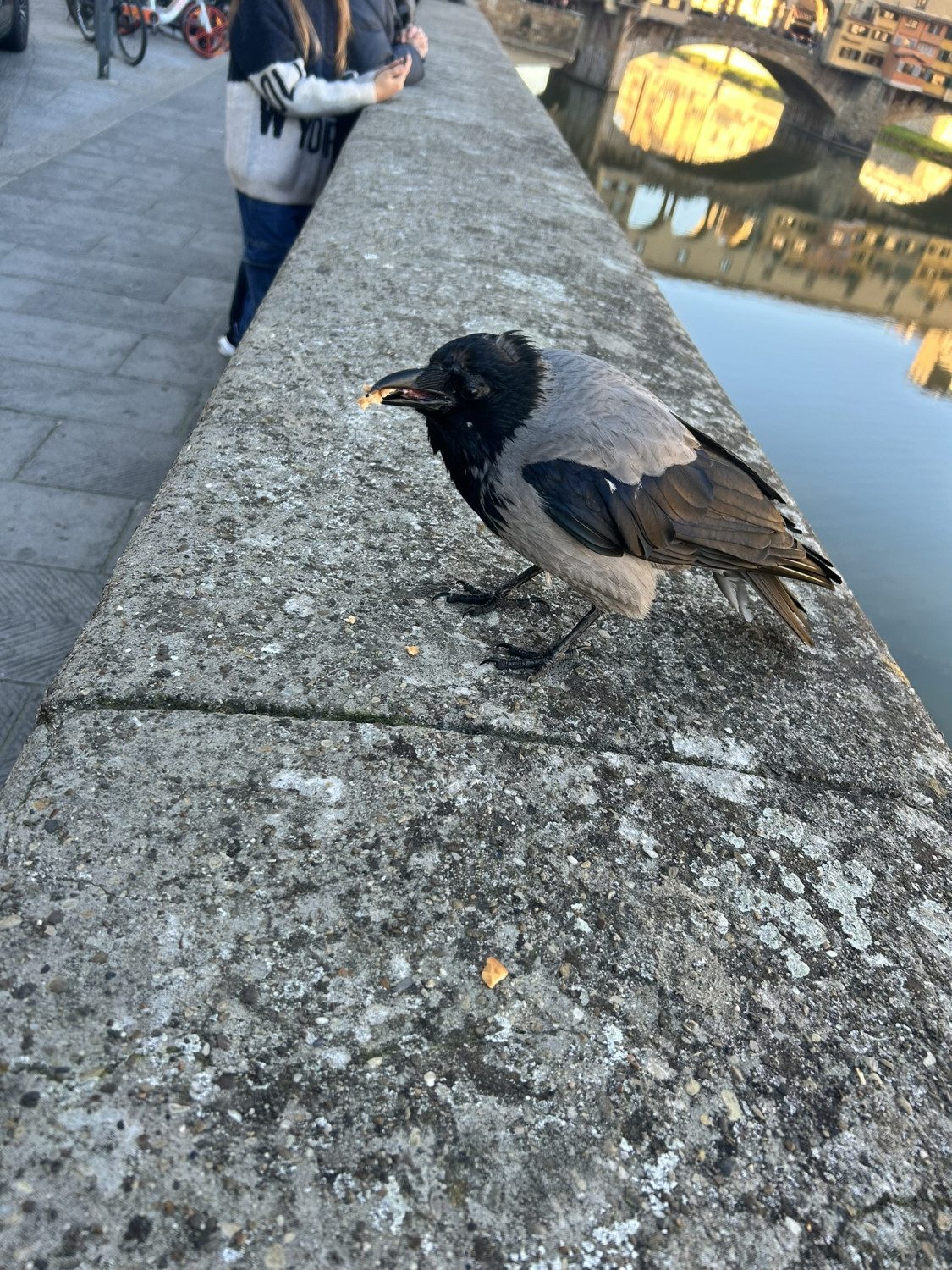
The cone vs. cup debate is one stretching back generations, and I am here to settle it once and for all. For clarity’s sake, I come from the U.S., and in the States, when you get an ice cream cone, you are rarely, if ever, provided with a spoon; licking up the ice cream is your only option. As one can imagine, in the summertime, this results in frequent, tragic messes. The ice cream spilled in the car strikes fear in the hearts of all American parents, and the weak, thin napkins ice cream shops provide are of no help. So my mind was blown the first time I ordered a cone of gelato and was given a complementary spoon. Needless to say, this changes the game completely, as you combine the convenience of the cup with the playfulness of the cone. It’s for that reason that the cone is definitely superior; the toastiness of the cone combines exquisitely with the sweetness of your gelato. Plus, you can break off a piece of your cone and offer it to a nearby bird, and now you have a companion with your gelato as well.
The phrase “less is more” does not apply to American ice cream; for us, more is more. Here, I will invoke my beloved Portillo’s, a chain restaurant native to the Chicagoland area that has been providing my people with beef, hot dogs, and french fries for generations. The beautiful folks at Portillo’s serve an item called the chocolate cake shake, which, of course, is a chocolate ice cream shake with an entire slice of cake mixed in. My personal preference is actually the strawberry lemon cake shake, which is the same thing but with strawberry ice cream and lemon cake. The Midwestern specialty is “food that will put you into a coma.” Suffice it to say, the no-frills, toppings-less style of ice cream here in Italy was a distinct change of pace in my frozen dessert palette. I haven’t seen a single sprinkle since I left home!
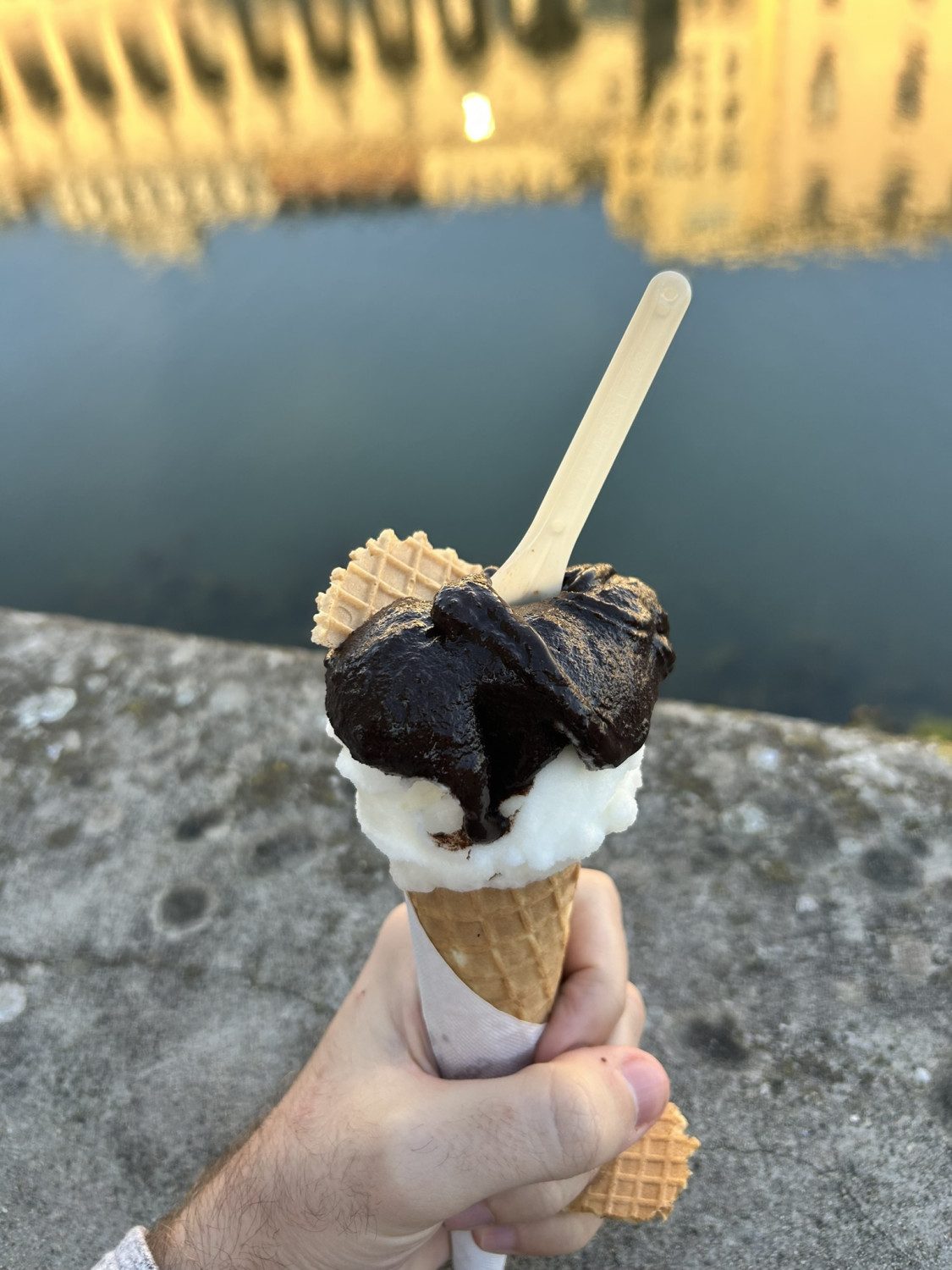
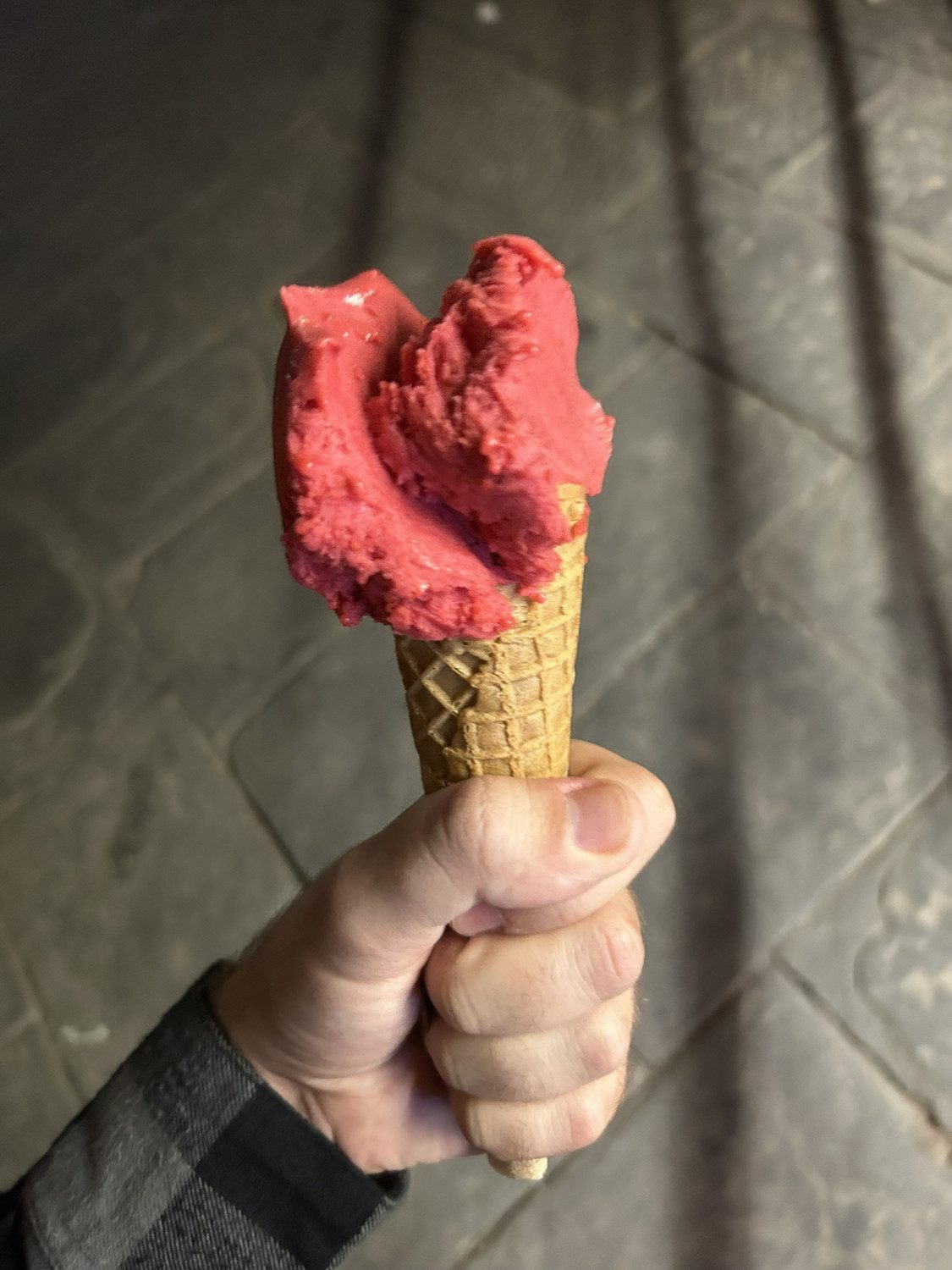
If you’re talking gelato flavors, I find that contrast is really the way to go when looking for the perfect combination. Personally, I am a dark chocolate champion. The bitterness of dark chocolate mixes best with the bright, sweet flavors found in most other gelato. Dark chocolate plus a fruit flavor is the strongest base for your gelato. I fear I may never again have quite as transcendent an experience as the first bite of dark chocolate and raspberry gelato. Strawberry would be a close runner-up with the raspberry, but you could of course sub in mango, orange, lemon, passionfruit, pomegranate, or even pear, which I did find at one spot. For sour and sweet, lemon and raspberry is the clear combination to go with.
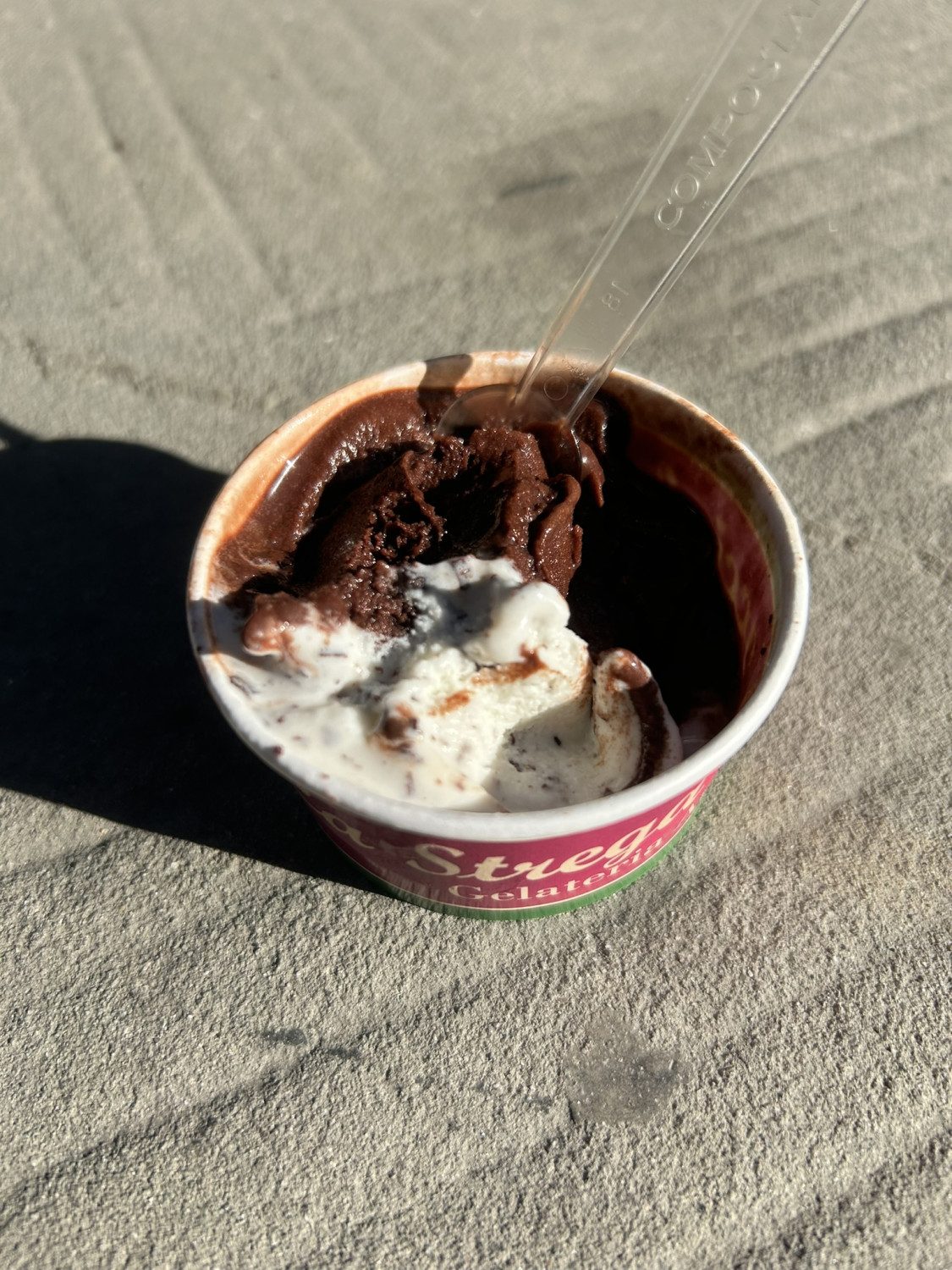
There are a number of quality gelato spots across Florence, many with their own unique flavors and styles. Unfortunately, in just 10 weeks of being here, I have not had the opportunity to sample all of them, but here are some of the best that I have found. La Strega Nocciola, just south of Ponte Vecchio, has a white chocolate and cinnamon flavor that so closely imitates the taste of Cinnamon Toast Crunch it is eerie. I am not even sure if they have Cinnamon Toast Crunch available in Italy, but it is one of the premiere cereals, so having it codified into gelato form is truly a marvel of modern technology. In Piazza Della Passera, you can find the aptly named Gelateria Della Passera. They have a number of unique flavors, including the aforementioned pear, but the Monna Lisa, which somehow works in apple sauce, walnuts, and fleur d’oranger, is the clear standout. Grom’s Crema di Grom is a great toasty flavor that almost tastes like a s’more (do they make s’mores in Italy?).
Some other standout locations: there are two places named Cantina di Gelato, one south of the river on Via dei Bardi and one on Borgo la Croce. North of the Duomo are two spots, another La Strega Nocciola and Carabè on via Ricasoli. There are two shops adjacent to each other in Piazza di San Pier Maggiore, David La Gelateria and Rivareno. La Sorbettiera next to Piazza Torquato Tasso for people further away from the city center. As bonus shoutouts, outside of Florence, I loved the Gelati e Granit in Lucca and La Sorbetteria Castiglione in Bologna.
That’s everything I have absorbed about the intricate world of gelato in just over two months in Florence. I have certainly gained a newfound respect and admiration for the Italian renditions on the dairy treat, though I had no doubt that I would when I arrived here. Though, I cannot say that I fully have converted to the Italian mindset; I still find myself craving a chocolate cake shake from time to time.