By Lauren Mulvey
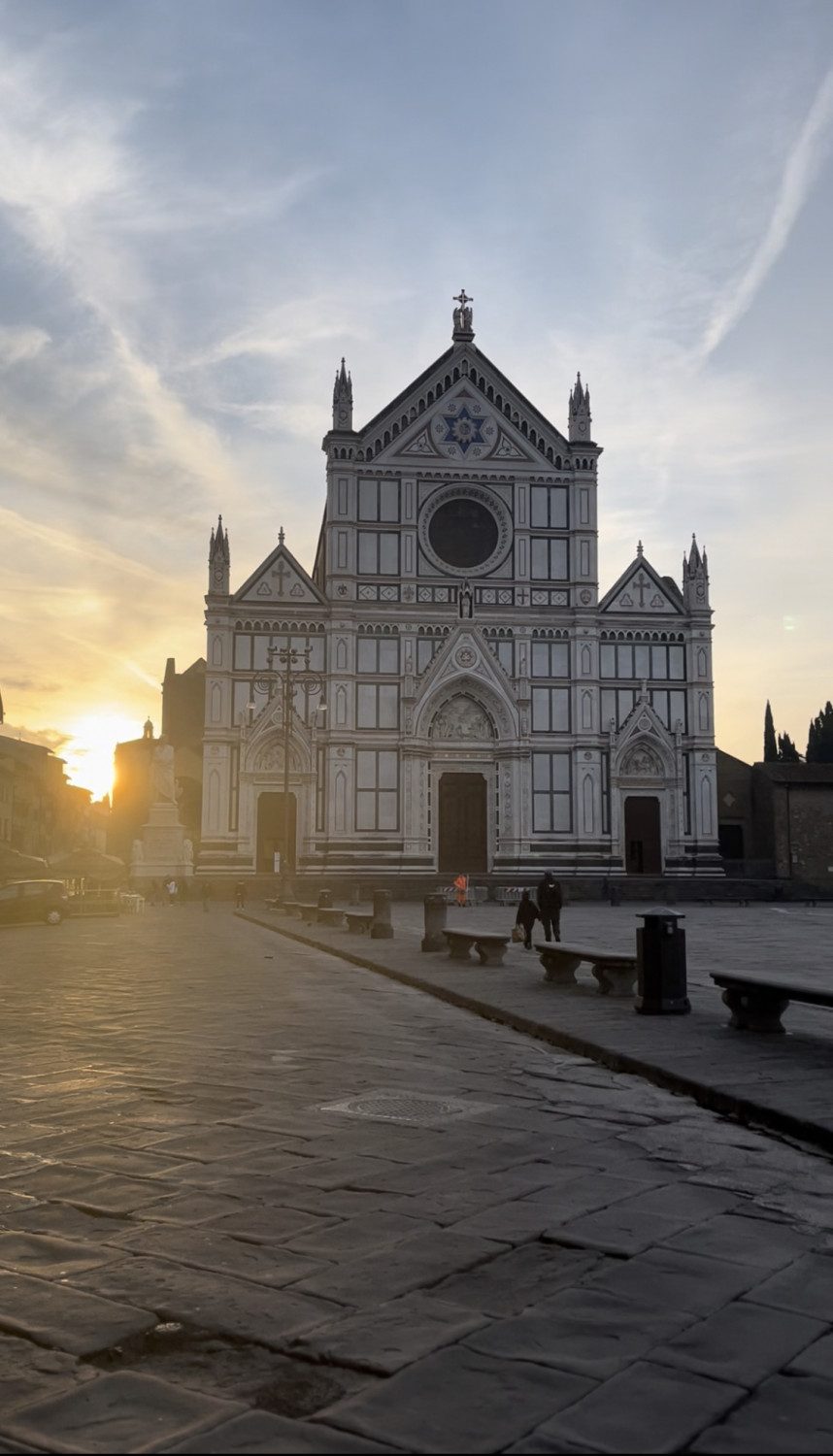
Florence is a city overflowing with a wealth of historical sites and beauty. When visiting the city, tourists often want to see the city’s gems: the Duomo, art galleries, old palaces and classic restaurants.
But one of the city’s brightest gems is the Basilica of Santa Croce. Sitting just a couple hundred feet from the Arno, this basilica houses tombs belonging to Italy’s most famous art and cultural figures. Upon a visit to Santa Croce, you may notice its similarities to the facade of the Duomo: the shape, the colors, and style of architecture is at times uncanny. However, you’ll find that at Santa Croce, just beyond the decorative facade is an old brick church with its own unique history. Nearly as old as Florence itself, Santa Croce’s current foundations were laid in 1294 and were not completed until the late 14th century. The project was overseen by Arnolfo di Cambio, an architect responsible for many of Florence’s most famous structures. Over the years, Santa Croce has undergone many changes. In 1566, at the request of Duke Cosimo I de’ Medici, multiple churches in Florence, including Santa Croce, were restored by Giorgio Vasari. In the following years, it was restored again in the 19th century and once more after the flood of 1966.
A visit to Santa Croce is surprisingly serene, even during tourist season. From the Duomo, one can walk the narrow streets and come upon Piazza di Santa Croce, a wide open square with nothing but cobblestone in the center surrounded by benches that sit bathed in sun or covered by shade. In ancient times, this was a square meant for horse racing and today is the home of the annual Calcio Storico Fiorentino games, a rigorous sport that mixes soccer and rugby. Today in the square are people from nearly every walk of life. Children playing soccer, couples
holding hands, tourists taking pictures, or FUA students sketching the scene before them. On a sunny day, there are dogs, birds, families and tour guides all congregating. Occasionally, there are markets in the square where locals and tourists can dine and shop. Just up the steps on the side of the church tourists, locals and students escape from the busy
streets of Florence and enter the quiet basilica. Inside sit pews where these visitors pray or observe their surroundings. But despite the density of people, it remains a quiet tribute to the memory of these figures and the beauty of the art within. Inside, you can find the tombs of Michelangelo, Machiavelli, Ghiberti, Galileo Galilei and many other political and cultural icons of Italian and Florentine history. These figures called Florence home, and Michelangelo even hailed from the Santa Croce area himself.
Towering ceilings and a gold-brimmed altar with frescoes of religious scenes surrounding a crucifix sit in silence as visitors from near and far look on. Walking around to view the elegant tombs and frescoes, you might not even notice that you are looking at the work of great artists
like Vasari, Donatello, or Giotto. Each tomb is unique in its beauty, as those who they pay tribute to were the first of their kind as well. Aside from the main basilica are chapels dedicated to different prominent Florentine families, as well as rooms for the clergy. Exiting the church, one comes upon a garden of lush green grass and ancient archways that
used to serve as a cemetery. But now, on a sunny day it is tempting to lie in the grass and fall asleep shielded from the busy Florence streets, but all visits must come to an end. Emerging from the Basilica the sounds of chatting, laughter, birds and children return to your ears, and suddenly you are back in Florence.