Mysteries Beyond the Tourist Trail: Ghosts, Legends, and Timeless Traditions of Florence

written by Sydney Kerrihard for SPEL: Public Relations

With only a few months to explore Florence, study abroad students are often swept up in the surface-level customs of the city – refraining from cappuccinos after 11 am or adjusting to the quiet afternoons of the Italian riposo. But beneath these everyday habits lies a city full of rich folklore and deep-rooted traditions, passed down from generation to generation. From haunting ghost stories whispered among children to age-old rituals, Florence’s cultural heritage is far too complex to fully unravel in just a few short months. Yet, it’s these lesser-known stories, tales, and traditions that truly capture the heart of this historic city.

The Ghost of Palazzo Vecchio
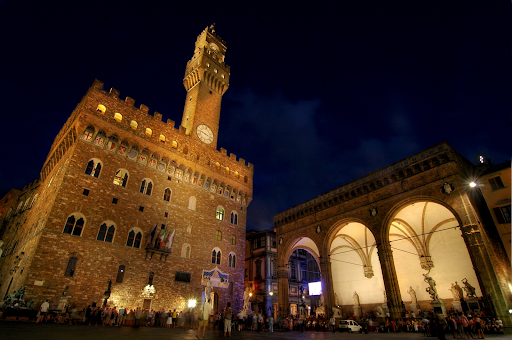
Figure 1. 
Palazzo Vecchio late at night.

While the exact number of people who were killed at Palazzo Vecchio remains unknown, one story specifically stands out. Baldaccio d’ Anghairari, a military leader notorious for his violent nature, earned his grim nickname “Baldaccio” because of his aggression.

On September 6, 1441, Baldaccio was summoned to the Palazzo Vecchio where he was ambushed – shot from behind, thrown from a window, and dragged into the Piazza della Signoria where he was beheaded. Wrongfully accused of treason, his death shocked the city of Florence, and even the Pope expressed remorse for the horrible crime committed against him.

Since that day, legend has it that Baldaccio’s ghost haunts the halls of Palazzo Vecchio, returning every September 6th.  Some believe that every 50 years, Baldaccio would return on the night of his death, holding its head under its arm. In 2001, a couple claimed to have encountered Baldaccio while on a romantic stroll at Piazzale Michelangelo. Having taken some photos of the evening, they later discovered a face staring back at them in one of the pictures. When paranormal investigators confirmed the photo was unaltered, they concluded the face belonged to the restless ghost of Baldaccio, still unable to find peace.

The Legend of “Rifrullo del Diavolo” (“The Devil’s Recoil”)

Figure 2. 
A visual representation of the “Rifrullo del Diavolo”.

Near Via Della Studio, just over the bridge, you will feel a slight breeze that in the winter turns into a powerful whirlwind. The wind is known as the “Rifrullo del Diavolo” or “The Devil’s Recoil”, a strange natural phenomenon rooted in an ancient legend.

The legend begins long ago when the devil was said to be pursuing a priest through the streets of Florence, determined to claim his soul. Once they arrived at the Cathedral of Santa Maria del Fiore, the priest pleaded with the devil, asking to pray one more time before suffering eternal damnation. The devil agreed, confident in his victory, and waited outside while the priest entered the church.

As the devil stood by the front doors, he dozed off, and his snores stirred up a gentle breeze. But when he awoke, he realized the priest had outwitted him, escaping through a back door. Furious at this deception, the devil’s anger turned his snores into a whirlwind of rage.

Since that day, the “Rifrullo of the Devil” has never stopped blowing, waiting in anger for the priest to emerge from the church.

The Rificolona Festival
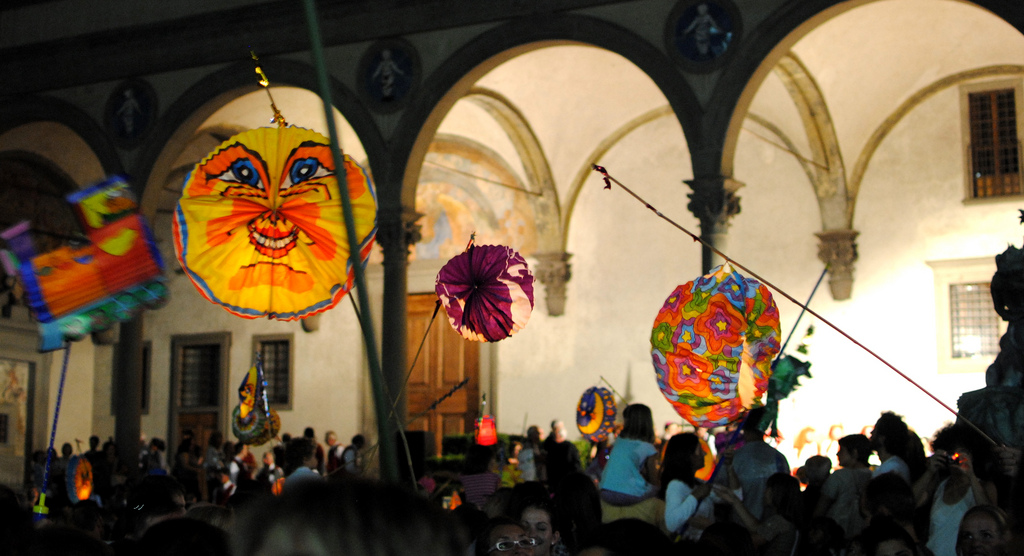
Figure 3. 
Lanterns from the Rificolona Festival lining the streets.

The Rificolona Festival is an ancient tradition that gained popularity in the mid-17th century. Held on September 7th, the night before the celebration of the Virgin Mary’s birth on September 8th, it marks a unique moment in Florence’s history.

On the evening of September 7th, farmers and merchants from the surrounding countryside would make their way into Florence, bringing goods to sell the next morning. They set out early to secure prime spots in the marketplace, lighting their way with lanterns hanging from sticks, canes, or poles, creating a beautiful collection of light through the dark streets.

Today, this tradition lives on through the children of Florence, who will craft or buy colorful lanterns to parade throughout the city. As they traverse the streets, they chant traditional songs such as the famous folk tune, “Ona, ona, ona che bella Rificolona! La mia l’è co’ fiocchi e la tua l’è co’ i pidocchi” (“Oh, oh, oh, what a beautiful lantern! Mine has ribbons, yours has lice”). The parade begins at the Basilica di Impruneta at 4 pm and concludes at Piazza Santissima Annunziata at 9:30. Sometimes, children will even throw clay balls at the lanterns to try and break them, adding an element of competition to the evening.

The following day on September 8, the terrace of Santa Maria del Fiore opens to visitors, offering a view of the lanterns from the previous night.
A City Full of History & Chaos

written by Isabella Tecchio for SPELL: Journalism

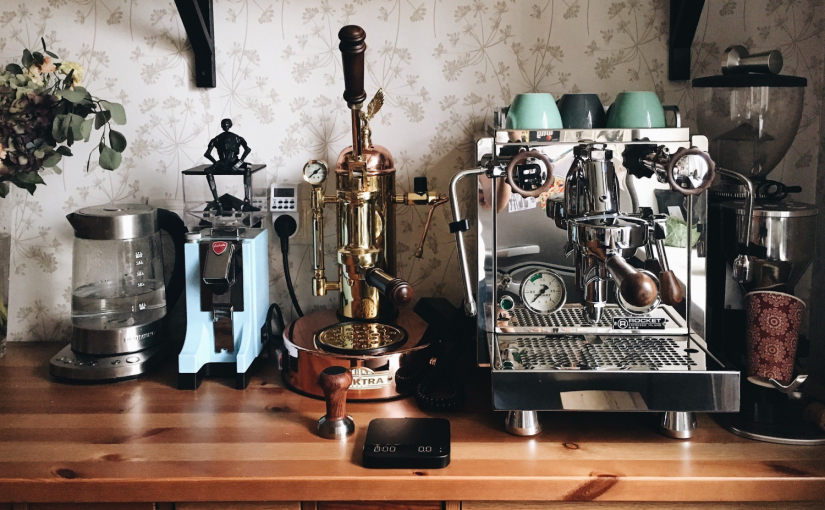
I know very well how to work an espresso machine. Better than a lot of people; at least I think. I know exactly how each pasta dish served to me here was made, what is inside of it, each and every kind of pasta there is, and how long each ragù took to cook. I grew up around Italians, an Italian family that came from Veneto. 

I felt that I knew a tremendous amount about the culture, and a tremendous amount about the people. I do believe I still do, but because of the large difference Italians and Americans have culturally, it is impossible to not be overwhelmed. I had an idea that I would not need as much cultural integration because I am already so aware of the culture, but it is simply not true. I am an American, born and raised in upstate New York. Although raised around the culture it does not separate the fact that I am not from Italy. 

Arrival in Florence

Florence is stunning. Stunning, and completely shocking for an American from a small town. How can so much history be packed into one city? Into one country? It is something I cannot grasp. With this incredible art and history come tourists. Many including me look in awe at everything around them. How can the outside and inside of the Duomo be so incredible? Genuinely, I wish I could express my amazement. Each minor detail was carved so long ago, each detail painted and worked on from centuries ago. I can go on and on, and for this reason I will always look like an American tourist. First of all because I am, and because of the utter astonishment I am in every time I walk by this masterpiece. 

The amount of people that pack into the city center freaks me out. More than freaks me out, it scares me. Never in my life have I been around so many people, or lived somewhere so close to the center of something so important. I can continue to use the word overwhelming but unfortunately this word does not cover it. Walking outside and making one left turn I see the Duomo, and every designer store you can imagine. I believe this is the most tourism-filled part of the city. Understandably, since this is also the home of the Uffizi Gallery, something I cannot wait to see. 

Lifestyle Changes & Differences

Living in a space where I am able to see the Duomo from outside my window is incredible. The way of living is extremely different. Americans love to waste energy. We keep our air conditioning on for hours at a time, leave the water running in the shower, and keep the lights on. At least these are things that I do…

If my roommates and I use too many outlets at one time, the circuit blows. By too many, I mean charging three computers at once, or someone wants to blow dry their hair. Conserving energy is taken more seriously, as well as the environment. Partly because I don’t think the same choice is given to waste energy, but also because it is of an almost cultural importance. I was always told to shut off the lights, turn off the fan, to not leave things running all day, and it puts things into perspective as I learn more about Italy, and how connected my family remains. 

Environmentally, Italy is very in tune. They separate glass, paper, and organics, usually maintaining five different bins for what Americans would just call trash. I don’t want to group all of us into one realm of not recycling, but at least in my home, even when we do recycle, the garbage truck puts everything into one bin. I have seen it happen every single time. Unfortunately even if we want to be as environmentally friendly, I don’t know that we care enough. There is a care for their country that I do believe we lack. Americans I know in Florence I have seen not separate their trash and recycling, which is very sad. If we don’t have respect for other countries, how can we have respect for our own?

I do believe that we can turn this ideal around, but witnessing it in front of me has brought me not just a cultural shock, but also sadness. I would like to point out how exciting this is for many Americans as well, to see another country caring so much about the environment to separate everything, and following it. 

In the end

I love Florence, and I love the country. I love being here, although overwhelming and the fact that it has taken me a bit to adjust; I don’t know that I ever will be fully adjusted. There is a comfort and a calmness here that the U.S. lacks, at least for me. Life here is based on taking care of yourself, feeding yourself, doing your work, being social and seeing friends.

The social aspect here is something we simply do not have in the U.S. as well. Walking culture and a thousand other things that make for a healthier life. Health is valued and cared about, activities and speaking to people is valued. I miss home, but for now home is here, and I am excited about it.

The Art of Busking: Florence’s Relationship with Street Performers

written by Ava Lees for SPEL: Public Relations

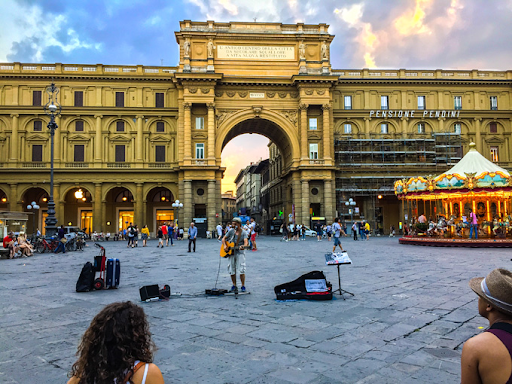
When walking around Florence, it’s difficult to miss the wide array of street performers who make their living displaying their talents in front of famous landmarks like the Duomo and Ponte Vecchio. All different types of performances from singing to puppeteering can be seen across the city, adding to the rich culture of art here. Florence’s streets often echo with the vibrant sound of guitars, violins, and even the occasional accordion, as artists fill the air with melodies that seamlessly compliment the city’s centuries-old architecture.

Street performing, or busking, has been around for centuries and has been present in Florence since the Renaissance era. During the Renaissance, Florence was not only the center of intellectual and artistic innovation but also a city where art and life intertwined in the most public ways. The streets were alive with performers entertaining and inspiring everyday citizens. These street artists brought art to the masses, making it accessible to people from all walks of life, and fostering a unique communal experience in public squares. This has carried into the culture of the city today, although there are a few more regulations around it. 

In my short time in Florence, I’ve seen dozens of different performances by buskers. I remember the first time I came across this was during sunset as I was taking a walk over Ponte Santa Trinita. Before I could see anyone, I could hear the music floating through the air and adding to the atmosphere of the gorgeous scenery of Florence. A crowd had gathered around a woman as she sat on the bridge playing the violin for a mix of both tourists and locals who were on the bridge to watch the sunset. It felt like a scene straight out of a movie and since that moment I have found the street performances in this city captivating. 

After witnessing dozens of talented buskers around the city, I started to wonder how these artists make their money. In recent years, Florence has implemented fairly strict laws when it comes to allowing people to busk, so it isn’t as simple as setting up and playing music. They’ve implemented a licensing system that performers can use so they can all display their talents without stepping on each other’s toes and causing chaos in the city. 

The license requires planning about a month in advance and costs fifty dollars a week for performers to be given a designated space for up to seven days in a row. Once performers do have a license, they are given guidelines to follow, such as having a two-meter square to perform in and reserving spaces at least ten days in advance. The regulations are so strict that even using a chair while performing incurs an additional 50-cent charge a day. 

Despite the regulations and logistical challenges, the spirit of busking in Florence continues to thrive, bringing life, music, and creativity to the city’s streets. These performers are not just providing entertainment, they are keeping alive a centuries-old tradition that has shaped the cultural fabric of Florence. The city’s unique blend of history, art, and strict modern regulations ensures that while Florence evolves, it remains a haven for street performers who enrich the daily lives of both locals and visitors.

Transportation Follies

written by Jack Wardynski for SPEL: Journalism

After a busy first full week of classes and internship work, I thought a weekend trip to the nearby town of Lucca would suit me well. I had heard from both my professor and a previous study abroad student how unique the famous walled city is, and I was eager to get a look at it for myself. A €25 round trip by train, plus the cost of a few meals, should make for an easy, cost-effective day.

“Should” was the critical word of that sentence. As my train pulled into the station in Pescia, just a few stops before Lucca, an announcement came over the speakers, and everyone started to pour off the train. Since my Italian is così così at best, I wasn’t sure what was going on, but I figured I should follow the pack. It became clear to me, based on people’s perturbed expressions and some highly agitated phone calls, that the train was not going to Lucca as originally planned. Instead, buses would be coming to take us the rest of the way. The issue: there were easily over a hundred of us waiting outside the station, much more than could fit on one or two buses. I settled in next to a friendly-looking group conversing in Italian and prepared for a long day.

Goodbye, Home

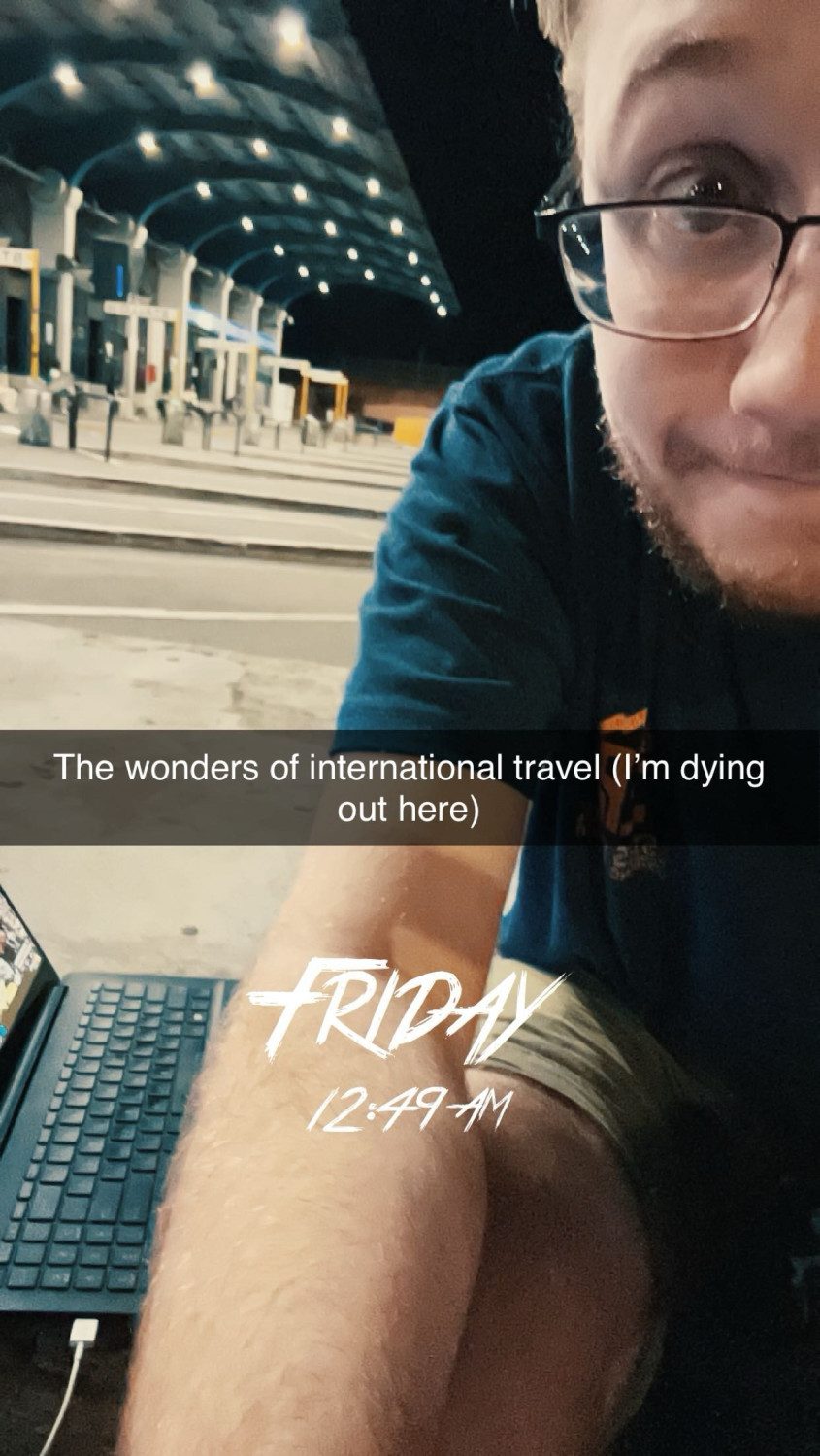
This latest public transportation folly sparked flashbacks to my initial journey from the U.S. to Florence just a few weeks prior. My flight out of O’Hare International Airport in Chicago was scheduled for 7 p.m. local time on August 27. Nature had other plans, however, as a massive storm with sideways rain and petulant lightning cut through the darkness outside. The plane took off two hours later than expected, which, considering my layover in Iceland was only meant to be one hour, presented an issue.

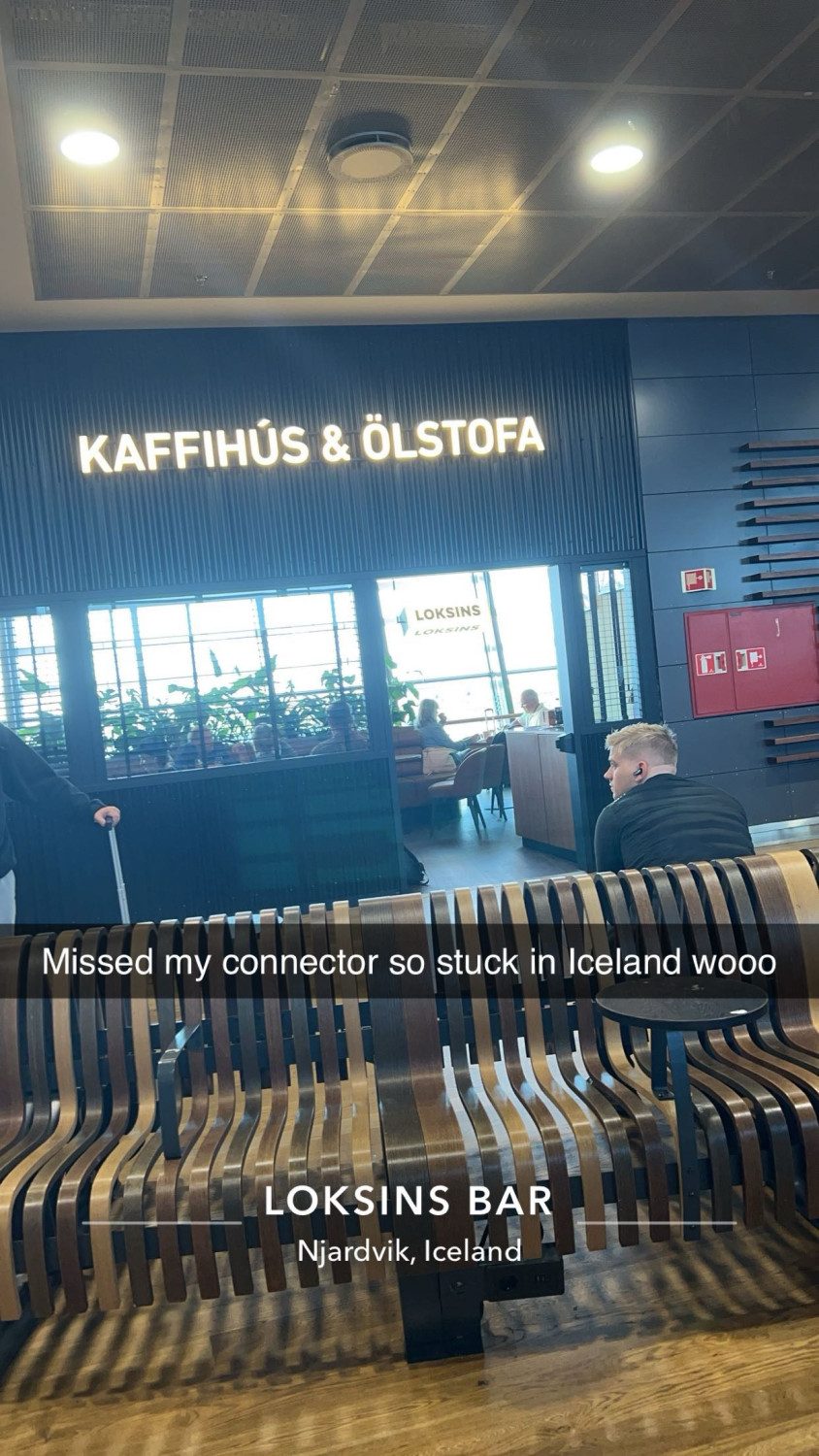
Five hours later (ten with the time zone change), we landed outside Reykjavik and I received the bad news: there were no more flights into Rome for the day, so I would have to stay the night in Iceland and depart the following morning. Thankfully, the good folks at Icelandair were kind enough to give me and the rest of the wayward travelers on Flight 852 free lodging and meals at a nearby hotel. After getting bused to our home for the night and receiving my room key, I promptly crawled into bed and crashed. I have never been able to sleep on planes, so I had been awake for around thirty hours straight at that point.

Icelandic Wake-Up Call

I awoke in the evening and decided to explore this new, exotic land. When one pictures themself visiting a foreign country for the first time, I don’t think many envision it being Keflavik, Iceland, but the universe works in mysterious ways. With all due respect to the people of Iceland, there wasn’t an extraordinary amount of things going on during a random Wednesday in late summer, though there were some beautiful sights. I ordered dinner at a small local joint called Kentucky Fried Chicken and returned to the hotel, only to learn that the bus to the airport would leave at 4 in the morning. Thankfully, my circadian rhythm was so out of sorts that getting up at 3 a.m. was no problem for me. For those keeping score, it is now the 29th. Upon returning to the airport, however, my problems only deepened.

Apparently, the airline had not booked me for a flight directly into Rome like I assumed, but instead a flight to Germany with a five hour layover before a connector into Rome. Panic started to settle in around now, as this meant I would miss the check-in time at FUA. Thankfully, one of my friends would grab my apartment keys for me, so that at least was taken care of. With no alternatives, I resigned myself to my imminent stay in Germany’s Frankfurt Airport. Fun fact: Iceland’s airport has no jet bridges, so you have to take a bus to and from the plane.

My brief excursion to Germany was largely uneventful; I ate an overpriced cheeseburger (Germans, why do you put cucumbers on burgers?), failed to locate a water fountain, and watched some anime. I did have a brief scare before boarding the flight that my luggage had been lost, but luckily this was sorted out eventually. If you thought this particular leg of the journey would go smoothly, I would question how closely you were paying attention to the rest of this blog. No, the flight was delayed an extra 90 minutes, because of course it was, and my eventual arrival in Florence was looking more and more dubious.

All Roads Lead to Rome, But Only Some to Florence

We touched down at Fiumicino Airport around 10:30 p.m. Finally, Italia! After a quick train ride to Roma Termini, all I needed to do was hop on a late train to Florence and… there were no more for the night. There were outgoing trains to seemingly every town in the entire country, but no Florence. It was around this point when my grip on reality started slipping. The prospect of roughing it in the station until the first train left at 6 a.m. began to break me. The idea of calling it quits and returning to the States a defeated man seemed almost more appealing. A phone call with my mother refocused me, however, and I settled for an overnight bus to Florence departing at 1:45 a.m. My Uber ride to the bus station with my trusted driver, Adam mimicked the great Roman emperors as they would parade through the city’s streets in their grand chariots pulled by mighty steeds.

After an hour waiting at the bus stop, the journey continued. Again, I have been cursed with an inability to doze off on moving vehicles, so I settled in for four hours of staring at the seat in front of me. It was on this bus that I realized that the date was August 30, which meant I was now 22 years old. I have never been one to enjoy the pageantry of a birthday celebration, but this particular milestone felt especially irreverent. As the sun rose on the Tuscan countryside and another year of my life, we pulled into Villa Costanza, a final destination further from the city center than I had anticipated. I grit my teeth and ordered a whopping €50 Uber to take me to Corso Tintori, where I would, at long last, acquire the key to my apartment, where sleep awaited me.

A Traveling Companion to Lucca

As I sat at the train station in Pescia, listening to the exasperated chatterings of the people around me in languages I mostly couldn’t understand, I realized the key mistake I made during my previous Sisyphysian travel extravaganza. Though I was going from country to country, city to city, airport to airport, I saw many familiar faces during those days on the move. A number of the people I sat alongside on that first plane out of Chicago were still with me on the final flight to Rome. Even still, I never made connections with them, after due to exhaustion, agitation, or plain indifference.


This time, I did not want to make the same error twice. So, I introduced myself to a man close to my age traveling with his mom. He spoke English and Italian and took the bus with me to Lucca. We talked the whole way about Italy, America, and what we each like (and dislike) about our home countries. Upon arriving in Lucca, we exchanged contact info, and he told me to reach out when I go to his home city of Venice. I had gone from a solo traveler to someone making valuable connections.

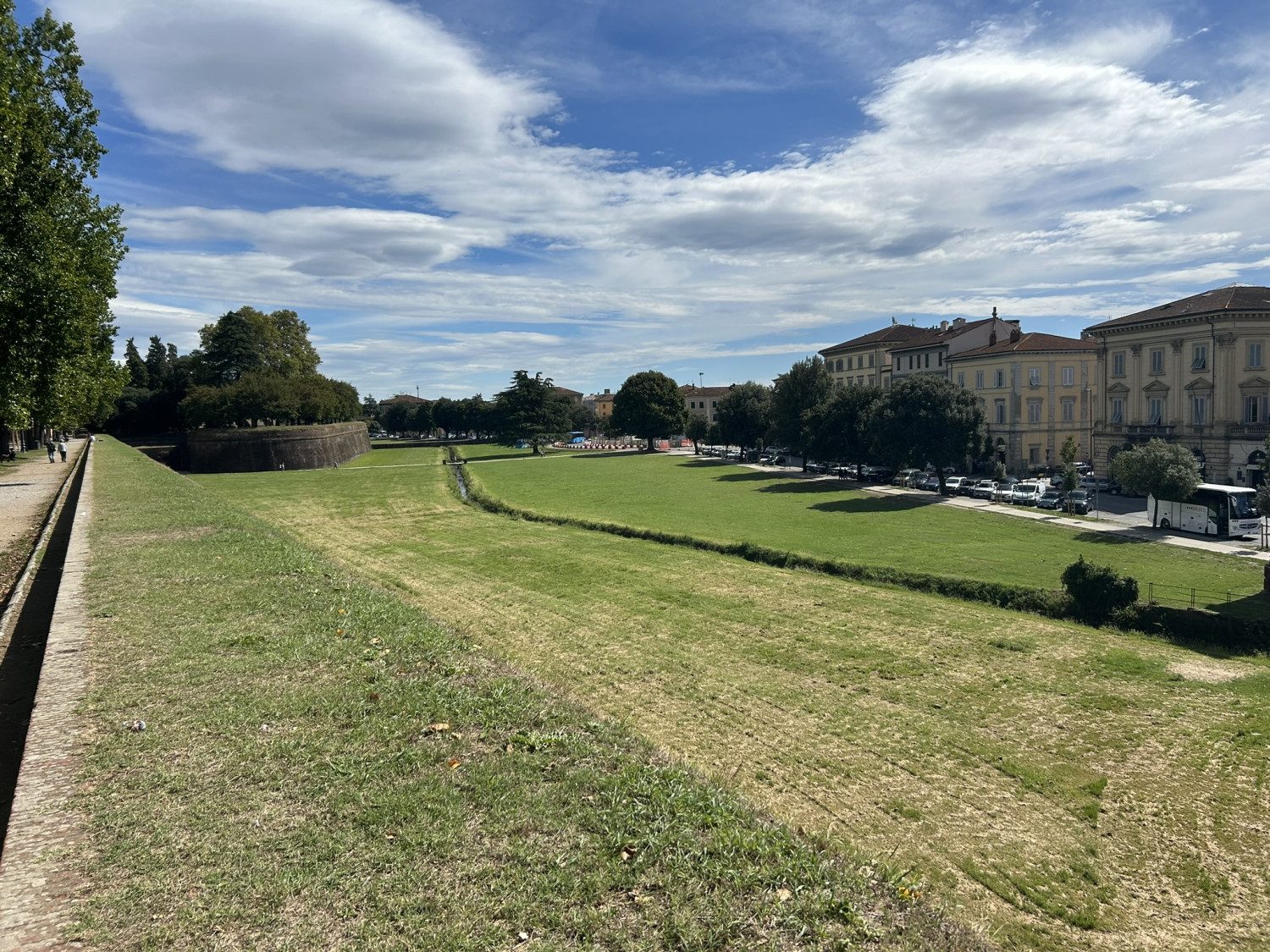
Lucca was beautiful, and a more than worthwhile place to spend a day. The walls were exactly as advertised; I walked the entire perimeter and then some. I climbed the Guinigi Tower and got a view of the whole town, then had the most delicious gelato I’ve ever tasted. Thankfully, my return trip to Florence went smoothly; the train actually went as far as it was supposed to this time. These lengthy transportation mishaps, while frustrating in the moment, demonstrated to me the real joy that can come from being a world traveler. Plus, they make for good stories, which is always nice.