Hidden Gem: Locally Owned Gym in Florence Provides Much Needed Solace

written by Alex Daggett for Special Project: Experiential Learning in Journalism

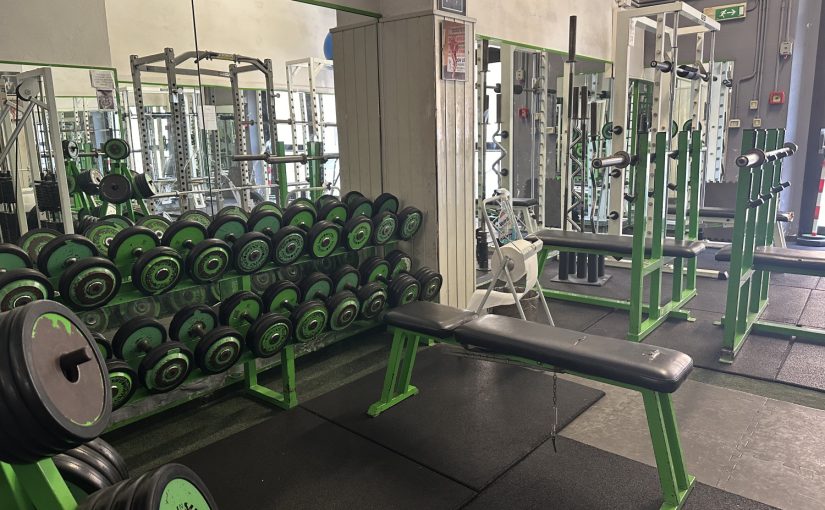
Tucked away on the quiet street, Via del Leone, with a modest sign and entrance, Gym & Tonic is a true, classic testament to athletic performance and bodybuilding. Built on the first floor of a residential building, the space extends to the back with free weights and old school machines adorning the right side. Under a skylit converted garden is a dance studio and boxing area. Certificates, awards, records, and trophies for mens physique occupy the walls everywhere the eye can see, and a sense of community is felt. 

As soon as I arrived in Florence to study abroad for the Summer, I immediately sought after a gym so I could stick to my workout routine.  After some research, there still weren’t any gyms that stood out to me. By pure chance, I happened to walk by Gym & Tonic while exploring the south side of the city, and decided  to take a look around. Immediately upon entering, I was shocked by how seamlessly the whole space was integrated into the classic architecture, nothing looked out of place. I was so used to the concept and sights of large scale commercial gyms where everything looks the same, and this was far from it. Despite the rustic nature of the machinery, everything was clean, and practical. I have been to a non commercial body building gym only once before, and this evoked very similar emotions and feelings, while offering an Italian twist. 

“I’ve been in charge for 26 years, since I inherited the gym from the man who owned before me,” said owner, Francesco Borghesi.

Despite the establishment being older than himself, Borghesi is synonymous with Gym & Tonic in the current date.

“I’ve been lifting weights since I was 15,” Borghesi said. “It’s what I love.” Borghesi provides not only customer relations, but also teaches various courses.

“I am thankful to have many good teachers in my time,”  Borghesi said. “So I try to provide the same to others.”

When I met Borghesi, he was teaching a patron a boxing lesson. Once he was finished, he told me all about the gym. I then bought a membership and got a workout in that day. Since then, I have gone every day and have yet to find a flaw in the gym. The hours are from 10:00 to 20:00, and every time I’m met with an immersive environment full of lively locals. Working out has always been a great escape and opportunity for self focus and reflection, and this is the perfect place for just that. Every time that I go to a commercial gym, it always just feels so clinical and uninviting, but Gym & Tonic offers such a different environment that is refreshing. I am very glad that I found this spot, as it made this international transition a lot easier. 

While it may not be on any travel destinations, or top ten lists, I think that adds to the charm of such an establishment. A place that is largely untouched by tourists offers a level of immersion and authenticity that is hard to come by. For that reason alone, Gym & Tonic is worth checking out, and they even offer day passes for people looking to get a quick lift in. A true hidden gem of Florence, located at Via del Leone 10.
Special Project: Experiential Learning in Journalism – A Writing Journey Through Study Abroad

written by Sophia Koch for Special Project: Experiential Learning in Journalism

I’ve always harbored a deep desire to explore the world. Contemplating my future as a journalist, I’ve often envisioned myself traversing diverse landscapes and culture. Some of my favorite travel experiences have thus far been confined to the United States, with standout destinations including Carmel, California; Maui, Hawaii and Key West, Florida. These travels sparked a realization within me: a profound yearning to delve into travel writing to some extent.

Studying abroad has unveiled a different facet of journalism, exposing me to the intricacies of writing about entirely new cultures, cities, and people.

Upon learning my home institution at the University of Missouri School of Journalism added the Florence study abroad program, I swiftly recognized it as the ideal opportunity. Uncertainty came over me regarding the experience awaiting me in a foreign country at a different university. I wondered whether the instructors would be stringent, what subjects they would cover, and how my Special Project Experiential Learning (SPEL) internship in Journalism would unfold. The SPEL program, offered through Florence University of the Arts – The American University of Florence, provides 3 credits along with real-world reporting and writing experience. The special project course features experiential learning hours with the Community Engagement Member Institutions (CEMI), which are dynamic learning environments created to foster learning through interaction within the community. 

During my second week in Florence, as my first class commenced and I met with Sofia Galli, my supervisor for the SPEL placement, I realized the breadth of knowledge awaiting me. The professors’ expertise and the assignments the instructor tasked me with promised to enrich my understanding of Florence thus being my first time ever in Europe.

Over the past 15 weeks, Professor Galli has assigned me various articles to be published on the institution’s websites. I’ve had the privilege of attending school-sponsored events, such as a book presentation featuring Italian author Caterina Perrone. Alongside attending, I conducted a thorough interview with the author, delving into her book and gaining insights into Florentine history. Hosted by the school’s advisors and students, the article found its place on their website. Another school-sponsored event I had the opportunity to attend was Laura Fauzzi’s art exhibition. Although I’m not a big art enthusiast, learning about the way she creates art through breathing and listening to waves was incredibly intriguing and something I had never encountered before. This experience once again reminded me why I love journalism so much – because it allows me to learn something new every day.

While some events I cover are not in English, initially posing a challenge, I’ve overcome this hurdle with assistance from my advisors and by conducting interviews in English such as the book presentation with Caterina Perrone. This journey has facilitated my growth as a journalist, reinforcing the notion that in this profession, nothing comes easy—a skill set I owe to FUA-AUF and the SPEL placement.

One of my favorite pieces I worked on was a profile of two bachelor’s degree students attending The American University of Florence. They are siblings from Brazil studying culinary arts and fine arts. I had the opportunity to speak with them about their experience living full-time abroad and learn more about their Brazilian culture. Additionally, I participated as a journalist in the Art and Community: Secret Florence Walks course, observing the dynamic interactions between the professor, students, and the urban landscape. Beyond contributing an article to the website and enhancing my portfolio, this experience exponentially deepened my understanding of Florence.

While my SPEL journalism internship is concluding, the whole experience has been transformative. From the picturesque landscapes of Carmel to the vibrant streets of Florence, each experience has shaped my understanding of journalism and ignited my passion for travel writing. Through the SPEL internship, I’ve not only honed my writing skills but also gained invaluable insights into different cultures and storytelling techniques. 

The Digital Pen: How Digital Platforms Shape Our Words and Ideas

written by Madison Baldwin for the course, Writing for Digital Media

In the age of the internet, the digital pen has emerged as a powerful force, shaping the way we communicate, express ourselves, and share ideas. From the humble beginnings of email and online chat rooms, to the wide reach of social media and blogging, digital platforms have become the canvas upon which our words and ideas are painted. However, as we navigate this new world of online communication, we must stop to consider the impact it has on our everyday communication, our thinking, and our society at large. 

One of the most distinct aspects of the digital pen’s influence is its power to equalize expression. With the click of a button, digital platforms have given voice to millions who may have otherwise not been seen or heard. Anyone with access to the internet can become a published author, sharing their thoughts and experiences with a global audience. This accessibility has sparked a renaissance of creativity, fostering diverse perspectives and narratives. Bloggers, podcasters, and YouTubers have become modern-day storytellers, shaping public discussion and challenging traditional media channels. 

However, this new level of expression comes with its own set of challenges. There have been rising concerns about the quality and authenticity of online content. Since publishing is so easily accessible to everyone, it has led to the spread of misinformation, making it challenging to determine fact from fiction. Misinformation spreads like wildfire, amplified by algorithms that prioritize engagement over accuracy. The digital pen, once proclaimed as a tool for empowerment, can also be wielded as a weapon of manipulation and deceit. 

Moreover, digital platforms have fundamentally altered the way we interact with language, producing new forms of expression and communication. Emojis, abbreviations, and memes have become integral parts of our online communication, allowing us to convey complex emotions and ideas in a matter of characters. While these innovations can enhance communication in the digital realm, they also risk destroying the depth of human expression. The internet is fundamentally changing the way we write and speak, blurring the lines between formal and informal language and challenging traditional notions of grammar and style.

Furthermore, the monetization of online content has introduced commercial interests into the world of creativity. Influencers and content creators navigate a landscape driven by likes, shares, and sponsorships, sometimes prioritizing popularity over authenticity. The pursuit of virality can compromise artistic integrity, as creators tailor their content to fit the algorithms rather than their own creative vision. 

Despite these challenges, the digital pen remains a powerful tool for self-expression and connection. Online communities and social movements have harnessed the power of digital platforms to gain support, raise awareness, and create positive social changes.

As we navigate this evolving landscape, it is imperative that we use the potential of the digital pen to build a more inclusive, equitable, and empathetic world. By discerning credible sources, engaging in meaningful dialogue, and embracing the diversity of voices online, we can use digital platforms to foster genuine connections and collective understanding. In conclusion, the digital pen has revolutionized the way we communicate and create, shaping our words and ideas in ways previously unimaginable.

While it presents opportunities for empowerment and expression, it also poses challenges regarding authenticity, quality, and commercialization. As we continue to navigate this digital frontier, let us approach it with critical thinking, empathy, and responsibility, ensuring that our words and ideas contribute positively to the collective conversation of humanity.

Fashion Takes Initiative on Environmental Protection

written by Isla Herring for Special Project: Experiential Learning in Journalism

Italy is commonly recognized for its significance in the fashion industry and the latest trends, along with the country being the birthplace of many reputable brands. A copious amount of designer brands was created here such as Prada, Gucci, Valentino, Versace, Fendi, and more. Although we recognize these brands for their power in the fashion world, we do not often consider the impact that they make on the planet. Brands today are taking steps to reduce their carbon footprint and take preventative measures for the future. 

Prada has been recognized in the past for its lack of protection of animal welfare by using materials derived from living beings, but recently they have been making strides towards sustainability by using recycled packaging and solar energy. They have also produced two new collections in which they use recycled nylon and recycled gold for their products instead of manufacturing more original materials. They are not only working to combat the backlash from their past methods of clothing production, but they are displaying effort to assist in improving our planet. 

As of December of 2022, Miu Miu, which is owned by the Prada Group, has implemented several sustainable measures such as offsetting emissions, use of solar energy in their buildings, and recycled plastics for their packaging. They also offer an upcycled collection that includes low-impact materials that are not as harmful to the environment. 

Owned by Capri Holdings, Versace, has been an Italian brand with long-standing recognition for its minimized negative impact on the planet. They have implemented numerous responsibly sourced and certified materials into their products throughout the years. They have also limited the use of animal-derived materials and banned furs from their products.

Ferragamo is another brand that has attempted to be conscious of their consumption of animal products. They have an official welfare policy that includes only sourcing wool from non-mulesed sheep as it is the most ethical process. 

Gucci is not specifically labeled as a ‘sustainable brand,’ yet they have been making improvements to their company to be more eco-friendly. They have incorporated materials that are recycled into their products, along with changing their methods of fabric cutting to produce less waste. They are also reducing their emissions and minimizing harmful chemicals in their leather.

Additionally, certain brands have been credited for donating money to environmental conservation projects. Prada has collaborated with the Intergovernmental Oceanographic Commission to support ocean conservation. Versace has also supported this cause by collaborating with organizations like the Green Carpet Fashion Awards. These awards celebrate leaders who are creating transformations to approach and achieve change on behalf of the planet. Fendi partners with various projects such as the World Wide Fund for Nature which supports local communities to conserve natural resources and put policies in place to protect natural habitats. Furthermore, Missoni has involved itself in philanthropic initiatives such as supporting environmental conservation projects. They also collaborated with OrphanAid Africa and have donated earnings made from their products to other charitable causes. 

As a consumer, it is important to be aware of your involvement in the health of the planet. Being mindful of the brands you choose to support can cause change that makes vast differences to the environment. Also, holding companies accountable for their part in the earth’s deterioration can bring about alternate solutions. Designer companies have been able to get away with unethical practices in the past due to their high profit levels, but it is necessary that we credit their current efforts to polish up their methods and materials.

Runseeing in Florence

Written by: Maya Echols-Albrecht

As a study abroad student, I am constantly trying to make the most of my time abroad. Taking advantage of the cheap flights to other countries and spur of the moment decisions truly make studying abroad a once in a lifetime experience. One thing I did not prepare myself for however, was taking time to explore Florence, the city I live and study in. This is when I decided to pick back up an old hobby of mine: running. 

I quickly started doing research on some good places to run in and outside of the city, figuring this could be an amazing opportunity for me to truly experience all of Florence. I still vividly remember my first run up to Piazzale Michelangelo, exploring the wooded trails and more residential areas of Florence which I never would have seen if I hadn’t gone on a run. This is when I knew I should start regularly running here. 

I found a blog that highlights various running routes in Florence, ranging from scenic paths along the Arno River to challenging trails in the surrounding hills. The blog also provides tips for runners, such as where to find water fountains or restrooms along the routes, and suggests the best times of day to avoid crowds and traffic. 

As I continued exploring Florence through running, I discovered hidden gems like the Boboli Gardens, a vast park filled with statues, fountains, and winding paths perfect for a leisurely jog. I also stumbled upon local parks and squares where I could join in on group runs or yoga sessions organized by the community.

Not only has running allowed me to stay active and maintain my fitness while abroad, but it has also deepened my connection to Florence. Each run feels like a mini adventure, as I uncover new sights, smells, and sounds of this beautiful city. It’s amazing how something as simple as lacing up my running shoes can turn an ordinary day into an extraordinary experience.

Experience a Rooftop View in Florence

Written by: Sophia Koch

One thing that will never get old while living in Florence are the immaculate views. I pass by the Duomo every day and still love to look at the architecture and admire the overall size of the building, but with the weather heading into spring, I have been enjoying going to rooftop bars. The views are amazing to experience, so I have taken on the mission to try out different rooftops to experience a new view of the city.

Caffè del Verone

During my Cultural Introduction to Italy class, our professor took us on a site visit, and then she made sure we went up to the Caffè del Verone rooftop to see the view during sunset. The sunset was so beautiful that night, and the weather was abnormally warm for February, so I knew I had to come back.

This place definitely feels like a hidden gem because it was a bit confusing getting to the restaurant, but the front desk employees at the museum were nice enough to lead the way. I came back on a weeknight about 30 minutes before sunset with my roommates. We grabbed drinks and found a table. Most of the tables were full, and the ones that sat right by the railings were all two-top high-top tables, so if you want a good seat during sunset, I suggest going earlier.

The way the restaurant is laid out with the other tall buildings around, you actually can’t physically see the sun go down, but it is still a breath-taking view when the sky changes colors over the Duomo and the Synagogue of Florence, with the hills in the background. Usually, most rooftops offer a view of the Duomo but I really enjoyed this one because there was a new view to see of the city. There is also a perfect picture spot right when you walk down the hall to get on the patio with the Synagogue of Florence in the distance.

The drinks were fantastic, and while in Italy, you can’t go wrong with an Espresso Martini. Drinks are about 10 to 15 euros, and they come with some chips and nuts to snack on. Overall, it was a really lively place and perfect for having aperitivos, hanging out, or playing cards with your friends and family.

View on Art Rooftop Cocktail Bar

Another example of the marvelous rooftop bars in Florence with jaw dropping views is located on the 6th floor of Hotel Medici. You will find a panoramic view of the Duomo and city on the terrace of this rooftop bar. If you want great pictures with the Cathedral in the back, this is the place to go. The terrace is super small and hard to get reservations during sunset, and it usually gets busy because the view is really to die for, so if you want the best table, I suggest going right when it opens for a cappuccino or a signature cocktail. 

This is a great location for a romantic evening, a fun evening with friends, or even a spot to bring your family when they visit so they really get to see one of the best views of Florence’s admired Duomo. It will definitely get busy, especially with the tourist season starting, so beware of crowds.

You can either come for a coffee and pastry or try their wide selection of wines and refreshing cocktails, as well as a range of foods from charcuterie boards to burgers. The prices for drinks range from 10 to 20 euros, but that is to be expected with the scenery. I feel like this place can offer both a relaxing time to cherish the view or a lively time with live music and some performances. We came at 2 pm, and all the tables on the terrace were full, but tables were still available inside.

I am definitely bringing my family here when they visit to impress them with the city I have been able to live in for this whole semester—and so I can get them to pay for the drinks. This is a must-visit place before you leave Florence.

When visiting new places, I love finding sites with great views to capture the essence of the city, especially at sunset.  These two rooftops give you two different vibes as well as views of Florence. Next time you are looking for a place to have a relaxing day and soak up the sun, or a lively night listening to some live music, overlooking a wonderful view, these two places in Florence will give you just what you are looking for.