Easter in Italy

Written by: Isla Herring

As a study abroad student in a foreign place, holidays and traditions differentiate between the culture of the United States and Italy. Since my arrival here, I have yet to experience a holiday, and this is a concept that I wanted to learn more about to understand the differences between the locations and their customs for Easter. 

After doing research on Italian Easter traditions, I began to grasp the dissimilarities between the practices of the holiday in different areas of the world. Here in Italy, Easter is observed with a week of processions and rituals such as Holy Thursday and Good Friday, followed by a Sunday feast, and La Pasquetta (little Easter) on Monday. Solem Processions often include people in costumes carrying statues of Christ through the town. In southern Italy, this is especially true and dramatic on islands such as Sicily and Sardinia. 

Here in Italy, Easter is also celebrated with Settimana Santa which begins on Palm Sunday in most places of the country. Palm Sunday is celebrated the Sunday before Easter, which is equivalent in the United States. In Saint Peter’s Square, the Pope leads mass on this day, where the Palms are blessed, and a procession is held. As for Holy Thursday, the Thursday before Easter, is an evening of special masses for the Italian public to attend all throughout the country. 

Good Friday is often observed with the Via Crucis, which is the ritual of the 14 Stations of the Cross. People frequently act out the events in each station while wearing costumes to give the story a more realistic feel. Depending on the region of Italy, Good Friday holds more or less significance to the people. For example, in Trapani, they hold a 24-hour long procession titled the Misteri di Trapani. The largest Via Crucis takes place in Rome by the Colosseum, where a massive cross with burning torches illuminates the city. 

Easter vigil mass is held on Saturday evening, where people bring hard-boiled eggs to be blessed for the holiday. Additionally, in Saint Peter’s Basilica, the Pope gives the Holy Easter Mass for those who are able to attend. As for the rest of the nation, people attend their local churches for mass, but the teachings are cohesive for all. 

In Florence itself, there is a popular event called the Scoppio del Carro, or “explosion of the cart.” Here, a large ox cart is decorated and filled with fireworks as it is pulled through the city to reach its final destination, Piazza del Duomo. Once mass has concluded, an Archbishop ignites the fireworks within the cart by sending a dove-shaped rocket into the air. This causes a massive display of lights for Florence to view, along with a parade filled with people dressed in medieval costumes. 

Following Easter, La Pasquetta is celebrated Easter Monday and is a national holiday in Italy. Commonly, people travel to the countryside where they attend picnics and entertaining activities such as concerts and games. One frequently played game is Punta e Cul, where participants are given an egg and must smash the eggs of the other players. The winner of this game is the person who collected the most cracked eggs from the other members playing. 

As for the food that is consumed on this holiday, the traditions obviously vary across diverse cultures. Here in Italy, one food that is specifically unique, is a dove-shaped Italian cake called Colomba. This cake symbolizes peace and is often compared to a Christmas panettone due to their common dough. This item is particularly challenging to make, so it is often purchased at a grocery store. For the main dish of Easter, traditionally, Italians serve lamb in different preparations depending on the region of the country. The lamb meat is often seen paired with artichokes and potatoes, again, depending on the dish and location. 

Overall, the traditions and practices for Easter in Italy are ones that I had never heard of until studying abroad. Not only does the holiday have differences in numerous countries, within Italy itself, there are various changes that are dependent on regions of the nation. It is important to understand the values of altering destinations across the globe and appreciate the abundance of customs it has to offer. 
Celebrating the Florentine New Year

Written by: Sophia Koch

I have only been living in Florence for the past few weeks, but there is one thing I have learned for certain. Italians are very into honoring traditions and these festivities are passionately celebrated. I myself am big on traditions and look forward to them every year, so while being abroad it makes me feel at home when I get to participate in these occasions. I believe when living in a new city – a new country in my case – one of the best ways to immerse yourself is to discover traditions the locals celebrate. That way you get a more broad experience outside of the typical touristy activities.

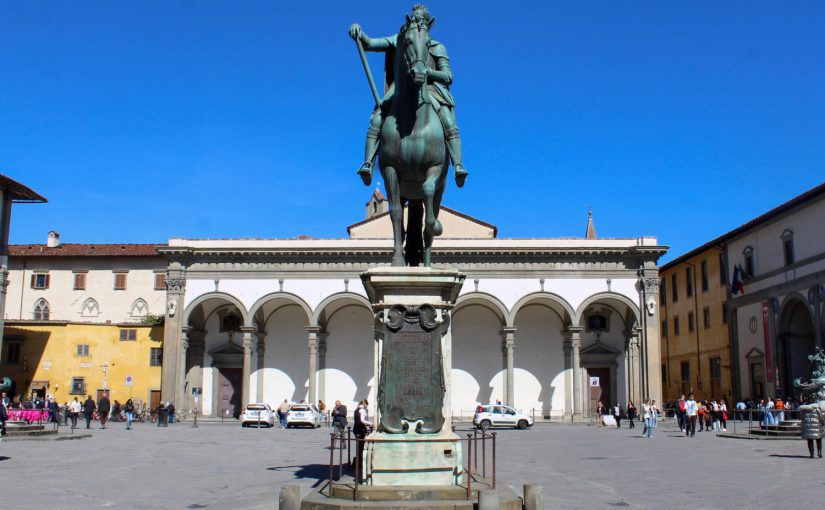
Each year, there are various events on March 25, honoring the Florentine New Year.  Starting at the Palagio di Parte Guelfa, a historical parade winds through the city streets, all the way to La Basilica della Santissima Annunziata. The parade honors those from the countryside who went on pilgrimage to pay homage to the sacred effigy of The Madonna. The streets will be filled with medieval dress and music. Candy will be sold and flags will be thrown all over the city. Once the celebration reaches Piazza SS Annunziata, Florentines and visitors feast on Italian cuisine at an outdoor market. Then, later in the night an evening concert can be enjoyed, while observing the frescoes of the Annunciation featured in the church. By visiting Piazza SS Annunziata, you can learn more about this historical event, by locating a plaque that commemorates the decree of suppression of the festival. 

Florentines still celebrate the typical new year on January 1, with fireworks and confetti filling the streets. Additionally, Florence celebrates a more traditional new year on March 25. From the Middle Ages until 1750, March 25 was the day the Church celebrated the Annunciation of the Incarnation received by the Virgin Mary, marking the beginning of spring, which then became the beginning of the civil calendar. The Tuscan capital celebrated this day as New Year’s Day, even though the rest of Italy was following the Gregorian capital, beginning the new year on January 1. 

A decree of the Grand Duke Francis II of Lorraine forced Florentines to use the Gregorian calendar by 1750, which meant their new year would be in effect now on January 1. Since 2000, the Municipality of Florence has included March 25 in the annual calendar of popular festivals, traditions, and official celebrations. 

The month of March honors a lot of special traditions including International Women’s Day and Easter, but if you want to truly celebrate the commencement of Spring and advance your historical and cultural knowledge, Florentine New Year is right around the corner and a perfect way to indulge in Tuscan tradition.

Navigating No Meat in Florence

Written by: Isla Herring

When I stopped eating meat at 11 years old, I never anticipated the challenges it would hand me while in a foreign country. As someone studying abroad who speaks limited Italian, shopping for food and ordering at restaurants is a difficulty I did not quite prepare myself for. 

Italy is commonly recognized for its food, whether it is pizza, pasta, cheese, sandwiches, or soup, the list can go on. I have always heard amazing recommendations about food from Italy and it was something that excited me when looking into studying abroad. Once I arrived here and was faced with menus in languages that I could not understand, I began to worry about how I would manage my diet in Florence. 

My first night in Florence was an experience that has lingered in my head for all of my meals since. I was attempting to read the menu and decipher the codes for allergies that are provided at the end of the page. I saw a number that told me if dishes contained fish, a number for eggs, and many numbers for other allergies and sensitivities, yet I saw no indication that meals contained meat. I decided that my best option would be pasta because I was famished and had hoped that it would be simple enough to understand if it contained meat. 

When the server set my plate down in front of me, my stomach immediately dropped. What I had ordered, thinking it was just a version of a red sauce, contained lumps of meat that I didn’t recognize. I told myself not to panic because this was just a meal, but from the stress of my travels, the lack of food in my body, and being in a place where the servers hardly understood me, I did indeed panic. 

I said to my roommates once the staff had walked away that my food had meat in it and I did not know what to do. Everyone looked at me with a face of concern as they could read the overwhelming emotions coming over me  in that moment.

“Trade with me,” was the first response that I heard. Luckily for me, my roommate ordered a meatless pasta dish and offered to switch with me so that I could get some food in my body. I knew then that going forward I had to make a conscious effort to improve my understanding of the language and vegetarian options while abroad. 

My first step  was to search for how to say, “without meat,” in Italian, which I learned is, “senza carne.” I knew this term would come in handy for me going forward. I also searched for, “fish,” which is, “pesce,” and practiced the pronunciation of these terms. 

After some basic terminology lessons, I wanted to find more places in Florence that were vegetarian or vegan friendly. Although now I felt confident that I could avoid meat, I still wanted meals that were more than just a noodle or a bread. I wanted to find options that still offered me protein and vegetables. 

I did some basic web browsing to see some places that were close enough for me and decently affordable for a student on a budget. The first place that I found was called “#Raw Vegan Firenze,” a restaurant that offers a variety of vegetarian and vegan options for a reasonable price. They have many juice options as well and focus on clean and healthy ingredients. 

The next place that I found was “Brac,” which offers Mediterranean food. It can be slightly pricey, but has many accommodations and vegetarian options for more of a sit-down dinner experience. They are recognized for their vegetarian and vegan options, along with gluten-free accommodations. 

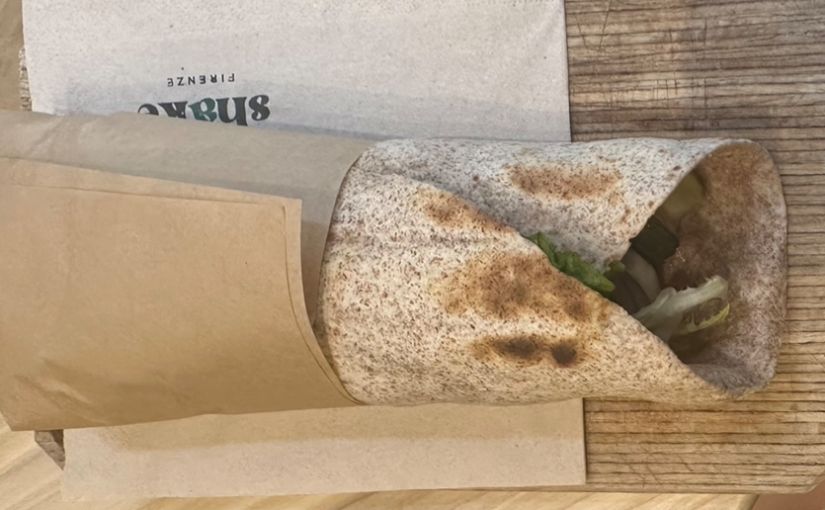
The last place that I want to mention is one that I discovered on my own when strolling around the city. It is called “Shake Cafe,” and it has many options for acai bowls, salads, and wraps that I very much enjoyed. They focus on healthy cuisine, sustainability, and high quality ingredients. The place is very cozy and welcoming and the staff were very understanding and kind. I ordered a falafel wrap that came with onions, beets, greens, hummus, and a lemon vinaigrette.  

I found that there are many places here that offer vegetarian meals that are more than just a salad or a carb. Some quick research immediately made me feel much more comfortable in this new city I call home. I began to make a list in my notes of places that I discovered were viable options for my diet. This way, when I’m in a pinch for food, I know I have places to go to on hand now.

I also did some more research on quality vegetarian protein sources and began to compile a list of these foods as well so I could search for them at restaurants, and grocery stores when cooking for myself. The top searches were foods like, seitan, tofu, lentils, beans, sprouted grains, oats, nuts, and eggs. These have become foods that I focus on when preparing meals and dining out to ensure that my diet is staying balanced with nutrients and substance. 

Overall, the transition to new food is a challenge for everyone, and for those who have dietary restrictions, the process can be even more strenuous. My advice is to do some research and stay optimistic because there are people everywhere who share your same struggles, regardless of language and location.